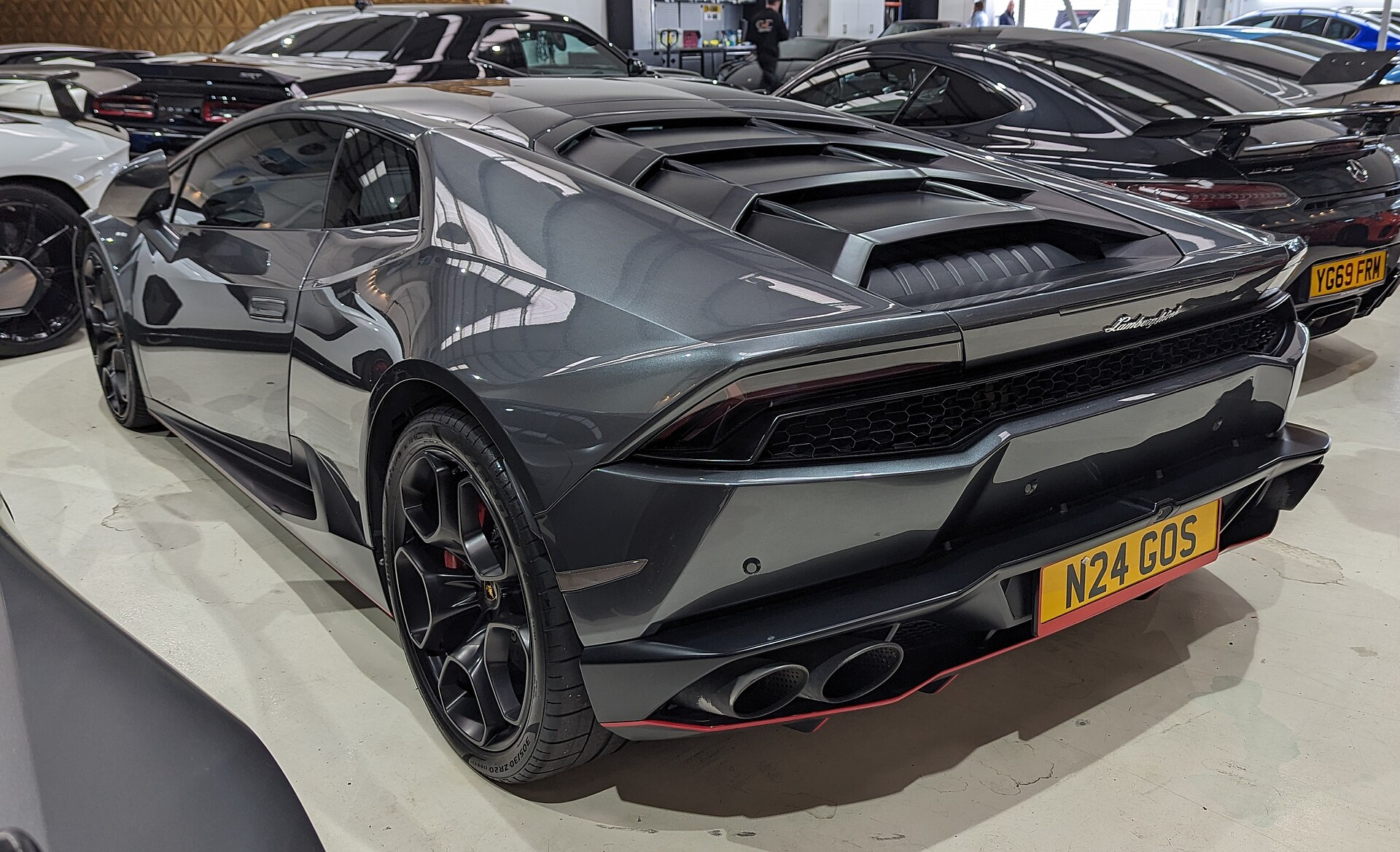
New or Used Lamborghini Huracan? The Complete Decision Guide
Huracan production ended in December 2024, fundamentally changing what "buying new" means. Should you chase remaining dealer stock, explore Lamborghini's CPO program, or buy private used? Here's every factor you need to consider.
The Huracan Is Dead. Long Live the Huracan. What Changed
On December 23, 2024, Lamborghini rolled the final Huracan off the production line after a decade of manufacturing. That car was a Revuelto — just kidding. It was a Huracan. The naturally aspirated V10 era at Lamborghini is over.
This creates a unique moment in the used supercar market. The question "should I buy new or used?" now carries different weight. There are no 2026 Huracans being built. There are no 2027 Huracans coming. What you see on dealer lots right now is "new old stock" — factory-fresh cars that were built before production ended, usually with delivery dates that fell close to the shutdown.
The Huracan's replacement, the Temerario, uses a turbo-hybrid V8. It's different. Different engine, different character, different sound. This means every remaining new Huracan is the last opportunity to buy a naturally aspirated Lamborghini V10 directly from a dealer.
That context changes everything about the new vs. used decision. Let's break it down.
What "New" Actually Means Now Understanding Dealer Stock
If you're shopping for a "new" Huracan in early 2026, you're not buying a car hot off the assembly line. You're buying a car that was manufactured sometime in 2024, likely sitting on a dealer lot or in transit since production ended.
Most remaining new Huracan inventory falls into these categories:
- Pre-orders completed in Q4 2024: Cars built to customer specifications before the production window closed. These were delivered between November 2024 and January 2025. Almost all are gone now.
- Dealer-ordered stock: Lamborghini authorized dealers typically keep 2–5 units in inventory for walk-in buyers. Some of these remain unsold, particularly in colors or configurations that don't match buyer preferences (white, gray, or black with standard wheels).
- Spec programs: Some high-volume dealers negotiated larger allocations. A few still have cars available, though availability is shrinking rapidly.
- Cancelled orders: Occasionally a buyer backs out of a custom order after the car is built. These become dealer stock.
The reality: if you want a genuinely new, unfed Huracan with zero miles, you have maybe 30–60 days left before available inventory approaches zero. By mid-2026, you'll be buying used exclusively.
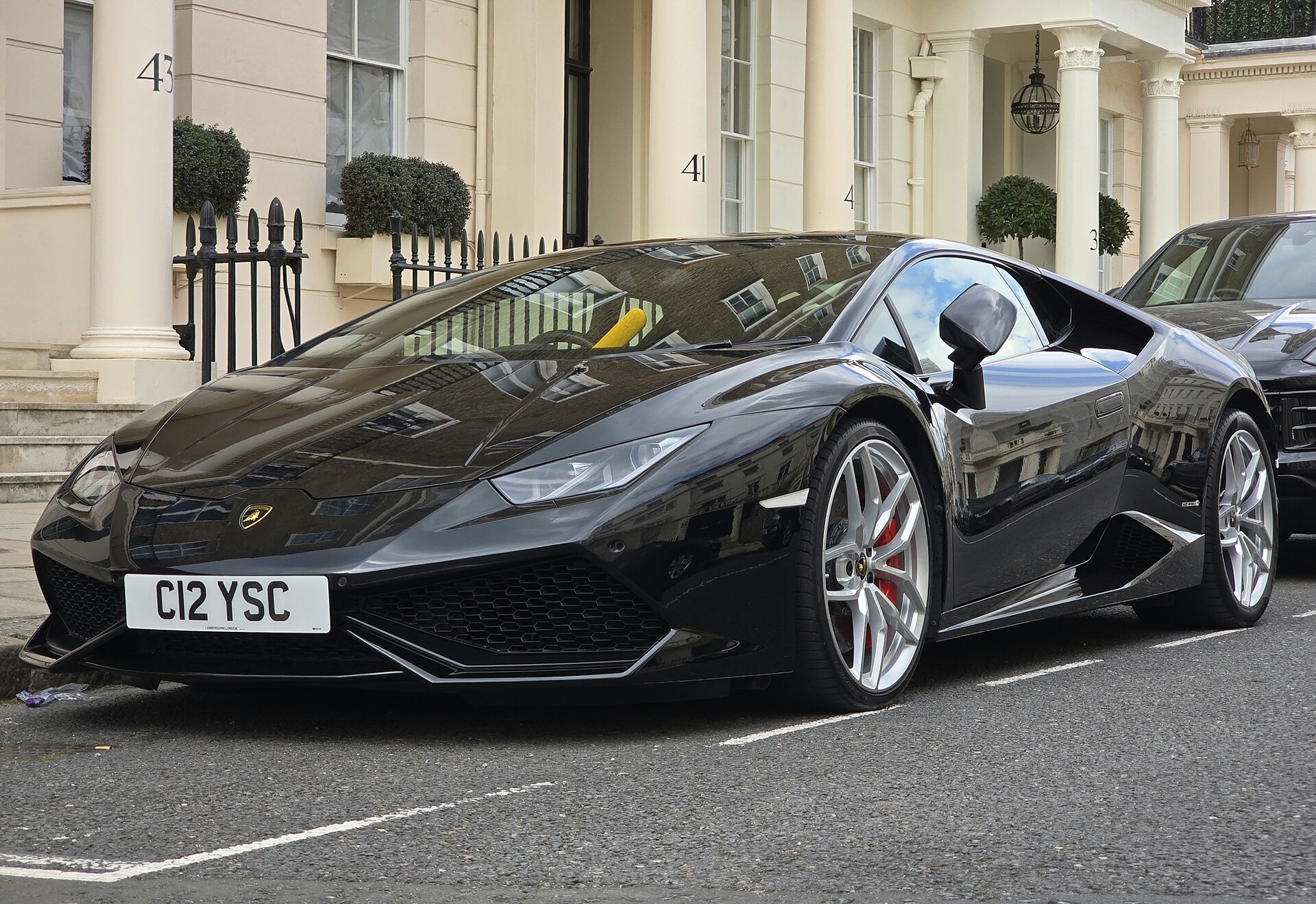
The New Stock Premium What Does Dealer Inventory Cost Extra?
Remaining new Huracans command a premium over comparable used examples. Here's what the market shows in February 2026:
| Configuration | New Stock Price | 1-Year Used Equivalent | Premium |
|---|---|---|---|
| EVO AWD (standard spec) | $245,000–$275,000 | $175,000–$195,000 | +$60K–$80K |
| EVO AWD (custom color) | $255,000–$285,000 | $185,000–$205,000 | +$60K–$80K |
| Tecnica (custom) | $280,000–$310,000 | $210,000–$240,000 | +$60K–$80K |
| Performante (custom) | $320,000–$350,000 | $240,000–$270,000 | +$60K–$80K |
| STO (special order) | $380,000–$420,000 | $295,000–$330,000 | +$60K–$80K |
The premium is remarkably consistent: $60,000–$80,000 for zero miles versus a one-year-old example. That's roughly 20–30% more than used, depending on variant.
Is that premium justified? We'll get to that. But first, understand this: that premium doesn't come with proportional benefit. You're not paying for cutting-edge technology (the Huracan's tech is from 2019–2024, already outdated). You're paying for new-car smell, the dealer warranty, and psychological comfort.
Warranty: New vs. CPO vs. Private Used Protection Costs Real Money
This is where new stock makes the most concrete case for itself. Let's compare warranties across all three buying scenarios:
| Scenario | Powertrain Warranty | Basic Coverage | Free Service | Transferable |
|---|---|---|---|---|
| New Stock (Dealer) | 12 years / unlimited miles | 5 years / 60K miles | 2 services included | Yes |
| Lamborghini CPO | 6 years / unlimited miles | 3 years / 36K miles | 1 service included | Yes |
| Dealer Warranty (3rd party) | 3–5 years / variable | 2–3 years / 40K miles | None | Maybe |
| Private Used (No warranty) | None | None | None | N/A |
New stock comes with Lamborghini's full factory warranty: 12 years unlimited-mile powertrain coverage and 5 years / 60K miles basic coverage. That's extraordinary for a supercar. For reference, Ferrari's factory warranty is 7 years. Porsche's is 4 years.
Lamborghini's official CPO program offers 6 years powertrain coverage (post-purchase), which is still excellent. But new stock gives you an extra 6 years of protection for that $60K–$80K premium.
The warranty question becomes: how long do you plan to keep the car? If you're selling in 2–3 years, CPO or even private used might not give you meaningful benefit. If you're keeping the car for 5+ years or past 60,000 miles, the new-stock warranty could save you $20K–$40K in major repairs.
Unsure About Warranty Coverage?
Automonitor breaks down exactly what you're protected for with each purchase scenario. Get expert guidance on which option protects your investment.
Schedule a Consultation →
Total Cost of Ownership Purchase Price Isn't the Whole Story
To fairly compare new vs. used, we need to look at five-year total ownership cost, not just purchase price. Let's model realistic ownership scenarios:
| Cost Category | New Stock (2025 EVO AWD) | Used (2020 EVO AWD) | Difference |
|---|---|---|---|
| Purchase Price | $255,000 | $175,000 | +$80,000 |
| Depreciation (5 years) | $25,500 (10%) | $17,500 (10%) | +$8,000 |
| Insurance (5 years) | $35,000 | $35,000 | Even |
| Maintenance (included/CPO) | $5,000 | $12,000 | -$7,000 |
| Warranty Coverage Benefit | $10,000 (estimated) | $0 | +$10,000 vs. used |
| Major Repairs (likelihood) | $2,000 (low) | $8,000 (higher) | -$6,000 |
| Fuel (5 years) | $20,000 | $20,000 | Even |
| Registration/Taxes (5 years) | $12,000 | $12,000 | Even |
| 5-Year Total Cost | $159,500 | $151,500 | +$8,000 |
| Cost Per Year | $31,900 | $30,300 | +$1,600/yr |
The surprising result: new stock is only slightly more expensive over five years when you factor in warranty coverage, included maintenance, and lower repair probability. It adds roughly $1,600 per year to your total cost of ownership.
But there's a critical detail: this assumes you keep the car. If you sell the new-stock car after just two years, the math changes dramatically, because depreciation is steeper on newer cars early in the ownership cycle.
The Depreciation Reality Which Timeline Favors You?
Here's how Huracans typically depreciate across different ownership periods:
| Car Age at Purchase | Value After 1 Year | Value After 3 Years | Value After 5 Years | Total 5-Year Loss |
|---|---|---|---|---|
| New Stock (2025) | $215K (15% drop) | $195K (23% drop) | $230K (10% drop) | 20% total |
| 1-Year Used (2024) | $168K (4% drop) | $155K (11% drop) | $165K (6% loss recovery) | 6% total |
| 3-Year Used (2022) | $145K (2% drop) | $138K (5% drop) | $145K (back to purchase) | Neutral |
| 5-Year Used (2020) | $173K (1% gain) | $175K (slightly up) | $185K (up 5%) | Appreciation |
The pattern is clear: new stock depreciates hardest in the first year (15%), while used cars that have already fallen off the new-car cliff hold value better. A 3–5-year-old Huracan is approaching the floor of its depreciation curve.
This means: if you plan to sell within two years, buying used saves you money even after accounting for warranty differences. If you plan to keep it 5+ years, the math is closer, and the warranty benefit of new stock matters more.
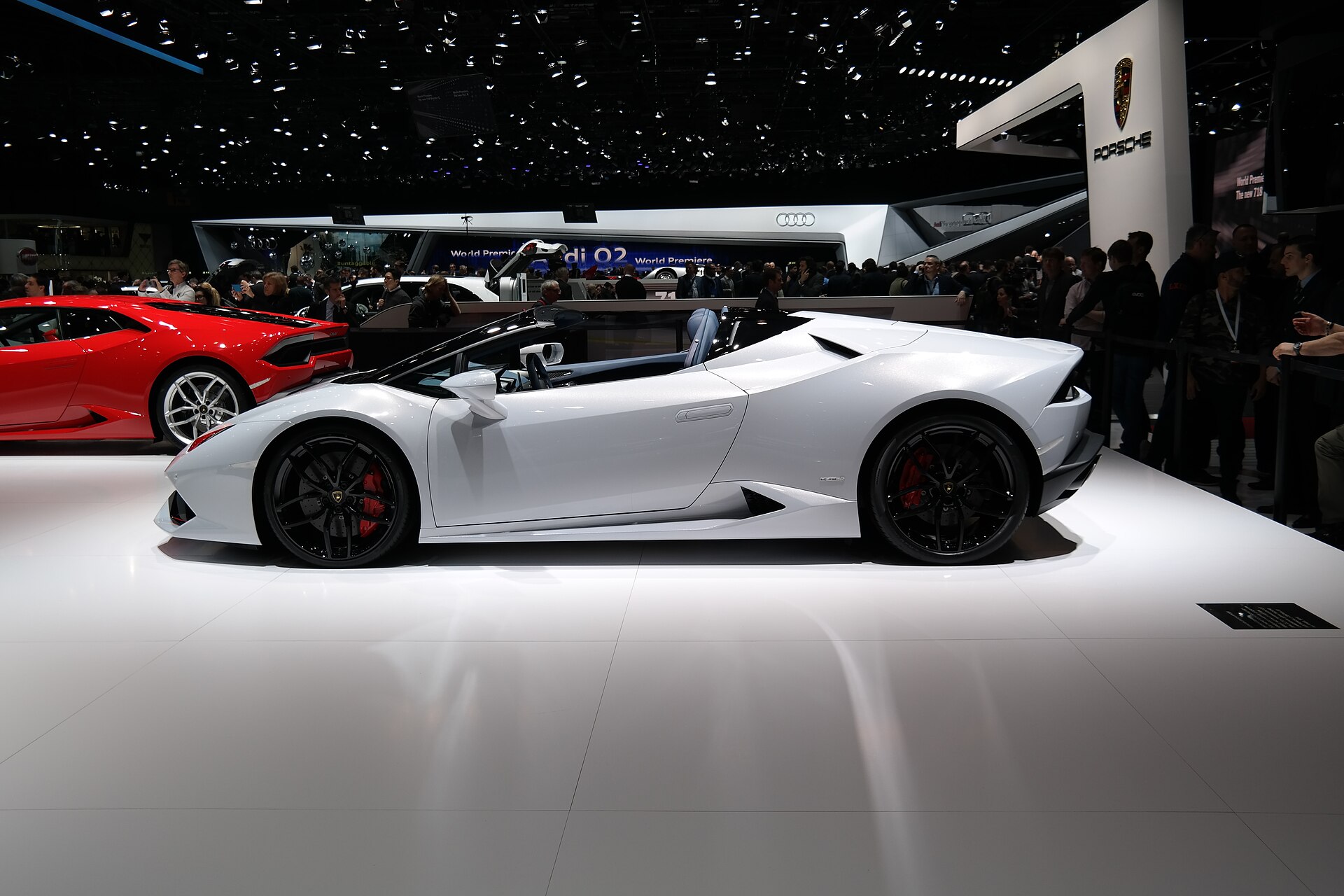
What Can You Actually Buy? Availability by Variant
New stock availability varies dramatically by variant. Here's the reality as of February 2026:
Readily Available (some inventory):
- EVO AWD — 2–8 units across North America in white, gray, or black
- Tecnica — 0–2 units remaining
Very Scarce (1 or fewer):
- Performante — Most sold out; custom-order cars almost gone
- STO — Sold out; no new stock available
- Sterrato — Extremely rare; unlikely to find new stock
Completely Unavailable:
- EVO RWD — Production ended 2023; no new stock
- LP 610-4 — Production ended 2019; no new stock
If you want a specific variant, color, and configuration, your window is closing. Most remaining inventory is EVO AWD in conservative colors. If you want something like a Performante in Giallo Inti (yellow) or a Sterrato, you're buying used.
Financing: Easier Money for New Cars But at What Cost?
Lenders treat new cars differently than used, and that impacts your rate. Here's what exotic car financing looks like right now:
| Scenario | Required Down Payment | Typical Rate (680+ credit) | Typical Term |
|---|---|---|---|
| New Stock (dealer financing) | 15–20% | 4.5%–6.5% | 60 months |
| Used (exotic lender) | 20–30% | 6.5%–9.5% | 60 months |
| CPO (Lamborghini finance) | 20–25% | 5.5%–7.5% | 60 months |
| Private used (specialized lender) | 25–35% | 7.5%–11% | 48–60 months |
New stock benefits from dealer financing relationships and lower perceived risk. You'll qualify for better rates with 15–20% down. Used cars through exotic specialists like JJ Best Banc or Woodside Credit typically require 20–30% down at higher rates.
On a $255K new-stock purchase with $50K down at 5.5% over 60 months, you're looking at roughly $3,900/month in financing. The same car at one year old ($175K) financed with $45K down at 7.5% comes to $2,900/month. That's $1,000/month less, which is substantial.
Insurance Implications New vs. Used Huracan Cost to Insure
Comprehensive and collision coverage is mandatory if you finance any Huracan. Here's what you'll pay:
- New stock (2025 model): $6,500–$9,000 annually for a 35-year-old buyer with clean record, depending on location and coverage limits
- 1-year used (2024 model): $5,500–$7,500 annually — slightly lower as the car depreciates
- 3-year used (2022 model): $4,500–$6,500 annually
- 5-year used (2020 model): $3,500–$5,500 annually
Insuring a new Huracan costs roughly $1,200–$1,800 more per year than a 3-year-old equivalent due to higher replacement costs and a higher insurable value. Over five years, that's $6,000–$9,000 in additional insurance expense.
This is a real cost that often doesn't factor into purchase decisions. When you add it to the depreciation and financing differences, new stock becomes notably less attractive for buyers without substantial cash reserves.
The Case for New Stock When It Makes Sense
New Huracan stock isn't the wrong choice. There are legitimate scenarios where it's the right one:
You have a substantial cash reserve and want to keep the car 5+ years: If you're paying mostly cash and planning long-term ownership, the warranty protection and included maintenance of new stock provides real value. The lower repair risk over five years can offset the depreciation hit.
You want a specific, custom configuration: If you have a vision for your Huracan — a particular color, interior, wheel setup, or special option — and that exact combination exists in new stock somewhere in North America, buying it is better than waiting for used examples to surface.
Psychological comfort matters to you: Knowing no one else has driven your car, that you're the first keeper, and that warranty peace-of-mind are worth something. Don't dismiss the emotional benefit. Ownership is about more than math.
You're buying from an authorized dealer with strong negotiating position: Some new-stock cars are deeply discounted if a dealer is clearing inventory. The $60K–$80K premium we quoted is an average. Aggressive negotiation might bring it down to $40K–$50K, which changes the equation.
The Case for Used The Financial Argument Is Strong
Used Huracans offer better economics for most buyers. Consider these advantages:
Steep discount for entering the market: A one-year-old Huracan costs $60K–$80K less than new stock but performs identically. That discount is essentially a "warranty voucher" that could cover major repairs if something goes wrong.
Depreciation curve has already started flattening: The steepest drop happens in year one. A 2–3-year-old Huracan loses value more slowly than a new one. If you plan to sell, buying used minimizes your loss.
Better financing and lower insurance costs: Over five years, better insurance rates (on a 5-year-old car) and lower financed amount save you roughly $30K–$40K compared to new stock, even with slightly higher interest rates.
More variant options: If you want a Performante, STO, or Sterrato, the used market has them. New stock is limited to EVO AWD mostly.
CPO represents the sweet spot: Lamborghini's official CPO program gives you six-year powertrain warranty, one included service, inspection, and reconditioning — at a used-car price. For buyers with $180K–$220K to spend, CPO is statistically the strongest choice.
The used market isn't risk-free. Pre-purchase inspection becomes non-negotiable. But the financial advantage is real and substantial.
Specification and Color Matter Future Resale Depends on What You Choose
Whether you buy new or used, your choice of color and specification will impact resale value significantly. This matters for planning your exit. The reality of the used supercar market is that buyers have emotional preferences that transcend model year or mileage. A perfectly maintained white 2020 Huracan EVO might sit on a dealer lot for three months. That same car in Giallo Inti yellow might sell in two weeks at a higher price.
Lamborghini's paint options are extensive and remarkably priced. Custom colors add $8,000–$12,000 to the purchase price at the factory. But on the secondary market, that investment pays dividends. When you eventually sell, that yellow Huracan will attract buyers from a much wider geographic radius. Collectors and enthusiasts actively seek distinctive colors.
Highest-value colors (command 5–15% premium):
- Giallo Inti (yellow) — The most sought-after; strong collector appeal
- Verde Mantis (green) — Rare; appeals to heritage-minded buyers
- Blu Cepheus (blue) — Classic supercar color; always in demand
- Arancio Borealis (orange) — Bold statement; strong enthusiast appeal
- Rosso Mars (red) — Iconic Lamborghini red; consistent demand
Mid-tier colors (neutral to slight discount):
- Nero Nemesis (black) — Timeless; good demand but no premium
- Grigio Telestis (gray) — Professional appearance; steady resale
Lowest-value colors (5–10% discount):
- Bianco Monoceroswhite) — Too common; depresses value relative to other options
Interior color matters considerably too. Black leather with red stitching is the safest choice for resale — it appeals to the broadest market. Alcantara materials, carbon fiber trim, and custom seat colors appeal to fewer buyers on the second-hand market and sometimes require expensive restoration if they show wear.
Wheel choice also impacts value. Original factory Lamborghini wheels in silver or gold hold value better than aftermarket or specialty finishes. If you're buying a used car, original wheels should be present and in good condition.
Strategic advice: if you're buying new stock, take whatever exotic color is available — it'll hold value better than standard colors and will make the car more distinctive and enjoyable. If you're shopping used, actively prioritize color over variant. A less-desirable Huracan EVO in Giallo Inti often sells faster and for more money than a higher-spec Performante in white. Buy the color that makes you happy; the resale market will reward you for it.
Where to Buy New vs. Used Sourcing Matters
New stock sources:
- Lamborghini.com's dealer locator — See which authorized dealers have inventory. Call directly; websites are often out of date.
- High-volume luxury dealers in Florida, Texas, California, New York — These markets have the most remaining stock.
- Lamborghini's official social media accounts sometimes post available inventory or can direct you to dealers.
Used sources:
- Bring a Trailer — Best for documented, enthusiast-owned cars. Auction format is transparent.
- Cars and Bids — Similar to BaT; good inventory of low-mileage examples.
- Lamborghini dealer used inventory — CPO cars often listed here with warranty documentation.
- Specialist exotic dealers — Independent dealers specializing in supercars sometimes have better pricing than franchised dealers.
- Automonitor — We source cars from 200+ verified dealers and handle inspection, valuation, and negotiation for you.
The Smart Buying Process New vs. Used Steps
For new stock:
1. Contact Lamborghini dealers in major markets. Call authorized dealers directly; inventory lists are often inaccurate online. Ask specifically about new inventory, available variants, expected delivery timeframe, and factory options still available. Know the VIN before you negotiate. 2. Negotiate aggressively. Remaining new stock is moving slowly, and dealers are motivated. Emphasize you're ready to finalize quickly with financing in place. Look for dealer discounts (many are offering $5K–$15K off list for quick moves). 3. Confirm warranty documentation and delivery condition. Verify the car is truly factory-fresh with zero miles before taking delivery. Review warranty paperwork for exact coverage dates and confirm the transferability policy. 4. Secure financing before visiting the dealership. Get a pre-approval from your lender so you have leverage and aren't subject to dealer finance department markups. You'll negotiate from a position of strength. 5. Complete the purchase quickly. Once you've agreed on terms, act fast. Inventory turns quickly when collectors learn of available stock.
For CPO:
1. Check the official Lamborghini CPO listings. Visit Lamborghini's official CPO portal and search by variant, color, and location. Authorized dealers list their CPO inventory here first. 2. Request a detailed inspection report. Every CPO car should come with a comprehensive inspection report covering powertrain condition, suspension, braking, transmission, and electrical systems. Ask for this before committing. 3. Verify proper reconditioning and inspection. Confirm the vehicle met Lamborghini's 150+ point inspection, was professionally reconditioned, and includes fresh fluids, filter service, and any necessary repairs. CPO is only valuable if the process was actually thorough. 4. Confirm warranty transfer details. Verify the remaining factory warranty transfers fully to you and understand any conditions. Confirm the six-year powertrain coverage is from the original manufacture date, not from the CPO purchase date. 5. Finance through Lamborghini if possible. Lamborghini's captive finance typically offers the best rates on CPO cars (5.5–7.5%), and approval is usually straightforward. This saves you 1–2% versus exotic car lenders.
For private used:
1. Search multiple platforms simultaneously. Check BaT, Cars and Bids, Autotrader, Facebook Marketplace specialty groups, and Automonitor. Different platforms attract different seller types and different pricing. Auction sites show the clearest market data via final selling prices. 2. Get a thorough pre-purchase inspection. This is non-negotiable for private used. Hire an exotic-car specialist (not a regular mechanic; Lamborghini shops have specific expertise) and expect to pay $800–$1,500. This inspection could reveal $20K–$50K in deferred maintenance. It's the best money you'll spend. 3. Review full service records and maintenance history. Request all service receipts, warranty records, and maintenance documentation. A Huracan with dealer service records and documented maintenance is worth $10K–$20K more than the same car with spotty history. 4. Verify accident history and ownership. Get a Carfax, AutoCheck, and specialist inspection report. Call the previous owners if possible. Ask directly: has this car been in an accident, repainted, or tracked? Honest sellers will tell you; evasive answers are red flags. 5. Negotiate from data, not emotion. Use completed auction prices on BaT and Cars and Bids as your baseline. Compare mileage, condition, color, variant, and service history of recent sales. Make an offer based on data, not feeling. 6. Secure financing before final negotiation. Get a pre-approval that gives you leverage and lets you walk away if the deal isn't right.
The Temerario Transition Why the Huracan Becomes More Valuable Over Time
Understanding the Huracan vs. Temerario dynamics is crucial for your purchase decision. The Temerario, which arrived in 2025, represents Lamborghini's shift to twin-turbocharged, hybrid technology. It's faster than the Huracan on paper: 907 horsepower versus 630, 0–60 in 2.7 seconds versus 2.8. But it's not the same car.
The Temerario is electric-assisted, twin-turbocharged, and designed for the emissions-regulated future. It's excellent. But it's also just another supercar in a field of turbo hybrids. The Huracan is the last naturally aspirated V10 Lamborghini will ever build. That distinction matters for value.
Historically, the final year of any automotive platform appreciates relative to production cars from earlier years. The last air-cooled Porsche 911 (1998) is now worth 30–50% more than comparable 996 models. The final W12-powered Ferrari (the 812 Superfast, production ending soon) is beginning to appreciate. Huracan buyers should understand this dynamic: as the Temerario becomes the "current" car, the Huracan becomes a collectible.
This doesn't mean Huracans will immediately shoot up in value. Appreciate comes gradually, typically after 5–10 years. But it does mean that buying a Huracan now — whether new or used — is buying into a car that will only become more historically significant. A 2024 or 2025 Huracan bought today for $175K–$255K could plausibly be worth $185K–$280K in 2030 if it's maintained well.
This creates a compelling argument for both new stock and used: you're not just buying a supercar to drive, you're buying a piece of automotive history that the market will eventually recognize. Contrast that with buying a 2025 Temerario, which will depreciate normally over the next decade like any other modern exotic.
The Final Word Our Honest Assessment
If we were buying a Huracan with our own money in February 2026, here's our decision framework:
Buy new stock if: You have $200K+ in cash, plan to keep the car 5+ years, want a specific configuration that exists in new inventory, and value warranty peace-of-mind. The new car makes sense financially if you can absorb the 15% first-year depreciation without emotional strain. For detailed variant analysis, see our EVO buying guide and STO analysis.
Buy CPO if: You have $180K–$220K to invest and want the balance of warranty protection (six-year powertrain) without the new-car premium. CPO is the statistically strongest choice for most buyers. You get nearly as much warranty protection as new stock at a $50K–$80K discount. Consult our complete Huracan worth-buying analysis for CPO-specific insights.
Buy private used if: You're willing to do due diligence (pre-purchase inspection is mandatory), you plan to keep the car 3–7 years, you want a specific rare variant (STO, Performante, Sterrato), or you prioritize total cost of ownership over warranty comfort. The financial advantage is substantial if you're disciplined. See our selling guide for insights on how specification and condition affect future resale value.
The production shutdown makes every remaining Huracan precious — new or used. Each is the last of its kind in its configuration. Whether you're paying $260K for a new EVO AWD or $175K for a 2024 equivalent, you're buying a piece of automotive history that's worth experiencing. If you'd prefer exploring other options in the Lamborghini lineup, consider the Urus SUV or the upcoming Revuelto hybrid.
For help navigating the decision and connecting with verified dealers, Automonitor's buying concierge walks buyers through every step of the new vs. used decision, handles pre-purchase inspection, and negotiates on your behalf. Learn more about the complete Huracan buying guide, best model years, and current pricing in our related articles. For additional sourcing guidance, check out where to buy a Huracan and our complete Lamborghini buying hub.
Ready to Make Your Decision?
Get expert guidance on whether new, CPO, or used is right for your budget and timeline. Automonitor handles inspection, valuation, and negotiation.
Start Shopping Now →