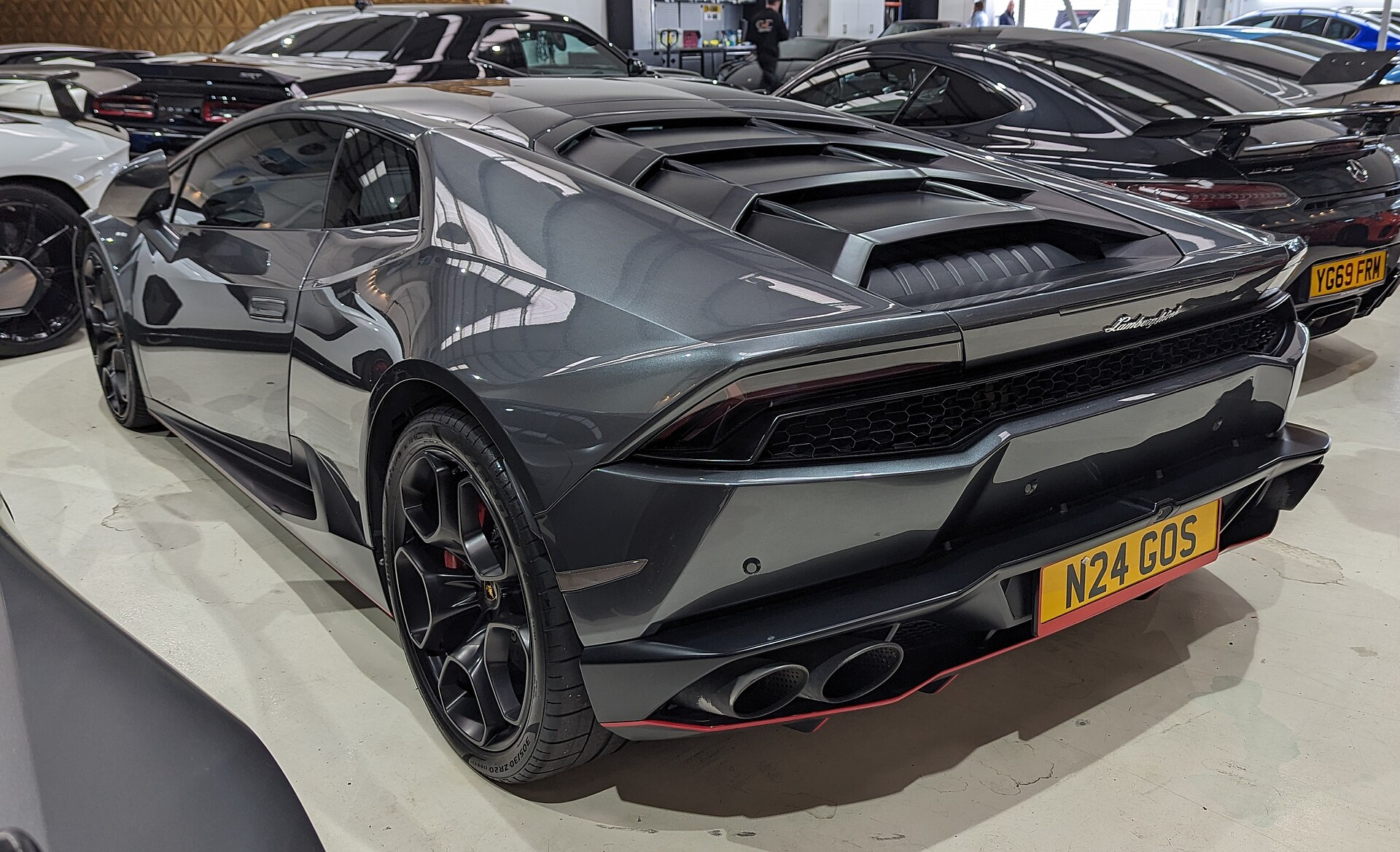
Six Huracans, One V10: Which One Is Actually Worth Your Money?
The base Huracan, EVO, Tecnica, STO, Performante, and Sterrato all share the same 5.2L V10. But they're six very different cars — and the price spread is over $250,000.
The Variant Confusion: Understanding Six Generations of the Same Engine
When Lamborghini introduced the Huracan in 2014, the marque created a singular vision: a V10-powered supercar that would define the brand for over a decade. What nobody anticipated was how many variants of that vision Lamborghini would create. Today, if you're shopping for a Huracan, you're not choosing between one or two options — you're navigating six distinct models, each with different powertrains, driving characteristics, suspension setups, and price points that spread across $250,000.
The base LP 610-4, the mid-life refresh EVO, the track-focused Performante, the pure racing machine STO, the mid-engine revolution Tecnica, and the all-terrain Sterrato all share the same 5.2L naturally aspirated V10. But they're six completely different driving experiences. Understanding which Huracan is right for your garage requires knowing what makes each one special — and more importantly, what makes each one wrong for the wrong buyer.
This guide breaks down every Huracan variant, compares them head-to-head, explains the real-world differences, and shows you how to choose the right one for your needs and budget.
The Complete Huracan Hierarchy: Specs, Pricing, and Best Use Case
| Model | Years | Horsepower | Drivetrain | 0-60 mph | New MSRP (2023-2024) | Current Used Market | Best For |
|---|---|---|---|---|---|---|---|
| LP 610-4 | 2014-2019 | 602 hp | AWD | 2.9s | $200,000 | $130,000–$160,000 | First-time supercar buyers |
| EVO AWD | 2019-2024 | 630 hp | AWD | 2.8s | $240,000 | $155,000–$185,000 | Daily-driven collectors |
| EVO RWD | 2020-2024 | 630 hp | RWD | 2.9s | $215,000 | $145,000–$170,000 | Driver-focused enthusiasts |
| Tecnica | 2021-2024 | 640 hp | RWD | 2.85s | $265,000 | $190,000–$215,000 | Pure driving dynamics |
| Performante | 2017-2024 | 630 hp | AWD | 2.8s | $270,000 | $185,000–$225,000 | Track-focused owners |
| STO | 2021-2024 | 631 hp | RWD | 2.8s | $335,000 | $240,000–$290,000 | Racing drivers |
| Sterrato | 2022-2024 | 631 hp | AWD | 3.2s | $265,000 | $195,000–$225,000 | Adventure seekers |
LP 610-4 — The Original: Where It All Began
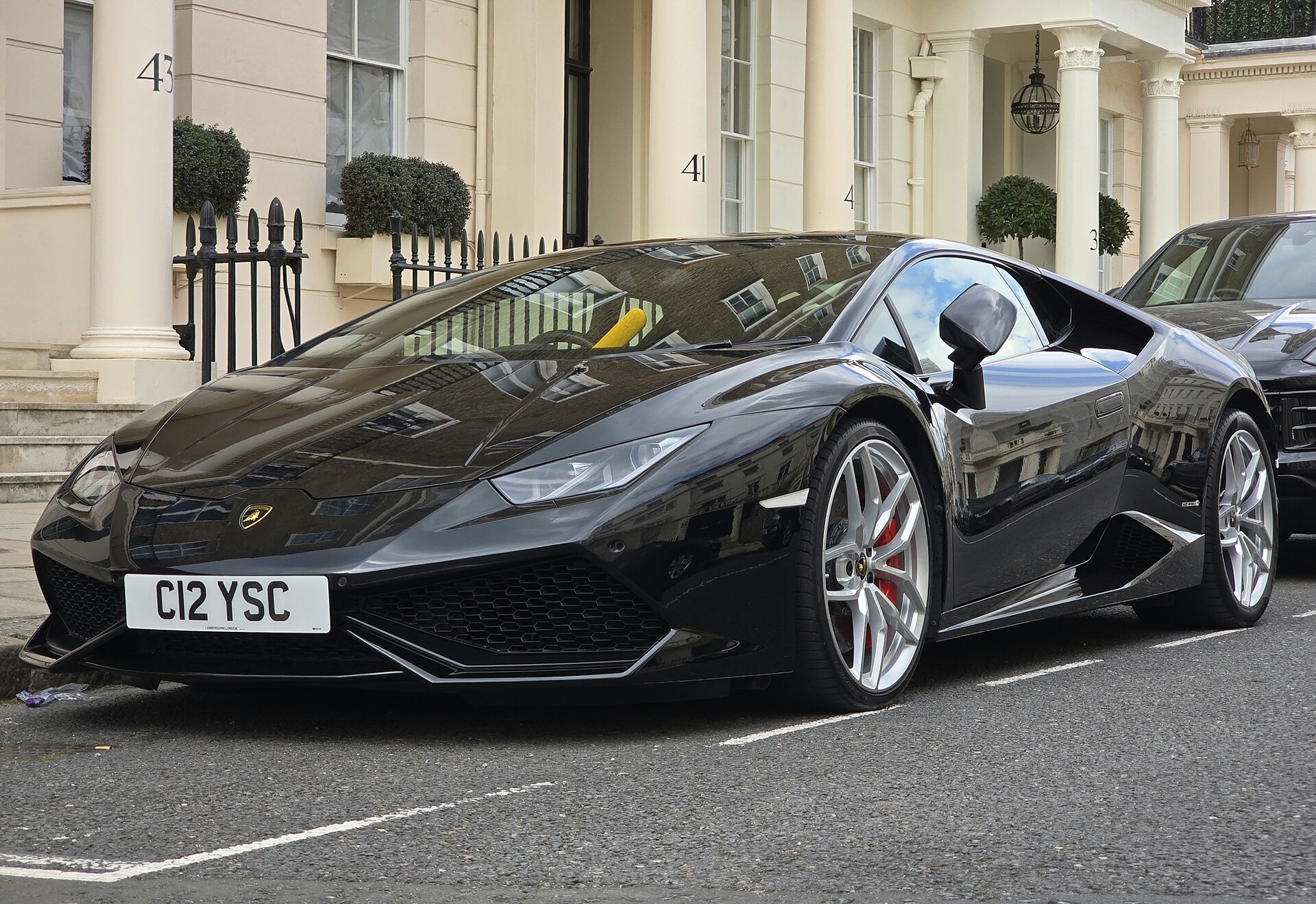
The base Huracan launched in 2014 as Lamborghini's answer to the Ferrari 458 Italia. With 602 horsepower and all-wheel drive, the LP 610-4 was immediately competitive, hitting 60 mph in 2.9 seconds and maxing out at 201 mph. It featured a seven-speed dual-clutch transmission, adaptive suspension, and the revolutionary carbon fiber monocoque chassis that set the standard for modern supercars.
The original LP 610-4 production ran from 2014 to 2019, and these examples represent the most affordable entry point into the Huracan ecosystem. They're now 5–10 years old, which means you can find well-maintained examples for $130,000–$160,000. At that price point, you're getting a contemporary supercar that was designed by the same engineering team that created the Gallardo, with proven reliability and parts availability.
The original Huracan was revolutionary because Lamborghini finally built a mid-engine V10 that didn't feel like it was compensating for anything. It had presence, aggression, and legitimacy from day one.
What to look for in a used LP 610-4: Check for front lift damage, as these cars were often spec'd with hydraulic front-lift systems that can develop seal leaks. Inspect the carbon fiber monocoque for hairline cracks around the A-pillars. Verify that the MagneRide adaptive suspension is functioning smoothly through its full range. Request the complete service history and confirm that regular oil changes were performed every 10,000 miles. Look for stone chips on the front bumper and bonnet — these cars are notoriously exposed to impact damage from road debris.
Huracan EVO — The Best All-Rounder: Refined, Capable, Proven
In 2019, Lamborghini released the Huracan EVO, a comprehensive mid-life refresh that addressed every criticism of the original LP 610-4. The EVO bumped horsepower to 630, refined the chassis dynamics through Lamborghini Dinamica Veicolo Integrata (LDVI) — a real-time chassis management system that distributes torque between the four wheels independent of driver input — and completely overhauled the interior with a new touchscreen infotainment system.
The EVO is available in both AWD and RWD configurations. The AWD version, launched in 2019, gives you the security of four-wheel drive while maintaining the performance edge. The RWD version, introduced in 2020, strips away the front driveshaft entirely and puts all 630 horses through the rear wheels, giving drivers a purer, more visceral connection to the car. For $215,000–$240,000 when new, the EVO represented the modern sweet spot in the Huracan lineup.
The Huracan EVO Spyder was also available during this period, offering a fully-removable carbon fiber top and the same specs as the coupe version. Used Spyders command a 5–10% premium over fixed-roof versions, primarily because they're rarer and offer year-round driving flexibility.
The LDVI system is the EVO's greatest asset. Unlike the original Huracan's reactive stability control, LDVI actively manages brake force and differential engagement thousands of times per second, preventing understeer and oversteer before they happen. On track, this makes the EVO extraordinarily stable. On the road, it makes the car remarkably easy to drive confidently at legitimate speeds.
Tecnica — The Driver's Huracan: Pure Dynamics, No Compromise
Released in 2021, the Tecnica stripped out everything but the driving experience. It's rear-wheel drive only, with no hybrid technology, no all-wheel drive complexity, just a 640-horsepower V10 and a carbon fiber chassis. Lamborghini tuned the steering to be more direct, the suspension to be more track-focused, and the overall character to be more engaging than any other naturally aspirated Huracan variant.
The Tecnica costs $265,000 and competes directly with the Ferrari F8 Tributo and the McLaren 720S in terms of price and performance. It hits 60 mph in 2.85 seconds, which is marginally faster than the EVO thanks to the reduced weight and simpler powertrain. The real advantage of the Tecnica is the driving feel: without four-wheel drive masking imperfections, every input flows directly from your hands to the wheels.
The carbon ceramic brakes are phenomenal. The active rear wing operates at multiple angles depending on speed and driving mode. The air conditioning can be deleted entirely to save weight. The Tecnica is the only Huracan that feels like a true driver's car rather than a sensible supercar.
Performante — Track Record Holder: ALA System and Nurburgring Glory
The Performante, introduced in 2017, was Lamborghini's direct answer to the Ferrari 488 GTB and Porsche 911 GT2. It features the proprietary ALA (Aerodinamica Laminar Attiva) system, a series of active aero elements that adjust in real-time based on speed, steering input, and braking force. At full throttle, the front flaps open to maximize downforce. During hard cornering, one wing surface adjusts independently to help rotate the car.
The Performante set a 6:52.01 lap time at the Nurburgring Nordschleife, making it one of the fastest production vehicles ever to lap the famous circuit. That record stood for years and represented a vindication of Lamborghini's engineering philosophy: lightweight, aerodynamic, and built around a naturally aspirated engine that rewards driver input.
The Performante is priced at $270,000 and delivers 630 horsepower through all four wheels. It's the most track-ready variant of the all-wheel-drive Huracans, with reinforced suspension components, upgraded brakes, and a host of carbon fiber body panels. For buyers who want to track their Huracan but need the security of all-wheel drive, the Performante is the obvious choice.

STO — Road Legal Race Car: Super Trofeo Heritage and Carbon Everything
The STO (Super Trofeo Omologato) is Lamborghini's purest expression of its racing DNA. Derived directly from the Huracan Super Trofeo race car, the STO features a completely carbon fiber body, racing-derived suspension, and a pure focus on track performance. It's rear-wheel drive, naturally, with 631 horsepower channeled exclusively through the rear tires.
The STO is rare, expensive — $335,000 — and genuinely difficult to drive in real-world conditions. The suspension is rock-hard. The steering is heavy. The car lacks power steering at low speeds and requires genuine muscle to maneuver it in parking lots. But put it on a racetrack, and the STO is one of the fastest road-legal supercars ever created.
The STO is also the most desirable variant in the collector market right now. Only 1,405 units were produced worldwide, and they're appreciating faster than any other Huracan variant. If you have the skill, the track time, and the budget, the STO is the Huracan to buy. For everyone else, it's a beautiful museum piece.
Sterrato — The Wildcard: Lamborghini Goes Off-Road
In 2022, Lamborghini did the unthinkable: it lifted the Huracan, added a rally-inspired body kit, and created the Sterrato — a 631-horsepower supercar designed to drive on gravel and dirt roads. The Sterrato sits 40mm higher than the standard EVO, features reinforced underbody protection, all-terrain tires as standard, and a completely reimagined air intake that sits above the bodywork to avoid dirt and water ingestion.
The Sterrato is the rarest Huracan variant, with fewer than 1,500 units produced before the Huracan's production ended in 2024. It's priced at $265,000, same as the Tecnica, but it's far more exclusive and immediately recognizable on the road. The all-wheel drive system is excellent for low-traction surfaces, and the extra ground clearance actually makes the car more usable on rough roads.
Is the Sterrato impractical? Absolutely. Is it pointless? Not at all — it's a statement piece that proves Lamborghini can innovate even within a declining nameplate. For buyers who want to stand out and have a genuine unique car, the Sterrato delivers in spades.
Pre-Purchase Inspection Essentials: What to Check Before Writing a Check
Before buying any used Huracan, you need to know what can go wrong. These are complex, high-performance machines with tight tolerances and premium maintenance requirements. Here's what to verify:
- Front Lift System: If equipped, the hydraulic lift system can develop slow leaks in the seals. Listen for hissing sounds when the lift cycles. Request service records showing seal replacement intervals.
- MagneRide Suspension: The adaptive dampers can fail, especially if the car was tracked extensively. Test the suspension through its full range and verify smooth operation.
- Dual-Clutch Transmission Actuator: The DCT can develop shudder during low-speed driving if the actuator is failing. Take the car on a test drive and pay attention to jerkiness during light acceleration below 2,000 rpm.
- Stone Chips and Paint: The front bumper and bonnet are exposed to road debris. Look for impact damage, and request paint thickness measurements to verify the car hasn't been repainted.
- Brake System: Huracan brakes are powerful but expensive to service. Confirm that carbon ceramic brakes (if equipped) haven't been damaged and that wear indicators are within acceptable ranges.
- Tire Condition: Original tires on older Huracans may be degraded. Budget $6,000–$8,000 for a full replacement set if needed.
- Service History: Request complete maintenance records. Confirm regular oil changes, fluid replacements, and any major repairs. Gaps in service history are red flags.
Financing and Insurance: The Hidden Costs of Supercar Ownership
Buying a Huracan is just the beginning of your financial commitment. Financing and insurance add significant ongoing costs that many buyers underestimate.
Financing: Most traditional auto lenders won't finance supercars beyond 5 years old. Specialty exotic car lenders like Beverly Hills Exotic Car Loans and Black Book Finance offer options, but expect 10–12% interest rates and short terms (typically 3–5 years). Down payments are usually 30–50% of the purchase price.
Insurance: Comprehensive coverage on a Huracan costs $3,000–$6,000 per year, depending on the variant, your age, driving record, and location. Insure a Performante, and you might pay $5,500–$7,000 annually. Some insurers won't write policies on vehicles over 15 years old or with more than 80,000 miles, so factor that into your decision.
Where to Buy: Authorized Dealers, Auctions, and Private Sales
You have three primary options for buying a Huracan:
Authorized Lamborghini Dealers: Official dealers offer certified pre-owned vehicles with warranty coverage and documented service history. Expect to pay a 10–15% premium over market rate, but you get peace of mind.
Auction Houses: Platforms like Bring a Trailer and Cars and Bids specialize in exotic cars and offer transparent bidding. No haggling, but limited inspection time.
Private Sales: The best deals come from private sellers, but also the greatest risks. Always hire an independent exotic car specialist to perform a pre-purchase inspection before completing the transaction.
For all three options, consider using Automonitor to help with the evaluation and negotiation process. Automonitor provides transparent market valuations, inspection recommendations, and expert consultation to ensure you're making an informed decision.
Which Huracan Should You Buy? A Decision Tree
The right Huracan depends entirely on your priorities, budget, and intended use:
Budget: $130,000–$160,000 → Buy the original LP 610-4. You'll get a contemporary supercar with proven reliability at the most affordable entry point.
Budget: $155,000–$190,000 → Buy the EVO AWD. You'll benefit from the mid-life refresh, the superior LDVI chassis management, and four-wheel drive peace of mind.
Budget: $145,000–$175,000 → Buy the EVO RWD. If you want a more engaging driver's car without paying Tecnica money, the RWD EVO is the perfect compromise.
Budget: $190,000–$215,000 → Buy the Tecnica. You're paying for pure driving dynamics and the engagement that only a rear-wheel-drive platform can deliver.
Budget: $185,000–$225,000 → Buy the Performante. If you're planning to track your car, the ALA system and track-focused engineering justify the premium over the EVO.
Budget: $240,000–$290,000 → Buy the STO. It's the rarest, the most exclusive, and the fastest version of the Huracan ever built. Values are appreciating faster than any other variant.
Budget: $195,000–$225,000 → Buy the Sterrato. If you want absolute uniqueness and don't mind the conversation piece factor, the Sterrato is the most distinctive Huracan ever created.
Final Thoughts: The Huracan's Legacy and Your Next Move
The Lamborghini Huracan is dead. Production ended in December 2024 after nearly 20,000 units. The Temerario, a hybrid V12 successor, is already here. So in a sense, every Huracan is now a piece of history — the last truly naturally aspirated Lamborghini supercar, the last purely mechanical expression of Lamborghini's V10 philosophy.
That makes now the perfect time to buy. Prices have stabilized, the market knows the variants, and you can find excellent examples across all price points. Whether you choose the affordable LP 610-4, the balanced EVO, the pure Tecnica, the track-focused Performante, the rare STO, or the unique Sterrato, you're buying a supercar that will age beautifully, appreciate in value, and reward you with driving experiences that modern hybrid supercars simply cannot match.
Ready to find your Huracan? Visit Lamborghini's official Huracan page to understand the full specifications, or check out our guide to buying a Lamborghini Aventador if you want to explore other options in the Lamborghini lineup.
Looking for a Lamborghini Huracan?
Automonitor connects you with vetted sellers and real market data so you can buy with confidence. No markup games, no pressure — just the right car at the right price.
Find Your Lamborghini →