
What is the Best Year to Buy a Lamborghini Aventador?
Twelve generations of Italian engineering, from the 2011 launch model through the 2022 final edition. Here's which year gets you the best value, the best investment potential, and which ones you should avoid entirely.
The Short Answer: 2017 S for Value, 2019 SVJ for Investment
If you want to buy an Aventador without overpaying, the 2017 S is your sweet spot. It was the first year of the major upgrade — significantly improved performance, revised suspension, 4-wheel steering, and all the durability lessons learned from the original 2011-2016 generation. You're buying an Aventador that's genuinely better to drive, but you'll save $150,000+ compared to newer models. Depreciation has already hit hard, but the fundamentals are solid.
If investment potential matters more than immediate enjoyment, the 2019 SVJ sets the gold standard. Only 900 coupes were built worldwide. It holds the Nurburgring record at 6:44.97 seconds. Values are appreciating, not depreciating. While a 2017 S has lost most of its value, a 2019 SVJ bought today for $350,000-$380,000 might sell for $360,000-$395,000 in three years. That's a car that essentially pays for its own running costs through appreciation.
But those are broad strokes. The Aventador's story is more nuanced than that. The earliest models have transmission gremlins. The mid-cycle refresh changed everything. The SVJ variants represent a different category entirely. And the 2022 Ultimae — the final edition — sits somewhere between a collector's piece and a gamble on future value. This guide breaks down every year so you can make the right choice.
Understanding the Aventador Eras: Three Completely Different Cars
The Aventador didn't evolve gradually. It was replaced twice, creating three distinct eras with radically different ownership experiences. Buying the wrong era is like buying the wrong car entirely.
Era 1: LP 700-4 (2011-2016) — The launch model. 691 horsepower. 7-speed ISR single-clutch transmission (Lamborghini's biggest weakness). Chassis tuned for raw aggression. Early years suffered from ISR calibration issues and electrical gremlins. Later years (2013-2014 onward) sorted these problems. The 50th Anniversary editions of 2015 are visually distinctive but mechanically identical.
Era 2: LP 700-4 S / SVJ (2017-2020) — The reinvention. Base S model jumped to 730 horsepower with completely revised suspension, 4-wheel steering, and a chassis redesign. The SVJ (2018-2020) added another 29 horsepower (759 hp), ALA 2.0 active aero, and genuine performance gains. This is where the Aventador became a properly engineered supercar instead of a raw V12 animal.
Era 3: Ultimae (2021-2022) — The swan song. Increased to 769 horsepower. Limited to just 600 coupes and 250 roadsters worldwide. Styled as a farewell, priced as a collector's car. None have truly aged yet, so investment value is speculative, but scarcity creates a floor under prices.
These aren't trim levels. They're different cars. Buying a 2014 LP 700-4 and a 2017 S is like comparing a 2010 Ferrari 430 to a 2013 458. Same nameplate, completely different experiences.

Era 1: LP 700-4 (2011-2016) — The Launch Model and Its Growing Pains
The original Aventador was a masterpiece of engineering theater. 691 horsepower from a 6.5-liter naturally aspirated V12. Carbon fiber chassis. AWD drivetrain. And a transmission that would define — and plague — the entire Aventador line: the ISR (Independent Shifting Rods) single-clutch gearbox.
The ISR Transmission Problem: The Aventador's Fatal Flaw
Here's what you need to understand about the ISR. It's not a traditional automatic, and it's not a dual-clutch transmission. It's a single-clutch system where each gear gets its own actuator. Upshifts are blindingly fast (0.2 seconds) because there's no clutch-off time. But downshifts are brutal and the low-speed driving experience is jerky. At speeds below 20 mph in urban traffic, the transmission shudders, lurches, and feels like it's about to break.
Early examples (2011-2012) had ISR calibration software that made this worse. Lamborghini couldn't fix the fundamental design, but they could tune the software. By 2013, the calibration improved noticeably. By 2014, owners reported that low-speed driving was merely unpleasant instead of terrifying. But the ISR never got truly smooth, and Lamborghini never fitted a dual-clutch despite having the technology in other models.
This single issue has shaped the entire used Aventador market. Buyers avoid early models specifically because of the ISR. 2011-2012 examples trade at severe discounts despite having lower mileage. 2013-2014 models command slight premiums for improved software. And most buyers eventually skip the entire 2011-2016 generation entirely in favor of the 2017+ generation with its completely different transmission software (still ISR, but finally sorted).
Year-by-Year Breakdown: LP 700-4 (2011-2016)
| Year | Horsepower | Key Issues | Used Market Price | Recommendation |
|---|---|---|---|---|
| 2011-2012 | 691 hp | ISR calibration issues, electrical gremlins, teething problems | $280,000–$320,000 | AVOID — Unless you find a pristine example below $300K |
| 2013 | 691 hp | ISR improved but still jerky, minor electrical fixes | $300,000–$340,000 | Acceptable entry point if service history is perfect |
| 2014 | 691 hp | ISR calibration mature, chassis proven reliable | $310,000–$350,000 | Best year in this era — solid value at these prices |
| 2015 50th Anniv. | 691 hp | None unique, mechanically identical to 2014 | $320,000–$360,000 | Premium for collectibility, but not for performance |
| 2016 | 691 hp | Final year of generation, nothing new | $300,000–$340,000 | Skip — the 2017 S is better in every way for similar prices |
Within this era, 2014 is the Goldilocks year. Early enough to be cheap, late enough that Lamborghini had ironed out the major bugs. A 2014 with full service history and under 10,000 miles will cost you $310,000-$350,000 and should be reliable for the next 30,000 miles without major issues. But — and this is critical — you're accepting an ISR transmission that will never be truly smooth. That's the trade-off for the price savings.
LP 700-4 Roadster (2011-2016): A Premium with Downsides
Lamborghini offered the Aventador as a roadster starting in 2013, with a retractable hard top. It's mechanically identical to the coupe but added $20,000-$40,000 to the purchase price when new. In the used market, roadsters actually trade at smaller premiums than you'd expect — about 10-15% more than comparable coupes — because they're less desirable to investors. For driving enjoyment, though, a roadster is superior. The V12 at full throttle with the roof down is an experience no coupe owner will have.
If you're buying a 2014 or 2015 roadster and can find one below $380,000, it's worth the premium. Just understand that the ISR transmission issues are identical to the coupes.
Era 2: S and SVJ (2017-2020) — The Real Aventador Begins Here
Everything changed in 2017. Lamborghini took the complete package — chassis, suspension, aero, and crucially, the ISR transmission calibration — and redesigned it from the ground up. The result is a car that's faster, more refined, and genuinely more usable than the 2011-2016 generation.
The 2017 S added 39 horsepower (to 730 hp) but more importantly, revised the suspension completely. The adaptive air suspension got new software and hardware. Four-wheel steering was added for the first time. The ISR transmission got software tuning that made low-speed driving merely uncomfortable instead of genuinely dangerous. For the first time in Aventador history, you could own one and daily-drive it without thinking you'd made a terrible mistake.
2017 LP 700-4 S: The Best Value Generation
This is the year to target for value. The 2017 S is the inflection point in the Aventador story. Depreciation has already crushed it — a new 2017 S cost around $400,000 and now trades for $290,000-$330,000, a loss of roughly 25% over nine years. But that's also where you get your opportunity. Depreciation did the hard work for you.
For $310,000, you're buying an Aventador with 730 horsepower, 4-wheel steering, revised suspension, and all the mechanical improvements Lamborghini learned from the 2011-2016 generation's mistakes. The ISR transmission still exists — you're not escaping that — but the tuning is finally adult-level usable. Low-speed driving is jerky but not frightening. Highway merging feels normal. The car is genuinely driveable.
Look for examples with full service history and under 15,000 miles. At that price point, you should expect some evidence of use, not a pristine museum piece. A car that's been driven and maintained is more reliable than a garage queen with four years of sitting. Interior wear is completely acceptable. Paint and body condition matter infinitely more than interior leather.
The 2017 S set the model for modern Aventadors. All subsequent models are derivatives of this generation. If you're buying an Aventador to drive regularly and don't care about investment value, this is your target.
2017-2019 LP 700-4 S Roadster
The roadster version of the S launched in 2017 alongside the coupe. Mechanically identical, mechanically superior to the 2013-2016 roadsters. Trades for a 10-15% premium over comparable coupes. If you want the Aventador roadster experience without buying something ancient and unreliable, the 2017-2019 S roadster is the baseline. Expect to pay $320,000-$360,000 for a good example.
2018-2020 SVJ: The Investment Pick
The SVJ (Superveloce Jota) is not a mid-cycle refresh of the S. It's a completely different animal. Starting in 2018, Lamborghini created a hardcore variant: 759 horsepower (up from 730), ALA 2.0 active aerodynamics, 10% stiffer suspension, and track-focused calibration. A 2019 SVJ set the Nurburgring lap record at 6:44.97 seconds — a genuinely remarkable achievement that commanded worldwide attention.
Only 900 SVJ coupes were built across 2018-2020. For comparison, thousands of S models exist. That scarcity creates the investment story. A SVJ purchased today for $350,000-$380,000 is unlikely to depreciate further. Early signs suggest appreciation — values have been climbing for SVJs with under 10,000 miles. If you're buying a Lamborghini partly for investment potential, the SVJ is the only modern Aventador generation that makes sense.
The 2019 model year is the sweet spot. 2018 was the launch year (always risky), and 2020 production was limited due to the pandemic. A 2019 SVJ with 8,000-12,000 miles in good condition will cost $360,000-$390,000. That number may be the floor, not a discount.
The SVJ 63: Ultra-Limited and Ultra-Expensive
Lamborghini built exactly 63 SVJ 63 coupes in 2020 as an even more exclusive variant. Same mechanical specs as the SVJ, but unique styling, interior customization, and numbered certificates. Prices exceeded $1,000,000. These are collector's cars, not driver's cars. If you're even considering one, you're not looking for a value purchase. We'll skip detailed analysis, but understand that the SVJ 63 represents a completely different market segment than the regular SVJ.
Year-by-Year: S and SVJ Era
| Year / Model | Horsepower | Units Built | Market Price | Best For |
|---|---|---|---|---|
| 2017 S Coupe | 730 hp | ~1,500+ | $290,000–$330,000 | Best value — daily driving |
| 2017-2019 S Roadster | 730 hp | ~800+ | $320,000–$360,000 | Roadster without huge premium |
| 2018 SVJ Coupe | 759 hp | ~250 | $340,000–$370,000 | Collectible, slight depreciation risk |
| 2019 SVJ Coupe | 759 hp | ~350 | $360,000–$390,000 | Investment — Nurburgring record holder |
| 2020 SVJ Coupe | 759 hp | ~300 | $350,000–$385,000 | Late production, limited availability |
| 2020 SVJ 63 | 759 hp | 63 total | $900,000–$1,200,000 | Collector's piece only |
The 2017 S is where buyers looking for value should land. The 2019 SVJ is where buyers looking for investment potential should focus. Everything else in this era is a variation on one of those two themes.
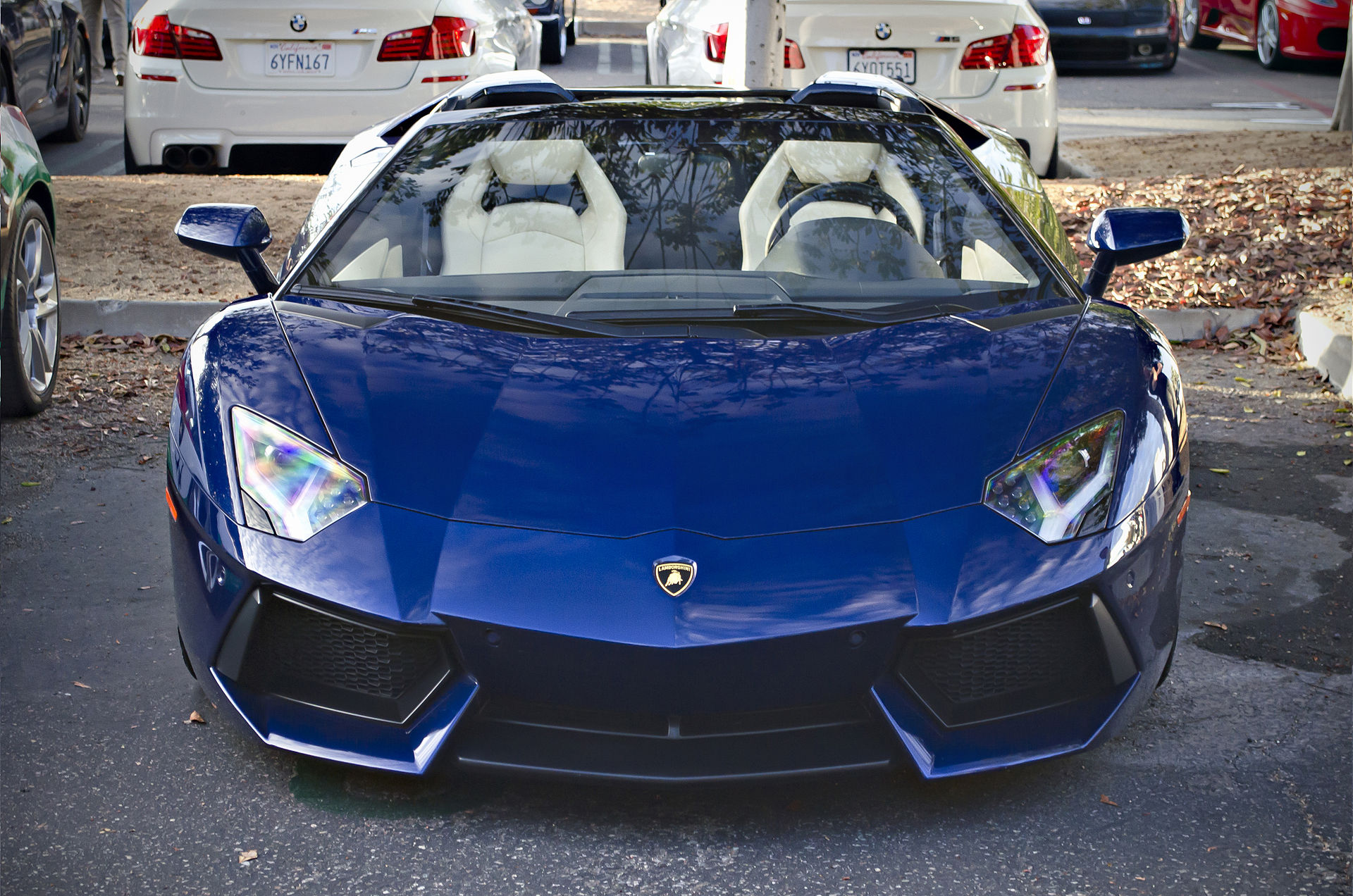
Era 3: Ultimae (2021-2022) — The Final Bow
Lamborghini knew the Aventador's time was ending. The new Revuelto hybrid would replace it. So they built a send-off: the Ultimae. 769 horsepower (the highest of any naturally aspirated Aventador). Limited to 600 coupes and 250 roadsters worldwide. Unique styling, special badging, and a price tag that screamed "farewell edition."
The Ultimae is a car caught between two worlds. It's technically the most powerful Aventador, which matters. It's limited to 850 units, which creates scarcity. But it also launched right as the Aventador was ending production, which means depreciation hasn't had time to do its work. A new 2022 Ultimae coupe cost $451,000. Current used prices are in the $420,000-$460,000 range. That's minimal depreciation, which means the car has been treading water for three years.
Investment Value: Speculative
The question with the Ultimae is whether it will become a "final edition" collector's car that appreciates, or if it will gradually depreciate like every other new car once the novelty wears off. Early signs are mixed. Some ultra-low-mileage examples have held value remarkably well. Examples with over 3,000 miles have depreciated more than Lamborghini owners would prefer. The data set is too small to predict with confidence.
If you believe that "final generation of naturally aspirated V12 Aventadors" will matter to collectors in 2030, the Ultimae is worth considering at current prices. But you're making a bet, not a safe investment. The 2019 SVJ is a safer choice for investment purposes because years of data confirm its value floor.
Driving Perspective: The Pinnacle
From a driving standpoint, the Ultimae is the best Aventador ever built. 769 horsepower is a meaningful increase. The suspension tuning is refined from years of 2017+ experience. The interior gets minor updates. It's the most polished and powerful version of this design that will ever exist.
If you don't care about resale value and simply want the best Aventador to drive, a 2022 Ultimae at $440,000 is worth considering. But it's not cheap. For $130,000 less, you're getting a 2019 SVJ that's mechanically 95% as capable.
Ultimae Year-by-Year
| Year | Horsepower | Bodies | Market Price | Outlook |
|---|---|---|---|---|
| 2021 Ultimae | 769 hp | Coupe & Roadster | $430,000–$460,000 | Early examples, holding value well |
| 2022 Ultimae | 769 hp | Coupe & Roadster | $420,000–$450,000 | Final production, scarcity premium uncertain |
The Ultimae is fundamentally a luxury play, not a value play. Buy it if you want the last and best naturally aspirated Aventador, not if you're shopping on a budget. The depreciation that makes a 2017 S such good value hasn't hit this generation yet.
The ISR Transmission Reality: The Asterisk on Every Aventador
No matter which year you choose, you're dealing with the ISR transmission. This deserves its own section because it's the Aventador's defining weakness across the entire production run.
The ISR improved over the years. Early 2011-2012 examples are legitimately problematic. By 2017, they're merely quirky. By 2022, they're sophisticated enough that most owners accept the trade-off. But a dual-clutch transmission would make the Aventador infinitely better to live with in traffic. Lamborghini never fitted one, even after other brands proved the concept works flawlessly.
If low-speed smoothness is a priority, the Aventador is not your car. The Porsche 911 Turbo S will shift more smoothly. The Ferrari F8 will shift faster. The McLaren 720S will do both. The Aventador's ISR remains a compromise that buyers accept because the V12 sound and all-wheel-drive performance are worth the trade-off.
Every Aventador from 2011-2022 uses some version of this transmission. That's not a 2017 S advantage or a weakness of the 2014. It's just the reality of Aventador ownership, regardless of year.

Complete Pricing Guide: What You Should Actually Pay
| Model Year | Generation | Current Market Range | Recommended Entry Price | Notes |
|---|---|---|---|---|
| 2011-2012 | LP 700-4 | $280,000–$320,000 | Sub-$300K only | Avoid unless pristine condition and full history |
| 2013 | LP 700-4 | $300,000–$340,000 | $310,000–$320,000 | ISR improvement notable, good value |
| 2014 | LP 700-4 | $310,000–$350,000 | $320,000–$340,000 | Best year in first generation |
| 2015-2016 | LP 700-4 | $300,000–$340,000 | $310,000–$330,000 | Skip — 2017 S better value at similar price |
| 2017 S | LP 700-4 S | $290,000–$330,000 | $310,000–$320,000 | BEST VALUE — Major improvements, peak depreciation |
| 2018-2019 S Roadster | LP 700-4 S | $320,000–$360,000 | $330,000–$345,000 | Roadster premium reasonable, solid depreciation |
| 2018 SVJ | SVJ | $340,000–$370,000 | $350,000–$360,000 | Launch year, slight risk premium |
| 2019 SVJ | SVJ | $360,000–$390,000 | $365,000–$380,000 | INVESTMENT PICK — Nurburgring record, scarcity |
| 2020 SVJ | SVJ | $350,000–$385,000 | $360,000–$375,000 | Low production year due to pandemic |
| 2021-2022 Ultimae | Ultimae | $420,000–$460,000 | $430,000+ | No significant depreciation yet; speculative |
Buying Checklist: What to Inspect When You Find Your Aventador
Regardless of which year you choose, the pre-purchase inspection is non-negotiable. Here's what to specifically look for by era:
2011-2016 (LP 700-4)
- ISR Transmission: Test drive from a standstill at very low speeds. Feel for shuddering in 1st and 2nd gear. Listen for any whining or grinding. A clutch replacement on 2011-2012 models can cost $12,000-$15,000.
- Electrical Gremlins: Have the diagnostic computer check all modules, particularly the traction control and stability systems. Intermittent electrical faults were common on early builds.
- Service History: Non-negotiable. The car must have full Lamborghini service records. Any gaps in service = walk away.
- Timing Chain Cover: Ask specifically if the car has ever had timing chain cover leaks addressed. If the answer is vague, arrange a borescope inspection of the rear timing cover.
2017-2019 (S and SVJ)
- ISR Transmission: Still jerky at low speeds, but shouldn't shudder violently. The 2017+ software is vastly better than 2011-2016.
- Suspension Components: The 2017 generation suspension is more complex. Have a shop verify all air suspension components, bushings, and the 4-wheel steering actuators are in good condition.
- Brake Condition: Carbon ceramic brakes are expensive. Get them inspected specifically. Ask about service history — when were they last serviced?
- Paint Condition: The S and SVJ have had multiple paint corrections from previous owners. Get a paint depth meter check on all panels.
2021-2022 (Ultimae)
- Warranty Status: Verify remaining factory warranty coverage. Lamborghini warranties are limited; you want clarity on what's covered.
- Service Records: Even low-mileage examples must have documented service at scheduled intervals. Newer cars accumulate calendar-based service intervals.
- Use Verification: Low mileage on a 2022 is normal, but verify actual use. Has it been driven or parked? Ask to see photos from different time periods to verify the mileage progression isn't suspicious.
Years to Absolutely Avoid
Not all Aventadors are worth buying at any price. Here's where to draw the line:
2011-2012: Unless you find a showroom-fresh example in a museum somewhere, avoid these entirely. The combination of ISR software issues, electrical gremlins, and early production tolerance stacking makes them the riskiest Aventadors. A $320,000 price tag isn't a bargain if you're fixing a $8,000 transmission issue two months into ownership.
2016: This is the worst year to buy from a value perspective. The 2015 and 2014 before it are cheaper. The 2017 S after it is better. A 2016 is caught in the middle with no advantages in either direction.
Any year without full service history: Aventadors are not forgiving cars. A gap in service history could mean thousands in latent damage nobody discovered yet. Walk away from incomplete records.
Special Considerations: Roadsters, Colors, and Specs
The base buying decision is year and generation. But three variables matter enormously for long-term value.
Roadster Premium: 10-15% More, But Worth It
A roadster costs $20,000-$40,000 more when new, but in the used market, the premium is only 10-15% over a comparable coupe. That's actually a great value for what you gain: the V12 sound at full throttle with the roof open is an Aventador experience no coupe owner will ever have. If you're buying a 2017+ S, the roadster version is worth the premium.
Color Matters More Than You Think
White, black, and gray Aventadors are common and trade at baseline prices. Giallo Inti (yellow), Verde Mantis (green), and Arancio Borealis (orange) command 5-10% premiums. Blu Cepheus (light blue) also holds value well. If you're choosing between two otherwise identical Aventadors and one is yellow, the yellow one is the safer investment.
Specification Impact: Carbon Fiber, Interior Options
Carbon fiber exterior packages, sport exhaust, and upgraded interior materials add real value. A 2019 SVJ with carbon fiber trim package might cost $5,000-$10,000 more than an otherwise identical model, but it's a legitimate premium that holds.
Ownership Reality: Beyond the Purchase Price
You need to understand the full cost structure before committing. Here are the hard numbers:
Insurance: Expect $6,000-$12,000 annually for full coverage, depending on age, location, and driving record. High-value examples cost more. Use your specific car's estimated value to get actual quotes.
Maintenance: Oil changes run $800-$1,200 per interval. Full fluid service every other year is $2,000-$3,000. Brake service (even partial) is $4,000-$8,000. If something major breaks — transmission clutch, suspension components, brake caliper — you're looking at $8,000-$25,000 repairs.
Fuel: The Aventador averages 12-16 mpg. At current fuel prices, budget $3,500-$5,500 annually for fuel.
Tires: High-performance tires run $400-$600 per corner and wear every 8,000-15,000 miles depending on use. Budget $2,000-$3,000 annually for tires.
Total Annual Running Cost: $12,000-$30,000+ per year depending on mileage and maintenance choices. That's $1,000-$2,500 per month before any depreciation. A $330,000 Aventador running $18,000 annually means the car is costing you $1,500 per month in running costs alone.
Investment Value Reality: Which Years Actually Appreciate?
Most Aventadors depreciate. The 2011-2016 generation lost 55-60% of value over their first decade. A new 2011 at $400,000 was worth $170,000-$180,000 by 2021. That's brutal depreciation.
But certain variants are different. The 2019 SVJ, with only 350 coupes built, has held value better than expected. Early 2019 SVJ examples purchased at $380,000 in 2019 are now worth $365,000-$395,000 in 2026. That's essentially flat value over six years, which is extraordinary for a hypercar. Some ultra-low-mileage examples have actually appreciated.
The 2022 Ultimae is too new to know for certain. But scarcity and the "final naturally aspirated Aventador" narrative create a potential floor. It's the only modern Aventador where you're not automatically losing money after purchase.
For investment purposes: The 2019 SVJ is the only Aventador built in the 2011-2022 timeline that makes sense. Everything else depreciates. If you're buying an Aventador purely for investment return, you're probably making a mistake. Buy for driving experience and accept the depreciation. But if you're set on an investment play, the SVJ is the only variant where the numbers work.
The Final Verdict: What Year Should You Actually Buy?
Everything comes down to your priority: value, investment, or driving experience.
Best Overall Value: 2017 LP 700-4 S — The 2017 S represents the inflection point where Lamborghini solved the Aventador's fundamental problems. For $310,000-$320,000, you're buying 730 horsepower, 4-wheel steering, and suspension tuning that makes the car genuinely livable. You're accepting an ISR transmission that's never going to shift smoothly, but at this price, that's a reasonable trade. A 2017 S with 12,000-15,000 miles and full service history is the Aventador I'd recommend to someone who wants to drive and enjoy the car without financial regret.
Best Investment: 2019 SVJ Coupe — The data is clear: 2019 SVJs are holding value better than any other modern Aventador. The Nurburgring record, the limited production (only 350 coupes), and the complete mechanical package make this the only variant where appreciation is possible. At $365,000-$380,000, you're paying a real price, but the investment story is real. A 2019 SVJ bought today has a plausible path to holding value over a five-year ownership period.
Best for Collectors: 2022 Ultimae (Coupe) — The final Aventador, with the most power (769 hp) ever fitted. It's expensive at $420,000-$450,000, but the scarcity narrative is real. Whether it appreciates depends on whether collectors in 2030 care about "the last naturally aspirated Aventador." It's a gamble, but at least it's a gamble with a plausible upside. Ultra-low-mileage examples (under 2,000 miles) are the only ones worth considering for investment.
Years to Avoid Entirely: 2011-2012, 2016. Too many known issues on 2011-2012. Too much better value in adjacent years on 2016. These are not opportunities; they're traps.
Need help navigating the purchase? Automonitor's buying guide walks through every variant in detail. We also handle sourcing and inspection of exotic cars, taking the guesswork out of finding your Aventador. And when you're ready to sell, we manage the entire exit strategy to maximize your recovery. For the complete picture on value, check our Aventador pricing guide. If you're considering the newer Huracan or want year-by-year Huracan analysis, we've covered those too. And explore our full Lamborghini resource center for more context on the brand.
The best year to buy an Aventador is the one that aligns with your actual budget and priorities, not the one that looks cheapest on a spreadsheet. That's how you end up with a car you keep for decades instead of one you regret after six months.
Ready to Find Your Aventador?
Automonitor connects you with vetted sellers, handles pre-purchase inspections, and provides real market data so you can buy with total confidence.
Start Your Search →