
The Last Naturally Aspirated V12: Why the Aventador Is the Lamborghini to Buy Right Now
Every Lamborghini going forward is turbocharged and hybrid. The Aventador's naturally aspirated 6.5L V12 is the end of an era — and the market knows it.
Why the Aventador, Why Now
The Lamborghini Aventador represents the final chapter of an era that defined supercar culture for over a decade. In February 2024, Lamborghini officially ended Aventador production after 13 years and over 10,000 examples built. But here's what matters: the Aventador is the last pure, naturally aspirated V12 supercar that Lamborghini will ever produce. Every model going forward—the new Revuelto included—uses turbocharged and hybrid powertrains.
This technological transition has fundamentally shifted the market. Collectors and enthusiasts recognize that the Aventador's 6.5-liter naturally aspirated V12, with its linear power delivery and distinctive 8,500 RPM redline scream, is gone forever. The result? Aventador values have stabilized and begun appreciating, particularly for low-mileage examples and limited editions like the Ultimae.
If you're serious about buying a V12 Lamborghini—not a turbocharged future car—the Aventador window is closing. The market for clean, well-maintained examples remains robust, and you're not fighting against new model competition. The Revuelto's $200,000+ allocation markups and hybrid complexity have made used Aventadors look increasingly attractive to buyers who want a simpler, more visceral machine.
"The Aventador isn't just fast. It's honest. You hear every revolution, feel every shift through that single-clutch gearbox. The Revuelto is brilliant engineering, but it's a computer telling you what the car is doing. The Aventador shows you."
The Complete Aventador Lineup
Understanding the Aventador family requires knowing where each model sits in the 13-year evolution. Production spans from 2011 to 2024, with several critical generational updates and limited editions.
| Model | Years | Horsepower | Production | Current Market (USD) |
|---|---|---|---|---|
| LP 700-4 | 2011–2016 | 690 | ~3,000 | $280,000–$350,000 |
| LP 700-4 Roadster | 2012–2016 | 690 | ~800 | $320,000–$380,000 |
| Aventador S | 2017–2019 | 730 | ~2,000 | $320,000–$400,000 |
| Aventador S Roadster | 2018–2019 | 730 | ~600 | $380,000–$450,000 |
| Aventador SVJ | 2019–2021 | 770 | ~1,500 | $450,000–$550,000 |
| Aventador SVJ Roadster | 2019–2021 | 770 | ~400 | $500,000–$600,000 |
| Aventador Ultimae | 2022–2024 | 780 | 600 (300 Coupe, 300 Roadster) | $550,000–$700,000+ |
Each generation brought meaningful improvements. The base LP 700-4 is the entry point—reliable, understated, and increasingly sought after by buyers who want the original vision. The Aventador S added four-wheel steering and aerodynamic refinements. The SVJ brought the revolutionary ALA 2.0 active aerodynamic system and 770 horsepower. The Ultimae, limited to just 600 examples worldwide, represents the final expression and commands collector-car pricing.

The LP 700-4 — Where It All Started
Launched in 2011, the original LP 700-4 was Lamborghini's boldest statement. It followed the Murciélago by two generations and represented a complete technological overhaul. The 690-horsepower, naturally aspirated V12 is mechanically simple compared to modern turbo engines—no forced induction, no variable valve timing complexity, just displacement and timing.
The ISR (Independent Shifting Rod) single-clutch gearbox debuted in the Aventador and remains controversial. At low speeds, it's jerky and hesitant. At full throttle, it's violent and exciting. By 2024, Lamborghini owners have accepted this as part of the machine's character. You don't buy an Aventador expecting seamless, DCT-smooth acceleration.
When evaluating an early LP 700-4, pay attention to:
- Clutch wear: The ISR clutch shows wear at 30,000+ miles. Replacement costs $15,000–$20,000. Request a pre-purchase inspection with clutch condition assessment.
- Carbon-ceramic brakes: Original pads can overheat on street driving. Check pad thickness and brake fluid condition.
- Hydraulic door lifts: The Aventador's upward-opening doors rely on hydraulic struts. Failure is expensive and common—budget $5,000 for replacement.
- Engine cover delamination: The carbon fiber engine cover is prone to separation. Cosmetic but worth noting.
- Visibility: The narrow rear window and low-mounted mirrors create significant blind spots. This is by design, not defect, but worth experiencing before purchase.
The Aventador S — The Best Daily V12
Released in 2017, the Aventador S introduced four-wheel steering and 40 additional horsepower (730 total). The steering system uses rear wheels that turn up to 3 degrees at low speeds for improved maneuverability, then align with fronts at highway speeds for stability. This made the S noticeably more accessible than the original 700-4.
The S also received refined suspension tuning, Pirelli P Zero Corsa tires, and updated aerodynamics. For buyers planning to actually drive their Aventador rather than garage-queen it, the S is the sweet spot. You get improved handling, slightly more power, and significantly improved visibility and interior ergonomics compared to the original.
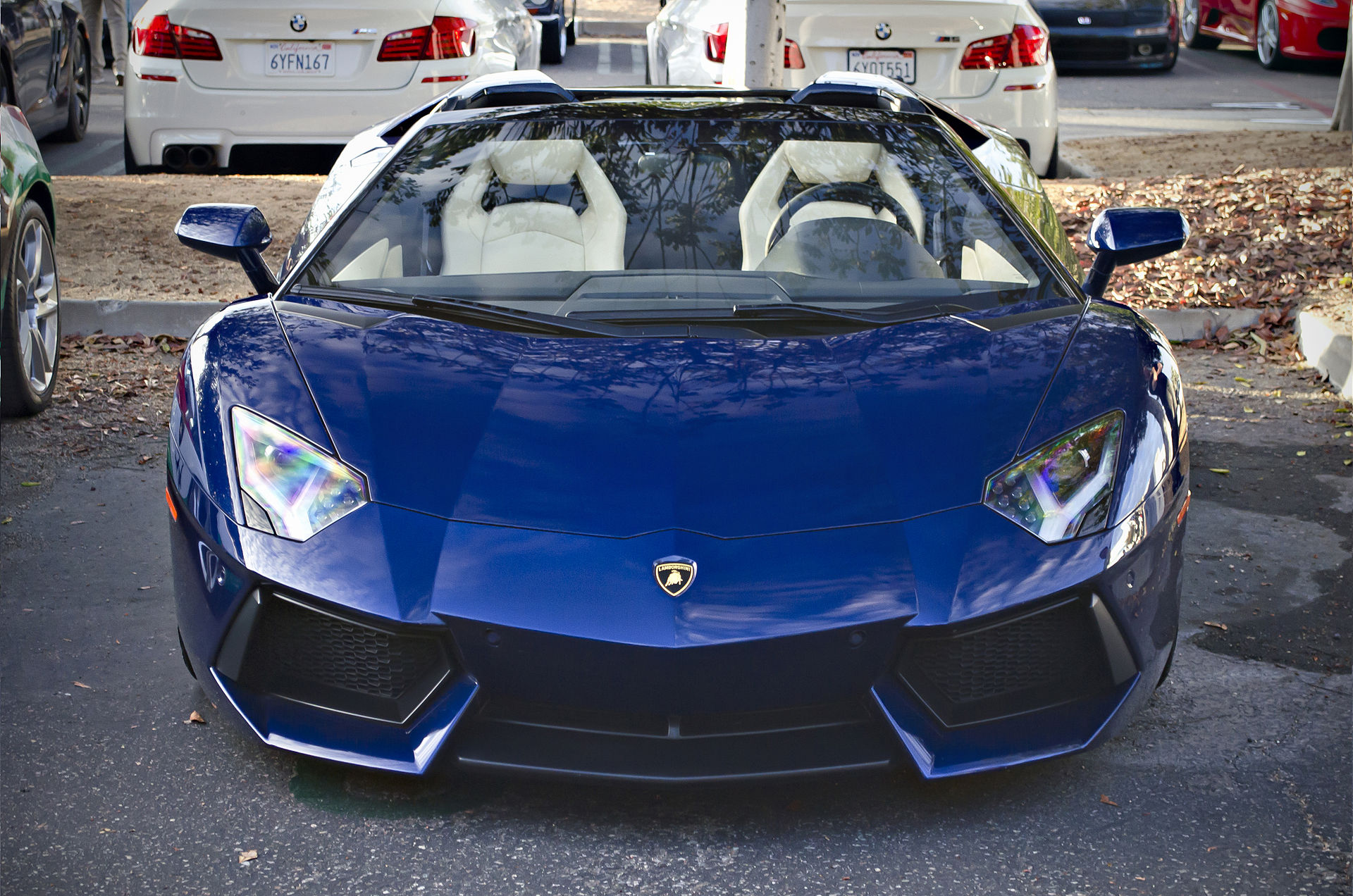
The S Roadster variant opens the convertible market, but roadster models command $40,000–$60,000 premiums over fixed coupes. Storage is non-existent with the roof down, and the removable roof panels require secure storage when detached.
The SVJ — Nurburgring Record Holder
The Aventador SVJ launched in 2019 and immediately captured headlines by setting a 6:52.01 lap time at the Nürburgring Nordschleife—the fastest production car lap at the time. This wasn't marketing hyperbole; it was genuinely significant engineering.
The secret was ALA 2.0: Lamborghini's active aerodynamic system. The rear wing features independently controlled flaps that generate downforce in corners and reduce drag on straights. Combined with 770 horsepower and Michelin Pilot Sport 4S tires, the SVJ is a legitimate supercar—not just a beauty with power.
The SVJ commands a collector premium because it represents the peak of the V12 Aventador lineage. Low-mileage examples are appreciating. The SVJ Roadster is rarer (only 400 built) and significantly more valuable.
The Ultimae — Final Chapter
Limited to exactly 600 examples—300 coupes, 300 roadsters—the Ultimae is Lamborghini's farewell to the Aventador. Launched in 2022 and produced through 2024, it combines the SVJ's 780-horsepower engine with visual enhancements, improved infotainment, and the knowledge that no more naturally aspirated Aventadors will ever exist.
Ultimae pricing reflects this scarcity and historical significance. Clean examples regularly sell for $550,000–$700,000. Some collectors are positioning Ultimaes as the last true V12 Lamborghinis, comparable to how the Murciélago Roadster became a collectible when the Aventador replaced it.
The Ultimae is not a value purchase. It's a legacy purchase. You're buying a piece of automotive history and betting that the market recognizes it as such.

The Single-Clutch ISR Transmission
The Independent Shifting Rod transmission is the Aventador's most divisive feature. It's not a traditional manual. It's not an automatic. It's an electro-hydraulic single-clutch gearbox that shifts gears by disengaging a primary clutch, rotating the input shaft to select the next gear, then re-engaging.
In reality: The ISR is jerky at low speeds. There are perceptible gaps between shifts. At traffic speeds, driving an Aventador feels abrupt compared to a modern DCT or traditional automatic. But at 7,000 RPM on a back road or at full throttle, the ISR is addictive. The shifts are violent and immediate. There's a mechanical drama to it.
By 2024, most Aventador owners have made peace with this. The ISR is part of the car's identity, not a defect. Some argue it's more involving than a paddle-shift automatic. Others find it frustrating in Los Angeles traffic. You need to spend an hour with an Aventador before committing to ownership.
The ISR requires specific maintenance: fluid checks, actuator servicing, and careful handling. Never launch an Aventador from standstill with aggressive throttle input—the clutch will wear faster. Smooth, graduated throttle is the path to longevity.
Common Aventador Issues
Every supercar has quirks. The Aventador's are well-documented:
Clutch Wear: The ISR clutch is not a vehicle-for-life component. Expect replacement at 30,000–50,000 miles depending on driving style. Cost: $15,000–$20,000. This is the single largest variable cost in Aventador ownership.
Hydraulic Door Lift Failure: The upward-opening doors rely on pressurized hydraulic struts. These fail regularly. Cost to replace: $4,000–$6,000 per door. Some owners install manual latches as a workaround.
Engine Cover Delamination: The carbon fiber engine cover separates from its base. This is cosmetic but worth addressing. Cost: $2,000–$4,000 for replacement.
Door Strut Wear: Even when hydraulic lifts function, the door struts can develop play, causing rattle and inconsistent operation. Wear is normal; replacement is preventative maintenance.
Visibility and Safety: The Aventador's narrow rear window, low-mounted mirrors, and aggressive aerodynamics create significant blind spots. This isn't a defect—it's design. But it requires adjustment from drivers accustomed to modern safety systems.
Electrical Gremlins: Aventador electrical systems are complex. Window regulators, seat adjusters, and infotainment can develop issues. Most are covered under warranty for younger examples; older cars may require expensive diagnostics.
Tire Cost: The Aventador wears 305/30 ZR20 front and 355/25 ZR21 rear performance tires. A full set of replacements costs $2,500–$4,000. This is a predictable but substantial recurring cost.
Pre-Purchase Inspection Checklist
Before committing to an Aventador purchase, insist on a comprehensive pre-purchase inspection by an exotic car specialist. Generic Lamborghini dealerships won't catch specific Aventador quirks.
- Clutch diagnostics: Request clutch wear assessment. A shop with ISR transmission knowledge can provide clutch remaining life estimates.
- Door lift function: Have a technician operate each door multiple times. Hydraulic lifts should be smooth and consistent. Any hesitation indicates wear.
- Transmission smoothness: Test shifts at low speed and high speed. Note any grinding, hesitation, or unusual behavior.
- Brake assessment: Check pad thickness, rotor condition, and brake fluid age. Carbon-ceramic brakes require specific maintenance.
- Tire condition: Aventador tires are expensive. Remaining tread depth and age matter significantly.
- Underbody inspection: Check for oil leaks, fluid seepage, and suspension component wear.
- Electronics testing: Verify all windows, seats, and infotainment systems function properly.
- Service history: Request complete maintenance records. Regular oil changes and fluid checks indicate responsible ownership.
- Mileage consistency: Verify mileage against service records and CarFax history.
- Body panel alignment: Check for accident history, previous repairs, or paint overspray.
A thorough PPI costs $500–$1,500 but can reveal $20,000+ in deferred maintenance. It's non-negotiable for Aventador purchases above $300,000.
Aventador vs Huracán — Which to Buy
Many Lamborghini buyers face a decision between the Aventador's V12 and the Huracán's V10. Here's the reality:
The Aventador is heavier, more visually dramatic, and more expensive to maintain. The V12 is more famous—that 8,500 RPM scream is iconic. The Aventador attracts attention everywhere.
The Huracán is lighter, quicker in a straight line, and cheaper to run. The V10 is younger technology—fewer Aventadors will exist eventually. Huracán values have been more stable, partly because the model was produced in higher numbers.
If you want a naturally aspirated Lamborghini with the most dramatic presence and can afford the maintenance, choose the Aventador. If you want a faster, more practical daily driver with lower running costs, choose the Huracán. Both are excellent machines—the choice is emotional, not logical.
For detailed Huracán analysis, see our complete Huracán buyer's guide.
Investment Outlook
The Aventador's investment outlook is improving. Production has ended. The V12 era is finished. Unlike the Murciélago, which lost value quickly after the Aventador launched, the Aventador benefits from a long production run and strong enthusiast base.
Variants likely to appreciate:
- Aventador Ultimae: Limited production (600 total), final V12 Aventador, genuine collector status. Likely to appreciate 5–10% annually.
- SVJ Roadster: Only 400 built, Nürburgring pedigree, rare configuration. Appreciation likely.
- Low-mileage base 700-4: The original, relatively common, and historically significant. Will hold value but unlikely to appreciate dramatically.
- Aventador S and S Roadster: Strong demand, good balance of performance and affordability. Stable values but modest appreciation.
The market is more favorable for Aventadors now than it was in 2020–2022. Production has ended. The Revuelto's complexity and cost have made Aventadors look more attractive. Expect moderate appreciation for low-mileage, well-maintained examples.
Financing the Aventador
Most Aventador purchases require exotic car financing. Traditional lenders won't touch vehicles with $15,000–$20,000 clutch replacement costs.
Specialized exotic car lenders include:
- Woodside Credit: Specializes in exotic vehicles, offers competitive rates for established buyers. Woodside Credit provides flexible terms for supercar purchases.
- Passport Financial: Another specialist in exotic car loans.
- Lamborghini Financial Services: Offered through authorized dealers for certified pre-owned inventory.
Expect interest rates of 7–10% for qualified buyers with strong credit. Down payment requirements typically start at 20–30%. Terms range from 36–84 months, though longer terms are uncommon for vehicles over 10 years old.
Insurance is another financing consideration. Aventador insurance runs $5,000–$12,000 annually depending on coverage and location. Factor this into total ownership cost calculations.
Find Your Aventador
The used Aventador market is active but not infinite. Low-mileage examples are increasingly rare. Once you've identified potential purchases and completed your pre-purchase inspection, it's time to negotiate.
The Automonitor platform provides real-time market data for exotic vehicles, including price trends by variant, mileage, color, and condition. Use this data to establish fair market value before negotiating.
The Aventador is not a bargain hunt. You're paying for a machine that will never be built again, with a V12 that will never exist in a new car. The price reflects that reality. The question is whether you're willing to embrace it.
Looking for a Lamborghini Aventador?
Automonitor connects you with vetted sellers and real market data so you can buy with confidence. No markup games, no pressure — just the right car at the right price.
Find Your Lamborghini →