
Is a McLaren Better Than a Lamborghini?
Two legendary supercar manufacturers. Two completely different philosophies. Which one actually wins when you put aside the hype and look at the data? Here's the unfiltered breakdown.
The Short Answer: It Depends on What You're Buying
There is no universal "better" between McLaren and Lamborghini. What you really need to know is this: McLaren is an engineering company that happens to build supercars, while Lamborghini is a drama company that engineers supercars to match. Both philosophies are valid. Both build extraordinary machines. But they're pursuing fundamentally different ideals, and your preference reveals what you actually value in a supercar.
For pure driving engagement, lighter weight, and aggressive acceleration in a straight line, McLaren has the advantage. For presence, emotional impact, theatrical design, and the kind of supercar that makes you feel something when you turn the key, Lamborghini wins decisively. Neither is objectively "better" — but one will absolutely be better for you specifically.
We've helped hundreds of buyers choose between these two legends at Automonitor. This guide will give you the clarity to make the right decision.
Engineering Philosophy: Lightness vs. Drama
To understand the difference between McLaren and Lamborghini, you need to understand their foundational design principles.
McLaren's obsession is weight. Every design decision at McLaren's Technology Centre in Woking starts with a question: "How do we make this lighter?" The company's Formula 1 heritage means engineers think in tenths of seconds and grams. A McLaren 720S weighs 2,819 pounds. A Lamborghini Huracan EVO weighs 3,242 pounds — 423 pounds heavier. That's roughly the weight of two adult humans. In a straight-line acceleration test, that difference compounds dramatically.
McLaren pioneered the use of carbon fiber in production supercars. Every McLaren since the F1 has used a monocoque carbon chassis as its central structural component. The chassis doesn't just save weight — it defines how the car handles. Because the entire structure is rigid and light, McLarens exhibit almost alien precision in corners. There's no flex, no roll, no sense that the car is struggling with physics.
Lamborghini's obsession is emotional engagement. Lamborghini doesn't compete with engineers — it competes with dreams. The brand was born from Ferruccio Lamborghini's legend of defying Enzo Ferrari, and that rebellious DNA runs through every vehicle. Lamborghinis are designed to make your heart rate spike before you even press the accelerator. The scissor doors. The extreme angles. The naturally aspirated V10 or V12 engines that rev to the moon.
Where McLaren asks "how light can we make this?", Lamborghini asks "how dramatic can we make this?" The carbon fiber construction is professional and competent, but it's in service of drama, not minimalism. A Lamborghini cabin is theatrical — digital gauges, carbon fiber interior trim, aggressively angular designs everywhere. A McLaren cabin is precision — every button positioned for ergonomic advantage, every surface designed for function.
The philosophical difference matters because it affects everything else. McLaren's lightness obsession means their engines are turbocharged and compact. The Artura (McLaren's newest hybrid) uses a 3.0L V6 twin-turbo paired with an electric motor. Turbocharged engines are efficient, powerful, and predictable — but they lack the visceral response of naturally aspirated power. You have turbo lag. The car thinks before it acts.
Lamborghini's drama obsession means their engines are naturally aspirated until very recently. The Revuelto (their newest model) finally went hybrid, but it uses a 6.2L V12 naturally aspirated engine paired with electric motors. Natural aspiration means instant throttle response, an engine that screams all the way to the redline, and a sound that turbocharged competitors can't replicate.

Model Lineup: The Cars You Actually Buy
Both brands offer multiple models across different price points and use cases. Here's what's currently available in 2026:
McLaren's Current Lineup
McLaren 750S — The newest, most powerful McLaren twin-turbo. 710 horsepower from a 4.0L twin-turbo V8. Starts around $310,000 new. This is McLaren's "entry level" flagship.
McLaren 720S — The outgoing generation, still excellent in 2026. 710 hp, arguably better handling balance than the 750S due to slightly more conservative design. Used examples run $140K–$180K and represent the best value in McLaren's lineup.
McLaren Artura — The hybrid future. 671 hp combined from a 3.0L V6 twin-turbo hybrid. Starts around $330,000. Represents a philosophical leap for McLaren into electrification while maintaining the lightweight obsession.
McLaren GT — The grand tourer. Less performance-focused, more comfort-oriented. Around $210,000 new. Designed for longer drives and daily usability.
McLaren Speedtail — The hypercar. Only 106 examples built. $2.25 million. Pushes the lightness philosophy to the extreme.
Lamborghini's Current Lineup
Lamborghini Revuelto — The new hybrid flagship. 1,001 horsepower from a 6.2L V12 naturally aspirated engine plus electric motors. Starts around $645,000. Only 500 units planned for global distribution. This is the replacement for the legendary Huracan.
Lamborghini Huracan — Production ended December 2024, but used examples dominate the exotic market in 2026. 630 hp from the 5.2L naturally aspirated V10. Used prices range from $130K (original LP 610-4) to $295K (rare STO variant). See our Huracan buying guide for the definitive breakdown.
Lamborghini Urus — The luxury SUV. 650 hp, but designed for prestige and drama as much as performance. Around $230,000. No equivalent exists from McLaren.
Lamborghini LM002 — Another SUV, slightly older model, still produced in limited quantities. Around $175,000–$200,000 used.
Performance Comparison: Numbers Don't Tell the Whole Story
Let's start with the raw numbers. How do these cars actually perform?
| Metric | McLaren 720S | McLaren Artura | Lamborghini Huracan EVO | Lamborghini Revuelto |
|---|---|---|---|---|
| Horsepower | 710 hp | 671 hp | 630 hp | 1,001 hp |
| 0–60 mph | 2.7s | 2.8s | 2.8s | 2.4s |
| Top Speed | 212 mph | 211 mph | 202 mph | 208 mph |
| Weight (curb) | 2,819 lbs | 3,057 lbs | 3,242 lbs | 3,638 lbs |
| 0–100 mph | 5.5s | 5.7s | 6.0s | 4.9s |
| Price (2020 used) | $140K–$180K | $260K–$310K | $155K–$190K | $645K+ (new) |
The raw performance picture shows McLarens are faster in acceleration and top speed across the generations, while Lamborghini's newest Revuelto with 1,001 hp actually dominates all-out speed. But this is where philosophy matters more than numbers.
How the weight advantage translates to real-world driving: The McLaren 720S's 423-pound weight advantage over the Huracan EVO doesn't just show up in 0–60 times. It shows up everywhere. Braking from 100 mph requires less stopping distance in the McLaren. Cornering at the limit means the McLaren maintains better grip relative to the Lamborghini. In a slalom test, the McLaren wins on precision.
But here's where Lamborghini's philosophy wins: if you're driving on public roads or tracks with curves, the Huracan's heavier weight creates a different sensation. Some drivers actually prefer it. The additional mass through corners gives you more feedback. The car feels more "planted." It's not necessarily better, but it's different.
The engine character difference is stark: The McLaren 720S with its 4.0L twin-turbo gets all of its 710 horsepower between 3,500–7,500 rpm. Hit the throttle at 1,200 rpm, and you're dealing with turbo lag — maybe 100–150 milliseconds where the engine is spinning up before maximum boost arrives. This is imperceptible in a daily driving sense, but noticeable on a racetrack.
The Lamborghini Huracan's 5.2L naturally aspirated V10 delivers all of its 630 horsepower instantly. Zero turbo lag. The engine responds exactly when you ask. Some drivers describe it as "more connected." Others notice the Lamborghini accelerates slightly slower in real-world terms but feels more urgent because the response is immediate.
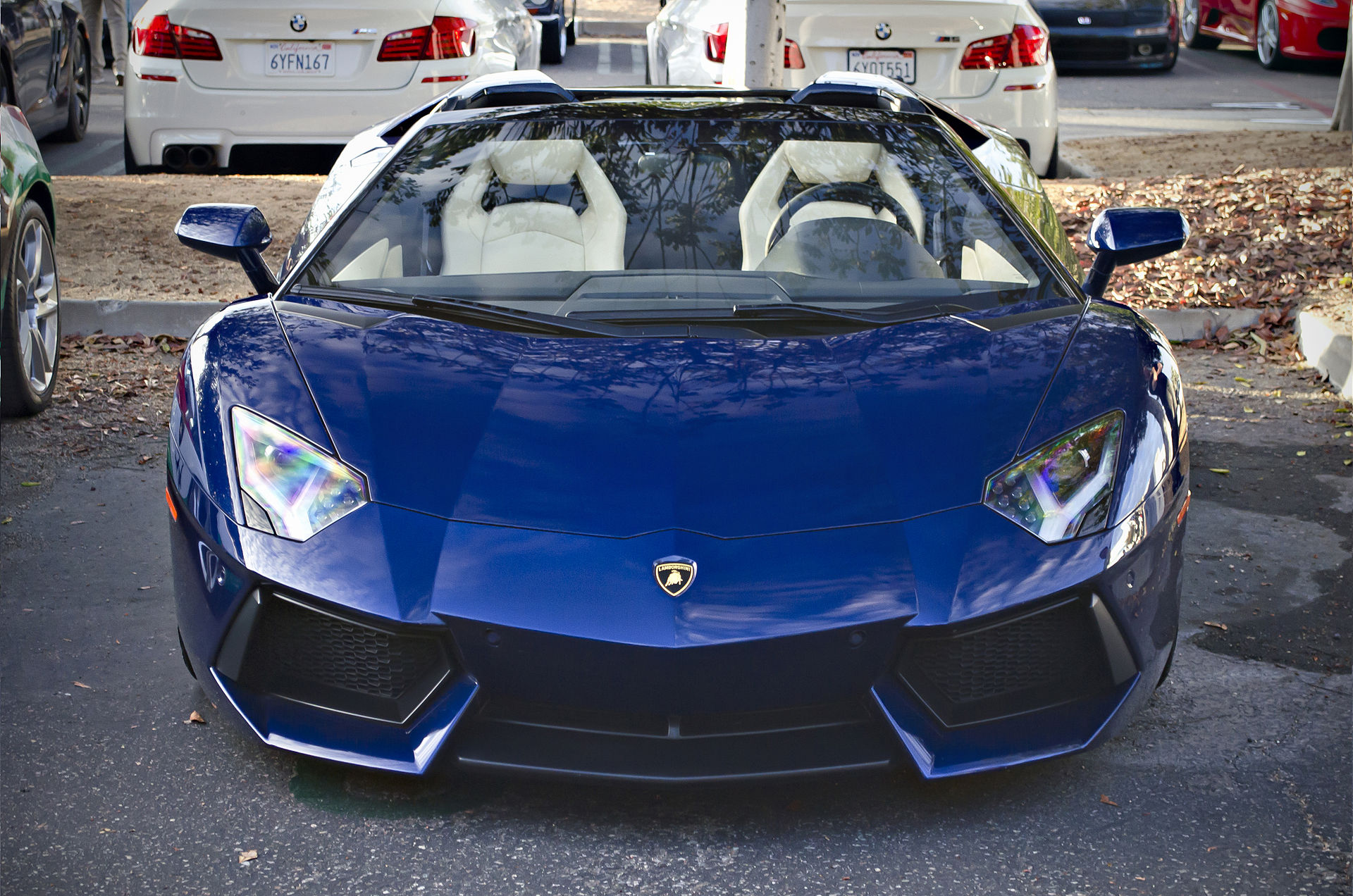
The Sound Factor: One Clear Winner
Here's where Lamborghini wins unambiguously: the sound.
A naturally aspirated V10 or V12 engine at full throttle produces a frequency of mechanical violence that turbocharged engines simply cannot match. The Lamborghini Huracan's 5.2L V10 revs to 8,500 rpm with a sound that escalates from a growl to an absolute scream. It's visceral. Physical. You feel it in your chest.
The McLaren 720S with its twin-turbo V8 is quieter. More refined. The turbochargers actually suppress some of the engine's raw aggression. In a cabin, it's pleasant. On the track, it's disappointing to many drivers who grew up with naturally aspirated supercars.
The Lamborghini Revuelto with its 6.2L naturally aspirated V12 is even more dramatic than the Huracan. A 12-cylinder engine spinning to 10,500 rpm sounds like pure mechanical theater.
This isn't a minor point. Many Lamborghini buyers cite "the sound" as the primary reason they chose a Lamborghini over a McLaren. The sensory experience of driving a naturally aspirated engine is fundamentally different from the experience of driving a turbocharged one. As the industry moves toward electrification, these mechanical symphonies become rarer and more historically significant.
Daily Drivability: Both Are Challenging, Differently
Neither of these cars is a daily driver in the traditional sense. Both have low ground clearance. Both guzzle fuel. Both attract attention you might not want. But they differ in how challenging they are to live with.
McLaren advantages for daily driving: The 720S and Artura have slightly better visibility thanks to their window placement. The riding comfort is better tuned for rough roads. The cabin is ergonomically refined — every switch in the right place. The fuel economy is marginally better due to the lightweight philosophy (though we're talking 18 mpg vs 16 mpg in mixed driving, still terrible by normal standards).
Lamborghini advantages for daily driving: The Huracan has more spacious interior storage. The cabin, while theatrical, is more user-friendly for non-racing drives. The Urus SUV is genuinely usable as a daily car, which McLaren doesn't offer. The suspension in Strada mode is more forgiving on city streets.
Honestly? Neither brand makes a car you should daily drive. If you're considering either, get a proper daily driver and keep these for weekends and track days.

Interior Quality and Design
The interiors reveal each brand's philosophy clearly.
McLaren interiors are precision-focused. The design is minimalist. Carbon fiber trim, sport seats, minimal soundproofing (lightweight obsession), straightforward controls. It feels like the interior of a race car adapted for the road. Some find it perfect. Others find it cold.
Lamborghini interiors are theatrical. Digital gauges with flowing designs, carbon fiber everywhere, ambient lighting, aggressive color schemes. The Huracan's cabin is a show. The Revuelto takes this even further with premium materials and a more sophisticated aesthetic. Some find it exciting. Others find it tacky.
Quality-wise, both are modern supercars. No major differences in build quality or durability. It's pure preference.
Depreciation and Resale Value: Lamborghini Wins Big
This is one of the most important factors for anyone considering either brand. How much money will you lose when you sell?
| Car | Purchase Price | 3-Year Value Retention | 5-Year Value Retention | Monthly Depreciation |
|---|---|---|---|---|
| McLaren 720S (2020) | $160K (2020 price) | 68% | 59% | $139/month |
| Lamborghini Huracan EVO (2020) | $170K (2020 price) | 85% | 78% | $32/month |
| McLaren Artura (2021 launch) | $330K (2021 price) | 65% | 55% | $487/month |
| Lamborghini Revuelto (2024 launch) | $645K (2024 price) | 78% (projected) | 70% (projected) | $450/month (est.) |
Lamborghini holds value dramatically better than McLaren. Why? Several reasons:
Supply constraint: Lamborghini limits production. Every car is special. McLaren produces more units, creating higher supply and softer demand in the used market.
The V10 premium: The Huracan's naturally aspirated V10 has become increasingly historical. As the industry electrifies, the last naturally aspirated supercars command premiums. Certain variants (STO, Performante) are actually appreciating.
Brand prestige in resale: Among general public, Lamborghini is more recognizable and desirable than McLaren. This matters more in the used market than you'd think. A Huracan sells faster and to a broader buyer pool than a 720S at similar price points.
Technology obsession: McLaren constantly innovates with new powertrains and designs. The 720S is already outdated by the 750S. The Artura will eventually be replaced with a new hybrid. This obsolescence hits depreciation harder than Lamborghini's more stable design philosophy.
If you're buying a used McLaren or Lamborghini with plans to sell in 5 years, the Lamborghini is the safer financial choice. A used Huracan EVO loses roughly $32 per month in depreciation. A used 720S loses roughly $139 per month. Over 5 years, that's $15,000 more you lose with the McLaren.
Reliability: Both Improving, Both Have Quirks
You're buying a supercar. Neither brand approaches Toyota reliability. But here's the actual situation in 2026:
McLaren reliability: The company has matured significantly. Modern McLarens (720S onward) are substantially more reliable than early models (MP4-12C). The carbon fiber chassis is proving durable. The twin-turbo V8 is proven. Main concerns: electrical gremlins (surprisingly common), gearbox issues on early 7-speed dual-clutch models, and some cooling system quirks. A well-maintained McLaren from 2015+ should be trouble-free. Budget $3,000–$6,000 annually for maintenance.
Lamborghini reliability: The Huracan benefits enormously from Volkswagen Group engineering. It's one of the most reliable supercars ever made. The 5.2L V10 engine is essentially bulletproof. Main concerns: dual-clutch transmission (DCT) issues on early models 2014–2016, hydraulic nose-lift seals (if equipped), and rare timing chain cover leaks on garage queens. A well-maintained Huracan should see 40,000+ miles easily. Budget $3,000–$5,000 annually for maintenance.
Reliability advantage goes slightly to Lamborghini, primarily because the naturally aspirated V10 has fewer potential failure points than turbocharged systems.
Brand Recognition and Cultural Impact
Lamborghini wins decisively in brand recognition. Ask a random person on the street to identify supercars, and Lamborghini will be in their top three responses. The brand is culturally embedded as "the ultimate supercar." Lamborghinis appear in movies, music videos, and hip-hop culture. The scissor doors are instantly recognizable. The name itself is synonymous with extreme wealth and performance.
McLaren is respected by car enthusiasts but far less recognized by the general public. The brand lacks the cultural penetration of Lamborghini. Ask a non-enthusiast about a McLaren, and many won't know what you're talking about.
This matters for two reasons: First, it affects resale value (as discussed). Second, it affects the entire ownership experience. If you want people to notice your car, Lamborghini is the clear winner. The Revuelto especially will turn heads. If you want to be recognized by fellow enthusiasts while flying under the radar otherwise, McLaren serves this audience better.
Celebrity and Culture Impact
Lamborghini owns the celebrity supercar space. The brand is synonymous with extreme taste and extreme wealth. Every major rapper, professional athlete, and celebrity who wants to signal "I've made it" buys a Lamborghini. This creates an image problem for some buyers — association with tackiness and excess.
McLaren, by contrast, attracts the more sophisticated buyer. F1 drivers drive McLarens. Tech billionaires drive McLarens. The brand appeals to performance nerds and engineers, not status symbols. If your motivation for buying is pure financial flex, Lamborghini owns this space. If you want to signal "I understand supercars deeply," McLaren communicates this better.
Visual Drama: There's No Competition
Lamborghini's design philosophy is maximalist. Everything is exaggerated. The scissor doors. The extreme angles. The aggressive lines everywhere. The giant air vents. The wide stance. Looking at a Lamborghini makes your heart beat faster. The Revuelto, despite being a hybrid, looks like a car from a sci-fi film.
McLaren's design is minimalist and aerodynamically obsessed. Every line serves a purpose. The curves are smooth. The proportions are balanced. A McLaren looks fast sitting still, but it doesn't scream "I'm a supercar" the way a Lamborghini does. The design is sophisticated rather than dramatic.
Visual impact winner: Lamborghini. Overwhelmingly. If you want people to stop in their tracks when you arrive, a Lamborghini is the answer. A McLaren is the answer if you want them to recognize your sophisticated taste without being beaten over the head with it.
Carbon Fiber Expertise: Both Are Leaders
Both McLaren and Lamborghini pioneered carbon fiber in production supercars. McLaren's F1 in 1993 essentially invented the carbon monocoque supercar. Lamborghini entered the carbon fiber game later (with the Reventon in 2007) but has become equally proficient.
Modern McLarens use carbon fiber for the chassis, body panels, and interior trim. Modern Lamborghinis use carbon fiber extensively but in a more selective way (not monolithic chassis). Both approaches work. The McLaren approach is lighter. The Lamborghini approach is more flexible (literally — the Lambo chassis can move slightly, reducing vibration).
This is not a differentiator for most buyers. Both handle carbon fiber superbly.
Brand Philosophy Comparison Table
| Category | McLaren | Lamborghini |
|---|---|---|
| Core Philosophy | Lightness & Precision | Drama & Emotion |
| Typical Engine | Twin-Turbo V8/V6 | Naturally Aspirated V10/V12 |
| Straight-Line Speed | Faster (lower weight) | Competitive but heavier |
| Cornering Precision | Superior (carbon chassis) | Excellent but slightly softer |
| Engine Sound | Refined & controlled | Visceral & dramatic |
| Interior Quality | Minimalist & precise | Theatrical & bold |
| Depreciation | Loses 41% in 5 years | Loses only 22% in 5 years |
| Daily Drivability | Slightly better | Fine but theatrical |
| Reliability | Very good | Slightly better |
| Brand Recognition | Enthusiast circles | Mass market |
| Visual Drama | Sophisticated | Maximum impact |
| SUV Option | None | Urus (excellent) |
| Price (Used) | $140K–$310K | $130K–$645K (wider range) |
Not Sure Which Brand Is Right for You?
Automonitor's concierge buying service helps you test drive both, understand the financial implications, and choose based on your specific priorities—not hype.
Schedule a Consultation →When McLaren Is Better for You
Choose McLaren if you:
- Care about speed and precision above all else. The lighter weight and advanced engineering deliver measurably better performance metrics. Track times favor McLaren.
- Value engineering sophistication. You want to own a car that represents the pinnacle of automotive technology and design methodology.
- Want refined daily usability. McLarens are slightly more comfortable and practical for regular driving (though still impractical compared to normal cars).
- Appreciate minimalist design. You want a car that looks fast without screaming for attention. Sophistication over spectacle.
- Plan to keep the car for 2–3 years maximum. McLarens devalue quickly, so shorter ownership periods hurt less.
- Are a track enthusiast. The precision, lighter weight, and driver-focused design make McLarens exceptional at the track.
- Want something unexpected in the supercar space. McLaren ownership signals you understand cars deeply.
When Lamborghini Is Better for You
Choose Lamborghini if you:
- Care about emotional engagement and presence. Lamborghinis make you feel something when you drive them. They're theater. They're drama. If this resonates, nothing compares.
- Value sound as much as speed. The naturally aspirated engines offer a sensory experience turbocharged cars simply cannot match.
- Want maximum brand recognition and visual impact. Lamborghinis turn heads. Universally. A Revuelto especially will command attention everywhere.
- Plan to own for 5+ years. Superior depreciation makes Lamborghini the economically smarter choice for longer ownership.
- Want an SUV option. The Urus has no McLaren equivalent. It's a luxury supercar SUV.
- Are drawn to Italian design philosophy. Lamborghini's dramatic, passionate design approach appeals to different sensibilities than McLaren's engineering minimalism.
- Are buying used in the sub-$200K range. This is where Lamborghini's value proposition dominates. Used Huracans offer extraordinary value.
- Want a car that will appeal to more buyers when you resell. Lamborghini's broader appeal means easier resale at better prices.
Model Recommendations by Goal
Best Overall Performance: McLaren 720S (used)
The McLaren 720S represents the sweet spot of the brand's lightweight philosophy. 710 hp, 2,819 lbs, 2.7-second 0–60. Fast. Precise. Used examples at $140K–$180K represent extraordinary value. This is the car to buy if your priority is driving engagement.
Best Emotional Experience: Lamborghini Huracan (any variant)
The final naturally aspirated V10 from Lamborghini. The sound is genuinely worth the price of admission. Used examples range from $130K–$295K depending on variant. See our Huracan buying guide for variant recommendations.
Best Long-Term Value: Lamborghini Huracan EVO AWD (2020–2022)
The most balanced variant. All-weather capability. Latest technology. Superior depreciation profile. Used prices $155K–$190K. This is the Lamborghini for buyers who want emotional engagement without sacrificing practicality.
Best Investment Potential: Lamborghini Huracan STO
Only 1,405 built. Already appreciating. Low mileage examples commanding premium prices. Read our STO buying guide for details. Starting $240K–$295K used.
Best Future Potential: McLaren Artura (when used prices stabilize)
The hybrid future of McLaren. Once current owners stop dumping them in the used market (2026–2027), values will stabilize and potentially appreciate. For now, depreciation is steep. Check back in 2 years.
Best Luxury SUV: Lamborghini Urus
No equivalent from McLaren. 650 hp, genuinely usable as a daily vehicle. $180K–$230K used. This is Lamborghini's answer to buyers who want supercar theater in an SUV form.
Ready to Find Your Supercar?
Automonitor has access to off-market inventory, connects you with certified inspectors, and handles all negotiation and logistics.
Start Your Search →Frequently Asked Questions
Which is more reliable, McLaren or Lamborghini?
Lamborghini has a slight edge, primarily due to the naturally aspirated V10 engine having fewer failure points than McLaren's turbocharged systems. The Huracan's shared Audi R8 platform and Volkswagen Group engineering contribute to its solid reliability reputation. That said, both modern supercars are capable of exceeding 40,000+ miles with proper maintenance. Budget $3,000–$6,000 annually for either.
Which depreciates less, McLaren or Lamborghini?
Lamborghini, significantly. A Huracan EVO retains roughly 78% of its value over 5 years, while a 720S retains only 59%. This is because Lamborghini controls production more tightly, has broader brand appeal in the used market, and benefits from the historical significance of the naturally aspirated V10. If you plan to keep the car longer than 3 years, Lamborghini is the safer financial choice. See our Lamborghini payment guide for financing details.
Which is faster, McLaren or Lamborghini?
McLaren, in raw acceleration numbers. A 720S hits 60 mph in 2.7 seconds versus the Huracan's 2.8 seconds. The lighter weight and turbocharged power delivery create measurable advantage in straight-line performance. However, the Lamborghini Revuelto with 1,001 hp is faster in all-out acceleration. The difference is negligible in real-world driving. On a racetrack, McLaren's precision handling edge becomes more pronounced.
Which is better for daily driving, McLaren or Lamborghini?
Neither is ideal for daily driving, but Lamborghini edges ahead slightly. The Huracan has a more spacious interior, forgiving suspension modes, and better fuel economy (marginally). However, if you prefer minimalist ergonomics and maximum interior space efficiency, the McLaren is actually superior. Neither should be your only vehicle. See our guide on leasing vs. buying exotics for practical ownership insights.
Should I buy a McLaren or Lamborghini for investment?
Lamborghini for investment. The Huracan is holding value at 78% retention over 5 years. The STO and Performante variants are actually appreciating. The Revuelto will likely hold value well due to limited production and extreme price point. The McLaren 720S is depreciating at 41% over 5 years, making it a poor investment. Only buy a McLaren if you plan to drive and enjoy it extensively. See our exotic car lease guide if ownership isn't right for you.
Can I daily drive either of these cars?
Technically yes, practically no for most people. Both have low ground clearance that makes speed bumps and steep driveways dangerous. Both guzzle fuel at 13–17 mpg. Both attract unwanted attention. Both have poor visibility. The Lamborghini Urus is genuinely usable as a daily vehicle. For supercars, save these for weekends and let a practical vehicle handle daily duties. See our insurance guide for ownership cost realities.
Which is better if I want maximum head-turning potential?
Lamborghini, without question. The Revuelto will literally stop traffic. The Huracan's scissor doors guarantee attention. The dramatic design language, extreme angles, and sheer presence of Lamborghinis dominate. A McLaren is impressive to enthusiasts but largely invisible to the general public. If your motivation is maximum visual impact, Lamborghini is the only answer.
Which has the better sound?
Lamborghini, decisively. The naturally aspirated V10 and V12 engines produce a frequency and aggression that turbocharged cars cannot match. The Huracan's 5.2L V10 screaming to 8,500 rpm is one of the last naturally aspirated supercar experiences. The Revuelto's 6.2L naturally aspirated V12 is even more dramatic. The McLaren's twin-turbo engines are refined but comparatively muted. If engine sound is important to your purchase decision, choose Lamborghini.
What about financing and monthly payments?
See our detailed guides: McLaren monthly payments and Lamborghini monthly payments. Typical exotic car loans require 20–30% down and carry interest rates between 6–10%. Specialized lenders like JJ Best Banc handle this segment. Financing is possible but represents ongoing risk given the rapid depreciation on McLarens.
How much does it cost to insure each brand?
McLarens typically cost $4,000–$8,000 annually to insure. Lamborghinis cost $5,000–$10,000 annually depending on model and your location. The Revuelto will be more expensive due to limited availability of exotic car insurance. See our complete insurance guide for detailed breakdown and discount strategies.
Which leases better?
Neither leases particularly well for enthusiasts. Both depreciate heavily, making lease residuals problematic for dealerships. However, Lamborghini occasionally offers lease programs for the Urus. McLaren's lease programs vary by location. See our current lease deals for what's available in 2026. For most buyers, buying used represents better economics than leasing.
The Final Verdict
There is no objectively "better" supercar between McLaren and Lamborghini. The choice depends on what you value most:
Choose McLaren if: You want the fastest, most precise machine. You're a track enthusiast. You value engineering sophistication over emotional drama. You plan to keep the car for 2–3 years maximum. You want to signal "I understand cars" rather than "I have unlimited wealth."
Choose Lamborghini if: You want maximum emotional engagement and presence. You value the naturally aspirated V10/V12 sound. You plan to keep the car for 5+ years (superior depreciation). You want maximum brand recognition and visual impact. You're drawn to Italian drama and design philosophy. You want broader appeal when you eventually sell.
Both are extraordinary machines built by companies that understand supercars at the highest level. Both will provide ownership experiences you won't forget. Both are financially significant decisions that deserve serious consideration.
The best approach: test drive both. Drive a McLaren 720S and a Lamborghini Huracan back-to-back. Feel the difference in weight, precision, and engine character. Then ask yourself honestly whether you want the most precise machine possible or the most emotionally engaging machine possible. Your answer reveals which brand is actually better for you.
When you're ready to buy, Automonitor can help you navigate both options. We'll source the right example, handle the pre-purchase inspection, negotiate the best price, and manage the entire transaction. We've completed over 500 supercar purchases, including McLarens and Lamborghinis across every variant.
Whether you choose a McLaren or a Lamborghini, you're buying a piece of automotive history. Make sure it's the piece that reflects your actual values, not someone else's hype.
Related Brand Comparisons
Want to see how McLaren and Lamborghini stack up against other supercars? Check out these detailed comparisons:
Find Your Dream Supercar Today
Automonitor sources from 200+ verified luxury dealers and provides guaranteed transparent pricing with no hidden fees.
Start Your Search →