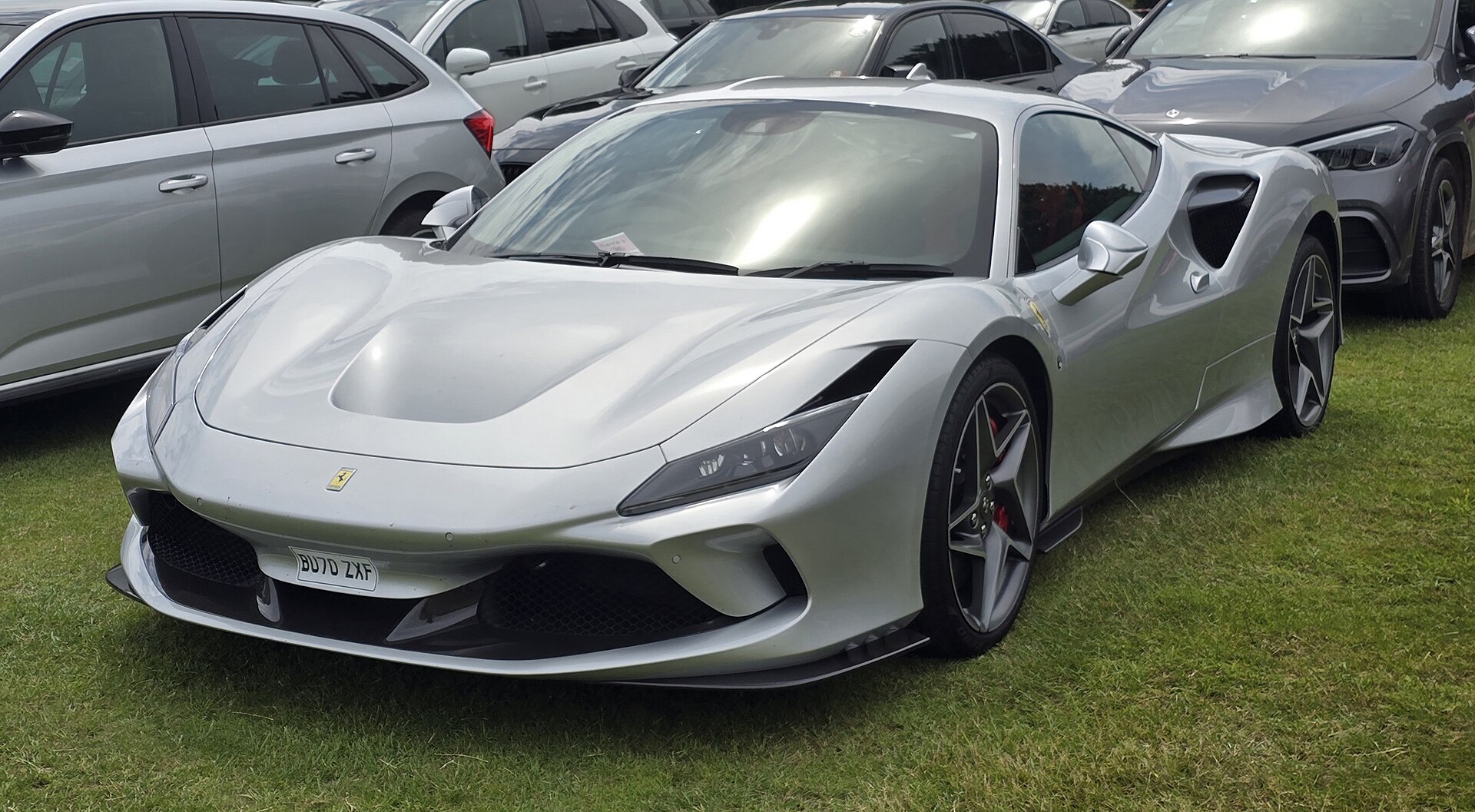
Ferrari F8 Tributo vs. McLaren 720S: Which Is Better in 2026?
Two of the most compelling twin-turbo V8 supercars ever built. One pulls at your emotions. The other appeals to your logic. Here's exactly how they compare — and which one is worth your money.
The Quick Breakdown: Raw Performance vs. Emotional Design
The Ferrari F8 Tributo and McLaren 720S represent two different philosophies in supercar engineering. The McLaren is a surgical instrument — optimized for grip, acceleration, and precision. The Ferrari is a masterpiece of Italian design that also happens to be extraordinarily fast. Performance specs are nearly identical on paper, but the experience couldn't be more different.
The McLaren 720S is 0.2 seconds quicker to 60 mph. The Ferrari will make you smile harder when you arrive.
Both cars feature twin-turbo V8 engines producing 710 horsepower, both deliver 0-60 times under three seconds, and both cost more than $300,000 new. But a quick look at the used market reveals a critical divergence: the F8 Tributo holds value dramatically better than the 720S, making the Ferrari potentially the smarter long-term investment despite the McLaren's raw performance advantage.
Performance Specifications: Where McLaren Edges Out Ferrari
| Specification | Ferrari F8 Tributo | McLaren 720S | Winner |
|---|---|---|---|
| Engine | 3.9L Twin-Turbo V8 | 4.0L Twin-Turbo V8 | — |
| Horsepower | 710 hp | 710 hp | Tie |
| Torque | 568 lb-ft | 568 lb-ft | Tie |
| 0–60 mph | 2.9 seconds | 2.7 seconds | McLaren |
| 0–100 mph | 5.9 seconds | 5.8 seconds | McLaren |
| Top Speed | 211 mph | 204 mph | Ferrari |
| Weight | 3,218 lbs | 2,889 lbs | McLaren |
| Power-to-Weight Ratio | 0.22 hp/lb | 0.25 hp/lb | McLaren |
The McLaren 720S's advantage comes from weight discipline. At 2,889 pounds, it's 329 pounds lighter than the F8 Tributo, translating to quicker acceleration and sharper response. That lighter weight also explains the McLaren's superior power-to-weight ratio of 0.25 hp/lb versus Ferrari's 0.22 hp/lb.
In real-world driving, this difference is noticeable but not dramatic. The McLaren feels like it launches with a hair more aggression. The Ferrari, despite being slightly heavier, feels nearly as quick thanks to its wider torque band and more immediate throttle response. On a public road, both cars accelerate with authority that renders the 0.2-second difference academic. On a closed circuit, the McLaren's advantage compounds through corner speeds and braking distances.

Handling & Suspension: Hydraulics vs. Electronics
This is where the two cars diverge most dramatically. The McLaren features a fully hydraulic suspension system — a rare holdout in the age of electronic dampers. The Ferrari uses a more traditional setup with electronic controls.
The McLaren's hydraulic system delivers body control that rivals physics. The 720S corners with a flatness that seems to defy gravity. Weight transfer is immediate and predictable. The car sits absolutely planted, and even aggressive inputs feel controlled. Road feel is exceptional — you know exactly what the tires are doing at any moment. This precision comes with a tradeoff: the suspension is relatively firm. Bumps are felt directly by your skeleton.
The Ferrari's suspension prioritizes accessibility without sacrificing performance. The F8 uses Ferrari's E-Diff and Side Slip Angle Control systems, which manage power delivery and weight distribution electronically. This system is forgiving — the car rewards confidence without punishing mistakes. The F8's chassis allows for more throttle input mid-corner, making it more playable for drivers working at 85% of the limit. At 95%, the McLaren's precision becomes apparent.
On everyday roads, the Ferrari feels more comfortable. The suspension completes its articulation with a smoothness that the McLaren's hydraulic setup can't match. This matters if you plan to drive the car regularly rather than reserving it for weekend track days.
Driving Experience: Clinical vs. Emotional
The steering wheel is where you feel the philosophical difference most acutely. The McLaren steering is pin-point accurate but communicative in an intellectual way. The car responds immediately to inputs, relaying information about tire grip with surgical precision. It's a conversation conducted in binary — the car tells you what it will do before it does it.
The Ferrari steering has more character. It's responsive but allows for subtle adjustments mid-corner. The relationship between steering angle and actual steering response is more organic. The car invites you to explore its limits rather than informing you when you've reached them. The F8's steering carries weight that increases with speed, providing real feedback rather than artificial weight.
Engine sound is another critical difference. The McLaren's turbocharged V8, while mechanically impressive, produces a refined mechanical drone. Throttle response is excellent, but there's a slight lag as the turbos spool. The Ferrari's engine fires with immediate brutality. The twin-turbos minimize lag, and the engine note carries more presence in the cabin and through the exhaust. This is partially psychological — turbocharged engines sound more distant by nature — but it's a real difference in how the cars feel to drive.
The McLaren is a masterclass in precision engineering. The Ferrari is a masterpiece of sensory experience.
Visibility deserves mention. The McLaren's dihedral doors, while dramatic, make entry awkward. The Ferrari's traditional doors open fully and are far more practical. The McLaren has extensive carbon fiber glass panels that improve visibility dramatically once you're inside. The Ferrari has smaller windows but a higher seating position that provides better sight lines. In urban driving, the Ferrari is more practical.

Interior Design & Technology: Italian Luxury vs. British Minimalism
Step into the Ferrari F8, and you're surrounded by hand-stitched leather, real carbon fiber, and carefully considered ergonomics. The cabin feels genuinely special. Controls are logical, the infotainment system is responsive, and materials feel premium throughout. The F8's interior is arguably the finest in the supercar segment — it justifies the prestige of the Ferrari badge with actual quality.
The McLaren prioritizes lightweight construction over soft-touch materials. The 720S's cabin is clean and functional, but it feels more austere. More hard plastics, less leather, and a minimalist approach that prioritizes performance over luxury. The infotainment system is quick but less intuitive than Ferrari's. For buyers seeking a daily-use supercar, the Ferrari's interior experience is superior.
Technology differs too. The F8 features an 8-inch touchscreen with Apple CarPlay integration. The 720S uses a similar-sized screen but with older interface design. Neither system will win awards, but the Ferrari's is more responsive and user-friendly. The McLaren offers a configurable digital instrument cluster that's more modern. It's a wash, with Ferrari winning on luxury and McLaren winning on configurability.
Used Market Pricing: Where the Economics Diverge Dramatically
This is the critical distinction. Both cars cost around $315,000 new. Here's what they're worth in the 2026 used market:
| Model Year | Mileage Range | Ferrari F8 Tributo | McLaren 720S | Difference |
|---|---|---|---|---|
| 2020 | 10K–20K miles | $285,000–$310,000 | $210,000–$235,000 | +$50K–$100K F8 |
| 2021 | 5K–15K miles | $295,000–$320,000 | $190,000–$220,000 | +$75K–$125K F8 |
| 2022 | Under 10K miles | $310,000–$330,000 | $200,000–$240,000 | +$70K–$130K F8 |
| 2023 | Under 5K miles | $320,000–$345,000 | $230,000–$260,000 | +$60K–$115K F8 |
The Ferrari F8 Tributo holds approximately 85–92% of its original purchase price after 5–6 years. The McLaren 720S, by contrast, holds only 65–75%. This $60,000–$130,000 difference isn't minor — it's the actual cost of ownership.
This depreciation gap persists because Ferrari maintains strict production numbers, and the brand commands a premium in the luxury segment that transcends actual performance. A McLaren buyer is paying for a superior driving tool. A Ferrari buyer is buying into Italian heritage, design authority, and manufacturing prestige that the market values significantly.

Depreciation Deep Dive: Why Ferrari Wins Long-Term
The F8 Tributo has depreciated approximately 15–25% over five years. The McLaren 720S has shed 35–40% in the same period. This 20-point gap has profound implications for ownership economics.
Ferrari's advantage stems from three factors:
1. Brand Power. Ferrari remains a status symbol that transcends mechanical specifications. Collectors and wealthy enthusiasts accept Ferrari depreciation as normal for the privilege of ownership. McLaren is seen as "the thinking person's supercar," which is excellent marketing but doesn't command the same emotional premium in the resale market.
2. Production Discipline. Ferrari restricts output to maintain exclusivity. The F8 production run was strictly controlled. McLaren produces more volume, which creates more used inventory and lower prices. Supply and demand remains the fundamental driver of used values.
3. Specification Availability. Ferrari offers virtually unlimited customization options, making each car unique. This exclusivity appeals to collectors. McLaren's options are more standard, meaning more identical cars compete in the used market.
If you finance a $315,000 F8 Tributo and sell it after five years at $265,000, you've spent $50,000 in depreciation plus $40,000–$60,000 in annual maintenance (detailed below). The McLaren, depreciating to $205,000, has already cost you an additional $60,000 in depreciation alone, plus nearly identical maintenance costs. Over five years, the F8 Tributo is materially cheaper to own.
Annual Ownership Costs: Maintenance & Insurance Comparison
| Expense Category | Ferrari F8 | McLaren 720S | Notes |
|---|---|---|---|
| Insurance | $4,500–$7,000 | $5,000–$7,500 | McLaren slightly higher due to repair costs |
| Routine Maintenance | Free (7-year warranty on F8s) | $3,500–$5,000 | Ferrari covers almost everything; McLaren does not |
| Fuel | $4,000–$6,000 | $4,000–$6,000 | Both require premium fuel; similar consumption |
| Tires (amortized) | $1,500–$2,000 | $1,500–$2,000 | Both use expensive Pirelli P Zero tires |
| Brakes (amortized) | $800–$1,500 | $1,000–$2,000 | McLaren's carbon ceramic replacements are pricier |
| Repairs (avg annual) | $1,500–$3,000 | $4,000–$8,000 | McLaren reliability is a known concern |
| Total Annual Cost | $11,800–$19,500 | $18,500–$30,500 | Ferrari significantly cheaper long-term |
Ferrari's 7-year free maintenance program on nearly all F8s (assuming you buy with coverage) changes the ownership economics dramatically. You're covered for scheduled service, brake fluid changes, filter replacements, and most wear items at no cost. This alone saves $3,500–$5,000 annually during the critical ownership window.
McLaren's warranty is far more limited. You'll be paying out of pocket for maintenance from year one. More importantly, McLaren reliability is a known issue. While the engine and transmission are generally reliable, the electrical systems can be problematic. Owners frequently report infotainment glitches, climate control failures, and sensor malfunctions. Annual repair costs for McLarens typically run $4,000–$8,000 beyond routine maintenance.
The Ferrari, by contrast, has a strong reliability track record. The engine is shared with the F8 GTE race car, which has proven virtually bulletproof in endurance racing. Electrical systems are more conventional. Real Ferrari owners report repair costs in the $1,500–$3,000 range annually, primarily for discretionary services like clutch checks and detailed inspections.
When you total five years of ownership including maintenance, fuel, insurance, and tire changes: the Ferrari costs approximately $70,000–$110,000 in running costs. The McLaren costs $110,000–$165,000. The F8 is the dramatically more affordable car to own.
Know the True Cost of Ownership
Automonitor's financial specialists break down full ownership scenarios — depreciation, maintenance, insurance — so you understand the total five-year cost before you commit.
Get Your Cost Analysis →Who Should Buy Which Car?
Buy the McLaren 720S if:
- You prioritize pure performance and want the quickest car possible between two comparable machines.
- You're primarily interested in track driving, where the 720S's precision and lighter weight provide measurable advantages.
- You plan to keep the car for only 2–3 years and aren't concerned with depreciation impact.
- You want the most cutting-edge technology and prefer a minimalist, uncompromising driving tool over luxury appointments.
- You live in a market where McLaren service is easily accessible and you have a trusted technician.
Buy the Ferrari F8 Tributo if:
- You want to invest in a car that will hold its value substantially better over five years and beyond.
- You prioritize driving experience and emotional connection alongside performance metrics.
- You plan to own the car long-term and want predictable maintenance costs through Ferrari's warranty program.
- You desire a more livable supercar with better visibility, more practical doors, and a more luxurious interior.
- You value brand prestige and want a car that carries cultural significance beyond its mechanical specifications.
- You're concerned about reliability and want peace of mind regarding electrical systems and component durability.
For most buyers in 2026, the Ferrari F8 Tributo emerges as the financially and experientially superior choice. The McLaren's performance advantage is real but marginal. The Ferrari's advantages in depreciation, ownership costs, reliability, and driving pleasure are substantial.
Head-to-Head Comparison Table
| Category | Ferrari F8 Tributo | McLaren 720S | Winner |
|---|---|---|---|
| 0–60 Performance | 2.9 sec | 2.7 sec | McLaren |
| Handling Precision | Excellent | Phenomenal | McLaren |
| Driving Experience | Emotional & Engaging | Clinical & Technical | Ferrari |
| Engine Sound | Visceral & Immediate | Refined & Distant | Ferrari |
| Interior Quality | Premium Luxury | Minimalist Functional | Ferrari |
| Comfort & Practicality | Good for Supercar | Sporty but Less Livable | Ferrari |
| New Car Price | $315,000 | $315,000 | Tie |
| 5-Year Resale Value | $265K–$280K (85–88%) | $200K–$220K (65–70%) | Ferrari |
| 5-Year Total Cost | ~$150,000–$180,000 | ~$210,000–$270,000 | Ferrari |
| Reliability Track Record | Excellent | Mixed | Ferrari |
| Annual Maintenance | Covered (F8s) | $3.5K–$5K+ | Ferrari |
| Brand Prestige | Maximum | High (Technical) | Ferrari |
Financing Both Cars: Making the Math Work
Both supercars can be financed through specialized exotic car lenders. Ferrari financing is generally available at 6–8% rates with 25–30% down. McLaren financing carries similar terms, though some lenders treat McLarens more cautiously due to reliability concerns.
On a $315,000 purchase price with 25% down ($78,750) and a seven-year loan, you're looking at approximately $355–$395 monthly payments for the Ferrari and $365–$410 for the McLaren. The payment difference is minimal. The total cost of ownership diverges materially when you factor in maintenance and depreciation.
Check out our detailed guides on Ferrari monthly payments and McLaren monthly payments for specific scenarios based on your down payment and credit profile.
Is Certified Pre-Owned Worth It?
For the Ferrari, yes. Certified pre-owned F8s from Ferrari dealers come with extended warranty coverage, typically 2–3 years of warranty protection beyond the original purchase date. This transforms ownership economics. A 2020 CPO F8 with 15,000 miles and 2 years of warranty remaining costs $250,000–$270,000 and includes covered maintenance.
For the McLaren, it's less compelling. McLaren's CPO program is less robust, and the warranty extension is minimal. Since you're already facing $4,000–$8,000 annual repair bills, the difference between certified and non-certified is marginal.
Automonitor recommends Ferrari CPO over independent market purchases. The warranty peace of mind justifies the potential price premium. For McLarens, find an independent example with full service history from a McLaren specialist rather than paying extra for dealer certification.
The Investment Angle: Which Appreciates?
Neither car is likely to appreciate. Both are modern supercars, not collector vehicles (yet). However, the F8's superior value retention means your loss is dramatically smaller. Exotic cars depreciate, but Ferraris depreciate more slowly and predictably.
The F8 Tributo, being the final naturally aspirated-era supercar before Ferrari's full hybrid transition, holds a slight collector interest. Early low-mileage examples in desirable colors are holding value better than average. The 720S has no such tailwind.
For exotic car financing, understand that depreciation is part of the cost. Neither the F8 nor the 720S should be considered investments. They should be considered as depreciating assets you're buying for the experience. The F8 simply depreciates slower.
Alternatives to Consider
If you're torn between these two, also examine:
Lamborghini Huracan: The naturally aspirated V10 offers superior sound and driving experience. Check our Lamborghini vs Ferrari comparison for details. The Huracan holds value similarly to the F8 and is slightly less expensive used.
Porsche 911 Turbo S: More practical, better reliability, lower maintenance costs. Less prestige but more genuine usability. Depreciation is similar to the McLaren.
Used Ferrari 488: The F8's predecessor is available at $185,000–$225,000 and offers 90% of the F8's performance. It's the value sweet spot if budget is constrained. Read more about exotic car ownership costs to understand the full financial picture.
Frequently Asked Questions
Is the McLaren 720S actually faster than the Ferrari F8?
Yes, marginally. The McLaren hits 60 mph in 2.7 seconds versus the F8's 2.9 seconds. The McLaren's lighter weight (2,889 lbs vs. 3,218 lbs) and superior power-to-weight ratio (0.25 hp/lb vs. 0.22) translate to quicker acceleration. On a drag strip or at a track, the difference is measurable. On public roads, both will feel equally rapid.
Which car is more reliable?
The Ferrari F8 Tributo significantly more reliable. The engine is proven in racing applications. Electrical systems are conventional. Owners report minimal unexpected repairs. The McLaren suffers from known electrical gremlins — infotainment failures, climate control issues, sensor malfunctions. Annual repair costs for McLarens typically run $4,000–$8,000 beyond warranty coverage. Ferraris average $1,500–$3,000.
Can I daily drive either car?
Both are technically daily-driveable but neither is practical. Low ground clearance, poor visibility in some directions, loud engines, and expensive fuel make both impractical as sole transportation. The Ferrari, with better visibility and more conventional doors, is slightly more livable. The McLaren's dihedral doors are dramatic but awkward in tight parking situations.
How much does maintenance cost annually?
Ferrari F8: Covered under 7-year warranty for most ownership scenarios. After warranty, expect $1,500–$3,000 annually. McLaren 720S: $3,500–$5,000 annually for routine maintenance, plus $4,000–$8,000 for repairs. The Ferrari is substantially cheaper to maintain.
Which holds value better?
The Ferrari F8 Tributo unquestionably. F8s depreciate 15–25% over five years. McLaren 720S units depreciate 35–40% in the same period. A 2020 F8 worth $315,000 new is worth $265,000–$280,000 today. A comparable 2020 McLaren worth the same new is worth only $200,000–$220,000 today. This $60,000–$80,000 difference compounds your true cost of ownership.
What about insurance costs?
Both are expensive to insure. Ferrari F8: $4,500–$7,000 annually. McLaren 720S: $5,000–$7,500 annually. The McLaren is slightly more expensive due to higher repair costs that increase insurance risk. Rates vary significantly by location, age, driving record, and mileage. Get quotes before committing to either purchase.
Is the McLaren's dihedral door design really that impractical?
Yes. The doors open upward rather than outward, which is visually stunning but problematic in tight parking situations. You need more vertical clearance than horizontal space, making parking garages challenging. The Ferrari's conventional doors open wider and are far more practical for everyday use.
Should I buy new or used?
Used is dramatically smarter. Both cars depreciate heavily in the first 2–3 years. Buy a 2020–2021 example with 10,000–20,000 miles instead of paying new-car prices. For the Ferrari, seek certified pre-owned examples with warranty coverage. For the McLaren, look for independent sales with full service history from a McLaren specialist. You'll save $40,000–$80,000 versus new while getting the same performance.
The Final Verdict: Ferrari F8 Tributo Wins Overall
On pure performance metrics, the McLaren 720S edges the Ferrari F8 Tributo with fractionally quicker acceleration and surgical handling precision. As a driving tool, the McLaren is arguably superior.
But ownership isn't just about driving. It's about the total experience, the financial implications, and the long-term satisfaction. The Ferrari F8 Tributo wins decisively on those fronts.
The F8 retains significantly more value — saving you $60,000–$130,000 over five years. Maintenance is covered under warranty, while McLaren owners face $4,000–$8,000 annual repair bills. Reliability is substantially better. The interior is more luxurious. The driving experience is more emotionally engaging. The brand carries cultural weight that transcends mechanics.
For a buyer who understands the full cost of ownership, values reliability and long-term value retention, and wants a supercar that's genuinely usable in daily life, the Ferrari F8 Tributo is the superior choice. The McLaren 720S appeals to buyers who prioritize pure performance metrics, enjoy frequent track days, and are comfortable with higher ownership costs.
Ready to explore either car? Read our guide on buying certified pre-owned exotic cars, or contact Automonitor's concierge team to explore available inventory, secure competitive financing, and arrange comprehensive pre-purchase inspections for any vehicle you're considering.
Compare Pricing & Inventory Today
Automonitor connects you with verified Ferrari and McLaren dealers nationwide. We handle valuations, inspections, and negotiations so you get the best car at the best price.
Start Your Search →