
Is a 2020 Lamborghini Huracan a Good Buy?
The 2020 model year was the second generation of the refined EVO platform — the year Lamborghini fixed the 2019 touchscreen bugs, introduced the compelling EVO RWD variant at $208K MSRP, and solidified the Huracan's value proposition. Here's everything you need to know before buying a 2020 EVO.
The 2020 Advantage: Second-Year EVO Polish
If 2019 was the Huracan EVO's first experiment with modernization, 2020 was its refinement. Lamborghini learned from the first year of the EVO platform, and the 2020 model year represents the sweet spot in second-generation reliability — firmware updates eliminated the temperamental touchscreen calibration issues that plagued early 2019 examples, the LDVI dynamic vehicle control system received refined tuning, and most importantly, Lamborghini introduced the RWD variant that would define the entire EVO generation.
This matters because a 2020 Huracan EVO sits at the intersection of modernization and proven reliability. It's the year Lamborghini got the EVO right. The 2021 and later models are refined further, but a well-maintained 2020 offers nearly identical performance at a significantly lower purchase price. Currently in early 2026, a 2020 EVO typically ranges from $190,000 to $230,000 depending on variant and mileage, making it one of the most financially sensible entry points into modern Huracan ownership.
The 2020 model year was the EVO's breakthrough year — when Lamborghini took the 2019 formula and perfected it without dramatic changes to the platform itself.
The 2020 Huracan Lineup: The Year the EVO RWD Arrived
2020 was a pivotal year for Huracan variants. Here's what was available:
| Variant | Drivetrain | Horsepower | Original MSRP | Current Market Price |
|---|---|---|---|---|
| EVO AWD | All-Wheel Drive | 630 hp | $261,000 | $190,000–$230,000 |
| EVO RWD | Rear-Wheel Drive | 610 hp | $208,000 | $165,000–$195,000 |
| EVO Spyder (Convertible) | All-Wheel Drive | 630 hp | $287,000 | $210,000–$255,000 |
| Performante (Phased Out) | All-Wheel Drive | 645 hp | $308,000 | Used only from prior years |
The standout debut was the EVO RWD. At $208,000 MSRP — a full $53,000 less than the AWD version — it represented a fundamentally different philosophy. Lighter weight (20 lbs less than AWD), sharper steering feedback, and a rawer driving experience appealed to purists. The RWD variant eliminated the front differential complexity of the AWD system, making it simpler mechanically and potentially more reliable long-term. By 2026, the 2020 EVO RWD has become the savviest buy in the entire pre-owned Huracan market for drivers prioritizing value and engagement.
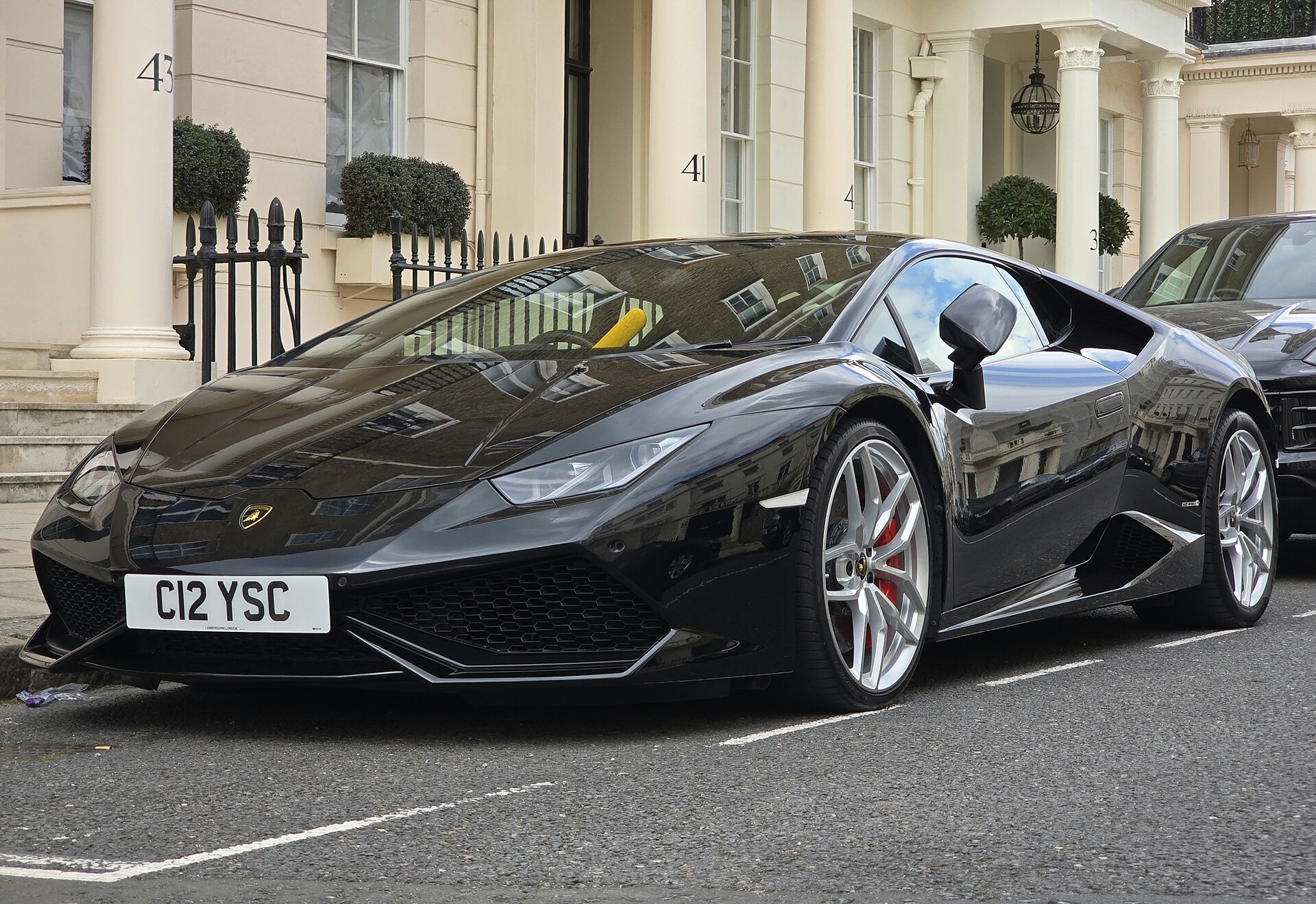
Why 2020 Specifically: The Refined EVO Story
To understand why 2020 deserves special consideration, you need to understand what happened in 2019. The first EVO generation debuted with advanced tech that wasn't quite ready: the 8.4-inch touchscreen infotainment system suffered calibration drift, requiring field updates to fix. The LDVI active suspension and aerodynamics system needed firmware refinement. Early 2019 buyers became inadvertent beta testers.
Lamborghini spent 2019 and the first half of 2020 addressing these issues through over-the-air updates and service bulletins. By the time 2020 model year production began, Lamborghini had solved the fundamental problems. The touchscreen firmware was stable. The LDVI calibration algorithms were optimized for real-world driving. The powertrain was proven.
This is what separates 2020 from its predecessor. A 2020 EVO comes with Lamborghini's warranty fixes already installed, not as future improvements to negotiate at the dealer. You're buying the matured platform, not the experimental one.
The EVO RWD Story: The Purist's Lamborghini
The 2020 EVO RWD deserves its own discussion because it fundamentally changed how people think about Huracan value. At launch, the $208,000 starting price created an interesting dynamic: you were saving $53,000 compared to AWD, losing 20 hp and traction system redundancy, gaining a sharper, more connected driving experience.
Fast forward to 2026. A well-maintained 2020 EVO RWD with reasonable mileage (8K–15K miles) typically commands $165,000–$195,000. For perspective, that's 20–30% less than a comparable EVO AWD. The gap exists because fewer buyers chose RWD new, creating lower supply. But for enthusiasts, it's the better value proposition because the driving experience — sharper steering, more feel, lighter weight, simpler mechanics — makes every drive more engaging than the AWD version.
The RWD variant solved a problem luxury car buyers didn't know they had: too many electronic assists, too much power distribution across four wheels, too much computer mediation between driver and machine. The EVO RWD brought back visceral connection without sacrificing the Huracan's overall refinement. It's the variant for drivers who track their cars, who appreciate mechanical simplicity, or who simply want a more intimate relationship with their engine and suspension.
For a detailed breakdown of all Huracan variants, including transmission and feature comparisons, see our comprehensive buyer's guide.

2020 Huracan Pricing in 2026: What You'll Actually Pay
Original MSRP is historical. What matters is what 2020 models actually sell for in the current used market. Here's the reality based on recent transactions and market data:
| Variant | Typical Mileage | 2026 Market Range | Sweet Spot Price |
|---|---|---|---|
| EVO RWD | 8K–25K miles | $165,000–$195,000 | $175,000–$185,000 |
| EVO AWD | 10K–30K miles | $190,000–$230,000 | $205,000–$220,000 |
| EVO Spyder | 5K–20K miles | $210,000–$255,000 | $230,000–$245,000 |
These prices reflect well-maintained examples with verifiable service history. Prices vary significantly based on color, specification, accident history, and maintenance records. A 2020 EVO RWD in Arancio Borealis (the signature orange) with comprehensive service records could command a $10,000–$15,000 premium over a white example with similar mileage.
The 2019 EVO ranges $5,000–$10,000 lower due to the firmware issues mentioned earlier. The 2021 models command $10,000–$20,000 premiums due to even further refinement and lower market supply. This makes 2020 genuinely the inflection point — newer enough to avoid first-generation problems, old enough to be priced fairly.
2020 vs. 2019: Should You Spend More for the Newer Year?
The most common question we hear: "Should I buy a newer 2020 instead of a cheaper 2019?" Here's the honest breakdown:
Why 2020 is worth the premium: No touchscreen issues. Refined LDVI calibration means smoother low-speed driving and more confident high-speed cornering. More reliable from delivery. Better warranty coverage remaining (if CPO). Less risk.
Why 2019 still works: If the specific 2019 has been to the dealer for the firmware update (check service history), it's effectively identical to 2020. Price savings of $5,000–$10,000 are meaningful. 2019 is still modern, still fast, still reliable enough.
Our recommendation: A 2020 commands a slight premium for peace of mind, and that premium is justified if you plan to keep the car 3+ years. A 2019 with documented service for the touchscreen issue is the smarter financial play if you're selling or trading in within 2 years. See our 2019 Huracan guide for detailed 2019-specific analysis.

2020-Specific Issues to Watch: What Actually Goes Wrong
The 2020 EVO is remarkably reliable, but no car is perfect. Here's what owners and inspectors have documented:
Front Bumper Stone Chips (Most Common)
The 2020 EVO's aggressive front bumper with its large air intakes is a stone chip magnet. This is cosmetic, not mechanical, but it's the most frequently encountered issue on well-driven examples. Budget $2,000–$4,000 for professional paint correction and ceramic coating refresh if the previous owner was hard on the roads. This is not a deal-killer — it's normal wear on any driver's car.
LDVI Sensor Recalibration (Occasional)
The LDVI system uses multiple sensors to manage aerodynamics and suspension. Some 2020 models require recalibration after high-mileage driving or extreme track use. Symptoms: warning lights on the dashboard, slightly different handling characteristics. Cost to recalibrate: $800–$1,500 at a Lamborghini dealer. This is manageable and often covered under extended warranty programs.
Transmission Dual-Clutch Engagement (Rare)
The 7-speed dual-clutch transmission is inherited from the original LP 610-4 platform. While dramatically improved from early generations, a small percentage of 2020 examples develop very subtle shuddering at low speeds — manifests as a barely perceptible jerk when accelerating from a stop in 1st gear under light throttle. This is more of an annoyance than a failure. Remedy: software update (free under warranty) or clutch plate service ($8,000–$12,000 if the problem persists after updates). This affects fewer than 5% of 2020 models.
What You Won't See on 2020s
Because 2020 is the refined generation, you typically won't encounter the severe issues from early Huracans: no timing chain cover leaks (those plagued 2014–2016 models), no electrical gremlins like 2017–2018 examples, no suspension arm failures, no transmission complete failures. The platform is proven.
Maintenance Costs: The Hidden Ownership Reality
A 2020 EVO uses the same V10 platform as earlier Huracans, so maintenance profiles are consistent across the generation. Here's what you can expect annually:
| Service Category | Annual Cost (Estimate) | Frequency |
|---|---|---|
| Oil & Filter Change | $800–$1,200 | Every 9,000 miles |
| Transmission Fluid Service | $1,200–$1,800 | Every 2 years (fluid check) |
| Brake Fluid Flush | $600–$900 | Every 2 years |
| Air Filter & Cabin Filter | $400–$600 | Every 12 months |
| Tire Rotation & Balance | $300–$500 | Every 6 months |
| Routine Annual Maintenance | $2,000–$3,500 | Proactive ownership |
These are routine costs. Major services (brake pad replacement on carbon-ceramic brakes, suspension overhaul, transmission service) can run $5,000–$15,000 depending on what's needed. For a detailed breakdown, see our comprehensive Lamborghini maintenance cost guide.
The critical point: a well-maintained 2020 EVO will cost $2,000–$3,500 per year in routine maintenance. Add insurance ($4,000–$8,000 annually), fuel ($3,500–$5,000 annually), and tires ($1,200–$2,000 annually), and you're looking at $10,500–$18,500 in annual running costs. This is consistent with other supercars in this price range.
The Best 2020 Spec for Value: Arancio Borealis EVO RWD
If you're hunting for the optimal 2020 Huracan, here's what the data says is the best value combination:
Variant: EVO RWD. Lower price, simpler mechanics, more engaging driving experience.
Color: Arancio Borealis (factory orange). Distinctive enough to command a premium ($5,000–$10,000 over neutral colors), but not so rare that it will alienate future buyers. White, silver, and black 2020s flood the market; orange ones stand out.
Mileage: 10,000–18,000 miles. Low enough to feel new, high enough to prove the car was actually driven and enjoyed. A 2020 with under 3,000 miles is often a red flag — it suggests the car sat for years, which can cause its own problems (seal degradation, brake corrosion, battery drain).
Service History: Complete, documented service with Lamborghini dealers preferred. Independent exotic specialists acceptable if they're certified and have full records.
Warranty Status: Factory warranty transferred to second owner is a major plus — covers bumper-to-bumper until 4 years/50,000 miles from original delivery. That's powerful protection on a $180,000 car.
That combination — 2020 EVO RWD, Arancio Borealis, 12,000 miles, full service records, remaining factory warranty — would typically market at $180,000–$195,000. It's the Goldilocks sweet spot of this model year.
Get a Pre-Purchase Inspection on Your 2020 EVO
Automonitor's certified exotic inspectors know exactly what to look for on 2020 EVOs. From LDVI calibration to transmission health to paint finish, we've inspected hundreds of this year.
Schedule Your Inspection →2020 EVO vs. Alternatives: How It Compares at the Price Point
At $180,000–$210,000, a 2020 Huracan EVO faces competition from several compelling alternatives. Here's how it stacks up:
| Car | Engine | Power | Sound Profile | Depreciation Risk | Our Verdict |
|---|---|---|---|---|---|
| 2020 Huracan EVO RWD | 5.2L NA V10 | 610 hp | Extraordinary | Low–Medium | Best sound, most engaging |
| 2018 Ferrari 488 GTB | 3.9L Twin-Turbo V8 | 661 hp | Very Good | Medium | Better power, higher insurance |
| 2018 McLaren 720S | 4.0L Twin-Turbo V8 | 710 hp | Good | Medium–High | Lighter, faster, less reliable |
| 2020 Porsche 911 Turbo S (slightly older) | 3.8L Twin-Turbo Flat-6 | 640 hp | Good | Low | Daily drivable, but less drama |
The 2020 Huracan EVO RWD's advantage isn't peak horsepower or lap times — it's the naturally aspirated V10 engine that sounds like nothing else, the mechanical transparency of rear-wheel drive, and the emotional connection. If those factors matter, the EVO is the winner. If you prioritize raw speed and modern tech, the Ferrari or McLaren might be smarter choices.
How to Buy a 2020 EVO: The Smart Process
Whether you're shopping for your first Huracan or upgrading from an older model, here's the Automonitor-recommended approach:
Step 1: Search broadly. Don't just check local inventory. 2020 EVOs are distributed across the country. Platforms like Bring a Trailer, Cars and Bids, eBay Motors, and official Lamborghini dealer inventory all have different pricing dynamics. West Coast and Southeast markets typically have better selection.
Step 2: Price comparison. Use recent Bring a Trailer sales data as your benchmark. Auction results are more reliable than asking prices because they represent actual agreed-upon values.
Step 3: Request complete service records. Download the entire service history from the seller or their dealer. Look for: regular oil changes, LDVI calibrations, touchscreen firmware updates (if any), transmission services. Gaps in service records are yellow flags.
Step 4: Pre-purchase inspection. Non-negotiable. A certified exotic inspector should spend 2–3 hours going through: transmission engagement, LDVI system responsiveness, brake condition, suspension bushings, battery health, coolant system pressure, paint finish analysis. Budget $600–$1,000 for a thorough PPI.
Step 5: Negotiate based on condition. If the PPI reveals needed repairs (stone chip repair, LDVI recalibration, brake servicing), adjust your offer. A $180,000 asking price with $5,000 in needed work is really a $175,000 offer after repairs.
Step 6: Finance appropriately. Exotic car lenders specializing in this segment offer 20–30% down requirements and 6–9% interest rates. See our exotic car financing guide for lender recommendations.
Before you commit financially, make sure supercar ownership actually fits your budget. The purchase price is only 40% of the total cost equation.
Frequently Asked Questions About 2020 Huracans
Is a 2020 EVO more reliable than a 2019 or 2021?
Reliability is essentially equivalent across 2019–2021. The difference is maturity: 2019 had firmware issues that got fixed by mid-year; 2020 came with fixes built-in; 2021 refined further but the gains are incremental. All three are solid.
Should I buy an EVO RWD or AWD?
RWD if you: track the car, want a sharper driving experience, prioritize value, appreciate mechanical simplicity. AWD if you: want maximum traction, live in snowy climates, prioritize everyday usability, want the prestige of the "full spec." For most enthusiasts, RWD is the smarter choice.
What's the warranty situation on a 2020 EVO?
Factory warranty is 4 years/50,000 miles from original delivery. If you're the second owner, that transfers. Third owner and beyond, you're covered under powertrain warranty (much more limited). Buy a CPO warranty from the dealer for $2,000–$5,000 if you're beyond original coverage.
Can I daily drive a 2020 EVO?
Yes, but shouldn't regularly. Low ground clearance (5.9 inches), tight steering at low speeds, abrupt shifts at low rpm all make it unsuitable as a full-time commuter. It's ideal as a weekend car or occasional sunny-day driver.
What's the best color for resale?
Distinctive colors (Arancio Borealis, Verde Mantis, Giallo Inti, Blu Cepheus) hold value better due to their distinctiveness. White, gray, and black are more common and slightly less desirable. If you're buying to flip, pick the distinctive color.
Is a 2020 EVO good for track days?
Absolutely. The EVO platform was specifically designed for track capability. Bring a spare set of tires and a fire extinguisher, but the car will outperform most drivers' abilities on circuit. See our guide to best cars for enthusiasts for more track-capable supercars at similar price points.
How often do I need to service it?
Oil changes every 9,000 miles, transmission fluid checks annually, major fluid services every 2 years. On a typical 8,000–10,000 mile annual usage, that's roughly one major service per year. See our maintenance cost breakdown for full detail.
What's the loudest 2020 configuration?
EVO RWD with carbon exhaust package produces the rawest, most unrestricted sound. The AWD version is slightly more muffled due to additional engineering complexity. Both are spectacular. Check our ranking of exotic car sound profiles for how the EVO stacks against competitors.
The Final Verdict: Is a 2020 Lamborghini Huracan Worth Buying?
Yes. The 2020 EVO is worth buying if you can comfortably afford the total cost of ownership (purchase + maintenance + insurance). It represents the optimal intersection of price, reliability, driving experience, and value retention in the modern Huracan lineage. The firmware fixes from 2019 mean you're getting a proven platform. The introduction of the EVO RWD means you have a smarter financial option than the all-wheel drive version. The refinement from 2020 production means the car won't have the growing pains of first-generation EVO models.
A 2020 EVO RWD in Arancio Borealis with 12,000 well-documented miles at $180,000–$195,000 is one of the best exotic car values in the 2026 used market. It's the car we'd buy if we were shopping in this price range today.
The only reason not to buy is if the total ownership cost strains your finances, or if you need a car that can genuinely function as a daily driver. The Huracan is many things, but it's not a practical car. It's a car you buy because you want to feel alive when you drive it. If that's what you're looking for, the 2020 Huracan EVO delivers in ways few cars can.
Automonitor specializes in matching buyers with 2020 EVOs that match their needs and budget. We handle the inspection, negotiation, and logistics so you don't have to. If you're serious about making this purchase, let us help you get it right.
Ready to Buy Your 2020 Huracan EVO?
Automonitor connects you with verified 2020 Huracan inventory across the country, handles pre-purchase inspections, and manages the entire transaction process. No hassle. No surprises.
Start Your Search →