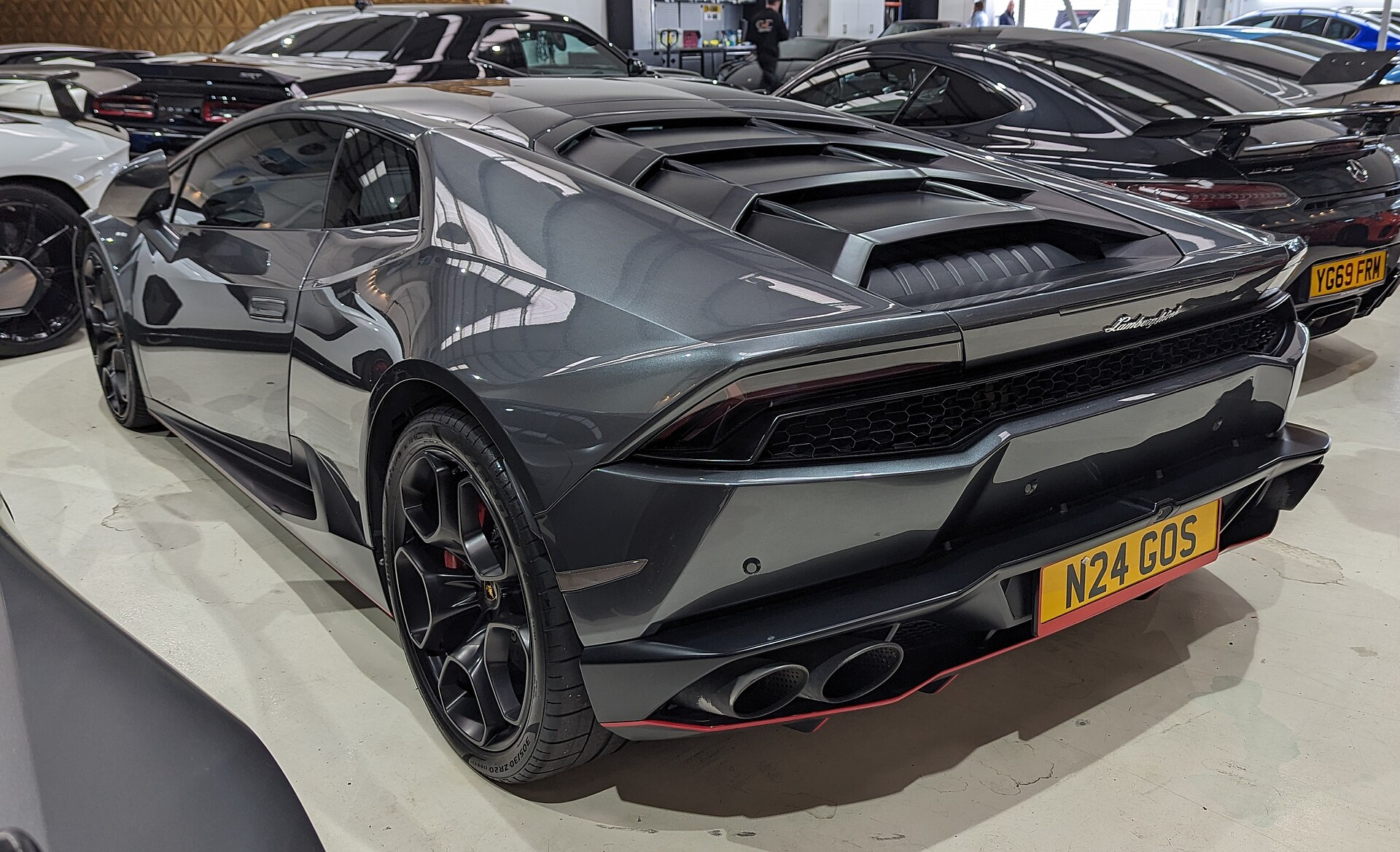
The Sterrato Broke Every Rule — Here's Why You Should Buy One
The ultimate rule-breaking supercar: off-road capable, historically significant, and the last NA Huracan ever made.
The Sterrato Broke Every Rule — Here's Why You Should Buy One
When Lamborghini announced the Huracan Sterrato in 2023, the automotive world stopped and stared in disbelief. A supercar, designed to conquer gravel roads and dirt surfaces, with a roof-mounted LED light bar and underbody skid plates. It sounded absurd—a contradiction so complete it should have failed immediately. Instead, Lamborghini created the most authentic, most conversational, and most genuinely unique Lamborghini ever produced. The Sterrato isn't just a special edition; it's a philosophical statement about what a supercar can be when you throw convention out the window.
The decision to create an off-road Huracan emerged from Lamborghini's deep technical confidence in the platform. The Huracan's independent double-wishbone suspension, advanced all-wheel-drive system, and lightweight carbon fiber chassis formed the perfect foundation. Rather than compromise, Lamborghini elevated these elements. They raised the ride height by 44 millimeters compared to the Evo, transforming suspension geometry to handle rough terrain while maintaining supercar dynamics. The result is a machine that genuinely belongs on Italian mountain roads AND pristine gravel tracks—something no other supercar on Earth can claim with authenticity.
Only 1,499 examples were built globally, making it one of the rarest modern supercars. More significantly, the Sterrato represents the final naturally aspirated Lamborghini Huracan ever produced. All future Huracans will adopt hybrid or fully electric powertrains. This fact alone transforms the Sterrato's value proposition. You're not buying a niche variant; you're buying a historical artifact—the swan song of an era when Lamborghini's ten-cylinder engines roamed free from turbochargers and hybrid systems. That V10 scream will never sound exactly like this again.
The Engine: The Last Pure V10
The Sterrato's 5.2-liter naturally aspirated V10 produces 610 horsepower and 413 pound-feet of torque. These numbers, while lower than the STO's 640 hp, tell a story about design priorities. Rather than chase peak power, Lamborghini optimized this engine for the Sterrato's specific mission: delivering visceral, mechanical feedback across a wide operating range. The engine maintains its characteristic high-revving nature, climbing to 8,500 rpm with the kind of linear power delivery that no turbocharged or hybrid system can replicate.
Zero to sixty arrives in 3.4 seconds, with top speed reaching 192 mph—genuinely sufficient for any legal driving environment and absolutely thrilling on gravel. The engine's character changes completely depending on drive mode. In Strada mode, it feels almost civilized, delivering smooth power with conservative shifts. Switch to Sport, and the ANIMA adaptive driving system awakens the beast. Rally mode—the Sterrato's exclusive setting—fundamentally transforms the driving experience. Engine mapping becomes aggressive, throttle response sharpens instantaneously, and the all-wheel-drive system redistributes power with wild abandon, sending maximum torque to whichever wheels have grip.
From an ownership perspective, this V10 carries significant advantages over turbocharged alternatives. Naturally aspirated engines operate at lower temperatures, experience less stress on internal components, and generate more straightforward maintenance requirements. Spark plugs, air filters, and basic service items remain unchanged from earlier Huracans, meaning specialist shops familiar with the platform know exactly how to care for your engine. The naturally aspirated philosophy also means no complex turbo systems requiring periodic servicing or replacement. When your Sterrato reaches 10,000 miles, you're looking at an oil change and filter replacement—nothing exotic.
Rally Mode and the Off-Road Experience
The Sterrato's exclusive Rally mode represents the engineering's heart. Lamborghini engineered this setting specifically for gravel, dirt, and uneven surfaces. The ANIMA system—Adaptive Personalized Managing Intelligently Asymmetric—continuously monitors throttle input, steering angle, wheel slip, and suspension load. In Rally mode, it interprets driver commands with an off-road mindset. Aggressive understeer in a supercar means disaster on pavement; on gravel, it means confident forward momentum. The system adjusts power delivery to the rear wheels, allowing controlled drifts and dynamic line adjustments that would be impossible in Strada or Sport modes.
The raised suspension geometry contributes meaningfully to this capability. That 44-millimeter increase in ride height seems modest until you encounter a rut or gravel berm at sixty miles per hour. Suddenly, you're crossing obstacles that would trap a standard Huracan. The suspension travel increased proportionally, with new damper tuning that absorbs impacts without transmitting jarring vibrations into the cabin. Lamborghini fitted a new limited-slip differential specifically calibrated for off-road conditions, constantly modulating torque distribution to maintain forward momentum even when individual wheels lose traction.
The underbody protection tells the story of genuine off-road intention. Aluminum panels shield the engine oil cooler, brake fluid coolers, differential, and transmission. These aren't cosmetic skid plates; they're structural components preventing gravel impact damage. The roof-mounted LED light bar isn't merely aesthetic—it provides 18,000 lumens of illumination for night driving on unlighted mountain passes. The integrated roof scoop channels fresh air directly to the engine, improving cooling during intense driving in hot climates or high-altitude environments where ambient temperatures affect engine management.
Bridgestone Dueler AT002 Tires and Grip
Tire selection represents one of the most critical decisions in off-road capable supercars. Lamborghini chose Bridgestone's Dueler AT002 all-terrain tires, a decision reflecting detailed engineering. These tires provide sufficient road manners for highway driving while featuring aggressive tread patterns designed for gravel and loose surfaces. Unlike pure road-racing tires, the Duelers incorporate thicker sidewalls to prevent punctures from sharp rocks and maintain structural integrity through sideways loading on uneven terrain.
The all-terrain compound trades some ultimate dry-road grip for versatility. On smooth asphalt, the Sterrato remains extraordinarily responsive, but you'll notice the microscopic difference compared to race-focused rubber. That trade-off evaporates the moment gravel appears. The Duelers' open-lug pattern bites into loose surfaces like a rally car's competition tires, providing confidence across terrain where road-specific tires would slip helplessly. Seasonal variation is minimal—these tires perform consistently across temperature ranges, from Scandinavian winter rallies to summer mountain passes.
Maintenance costs for the Duelers run approximately $3,500-$4,200 for a complete set, roughly aligned with other premium all-terrain tires but substantially cheaper than the specialized carbon-ceramic brake and ultra-high-performance rubber required by track-focused Huracans. Tire longevity extends slightly longer than race tires due to the more conservative compound, delivering improved value over the Sterrato's ownership span.
Lightweight Engineering: Magnesium Wheels and Titanium Components
The Sterrato's suspension components showcase materials science at the supercar level. Magnesium wheels replace standard aluminum, reducing unsprung mass and improving suspension response. Lower unsprung weight means the suspension responds more quickly to road inputs, maintaining tire contact through cornering and off-road obstacles. The weight savings—roughly eight pounds per wheel compared to aluminum—translates to noticeable improvements in ride quality and handling feedback. Acceleration feels marginally quicker, and cornering fluidity improves from already-exceptional baselines.
Titanium roll bar mounts replace standard steel components, saving additional weight while increasing structural rigidity. These mounts connect the integrated roll bar to the carbon fiber monocoque chassis, creating a structure rigid enough for gravel punishment while maintaining the suspension articulation necessary for off-road terrain. The integrated roll bar itself serves dual purposes—genuine safety equipment during potential rollovers plus structural reinforcement for chassis rigidity.
This materials selection affects long-term ownership costs meaningfully. Magnesium wheels require specialized repair and refinishing—you cannot simply re-bend a magnesium wheel like aluminum. Conversely, damaged wheels are rarely repairable regardless of material; you're replacing them outright. Budget approximately $1,800-$2,500 per wheel for replacement, making wheel damage one of the more expensive ownership consequences. Off-road driving inevitably encounters rocks and obstacles capable of damaging wheels. The Sterrato's larger suspension travel provides more protection, but damage remains possible. Consider comprehensive coverage that includes wheel protection or maintain an emergency wheel and tire set for serious off-road adventures.
Unique Market Position and Collectibility
The Sterrato exists in a market category with zero direct competitors. No other manufacturer produces a naturally aspirated, mid-engine, all-wheel-drive supercar with genuine off-road capability. Porsche's 911 Dakar shares some philosophical DNA, but it's fundamentally a 911—a front-engine grand tourer adapted for gravel. The Sterrato is a supercar reimagined for adventure. Ferrari, McLaren, Aston Martin, and Corvette produce nothing remotely similar. This alone transforms its collectibility calculation.
The 1,499-unit production run creates genuine scarcity. Compare this to annual production figures for base-model Huracans during the model's lifecycle—thousands per year across all variants. The Sterrato represents roughly 2-3% of total Huracan production. More significantly, it's the last-ever naturally aspirated Huracan. Future production halts entirely as Lamborghini transitions to hybrid and electric powertrains. This historical significance creates powerful collecting narratives. Twenty years from now, the Sterrato will command substantial premiums as the final expression of a naturally aspirated supercar era.
Current market pricing ranges from $280,000 to $350,000, with lower-mileage examples commanding premiums in the $330K-$350K range. The original MSRP of $273,547 makes current secondary-market pricing surprisingly rational—a 2-5% annual appreciation despite the initial purchase. This trajectory typically accelerates as production scarcity becomes concrete history. Comparable limited-edition Lamborghinis from previous generations have appreciated 8-12% annually over twenty-year periods, suggesting the Sterrato could reach $600K-$800K by 2043-2044.
Conversation and Lifestyle Value
Supercar ownership encompasses more than mechanical performance; it encompasses lifestyle positioning and social dynamics. The Sterrato uniquely dominates conversation. When you arrive at a cars-and-coffee event, the collective head-turning is absolute. A bright-red Huracan Tecnica drives past—handsome, but expected. A Sterrato arrives, and strangers start asking questions immediately. They want to understand the contradiction: why does a supercar have an LED light bar? How does it handle gravel? Can you actually take it off-road? Each question becomes an opportunity to explain Lamborghini's bold reimagining of supercar mission.
This conversational value extends beyond automotive enthusiasts. Luxury automotive ownership often involves attendance at concours, vintage car events, and private collections viewings. The Sterrato's uniqueness creates an instant talking point. You're not competing against dozens of similar models; you're representing a singular vision. Owners report significantly higher engagement with other collectors, invitations to exclusive events, and genuine interest from international automotive media.
The off-road narrative also opens lifestyle dimensions unavailable to track-focused variants. Ownership enables European mountain adventures unavailable in standard supercars. The Passo dello Stelvio becomes genuinely accessible—a mountain pass famous for switchbacks and gravel sections that would destroy standard Huracans becomes the Sterrato's hunting ground. Owners organize rallies, mountain expeditions, and adventure drives that simply wouldn't occur with track-focused machines. This transforms ownership from static collection to active exploration.
Ownership Economics and Maintenance
The Sterrato's maintenance requirements align with standard Huracan platforms rather than presenting exotic complexity. Annual service costs run approximately $3,500-$5,000 depending on driving intensity and specialist shop location. Oil changes require synthetic Lamborghini-approved lubricant, roughly $400-$600 for the complete service. Air filters, cabin air filters, and spark plugs require periodic replacement following the Huracan's standard intervals rather than the aggressive schedules demanded by track-specific models.
The advanced all-wheel-drive system requires occasional fluid servicing—the LDVI (Lamborghini Dinamica Veicolo Integrata) system uses proprietary differential fluid changed every 20,000 miles. This service typically costs $1,200-$1,600 and represents the Sterrato's most specialized maintenance item. Brake fluid requires replacement annually due to moisture absorption—approximately $300-$500 depending on shop rates. Suspension components, while upgraded, follow relatively standard replacement intervals. The Sterrato doesn't present the exotic suspension maintenance that purely track-focused machines demand.
Insurance represents significant annual cost—budget $6,000-$10,000 depending on coverage levels and your location. Specialty automotive insurers provide coverage specifically suited to rare collectible vehicles, typically offering agreed-value policies rather than standard depreciation models. Agreed-value policies insure the vehicle at a fixed amount rather than depreciating from original purchase price, crucial protection for vehicles appreciating or maintaining value like the Sterrato.
The Resale Narrative
The Sterrato's future resale value depends on several factors converging over the next five to fifteen years. First, the naturally aspirated V10 becomes increasingly rare. Lamborghini's 2024-2025 announcements confirm hybrid and hybrid-only production going forward. Current owners become custodians of the final generation. Second, generational automotive preferences shift toward electrification and hybrid systems. A naturally aspirated supercar becomes exotic rather than conventional. Third, the Sterrato's all-road capability differentiates from purely track-focused machines as ownership becomes increasingly experiential.
Historical precedent suggests strong appreciation. The original Murcielago SV—Lamborghini's last-generation V12 supercar—introduced in 2009 at roughly $475,000 MSRP now commands $750,000-$950,000 depending on mileage and condition. That's approximately 4% annual appreciation despite technology advancement and the introduction of superior successors. The Sterrato's uniqueness, scarcity, and historical significance position it even stronger than the Murciélago SV for long-term value retention.
Ownership duration dramatically affects depreciation curves. A Sterrato sold after three years (roughly 12,000-15,000 miles) will depreciate approximately 10-15% from secondary-market purchase price, aligning with standard supercar depreciation. A Sterrato kept seven-plus years begins appreciating. At ten years, scarcity drives the narrative entirely. You're not discussing a supercar aging past peak performance; you're discussing a historically important machine becoming increasingly rare. Secondary-market prices likely exceed current MSRP substantially by 2033-2034.
The Decision: Why You Should Buy
Purchase the Sterrato if you want the most authentic off-road supercar ever created, genuine rarity with only 1,499 produced worldwide, the final naturally aspirated Huracan before electrification, a conversation piece unlike anything at local car meets, the lifestyle flexibility to explore mountain passes other supercars cannot access, and investment appreciation potential in the coming decades. The Sterrato delivers all of this without compromise.
Don't purchase the Sterrato if you demand maximum track performance—the Huracan STO remains superior at pure circuit speed. Don't buy if you prioritize comfort and daily usability above all else—off-road suspension tuning trades slight refinement for capability. Don't buy if wheel and suspension damage creates anxiety—off-road driving inherently accepts that risk.
For the buyer seeking something genuinely different, something that challenges automotive convention, something that will command attention two decades from now, the Sterrato represents an extraordinary opportunity. It's the last pure supercar Lamborghini made before electric motors became mandatory. It's the only supercar you can confidently drive on gravel. It's the most conversation-starting automotive purchase available at its price point. Own a Sterrato, and you're not following trends—you're collecting history.
Looking for a Lamborghini Huracan Sterrato?
Automonitor connects you with vetted sellers and real market data so you can buy with confidence. No markup games, no pressure — just the right car at the right price.
Find Your Lamborghini →