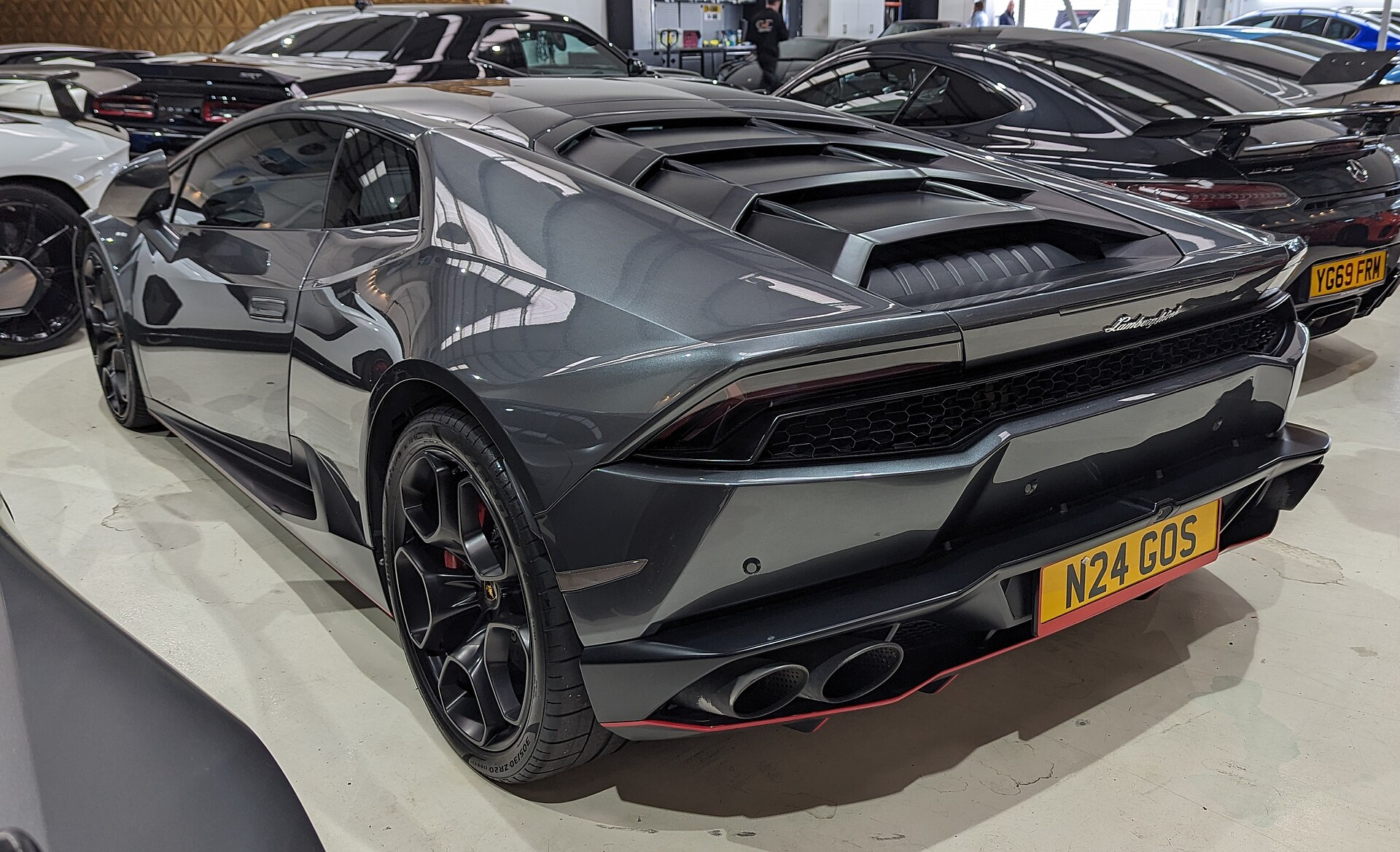
Selling the Sterrato: Marketing the Machine with No Competitor
The only off-road supercar ever built. 1,499 produced.
The Huracan Sterrato: Selling the Unexpected—Rarity Beyond Numbers
The Lamborghini Huracan Sterrato represents something genuinely unprecedented in automotive history: a mid-engine supercar designed for off-road capability. Conceived as Lamborghini's farewell to naturally aspirated mid-engine performance (before the Revuelto's hybrid V12 era), the Sterrato intentionally breaks every convention of supercar design philosophy. Only 1,499 units were produced starting in 2023, making it substantially rarer than Performante or STO variants. Yet the rarity pales compared to the machine's genuine uniqueness: there is no direct competitor. No other manufacturer produces a mid-engine supercar with raised suspension, off-road tires, underbody protection, and roof-mounted LED lighting bar. This unprecedented positioning creates uniquely powerful selling dynamics for owners understanding how to capitalize on the Sterrato's differentiation.
Current market pricing reflects the Sterrato's dual personality. At $280K-$320K for pristine examples, it trades below STO/Tecnica variants despite superior rarity. This pricing arbitrage opportunity—lower price than more extreme variants despite greater scarcity—creates meaningful value for owners selling today. As the Sterrato's production edition status becomes clearer and supply remains constrained, collectors increasingly recognize it as the ultimate "wrong place, right time" machine that broke all conventions and succeeded. This recognition drives appreciation momentum superior to standard variants.
The Uniqueness Factor: Competitive Positioning That Doesn't Exist
The Sterrato's fundamental advantage as a sales vehicle lies in a single, overwhelming fact: it has no competitor. The Ferrari SF90 Stradale, Porsche 911 Turbo S, McLaren 720S—all operate in entirely conventional supercar paradigms. None even consider all-terrain capability. Even comparing Sterrato to standard Huracan underestimates the differentiation. A standard Huracan is a conventional supercar with excellent handling. The Sterrato is an entirely different conceptual category: the road is merely the baseline for capability that extends substantially beyond conventional automotive parameters.
This absence of competitive comparison creates powerful psychological advantages in marketing. Potential buyers cannot easily research competing machines or compare specifications against alternatives. The Sterrato must be evaluated on its own terms: what is this machine, and does it appeal to my vision of automotive ownership? This forces buyers to engage with the machine emotionally and philosophically rather than analytically comparing feature checklists. Emotional connection drives premium willingness-to-pay far more effectively than feature comparison.
Position your Sterrato sales narrative around this uniqueness: "This is the only machine of its kind. There is no alternative. You're not choosing between Sterrato and other off-road supercars—because no off-road supercars exist. You're choosing whether your supercar ownership includes unprecedented versatility and capability." This positioning appeals to buyers seeking genuinely distinctive machines that establish identity through uniqueness.
The "Last Naturally Aspirated" Narrative
The Sterrato carries profound significance as Lamborghini's final naturally aspirated mid-engine production car. The 2025 Revuelto introduces hybrid V12 power. Future Lamborghini mid-engine cars will feature electrification and turbocharging. The Sterrato represents the last chance to purchase a brand-new naturally aspirated Lamborghini—this should be emphasized relentlessly in your sales positioning.
This "last of the era" positioning creates meaningful collector psychology. Enthusiasts who deeply value naturally aspirated engagement recognize the Sterrato as the final opportunity to purchase a new machine without turbos or hybrid complexity. Unlike used Performante or older Huracan variants, the Sterrato is brand new with full warranty. Unlike future Lamborghinis, it represents the final NA design. This confluence creates powerful positioning: "The last naturally aspirated Lamborghini you can purchase new, but with unprecedented off-road capability Lamborghini never attempted before."
Dual Positioning Strategy: Purist vs. Practical
The Sterrato appeals to two distinct buyer segments, and your marketing should address both. The first segment comprises purist collectors who value naturally aspirated engagement and recognize the Sterrato as the swan song of a magnificent powertrain era. Market to this audience emphasizing the naturally aspirated V10, the 610 horsepower, the mechanical connection, the soundtrack. These buyers care little about off-road capability but deeply value NA purity and finality. For this audience, the off-road components are almost incidental—the real story is the machine's mechanical character.
The second segment comprises practical visionaries who appreciate the genuine capability expansion. These buyers value the raised suspension (+44mm vs. standard Huracan), the all-terrain tires, the approach and departure angles that enable actual light off-road driving, and the versatility of owning a machine that transcends conventional boundaries. Market to this audience emphasizing capability, versatility, and the liberation of owning a supercar that's not imprisoned by curb sensitivity. This buyer seeks genuinely different ownership experience beyond conventional supercar paradigms.
Both narratives are authentic, and both resonate with different buyer psychographies. Your listing should provide sufficient information for both segments to recognize their specific appeal in the machine.
Valuation and Rarity Economics
Pricing reflects early production status combined with extreme rarity. Pristine examples (under 500 miles) command $310K-$330K. Excellent condition (500-1,500 miles) trade in $290K-$310K range. Very good condition (1,500-3,000 miles) operate at $270K-$290K. Good condition (3,000-5,000 miles) move to $250K-$270K range. This pricing structure reflects "new production" positioning. As Sterrato ages beyond 5,000 miles, it transitions from "barely used new production car" to "used Huracan variant," creating pricing inflection point around 4,000-5,000 miles.
Production rarity (only 1,499 made) should command rarity premium relative to Performante (larger production run) or standard Huracan (much larger production volume). Yet current market pricing doesn't yet reflect this premium—Sterrato operates at similar pricing levels to more common variants. This represents temporary market inefficiency that favors current sellers. As collector understanding deepens regarding Sterrato's finality and uniqueness, future pricing appreciation may exceed other Huracan variants. Current owners benefit from selling into this appreciation recognition curve.
Specification Variations and Value Drivers
The Sterrato's relatively recent introduction means specification variations matter less than established production runs. However, several options create meaningful value differentiation. Pearl or metallic paint options add 3-5% premium over standard colors. Carbon fiber package (exterior accents, interior trim) adds 2-3% value. Premium audio systems add modest value (1-2%). Roof-mounted LED light bar is standard equipment, but aftermarket upgrades or protective covers suggest heavy use and may create minor depreciation. Color specification matters less for Sterrato than for other Huracans because conceptual uniqueness dominates buyer decision-making.
Unlike older Huracans with extensive customization options, Sterrato production runs feature relatively standardized configurations. This reduces specification variation impact compared to earlier generations. Focus on condition, mileage, and documentation quality rather than endless specification variation.
Known Issues and New Production Challenges
The Sterrato is brand new with limited ownership history, so "known issues" are minimal compared to established production runs. However, several early-production considerations merit discussion. Stone chip damage on underbody cladding represents early-production reality for any machine with underbody protection. Rally-mode driving or gravel road usage creates inevitable cosmetic damage to protective plastics. This is normal wear rather than defect—address it in your disclosure but don't overstate its significance. Paint stone chips are nearly invisible on unpainted protective material.
Rally mode tire wear occurs rapidly on all-terrain tires when operated in aggressive driving modes on pavement. First-generation Sterrato owners using rally mode frequently experience dramatically accelerated tire wear. This represents owner operating mode choice rather than mechanical defect. However, evidence of extreme tire wear (tread depth under 4/32 inch remaining) justifies discount reflecting future buyer's tire replacement need ($4,000-$6,000 for OEM all-terrain tires).
Software stability and LDVI system glitches occasionally manifest in early production examples, though Lamborghini has released software updates addressing most issues. If your vehicle has received latest software updates, this is selling point (responsible ownership). If still operating on original software version, recommend update before sale to prevent buyer hesitation. LDVI system controls all vehicle dynamics and buyer confidence in system reliability matters substantially.
Overall, new production status means mechanical defects are rare. Condition and maintenance become primary quality metrics rather than engineering flaws.
Documentation and Warranty Status
Sterrato is production vehicle with full factory warranty (5 years/unlimited mileage coverage typical). Verify warranty status and transferability (Lamborghini warranties typically transfer to second owner with minimal restrictions). Comprehensive warranty coverage significantly increases buyer confidence and allows pricing at premium levels relative to older, warranty-expired variants. Document warranty status clearly in your listing and marketing materials. Some buyers specifically seek extended warranties that Lamborghini dealerships can provide.
Compile ownership documentation including: original delivery paperwork, warranty certificate, maintenance records from any performed service, original purchase agreement, original keys and service booklets. While few Sterrato examples have exceeded regular maintenance intervals yet, any documentation of conscientious ownership (regular tire rotation, filter changes) builds buyer confidence in pre-purchase condition. Keep meticulous maintenance records from day one of ownership.
Marketing the Unprecedented
Your marketing narrative must center on unprecedented character. Emphasize: "The only off-road supercar ever produced." "The final naturally aspirated Lamborghini." "1,499 examples produced—fewer than most limited-edition variants." "No competitor exists." "Light trails, canyon passes, and four-lane highways—this machine transcends conventional supercar boundaries." This messaging appeals to buyers seeking genuine differentiation in automotive ownership.
Professional photography becomes even more critical for Sterrato than conventional supercars. Capture the machine in diverse environments: urban streets, canyon roads, beach setting, gravel road (if possible with owner permission). Show the raised suspension, the all-terrain tires, the roof-mounted light bar—these distinctive design elements are selling points that differentiate from conventional supercars. Include detail shots of protective underbody cladding and terrain management systems.
Video content showing off-road capability (even simple dirt road driving) provides unique value proposition impossible to convey in photographs. Sterrato buyers particularly respond to content demonstrating actual capability beyond conventional paved driving. Create compelling narrative showing versatility across different terrain types.
Target Buyer Psychology
Sterrato buyers divide into three segments: (1) purist collectors valuing NA finality, (2) practical visionaries appreciating genuine capability, (3) early-adopter status seekers recognizing unique positioning. All three segments value distinctive ownership experience over conventional supercar metrics. Marketing message: "Stop choosing between practical capability and supercar performance. The Sterrato doesn't compromise—it simply expands what's possible."
Avoid conventional supercar positioning (0-60 benchmarks, track day capability) that audiences already understand. Instead emphasize conceptual uniqueness: "Your supercar doesn't need the highway. It chooses the highway because it can drive anywhere." This inverts conventional supercar marketing entirely.
Valuation Architecture Summary
Pristine condition, minimal mileage: $310K-$330K. Excellent condition, regular use: $290K-$310K. Very good condition, 2,000-4,000 miles: $270K-$290K. Good condition, light trail use: $250K-$270K. Deduct 5-8% for heavy trail use evidence. Deduct 3-5% for deferred maintenance (tire replacement pending, service interval approaching). Add 2-4% for exclusive color specifications. Warranty transferability adds modest premium.
Investment Thesis and Collector Recognition
The Sterrato occupies fascinating positioning in the collector marketplace. Unlike traditional collectible supercars that appreciate through scarcity and historical significance, the Sterrato appreciates through conceptual innovation and market belatedness. Collectors are now beginning to recognize that Lamborghini's willingness to break design conventions represents something genuinely valuable. The Sterrato was "wrong" from a conventional supercar perspective—yet this wrongness made it right. As this collector psychology crystallizes over next 2-3 years, Sterrato pricing will likely appreciate substantially beyond current levels. Owners selling today capture current supply-constrained pricing while missing on potential future appreciation. However, current pricing remains strongly favorable compared to more established Huracan variants. This represents optimal timing for owners seeking liquidity without leaving massive appreciation on the table.
Seasonal and Market Timing Considerations
Sterrato production is early and inventory remains limited. Current market conditions favor sellers heavily. Few examples are for sale, and demand exceeds supply. This creates favorable pricing environment that may not persist as production scales and secondary market matures. Selling in current market (2024-2025) captures supply-constrained advantages before broader availability increases competition.
Seasonally, the Sterrato bucks conventional patterns. Unlike standard supercars showing peak demand in late spring/early fall, Sterrato actually shows stronger buyer interest in winter months—practical buyers researching capability vehicles for challenging seasons. Consider timing your sale for winter marketing if timeline flexibility exists. Spring and fall remain strong for purist collector interest.
The Sterrato's Unique Selling Advantage
Finally, recognize that the Sterrato's greatest selling advantage is precisely its unprecedented uniqueness. In a supercar market filled with incremental variations and derivative designs, the Sterrato stands alone. This isolation is marketing gold. Every comparison emphasizes the Sterrato's singular positioning. Every alternative buyer considers only reinforces Sterrato's lack of competitor. Use this relentlessly in your sales positioning. The machine sells itself—your job is simply channeling buyer interest toward authentic ownership of something genuinely unrepeatable. The Sterrato represents a once-in-a-generation outlier that successfully challenged automotive convention, and the collector market is only beginning to recognize its significance.
Ready to Sell Your Lamborghini Huracan Sterrato?
Automonitor's buyer network includes thousands of pre-qualified collectors and enthusiasts. Get a fair market valuation and connect with serious buyers — no lowball offers, no tire kickers.
Get Your Valuation →