The Thinking Person's Huracan — Why the Tecnica Is the Smartest Choice
640 hp rear-wheel-drive perfection: where track capability meets daily livability. The engineer's Huracan.
The Thinking Person's Huracan — Why the Tecnica Is the Smartest Choice
The Lamborghini Huracan Tecnica occupies an extraordinary position in the supercar hierarchy. It exists at the exact intersection where engineering excellence meets practical ownership, where track capability transcends into daily usability, where performance doesn't demand lifestyle sacrifice. The Tecnica is Goldilocks supercar: not quite as extreme as the Sterrato or STO, yet delivering everything those machines offer and more through sheer engineering sophistication. For the buyer seeking maximum capability balanced with genuine drivability, nothing else compares.
Introduced for the 2022 model year with production running through 2024, the Tecnica represents Lamborghini's final-generation Huracan evolution before the transition to hybrid and electric powertrains. Unlike the Sterrato's niche positioning, the Tecnica speaks to serious performance engineers. It combines the rear-wheel-drive purity of the Huracan STO with the everyday usability of the Evo lineup. It adds rear-wheel steering technology that fundamentally transforms handling dynamics. It introduces design flourishes that distinguish it visually while retaining the Huracan's evolutionary elegance.
Current market pricing reflects the Tecnica's balanced appeal: $260,000 to $320,000 depending on mileage, service history, and specific examples' build configurations. The original $238,083 MSRP means recent examples maintain substantial value compared to depreciation curves of earlier Huracans. This value retention itself speaks to buyer recognition—people understand the Tecnica's balanced positioning immediately.
The Tecnica's V10: Pure Power with Modern Efficiency
The Tecnica engine represents the V10's final evolutionary stage at Lamborghini. The 5.2-liter displacement remains constant, but extensive tuning coaxes 640 horsepower and 417 pound-feet of torque—a 30 hp increase over the Sterrato. More importantly, this power arrives in a refined, completely modern delivery package. The engine targets 8,500 rpm, matching the Sterrato's high-revving character while introducing refinements that make the Tecnica feel thoroughly contemporary.
Zero to sixty arrives in 3.2 seconds—genuinely quick enough that driving acceleration sensation reduces to camera review verification rather than subjective experience. Top speed reaches 202 mph, a 10 mph advantage over the Sterrato reflecting the Tecnica's road-focused engineering. More significant than headline numbers is the power curve's character. Unlike earlier Huracans with power peaks at specific engine speeds, the Tecnica's sophisticated engine management creates a plateau of maximum torque across a wider band. This means continuous acceleration response whether revving from 4,000 to 8,500 rpm—true supercar immediacy.
The engine's internal modifications deserve engineering appreciation. Lighter titanium connecting rods reduce reciprocating mass, allowing quicker acceleration and smoother operation at extreme rpm. New piston design optimizes combustion chamber flow, improving power output without requiring turbocharging or displacement increase. Updated fuel injection patterns provide superior combustion efficiency, benefiting both performance and emissions compliance. The result is a naturally aspirated engine that outperforms many turbocharged competitors while requiring less complex maintenance and delivering more mechanical authenticity.
From ownership perspective, this engine sits at the sweet spot between the Sterrato's simpler operation and the STO's aggressive servicing demands. Annual maintenance costs approximate $4,000-$5,500 depending on shop labor rates and your location. The seven-speed ISR (Independent Shifting Rod) transmission adds complexity compared to traditional automatic gearboxes, but Lamborghini's single-clutch system proved remarkably reliable throughout the Huracan's production run.
Rear-Wheel Drive and the Tecnica's Steering Character
The Tecnica abandons the Huracan's standard all-wheel-drive system, committing entirely to rear-wheel drive. This decision fundamentally transforms driver engagement. All-wheel-drive supercars provide ultimate grip and acceleration authority, but RWD machines deliver feedback and connection that separated machines inspire in attentive drivers. The Tecnica rewards technique with responsiveness, punishment, and drama in equal measure.
Rear-wheel-drive power delivery creates a mechanical narrative. Throttle input transitions instantaneously to wheel spin or grip-limited acceleration. Corner exit—traditionally the RWD supercar's challenging moment—becomes an art form. The Tecnica's electronic stability control allows appropriate slip control without artificial dampening, letting genuine vehicle dynamics express themselves. Experienced drivers exploit controlled drifts and dynamic line adjustments unavailable in traction-controlled all-wheel-drive machines.
This isn't recklessness; it's engineering philosophy. Lamborghini calibrated the electronic control systems understanding that Tecnica buyers would be advanced drivers capable of managing high-performance situations. The ANIMA system provides Strada, Sport, and Corsa modes, each moderating stability intervention differently. Strada enforces maximum stability intervention for public roads. Sport permits greater driver control while maintaining safety margins. Corsa removes most intervention, entrusting the driver with active vehicle management.
The psychological effect of RWD ownership shouldn't be underestimated. Driving a rear-wheel-drive supercar on challenging road conditions requires attention and engagement that AWD machines eliminate. For many drivers, this engagement represents the core appeal of supercar ownership. You're not simply pushing an input device that translates to velocity; you're actively dancing with machine dynamics, reading road feedback through steering inputs and throttle modulation.
Rear-Wheel Steering and Handling Revolution
The Tecnica introduces rear-wheel steering technology that transforms supercar handling. The rear axle's wheels rotate in controlled opposition to front wheel angle—up to three degrees of steering angle depending on speed and driving conditions. This seemingly minor capability revolutionizes handling across the entire performance envelope. At low speeds, rear-wheel steering effectively shortens the wheelbase, reducing turning radius dramatically. Parking, U-turns, and tight corner navigation become surprisingly accessible for a 180-inch vehicle.
At highway speeds, rear-wheel steering maintains wheelbase length, improving stability and reducing the dramatic inputs required for direction changes. The system's algorithm reads speed, steering angle, and vehicle dynamics, continuously optimizing rear-wheel angle for maximum responsiveness. Drivers perceive this as supernatural handling—the Tecnica changes direction with less steering lock required than earlier Huracans, yet maintains complete stability even during aggressive high-speed transitions.
Corner entry dynamics benefit fundamentally from rear-wheel steering. Traditional supercars require absolute precision entering challenging turns—trail-brake too late, and the rear slides outward; brake too early, and entry speed diminishes. The Tecnica's rear-wheel steering provides effective margin for correction. The algorithm interprets overcorrection as intentional adjustment and augments rear-wheel angle accordingly, tightening line without requiring driver correction. This transforms corner entry from tense precision execution into confident exploration.
Track drivers immediately recognize rear-wheel steering's advantages during circuit driving. Apex speed increases not through greater straightline velocity but through superior cornering geometry and stability. The Tecnica attains lateral acceleration comparable to the STO despite softer suspension tuning. This enables the remarkable achievement: track performance approaching the STO while maintaining genuine daily drivability.
Advanced Suspension and Braking Technology
The Tecnica's suspension system represents Lamborghini's final naturally aspirated performance evolution. Double-wishbone independent front and rear geometry remains conceptually unchanged from the original Huracan platform, but every bushing, spring rate, and damper coefficient underwent revision. The suspension targets precise responsiveness while permitting adequate travel for rough road surfaces that eliminate earlier, more track-focused variants.
Magneto-rheological dampers—suspension fluid containing ferro-magnetic particles that adjust stiffness instantaneously—enable continuously variable suspension behavior. ANIMA mode selection adjusts damping from fluid to firm, creating suspension character matching driving intention. Strada mode delivers comfortable compliance sufficient for extended highway drives without serious degradation of responsiveness. Corsa mode hardens damping to maximum, creating direct steering response and minimal body roll during aggressive driving.
Brake specifications speak to the Tecnica's capabilities. Carbon ceramic discs—standard equipment rather than optional upgrade—provide fade-free performance across unlimited braking cycles. Street-focused supercars like the Evo use steel brakes with composite pads providing excellent stopping power for normal driving. The Tecnica's carbon ceramics demand considerably higher temperatures to generate friction, creating slower initial bite on cold morning drives. Serious track driving justifies this trade-off; casual daily driving introduces slight braking delay when morning thermometers read below forty degrees.
The braking system's electronic control includes ABS and electronic brake force distribution, managing weight transfer during aggressive deceleration. The system prevents rear-wheel locking even during maximum-effort braking on low-grip surfaces, a feature appreciated far more during panic emergency braking than controlled circuit driving.
Visual Evolution: Restyled Design Elements
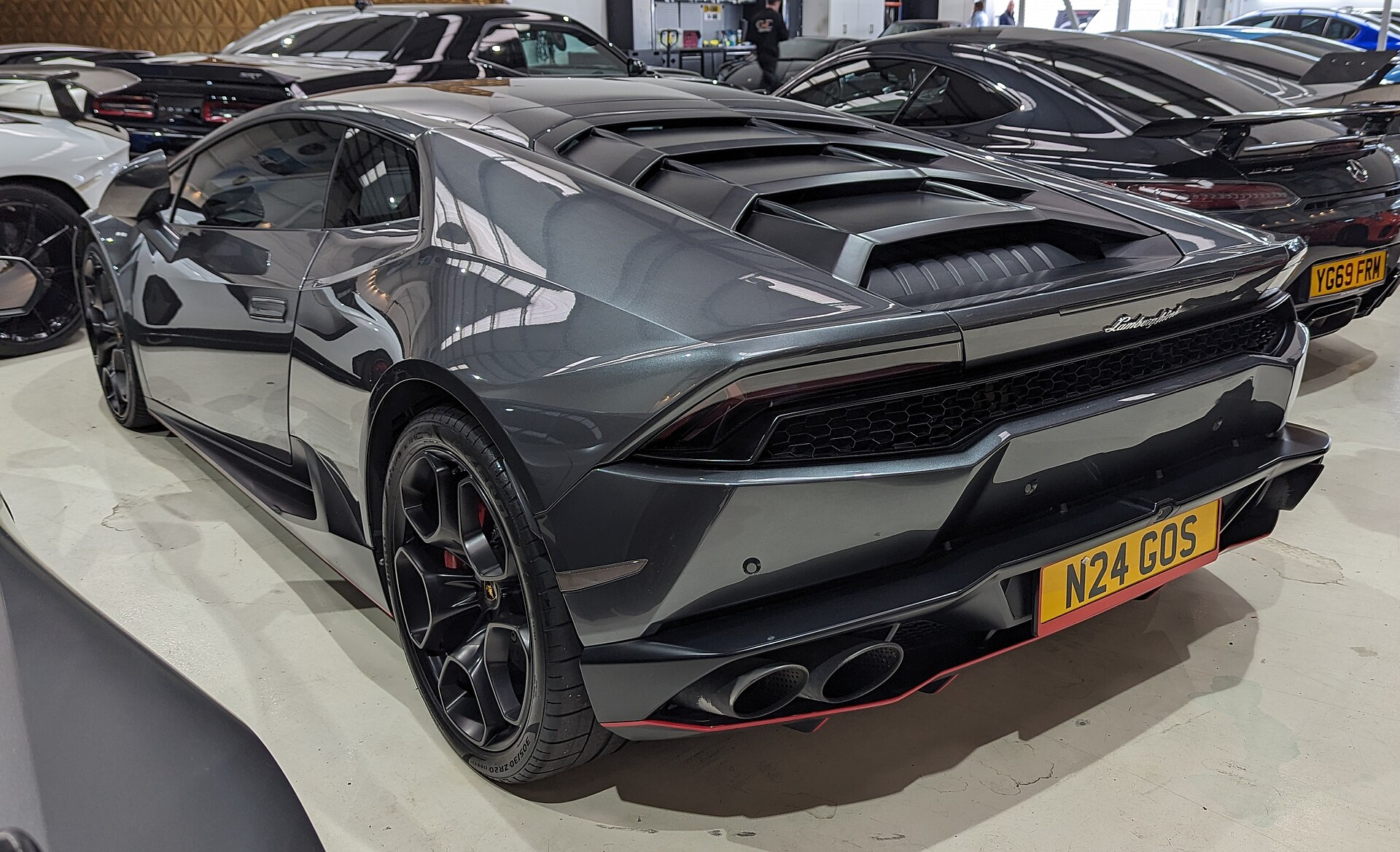
Externally, the Tecnica introduces design evolution that distinguishes it from earlier Huracans while honoring the platform's visual language. The revised front bumper features aggressive shapes suggesting aerodynamic sophistication. New side intake styling improves cooling without appearing over-modified. The most distinctive change involves restyled rear taillights—Y-shaped hexagonal units replacing the Evo's circular lenses. These new lights, inspired by Lamborghini's historical design language, modernize the rear end while immediately distinguishing the Tecnica from earlier variants.
The rear diffuser integrates elements from the more aggressive STO, featuring dual diffuser sections improving high-speed aerodynamic efficiency. The overall visual effect conveys purpose without cartoon-like aggression. The Tecnica looks track-focused yet refined, sporting equipment-laden yet restrained. This design balance translates into long-term appeal—the Tecnica resists dated appearance better than overtly aggressive contemporary designs.
Interior updates include revised infotainment interfaces and modern connectivity systems aligned with 2022-2024 automotive standards. The Tecnica eliminates the dated touchscreen interfaces of early Huracans, introducing cleaner graphics and faster response. Modern Apple CarPlay and Android Auto integration proves standard, enabling seamless smartphone connectivity for navigation, communications, and entertainment.
LDVI 2.0 and Driving Dynamics Management
The Tecnica benefits from LDVI 2.0—Lamborghini Dinamica Veicolo Integrata version two—a comprehensive vehicle dynamics computer integrating steering, throttle, suspension, and all-wheel-drive torque distribution (on applicable models). The Tecnica's RWD configuration simplifies some LDVI functions while enabling others. The system no longer manages all-wheel-drive bias but provides enhanced throttle and suspension control, delivering real-time response optimization.
LDVI 2.0 continuously monitors steering angle, vehicle speed, lateral acceleration, and engine parameters. During aggressive driving, the system modulates throttle response aggressiveness, adjusting how quickly engine power translates to wheel torque. Corsa mode enables maximum aggressiveness—precisely matching driver throttle input to power delivery. Strada mode introduces deliberate delay, softening throttle response and preventing accidental oversteer during parking-lot maneuvers or panic inputs.
Suspension damping integrates into LDVI monitoring. The system adjusts damper stiffness microseconds after reading suspension compression or extension, creating active-feel suspension response. Bumps transmit to the chassis, but the dampers adjust stiffness preventing secondary oscillation. The result is suspension that feels alive and responsive without transmitting every road imperfection into the cabin.
Bridgestone Potenza Tires and Road Manners
The Tecnica wears Bridgestone Potenza tires optimized for road performance and track capability. These performance-focused tires balance dry-grip with wet-weather safety, highway comfort with corner agility. Unlike the Sterrato's all-terrain rubber or the STO's ultra-focused race tires, the Potenzas represent mainstream high-performance rubber. This choice reflects the Tecnica's positioning: extraordinary performance wrapped in genuinely usable daily driving.
Tire wear rates exceed all-terrain or eco-focused alternatives significantly. Aggressive driving and track usage can consume tire sets within 12,000-15,000 miles. Replacement costs run $3,500-$4,200 for a complete set, comparable to quality performance tires across the supercar market. The trade-off is straightforward: maximum grip and responsiveness requires tire consumption. Casual road driving at modest speeds extends tire life dramatically—many owners report 20,000+ miles from properly maintained sets through measured driving.
Seasonal changes impact performance noticeably. Winter temperatures substantially reduce Potenza grip, while summer heat extends peak performance. Serious owners in northern climates maintain separate winter rubber, improving safety and extending summer tire life. Winter tire sets cost similarly to summer equipment, representing the cost of sophisticated regional driving.
Daily Usability: The Underrated Virtue
Unlike the track-focused STO, the Tecnica genuinely accommodates extended regular driving. Bumps don't rattle your teeth. Engine temperatures remain manageable during slow urban traffic. The cabin maintains reasonable noise levels without active noise cancellation. These qualities, seemingly simple, represent sophisticated engineering balancing extreme performance with human comfort.
The transmission raises important usability considerations. The ISR single-clutch gearbox provides instantaneous gear changes during performance driving, but gear selection requires deliberate pedal modulation during casual driving. Heavy-traffic commuting demands constant throttle modulation to prevent jerky gearbox behavior. Drivers unaccustomed to sophisticated transmissions report frustration during initial ownership. However, behavioral adaptation—learning to anticipate gearbox behavior and modulate inputs accordingly—transforms the transmission from nuance into character.
Climate control systems manage cabin temperatures during extended driving. The Tecnica's low-slung seating and modest glass area restrict ventilation compared to conventional cars, meaning air conditioning demands constant attention during summer driving. The system performs adequately, maintaining reasonable cabin temperatures, but never achieves the near-invisible thermal management of less aggressive vehicle designs.
Infotainment systems provide modern functionality—navigation, communications, entertainment—without requiring the aggressive learning curves of ultra-exotic supercars. The Tecnica feels contemporary without demanding technical expertise beyond typical owners' capabilities.
Performance on Road and Track
The Tecnica delivers extraordinary performance across different driving environments. Public road driving showcases the rear-wheel steering advantage: high-speed stability permits confident exploration of challenging routes. Sweeping highway corners transmit minimal steering inputs, enabling relaxed-yet-responsive driving unavailable in traditional RWD supercars. Aggressive back-country driving reveals the sophisticated suspension—body roll remains minimal while compression absorption prevents bottoming during deep ruts.
Track performance positions the Tecnica between the Evo and STO. The Evo, positioned as accessible daily-drivable extreme performance, delivers competent lap times while maintaining absolute user-friendliness. The STO, engineered purely for circuit speed, demands driver precision and exploits every ounce of performance engineering. The Tecnica occupies the middle ground—lap times approaching the STO with suspension and braking capability sufficient for track use, yet maintaining genuine daily usability.
Circuit lap times depend on driver skill and specific track configurations. Comparable vehicles suggest the Tecnica delivers laptimes 2-4 seconds slower than the STO on technical courses, substantially faster than the Evo. The psychological impact is more significant than raw time advantages: the Tecnica permits aggressive driving without demanding absolute precision at the limit. You can trail-brake confidently without requiring millimeter accuracy; corner exit aggression forgives imperfection; general mistakes rarely create catastrophic consequences.
Ownership Costs and Long-Term Reliability
Annual maintenance runs $4,000-$5,500 depending on specific service items and regional shop rates. Oil service costs approximately $500-$700, relatively reasonable for a 640 hp naturally aspirated engine. Brake fluid replacement requires annual attention—$300-$500 depending on shop rates. Transmission fluid servicing occurs every 20,000 miles—$1,200-$1,600 for Lamborghini-approved fluids. Spark plug replacement happens every 30,000 miles—approximately $400-$600.
The ISR transmission represents the most exotic maintenance item. Single-clutch designs require occasional hydraulic system servicing and clutch monitoring. Complete clutch replacement occurs around 50,000 miles of hard driving, sooner with aggressive track use. This service runs $12,000-$20,000, representing significant ownership cost but remaining reasonable relative to total vehicle value.
Insurance costs approximate $6,500-$9,500 annually depending on coverage levels and location. Specialty automotive insurers provide agreed-value policies protecting against depreciation, crucial coverage for appreciating investment-grade vehicles.
Carbon ceramic brake replacement occurs every 80,000-120,000 miles depending on driving style. Replacement costs $20,000-$35,000 for complete sets, substantial expense but typically occurring well into ownership timelines. Steel brakes cost substantially less and provide adequate performance for non-track driving, enabling cost-reduction strategies for extended ownership.
The Tecnica's Market Position and Investment Potential
Secondary market pricing reflects the Tecnica's sophisticated positioning. Original MSRP of $238,083 appears approximately 7-12% cheaper than current secondary market pricing ($260K-$320K range). This modest appreciation seems modest compared to rare limited-edition variants, but reflects the Tecnica's production volume and balanced appeal. Lamborghini produced the Tecnica in more substantial numbers than the Sterrato, reducing scarcity premiums.
Long-term appreciation potential exceeds the Evo substantially. The transition to hybrid and electrified Huracans increases the naturally aspirated Tecnica's historical significance. Owner recognition of the Tecnica's balanced perfection—the final engineering evolution of the naturally aspirated Huracan—drives value retention. Comparable modern Ferraris and McLarens appreciated 4-7% annually during similar ownership periods. The Tecnica's stronger character and engineering reputation suggest faster appreciation potential.
Depreciation follows predictable curves: 8-12% first-year loss reflecting new-car depreciation, then 3-5% annually as the vehicle ages. The depreciation curve flattens significantly after five years, suggesting the Tecnica reaches a stable value point around year seven to ten. This implies purchasing a four to five-year-old example with 15,000-20,000 miles captures most depreciation cost while acquiring a substantially depreciated vehicle at substantially lower purchase price.
Why the Tecnica Is the Balanced Choice
The Tecnica represents the engineering summit of the naturally aspirated Huracan. It delivers the highest power output of the entire lineup, combines the purity of rear-wheel drive with the sophistication of rear-wheel steering, provides genuine daily usability without sacrificing track capability, and exists at a price point ($260K-$320K secondary market) offering exceptional value relative to performance delivered. It is the thinking person's Huracan: the choice made by engineers and sophisticated drivers who appreciate comprehensive excellence over specialist extremes.
Select the Tecnica if you want a naturally aspirated supercar that daily-drives comfortably while delivering credible track performance, sophisticated engineering (rear-wheel steering) differentiating from all other Huracans, the highest power output Huracan ever produced, reasonable pricing relative to capability, or investment appreciation potential as a final naturally aspirated platform. The Tecnica delivers all these simultaneously.
Own a Tecnica, and you own the balanced masterpiece—the Huracan variant that got everything right without compromise, without excessive specialization, without forcing trade-offs between performance and usability. It is, quite simply, the best Huracan for the broadest category of discerning buyers.
Looking for a Lamborghini Huracan Tecnica?
Automonitor connects you with vetted sellers and real market data so you can buy with confidence. No markup games, no pressure — just the right car at the right price.
Find Your Lamborghini →