
Best Year Porsche 911 to Buy: Every Generation Ranked for Modern Buyers
The 911 has been in production for over 60 years, making it one of the greatest sports cars ever built. But which generation should you buy? We've ranked the 996, 997, 991, and 992 by value, reliability, and driving experience to help you make the right choice.
The 911 Generations: From Water-Cooled to Modern Performance
The Porsche 911 has undergone four major generational redesigns since the shift to water cooling in 1998. Understanding these generations is crucial because they represent fundamentally different driving experiences, reliability profiles, and value propositions. Each generation brought its own compromises, and each generation has enthusiasts who swear it's the peak of 911 evolution.
The 996 (1999-2004) was the first water-cooled 911, a controversial leap from the air-cooled 993. The 997 (2005-2012) refined the formula and fixed many of the 996's early issues. The 991 (2012-2019) represented Porsche's most modern interpretation before the current generation. The 992 (2019-present) is the newest, most tech-forward 911 ever made. For used buyers in 2026, the 996, 997, and early 991 models represent the best value opportunities, while the 992 commands a premium for its recency and technology.
The best 911 to buy isn't the newest or the rarest. It's the generation that aligns with your priorities: reliability, driving feel, budget, and intended use.
BEST OVERALL VALUE: 997.2 (2009-2012)
If you're looking for the single best year Porsche 911 to buy as a used car, the 997.2 generation stands out as the optimal blend of reliability, driving experience, and value. This is the last iteration of the 997 platform, and it represents the culmination of a decade of refinement. At $55,000-$80,000 in the used market, you're getting a modern, engaging 911 that still feels alive in a way newer turbocharged models don't.
The 2009-2012 997.2 models benefit from Porsche's Direct Fuel Injection (DFI) engine technology, which solved the notorious Intermediate Shaft (IMS) bearing problems that plagued earlier generations. The IMS saga had become Porsche's biggest reliability liability, and its resolution in 2009 fundamentally changed the ownership experience. You're buying a 911 from an era when the engineering was mature, the costs were reasonable, and the cars still used hydraulic power steering instead of electric assist.
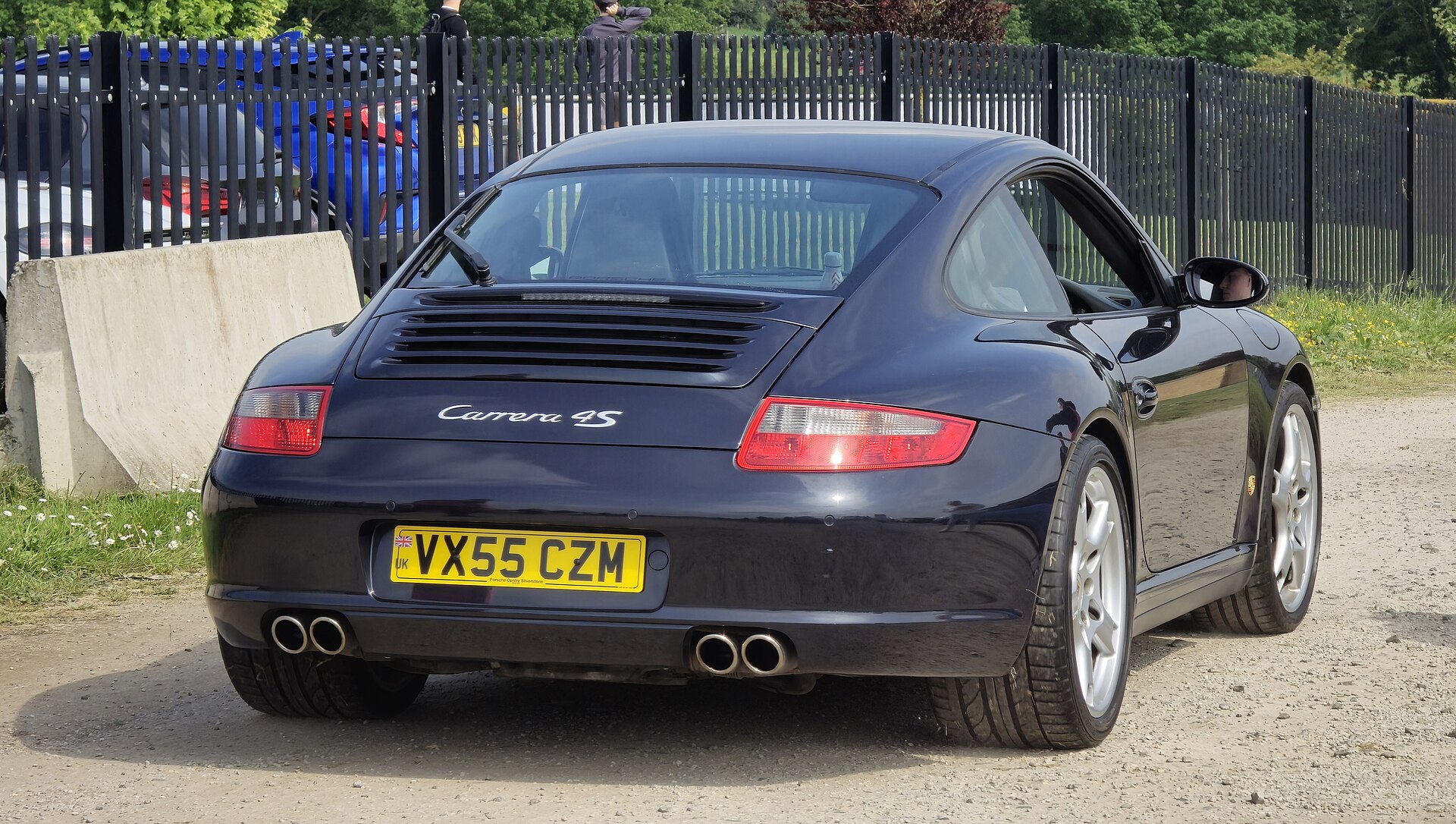
The 997.2 Carrera S and Carrera 4S produce 385 horsepower and 0-60 times of around 4.1 seconds. Those numbers don't sound dramatic by 2026 standards, but they're more than adequate for a weekend driver, and the naturally aspirated engine revs to 7,600 rpm with a mechanical immediacy that turbocharged engines can't replicate. Fuel economy hovers around 18-20 mpg combined, which is reasonable for a performance car. Maintenance costs run $2,000-$3,500 annually for routine service, significantly lower than newer models.
Insurance costs for a 997.2 are also remarkably affordable compared to newer generations — typically $1,200-$2,500 per year depending on your location and driving record. Registration and taxes are lower due to the car's age. After-market support is exceptional, with thousands of independent Porsche specialists across the country offering competent service at $150-$200/hour versus the $200-$300/hour dealership rates.
The 997.2 is also an excellent entry point for buyers who are considering whether they'll actually enjoy 911 ownership. If you buy at $65,000 and drive for three years, you'll likely sell for $50,000-$55,000, making your true ownership cost roughly $3,000-$5,000 per year. That's remarkably affordable for a Porsche.

BEST MODERN 911: 991.2 (2017-2019)
If you want to step up in technology, refinement, and turbocharged performance, the 991.2 generation represents the last naturally-aspirated 911 paired with modern conveniences you actually want. Introduced in 2015 and updated with a full turbo conversion in 2016, the 991.2 (2017-2019) strikes a balance between modern and mechanical that's hard to find. At $70,000-$100,000 used, you're looking at a car that feels genuinely contemporary while retaining the core 911 character.
The 991.2 Carrera S features a 3.0L twin-turbocharged flat-six producing 443 horsepower and 405 lb-ft of torque. It hits 60 mph in 3.9 seconds and tops out at 191 mph. The 991.2 is significantly more refined than the 997 generation — better interior quality, more intuitive controls, better infotainment, and a smoother, more predictable powerband. PDK dual-clutch transmission shifts are seamless and responsive, though six-speed manuals are still available in 2017-2019 models if that's your priority.
Reliability on the 991.2 has been solid, with fewer reported issues than earlier 991 models. The turbochargers are robust, the transmission is proven, and electrical gremlins are minimal compared to other manufacturers' turbocharged sports cars. Annual maintenance typically runs $2,500-$4,000. The 991.2's warranty coverage depends on the specific model year, but many 2017-2018 examples still have factory warranty remaining if purchased through a Porsche dealer.
Where the 991.2 truly excels is as a daily driver that doesn't feel compromised. The steering is electronically assisted but still communicates feedback. The suspension is comfortable enough for highway driving but stiffens up beautifully when you're pushing. The infotainment system is actually usable. Climate control works. Heated seats are standard. This is a 911 that won't punish you for actually driving it to work.
Find Your Perfect 911 Match
Automonitor sources Porsche 911s across all generations and years. Our team handles inspections, documentation, and negotiations so you can focus on finding the right car.
Browse Available Inventory →BEST DRIVER'S 911: 2018 991.2 GT3 ($155K-$230K)
For buyers who prioritize the mechanical driving experience above all else, the 2018 991.2 GT3 is arguably the finest generation of this variant ever produced. It's the last naturally-aspirated GT3, featuring a 4.0L flat-six engine that screams to 9,000 rpm, producing 500 horsepower of unadulterated mechanical fury. The steering is hydraulic. The gear changes come from a six-speed manual that feels like a mechanical masterpiece. The suspension is track-focused but street-manageable. At $155,000-$230,000 depending on specification and mileage, it's expensive, but it's an entirely different breed of 911.
Driving the 991.2 GT3 is an experience that turbocharged engines can't replicate. There's no turbo lag, no electronic intervention, no safety systems muting your inputs. Just engine, drivetrain, suspension, and your hands. The sound alone justifies the premium — a high-revving naturally-aspirated flat-six at full throttle is one of the greatest automotive experiences money can buy.
The GT3 is also remarkably reliable for a track-focused car. Maintenance is higher than standard models, but not prohibitively so. Porsche owners who track their GT3s regularly report excellent durability if they follow service intervals religiously. The only caveat: if you plan to track it hard, budget for brake service, tire replacement, and occasional suspension work.
See our detailed 2018 Porsche 911 GT3 buyer's guide for comprehensive specs and ownership costs.
BEST DAILY DRIVER: 992 Carrera S (2020+)
If you want the newest, most refined, most tech-forward 911 that can be legitimately used every day without compromise, the 992 Carrera S (2020 and newer) is worth the premium. At $88,000-$108,000 used for 2020-2022 models, these are expensive cars, but they're also arguably the best all-around 911 ever produced for daily driving purposes.
The 992 represents a complete redesign — new platform, new engine, new transmission, new suspension, new interior. The 3.0L twin-turbo flat-six produces 443 horsepower, slightly more than the 991.2. Acceleration is brisk. The eight-speed PDK transmission is exceptional. The steering has been improved and now features a more organic feel than the 991.2. The interior quality is noticeably higher, with better materials, more intuitive controls, and a modern infotainment system that actually makes sense.
Where the 992 truly shines is in usability. Visibility is improved. Ground clearance is better. The steering angle is tighter for parking. The suspension soaks up highway imperfections while remaining planted in corners. Long highway drives are genuinely comfortable. Cold starts are smooth. The car wakes up immediately.
Reliability on the 992 has been excellent so far. Porsche's quality control has improved significantly over the last decade, and this generation benefits from that investment. Annual maintenance runs $2,500-$3,500 for routine service. Most 2020-2022 models still have warranty remaining, which is a significant advantage for peace of mind.
The main drawback: the 992 is a computer-mediated experience in a way earlier generations weren't. There's less mechanical feedback. The steering is electric assist. Electronic stability control is intrusive unless you actively turn it off. For drivers who value feel above all else, this is a step backward. But for buyers who want a modern, reliable, usable Porsche that happens to be a sports car, the 992 is the answer.
The IMS Bearing Saga: Which Years to Avoid
The Intermediate Shaft bearing problem stands as the most significant reliability issue in modern Porsche history. The IMS bearing is a single-row ball bearing that supports the intermediate shaft in certain 911 engines. In certain model years, these bearings could fail catastrophically, turning a $5,000 component into a $15,000-$25,000 engine replacement.
The affected years and engines are: All 996 models (1999-2004), and early 997 models (2005-2008) with non-DFI engines. The 997.2 (2009-2012) with DFI direct fuel injection resolved the problem. Porsche eventually issued recalls and extended warranties for affected vehicles, and many used cars have already had preventative IMS bearing replacements done.
When shopping for a 996 or early 997, ask the seller specifically whether an IMS bearing replacement has been completed. Get documentation. If the bearing hasn't been replaced and the car has high mileage (over 60,000 miles), factor in a $4,000-$8,000 pre-emptive replacement cost before buying. Many specialists offer less expensive alternatives to dealer replacement, so if you buy a car without IMS work done, have an independent inspection specifically focus on this component.

Air-Cooled vs. Water-Cooled: The Elephant in the Room
The 993 (1995-1998) represents the final air-cooled 911 generation. These cars have become collectible, with prices that have appreciated dramatically over the last five years. A good 993 Carrera costs $80,000-$120,000, and desirable variants like the RS or Turbo can exceed $150,000.
Are air-cooled 993 models worth buying? That depends entirely on your priorities. Air-cooled engines have a character and sound that water-cooled engines don't replicate. They run cooler, have fewer complex systems to fail, and represent a simpler mechanical paradigm. But they're also older, require more specialized service, have less power than modern water-cooled 911s, and are increasingly valuable as appreciating assets rather than usable vehicles.
If you're buying a 993 as an investment, you're potentially making a smart move — these cars are appreciating faster than any other 911 generation right now. If you're buying a 993 as a usable driver, understand that you're compromising on power, efficiency, and reliability for character and historical significance. See our comprehensive Porsche 911 buyer comparison for air-cooled vs. water-cooled analysis.
GT Cars: GT3, GT3 RS, GT2 RS
The GT variants represent the pinnacle of 911 performance. The GT3 is track-focused but street-legal. The GT3 RS is even more extreme, with active aerodynamics and track-specific suspension. The GT2 RS is the ultimate — a turbocharged monster with over 700 horsepower in later generations.
For current buyers in 2026, the 2017-2019 991.2 GT3 ($155K-$230K) represents the best value in track-focused 911s. The 2019 GT3 RS ($180K-$250K) is more exclusive but significantly more expensive to maintain and less street-friendly. The 2019 GT2 RS ($220K-$300K+) is the most powerful but also the most specialized.
Which GT car should you buy? If you track your car regularly or want to, the GT3 is the answer. If you prioritize exclusivity and performance above cost, the GT3 RS. If you want the maximum power and can handle a turbocharged variant, the GT2 RS. Read our detailed Porsche 911 Turbo vs. GT3 comparison for a complete analysis of the performance hierarchy.
Manual vs. PDK: Which Transmission Should You Choose?
This debate dominates 911 forums, and the answer depends on your driving priorities. Manual transmissions in the 997 and early 991 generations are mechanical masterpieces, offering complete driver control and that satisfying mechanical feedback that PDK automatics can't provide. However, PDK transmissions are faster, smoother, easier to use in traffic, and increasingly, they're what buyers actually want.
From a value perspective, manual 911s are becoming rarer and more desirable among enthusiasts, which means they hold their value better. A 2010 997.2 Carrera with a six-speed manual costs roughly $2,000-$3,000 more than an equivalent automatic, but resale values often show a 5-10% premium for manuals.
From a driving perspective, the manual is more engaging. From a practical perspective, the PDK is more civilized. For buyers who'll use the car primarily as a weekend driver or occasional track car, the manual is the right call. For daily drivers, the PDK is genuinely superior.
Naturally-Aspirated vs. Turbocharged: The Sound and Character Question
The last generation of naturally-aspirated 911s (997 and early 991) have become increasingly desirable as Porsche has shifted entirely to turbocharging. The 997 Carrera produces 385 horsepower at 7,600 rpm. The 991.1 Carrera produces 370 horsepower at 7,500 rpm. Both rev with a mechanical purity that turbocharged engines don't possess.
The 991.2 and 992 have abandoned naturally-aspirated engines entirely, shifting to twin-turbo flat-sixes that produce more power (443-503 horsepower) but less character. This isn't a criticism of turbocharged engines — they're more efficient, more powerful, and more responsive in real-world driving. But for drivers who prioritize the emotional experience above raw horsepower, the final naturally-aspirated 911s are increasingly valuable.
From an investment perspective, the last naturally-aspirated models (2015 991.1 Carrera) are trending upward in value as buyers recognize they're the final generation of a particular 911 character. If natural aspiration matters to you, budget the extra $3,000-$5,000 for a 991.1 over a 991.2 equivalent.
Which 911 Is the Best Investment?
If you're buying with an eye toward appreciation, certain models stand out. The 2018 991.2 GT3 has appreciated approximately 8-12% annually since new, making it one of the strongest 911 appreciators in the current market. The 2019 GT3 RS is similarly strong. Early naturally-aspirated 991.1 Carreras are also appreciating as buyers recognize this generation's uniqueness.
The 996 has appreciated significantly in recent years, but early models with high mileage may depreciate further before stabilizing. The 997.2 Carrera S, while excellent value, is unlikely to appreciate beyond inflation for the foreseeable future — it's a great driver's buy, not an investment buy.
For true investment potential, focus on low-mileage, well-documented examples of desirable variants: GT3, GT3 RS, GT2 RS, or the final naturally-aspirated models. See our guide on starting an exotic car collection for investment strategy insights.
Best 911 for Track Days
If you plan to spend time on the track, the 2018 991.2 GT3 is the obvious choice — it's designed for this purpose and can handle repeated abuse better than standard models. However, if budget is a constraint, the 2010-2012 997 Carrera S is surprisingly capable on track. Its naturally-aspirated engine is more forgiving of heat stress than turbocharged engines, and its hydraulic power steering provides better track feedback.
The 991.2 Carrera S or Carrera 4S can also be tracked if you're willing to manage brake temperatures and tire wear. These cars will require more frequent maintenance than a dedicated GT3, but they're more usable on the street when you're not at the track.
Budget Entry: 996 & Early 997
If you're buying your first 911 and budget is tight, the 996 (1999-2004) offers entry at $25,000-$45,000. The 996 was controversial when new, but it's a legitimate Porsche with surprising driving capability and reasonable reliability now that early issues have been resolved. The trade-off: older technology, simpler interiors, and the IMS bearing risk mentioned earlier.
The early 997 (2005-2008) sits at $35,000-$55,000 and is slightly more refined than the 996 while still offering traditional 911 character. Both generations are entry points for buyers who want to understand whether 911 ownership aligns with their priorities before committing to a more expensive model.
Generation Comparison Table
| Generation | Years | Used Price | Engine | Horsepower | Reliability | Recommendation |
|---|---|---|---|---|---|---|
| 996 | 1999-2004 | $25K-$45K | 3.4L NA Flat-6 | 296 hp | Fair | Budget Entry Only |
| 997.1 | 2005-2008 | $35K-$55K | 3.6L NA Flat-6 | 345 hp | Good | Watch for IMS |
| 997.2 | 2009-2012 | $55K-$80K | 3.6L NA Flat-6 | 385 hp | Excellent | BEST VALUE |
| 991.1 | 2012-2015 | $60K-$90K | 3.4L NA Flat-6 | 370 hp | Good | Last N/A Engine |
| 991.2 | 2016-2019 | $70K-$100K | 3.0L TT Flat-6 | 443 hp | Excellent | BEST MODERN |
| 992 | 2020+ | $88K-$108K | 3.0L TT Flat-6 | 443 hp | Excellent | Best Daily Driver |
Buying Strategy: How to Find and Evaluate Your 911
Once you've identified which generation and year matches your priorities, the buying process requires careful attention. Check condition on multiple platforms: Bring a Trailer offers transparency through auction data. Autotrader provides market breadth. Rennlist forums offer community knowledge. Hagerty provides pricing data and insurance insights.
Pre-purchase inspection is non-negotiable. Porsche specialists charge $400-$800 for a comprehensive PPI and can identify issues that casual inspection misses. This is money well spent — a single missed problem can cost $5,000+ to repair.
Focus on service history. A 911 with complete Porsche service records is worth 5-10% more than an equivalent car with missing records. This reflects both lower probability of deferred maintenance and better resale value. See our Porsche 911 affordability guide for detailed cost breakdown.
Ready to Buy Your 911?
Automonitor specializes in Porsche acquisition across all generations. We handle inspections, market analysis, and negotiations.
Start Your 911 Search →Frequently Asked Questions
Q: Is the 996 still worth buying in 2026?
A: Yes, but only as a budget entry or investment in limited variants (Turbo, GT2). The 996 Carrera is the least desirable generation due to IMS risk and outdated technology. If you buy one, ensure IMS bearing replacement is documented and budget accordingly.
Q: Should I buy manual or PDK?
A: Manual for enthusiast drivers and weekend cars; PDK for daily drivers and faster acceleration. Manual 911s command a 5-10% premium on resale, making them slightly better investments.
Q: How reliable are 991.2 models?
A: The 991.2 is one of the most reliable 911 generations, with no major known issues. Annual maintenance runs $2,500-$4,000. Most 2017-2019 models still have factory warranty remaining if dealer-purchased.
Q: What's the ideal mileage for a used 911?
A: 30,000-60,000 miles represents the sweet spot — the car has been broken in, but it's not high-mileage. Cars under 10,000 miles can have their own problems from storage, so don't over-prioritize low mileage.
Q: How much does 911 ownership cost annually?
A: Budget $3,000-$5,000 annually for routine maintenance, plus insurance ($1,500-$4,000 depending on age and model), registration, and fuel. Total annual cost typically runs $6,000-$10,000.
Q: Is the 997.2 really better than the 991.2?
A: Different priorities. The 997.2 offers better value and more mechanical engagement. The 991.2 offers more power, refinement, and modern technology. Both are excellent 911s.
Q: Can I track my 911 on weekends?
A: Yes, but maintenance increases significantly. Budget additional tire, brake, and suspension service. A GT3 is designed for this. Standard Carrera models can handle occasional track days if properly maintained.
Q: Will my 911 appreciate?
A: Limited-production variants (GT3, GT3 RS, GT2 RS) and naturally-aspirated models appreciate. Standard Carrera models hold value well but don't typically appreciate beyond inflation. Buy these as drivers, not investments.
The Final Answer
The best year Porsche 911 to buy depends on your priorities:
Best overall value: 997.2 Carrera S (2009-2012) at $55K-$80K. This is where the sweet spot of engineering maturity, mechanical engagement, and affordability converge.
Best modern driver's car: 991.2 Carrera S (2017-2019) at $70K-$100K. More power, more refinement, genuinely drivable daily.
Best for enthusiasts: 2018 991.2 GT3 at $155K-$230K. The last naturally-aspirated GT3, hydraulic steering, six-speed manual, pure mechanical perfection.
Best for daily use: 992 Carrera S (2020+) at $88K-$108K. Newest, most reliable, most usable, but least mechanical engagement.
Best for investment: Limited variants (GT3, GT3 RS) or final naturally-aspirated 991.1 models. Standard Carreras don't appreciate.
Whatever generation you choose, buy from a reputable source, get a pre-purchase inspection, verify service history, and understand your true ownership costs before committing. The 911 is an exceptional car, but it's only exceptional if you buy the right one for your specific needs.
If you're ready to find your 911, Automonitor can help you navigate the process. We've helped hundreds of buyers find the perfect 911 at the right price, and we can do the same for you. Check out our related guides on the 992 generation, cars for enthusiasts, and weekend car options to continue your research.
Explore Porsche 911 Inventory Across All Generations
Automonitor sources verified 911s from 996 through 992. Get expert guidance on which generation suits your needs and budget.
Browse Available 911s →