
Rolls-Royce Spectre vs Mercedes-Benz EQS: Electric Luxury at Two Very Different Levels
The luxury electric vehicle market has fractured into two distinct universes. One costs $420,000 and promises the pinnacle of handcrafted elegance. The other costs $105,000 and delivers cutting-edge technology and practicality. The question isn't which is better — it's which world you actually belong to.
The Electric Luxury Divide: Two Strategies, One Market
The rise of electric vehicles has forced the luxury automotive world to choose a direction. Rolls-Royce chose one path. Mercedes-Benz chose another entirely. The Spectre, launched in 2023 as Rolls-Royce's first fully electric vehicle, represents the ultra-luxury maker's interpretation of sustainable mobility: ignore cost constraints, ignore market expectations, and build the most refined, hand-assembled electric car imaginable. The EQS 580 4MATIC+, meanwhile, represents Mercedes' philosophy: deliver authentic luxury through technological sophistication, efficiency, and accessibility to a broader audience.
With a $315,000 price gap between these vehicles, comparing them directly seems absurd on the surface. But the comparison reveals something critical about modern luxury: heritage, craftsmanship, and unbridled engineering resources matter far more than raw specifications. The Spectre costs 4 times more than the EQS. The question is whether it's 4 times better, or if the Mercedes represents the smarter luxury purchase for virtually every buyer.
This guide exists to navigate that decision. We've researched every dimension: performance, range, interior craftsmanship, technology philosophy, charging practicality, depreciation trajectory, and the hidden costs of ultra-luxury EV ownership. By the end, you'll understand not just which car is better, but which car is better for you.
The Specifications: More Similar Than You'd Expect
On paper, the performance story is surprisingly close. The Rolls-Royce Spectre produces 577 horsepower from its dual electric motors and hits 60 mph in 4.4 seconds. The Mercedes-Benz EQS 580 4MATIC+ produces 536 horsepower and hits 60 mph in 3.4 seconds. Let that sink in: the Mercedes is significantly faster, despite costing one-quarter as much.
Range tells a similar story. The Spectre delivers approximately 260 miles of EPA-estimated range on its 112-kWh battery pack. The EQS 580 delivers approximately 350 miles of range. The Mercedes offers 34% more range from a more efficient platform. Both vehicles support DC fast charging, though neither can match the Tesla Supercharger network or the rapidly expanding Electrify America infrastructure that Mercedes owners enjoy.
Power delivery is where philosophies diverge. The EQS is calibrated for responsiveness and road feedback. The Spectre is calibrated for serene, weightless acceleration that passengers barely perceive. The Mercedes driver feels the electric torque. The Spectre passenger experiences only silence and a sensation of effortless forward motion. Which approach is "better" depends entirely on your philosophy of what a luxury car should communicate.
The Sound of Silence: Where Rolls-Royce Already Owned the EV Space
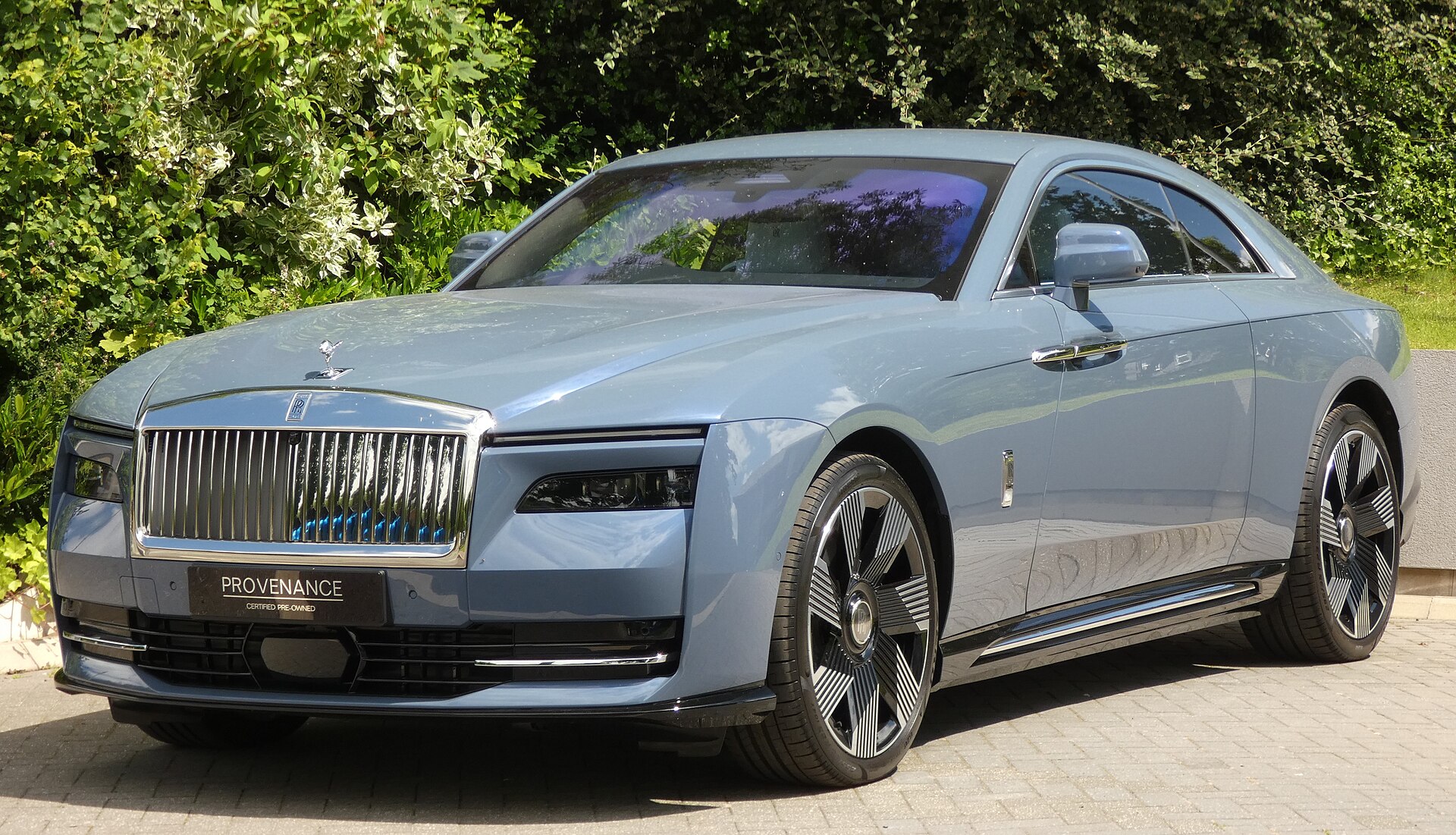
Here's a fact that catches many first-time Rolls-Royce owners off guard: the brand has been designing cars around silence for over a century. The Phantom has been called a "magic carpet" because you can barely feel or hear the drivetrain at highway speeds. When Rolls-Royce went electric, they weren't solving a problem that bothered them — they were finally eliminating the last remaining compromise.
The Spectre is genuinely, profoundly silent. There's no engine noise, no transmission whine, not even the faint electric motor hum you get in most EVs. The acoustic engineering includes special tire compounds, sound-deadening materials that cost more than most cars' interiors, and a philosophy that views any unintended noise as a design failure. Sitting inside a Spectre at speed is like floating in space.
The EQS is also remarkably quiet. Mercedes' engineering ensures that wind noise and tire roar are minimized through careful design. But it's silent in the way a modern luxury sedan is silent — expertly engineered, thoroughly tested, and very competent. The Spectre is silent in a way that feels almost supernatural. It's the difference between a well-built house and a space observatory.
For drivers who spend significant time with the car, this distinction registers as profound. For occasional drivers, it's almost imperceptible. This single aspect, more than any performance specification, captures why Rolls-Royce commanded a $315,000 premium: complete, unconditional mastery of one narrow dimension — in this case, the absence of sound.
The Interior Craftsmanship Gap: Where the Price Difference Actually Lives
Drive both vehicles, and the price difference stops being abstract. It becomes visceral in the cabins.
The Mercedes EQS interior is outstanding. The materials are premium leather, open-pore wood, and tasteful aluminum trim. The assembly quality is Teutonic — precise, consistent, and built to last 200,000 miles without rattles or squeaks. The design language is modern and minimalist, with the 56-inch Hyperscreen dominating the dashboard. This is what contemporary luxury looks like: technology integrated seamlessly with materials science. A knowledgeable buyer would be genuinely satisfied with this cabin.
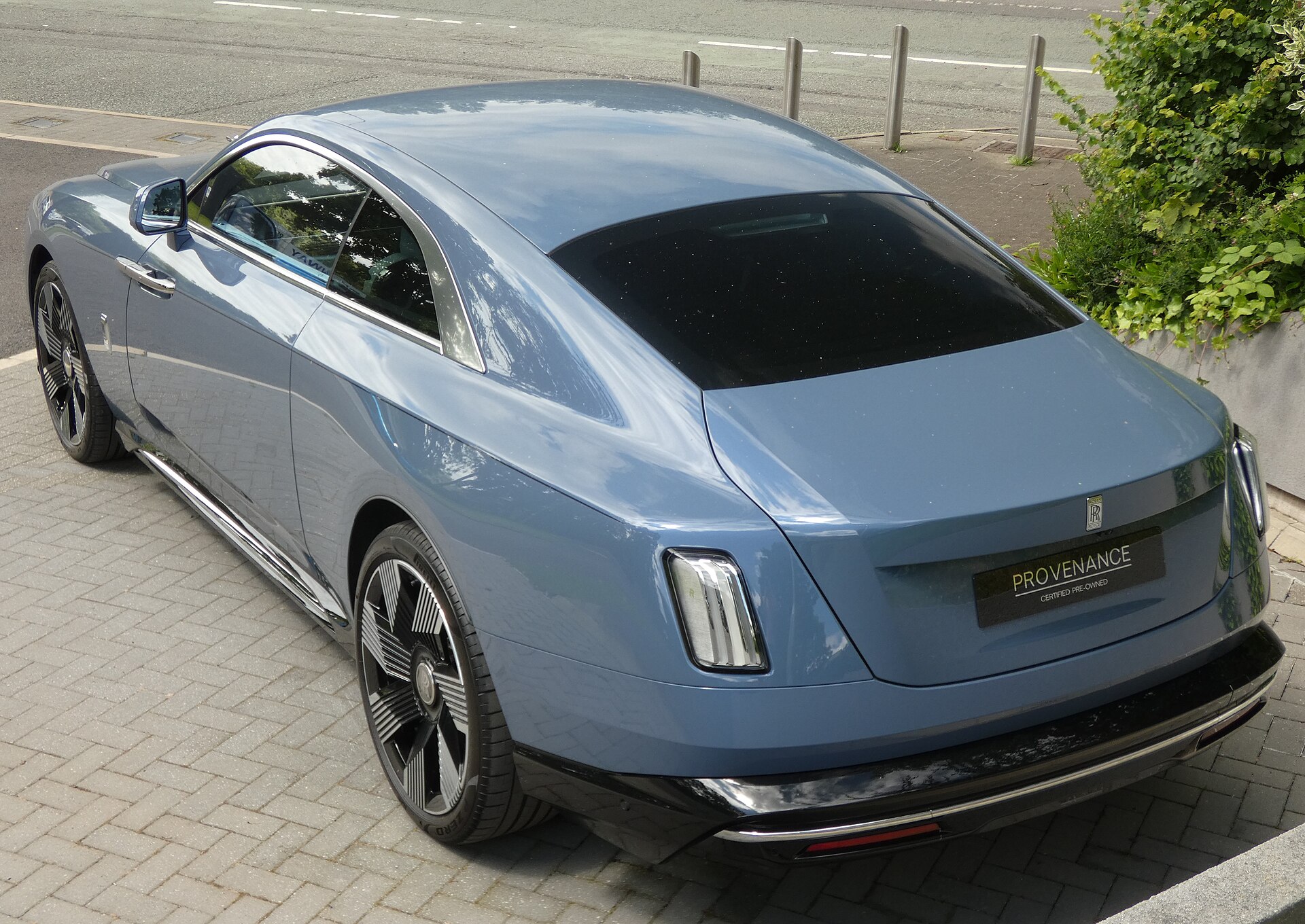
The Rolls-Royce Spectre interior is in an entirely different category. The brand offers customers a palette of 40 leather shades and will match samples to your home or clothing. The wood veneers are cut to reveal the grain in specific patterns — symmetrically across the cabin. Stitching is done by hand in certain locations. Ambient lighting includes 850 LED points, individually addressable, that can be set to any color or intensity. The seat design isn't based on typical ergonomic research — it's based on feedback from Rolls-Royce customers about how they want to be supported.
More profoundly, the Spectre cabin treats every surface as a design element. The door handles have a specific weight and actuation feel. The buttons and switches have been engineered for tactile satisfaction. The climate control doesn't just maintain temperature — it learns your preferences from your phone and adjusts automatically before you even enter the car. These aren't specification sheets; they're design philosophies executed at extraordinary cost.
A fair assessment: if you spend 10 hours per year in the EQS, you'll never notice the craftsmanship gap. If you spend 500 hours per year in the Spectre, you'll never stop appreciating it. Most luxury car buyers fall somewhere in between, which is why most luxury car buyers should buy the Mercedes.
Technology Philosophy: Hyperscreen vs. Handcraft
The EQS 580's headline is the Hyperscreen — a revolutionary integrated 56-inch display that stretches across the entire dash. It consolidates navigation, climate, entertainment, and vehicle settings into one unified interface. It's genuinely impressive from a design perspective: fewer physical buttons means cleaner interior aesthetics. From a practical perspective, touchscreen controls are inherently slower than physical buttons for safety-critical functions, and it represents Mercedes betting that consumers value aesthetics over ergonomics.
The Spectre's technology strategy couldn't be more different. Instead of maximizing the number of functions on a single screen, Rolls-Royce preserved physical controls for everything safety-critical. The touchscreen is present but purposely deemphasized. The philosophy is that technology should serve the car's primary purpose — providing uninterrupted comfort — rather than demanding attention. Features exist, but they're designed to be invisible unless you need them.
Where Rolls-Royce excels is in bespoke customization. The infotainment system can be programmed to do virtually anything. The brand's "Gallery" feature allows customers to display personalized artwork or photography on the cabin screens. The climate control can be set to specific temperatures for different parts of the cabin. The audio system can be tuned to individual listening preferences. These aren't just settings — they're design statements about what luxury vehicles should do: adapt to you, not the reverse.
From a purely technical standpoint, the EQS is the more sophisticated vehicle. From a philosophical standpoint, the Spectre better represents how modern ultra-luxury brands think about technology: as a tool, not the main event.
Driving Character: The Intangible Divide
Here's where specifications completely fail to capture reality. The Mercedes EQS drives like a thoroughly modern luxury sedan: responsive steering, progressive throttle mapping, air suspension that adapts to road conditions in real time, all-wheel drive that distributes power dynamically. It's engaging and rewarding for an engaged driver. It's also approximately 2.2 tons of engineering complexity.
The Rolls-Royce Spectre is, by contrast, an exercise in restraint. The suspension is tuned for what Rolls-Royce calls "Magic Carpet Ride" — independent adjustment of air pressure at each corner that prevents the car from ever feeling like it's moving. Steering is calibrated for what the driver needs, not what they might want. Acceleration is so smooth that passengers cannot perceive gear changes or power modulation (because there are none — it's electric). The Spectre is approximately 2.7 tons of purposeful engineering toward one goal: making the car disappear.
Driving the EQS on a winding road is genuinely enjoyable if you're an engaged driver. You can feel what the car is doing. You have tools to interact with the machine. Driving the Spectre on a winding road is almost disorienting in how thoroughly the car insulates you from the experience. The Mercedes wants to be driven. The Spectre wants to be experienced as a passenger in your own vehicle.
This is not a criticism of either approach. Rolls-Royce believes that true luxury is freedom from mechanical complexity and sensory input. Mercedes believes that luxury includes the pleasure of controlling a sophisticated machine. Which philosophy resonates depends entirely on how you think about transportation.
The Price Reality: $315,000 Isn't Just Numbers
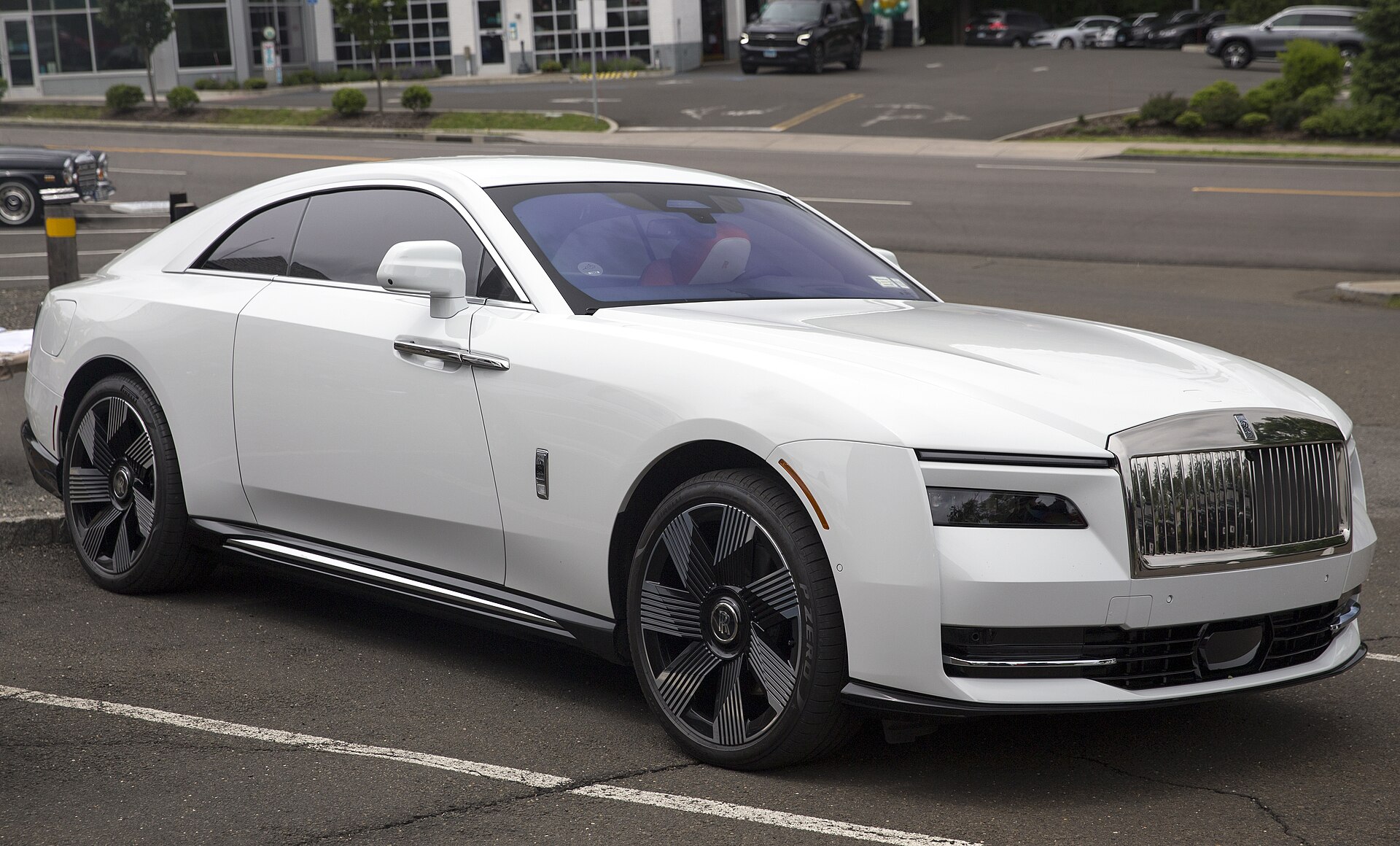
The Rolls-Royce Spectre starts at approximately $420,000. The Mercedes-Benz EQS 580 4MATIC+ starts at approximately $105,000. This isn't a case where the Spectre is expensive — it's a case where the Spectre exists in a completely different financial universe.
To understand what that $315,000 delta represents, consider: that's the price of 3 fully-loaded Mercedes-AMG E63 sedans. That's the price of a used Boeing 737 captain's experience. That's roughly the lifetime gross income of an American family working middle-class jobs. The Spectre isn't a luxury car that costs more than expected. It's a fundamentally different product category: Ultra-Luxury Good.
Here's what $315,000 actually buys you: bespoke customization that the EQS simply cannot match. Custom leather matching your home. Custom wood grain selection. Custom ambient lighting configurations. Custom steering and suspension tuning. In essence, the Spectre is a car that Rolls-Royce will customize to your exact specifications, while the EQS is a car you choose from existing options.
The $315,000 also buys exclusivity. Only about 1,000 Spectres are expected to be built per year worldwide. The EQS sells 50,000+ units annually. Owning a Spectre means you'll almost never see another one. Owning an EQS means you'll see them constantly.
From a financial perspective, the Mercedes is superior in almost every dimension. You get 68% of the luxury car experience for 25% of the price. No financial analysis justifies the Spectre unless money is genuinely not a meaningful constraint in your life.
Range, Charging & Practicality: The Mercedes Wins Decisively
Let's be direct: the EQS is the superior choice for owners who actually drive their cars regularly. The 350-mile EPA range versus the Spectre's 260 miles means fewer charging stops on longer journeys. The Mercedes' superior efficiency means lower electricity costs per mile driven. The broader availability of compatible charging networks (Tesla Supercharger network, Electrify America, EVgo, ChargePoint) means the Mercedes can charge almost anywhere in America. The Spectre requires more specific planning for longer routes.
For a Spectre owner, this matters far less. These vehicles are rarely driven more than 3,000 miles annually. They're garaged at night, charged overnight at home, and used for weekend excursions to restaurants, social events, or short metropolitan driving. In this usage pattern, the Spectre's 260-mile range is more than adequate. The real-world practicality question never becomes an issue.
The EQS is genuinely usable as a primary vehicle. The Spectre is best used as an expression car — a vehicle you drive when you want to make a statement, not because you need practical transportation. If you need a car that works as your only vehicle, the EQS is the only rational choice. If you're shopping for a Spectre, the assumption is that you already own practical vehicles and this is purely for specific occasions.
Depreciation & Resale Value: The Ultra-Luxury Wild Card
Mercedes EVs follow typical depreciation patterns. The EQS 580 will likely lose 30-40% of its value over 5 years, consistent with luxury sedan trends. Parts are readily available. Service history is straightforward to document. The used market will be robust because tens of thousands of EQS units exist globally. Resale is straightforward and predictable.
Rolls-Royce vehicles are a fundamentally different story. Ultra-luxury cars don't depreciate like normal cars because there's no real "used market" in the traditional sense. A 2025 Spectre with 10,000 miles might sell for $380,000 — a loss, but not catastrophic. A 2020 Phantom (pre-electric) still commands prices in the $300,000-$400,000 range despite being 5+ years old. Why? Because people buying Rolls-Royce cars aren't buying transportation — they're buying membership in an exclusive club. Used Rolls-Royce cars are sold to people who want to join that club more affordably.
The realistic scenario: if you buy a Spectre and sell it after 3 years and 15,000 miles, you'll likely recover 85-90% of your purchase price. The EQS, in the same scenario, will retain 60-65%. On an absolute-dollar basis, the Spectre loses more value, but on a percentage basis, it actually appreciates relative to its purchase price. This phenomenon is unique to ultra-luxury goods.
That said, this advantage only matters if you plan to sell. If you're buying a Spectre to keep forever, depreciation is irrelevant.
Who Each Car Is Really For: The Honest Assessment
The Mercedes EQS is for: Anyone who genuinely wants to own a luxury electric vehicle. High-net-worth individuals who value sophisticated engineering, practical range, and recognized prestige. Business owners and executives who use luxury cars as rolling offices. Anyone who drives more than 10,000 miles annually. Buyers under $150,000 in annual spending power who want to demonstrate success. Anyone who values reliability, parts availability, and service network support. Essentially: normal people with above-normal incomes who want to buy the best luxury car in its segment.
The Rolls-Royce Spectre is for: Ultra-high-net-worth individuals ($50M+ liquid net worth) for whom the $420,000 purchase price is genuinely inconsequential. Collectors who view cars as artworks and investment vehicles. Individuals who drive fewer than 5,000 miles annually and value the experience over practicality. Buyers who view cars as expressions of personal philosophy rather than tools. Anyone for whom being seen in an extremely rare vehicle is part of the purchase appeal. Essentially: people for whom a $420,000 car purchase decision doesn't require analysis because cost is not a constraint.
If you're reading this and asking "which should I buy?", the answer is almost certainly the Mercedes. The Spectre only makes sense if you already own multiple properties, have a household staff, and use cars as trophies rather than transportation. The EQS is the luxury car that normal wealthy people buy. The Spectre is the car that people buy when they've achieved a level of wealth where normal consumer logic stops applying.
The Technology Comparison: Sophistication vs. Simplicity
The EQS 580 includes Mercedes' MBUX infotainment system, fully integrated navigation with real-time traffic, wireless charging, a 456-watt Burmester audio system, and compatibility with both Apple CarPlay and Android Auto. The vehicle can receive over-the-air updates that add functionality throughout its life. The touchscreen-first interface means fewer physical controls to maintain. The system learns your preferences, suggests climate adjustments, and generally acts as a connected digital companion.
The Spectre also offers these features, but with a different philosophy. The infotainment system is more customizable but less forward-integrated with your digital life. The audio system is bespoke-tuned to the individual owner's preferences rather than optimized to a single specification. The digital experience is secondary to the analog experience. Where Mercedes asks "how can we make this car smarter?", Rolls-Royce asks "how can we make this car more responsive to what this specific customer wants?"
From a pure technology standpoint, the EQS is more sophisticated. From a customization standpoint, the Spectre is more intelligent about understanding individual preferences. The Mercedes is better if you want cutting-edge features. The Spectre is better if you want the car to conform to your personal specifications.
Annual Ownership Costs: The Hidden Expense Picture
| Expense Category | Mercedes EQS 580 | Rolls-Royce Spectre |
|---|---|---|
| Insurance (Annual) | $2,500–$4,000 | $4,500–$8,000+ |
| Electricity (Annual) | $900–$1,200 | $1,200–$1,600 |
| Maintenance (Annual) | $1,500–$2,500 | $3,000–$6,000+ |
| Registration & Taxes | $500–$1,500 | $2,000–$5,000 |
| Tire Replacement (Amortized) | $1,200–$1,800 | $2,000–$3,000+ |
| Annual Total | $6,600–$11,000 | $12,700–$23,600+ |
The EQS ownership costs approximately $500-$900 per month in running expenses. The Spectre costs $1,000-$2,000 per month, not including the depreciation component. This makes the Spectre a true ultra-luxury expense that only makes sense for buyers with seven-figure annual incomes and significant discretionary spending power.
Head-to-Head Comparison: All Dimensions
| Dimension | Rolls-Royce Spectre | Mercedes-Benz EQS 580 4MATIC+ |
|---|---|---|
| Starting Price | $420,000 | $105,000 |
| Horsepower | 577 hp | 536 hp |
| 0-60 MPH | 4.4 seconds | 3.4 seconds |
| EPA Range | 260 miles | 350 miles |
| Battery Capacity | 112 kWh | 108 kWh |
| DC Fast Charging Speed | 195 kW | 200 kW |
| Interior Complexity | Bespoke Customization | Standardized Options |
| Leather Options | 40+ Shades | 8-12 Standard Options |
| Tech Integration | Secondary to Experience | Primary Feature |
| Driving Feel | Disconnected/Serene | Engaged/Responsive |
| Cabin Noise Level | Supernatural Silence | Very Quiet/Engineered Silence |
| Annual Running Costs | $12,700–$23,600 | $6,600–$11,000 |
| 5-Year Depreciation % | 10-15% | 30-40% |
| Exclusivity | ~1,000 per year globally | 50,000+ per year |
| Service Availability | Rolls-Royce dealer network | Mercedes dealer network everywhere |
| Used Market Size | Tiny (specialty dealers only) | Robust (nationwide) |
Navigate the Luxury EV Decision with Expert Guidance
Whether you're considering a $105K EQS or a $420K Spectre, Automonitor connects you with automotive specialists who understand luxury vehicles at every price point. We provide honest assessments, market valuation, and purchasing guidance.
Get Expert Consultation →Depreciation Reality: Why Ultra-Luxury Cars Don't Follow Normal Rules
The Mercedes EQS depreciates like virtually all luxury sedans: it will lose roughly 30-40% of its value over 5 years. A $105,000 purchase becomes a $60,000-$73,000 used car. This is important to understand because it means that EQS ownership has a genuine cost beyond the sticker price. That $105,000 buys you five years of transportation at approximately $7,000 per year in depreciation alone, plus the operating costs listed above.
The Spectre operates in a completely different depreciation paradigm. A 5-year-old Spectre with 15,000 miles might be worth $355,000-$380,000 (assuming normal Rolls-Royce depreciation patterns). That means the purchase cost $420,000 and depreciated only $40,000-$65,000 over five years. On a percentage basis, that's 10-15% depreciation — far superior to the EQS.
Why? Because used Rolls-Royce sales are essentially new sales to a different customer segment. The person buying a used Spectre is buying membership into Rolls-Royce ownership at a discount. They're not buying a depreciating asset — they're buying a maintained luxury good at a slightly lower price. This is the same phenomenon that keeps used Hermes bags at 60-70% of original retail price, even years later.
The practical implication: if you plan to own either car for 5+ years and then sell it, the Spectre is the better financial decision because it loses much less value. If you plan to own the EQS and keep it well past warranty expiration, ensure you're prepared for repair costs that will accrue after the included maintenance period.
What It's Actually Like to Own a Rolls-Royce Spectre
Rolls-Royce doesn't sell cars — it sells experiences and membership. Owning a Spectre means joining a club of approximately 1,000-1,500 people worldwide who own the current generation. It means you'll likely never see another Spectre on the road. It means you'll attend exclusive Rolls-Royce events, have access to white-glove service, and be invited to brand experiences that the owner of an EQS, regardless of how wealthy, simply will not be invited to.
The vehicle itself is a work of art. The precision of the paint finish is such that you can see the reflection of surrounding objects in the body panels. The seating is so comfortable that some owners fall asleep during long drives. The silence is so complete that the sound of your own breathing becomes noticeable. These aren't marketing claims — they're documented observations from Spectre owners who have driven virtually every other car on the planet.
The practical reality: you'll drive it very little. Most Spectre owners use their vehicles for 3,000-5,000 miles annually. Why? Because the ownership experience — parking it in your garage, admiring it, being seen in it during specific occasions — is more valuable than the driving experience. This is fundamentally different from the EQS, which rewards frequent use and genuinely improves as a car the more you drive it.
What It's Actually Like to Own a Mercedes-Benz EQS
Mercedes EQS ownership is genuinely appealing to the right buyer. The car is beautiful, technologically sophisticated, and genuinely practical. You can drive it cross-country with minimal charging stops. You can use it as your only car and never feel like you're making compromises. The interior is genuinely luxurious without approaching the "over-engineered" feeling some people get from ultra-luxury vehicles.
The EQS rewards regular driving. It gets better as you learn its interfaces. The ambient lighting responds to your moods. The climate control learns your preferences. The driving dynamics tighten as you understand the steering feel. After a few months of ownership, the car becomes genuinely customized to your preferences — not through bespoke manufacturing, but through software learning and personal familiarity.
The practical reality: you can use the EQS as your actual car. It's a luxury vehicle that doesn't demand special treatment, doesn't require excessive caution, and doesn't consume your entire annual transportation budget. It's the car for someone who genuinely wants to drive a luxury electric sedan, not someone who wants to make a statement about their net worth.
Frequently Asked Questions
Does the Rolls-Royce Spectre offer better technology than the Mercedes EQS?
No. The Mercedes EQS has more advanced infotainment systems, broader integration with consumer electronics, and more cutting-edge autonomous features. The Spectre's technology is excellent but deliberately de-emphasized in favor of a more analog, handcrafted experience. If you value cutting-edge tech, the EQS is the better choice.
Can I daily drive the Rolls-Royce Spectre?
Technically yes, but practically no for most owners. The Spectre is optimized for occasional use. Ground clearance is limited, visibility requires adjustment, and the cost per mile driven (when calculated including depreciation and insurance) is extraordinarily high. The EQS is the better daily driver by an enormous margin.
Which car has better range for road trips?
The Mercedes EQS offers 350 miles versus the Spectre's 260 miles. More importantly, the EQS has broader access to public charging networks (Tesla Supercharger, Electrify America, etc.) while the Spectre requires more specific charging planning. If you drive frequently, the EQS is the practical choice.
Is the Spectre worth four times the price of the EQS?
This depends entirely on your definition of "worth." If you measure worth in horsepower-per-dollar or technology-per-dollar, the Spectre is not worth it. If you measure worth in exclusivity, bespoke customization, and membership in an ultra-luxury community, the Spectre might be worth it to the right buyer. For 99% of wealthy people, the EQS represents better value.
Which car will hold value better?
The Rolls-Royce Spectre will retain a higher percentage of its purchase price (90%+ after 5 years) compared to the Mercedes (60-70% after 5 years). However, the Spectre also costs 4 times more, so the absolute depreciation in dollars is higher. As a percentage-of-purchase-price, the Spectre is the better investment.
Can the Spectre tow anything or carry cargo?
The Spectre is a fully electric sedan with no towing capacity. It has a traditional trunk (frunk for front-mounted storage). It's optimized for passenger comfort, not cargo capability. If you need a luxury vehicle that can tow or carry significant cargo, the EQS SUV (EQS SUV models exist) would be more appropriate than either of these sedans.
Is the Mercedes EQS going to be available for the next 10 years?
Yes. Mercedes is committed to EQS production and continuous development. Parts will remain available, service will be straightforward, and the used market will be robust. The Spectre, given its rarity, will require more specialized service, which could become challenging as the brand updates its service centers.
Make an Informed Luxury Vehicle Decision
The choice between electric luxury vehicles spans a $315,000 range. Automonitor helps you navigate every decision point, from financial analysis to bespoke customization options. Get guidance from experts who understand luxury vehicles at every price point.
Schedule a Consultation →Related Comparisons & Guides: Understanding Luxury Vehicles
If you're exploring ultra-luxury vehicles, consider reviewing our comprehensive guides: Rolls-Royce Ghost vs Bentley Flying Spur to understand traditional luxury sedans, or Lamborghini Urus vs Rolls-Royce Cullinan if you're interested in high-performance luxury SUVs. For financing insights, see our comprehensive exotic car financing guide or what it actually costs to lease a Rolls-Royce.
If you're considering exotic car ownership more broadly, we recommend reading should you lease or buy an exotic car and typical monthly payments on Rolls-Royce vehicles. Tax professionals often ask about using business structures to purchase exotic cars and Section 179 deductions for luxury vehicles.
For current market deals, check our guide to the best exotic car lease deals available now and ensure you understand the insurance implications of exotic vehicle ownership. All of these resources can help you make a more informed decision within the luxury and ultra-luxury vehicle landscape.
The Real Question: Which World Do You Actually Belong To?
This comparison ultimately isn't about cars. It's about two fundamentally different philosophies of luxury, two different definitions of success, and two different answers to the question "what does a great vehicle do for my life?"
The Mercedes EQS is for someone who genuinely loves driving great cars. It rewards engagement. It improves with familiarity. It offers authentic luxury that can be appreciated deeply if you actually spend time in the vehicle. It's expensive, but it's expensive because Mercedes built an objectively excellent product, not because it's rare.
The Rolls-Royce Spectre is for someone who owns great cars as expressions of personal philosophy. It's not meant to be driven frequently. It's meant to be admired, preserved, and occasionally experienced. It's expensive because you're buying exclusivity, bespoke customization, and membership in an ultra-luxury community.
The uncomfortable truth: if you're asking which one you should buy, the answer is almost certainly the Mercedes. The Spectre only makes sense if the purchase price is so inconsequential relative to your net worth that it genuinely doesn't require financial analysis. Most high-net-worth individuals should buy the EQS, drive it regularly, and save $315,000 for investments that will actually improve their financial position.
But for the subset of ultra-wealthy individuals for whom a $420,000 car purchase is literally inconsequential to their financial position — those people will find something in the Spectre that no amount of specification comparison can capture. They'll find what every Rolls-Royce customer since 1906 has found: the feeling that they own something that was designed specifically for them, that money couldn't actually buy perfection until they decided to buy a Rolls-Royce.
Which vehicle is right for you depends on whether you're looking for the best luxury car you can buy, or the rarest piece of automotive art you can own. Automonitor can help you navigate either decision. Contact our team to explore both options in depth, schedule test drives, and make a purchase decision backed by complete information and expert guidance.
Ready to Explore Luxury EV Options?
Automonitor provides expert guidance across the entire luxury vehicle spectrum — from $105K Mercedes sedans to $420K Rolls-Royce vehicles. We connect you with specialists, handle negotiations, and ensure you buy with complete confidence.
Start Your Journey →