
Mercedes-AMG GT vs Porsche 911 Turbo: German Performance Titans Face Off
Two German engineering legends. Two completely different philosophies. One front-mounted twin-turbo V8 built for grand touring excellence. One rear-engine icon with decades of motorsport DNA. The choice between them defines your driving priorities more than any number ever could.
The Philosophical Divide: Grand Tourer vs. Precision Instrument
The Mercedes-AMG GT and Porsche 911 Turbo S represent two fundamentally different approaches to high-performance driving. One is designed around a long hood, a traditional front-engine architecture inherited from Mercedes' road car tradition, and the comfort expectations of a grand tourer. The other is built on 70+ years of Porsche's rear-engine legacy, optimized for point-and-shoot precision and mid-corner adjustability.
This isn't a minor distinction. It affects everything from how the cars steer, accelerate, and brake to which one you'll want to drive on a 300-mile touring journey versus which one makes you want to hunt for a closed circuit. Understanding this philosophical gap is essential before comparing any other metric.
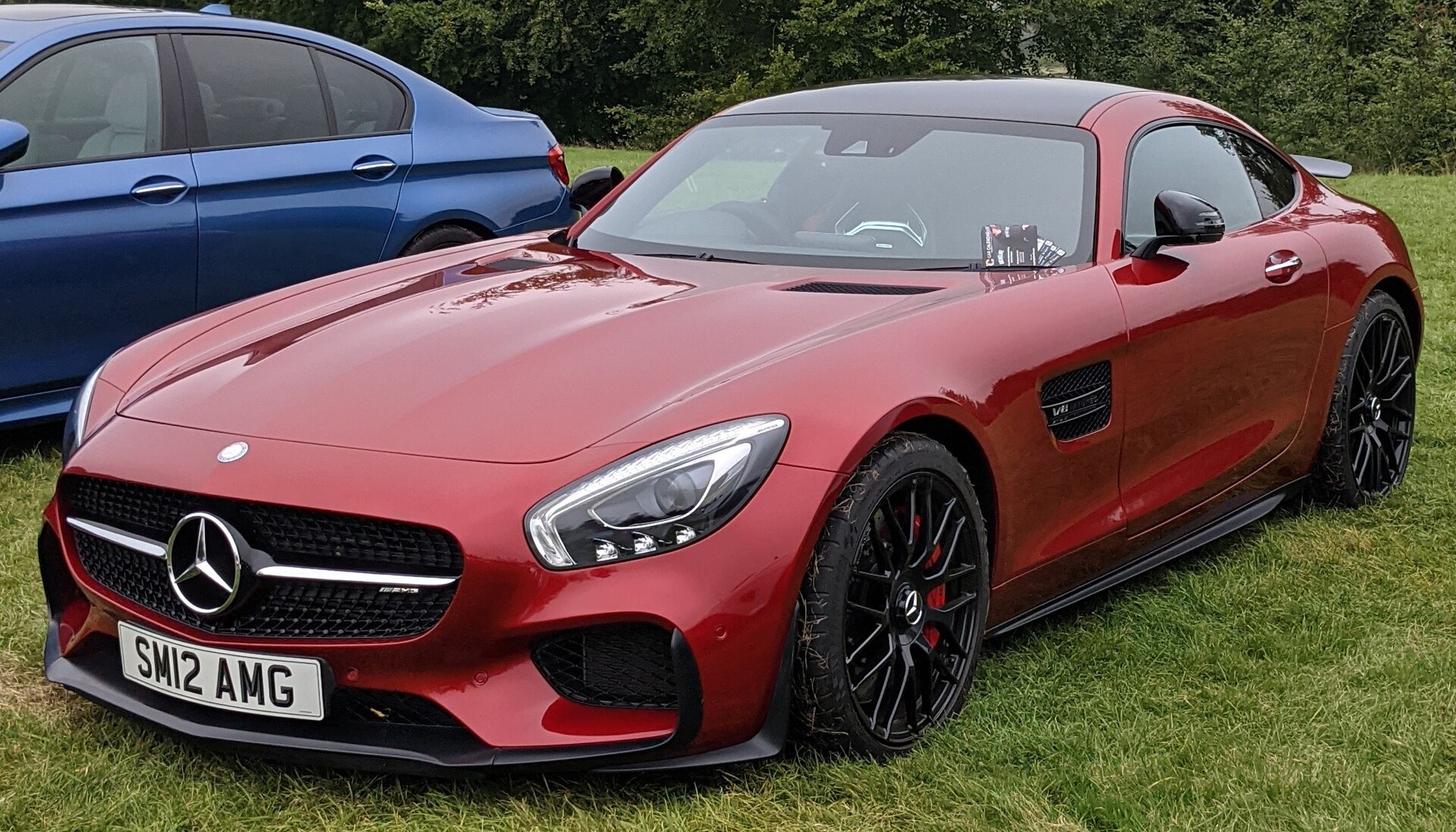
The AMG GT 63 S E-Performance carries 577 horsepower and 590 lb-ft of torque from a 4.0-liter twin-turbocharged V8 engine, complemented by a 201-horsepower electric motor in the 21-inch rear wheels. It's the latest evolution of a grand touring tradition that dates back to the original 300 SL Gullwing of 1954 — long hood, near-perfect weight distribution thanks to mid-mounted tanks and electric motors, and genuine three-adult-plus-luggage space in the trunk.
The 911 Turbo S, by contrast, retains the essential DNA of every 911 ever built: a 3.8-liter twin-turbocharged flat-six engine mounted behind the rear wheels, producing 640 horsepower and 590 lb-ft of torque, supplemented by all-wheel drive and adaptive torque vectoring that would make a fighter jet engineer jealous. It's pure Porsche — every system optimized for driver feedback and on-limit performance.
One car was designed to feel like a precision instrument. The other feels like a controlled explosion in the best possible way. Neither approach is objectively superior — they're just different visions of what performance driving should feel like.
The Numbers Game: Performance Specs That Matter
On paper, the specifications seem nearly identical. In reality, they tell very different stories about how these cars build power and how they'll perform in the real world.
The Mercedes-AMG GT 63 S E-Performance accelerates from 0-60 mph in 3.1 seconds, making it competitive but not class-leading. It will hit 60 mph from a standstill, but more impressively, it hits 100 mph in 7.1 seconds due to its smooth electric motor torque delivery and sophisticated traction management. Top speed is a governed 196 mph.
The 911 Turbo S is measurably quicker: 0-60 mph in 2.6 seconds, 0-100 mph in 5.8 seconds, and a top speed of 205 mph. That 0.5-second advantage in the 0-60 metric might seem trivial, but it compounds across every acceleration event. In real-world driving — highway merges, passing, roll-on acceleration — that rear-engine, all-wheel-drive layout translates to noticeably superior traction delivery and a more linear power curve.
| Specification | Mercedes-AMG GT 63 S E-Perf | Porsche 911 Turbo S |
|---|---|---|
| Engine Type | 4.0L Twin-Turbo V8 + Electric Motor | 3.8L Twin-Turbo Flat-6 |
| Combined Horsepower | 778 hp (577 ICE + 201 E-Motor) | 640 hp |
| Torque | 590 lb-ft (e-motor adds instant torque) | 590 lb-ft |
| 0-60 mph | 3.1 seconds | 2.6 seconds |
| 0-100 mph | 7.1 seconds | 5.8 seconds |
| Top Speed | 196 mph | 205 mph |
| Curb Weight | 3,968 lbs | 3,659 lbs |
| 0-60 mph Consistency | Excellent (electric motor torque) | Superior (RWD bias + Turbo response) |
The AMG's electric motor provides instant, zero-lag torque delivery that smooths the turbo's response and ensures reproducible acceleration runs. The 911's traditional turbo lag is minimal but present — something you'll absolutely feel on a track or during spirited driving. However, the 911's lighter weight and superior traction offset this factor, giving it the measurable advantage in actual acceleration. The Mercedes is quicker in the first 20 meters off the line due to electric motor torque, but the Porsche catches and passes it shortly after.
Driving Dynamics: How They Actually Feel on the Road
Zero to sixty metrics disappear completely once you're on a twisting mountain road or at the edge of a race track. This is where the philosophical differences become visceral.
The Mercedes-AMG GT 63 S E-Performance feels like a machine built for Grand Prix circuits and European grand tours. Sit low, grab the perfectly weighted steering wheel, and there's an immediate sense of control — the electric motors in the rear wheels provide torque vectoring that feels like the car is thinking ahead of you. In Comfort mode, it's genuinely relaxed, with suspension compliance that swallows highway imperfections and a transmission that shifts so smoothly you sometimes forget it's working. Switch to Race mode, and the personality inverts completely. The suspension tightens, the steering weight increases, and you're driving something that feels engineered for Le Mans-style stamina rather than point-and-shoot fun.
The 911 Turbo S approaches cornering like a precision-guided missile. The steering is more responsive, the chassis feels more intimate, and there's a directness to mid-corner adjustments that the Mercedes — despite its sophistication — can't quite match. This is partly physics (a 309-pound weight advantage compounds through corners) and partly philosophy (Porsche's engineers have spent seven decades perfecting mid-engine dynamics). The rear-engine layout provides natural mid-corner balance and a slight oversteer bias that experienced drivers actually prefer to the Mercedes' neutral, stable behavior. It feels less like driving a sophisticated computer and more like driving a machine that responds to your inputs with immediate, tactile feedback.
Acceleration-wise, both cars absolutely deliver. The Mercedes feels smoother, more refined, with electric motor torque arriving instantly before the turbochargers spool. The Porsche feels more urgent, more visceral — that familiar turbo growl, the sense that the flat-six is genuinely working, the awareness that you're harnessing nearly 650 horsepower through a lightweight, purpose-built platform.
Braking and trail-braking? This is where the Mercedes pulls ahead. Its 13.8-inch carbon-ceramic rotors provide feedback and stopping power that the Porsche's 13.4-inch units match spec-for-spec but not feel-for-feel. The Mercedes' braking system feels more progressive, more modular. Porsche's is sharper, more on-off, which suits its overall personality but means trail-braking requires more attention and lock-up prevention relies more heavily on ABS intervention.
Interior and Technology: Two Visions of Modern Luxury
Mercedes-AMG vehicles live in the MBUX ecosystem — the Mercedes-Benz User Experience that dominates the modern luxury automotive world. The AMG GT 63 S E-Performance features a 12.3-inch digital instrument cluster, a 11.9-inch central touchscreen, and the AMG-specific AMG Track Pace telemetry system that records your lap times, brake pressure, throttle input, and engine data. Everything is configurable, everything is connected, and everything looks expensive because it is. The interface is intuitive, particularly compared to Porsche's systems. You can control almost every function with predictable menu navigation or voice commands.
Porsche's infotainment system uses the latest Porsche Communication Management (PCM) system with a standard 10.9-inch touchscreen and a configurable 12.6-inch digital instrument cluster. It's less flashy than MBUX, more utilitarian in its presentation. The Porsche telemetry system (Porsche Track Precision) is similarly capable — recording the same lap data, brake inputs, and telemetry — but the interface feels less intuitive. You're less likely to find exactly what you want immediately, but once you do, it's equally powerful. The PCM system handles Apple CarPlay and Android Auto, though it's somewhat reluctant about it compared to Mercedes' enthusiastic integration.
For daily driving and connected services, the Mercedes wins decisively. Its smartphone integration is seamless, its voice commands are more responsive, and its navigation (powered by Google Maps data) is genuinely superior. For track use and performance driving, they're essentially equal — both record all the data you need, both display it clearly, both let you customize your telemetry readout.
The Mercedes cabin feels more modern, more integrated, with surfaces that reflect expensive materials and lighting that feels ambient. The Porsche cabin feels more mechanical, more driver-centric, with everything positioned exactly where you'd want it during hard driving. The Mercedes seats are supportive and comfortable on hour-long drives. The Porsche seats feel like they're holding you down, preventing you from moving during hard cornering — which is precisely what they're designed for.

Build Quality and Materials: German Engineering at Its Finest
Both cars represent the absolute pinnacle of German automotive manufacturing. The Mercedes-AMG GT 63 S E-Performance features hand-stitched leather, genuine carbon fiber accents, precisely fitted panels, and an overall sense of luxury that permeates every surface. The steering wheel is smaller and flatter than typical Mercedes offerings, immediately signaling the performance focus. Switches have definitive clicks. Doors close with substantial weight. The overall feeling is control and precision wrapped in contemporary luxury.
The Porsche 911 Turbo S feels equally well-built but in a more restrained manner. There's expensive leather, actual carbon fiber (not veneered plastic), and a sense of purposeful engineering rather than aspirational luxury. The materials aren't as soft or as ambient-lit, but they feel engineered for durability and driver interaction rather than impressing passengers. Every control feels substantial. Nothing rattles. The build quality isn't superior to Mercedes — it's simply different, optimized for different priorities.
For daily driving and impressing passengers, the Mercedes edges ahead with its more luxurious appointments. For durability and purpose-built construction, they're essentially equal — both will outlast their owners' interest in exotic car ownership. Porsche has the reliability data to prove this; Mercedes-AMG is catching up, but its electric motor powertrain adds complexity that Porsche doesn't have to manage.
Daily Drivability: Can You Actually Live With These?
This is where the philosophical differences reveal their most practical implications. The Mercedes-AMG GT 63 S E-Performance was designed as a grand tourer. It has a trunk that can fit two carry-on suitcases and a messenger bag. It's comfortable enough for 300-mile days. The steering, while sharp in Race mode, can be dialed back to Comfort for highway cruising. The suspension doesn't hammer you over bad pavement. The ride height is low enough to require a long approach angle at driveways (it will scrape), but the car manages this reality with genuine poise.
The Porsche 911 Turbo S is genuinely more challenging as a daily driver. The trunk is actually smaller than the Mercedes (it sits above the engine). Ground clearance is slightly better, but you'll still think carefully about steep driveway approaches. The seats, while supportive, can feel firm on longer drives. The steering is always responsive, which is wonderful at the limit but occasionally feels hyperactive in parking lots. The suspension is sophisticated with air springs and active damping, but it's optimized for performance, not comfort. You can live with it as a daily driver — plenty of people do — but you're constantly aware that you're driving a race car rather than a luxury car that happens to be fast.
For extended touring, regular highway use, and the occasional track day, the Mercedes wins. For performance-first priorities where daily driving is the compromise rather than the priority, the Porsche is the obvious choice. This isn't a weakness of either car — it's a reflection of their design intent.

Reliability and Maintenance: What Ownership Actually Costs
Both the Mercedes-AMG and Porsche 911 Turbo S have established track records of reliability that exceed most exotic cars. The Porsche flat-six engine is legendary — owners frequently report 100,000+ miles without significant issues. The Mercedes twin-turbo V8 is newer (first introduced in the current generation in 2020) but early reliability data suggests it's equally dependable. The concerning element is the electric motor in the Mercedes — while Mercedes has been building electric drivetrains successfully, combining an electric motor with a traditional turbo drivetrain adds complexity that could surface in years 5-7 of ownership.
Routine maintenance costs are roughly equivalent. An oil change on either car runs $350-500 at a dealer. A full service (oil, filter, fluid checks) costs $800-1200. Neither car is cheap to maintain, and both require dealer-level expertise for anything more complex than tire rotations. The Porsche has a slight advantage in independent service availability — there are more Porsche specialists globally than Mercedes-AMG specialists — but this advantage is marginal.
Major repairs are where the picture diversifies. The Porsche's mechanical simplicity (no electric motors, fewer complex systems) makes major repairs more straightforward. Replacing turbos, fuel injectors, or suspension components is expensive but follows established protocols. The Mercedes' hybrid system means electric motor failure (extremely rare but possible) becomes a $15,000+ repair that requires more extensive diagnostics and engineering knowledge. This isn't a current issue — Mercedes hasn't reported widespread e-motor failures — but it's a consideration for longer-term ownership.
Insurance costs are roughly equivalent, typically $2,500-4,500 annually depending on your location, driving record, and coverage selections. Both cars are high-value assets with repair costs that correlate directly to insurance premiums.
Pricing and Value Retention: What You'll Spend and What You'll Recover
A new Mercedes-AMG GT 63 S E-Performance carries a window sticker price of approximately $180,000-195,000 with minimal options. A new Porsche 911 Turbo S starts around $230,000 and climbs quickly with options. This is a meaningful price delta — the Porsche costs approximately 25-30% more than the Mercedes for entry.
In the used market (2021-2023 model years), the pricing gap actually inverts somewhat. A 2022 Mercedes-AMG GT 63 S E-Performance typically runs $145,000-170,000 depending on mileage and condition. A 2022 Porsche 911 Turbo S runs $190,000-220,000. The Mercedes depreciates faster in absolute dollar terms, but in percentage terms, both cars retain roughly 70-75% of their original purchase price after three years and 55-65% after five years.
The value proposition favors the Mercedes if purchase price is your primary concern. You're getting genuinely comparable performance, better daily usability, and newer technology for substantially less money. The Porsche's value proposition centers on heritage, precision driving dynamics, and the security of knowing that your money is funding one of automotive history's most iconic platforms.
| Metric | Mercedes-AMG GT 63 S E-Perf | Porsche 911 Turbo S |
|---|---|---|
| Starting Price (New) | $180K–$195K | $230K–$245K |
| 2022 Used Range | $145K–$170K | $190K–$220K |
| 3-Year Depreciation | ~30% | ~28% |
| Annual Insurance | $2,800–$4,000 | $3,000–$4,500 |
| Annual Maintenance | $2,500–$4,000 | $2,000–$3,500 |
| Premium Fuel Requirement | 91+ Octane (Can use 87) | 91+ Octane Mandatory |
| Fuel Economy (EPA Est.) | 16 mpg city / 23 mpg highway | 15 mpg city / 25 mpg highway |
The real value comparison depends entirely on your ownership intentions. If you plan to keep the car 5+ years and drive it regularly, the Mercedes' lower purchase price and better daily usability make it the financial winner. If you see your ownership as 2-3 years of performance exploration before moving to the next car, the Porsche's better resale value and stronger brand prestige might justify the premium. If you're buying purely as an investment (which neither car should be), neither is a compelling choice — classic cars appreciate, modern supercars depreciate.
Brand Heritage and Ownership Identity: Why This Matters More Than You Think
This isn't quantifiable, but it's absolutely real. Owning a Porsche 911 Turbo S puts you in a car that's instantly recognized as a performance icon. The 911 design language is 70 years old, and people understand what it means. You're driving a machine that's won Le Mans, dominated racing series, and consistently been rated among the world's greatest cars.
The Mercedes-AMG GT, while respected, carries different associations. It's a newer nameplate (introduced in 2015). It's part of Mercedes' performance division, which many consider derivative of Porsche's approach. It's luxurious, modern, and sophisticated, but it lacks the motorsport pedigree that the 911 brings to every interaction.
If brand perception and being instantly understood as driving something exceptional matters to you, the Porsche wins this category decisively. If you'd rather impress with driving dynamics than badge recognition, the Mercedes is equally impressive and considerably less predictable as an ownership choice.
Which Should You Buy? A Practical Guide by Use Case
Best for Grand Touring: Mercedes-AMG GT 63 S E-Performance
If you want a car that can comfortably carry you and a passenger 500 miles over a weekend, handle winding roads with genuine precision, and feel like a luxury automobile between driving events, the Mercedes is the clear winner. Its suspension compliance, comfortable seats, spacious interior, and superior infotainment make it the car you'll actually want to use for extended drives. The electric motor provides instant torque that makes real-world acceleration feel effortless. This is the car for buyers who prioritize the full ownership experience.
Best for Track Days: Porsche 911 Turbo S
If you're buying this car specifically to spend time at your local track, to explore its limits on closed courses, and to experience the satisfaction of driving a precision instrument at its edge, the Porsche is incomparable. The rear-engine layout, the flat-six's responsiveness, the weight distribution, and the decades of engineering refinement all translate to a machine that's more intuitive at the limit. You'll be faster, more confident, and ultimately more satisfied. Read our full Porsche 911 Turbo S vs Nissan GT-R comparison for detailed track performance analysis.
Best for Brand Heritage: Porsche 911 Turbo S
If the name and heritage matter as much as the driving experience — if you want people to immediately understand what you're driving without needing to explain — the Porsche 911 Turbo S is unquestionable. It's an icon. It will still be an icon in 20 years. The Mercedes-AMG is genuinely exceptional, but it doesn't carry the same gravitational weight in automotive culture.
Best for Daily Use: Mercedes-AMG GT 63 S E-Performance
If you're going to use this car multiple times per week for actual transportation — commuting, running errands, taking passengers — the Mercedes wins decisively. It's more comfortable, more usable, and less demanding. The Porsche is livable as a daily driver, but it's optimized for performance, and that optimization translates to constant small compromises in daily life.
Best for Value: Mercedes-AMG GT 63 S E-Performance
The Mercedes costs significantly less and offers comparable performance. For value-conscious buyers, this is the obvious choice. You're not sacrificing performance or capability for the lower price — you're simply choosing the more practical grand tourer over the more specialized precision instrument. Check out our exotic car financing guide for strategies to maximize value in your purchase.
Head-to-Head Comparison
| Category | Mercedes-AMG GT 63 S E-Perf | Porsche 911 Turbo S |
|---|---|---|
| Engine Philosophy | Front-mounted twin-turbo V8 + e-motor hybrid | Rear-mounted twin-turbo flat-six traditional |
| 0-60 Acceleration | 3.1 seconds (electric torque advantage) | 2.6 seconds (sustained advantage) |
| Top Speed | 196 mph | 205 mph |
| Cornering Precision | Excellent (stable, controlled) | Superior (responsive, intimate feedback) |
| Comfort | Excellent (grand touring focus) | Good (performance-optimized) |
| Interior Tech | Superior MBUX system | Adequate PCM system |
| Cargo Space | Genuinely usable trunk | Minimal but sufficient |
| Fuel Efficiency | 16/23 mpg | 15/25 mpg |
| Purchase Price | $180K–$195K | $230K–$245K |
| Reliability Track Record | Good (newer platform) | Excellent (established platform) |
| Brand Heritage | Strong but modern | Legendary 70-year history |
| Daily Driving Experience | Luxurious and capable | Committed and demanding |
| Track Day Capability | Excellent | Superior precision |
Need Help Choosing the Right Car?
Automonitor's expert consultants can help you evaluate both vehicles, arrange test drives, and find the perfect fit for your performance priorities. We handle the entire buying process so you focus on the driving.
Start Your Search →Frequently Asked Questions
Which car is faster in a straight line?
The Porsche 911 Turbo S is faster in sustained acceleration and top speed. Its 2.6-second 0-60 time beats the Mercedes' 3.1 seconds, and it hits 100 mph in 5.8 seconds versus the Mercedes' 7.1 seconds. The Mercedes' electric motor provides instant initial torque, so it feels quick off the line, but the Porsche catches and passes it shortly after. For highway roll-on acceleration (60-120 mph), the Porsche maintains its advantage due to its lighter weight and superior power delivery.
Which car is more reliable?
The Porsche 911 Turbo S has a more established reliability track record dating back decades. Its flat-six engine is legendary for durability. The Mercedes-AMG GT 63 S E-Performance is newer in its current generation and adds complexity with its electric motor. Both are reliable by exotic car standards — much more so than older Ferraris or many McLarens. If reliability is your primary concern, the Porsche's mechanical simplicity and proven track record give it the edge. However, both cars should last well beyond 100,000 miles if properly maintained.
Which car is better for daily driving?
The Mercedes-AMG GT 63 S E-Performance is significantly better for daily driving. It has more interior space, a usable trunk, more comfortable suspension, superior interior technology, and an overall sense of luxury that makes longer drives more pleasant. The Porsche is livable as a daily driver, but its performance-first design philosophy means constant small compromises — lower comfort, less cargo space, more demanding steering, and a stiffer ride. If you're using the car multiple times per week, the Mercedes is the better choice.
Which car will hold its value better?
Both cars depreciate similarly in percentage terms (28-30% over three years), but the Porsche retains more absolute dollar value due to its higher purchase price. If you buy a Mercedes at $185,000 and it depreciates 30%, you lose $55,500. If you buy a Porsche at $235,000 with the same 30% depreciation, you lose $70,500. However, the Mercedes' lower entry price means your ownership costs are lower from day one. For value retention as a percentage of purchase price, they're essentially equivalent.
Can I track day both cars?
Yes, both cars are completely track-capable. The Porsche is more intuitive at the limit due to its rear-engine architecture and decades of track optimization. The Mercedes is equally fast on the track but feels more controlled, more stable, and requires a different driving style — it's more about smooth inputs and progressive acceleration rather than the point-and-shoot directness of the Porsche. Both come with track telemetry systems to log your performance. If track days are your primary use, the Porsche is the better choice.
Which car should I buy if I can only choose one?
Choose the Mercedes if: You want a car that's equally capable as a daily driver and a performance machine. You prioritize comfort and usability. You want modern technology and luxury amenities. You want the best value. Choose the Porsche if: Track performance and precision handling are your primary priorities. You want legendary brand heritage. You're willing to compromise daily comfort for on-limit capability. You want the most established reliability track record. Ultimately, test drive both and pay attention to which one makes you want to drive it more. That emotional connection is often more important than any specification.
Comparing to Other Contenders
If you're considering these two cars, you should also evaluate the Ferrari Roma vs Porsche 911 Turbo for a more luxurious-focused perspective. The Bentley Continental GT vs Mercedes-AMG GT comparison offers insights into the grand touring segment. For different performance philosophies entirely, see McLaren 720S vs Porsche 911 GT3 for mid-engine alternatives.
Making the Purchase: Financing and Buying Strategy
Both cars are expensive enough that financing deserves serious consideration. The Mercedes at $180,000-$195,000 and the Porsche at $230,000-$245,000 represent significant financial commitments. Check our how much is it to lease a Porsche guide if you're considering leasing instead of buying — leasing can significantly reduce your monthly cost and eliminate long-term ownership risk.
For purchasing, specialty exotic car lenders like JJ Best Banc and Woodside Credit offer rates between 5-8% depending on the vehicle age and your credit profile. Expect to put down 20-30% to secure financing. The interest you'll pay over a 60-month term on a $150,000 loan at 6.5% is approximately $26,000 — so total cost of ownership goes beyond the purchase price significantly.
Consider our should I lease or buy an exotic car guide for a detailed analysis of leasing versus buying for your specific situation. Leasing a Porsche 911 Turbo might be $3,500-4,500/month versus buying with loan payments of $3,000-3,500/month — but leasing includes insurance and maintenance.
Check out our what is the monthly payment on a Porsche 911 Turbo guide for specific payment calculations, and review the exotic car insurance guide to understand insurance costs for each vehicle.
The Final Verdict: Two Exceptional Cars, Different Dreams
The Mercedes-AMG GT 63 S E-Performance and Porsche 911 Turbo S are genuinely exceptional high-performance automobiles. They're not direct competitors in the way that two similar products from the same brand would be. They're competing visions of what a high-performance car should accomplish.
The Mercedes says: "Performance should be effortless. Luxury should be genuine. Driving should be comfortable and engaging simultaneously. Technology should enhance the experience." It delivers on all these promises with a car that's legitimately faster in some metrics, more usable in most scenarios, and available at a significantly lower price.
The Porsche says: "Performance is the purpose. Heritage is the credential. Precision is the experience. Every system should be optimized for the driver." It delivers these promises through a car with 70 years of engineering history, a legendary flat-six engine, and handling characteristics that remain unmatched in their responsiveness and intuitiveness.
Choose based on your priorities: If daily usability, value, and modern luxury matter most, the Mercedes wins. If brand heritage, track precision, and the satisfaction of driving an automotive icon matter most, the Porsche is unquestionable. Both will provide years of exceptional driving experiences. Both will cost serious money to own. Neither is the objectively "correct" choice — they're just two different answers to the same fundamental question: "What does performance driving mean to me?"
For help navigating the purchase, evaluating both cars in person, arranging test drives, and handling the entire transaction process, Automonitor's concierge buying service specializes in exactly this decision-making process. We'll ensure you end up in the right car for your specific needs and priorities.
Find Your Perfect Performance Car
Automonitor connects you with verified luxury dealers and handles all the negotiation, inspection, and paperwork. Drive with confidence in the exact car that matches your performance priorities.
Start Your Search →