
Ferrari Roma vs Porsche 911 Turbo: Grand Tourer vs Sports Car Showdown
Two of the most desirable cars under $250,000. But they represent completely different philosophies. The Roma prioritizes elegance and comfort. The 911 Turbo obsesses over performance. Which matches your vision of the perfect exotic?
The Fundamental Difference: Philosophy Over Pricing
On paper, the Ferrari Roma and Porsche 911 Turbo occupy similar real estate. Both cost between $180K and $240K. Both produce between 550 and 650 horsepower. Both are usable daily drivers. Both carry the weight of their brand's legacy.
But the moment you sit in either car, the philosophy becomes obvious. The Ferrari Roma whispers, "I'm a front-engine grand tourer that happens to be Ferrari." The Porsche 911 Turbo shouts, "I'm the most capable all-weather performance machine ever mass-produced."
This isn't a shootout where one car definitively beats the other. It's a decision about what you actually want from a $200,000+ investment. Performance per dollar? The 911 wins. Emotional presence and continental elegance? The Roma dominates. Daily usability with rear seats and AWD confidence? Porsche. Pure Italian drama? Ferrari.
Let's break down every dimension that matters, starting with the numbers.
Performance Specs: Where Porsche Dominates Despite Less Power
The Ferrari Roma carries a 3.9-liter twin-turbo V8 with 612 horsepower and 561 lb-ft of torque. That's already extraordinary. But the Porsche 911 Turbo runs a smaller 3.7-liter twin-turbo flat-six with 572 horsepower and 553 lb-ft. Same basic turbocharged formula, smaller displacement, slightly less peak power.
Yet the 911 Turbo accelerates to 60 mph in 2.7 seconds. The Roma takes 3.2 seconds. That 0.5-second gap feels small on paper. In reality, it's significant. The Porsche's rear-engine architecture, AWD traction, and weight distribution create a physics advantage the Roma simply can't overcome from the front engine bay.
Quarter-mile times: 911 Turbo completes it in 10.8 seconds at 127 mph. Roma does it in 11.3 seconds at 121 mph. Top speed favors the Ferrari slightly (205 mph vs 201 mph), but peak acceleration belongs entirely to Porsche.
| Specification | Ferrari Roma | Porsche 911 Turbo | 911 Turbo S |
|---|---|---|---|
| Engine | 3.9L Twin-Turbo V8 | 3.7L Twin-Turbo Flat-6 | 3.7L Twin-Turbo Flat-6 |
| Horsepower | 612 hp | 572 hp | 620 hp |
| Torque | 561 lb-ft | 553 lb-ft | 553 lb-ft |
| 0-60 mph | 3.2 seconds | 2.7 seconds | 2.6 seconds |
| Top Speed | 205 mph | 201 mph | 201 mph |
| Transmission | 8-speed Automatic | PDK Dual-Clutch | PDK Dual-Clutch |
| Drivetrain | Rear-Wheel Drive | All-Wheel Drive | All-Wheel Drive |
| 0-60 Advantage | — | +0.5 seconds | +0.6 seconds |
| Starting Price | $236,000 | $180,000 | $230,000 |
This performance gap reveals Porsche's engineering philosophy: extract maximum performance from each dollar and ounce. The 911 Turbo achieves speeds the Roma can't match with an engine that's 200cc smaller. That's not accident — that's meticulous engineering.
Driving Character: Elegance vs. Engagement
Numbers don't tell you how a car makes you feel when you're alone with it on a winding road. For that, we need to discuss driving character.
The Ferrari Roma Experience
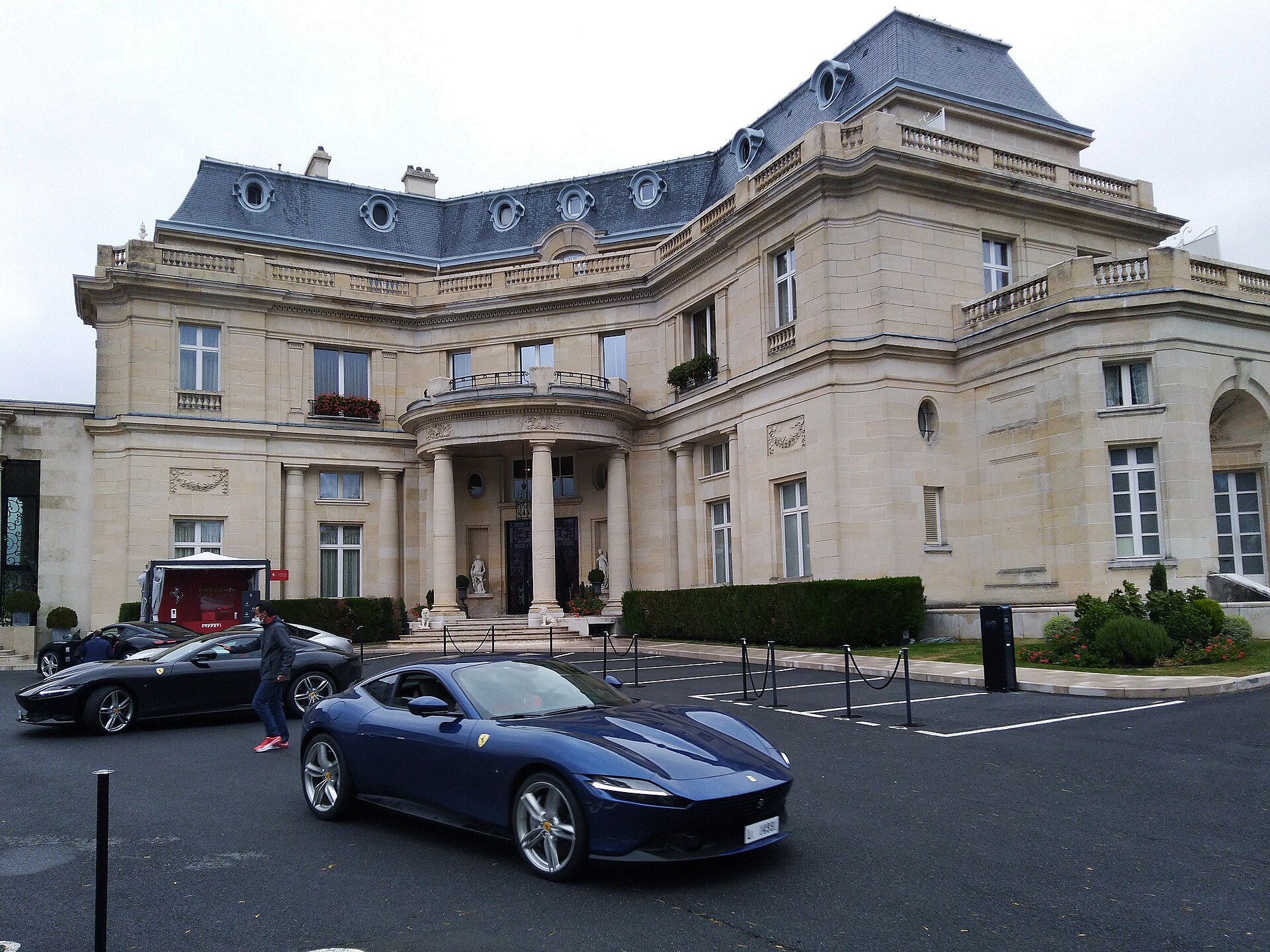
The Roma is a grand tourer first, a sports car second. In Comfort mode, it's genuinely serene. The suspension absorbs highway imperfections gracefully. Wind noise is minimal. The steering is light and responsive but not buzzy. The cabin feels like a luxury suite that happens to do 200+ mph.
Turn into Sport mode, and the Roma tightens up. Adaptive dampers stiffen. The steering weight increases. The engine's response becomes more aggressive. But it never loses its fundamental character — controlled, elegant, refined. Even at track speeds, the Roma communicates confidence rather than madness.
The V8 sound is exceptional. Ferrari tuned it carefully to be addictive without becoming monotonous. It's not a screaming naturally-aspirated engine, but twin-turbo V8s rarely are. What it is: smooth, muscular, and distinctly Ferrari.
The Porsche 911 Turbo Experience
The 911 Turbo is uncompromising. In Comfort mode, it's still a sports car — just one that won't kill you on a terrible road surface. Adaptive dampers and air suspension work overtime to deliver both comfort and capability.
Switch to Sport or Sport Plus, and the 911 transforms into a precision instrument. The steering becomes surgically responsive. The suspension firms to track-ready stiffness. AWD delivers corner-exit traction that's almost unfair. The transmission snaps through gears with mechanical violence.
But here's what separates the 911: it's equally at home carrying bags to the airport, ripping a track day, or sitting in rain-soaked traffic. It's not specialized. It's universal. A Porsche engineer will tell you the 911 Turbo is the most capable all-weather performance machine ever mass-produced. They're right.
The flat-six sound is distinctive — that Porsche boxer burble that defines the brand. Turbocharged, it loses some of the character of naturally-aspirated units, but gains a modern urgency that grows on you.
The Roma makes you want to drive slow and savor every moment. The 911 Turbo makes you want to drive fast and dominate every corner. Neither is objectively better — but only one is right for you.
Daily Usability: Where Porsche Actually Has an Advantage
This surprises people. The Ferrari is more luxurious on paper. But the 911 Turbo is dramatically more practical daily driver.
Rear Seats
The 911 Turbo has genuine rear seats. Rear passengers won't be comfortable on a cross-country drive, but they exist. Kids can ride. You can transport more than one person and their belongings. The Roma? It has a rear shelf. Not seats. A shelf. Load capacity is measured in pizza boxes, not luggage.
Trunk Space
The 911 has a front trunk (frunk) and a rear trunk, totaling about 14 cubic feet. Enough for a weekend away. The Roma has a front trunk and a small rear storage area, totaling roughly 10 cubic feet. Tight, but workable.
Visibility
The 911's flat-six architecture keeps the hood lower and narrower. You can actually see around the car. The Roma's V8 is taller and wider. The hood extends further. Visibility is noticeably worse. Parking lots become a tension sport in a Roma. The 911 feels like a normal car you can actually see out of.
All-Wheel Drive Confidence
The 911 Turbo is AWD. In rain, sleet, or unseasonable snow, it's simply better. You get confidence the RWD Roma can't match. This is worth more than people realize during winter months.
The Practical Verdict
If you want a $200,000 car that can genuinely serve as your primary vehicle, the 911 Turbo is the better choice. If you want a $200,000 car that's a weekend toy with some usability padding, the Roma is fine. It's genuinely surprising how much this matters to actual owners after the novelty wears off.

Pricing and Value: Porsche Offers More Performance Per Dollar
The Ferrari Roma starts at $236,000. The Porsche 911 Turbo starts at $180,000. The 911 Turbo S (the higher-end variant) sits at $230,000.
You're looking at a $56,000 price gap between the base Roma and the base 911 Turbo. For that premium, the Roma offers Italian prestige, a grander cabin aesthetic, and a front-engine architecture with certain handling characteristics. You don't get more speed. You don't get more practicality. You get the Ferrari badge.
If you configure a 911 Turbo S to Roma pricing territory, you end up with a significantly faster, more capable, more practical car for the same or less money. Porsche 911 Turbo financing typically works out to roughly $3,200-$4,500 per month on standard 60-month terms. The Roma runs $4,200-$5,200 monthly. That's meaningful money over the life of ownership.
From a pure value perspective, Porsche wins decisively. You get a faster, more capable, more practical car for less money. The question is whether Ferrari's intangible assets justify the premium.
Confused About Financing Options?
Automonitor sources exotic car loans from 50+ specialty lenders. We'll find you the best rate on a Roma or 911 Turbo — saving you tens of thousands over the life of the loan.
Get Financing Pre-Approval →Depreciation Analysis: Both Hold Value Impressively Well
Ferrari Roma depreciation has been moderate — roughly 15-20% over three years for well-maintained examples. The Ferrari badge and limited production keep values supported. Exotic car depreciation typically follows this pattern: steep initial hit, then stabilization as the car becomes established.
The 911 Turbo depreciates even less — roughly 10-15% over the same period. Porsches are legendary for value retention. They're desired by more buyers, have larger aftermarket support, and benefit from the brand's reliability reputation. A 911 Turbo is practically a safe investment in automotive form.
| Time Period | Ferrari Roma | Porsche 911 Turbo | Winner |
|---|---|---|---|
| Year 1 | -8% to -12% | -5% to -8% | Porsche |
| Year 3 | -15% to -20% | -10% to -15% | Porsche |
| Year 5 | -20% to -25% | -15% to -20% | Porsche |
| CPO Program | Limited | Extensive | Porsche |
If you're buying with an eye toward ownership longevity and eventual resale, the 911 Turbo's depreciation profile is a significant advantage. Over a 5-year ownership period, you're looking at recovering roughly $150K of a $180K purchase on the 911 — or $195K of a $236K purchase on the Roma. That's an extra $10,000+ in your pocket simply by choosing Porsche.

Ownership Experience: Mystique vs. Accessibility
Ferrari Ownership Culture
Owning a Ferrari means joining an exclusive club. Ferrari ownership involves an application process through the dealership. You can't simply find a Roma on the market and buy it — you need to be approved. This exclusivity creates a tight community of Ferrari owners who value the brand's heritage and prestige.
Ferrari offers seven years of free scheduled maintenance on new cars, which is exceptional. But ownership can be complicated by Ferrari allocation policies that restrict your ability to modify or immediately resell the car. The brand is protective of its image.
Dealer network is limited. If something goes wrong, you might be traveling to get service. Documentation matters enormously for resale.
Porsche Ownership Culture
Porsche ownership is significantly more accessible and less precious. You can buy a 911 Turbo from any dealer without an application or approval process. The car is considered an investment in your happiness, not a sacred artifact.
Porsche's dealer network is extensive — nearly every major market has multiple dealers. Warranty and maintenance programs are comprehensive. Certified pre-owned 911 Turbos come with extended warranty coverage, making used purchases lower risk.
The culture is less exclusionary and more meritocratic. Ferrari ownership is about the brand. Porsche ownership is about the driving experience. This matters to many buyers.
Reliability: Porsche's Engineering Advantage
The 911 Turbo benefits from 75+ years of Porsche reliability engineering. The architecture is proven. The dual-clutch transmission (PDK) is among the most robust in the industry. The engine platform is shared across the entire lineup, meaning parts availability and service knowledge are excellent.
The Roma is newer, with fewer long-term ownership data points. Its engine is modern and capable, but less battle-tested than the 911. Ferrari engines are generally reliable, but the learning curve is steeper. Service costs are higher. Finding a shop qualified to service a Roma requires serious effort outside major metropolitan areas.
Both cars are far more reliable than older exotics, but the Porsche carries a lower risk profile. Certified pre-owned Ferrari programs help mitigate this, but CPO is less available and less comprehensive than Porsche's.
Which Should You Actually Buy?
Choose the Ferrari Roma if...
- You prioritize emotional impact and prestige above all else. The Ferrari badge means something to you that justifies the premium.
- You drive in mild climates and don't need all-weather capability. RWD is fine for your needs.
- You love the concept of a grand tourer more than a sports car. Long highway drives appeal to you more than track days.
- You have limited rear-seat needs. You primarily drive alone or with one passenger.
- You want to minimize annual running costs. Seven years of free maintenance is genuinely valuable.
- You appreciate Italian design language and unconventional thinking.
Choose the Porsche 911 Turbo if...
- You want the most performance and capability for your money. You care about metrics and results.
- You need occasional rear-seat transportation or more trunk space. Practicality matters.
- You'll drive in varied weather conditions. All-wheel drive confidence is worth the trade-off.
- You value access to an extensive dealer network and lower service costs.
- You want a car that depreciates less and holds its value better.
- You appreciate Porsche's engineering philosophy and want to own something fundamentally different.
- You plan to drive regularly, not just weekends. The 911 is more versatile for serious use.
If you must choose one winner, the 911 Turbo offers more practical value. If you care equally about finance and emotion, the Roma offers a compelling alternative at the expense of some performance and versatility.
Smart Financing Strategies: How to Own Either Car Smartly
Both cars benefit from specialized exotic car financing. Exotic car financing through firms like JJ Best Banc or Woodside Credit typically offers better terms than standard auto lenders.
For a $230,000 911 Turbo S with 20% down ($46,000), you're looking at a loan of $184,000. At 6.5% over 60 months, your payment is roughly $3,550 monthly. Include insurance ($400-600/month), maintenance ($200-300/month), and fuel ($300-400/month), and you're at roughly $4,500-4,950 monthly running cost.
A Roma at $236,000 with identical down payment and terms sits at roughly $3,700 monthly for the loan. With insurance, maintenance, and fuel, you're at $4,750-5,200 monthly. The monthly premium for Ferrari ownership is $250-300, or $3,000-3,600 annually.
Is the Ferrari badge worth $3,000-3,600 annually to you? That's the fundamental question. Leasing a 911 Turbo might be worth exploring if you want to avoid depreciation entirely and trade the car in fresh every 3 years.
Related Resources
Want more detailed information about specific aspects of ownership? Automonitor covers the full spectrum:
- Can You Finance a Ferrari? explores Ferrari financing options in detail.
- What is the Monthly Payment on a Ferrari? breaks down Roma financing specifically.
- What is the Monthly Payment on a Porsche 911 Turbo? compares financing terms.
- Is Leasing a Ferrari Worth It? explores alternatives to ownership.
- Is Leasing a Porsche 911 Worth It? covers Porsche lease dynamics.
- How Does Ferrari Allocation Work? explains Ferrari's purchase restrictions.
- Is Certified Pre-Owned Worth It for a Ferrari? analyzes used Roma purchases.
- Is Certified Pre-Owned Worth It for a Porsche? explores used 911 buying.
- Do Exotic Cars Depreciate? examines depreciation fundamentals.
- How to Finance an Exotic Car provides comprehensive lending guidance.
Frequently Asked Questions
Which car is faster in a straight line?
The Porsche 911 Turbo is significantly faster. It hits 60 mph in 2.7 seconds versus the Roma's 3.2 seconds. The 0.5-second gap is substantial. The 911 Turbo S is even faster at 2.6 seconds.
Which car is better in rain or snow?
The 911 Turbo, without question. All-wheel drive provides dramatic advantages in adverse weather. The Roma's rear-wheel drive makes it more difficult to control in wet or snowy conditions. If you live in a variable climate, the 911's AWD is a major practical advantage.
Can I actually use the Roma's rear seat?
Technically yes, but not practically. It's a rear shelf designed for occasional cargo or a small child in emergency situations. Adults will find it extremely cramped. The 911 Turbo's rear seats are similarly tight, but at least they exist as actual seats.
How much does insurance cost for each car?
Insurance runs roughly $4,000-6,000 annually for either car, depending on your age, location, driving record, and coverage levels. The Roma might be slightly more expensive due to higher repair costs, but the difference is marginal. Shop with specialty exotic insurers like Hagerty or Chubb.
Which car should I choose if I plan to keep it for only 3 years?
The 911 Turbo. Its superior depreciation profile means you'll recover more of your initial investment. Over three years, you'll likely recover roughly 80-85% on the 911 versus 75-80% on the Roma. That's meaningful money if you're a short-term owner.
Is the Roma's seven-year free maintenance worth it?
Yes, if you plan to own the car for the full seven years. Free maintenance on a Ferrari is genuinely valuable — service can run $2,000-5,000 annually. But if you're trading in after 3-4 years, you won't see the full benefit. Factor this into your ownership timeline calculation.
The Final Verdict: It Depends on What Matters Most to You
The Ferrari Roma is the better grand tourer. The Porsche 911 Turbo is the better overall car.
If you prioritize performance, practicality, value, depreciation, and all-weather capability, the 911 Turbo wins comprehensively. It's faster, more useful, more affordable, easier to service, and holds its value better. From a pure automotive perspective, it's the more rational choice.
If you prioritize emotional connection, Italian prestige, design elegance, and grand touring comfort, the Roma makes the case. It's not a rational choice — it's an emotional one. And in the luxury car market, emotion often justifies the premium.
The honest assessment: the 911 Turbo is the better car. The Roma is the better story. Which one resonates with you says a lot about what you actually want from a $200,000+ investment.
If you're genuinely torn, test drive both. Spend an afternoon in each. Feel the steering feedback. Listen to the engine. Sit in the seats. One will speak to you more than the other — and that's your answer. Automonitor can arrange test drives at major dealerships and source either car from our network of vetted sellers.
Ready to Own One of These Legendary Cars?
Automonitor sources Roma and 911 Turbo inventory from 200+ verified dealers, handles financing, inspections, and negotiations so you can focus on enjoying the drive.
Find Your Roma or 911 Turbo →