
Bentley Continental GT vs Mercedes-AMG GT: Grand Touring Luxury vs Performance Muscle
Two of the world's most compelling grand touring cars sit at opposite ends of the luxury automotive spectrum. The Bentley Continental GT epitomizes understated elegance and effortless refinement. The Mercedes-AMG GT channels Affalterbach's performance heritage into a machine that challenges supercars on the track. Which one deserves your half-million dollars?
The Fundamental Difference: Philosophy Over Performance
Before you dive into the numbers, understand this: the Bentley Continental GT and Mercedes-AMG GT represent two fundamentally different approaches to the grand touring car. They happen to be close competitors, but they're not really fighting for the same buyer.
The Bentley Continental GT Speed produces 650 horsepower from a 6.0-liter twin-turbocharged W12 engine. It hits 60 mph in 3.5 seconds, reaches a top speed of 208 mph, and weighs 4,585 pounds. The throttle response is smooth and relentless, delivering power in a way that feels like someone opened a valve and let endless energy flow through the chassis. The cabin is cathedral-like — hand-stitched diamond quilting on the doors, leather that costs more per square meter than most people spend on cars, and a level of acoustic engineering that makes highway cruising feel like you're floating on a cloud.
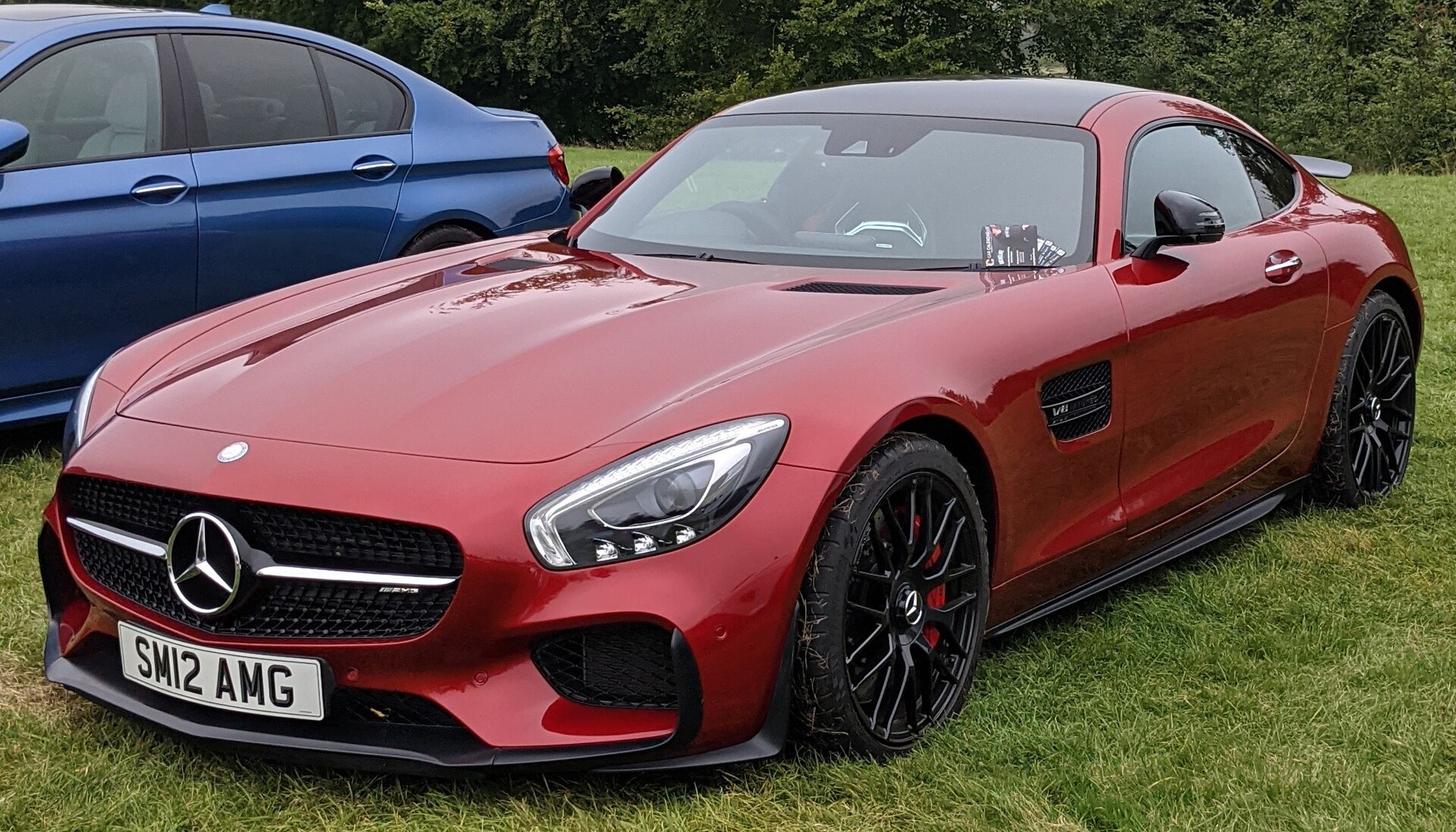
The Mercedes-AMG GT 63 S E-Performance produces 577 horsepower from a 4.0-liter twin-turbocharged V8, paired with an electric motor (in the E-Performance model) for additional torque delivery. It accelerates to 60 mph in 3.1 seconds, tops out at 196 mph, and weighs 4,685 pounds. The engine exhaust crackles and pops. The steering is race-car sharp. The suspension is track-ready. The cabin feels more like a high-tech cockpit than a sitting room.
Both are priced around $180,000–$235,000 depending on specification. Both are rapid. Both are beautiful in completely different ways. But only one should be in your garage, and which one depends entirely on how you actually want to spend your time behind the wheel.
Under the Hood: W12 Waft vs V8 Aggression
The engine comparison tells you almost everything you need to know about the philosophical difference between these cars.
The Bentley's 6.0L twin-turbo W12 is an engineering marvel that feels increasingly anachronistic in 2026. It's a 12-cylinder engine — literally two six-cylinder engines bolted together — that produces power in a way that smaller turbocharged engines simply cannot replicate. There's no turbo lag because the turbochargers are always spinning. There's no dead zone. The power delivery is instantaneous and relentless, and because it's spread across 12 cylinders, it never feels harsh. It feels inevitable.
The sound is subdued — Bentley engineered this engine to be quiet. The car is designed to swallow noise, not amplify it. In Bentley tradition, the goal is to deliver performance while maintaining an atmosphere of calm sophistication. Some drivers will find this disappointing. Others will find it perfect.
The Mercedes-AMG GT's 4.0L twin-turbo V8 is a different beast entirely. It's sharper, more responsive, and engineered to punish you with noise and aggression. When you downshift and apply throttle, the engine pops and crackles through the exhaust. When you heel-toe into a corner, the car responds immediately. When you exit the turn, there's a visceral sense of mechanical fury.
In the latest E-Performance version, Mercedes adds an electric motor on the rear axle, effectively making this a performance hybrid. The electric motor fills the gap between the turbos spooling up and full engine power, eliminating turbo lag entirely. This is genuinely clever engineering — it gives you the efficiency benefits of electrification without sacrificing the driving experience.
On paper, the Mercedes is faster. In reality, both cars are genuinely quick, and unless you're on a closed track, you'll never actually need the extra 77 horsepower.
Performance: Numbers That Matter Less Than You Think
| Specification | Bentley Continental GT Speed | Mercedes-AMG GT 63 S E-Perf |
|---|---|---|
| Engine | 6.0L Twin-Turbo W12 | 4.0L Twin-Turbo V8 + Electric Motor |
| Horsepower | 650 hp | 577 hp |
| Torque | 667 lb-ft | 700 lb-ft (with electric) |
| 0–60 mph | 3.5 seconds | 3.1 seconds |
| Top Speed | 208 mph | 196 mph |
| Curb Weight | 4,585 lbs | 4,685 lbs |
| 0–60 Acceleration Feel | Smooth, relentless, effortless | Sharp, explosive, driver-focused |
| Braking (100–0 mph) | 132 feet | 128 feet |
| Fuel Economy (est.) | 14–16 mpg | 16–18 mpg |
The Mercedes wins on 0–60 times. The Bentley wins on top speed and throttle satisfaction. The Mercedes has marginally better fuel economy due to the hybrid system.
Here's what actually matters: on a real road, with real speed limits, these performance differences mean almost nothing. The Bentley is fast enough that you'll never find the limit. The Mercedes is fast enough that you'll never need more. The decision comes down to how you want to feel when you're driving, not which number is bigger on a spec sheet.
Luxury and Refinement: Bentley's Greatest Strength
This is where the Bentley Continental GT separates itself entirely from the competition.
Bentley is one of the few manufacturers that still practices full-scale hand-assembly for certain interior elements. The diamond quilting on the doors of a Continental GT Speed is stitched by hand. The leather that wraps the cabin comes from heritage tanneries that have been working with Bentley for decades. The wood trim — available in 17 different species — is hand-selected and hand-finished. Every control surface is weighted, textured, and positioned with obsessive attention to detail.
Sit inside the Continental GT and you're not sitting in a car. You're sitting in a bespoke environment that was designed around you. The seats are 22-way adjustable. The ambient lighting can be customized to 64 different colors. The audio system can be optioned with specific amplifiers and speaker configurations depending on your musical taste. This is not mass production. This is automotive couture.
The Mercedes-AMG GT, by contrast, feels more like a very nice car. The interior is beautiful — the new E-Performance model has a stunning digital cockpit and impeccable materials. But it feels like it rolled off an assembly line, even if it technically did. It doesn't have the bespoke, hand-crafted feeling of the Bentley. It has the feeling of a car that was engineered to perfection in Stuttgart and then built exactly to specification, thousands of times.
Both approaches are valid. One prioritizes uniqueness and craftsmanship. The other prioritizes consistency and precision. Which one appeals to you depends on your personal philosophy.
The Bentley is softer. The Mercedes is firmer. The Bentley floats over imperfections. The Mercedes lets you feel the road. The Bentley is a living room. The Mercedes is a cockpit.
The Bentley Continental GT isn't just a faster car. It's a statement about how you want to move through the world — with quiet confidence, supreme comfort, and the subtle pleasure of knowing that no other car on the road represents your specific tastes and preferences.

Driving Character: Gentleman's Express vs Performance Machine
In Bentley mode, the Continental GT Speed feels like it's gliding. The suspension absorbs bumps before you feel them. The engine delivers power so smoothly that acceleration feels inevitable rather than thrilling. The steering is responsive but not nervous. The automatic transmission shifts seamlessly — you barely notice the gear changes.
Drive the same car in Sport mode and something shifts. The suspension firms up. The throttle response sharpens. The transmission holds gears longer. The exhaust opens up (slightly — it's still a Bentley). But even in Sport mode, this car feels like it's making a compromise. It's like asking a British businessman to jog. He can do it, but it's not his natural state.
The Mercedes-AMG GT feels completely different from the first second you point it down a road. The steering is weighted for performance, not comfort. The suspension is firm enough that you feel every apex and every braking point. The engine doesn't whisper — it snarls. The transmission responds instantaneously to throttle inputs. In Sport+ mode, this car transforms into something that feels genuinely track-ready.
This is the key decision point: if you spend 80% of your time on highways and 20% at track days, the Bentley is the better choice. If you spend 20% of your time on highways and 80% hunting apexes, the Mercedes is the better choice.
The Bentley's Mulliner customization program allows you to essentially build a one-of-one car. You can choose exterior colors that don't exist on any other Bentley. You can specify interior materials and stitching patterns. You can order custom body stripes or wheels. The result is a car that literally no one else in the world owns.
The Mercedes-AMG has the AMG Performance Studio program, which is impressive but operates within narrower boundaries. You get more options than a standard Mercedes, but you're still choosing from a predefined palette rather than creating something entirely new.
Daily Usability: Which One Can You Actually Live With?
Here's a question people don't ask enough: can you actually use these cars regularly without wanting to scream?
The Bentley Continental GT Speed has 4 seats (unlike many supercars with 2), a surprisingly spacious trunk (16.5 cubic feet), and a turning radius that doesn't require you to take three-point turns in every parking lot. The ride quality is so refined that you can comfortably drive it for 8+ hours. Highway cruising is serene. The only real sacrifice is ground clearance — approach angles and speed bumps require caution — but the air suspension can be lowered on demand to help with particularly aggressive obstacles.
This is a car you can actually use as a primary transportation. Some owners do. It's not practical, but it's possible.
The Mercedes-AMG GT is technically a four-seater, but the rear seats are extremely tight. The trunk is smaller (12.3 cubic feet). The ride quality is stiffer, so long-distance highway drives are less pleasant. The car is also lower to the ground, which means approach angles are tighter and speed bumps are a genuine concern.
The Mercedes is a weekend car. A special-occasion car. A car you take to the track or cruise on backroads when the weather is perfect. It's not meant to be your daily transportation, even though technically you could do it.
For daily usability, the Bentley wins decisively. If you want a car that can be pressed into service for a 6-hour road trip or a grocery run without compromising too much, the Continental GT is the answer.

Depreciation and Value Retention: Which One Holds Its Worth Better?
| Time Period | Bentley Continental GT Speed | Mercedes-AMG GT 63 |
|---|---|---|
| New Price (2024 model) | $235,000 | $180,000 |
| After 1 Year | ~$195,000 (17% loss) | ~$150,000 (17% loss) |
| After 3 Years | ~$155,000 (34% loss) | ~$115,000 (36% loss) |
| After 5 Years | ~$120,000 (49% loss) | ~$85,000 (53% loss) |
| Resale Market Demand | Strong (Bentley rarity) | Moderate (more common) |
| Low-Mileage Premium | 15–20% above market | 8–12% above market |
Both cars depreciate — luxury cars do. But the Bentley holds its value slightly better, particularly if it's optioned with distinctive colors and features. A well-maintained Continental GT Speed with low mileage can actually appreciate in value if it's a particularly beautiful or rare specification.
The Mercedes depreciates more steeply because there are simply more of them in the market. Mercedes builds considerably more cars than Bentley. Supply and demand matter.
From a purely financial perspective, the Bentley is a better investment. But that's not why you'd buy either car. You'd buy one of these because you love driving it, and if you're factoring investment appreciation into your decision, you're thinking about this wrong.
Reliability and Maintenance: The Hidden Costs of Exotic Ownership
Both the Bentley Continental GT and Mercedes-AMG GT are remarkably reliable by exotic car standards. The Bentley shares its platform and many components with Audi, giving it Volkswagen Group engineering reliability. The Mercedes-AMG GT is built by Mercedes, which has some of the best engineering in the automotive world.
But reliability is where the Mercedes starts to pull ahead. Mercedes dealers are everywhere. Service appointments are easier to get. Replacement parts are more readily available. When something goes wrong — and with performance cars, something eventually does — fixing it is less of an ordeal than it can be with Bentley.
Annual maintenance on a Bentley Continental GT runs $3,000–$5,000 for routine service, plus whatever repairs are needed. The W12 engine requires synthetic oil, regular spark plug replacements, and special attention to the turbocharger system. Out-of-warranty repairs can be shockingly expensive.
Annual maintenance on a Mercedes-AMG GT runs $2,500–$4,000 for routine service. The V8 is simpler mechanically, which translates to lower maintenance costs when things do go wrong. The electrical system is more complex, which can introduce gremlins that take time and money to diagnose.
Neither car is a Honda Civic. Both will require financial commitment to maintain. But the Mercedes is marginally easier and cheaper to keep running.
Pricing and Customization: The True Cost of Each Car
Let's talk money. The sticker price is only part of the equation.
A 2024 Bentley Continental GT Speed starts at around $235,000 for a base configuration. That's not really a thing with Bentley — almost every car is custom ordered to the buyer's specifications. Once you start adding options — distinctive colors, special leather, upgraded audio systems, carbon fiber accents — you're easily looking at $280,000–$320,000+.
A 2024 Mercedes-AMG GT 63 S E-Performance starts at around $180,000. Options are more reasonably priced, so you can drive a fully equipped example for $210,000–$240,000.
The Bentley is more expensive, period. You're paying a premium for the Bentley name, the hand-crafted interior, the exclusivity, and the ability to create a one-of-one car. If your budget is $200,000, the Bentley is off the table. If your budget is $250,000, the Bentley is possible but requires accepting a less exotic spec.
The Mercedes offers better value in terms of dollar-for-performance. You're getting a performance-focused grand touring car for significantly less money.
Which Buyer Should Choose Which Car?
Buy the Bentley Continental GT if: You value refinement, comfort, and exclusivity over outright performance. You want a car that can be driven 4 hours to your vacation home without your back hurting. You care about the craftsmanship and hand-finished details. You want to create a truly unique specification that no one else owns. You enjoy long-distance highway cruising. You want a car that makes a statement about your success and sophistication rather than your need for speed.
Buy the Mercedes-AMG GT if: You prioritize driving engagement and performance. You spend most of your time on backroads and race tracks rather than highways. You want a car that responds immediately to your inputs and makes you feel like a race driver. You value Mercedes's legendary engineering and reliability. You want a more affordable entry point into ultra-luxury motoring. You enjoy sharp steering, firm suspension, and responsive throttle feel. You don't need a practical daily driver and don't care about the hand-stitched diamond quilting.
Frequently Asked Questions
Which car is faster?
The Mercedes-AMG GT 63 S E-Performance is slightly faster in straight-line acceleration (3.1 seconds vs 3.5 seconds). The Bentley Continental GT Speed is faster at high speed (208 mph vs 196 mph). In real-world driving, the difference is negligible — both are absurdly fast.
Which car is more reliable?
Both are reliable by exotic car standards. The Mercedes-AMG GT has a slight edge due to the simpler V8 engine, better dealer network, and more readily available parts. The Bentley is also reliable but can be more expensive to service.
Can I use the Bentley as a daily driver?
Yes, more so than the Mercedes. The Bentley has a more spacious interior, better ride quality, and is generally more comfortable for long distances. Many owners do use the Continental GT for mixed driving. It's not ideal, but it's possible.
Which car holds its value better?
The Bentley typically holds its value slightly better due to lower production numbers and higher initial cost. A well-maintained Continental GT with a distinctive specification can actually appreciate. The Mercedes depreciates more steeply but from a lower starting price.
What about fuel economy?
Both are terrible. The Bentley gets 14–16 mpg. The Mercedes-AMG GT gets 16–18 mpg thanks to the hybrid system. Neither car is remotely fuel-efficient, and if fuel economy is a consideration, you shouldn't be buying a quarter-million-dollar performance car.
Should I lease or buy?
Both cars hold their value well enough that buying makes more sense than leasing, assuming you can afford the purchase price. Check our guide on leasing vs buying exotic cars for a detailed breakdown of the economics.
What about maintenance costs over time?
Plan on $3,000–$5,000 annually for routine maintenance on the Bentley, $2,500–$4,000 on the Mercedes. Add another $2,000–$5,000 annually for insurance. Factor in tires, which need replacement every 20,000–30,000 miles at $400–$600 per tire. Unexpected repairs can easily cost $5,000–$15,000.
How to Finance These Cars: Your Options for Making the Purchase Realistic
If you're financing rather than paying cash, you have options. Check our exotic car financing guide for detailed information, but here are the basics:
Specialty exotic car lenders like JJ Best Banc, Woodside Credit, and others will finance both of these cars, typically requiring 20–30% down and offering rates between 6–10%. Bentley and Mercedes both have captive finance programs (Bentley Financial Services, Mercedes-Benz Financial Services) that can offer competitive rates if you're financing through a dealer.
You can also explore business purchase strategies using your business to purchase an exotic car, which can offer tax advantages depending on your situation. This isn't a loophole — it's completely legitimate — but it requires careful structuring with a tax professional and your CPA.
Should You Consider Alternatives?
Before you decide between the Bentley and Mercedes, consider whether you should be looking at other cars in this category:
The Rolls-Royce Ghost vs Bentley Flying Spur comparison is worth exploring if you're considering longer-wheelbase luxury sedans. Both offer even more refinement and space than the Continental GT or AMG GT.
The Ferrari Roma vs Aston Martin Vantage comparison explores other luxury grand touring options if you want something with more exotic heritage.
The Porsche 911 Turbo S offers performance closer to the Mercedes with better handling and Porsche's legendary reliability, though it lacks the luxury appointments of either the Bentley or Mercedes.
The Lamborghini Urus vs Bentley Bentayga comparison is relevant if you want a performance SUV instead of a grand touring coupe.
The Final Verdict: Choose Based on Your Life, Not Your Dreams
The Bentley Continental GT Speed is the better car if you prioritize everything that makes a car a pleasure to own: refinement, bespoke craftsmanship, comfort, and the unique joy of driving a car that's literally one-of-a-kind. You're paying a premium for all of that, and it's worth it if those things matter to you.
The Mercedes-AMG GT 63 S E-Performance is the better car if you prioritize driving engagement, responsiveness, value, and the intangible but very real pleasure of piloting a machine that feels like it's trying to kill you in the best possible way. You're getting a 577-horsepower performance machine that will out-handle and out-accelerate almost everything on the road, and you're spending less money to get it.
Both are exceptional cars. Both will give you the drive of a lifetime. Both will cost you real money to own and maintain. The Bentley is the car for people who are confident enough to be subtle about their success. The Mercedes is the car for people who want everyone on the road to know they're in a performance machine.
Choose the one that matches how you actually spend your time and what you actually value in a car. Don't choose based on which number on a spec sheet is bigger. Don't choose because of the badge. Choose because it's the car that, when you walk up to it in the morning, makes you genuinely excited to drive it.
If you want help finding the right specification, negotiating the right price, or navigating the purchase process, Automonitor's concierge buying service specializes in exactly this scenario. We've helped hundreds of buyers make this exact decision and walk away completely satisfied with their choice.
Ready to Choose Your Grand Touring Masterpiece?
Automonitor connects you with verified dealers, handles pre-purchase inspections, and provides real market pricing so you can buy the Bentley or Mercedes that's right for you.
Start Your Search →