
Lamborghini Urus vs Porsche Cayenne Turbo GT
Two twin-turbocharged V8 performance SUVs built on the same platform, engineered completely differently. One prioritizes drama over dynamics. The other set a Nürburgring SUV record. Which is actually worth your $200K+?
The Quick Verdict: Different Missions, Different Buyers
The Lamborghini Urus Performante and Porsche Cayenne Turbo GT share more DNA than most people realize. Both use a 4.0-liter twin-turbocharged V8 from the Volkswagen Group. Both are based on the MLB Evo platform. Both deliver around 660 horsepower and can accelerate to 60 mph in the low 3-second range. And yet, they're designed for fundamentally different buyers with fundamentally different priorities.
The Cayenne Turbo GT is the performance reference. It holds the Nürburgring SUV lap record. It's engineered to be the most dynamically capable performance SUV ever built — with handling that approaches 911 levels of competence in a body that seats five. The Urus Performante is engineered to be the most dramatic. It prioritizes presence, visual aggression, and that unmistakable Lamborghini identity over anything approaching understated competence.
Here's what you need to know before writing a check: the Porsche is objectively the better driver's car. The Lamborghini is objectively the better conversation starter. The Porsche will hold its value more predictably. The Lamborghini will own the parking lot. Choose based on what matters to you, because these two are going to give you radically different ownership experiences.
Raw Specs: The Numbers Game
| Specification | Urus Performante | Cayenne Turbo GT | Winner |
|---|---|---|---|
| Engine | 4.0L Twin-Turbo V8 | 4.0L Twin-Turbo V8 | Tie |
| Horsepower | 666 hp | 659 hp | Urus by 7hp |
| Torque | 626 lb-ft | 631 lb-ft | Cayenne |
| 0-60 mph | 3.3s | 3.1s | Cayenne |
| 0-100 mph | 7.2s | 6.9s | Cayenne |
| Top Speed | 190 mph | 195 mph | Cayenne |
| Weight | 4,695 lbs | 4,915 lbs | Urus |
| Nürburgring SUV Record | No record holder | 8:06.248 | Cayenne |
| MSRP (new) | $260,000 | $195,000 | Cayenne (less expensive) |
| Fuel Economy | 13 MPG combined | 15 MPG combined | Cayenne |
The spreadsheet tells an interesting story: the Porsche is faster, more efficient, lighter per horsepower, and costs $65,000 less new. The Lamborghini is lighter overall and has slightly more horsepower. But numbers don't capture the entire picture, because these vehicles are tuned completely differently despite sharing the same engine block.

Performance Reality: Tuning Matters More Than You Think
Lamborghini and Porsche take opposite approaches to the same engine. Porsche's engineers focused on precision, predictability, and lap time. The Cayenne Turbo GT makes 659 horsepower with a more aggressive boost curve that delivers maximum torque from 1,800 rpm. Every part of the chassis — from the suspension geometry to the brake calibration to the steering response — is optimized around consistent, repeatable performance.
Lamborghini's engineers prioritized drama and aggression. The Urus Performante makes 666 horsepower (Porsche's 659 just wouldn't be provocative enough). The engine hits peak torque at 2,500 rpm — slightly later but with more aggressive response characteristics. The exhaust note is more pronounced. The shift behavior is more theatrical. Lamborghini isn't trying to match the Nürburgring record. They're trying to make you feel like you're piloting an angry beast.
On the road, here's what that means: the Porsche is predictable. You enter a corner, the car responds exactly as you'd expect. You ask for maximum acceleration, you get maximum acceleration without drama or surprise. The Lamborghini is less predictable. The power delivery has character. The transmission hunts for gears with purpose. The differentials lock aggressively. It's more engaging, but less precise.
Handling Dynamics: The Nürburgring Proves Everything
The Cayenne Turbo GT holds the Nürburgring Nordschleife SUV lap record — an 8:06.248 that's faster than many dedicated sports cars. The Urus Performante doesn't chase records. This isn't laziness on Lamborghini's part; it's strategic. They're aiming at different buyers.
The Cayenne Turbo GT uses a sophisticated adaptive air suspension with Porsche's Dynamic Chassis Control (PDCC) active roll stabilization. The steering is perfectly weighted. The brakes are absolutely relentless. The handling characteristics can be fine-tuned with adjustable drive modes that actually change the fundamental driving personality of the car. It's a masterclass in performance SUV engineering.
The Urus Performante uses a similar suspension architecture but tuned for different priorities. It prioritizes ground clearance and articulation more than the Porsche does. The steering is heavier — more aggressive, less refined. The brake characteristics are more on-off than progressive. The drive modes are available, but they feel more theatrical than transformational. The Urus is genuinely competent — it can absolutely embarrass slower vehicles on both road and track — but the Cayenne is operating on a different level of precision.
In practical terms: if you're planning to attack a closed course, the Porsche will lap faster, brake later, corner harder, and feel more like a 911 transplanted into an SUV body. The Lamborghini will impress people in the paddock and run genuinely quick lap times, but it won't beat the Porsche around a circuit. That's the reality.
Get Expert Comparisons From Automonitor
Not sure which performance SUV is right for you? Our automotive specialists have driven both and can help you make the decision. Schedule a consultation.
Talk to Our Specialists →
Pricing & Ownership Costs: The Value Story
This is where the decision gets interesting. The Cayenne Turbo GT starts at $195,000 MSRP new. The Urus Performante starts at $260,000. That's a $65,000 difference at purchase — and the gap widens dramatically when you factor in ownership costs.
Insurance
The Porsche typically costs 15-20% less to insure than the Lamborghini. A Cayenne Turbo GT might cost $2,800-$3,600 annually. An Urus Performante runs $3,400-$4,200. It sounds like a small difference, but over five years, you're looking at $4,000-$6,000 in additional insurance costs.
Maintenance
Porsche has a significantly better dealer network and a more mature service infrastructure. Routine maintenance (oil changes, fluid services, filter replacements) runs about $1,800-$2,400 annually for the Cayenne. The Urus runs $2,200-$2,800. Major services are more expensive for the Lamborghini — Porsche's parts pricing is more reasonable, and their technicians command lower labor rates on average.
Fuel Economy
The Cayenne Turbo GT achieves 15 MPG combined; the Urus manages 13 MPG. If you drive 8,000 miles annually at today's fuel prices, that's roughly $800-$1,200 additional annual cost for the Lamborghini. Not catastrophic, but it adds up.
Depreciation
This is where Porsche's reliability reputation pays dividends. Based on five-year ownership data, the Cayenne Turbo GT typically retains 60-65% of its value. The Urus Performante retains 55-60%. That means a $195,000 Cayenne might be worth $120,000-$125,000 after five years. A $260,000 Urus might be worth $145,000-$155,000. The Porsche's value retention percentage is better, meaning lower total depreciation on a per-mile basis.
The Cayenne Turbo GT is the financially smarter choice. The Urus Performante is the emotionally smarter choice. Choose accordingly.
Daily Usability: Which Actually Works as Transportation?
Both are legitimately drivable daily drivers by exotic SUV standards. But the Cayenne has meaningful advantages.
Ride Quality
The Porsche uses its air suspension and PDCC system to deliver a genuinely compliant ride on poor pavement. You get that sophisticated German engineering that absorbs road imperfections without wallowing. The Urus, tuned more aggressively for drama, has a slightly firmer ride quality — not uncomfortable, but noticeably more athletic and less forgiving of bad roads.
Visibility
The Cayenne has better window area and more practical sightlines for daily driving. The Urus has smaller windows, more aggressive visual mass, and slightly worse over-the-shoulder visibility. For navigating parking lots and urban streets, the Porsche is easier to live with.
Interior Practicality
The Cayenne has a more thoughtful interior layout. Storage is logical, climate control is intuitive, and the infotainment system — Porsche's latest PCM — is genuinely one of the best in the automotive world. The Urus interior is more dramatic, with the signature Lamborghini design language applied to an SUV body. It's less practical but more visually impressive. Visibility of controls is slightly more difficult; climate zone management isn't as intuitive.
Reliability Track Record
Porsche has exceptional reliability data with the Cayenne platform. The Urus Performante is newer, but it inherits rock-solid Volkswagen Group engineering. Both are far more reliable than you'd expect from exotic vehicles in this price range. That said, Porsche's service infrastructure and parts availability give it a meaningful advantage if something unexpected happens.
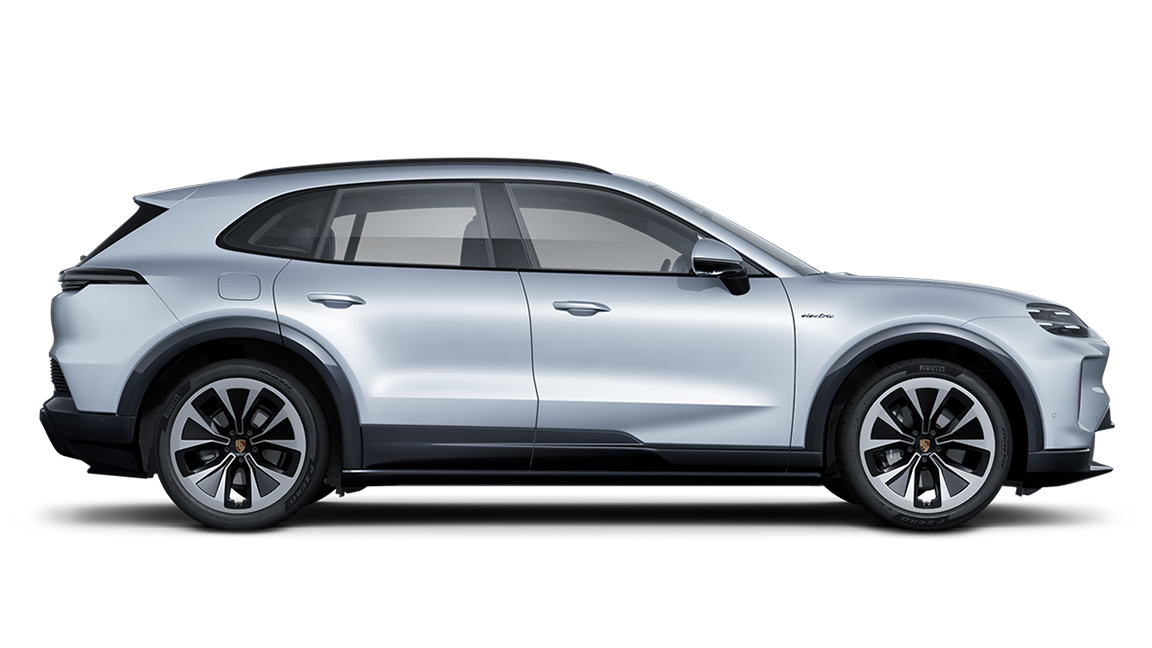
Interior Experience: Drama vs. Refinement
This is perhaps the most visceral difference between these two vehicles.
The Lamborghini Urus interior is theater. The dashboard wraps around you with aggressive angles and carbon fiber accents. The seats are more supportive and more visually striking. The stitching patterns are more complex. When you close the door, you hear a heavy, deliberately engineered thud. The steering wheel is thicker. The shift lever is more theatrical. Every control feel designed to reinforce that you're piloting a Lamborghini, not just a fancy Audi.
The Porsche Cayenne interior is competent. The materials are excellent — leather quality arguably exceeds the Urus — but the design language prioritizes ergonomics over drama. The dashboard is logical. The controls are where you'd expect them. The steering wheel is perfectly sized for precise driving. The seats are supportive without feeling like race seats. When you close the door, you hear a quiet, refined sealing sound. Nothing shouts "look at me." Everything whispers "I'm engineered to perfection."
For daily driving and long-distance comfort, the Porsche wins. For making yourself feel special every time you get behind the wheel, the Lamborghini wins. This isn't a technical comparison — it's purely about what makes you smile when you sit down in the driver's seat.
Comprehensive Specification Comparison
| Category | Urus Performante | Cayenne Turbo GT |
|---|---|---|
| Engine Type | 4.0L Twin-Turbo V8 | 4.0L Twin-Turbo V8 |
| Peak Power | 666 hp @ 6,000 rpm | 659 hp @ 5,750 rpm |
| Peak Torque | 626 lb-ft @ 2,500 rpm | 631 lb-ft @ 1,800 rpm |
| Transmission | 8-speed Automatic | 8-speed Automatic |
| Drive Configuration | AWD | AWD |
| 0-60 mph | 3.3 seconds | 3.1 seconds |
| 0-100 mph | 7.2 seconds | 6.9 seconds |
| Top Speed | 190 mph | 195 mph |
| Curb Weight | 4,695 lbs | 4,915 lbs |
| Brake Type | Carbon Ceramic | Carbon Ceramic |
| Suspension | Air Suspension (adaptive) | Air Suspension (adaptive) |
| Steering Type | Electric Power-Assisted | Electric Power-Assisted |
| EPA Combined MPG | 13 | 15 |
| Fuel Tank Capacity | 23.8 gallons | 27.0 gallons |
| Seating Capacity | 5 | 5 |
| Cargo Space (behind rear seats) | 37.0 cu ft | 16.9 cu ft |
| Cargo Space (maximum) | 76.9 cu ft | 59.1 cu ft |
| Ground Clearance | 8.3 inches | 8.4 inches |
| Warranty | 3 years / 36,000 miles | 4 years / 50,000 miles |
Who Should Buy Which? The Honest Assessment
Buy the Porsche Cayenne Turbo GT if:
- You value genuine driving dynamics and want a performance SUV that can actually attack a racetrack without apology
- You appreciate Porsche's engineering precision and don't need the drama as much as you need competence
- You want better resale value and more predictable ownership costs
- You care about fuel economy, even if just slightly — 2 MPG difference adds up over years of ownership
- You plan to keep the car for 3+ years and want peace of mind with Porsche's dealer network and reliability reputation
- You'd rather be the best driver in the lot than have the most dramatic car
- You drive daily and appreciate a genuinely refined daily driver that happens to be insanely fast
Buy the Lamborghini Urus Performante if:
- You prioritize presence and visual drama above all else — you want people to notice when you pull up
- You value the Lamborghini brand identity and want to make a clear statement with your vehicle choice
- You're keeping the car as a trophy piece, not as practical transportation
- You have the budget for the $65,000 premium and the associated higher running costs
- You want an SUV that feels fundamentally different from anything else on the road
- You appreciate Lamborghini's theatrical approach to performance over Porsche's surgical precision
- You value the emotional experience of ownership more than rational financial considerations
Getting into Either One: Finance & Lease Options
Both vehicles offer financing options through their respective manufacturers, though the Porsche's program is typically more competitive due to higher volume and better residual value predictions.
For the Cayenne Turbo GT, expect to finance at 4.9-6.9% APR depending on credit score and down payment. The Urus Performante typically runs 5.5-7.5%, reflecting higher risk and lower residual values. Read our complete guide to leasing a Porsche and leasing a Lamborghini for detailed breakdown of monthly payments.
Leasing either vehicle is possible but less attractive than purchasing, since both depreciate relatively slowly. For more information on specific monthly costs, check our guides on Porsche monthly payments and Lamborghini monthly payments.
How They Compare to Other Performance SUVs
If you're still deciding between these two, you should also be considering the Bentley Bentayga Speed, the Rolls-Royce Cullinan Black Badge, and the Aston Martin DBX707. Check our detailed comparison articles for how the Urus and Cayenne stack up against the full luxury performance SUV field.
Depreciation & Long-Term Value
The Porsche Cayenne Turbo GT should hold approximately 60-65% of its value over five years, meaning a $195,000 purchase depreciates roughly $68,000-$78,000. The Urus Performante, being a newer model and less proven on the used market, should hold about 55-60%, meaning a $260,000 purchase depreciates roughly $104,000-$117,000.
In practical terms: the Cayenne loses about $13,600-$15,600 annually; the Urus loses about $20,800-$23,400 annually. That's the real cost of performance SUV ownership beyond the purchase price. Read more in our comprehensive guide on exotic car depreciation and visit our article on the true cost of Lamborghini ownership.
Frequently Asked Questions
Is the Lamborghini Urus faster than the Porsche Cayenne Turbo GT?
The Porsche is slightly faster in absolute terms. It accelerates to 60 mph in 3.1 seconds versus 3.3 seconds for the Urus. The Cayenne also has a higher top speed (195 mph vs 190 mph) and better mid-range acceleration. The Urus has 7 more horsepower, but the Porsche's superior engineering and lighter weight give it the acceleration advantage. Neither is objectively "fast" at that level — both are genuinely quick by any real-world standard.
Which has better reliability?
Both are exceptionally reliable for exotic vehicles, but Porsche has the better track record. The Cayenne platform has been refined over years and has real-world data proving its durability. The Urus Performante is newer, but it shares the same VW Group engine and transmission. If I had to bet money, I'd bet on the Porsche proving slightly more reliable long-term, but the difference won't be dramatic. Proper maintenance is far more important than which badge you're buying.
Can the Urus be daily driven?
Yes, absolutely. It's more aggressive than the Porsche, but it's still an SUV with reasonable ground clearance, good visibility (for its size), and a usable interior. That said, the Cayenne is the better daily driver because of its more refined ride quality and more practical interior layout.
Which is a better investment?
The Porsche, by a significant margin. Better value retention, lower ownership costs, better resale market, and more predictable depreciation. If you're buying with any financial rationale whatsoever, choose the Porsche. The Urus is an emotional purchase, not a financial one.
What about the Nürburgring record? Does it matter?
Not for 99% of owners. The Porsche set that record because it's engineered for precision, which makes it better at precise things like lap times. But if you're not planning to attack closed courses regularly, the record is just a bragging right. Most owners will never approach either vehicle's actual performance envelope.
The Final Decision
The Porsche Cayenne Turbo GT is the rational choice. It's faster, cheaper, more efficient, holds value better, costs less to own, and provides a more refined daily-driving experience. If you're buying a performance SUV as your primary consideration and you want maximum capability for your money, get the Porsche. You'll end up ahead financially and mechanically.
The Lamborghini Urus Performante is the emotional choice. It makes a statement. It prioritizes drama and presence over precision. It's a uniquely Lamborghini experience wrapped in an SUV body. It's $65,000 more expensive and $4,000+ more per year to own, but you'll never forget what it feels like to behind the wheel.
Neither is objectively "better" — they're better for different people with different priorities. Determine which category you fall into, and the decision becomes obvious. At Automonitor, we can help you find the right vehicle at the right price, whether you're committing to the Porsche's precision or the Lamborghini's drama. Get in touch with one of our specialists today to make sure you're choosing the right fit for your needs and budget.
Compare Both in Person at Automonitor
Our specialists have access to inventory of both vehicles. Schedule test drives and let us help you make the right decision for your garage.
Schedule Your Test Drives →