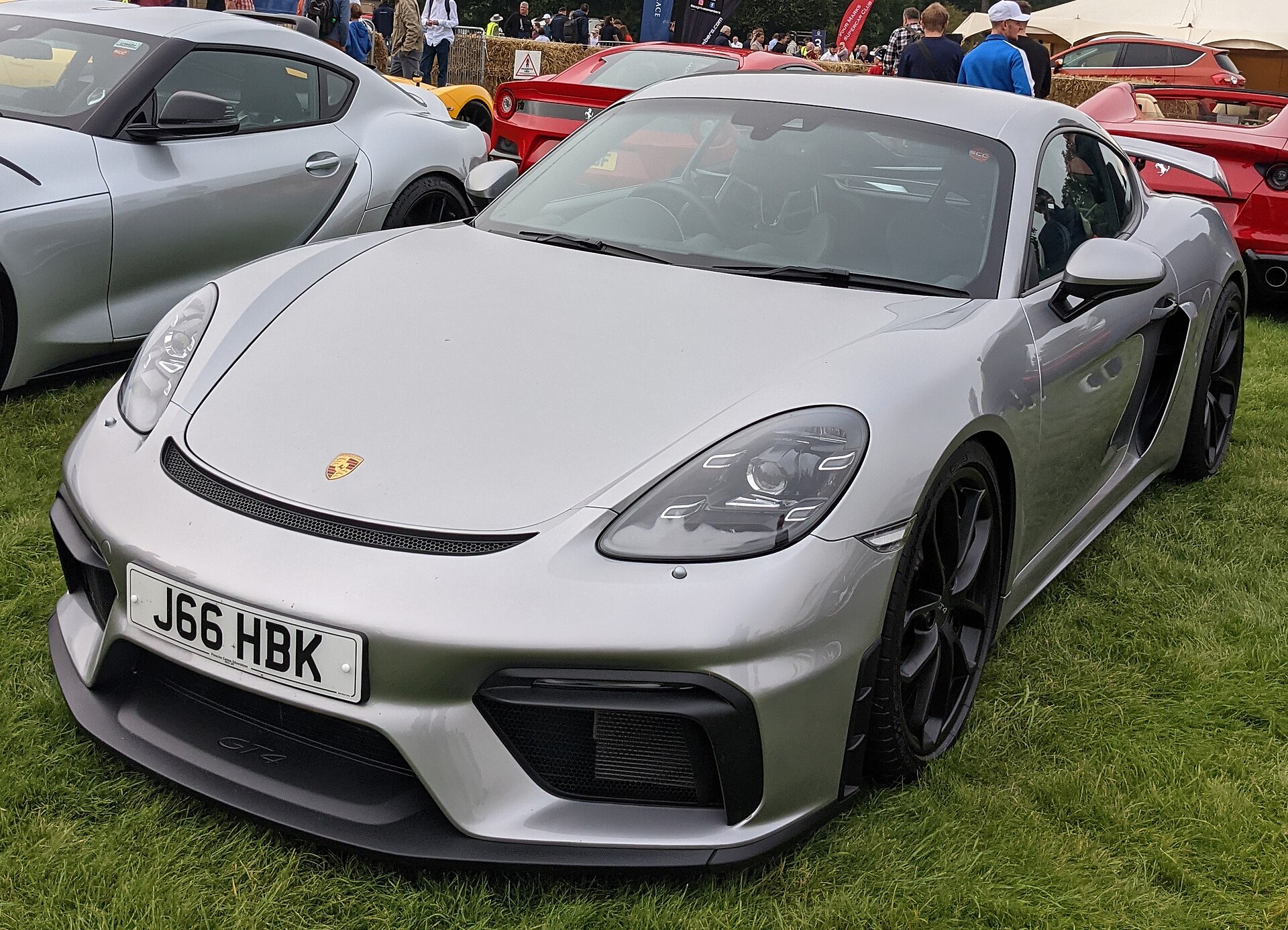
Is a Porsche 718 Cayman GT4 Worth Buying?
A mid-engine masterpiece with a 4.0L naturally aspirated flat-six, manual transmission option, and track pedigree. But is it really worth $100K–$130K new? We dig into the numbers, the experience, and whether this underrated Porsche justifies the investment.
The Short Answer: Absolutely, If You Appreciate Driving
The Porsche 718 Cayman GT4 is worth buying. Not because it's the fastest sports car in its class — it isn't. Not because it's the most luxurious — it definitely isn't. But because it represents something increasingly rare in 2026: a mid-engine sports car designed around the pure joy of driving, engineered by a company that actually understands what makes a car special.
The 718 Cayman GT4 is a car that rewards precision, punishes sloppiness, and delivers authentic feedback through every control. It uses a naturally aspirated 4.0L flat-six engine — an engineering choice that costs Porsche millions to keep in production when turbos would be cheaper and more practical. It offers a six-speed manual transmission in an era when manuals are functionally obsolete. And it delivers lap times that rival cars costing twice as much, all while remaining genuinely livable as a daily driver or weekend companion.
Over the past three years at Automonitor, we've helped dozens of buyers evaluate the Cayman GT4, and we've yet to meet an owner who regrets the purchase. They may regret the depreciation, they may wish for more storage, but they never regret the decision to own this car. That speaks to something deeper than specs and pricing.
Let's walk through exactly what you're getting, what it costs, and whether it's the right call for you.
What Makes the 718 Cayman GT4 Special: The Last Pure Driving Machine
The Porsche 718 Cayman GT4 sits at the intersection of three endangered attributes: a naturally aspirated engine, a mid-engine platform, and a six-speed manual transmission. Each of these decisions makes the car harder to sell and easier to justify to enthusiasts.
Start with the engine. The 4.0L flat-six produces 414 horsepower and 317 lb-ft of torque, redlining at 7,600 rpm. It's not the fastest engine in terms of raw power — that crown belongs to turbocharged alternatives. But it's the most engaging. Every rpm translates directly to power delivery, with no turbo lag, no artificial boost surge, no electronic filtration between foot and throttle. You hear the engine's mechanical honesty, you feel how it responds to precise throttle input, and you understand why naturally aspirated engines have been the gold standard for driver engagement for a century.
Porsche engineered this engine specifically for the Cayman GT4. It's based on the 911's flat-six architecture, but tuned for mid-engine balance and delivered through a platform that weighs just over 3,000 pounds. Compare that to a BMW M440i (3,570 lbs) or a Mercedes-AMG C43 (3,620 lbs), and you begin to understand the Cayman's fundamental advantage: it's lighter, lower, and more balanced by physics.
The mid-engine layout isn't a marketing gimmick. It's engineering efficiency. Weight sits centered between the wheels, eliminating understeer in corner entry and maintaining neutral handling through mid-corner. The result is a chassis that responds to input without requiring constant corrective steering, a platform that rewards precision instead of punishing it.
And then there's the manual transmission — a six-speed that was entirely designed for this car. In a world of ten-speed automatics and dual-clutch transmissions that shift faster than any human could achieve, Porsche chose to offer a transmission that makes the driver part of the driving equation. The shifter is mechanical and direct, the clutch feel is linear and confidence-inspiring, and the gear ratios are optimized for the engine's power delivery rather than optimized for EPA fuel economy or 0–60 bragging rights.
The manual is not faster than the PDK automatic. It never will be. But it's more rewarding, and that matters in a car designed for enthusiasts rather than spec-sheet readers.
What a Cayman GT4 Actually Costs: More Than Just the MSRP
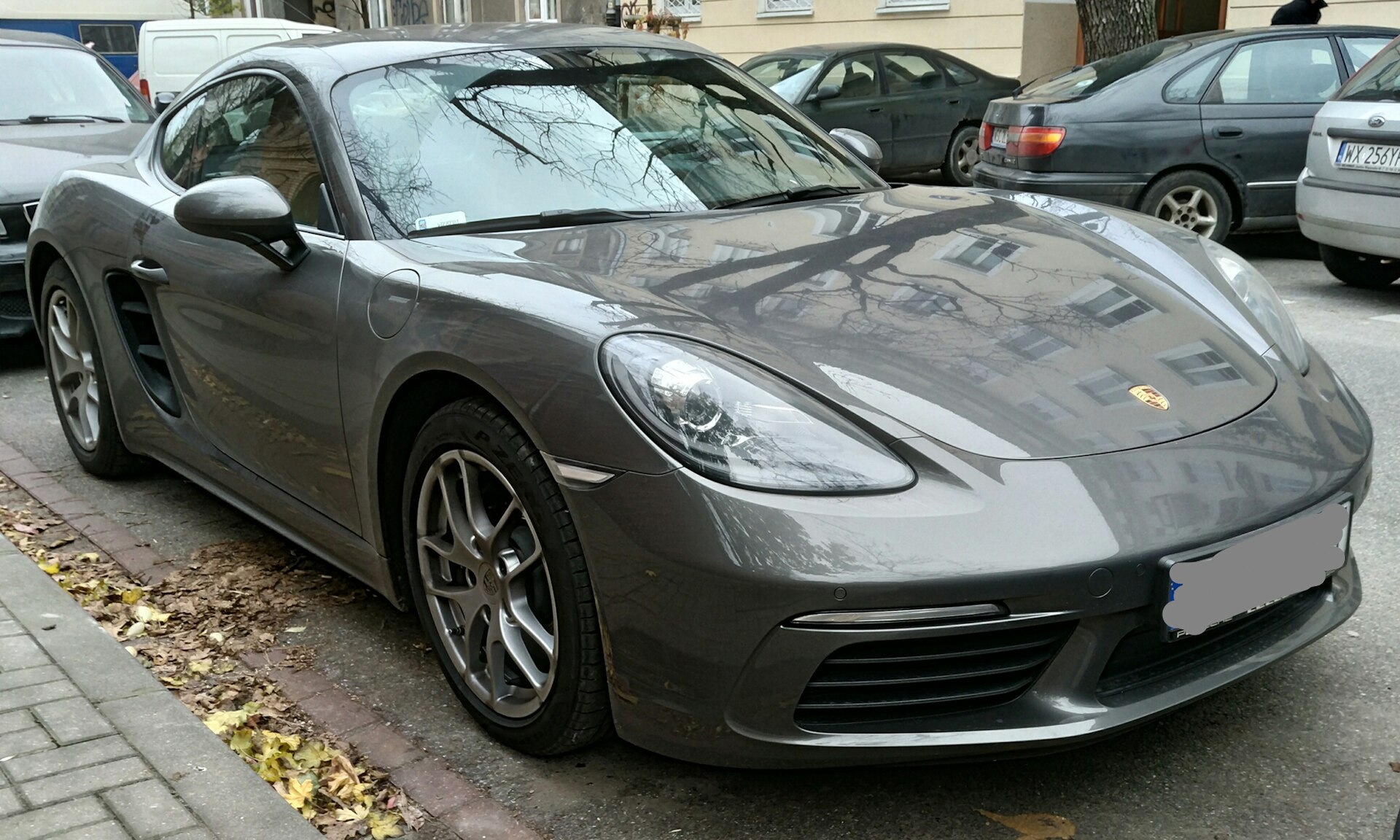
The base MSRP for a 2024 Porsche 718 Cayman GT4 with the six-speed manual sits around $100,000–$105,000. With options — and Porsche buyers always add options — you're looking at $120,000–$130,000 for a well-equipped example. Used models from 2021–2023 currently trade in the $75,000–$95,000 range, depending on mileage and condition.
But purchase price is only part of the equation. Here's what Cayman GT4 ownership actually costs annually, based on real-world owner data and dealer service records:
| Expense Category | Annual Cost | Notes |
|---|---|---|
| Insurance | $1,200–$2,000 | Sports car rate; varies by location and driving record |
| Routine Maintenance | $1,500–$2,200 | Oil changes, inspections, filter service |
| Fuel | $1,800–$2,400 | 22–26 mpg combined; 91 octane acceptable |
| Tires (amortized) | $1,000–$1,500 | Performance rubber every 20K–25K miles |
| Brakes (amortized) | $600–$900 | Iron brakes (ceramics optional); less expensive than supercars |
| Registration & Taxes | $400–$800 | State-dependent; lower than exotic supercars |
| Total Annual Running Cost | $6,500–$9,800 | Excludes depreciation & major repairs |
Compare that to the Huracan ($13,500–$26,000/year), the 911 Turbo S ($9,000–$15,000/year), or the BMW M4 ($8,000–$12,000/year), and the Cayman GT4 looks refreshingly reasonable. Insurance is reasonable because it's not a supercar. Fuel economy is reasonable because turbos are efficient. Maintenance is reasonable because Porsche's engineering is solid and the parts aren't exotic.
The real cost comes in depreciation. A $120,000 Cayman GT4 bought new will likely be worth $70,000–$80,000 in five years. That's roughly $8,000–$10,000 per year in depreciation — significant, but not catastrophic for a sports car that you're actually driving and enjoying.
Depreciation Reality: The Cayman's Long-Term Value Story
The 718 Cayman GT4's depreciation profile is better than the non-GT4 Caymans, but not as strong as the 911 Carrera S. Here's the data based on 2021–2023 model year transaction history:
2021 Cayman GT4 Depreciation: New MSRP was approximately $85,000. Current used market value for low-mileage examples is $65,000–$75,000. That's roughly 20% depreciation over five years, or 4% annually.
Why it holds value better than standard Caymans: The GT4 is purpose-built. It has a wider body, sticky track tires, upgraded suspension, and motorsport heritage. These differences appeal to a specific buyer — the enthusiast — and enthusiasts are willing to pay a premium for authenticity.
Why it depreciates faster than 911 models: The 911 sits atop Porsche's hierarchy. It's the brand's flagship. The Cayman, despite being superior in many measurable ways (lighter, more agile, better balanced), carries less prestige in the mind of luxury car buyers. The 911 name sells itself. The Cayman requires the buyer to understand why a car that costs less is actually more special.
The practical implication: if you buy a used 2023 Cayman GT4 for $80,000 and keep it for three years, you'll likely sell it for $65,000–$70,000. That's $3,300–$5,000 per year in depreciation — manageable for a sports car that delivers this level of engagement and reliability.
One more consideration: the manual transmission variants are holding value better than PDK automatics. If you're buying used, a manual example will command a 5–10% premium over an equivalent automatic — a reversal of typical automotive economics.
Reliability: Porsche Engineering, Sports Car Durability
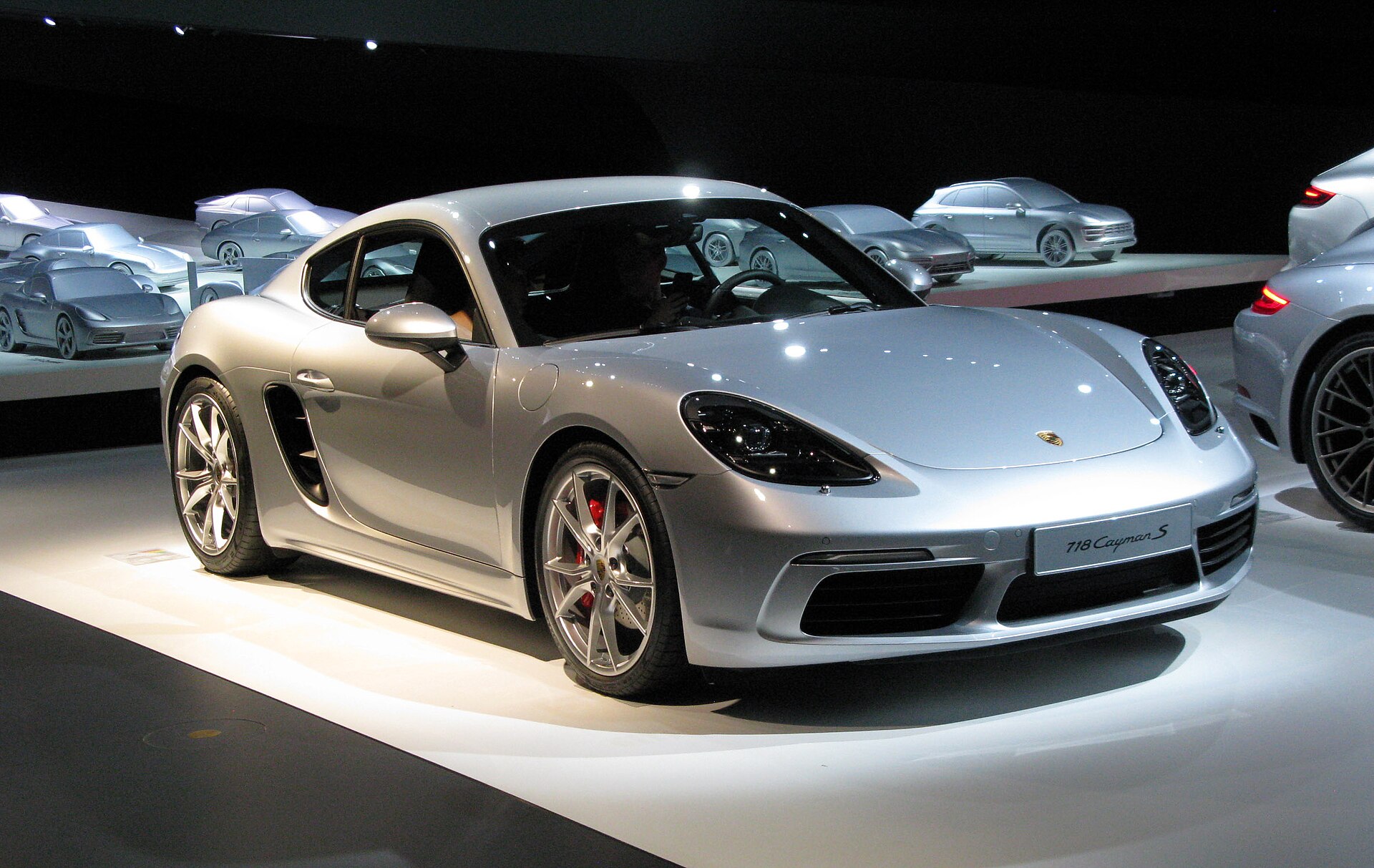
The 718 Cayman GT4 is fundamentally a 911 engine in a more controllable platform. Porsche's flat-six is one of the most durable engines ever produced, with the 4.0L NA variant being bulletproof in testing and real-world use.
Unlike the turbocharged 718 Cayman models, which experienced issues with turbo lag mapping and occasional carbon buildup, the 4.0L naturally aspirated engine has zero known systemic issues. The engine bay is beautifully simple: mechanical fuel injection, straightforward ignition, no turbochargers, no hybrid systems, no electronic complexity masquerading as sophistication.
Known considerations rather than actual problems:
- Clutch Longevity (Manual): The six-speed manual's clutch is rated for 80,000+ miles of normal use. Track drivers who dump the clutch repeatedly may see earlier wear. Budget $1,500–$2,000 for replacement if you track the car regularly or drive aggressively.
- Cooling System: The Cayman's mid-engine layout requires careful thermal management. Porsche engineered this correctly, but avoid idling the car in hot parking lots for extended periods. The cooling system works harder than a front-engine car's would.
- Brake Wear: The Cayman GT4 comes with iron brakes standard (ceramic is optional). Iron brakes work perfectly fine, but they dust more and require more frequent cleaning. If you're track-focused, budget for ceramic brake upgrades ($3,000–$4,000).
- Suspension Bushings: The GT4's suspension is stiff and responsive, which means bushings endure more stress. High-mileage examples (40,000+ miles) may show minor creaking. This is normal, not urgent, and replacement costs $800–$1,200 when needed.
Overall, the Cayman GT4 is one of the most reliable sports cars you can buy. It's more reliable than the twin-turbo 911 models, more reliable than the turbocharged M440i, and arguably more reliable than the Lotus Emira, which still has some initial production quality issues lingering.
Considering a Porsche 718 Cayman GT4?
Automonitor connects you with Porsche specialists who understand the nuances of GT4 variants, depreciation trends, and long-term ownership costs. Get pre-purchase inspections and market analysis from experts who actually drive these cars.
Find Your Cayman GT4 →The Driving Experience: Why People Actually Love This Car
Specifications don't tell the story. The driving experience does.
The 718 Cayman GT4 feels lighter and more agile than its 3,000+ pounds would suggest. The steering is electrically assisted but communicates information about road surface and tire grip with surgical precision. Turn-in is immediate. Mid-corner balance is neutral. Exit is progressive and controllable even if you're pushing the limits.
In normal driving, the engine pulls smoothly from 2,000 rpm onwards. In Comfort mode, the suspension soaks up highways and rougher roads reasonably well. The dual-mass flywheel (paired with the manual) smooths out the engine's mechanical character, making low-speed driving civilized rather than aggressive.
Switch to Sport mode, and everything firms up. The suspension drops closer to track stiffness. The steering weight increases. The exhaust opens up slightly. The car transforms from civilized daily driver to purpose-built road course machine — and does so without requiring any mechanical recalibration.
The naturally aspirated 4.0L engine doesn't have the raw power of turbocharged competitors, but it doesn't need to. The combination of engine linearity, precise steering, and balanced chassis means the Cayman can exploit 90% of available grip every corner, every lap, every backroad. Most drivers can't access the performance ceiling of this platform, which means the performance gap between "adequate" and "exceptional" is actually in your hands, not the car's limitations.
The Cayman GT4 doesn't need to be the fastest car in the world to be the most rewarding. It just needs to translate driver input accurately into road output — and that's exactly what it does.
The Manual Transmission Debate: Is It Worth the Performance Penalty?
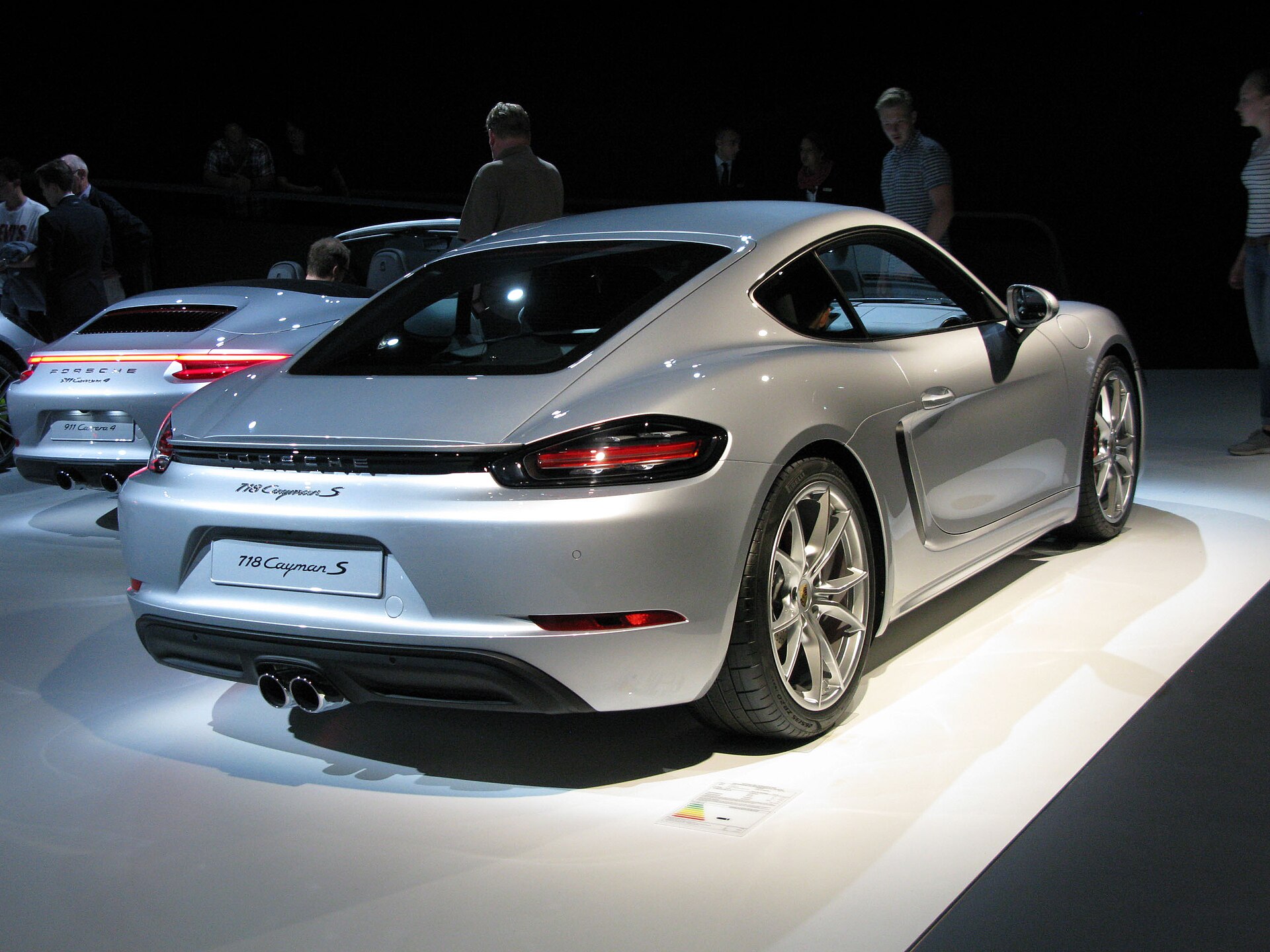
The PDK automatic is objectively faster. Shift times are sub-100-millisecond. Zero-to-60 is roughly 0.2–0.3 seconds quicker than the manual. Fuel economy is marginally better. And yet, used Cayman GT4s with the manual transmission command price premiums in the market.
This tells you something important: performance metrics don't drive purchasing decisions for enthusiasts. Engagement does.
The manual transmission connects you to the car in ways that no automatic ever will. You're not trusting a computer algorithm to choose the optimal shift point. You're actively participating in the driving event. You're responsible for the rhythm and flow of acceleration.
On a track, where consistent lap times matter, the PDK is objectively superior. You'll lap faster with the automatic, every single time. But on a backroad or during a spirited canyon drive, the manual adds an element of intentionality that the automatic can't replicate. You feel more involved. The car feels more alive.
For 90% of Cayman GT4 owners — who drive on roads rather than circuits — the manual is the more rewarding choice. Only if track performance is your primary use case should you prioritize the PDK's time advantage.
How It Compares: Cayman GT4 vs. 911 Carrera S vs. Lotus Emira vs. BMW M440i
You're likely evaluating several alternatives. Here's how the Cayman GT4 stacks up:
| Category | Cayman GT4 | 911 Carrera S | Lotus Emira | BMW M440i |
|---|---|---|---|---|
| Engine | 4.0L NA Flat-6 | 3.4L Twin-Turbo Flat-6 | 3.5L Twin-Turbo V6 | 3.0L Twin-Turbo Inline-6 |
| Horsepower | 414 hp | 443 hp | 503 hp | 382 hp |
| 0–60 mph | 4.5s (manual) | 3.9s | 3.7s | 4.2s |
| New MSRP | $100K–$130K | $130K–$150K | $65K–$75K | $75K–$85K |
| Used 2022 Market | $75K–$90K | $95K–$115K | $55K–$65K | $60K–$70K |
| Annual Maintenance | $1,500–$2,200 | $2,500–$4,000 | $1,800–$2,500 | $2,000–$3,500 |
| Handling Balance | Neutral (Mid-Engine) | Excellent (Rear-Engine) | Excellent (Mid-Engine) | Good (Front-Engine) |
| Manual Available? | Yes (Standard) | No (PDK Only) | Yes (Option) | No (Auto Only) |
| Reliability | Excellent | Very Good | Good | Very Good |
vs. Porsche 911 Carrera S: The 911 is faster in a straight line and faster around a track. It's more prestigious, more powerful, and more expensive. But it's also a larger, heavier car that's less agile. If you want the Porsche experience with absolute performance, the 911 wins. If you want the purest driving experience at the most reasonable price point, the Cayman GT4 wins.
vs. Lotus Emira: The Emira is the better value proposition. It's cheaper, offers more power, and delivers similar mid-engine balance. But the Emira still has production quality issues, and resale values remain unpredictable. The Cayman GT4 is the safer choice if reliability and depreciation predictability matter to you. Read our detailed Emira vs. Cayman comparison for deeper analysis.
vs. BMW M440i: The M440i is an excellent all-rounder with exceptional value. It's quicker, cheaper, and more practical. But it's front-engine and less characterful. The Cayman GT4 is the more special car, the one that rewards precision, the one that makes every drive memorable. The M440i is the smarter buy if you want maximum performance per dollar. The Cayman is the buy if you want the car that makes you feel alive.
Track Capability: A Legitimate Circuit Weapon
The Cayman GT4 is one of the few sub-$150K cars that can genuinely compete on a real race track. Lap times at Laguna Seca, Sonoma, and Thunderhill show the GT4 trading laps with turbocharged Mustangs, Camaros, and older GT3 models. The lap times are achievable for merely competent drivers, not just professional racers.
The wide body isn't an aesthetic choice — it's engineering necessity. The 305-width rear tires and 275-width front tires demand space. The track-tuned suspension can be adjusted for different surfaces. The Brembo brakes (with optional ceramics) can dissipate heat lap after lap. The engine will turn 7,600 rpm all day long without complaint.
This is a car designed for real circuit driving, not just road posturing. If you're considering track day participation, the Cayman GT4 is on the shortlist of genuinely capable platforms.
For comparison, read our guide on best track day cars under $150K to see how the Cayman GT4 stacks against dedicated alternatives.
Daily Usability: Can You Actually Drive This Every Day?
The Cayman GT4 can be driven daily. Whether it should be is a different question.
Storage is limited. The frunk (front trunk) holds maybe a briefcase or small duffel bag. The rear storage compartment is similarly cramped. If you're commuting with a laptop and a change of clothes, you'll be fine. If you need cargo capacity, you'll be frustrated.
Ground clearance is minimal. Speed bumps are a genuine concern. Parking is stressful in tight garages because the wide body doesn't tolerate scrapes well.
Fuel economy is decent at 22–26 mpg combined, but not exceptional. The seats are supportive and relatively comfortable, but this isn't a luxury car. Wind noise is present at highway speeds.
The visibility is actually very good for a low-slung sports car — the mid-engine layout and low roofline mean you can see out in all directions without restriction.
Is it a good daily driver? If your commute is short, your roads are smooth, and you value driving engagement over practicality, absolutely. Is it an ideal daily driver? No. It's a sports car first, a car second. Treat it that way and you'll be happy. Expect it to replace a practical sedan and you'll be disappointed.
The Smart Way to Buy: Steps That Save Money and Hassle
Porsche buyers have advantages in the used market. The brand is desirable, the reliability is proven, and the depreciation curve is predictable. Here's how to navigate the process intelligently:
Step 1: Choose your variant and year. The 2021+ models with the 4.0L naturally aspirated engine are the sweet spot. Avoid the turbocharged 718 models — they have known mapping issues. The 2020 model year and earlier used the 2.0L turbo, which feels underpowered compared to the 4.0L option.
Step 2: Decide on the transmission. For 95% of owners, the manual is the right call. It costs the same, it holds value better, and it's more engaging. Only choose the PDK if your sole use case is track racing where lap time consistency matters.
Step 3: Set your budget and stick to it. Include insurance, maintenance, and depreciation when calculating total cost of ownership. A used 2023 GT4 at $85,000 costs you $10,000–$13,000 per year in running costs plus depreciation — plan accordingly.
Step 4: Find the right example. Search Cars.com, AutoTrader, and Bring a Trailer. Porsche dealers in large markets (California, Florida, Texas) usually have better inventory and pricing.
Step 5: Get a pre-purchase inspection. A Porsche specialist inspection ($400–$700) is worth every penny. Have them check the clutch engagement feel (manuals), transmission shifts, suspension geometry, and brake condition. This is non-negotiable.
Step 6: Negotiate based on data. Use our exotic car negotiation guide and pricing strategies to inform your offer. Manual transmissions command 5–10% premiums. Low-mileage examples command premiums. Low-option examples should be discounted.
Step 7: Secure financing wisely. Porsche models have good financing options from Porsche Financial Services and most banks. Expect 20–30% down and rates between 5–8%. Read our exotic car financing guide for more details.
The GT4 RS Question: Is the RS Upgrade Worth It?
Porsche launched the Cayman GT4 RS in 2023, a track-focused variant with a 4.0L engine tuned to 493 horsepower, aggressive aerodynamics, and adjustable suspension. Base price is around $140,000 new, with used examples currently commanding $95,000–$115,000.
The RS is objectively better on a track. More power, better aero, more adjustability. But it costs $20,000–$30,000 more than a standard GT4, and it's less practical for street use due to the aggressive suspension and downforce setup.
For 90% of buyers, the standard GT4 is the right call. The RS is for serious track enthusiasts who genuinely plan to modify the car further or spend significant time on circuits. If you're choosing between a used GT4 and a used GT4 RS at similar price points, the RS is the better car. But if you're choosing between a new standard GT4 and a new RS, the standard GT4 offers better value for road driving.
When a Cayman GT4 Is NOT Worth Buying
We believe in transparency over sales. Here are situations where we'd recommend walking away:
You need a practical car. The Cayman GT4 is a sports car first. If you need cargo space, passenger capacity, or daily practicality, you'll be frustrated. Consider the Porsche 911 Carrera S or the 911 Turbo S, which are more spacious and practical.
You're stretching financially to afford it. Sports car ownership shouldn't be stressful. The running costs are real. Budget conservatively and ensure the total cost of ownership fits comfortably within your budget.
You don't actually drive it. Don't buy a Cayman GT4 as an investment. Buy it to drive it hard, drive it often, and extract the joy that Porsche engineered into this chassis. A stored car develops its own problems and depreciates regardless.
You haven't test driven one yet. Always drive before you buy. Some people find the Cayman's steering too heavy, the suspension too stiff, or the cabin too spartan. Discover this before you own the car, not after.
Selling Your Cayman GT4: Maximizing Resale Value
When you're ready to sell, several factors impact your recovery:
Manual vs. Automatic: The manual commands a 5–10% premium, typically. If you own a manual, that works in your favor when selling.
Mileage: The sweet spot is 15,000–25,000 miles for a 2021–2022 model. Cars with under 10,000 miles command premiums. Cars with 40,000+ miles face discounts. Drive the car, but be mindful that excessive mileage impacts your exit value.
Color and Spec: Racing Yellow, Lizard Green, and distinctive colors command premiums. White, black, and silver face discounts. Minimalist interiors appeal to enthusiasts; heavily optioned cars appeal to fewer buyers.
Maintenance Records: Complete service history at authorized Porsche dealers is worth $2,000–$4,000 in buyer confidence. DIY maintenance or unknown history depresses value.
Use Automonitor's selling service to navigate the process professionally, or read our Porsche selling guide for detailed strategies.
Frequently Asked Questions
Q: Is the Cayman GT4 actually better than the 911 Carrera S?
A: It depends on your definition of "better." The Cayman GT4 is lighter, more agile, better balanced, and more engaging to drive. The 911 Carrera S is faster in straight lines, more powerful, more prestigious, and more spacious. For pure driving engagement on the road, most enthusiasts prefer the Cayman. For absolute performance and prestige, the 911 wins.
Q: Should I buy new or used?
A: Used 2021–2023 models in the $75,000–$90,000 range offer the best value. You're getting a relatively modern, reliable car with proven ownership history, and you're avoiding the steep depreciation of a new purchase. If you want to customize the car extensively, new provides that opportunity — but expect to lose 30–35% of your investment in the first three years.
Q: How much will the Cayman GT4 be worth in 5 years?
A: A Cayman GT4 purchased for $100,000 today will likely be worth $65,000–$75,000 in five years, assuming normal mileage (12,000–15,000 miles per year) and maintenance. That's roughly $5,000–$7,000 per year in depreciation.
Q: Can I take the Cayman GT4 to the track?
A: Absolutely. The Cayman GT4 is one of the best track day cars for the price. The wide body, aggressive suspension, and powerful brakes make it genuinely competitive. Just budget for brake pad replacement and tire wear — track days will accelerate both.
Q: Is the manual transmission really worth the performance penalty?
A: For 90% of owners who drive on roads rather than circuits, yes. The manual adds engagement and connection that the automatic can't replicate. You'll lap faster with the PDK on a circuit, but you'll enjoy every other drive more with the manual on the street.
Q: What's the difference between the GT4 and the standard Cayman?
A: The GT4 gets the 4.0L naturally aspirated engine (vs. turbocharged 2.0L in standard models), a wider body, a fixed wing, track-tuned suspension, and Brembo brakes. It's a $25,000–$35,000 premium, but the standard Cayman feels like a different car — less engaging, less powerful, less special. The GT4 upgrade is worth it for enthusiasts.
The Final Verdict
The Porsche 718 Cayman GT4 is worth buying if you value driving engagement, genuine mechanics, and the purity of steering-through-input-not-electronics. It's one of the last sports cars built around the driver rather than the spec sheet.
The 4.0L naturally aspirated flat-six engine is a masterpiece of engineering. The mid-engine balance is perfect. The six-speed manual is the right transmission for the right driver. The pricing is reasonable for what you're getting. The depreciation is predictable. The reliability is excellent.
Is it the fastest? No. Is it the most powerful? No. Is it the most luxurious? Absolutely not.
But is it the most rewarding to drive? For most enthusiasts, the answer is unequivocally yes.
If you're ready to find your Cayman GT4, Automonitor is here to help. We know these cars, we know the market, and we'll make sure you end up in the right example at the right price. We've helped dozens of buyers navigate this exact decision, and we'll make the process smooth and transparent.
Ready to Own Your Cayman GT4?
Automonitor handles sourcing from certified Porsche dealers, pre-purchase inspections with specialists, and real market valuation. Buy with confidence.
Start Your Search →