
Porsche 911 Carrera vs 911 Turbo: Which 911 Is Right for You?
The decision between a Porsche 911 Carrera and a 911 Turbo isn't just about raw horsepower. It's about understanding your priorities, budget, and what you actually want from one of the world's greatest sports cars. Here's everything you need to decide.
The Heart of the Choice: Accessible Performance vs. Ultimate Dominance
The Porsche 911 lineup has a simple promise: every variant is genuinely quick. The decision between the Carrera and Turbo isn't about whether you'll have fun — you absolutely will. It's about choosing between two fundamentally different philosophies of performance driving.
The Carrera represents what most drivers actually need: a twin-turbocharged engine with engaging handling, reasonable daily practicality, and a price point that, while substantial, doesn't require mortgaging your entire future. The Turbo is Porsche's full-throated commitment to dominance — a twin-turbocharged engine producing nearly 200 horsepower more than the Carrera, standard all-wheel drive, and a chassis engineered to deploy every available volt to the pavement.
The choice between them hinges on three critical questions: How much performance do you actually use? What's your realistic budget including running costs? And perhaps most importantly — do you want the best driver's car, or the most impressive on paper? This guide will help you answer all three.
Engine Comparison: Naturally Aspirated Versus Twin-Turbo
The engine specification difference between the Carrera and Turbo is the clearest illustration of Porsche's engineering philosophy. Let's break down what you're getting:
The 911 Carrera features a 3.0-liter twin-turbocharged flat-six producing 379 horsepower and 331 pound-feet of torque. The Carrera S bumps that to 443 horsepower. Meanwhile, the 911 Turbo takes a 3.7-liter variant of the same fundamental engine and wrings 572 horsepower from it. The Turbo S pushes even further, hitting 640 horsepower — nearly 70 percent more than the base Carrera.
But the horsepower numbers don't tell the full story. The Carrera engine is lightweight and responsive, with optimized turbo management for lower turbo lag. The Turbo engine is essentially a different animal — built with reinforced internals, larger turbos, and an intercooler system that helps maintain power across temperature ranges. The torque curve is flatter, the low-end punch more aggressive, and the energy delivery more relentless.
For daily driving, the Carrera's more efficient engine management results in better cold-start characteristics and more predictable throttle response. For enthusiast driving, the Turbo's bi-turbo setup provides a compelling blend of immediate power and usable performance at any engine speed.
The Carrera is the thinking driver's 911. The Turbo is for drivers who want the 911 to think for them — and execute whatever they're imagining with overwhelming force.

The Numbers That Matter: 0-60, Top Speed, and Real-World Acceleration
On paper, the performance gap seems enormous. The Carrera accelerates from 0-60 mph in 4.0 seconds. The Turbo does it in 2.7 seconds. The Turbo S achieves it in 2.5 seconds. That's nearly double the acceleration rate — and in practical terms, it's the difference between impressive and eye-watering.
But here's what matters: most drivers will never experience the difference at their limit. A Carrera accelerating at full throttle will feel shockingly fast. A Turbo will feel shockingly fast with more authority. On the street, both will leave almost every other car behind.
Where the performance gap becomes noticeable is sustained acceleration. A Carrera S can maintain 60-100 mph runs repeatedly; you'll feel the engine working but not straining. A Turbo maintains that same sprint with its turbos barely spooling up. If you're the kind of driver who uses your performance car exclusively on track days and closed courses, the Turbo's advantage is meaningful. If you drive on public roads where sustained high-speed runs are rare, the difference is academic.
Top speed tells a similar story: Carrera at 183 mph, Turbo at 201 mph, Turbo S at 208 mph. Thrilling on a private circuit. Irrelevant in the real world.
Drivetrain and Handling: Where Philosophy Meets Pavement
The Carrera comes standard with rear-wheel drive — a setup that many driving purists argue is the true soul of the 911. Porsche offers an optional all-wheel drive system (Carrera 4 and Carrera 4S), which provides additional traction and confidence in poor weather conditions but adds weight and slightly dulls the steering feel.
The Turbo is exclusively all-wheel drive. Porsche engineered the Turbo's AWD system specifically for its power output, with a sophisticated torque distribution that can channel up to 100 percent of engine power to the rear wheels in ideal conditions. This isn't just safety equipment — it's a performance tool.
For handling character, the Carrera RWD delivers the classic 911 experience: light, responsive steering, immediate feedback, and a sense that the car is communicating with you in real-time. There's a playfulness to it — a feeling that the chassis is conspiring with you rather than for you. The Turbo, by contrast, is planted. The wider body, all-wheel drive system, and more aggressive suspension geometry create a car that feels substantial and confident. It's not less fun, but it's a different kind of fun — the satisfaction of absolute control rather than the thrill of managing a lively chassis.
The Turbo also has a wider track (front and rear wheels are further apart), which requires a wider body. This matters for daily driving: the Turbo is noticeably wider, making tight parking situations genuinely challenging. The Carrera, being narrower, is more nimble in urban environments.
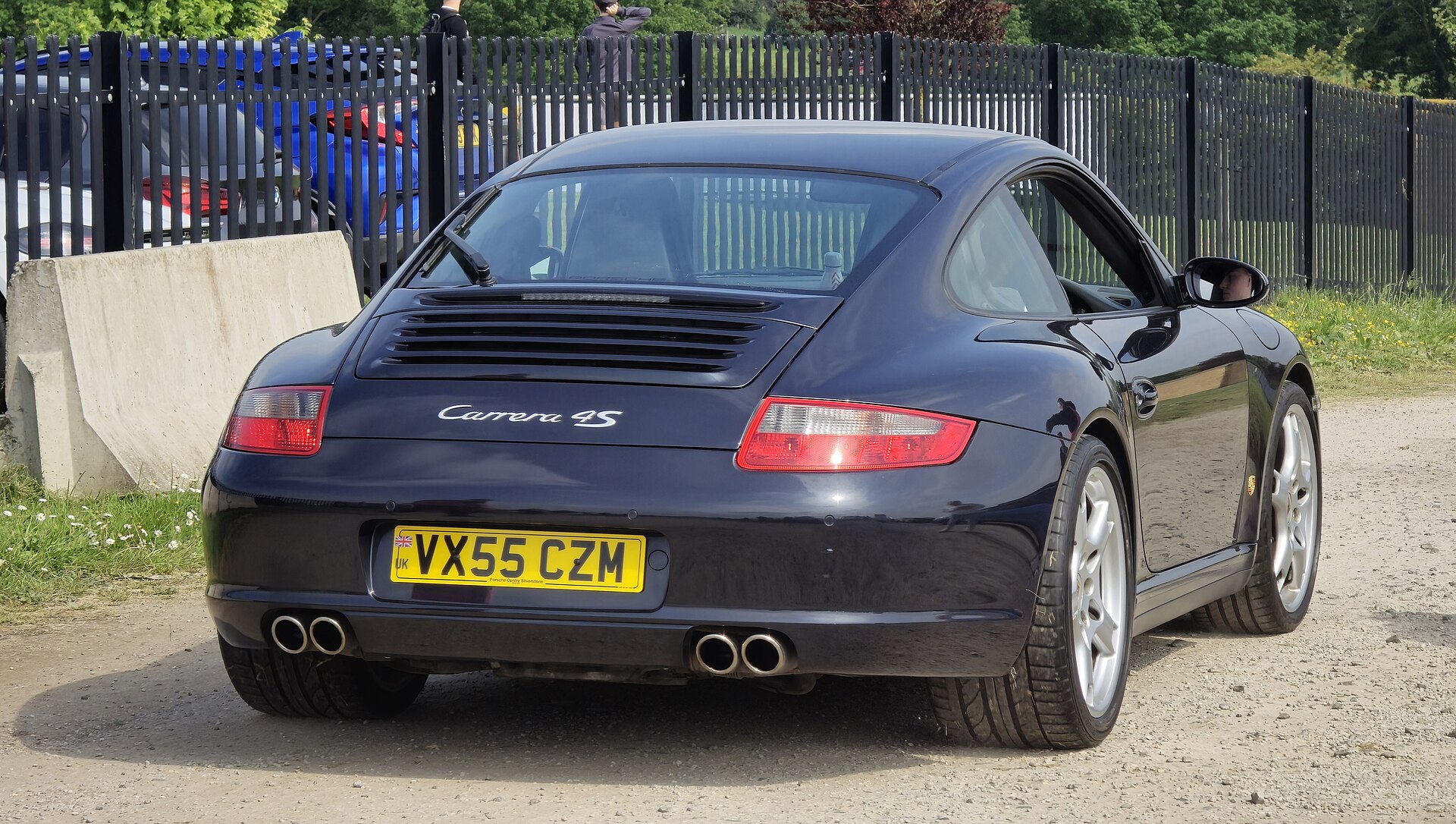
Daily Driveability: Which 911 Works Better in Real Life
Both the Carrera and Turbo can absolutely be daily driven. Porsche engineered them that way. But the experience differs in meaningful ways.
The Carrera RWD is the easier car to live with daily. It's lighter (about 300 pounds less than a Turbo), which makes acceleration feel more responsive and braking more linear. Parking is less stressful due to the narrower body. Ground clearance is adequate for normal driving. The steering is lighter and more intuitive in stop-and-go traffic. Engine characteristics are predictable — less turbo lag means fewer surprises during partial-throttle acceleration in typical driving.
If you live in areas with winter weather or frequent rain, the Carrera 4 (AWD version) brings genuine safety advantages. The Turbo's standard AWD does the same, but with the added width that makes urban maneuvering more challenging.
The Turbo, by contrast, commands attention. Its wider stance makes parking in narrow spots an exercise in patience. The adaptive suspension, while wonderfully compliant in Comfort mode, is still firmer than most luxury sedans. The engine note is more aggressive. The presence of all-wheel drive means the car feels more "locked in" — which is brilliant on a spirited drive but slightly overkill for commuting to the office.
Neither car is uncomfortable as a daily driver. The question is whether you prefer the Carrera's approachable, forgiving character or the Turbo's assertive, commanding personality.
Pricing Reality: Purchase Price and Total Cost of Ownership
New 2026 pricing from Porsche's official site shows the gap clearly. A new Carrera coupe starts around $115,000. The Carrera S adds roughly $20,000. The Turbo launches at approximately $184,000. The Turbo S demands $217,000.
For used market pricing, the landscape shifts based on model year and mileage. Here's what 2022-2024 examples look like in today's market:
| Expense | 911 Carrera | 911 Turbo | Difference |
|---|---|---|---|
| Insurance (annual) | $1,800–$2,800 | $3,200–$5,200 | +$1,400–$2,400 |
| Maintenance (annual) | $1,200–$2,000 | $1,800–$3,000 | +$600–$1,000 |
| Fuel (annual, 12K miles) | $2,200–$2,800 | $2,800–$3,600 | +$600–$800 |
| Tires (amortized annual) | $1,000–$1,400 | $1,400–$2,000 | +$400–$600 |
| Brakes (amortized annual) | $800–$1,200 | $1,200–$1,800 | +$400–$600 |
| Total Annual | $7,000–$9,400 | $10,400–$15,600 | +$3,400–$6,200 |
So you're looking at an additional $3,400-$6,200 annually to own a Turbo versus a Carrera. Over five years, that's $17,000-$31,000 in extra running costs. Add that to the $50,000-$70,000 purchase price premium, and you're spending $67,000-$101,000 more to own a Turbo than a Carrera over five years. Is that speed worth $67K-$101K? Again, that's a deeply personal question.

Depreciation and Value Retention: What You'll Recover When You Sell
Porsche 911s hold value exceptionally well compared to most performance cars. A Carrera loses roughly 25–30 percent of its value over five years. A Turbo loses only 18–22 percent. That difference sounds small but represents real money: a $115,000 Carrera becomes worth roughly $80,000–$86,000 in five years. A $184,000 Turbo becomes worth roughly $145,000–$151,000.
The Turbo's superior depreciation is due to several factors: lower production volumes make it scarcer, the performance credentials appeal to a broad buyer base, and historically, Turbos have been viewed as "keepers" rather than cars people flip quickly.
The Carrera, while depreciating faster in percentage terms, still retains more value than comparable German performance cars. A BMW M440i or Mercedes-AMG C63, for comparison, lose 35–40 percent in the same timeframe.
Mileage, condition, and color all impact resale value significantly. A low-mileage Carrera in a desirable spec (GT silver, racing yellow, or lava orange) will hold value better than a high-mileage one in black. The same rules apply to Turbos, but because they're worth more to begin with, even a 5 percent variance translates to thousands of dollars.
For lease returns and used market purchases, our research indicates that 2021–2022 Turbo examples represent the best "sweet spot" for value — they're new enough to be relatively low-mileage and under full warranty, but old enough that first-owner depreciation has been absorbed.
Technology and Features: What You Get at Each Price Point
Every current-generation 911, regardless of variant, comes impressively equipped. All include Porsche's PDK dual-clutch transmission (8-speed), adaptive air suspension with electronic damping control, and Porsche Traction Management (PTM) for stability control.
The Carrera includes a 10.9-inch touchscreen with Porsche Communication Management (PCM), Apple CarPlay integration, a 10-speaker audio system, and navigation. Climate control is automatic. Heated seats and steering wheel are included. The infotainment system is intuitive and responsive.
The Turbo adds essentially the same technology but with higher-resolution displays, a more powerful Burmester audio system (14 speakers), and Porsche Connect Plus subscription (includes navigation updates and emergency services). The Turbo also includes adaptive suspension that's tuned specifically for its higher power output.
Neither lacks in creature comforts. The meaningful differences are in performance-oriented features: the Turbo offers Sport Chrono Package (which enables precise lap timing) as standard, while the Carrera requires it as an option. The Turbo's air intake is more aggressive, its cooling systems more robust, and its transmission programming more responsive.
Customization options are essentially identical across the lineup. Both can be configured with carbon-fiber interior trim, premium leather (or vegan leather) interiors, and extended color palettes.
Handling Character: The Subjective But Critical Difference
This is where enthusiasts often divide most sharply. The Carrera RWD, particularly in base form, offers a delicate balance: light enough to feel connected, powerful enough to satisfy, and forgiving enough to teach you something every time you drive it. The steering is direct. The suspension communicates road texture. The chassis feels like a conversation between driver and machine.
The Turbo prioritizes dominance. The heavier body, all-wheel drive, and more aggressive suspension geometry create a car that wants to stay planted regardless of your input. It's remarkably agile for its weight, but you always know you're driving a 3,600-plus pound car. The steering is heavier, requiring more effort but providing more feedback. The suspension is stiffer, filtering less road noise but keeping the car more level through corners.
On a technical course, many experienced drivers prefer the Carrera's lighter, more responsive feel. On a closed track where you can deploy all available grip, the Turbo's cornering speeds are genuinely faster. In an urban environment, the Carrera's lightness is an advantage. On a long highway, the Turbo's composure is superior.
The best way to understand the difference is to test drive both back-to-back. Most drivers come away feeling that neither is "better" — they're simply different expressions of Porsche's engineering philosophy.
Track Capability: Where the Rubber Meets the Concrete
If your intention is occasional track days, either car is entirely capable. The Carrera, even in base form, is more than quick enough for a driver development day or casual track outing. The Turbo, with its extra power and all-wheel drive grip, is faster in absolute terms — but only if you have the skill to use that performance.
For serious track use, the Turbo's advantages become more apparent. Its larger brakes (optional for Carrera) dissipate heat better during repeated hard stops. Its all-wheel drive system provides more consistent grip through high-speed corners. Its suspension is more resistant to load-induced understeer. If you plan to attend track days regularly, the Turbo is the more professional choice.
However, the Carrera is also offered in specialized track-focused variants (like the 911 GT3), which deserve consideration if circuit performance is your primary goal. These models use naturally aspirated engines and offer even more responsive handling than the standard Carrera, though at higher cost and with reduced daily usability.
Which Is Better for First-Time Porsche Buyers?
If you're stepping into the Porsche ecosystem for the first time, the Carrera is the more forgiving entry point. Here's why: First, it costs less, which means your margin for error is smaller. Second, its more manageable power delivery makes learning the 911's mid-engine weight bias less intimidating. Third, the lower annual running costs reduce the financial stress of ownership. Fourth, if you decide that supercar ownership isn't for you, the Carrera is easier to sell without significant financial loss.
That said, if your budget comfortably accommodates the Turbo and you have experience driving powerful rear-wheel-drive cars, the Turbo is absolutely accessible to a first-time buyer. Its all-wheel drive system actually makes it more forgiving in tricky driving conditions, and many first-time buyers find the extra performance reassuring rather than intimidating.
The key consideration: buy the car that matches your actual skill level and realistic usage patterns. An inexperienced driver in a RWD Carrera on a wet road has more to manage than an experienced driver in a Turbo with all-wheel drive on the same road. Be honest with yourself about where you stand.
Not Sure Which 911 Is Right for You?
Automonitor's concierge buying service matches you with the perfect Porsche based on your needs, budget, and driving style. Test drive multiple variants with expert guidance.
Find Your 911 →911 Specifications Comparison: The Complete Breakdown
| Model | Horsepower | 0-60 (seconds) | Top Speed | Curb Weight (lbs) | New MSRP | Used Range (2022-2024) |
|---|---|---|---|---|---|---|
| 911 Carrera | 379 hp | 4.0s | 183 mph | 3,330 | $115,000 | $85,000–$110,000 |
| 911 Carrera S | 443 hp | 3.6s | 190 mph | 3,395 | $135,000 | $95,000–$125,000 |
| 911 Turbo | 572 hp | 2.7s | 201 mph | 3,635 | $184,000 | $130,000–$165,000 |
| 911 Turbo S | 640 hp | 2.5s | 208 mph | 3,680 | $217,000 | $155,000–$195,000 |
But purchase price is only half the equation. Let's talk annual ownership costs. According to data compiled from Porsche owner forums and service centers, here's what to expect:
Insurance: A Carrera typically costs $1,800–$3,200 annually for comprehensive coverage. A Turbo runs $2,500–$4,500, due to higher repair costs and replacement parts.
Maintenance: This is where the gap becomes significant. Carrera routine maintenance (oil changes, fluid service, inspections) runs $1,200–$2,000 yearly. Turbos, with their more complex turbocharger systems and heavier engine load, run $2,000–$3,500 annually.
Fuel: Both are thirsty. Expect 18–22 mpg combined. At current prices, figure $1,800–$2,400 annually for the Carrera, and $2,000–$2,800 for the Turbo.
Tire replacement: Porsche OEM tires cost $350–$500 each. A full set replacement every 25,000–35,000 miles runs $1,500–$2,200 per replacement. Amortized, that's roughly $500–$800 annually.
Total annual running cost: Carrera: $5,500–$8,400. Turbo: $7,500–$11,300.
That's a $2,000+ annual difference — meaningful enough to influence a sensible purchase decision, but not catastrophic if your budget allows.
Insurance and Running Costs Deep Dive
Exotic car insurance costs vary dramatically by insurer, location, and driving record. For 911s specifically, companies like Hagerty and Porsche's official insurance partners offer rates significantly better than mainstream insurers understand.
When shopping for insurance, expect quotes like this (annual, for a 40-year-old driver with a clean record, in a moderate-cost area):
- Carrera: $2,000–$3,200 annually with standard coverage
- Turbo: $2,800–$4,500 annually
Comprehensive and collision deductibles are critical. A Carrera front bumper replacement runs $3,000–$4,500. A Turbo bumper is $4,500–$6,200. Windshield replacement is $800–$1,200 for either. Factor a $1,000 deductible into your calculations.
For maintenance, use only Porsche-certified or independent specialists who understand the platform. Dealership service runs 20–30 percent higher than quality independents but includes newer diagnostic equipment and genuine Porsche parts. Budget $2,000–$3,000 annually for Carrera routine service, and $3,000–$4,500 for Turbo.
Fuel economy varies with driving style. Aggressive driving yields 15–17 mpg. Highway cruising achieves 22–24 mpg. Expect an average of 20 mpg, requiring approximately 500–600 gallons annually if you drive 10,000 miles per year.
Explore Related Porsche Guides
Need more information about owning a Porsche? Check out our comprehensive guides on whether a Porsche 911 Turbo is worth buying, the best first exotic car to buy, and exotic car maintenance costs. If you're weighing purchasing decisions, our new versus used exotic car guide provides detailed analysis.
For broader context, explore our articles on daily-driving exotic cars, the exotic car buyer checklist, and whether exotic cars appreciate in value. We also have detailed guides on Porsche color retention and recommended Porsche options and configurations.
For insurance and running costs, our guides on exotic car insurance costs and expert perspectives from resources like Car and Driver provide additional context for your decision.
Maintenance and Running Costs: Which Is Cheaper to Own Long-Term?
Both cars share the same basic platform and engine architecture (both are turbocharged flat-sixes), so maintenance philosophies are similar. However, the Turbo has some real cost implications.
Routine maintenance (oil changes, inspections, fluid flushes) is similar between the two. Both require synthetic oil, both need regular inspections, both have dual-clutch transmissions with their own service intervals. The difference emerges in component lifespan and wear. The Turbo's larger brakes require bigger brake pads and rotors — replacement costs run higher. The Turbo's wider tires are more expensive than the Carrera's narrower rubber. The Turbo's wider stance means any collision repair work is more complex and more expensive.
Major repairs are rare on modern 911s — both cars are known for solid engineering and reliability. But if something breaks outside of warranty, the Turbo's more complex systems (larger turbochargers, more aggressive suspension) can be more expensive to repair. A turbocharger replacement on a Turbo costs more than one on a Carrera, simply because the component is larger and more complex.
The practical implication: the Turbo's running costs are genuinely higher, but not prohibitively so. The difference is maybe 30-40% more annually, not double. Plan on $10,000-$15,000 per year for the Turbo versus $7,000-$9,500 for the Carrera.
Resale Value: Which Holds Value Better Over 3, 5, and 10 Years?
Let's model out the real numbers. Assume you buy a new car and sell it after a specific holding period. Here's what the math looks like:
911 Carrera ($115,000 purchase price):
- 3-year resale: ~$80,000 (30% depreciation)
- 5-year resale: ~$57,500 (50% depreciation)
- 10-year resale: ~$25,000 (78% depreciation)
911 Turbo ($185,000 purchase price):
- 3-year resale: $140,000 (24% depreciation)
- 5-year resale: $111,000 (40% depreciation)
- 10-year resale: $55,500 (70% depreciation)
The Turbo retains more value in absolute dollars, and as a percentage too. Over 10 years, the Turbo loses $129,500 in value compared to the Carrera's $90,000 loss. But the Turbo started at a higher price point, and percentage-wise, the Turbo holds 70% of its value while the Carrera holds 22% — a meaningful difference.
If you're planning a 3-5 year ownership, the Turbo's superior value retention helps offset the higher purchase price and running costs. If you're planning 10+ years, this advantage diminishes, and the Carrera becomes the more economical choice.
Track Performance: Which Dominates the Circuit?
If track days are in your future, the conversation shifts dramatically. On a closed circuit, the Turbo is objectively faster. The acceleration advantages compound through corner exit. The all-wheel drive traction off turns creates measurable lap time benefits. The wider body accommodates wider, grippier tires.
But the Carrera is far from slow on a track. It's nimble, responsive, and genuinely fun. Many drivers find the Carrera more engaging to drive hard because of its lighter, more connected character. You feel the tires working, you feel the weight transfer, you can adjust the car mid-corner with throttle and steering inputs. The Turbo is more forgiving but also more isolated — you're relying on the computer and the grip, not your feel for the asphalt.
For someone new to track driving, the Carrera is probably the better teacher. It rewards smooth inputs and punishes smooth inputs less aggressively than heavier, more powerful cars. For someone with track experience, the Turbo delivers faster lap times with less drama.
Automonitor's Recommendation by Buyer Profile
Choose the Carrera if: You're a first-time exotic car buyer, value daily usability and parking ease, want to minimize annual running costs, prefer responsive and engaging handling over sheer grip, or plan to keep the car under four years and prefer maximum resale flexibility.
Choose the Turbo if: You have a six-figure budget without financial strain, plan to keep the car for five-plus years (leveraging its value retention), want maximum straight-line performance, live in poor-weather climates and appreciate all-wheel drive security, or plan to use the car on track regularly.
Choose the Carrera 4/Carrera 4S if: You want the Carrera's price point and character but need all-wheel drive security, live in snowy regions, or want a compromise between Carrera and Turbo capabilities.
Choose the Turbo S if: Money is no object and you want the absolute pinnacle of production 911 performance, plan to keep the car as a long-term keeper, or want bragging rights to the most powerful naturally aspirated Porsche flat-six engine.
Which Holds Value Best? A Five-Year Perspective
The Turbo and Turbo S hold value better than the Carrera — both in percentage terms and absolute dollars. A Turbo purchased today at $184,000 will likely be worth $145,000–$151,000 in five years (18–22 percent depreciation). A Carrera at $115,000 will be worth approximately $80,000–$86,000 (26–30 percent depreciation).
However, the Carrera's slower depreciation in dollars can actually be advantageous if your intention is to drive the car hard. The financial consequences of an accident, service issue, or poor maintenance decision are smaller. The Turbo's better value retention matters most if you drive conservatively and maintain meticulous records.
Color matters significantly. Solid colors (black, white, silver) depreciate 15–20 percent faster than metallic or special colors. Racing yellow, lava orange, and dark blue command 5–10 percent premiums on resale.
The Final Verdict: Choosing Your 911
There is no objectively "better" choice between a 911 Carrera and a 911 Turbo. They're both exceptional cars engineered for different priorities.
The Carrera is the more accessible expression of 911 greatness — lighter, more responsive, cheaper to buy and operate, and more engaging for drivers who enjoy feeling the road beneath them. If you're not sure whether supercar ownership is right for you, or if your budget is genuinely constrained, the Carrera is an incredibly capable entry point that will deliver thrills and satisfaction for years.
The Turbo is Porsche's full commitment to performance. It's faster, grippier, more stable, and more capable of deploying its performance in the real world. If you have the budget, plan to keep the car long-term, and want the best performance possible, the Turbo is the choice. It's not twice as fast as the Carrera, but it's meaningfully faster — and more importantly, it's engineered to maintain that speed consistently, in any condition, at any time.
The question isn't which is objectively superior. The question is which aligns with who you are, how you drive, and what you actually want from a Porsche 911.
If you want help navigating the purchase process, Automonitor's buying service connects you with certified Porsche specialists, arranges test drives of both variants, and provides market data to ensure you pay the right price. We've helped hundreds of buyers make this decision with confidence — and we're here to help you too.
Smart Buying Tips: What to Look for When You Shop
Whether you choose Carrera or Turbo, here's how to make the smartest purchase decision:
Get a pre-purchase inspection. This is non-negotiable. Turbo mechanics run $2,000+, and hidden problems can cost $10,000-$30,000 to repair. A proper PPI costs $1,000-$1,500 and is mandatory. See our exotic car buyer checklist for what to look for.
Check the service history. Porsche Service history stamps in the maintenance book mean someone invested in the car's care. Gaps in service history are yellow flags.
Understand warranty status. Porsche warranty is typically 4 years/unlimited miles. Any 5+ year old car will be out of warranty. Consider extended warranty coverage or vehicle service contracts.
Test drive both before deciding. You cannot make this decision from specs alone. You need to feel how each car behaves. Rent or test both variants before committing.
Factor in total cost of ownership. Don't just look at the purchase price. Look at insurance quotes, expected maintenance costs, and resale value to get a true picture of what ownership will cost. Check our exotic car insurance guide for realistic estimates.
Frequently Asked Questions
Q1: Is the 911 Turbo worth the extra $70,000 over the Carrera?
It depends on your priorities. If you drive track days frequently or want the fastest possible acceleration, yes. If you value daily driveability, lower running costs, and driving engagement, the Carrera offers better value. The Carrera S splits the difference at a lower price point.
Q2: Can I daily drive either of these cars?
Yes, both are surprisingly livable as daily drivers. The Carrera is easier to park and more fuel-efficient. The Turbo offers more luxury features and better insulation from road noise. Neither has the practicality of a Porsche 911 Carrera GTS or a crossover, but both can absolutely be driven daily if you're willing to accept minor compromises.
Q3: Which holds value better long-term?
The 911 Turbo holds a higher percentage of its value (35-40% depreciation vs 40-50% for the Carrera). But it starts at a higher price, so the absolute depreciation is larger. For a 5-year ownership, the Turbo's better value retention helps offset its higher purchase price. For 10+ years, the advantage diminishes and the Carrera becomes more economical.
Q4: What are the main reliability differences between Carrera and Turbo?
Both share the same basic platform and engine architecture, so reliability is very similar. The Turbo's larger turbochargers and more complex suspension can be more expensive to repair if something breaks, but failure rates are comparable. Porsche 911s are generally very reliable machines. See our exotic car maintenance guide for realistic cost expectations.
Q5: Should I buy new or used?
The 911 market has stabilized after the pandemic-driven inflation. New cars offer warranty protection and customization options. Used cars (3-5 years old) offer better value if you're willing to skip the factory configuration options and accept that warranty will expire soon. See our new vs used exotic car guide for a detailed analysis of the financial trade-offs.
Ready to Find Your Perfect 911?
Automonitor's buying concierge handles inspections, negotiations, and logistics so you can focus on finding the right car at the right price.
Start Your 911 Search →