
Ferrari Roma vs Aston Martin Vantage: Which Grand Tourer Deserves Your Garage?
Two of the world's most elegant grand tourers sit at an interesting intersection: Italian precision engineering meets British aggression. But beneath the styling and heritage lies a more nuanced question: which car actually aligns with how you drive, what you value, and what you're willing to pay? This is the analysis that separates the dreamers from the buyers.
The Fundamental Difference: Italian Elegance vs. British Aggression
The Ferrari Roma and Aston Martin Vantage represent two completely different interpretations of what a grand tourer should be. This distinction isn't superficial—it cascades through every aspect of ownership, from how they perform on the road to how much they'll cost you five years from now.
The Ferrari Roma is a masterclass in understated Italian design. Penned by Pininfarina, the same design house responsible for some of the most beautiful cars ever built, the Roma channels 1950s and 60s Ferrari elegance. It's the car you buy when you want everyone at the country club to know you have excellent taste without needing a wing, a diffuser, or aggressive aerodynamic theater. The Roma whispers confidence rather than shouting it.
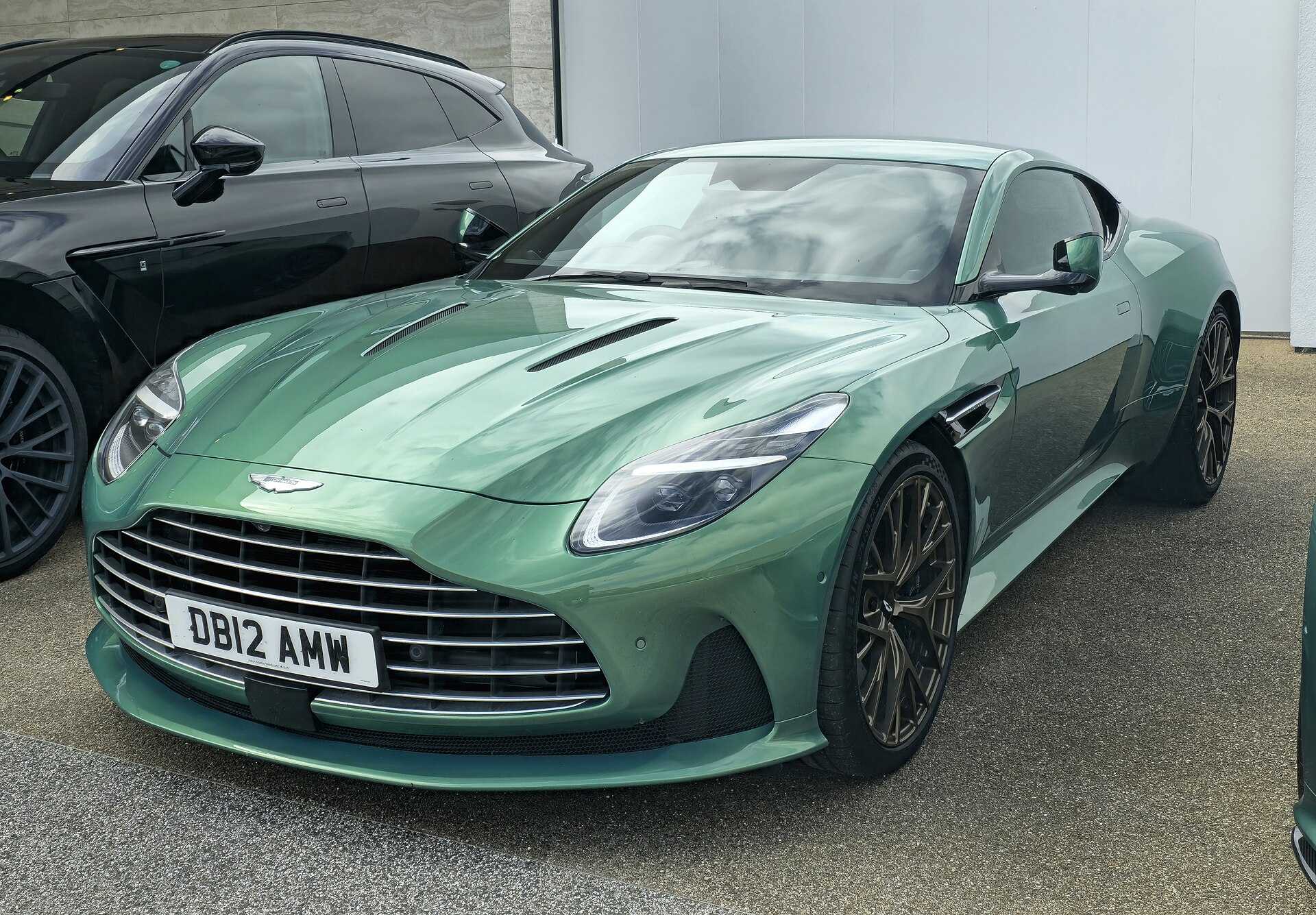
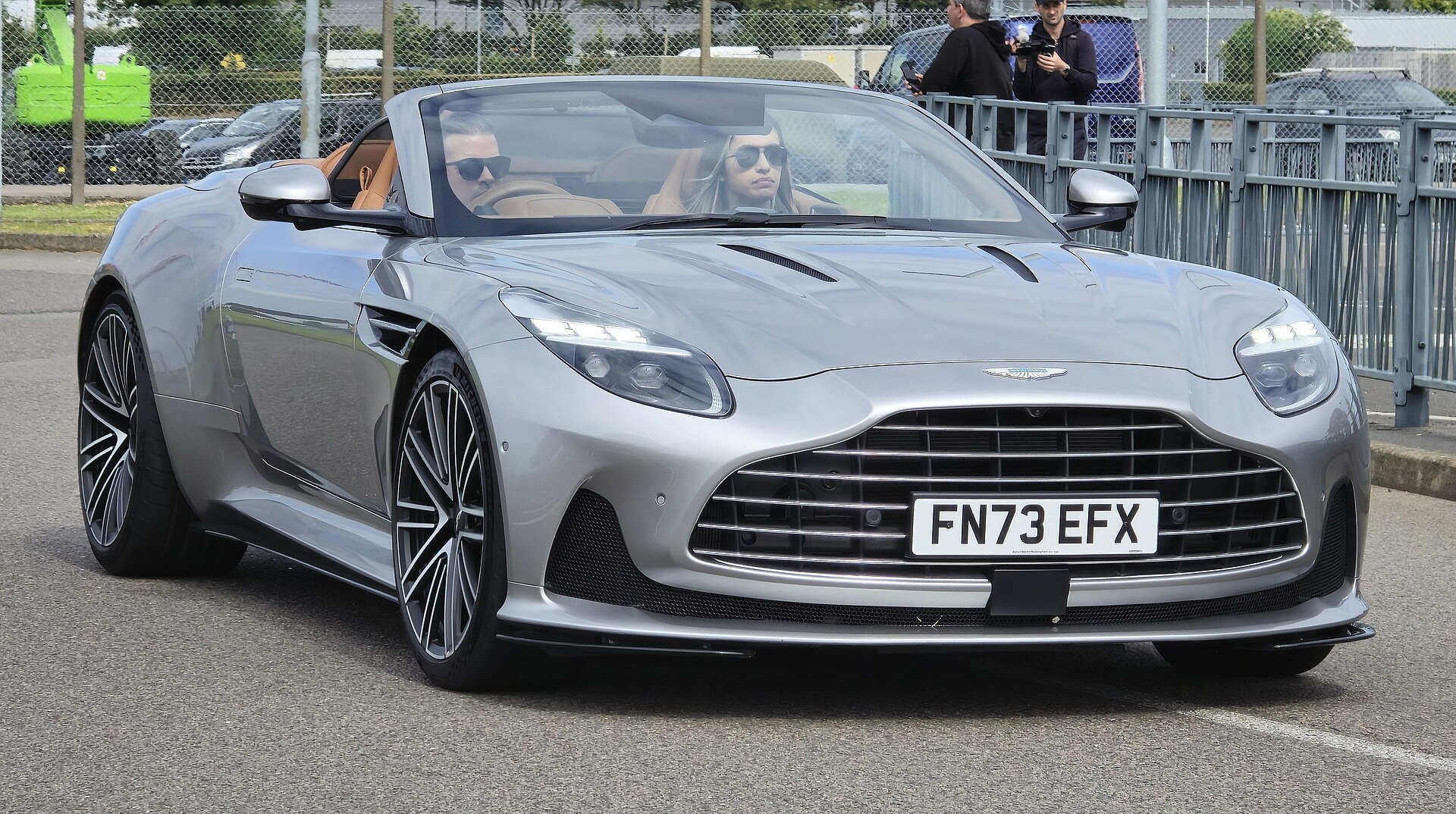
The Aston Martin Vantage, particularly the F1 Edition variant, is the opposite. It's a car designed by someone who asked, "How do we make a grand tourer look like it just won a race?" Sharp angles. Aggressive stance. A front grille that seems to want to devour the road. The Vantage doesn't whisper—it announces itself in a British accent with an attitude.
Mechanically, this distinction matters enormously. The Roma is optimized for refinement, daily usability, and the kind of performance that makes you faster without making you work harder. The Vantage is optimized for engagement, response, and the kind of drama that reminds you why supercars exist. Both are genuinely fast. They just express speed differently.
Performance Specs: The Raw Numbers Tell Only Half the Story
Let's start with the objective data, then we'll interpret what it actually means in real-world driving:
| Specification | Ferrari Roma | Aston Martin Vantage F1 Edition | Winner |
|---|---|---|---|
| Engine Type | 3.9L Twin-Turbo V8 | 5.2L Twin-Turbo V8 | Vantage (larger displacement) |
| Horsepower | 612 hp | 656 hp | Vantage |
| Torque | 561 lb-ft | 630 lb-ft | Vantage |
| 0–60 mph | 3.4 seconds | 3.4 seconds | Tie |
| 0–100 mph | 6.8 seconds | 6.2 seconds | Vantage |
| Top Speed | 199 mph | 195 mph (governed) | Roma |
| Weight | 3,461 lbs | 3,687 lbs | Roma (lighter) |
| Transmission | 8-Speed Dual-Clutch | 8-Speed Automatic | Roma (faster shifts) |
| Lateral Grip | 1.05 g | 1.08 g | Vantage |
The specs look roughly equivalent at first glance, which is precisely the point. Both cars will accelerate from 0–60 mph in 3.4 seconds. Both can exceed 195 mph. Both are genuinely fast by any real-world standard. The differences emerge in how they deliver those numbers and what you feel while experiencing them.
The Roma's dual-clutch transmission is faster and more responsive than the Vantage's traditional torque converter automatic. The Roma is lighter, which means it has a better power-to-weight ratio despite having 44 fewer horsepower. The Roma's twin-turbo V8 is mounted longitudinally (front-to-back), while the Vantage's is mounted transversely (side-to-side), which affects how the cars feel through corners.
The Vantage's larger engine produces more total torque, which gives it a slight edge in mid-range acceleration and makes it more forgiving in lower gears. Its manual transmission option (on non-F1 editions) appeals to driving purists, while the Roma's dual-clutch is a concession to practicality and everyday usability.
Design Philosophy: How You Want People to See Your Taste
This is where the comparison becomes personal rather than objective. The design philosophy of a car reveals what the manufacturer believes a car should communicate.
The Ferrari Roma communicates timeless elegance. Its proportions echo the 1950s and early 60s, a period when automotive design was governed by simplicity and harmony rather than aero efficiency. There are no aggressive vents, no wing extensions, no carbon fiber accents screaming for attention. The Roma's curves are subtle. Its stance is poised. It looks like a car that appreciates good wine, classical music, and understatement—the automotive equivalent of Tom Ford's design philosophy.
This restraint is intentional and rare. In an era where every supercar manufacturer is trying to look more aggressive, more menacing, more "performance-focused," Ferrari chose a different path. The Roma is a car for buyers who believe that excellent taste shouldn't require explanation.
The Aston Martin Vantage, by contrast, design by Miles Nott and the team at Aston Martin's UK studio, channels British sports car tradition with contemporary aggression. The Vantage's character line runs the full length of the side, creating visual drama. The front grille is imposing. The F1 Edition adds a fixed rear wing, side splitters, and aerodynamic extensions that make absolutely clear this is a performance car first, an exercise in restraint nowhere.
But here's where it gets interesting: the Vantage's design isn't gratuitous. Every aggressive line serves a purpose. The body work is functional. The aero kit works. This is a car that says, "I'm fast because I'm engineered to be fast, and I'm going to show you how."
Both approaches are honest in their own way. The Roma is honest about prioritizing timeless design. The Vantage is honest about prioritizing performance. Neither is better—they simply appeal to different buyers.
Driving Dynamics: How They Actually Feel on the Road
Specifications and design descriptions are useful, but they don't capture what separates a good car from a genuinely special one. That happens in driving dynamics—the accumulated effect of chassis tuning, suspension geometry, steering calibration, and brake feel.
The Ferrari Roma is engineered to be fast without being demanding. The suspension uses adaptive dampers that can shift between comfort and sport modes, but even in the sportier setting, the Roma is forgiving. The steering is precise but communicative. The brake pedal feels natural and linear. The dual-clutch transmission shifts so smoothly in normal driving that you might forget it's a performance machine at all.
This is by design. Ferrari aimed to create a car that could be driven cross-country in comfort, then taken to a race track without complaint. The Roma achieves this better than almost any car at its price point. It's a true grand tourer in the classical sense—fast enough to satisfy performance demands, comfortable enough for real-world driving, and elegant enough that you never tire of looking at it.
The Aston Martin Vantage, particularly in the F1 Edition trim, is more focused. The suspension is stiffer. The steering is more aggressive. The transmission feels less automatic and more like it's working with you rather than for you. The brakes are more sharp, more immediate, more track-oriented.
This makes the Vantage feel more connected, more visceral, more emotionally engaging. But it also means the Vantage requires more attention. On a 500-mile road trip, the Roma will leave you fresher. On a 20-minute mountain pass, the Vantage will feel more rewarding.
The Roma asks you to trust its engineering. The Vantage asks you to participate in its performance.
Interior, Technology, and Daily Usability: Where the Difference Becomes Obvious
Sit in the Ferrari Roma and you immediately feel Pininfarina's design heritage. The interior is minimalist, geometric, and beautifully proportioned. Controls are intuitive. The infotainment system is modern without being cluttered. The materials are exquisite—leather, Alcantara, and carbon fiber arranged with genuine restraint.
The Roma's cabin is genuinely quiet. The dual-pane glass, sound-deadening materials, and aerodynamic design create an environment where conversation is easy, road noise is minimal, and you can actually hear the excellent sound system without cranking it to uncomfortable levels.
Climate control is effective and responsive. Visibility is reasonable for a supercar. Cargo space—32 cubic feet—is actually usable. The Roma isn't a Porsche 911 in terms of practicality, but it's far more livable as a primary car than most supercars of equivalent performance.
The Aston Martin Vantage interior is more dramatic. The design is sportier, more angular, more aggressive to match the exterior. Control layout is intuitive, and the infotainment system is actually better integrated than Ferrari's (Aston uses the Mercedes AMG infotainment software). The materials are excellent—leather and Alcantara—but the overall effect is less serene and more kinetic.
Noise insulation is adequate but not class-leading. Road and engine noise intrude more readily, which some drivers appreciate (it adds drama) and others find tiring on long drives. Visibility is worse than the Roma, particularly rearward. Cargo space is comparable at 33 cubic feet.
For daily usability, the Roma wins decisively. It's the car you could conceivably drive to the office every day without regret. The Vantage is the car you drive on special occasions when you want to feel alive. This distinction matters more to your ownership satisfaction than specs ever could.
Pricing: Initial Cost and The Full Financial Picture
The sticker price tells only part of the financial story. Here's what real-world Ferrari Roma and Aston Martin Vantage ownership actually costs in 2026:
Purchase Price (Used Market): A used Ferrari Roma from 2020-2022 typically sells for $200,000–$240,000 depending on mileage and condition. A comparable Aston Martin Vantage (non-F1 Edition) from the same period runs $130,000–$160,000. The F1 Edition commands a premium of $30,000–$50,000 due to its rarity and performance enhancements, bringing the total to $160,000–$210,000.
This pricing is important: there's a $40,000–$80,000 difference in acquisition cost, with the Roma being significantly more expensive. New car pricing widens this gap—a new Roma starts around $226,000 while a new Vantage base model starts around $153,000 (F1 Edition $261,000).
Insurance: Ferrari Roma insurance runs $3,500–$7,500 annually depending on driving history, location, and coverage. Aston Martin Vantage insurance runs $2,800–$6,000 annually. The difference reflects both the higher purchase price and Ferrari's reputation for expensive repairs.
Maintenance and Service: Ferrari's dealer network is extensive but expensive. Annual maintenance (oil changes, inspections, fluid service) costs $2,500–$4,000 for the Roma. The Vantage runs $2,000–$3,500 annually. Neither figure includes unexpected repairs, which can be significant.
Major Service Intervals: Both cars require major service at 20,000 mile intervals. A Ferrari major service costs $4,000–$6,500. An Aston Martin major service costs $3,500–$5,500. Neither figure is cheap, but they're within the realm of typical supercar maintenance.
Depreciation: This is where the analysis gets interesting. Ferrari Roma values have been relatively stable since 2020—they've depreciated roughly 5–8% over three years, which is excellent for a supercar. Aston Martin Vantage values have depreciated more steeply—15–20% over the same period. This means while the Vantage costs less upfront, the Roma holds value better.
The practical implication: a Roma purchased for $225,000 new might be worth $205,000–$215,000 after three years of ownership. A Vantage purchased new for $260,000 might be worth $210,000–$220,000 after the same period. The gap narrows considerably when you factor in depreciation.

Maintenance, Reliability, and Repair Costs: The Stuff Nobody Talks About Until They Have To
Both the Ferrari Roma and Aston Martin Vantage are far more reliable than their mythical reputations suggest. Modern Ferraris benefit from over a decade of Fiat/Stellantis engineering, while Aston Martin Vantages use proven Mercedes-AMG components (the same 5.2L twin-turbo V8 found in the Mercedes-AMG C63 and E63).
Known Roma Issues: The Roma is remarkably robust for a Ferrari. The most common complaint is infotainment system glitches (fixable via software updates). Some early cars experienced roof mechanism issues, but this has been addressed via service bulletins. The DCT transmission is proven and reliable, though shift quality can be affected by software calibration. Seal leaks around the turbos have been reported in a small number of cars, but they're not epidemic.
Known Vantage Issues: The Vantage is generally reliable, but F1 Edition cars have shown some brake dust accumulation issues requiring more frequent cleaning. Some owners report infotainment quirks with the Mercedes system (updating to the latest software typically resolves these). The transmission is rock-solid. Engine reliability is excellent—the 5.2L twin-turbo V8 has an established reliability record from its Mercedes-AMG applications.
Repair Costs When Things Go Wrong: A Ferrari transmission rebuild or replacement can cost $8,000–$12,000. An Aston Martin transmission repair is typically $6,000–$10,000 because Aston can source Mercedes transmission components. A Roma engine issue is more expensive to address than a Vantage issue—Roma repairs often require Ferrari-specific parts and Ferrari dealers, while Vantage repairs can sometimes source Mercedes-AMG parts at lower cost.
The practical result: while the Roma costs more to maintain routinely, the Vantage isn't dramatically cheaper. When major repairs are needed, both are expensive. The Roma's advantage is that major repairs are less frequent.
Which Car Is Right For You: A Detailed Buyer Profile Analysis
After analyzing specifications, design, performance, and costs, here's how to determine which car aligns with your priorities:
Choose the Ferrari Roma If:
- You value timeless design over trendy aggression. The Roma will look beautiful in 10 years. Fashion-forward designs age poorly.
- You want a car that works as a primary driver. The Roma is comfortable enough for regular use in a way the Vantage is not.
- You prioritize value retention. Ferraris hold value better than Aston Martins, which matters when you sell.
- You appreciate Italian engineering philosophy. The Roma is a masterclass in elegant efficiency—more power from a smaller engine through clever turbocharging.
- You want effortless performance. The Roma makes you feel fast without demanding engagement or constant attention.
- You care about brand prestige. Fairly or not, Ferrari carries more cachet than Aston Martin in most social circles.
Choose the Aston Martin Vantage F1 Edition If:
- You want a car that feels like a race car for the road. The Vantage's drama and aggression are intentional and delivered.
- You value driving engagement over ease. The Vantage demands participation; the Roma allows relaxation.
- You have a lower overall budget. Base Vantage pricing is significantly lower, and F1 Edition used cars are cheaper than Roma equivalents.
- You like visible performance. The Vantage's aero kit makes absolutely clear that this is a serious machine.
- You prefer naturally-inspired styling. While still elegant, the Vantage doesn't attempt understated design—it's openly aggressive.
- You value the Mercedes-AMG connection. If you trust Mercedes engineering (and you should—their engines are excellent), the Vantage is reassuring.
Full Comparison Table: Specs, Performance, and Value Side-by-Side
| Category | Ferrari Roma | Aston Martin Vantage F1 Ed |
|---|---|---|
| Design Philosophy | Timeless Italian Elegance | Aggressive British Performance |
| Displacement | 3.9L Twin-Turbo V8 | 5.2L Twin-Turbo V8 |
| Horsepower / Torque | 612 hp / 561 lb-ft | 656 hp / 630 lb-ft |
| 0–60 mph | 3.4 seconds | 3.4 seconds |
| Top Speed | 199 mph | 195 mph |
| Curb Weight | 3,461 lbs | 3,687 lbs |
| Transmission | 8-Speed DCT | 8-Speed Auto |
| Fuel Economy | 16 city / 24 highway | 13 city / 19 highway |
| Cargo Capacity | 32 cu ft | 33 cu ft |
| New Price (MSRP) | $226,000 | $261,000 (F1 Ed) |
| Used Price (2020-22) | $200K–$240K | $160K–$210K |
| Annual Insurance | $3,500–$7,500 | $2,800–$6,000 |
| Annual Maintenance | $2,500–$4,000 | $2,000–$3,500 |
| 3-Year Depreciation | 5–8% | 15–20% |
| Cabin Noise Level | Low (refined) | Moderate to High |
| Daily Drivability | Excellent | Good |
| Engagement Factor | Moderate (elegant) | High (dramatic) |
| Track Readiness | Capable | Specialized |
| Warranty (used) | 1-3 years typical | 1-3 years typical |
Find Your Perfect Grand Tourer Match
Automonitor connects you with expert buyers advisors who can help you compare specifications, negotiate pricing, and secure pre-purchase inspections for both Ferrari and Aston Martin vehicles.
Get Expert Guidance →Real-World Scenario: How They Differ on a 500-Mile Road Trip
Specifications and features are useful, but they don't capture real-world experience. Here's how a 500-mile road trip would unfold differently in each car:
In the Ferrari Roma: You settle into the incredibly comfortable seats, adjust the climate control (which responds immediately and precisely), and accelerate smoothly onto the highway. The cabin is quiet—genuinely quiet. You can listen to podcasts or music without significant distortion from wind or engine noise. The ride quality is surprisingly supple, absorbing road imperfections without feeling soft. Fuel consumption is reasonable for a 612-hp car (you'll be stopping for fuel roughly every 300 miles). The infotainment system works intuitively, and Apple CarPlay integration is seamless. After 500 miles, you're refreshed, not exhausted. The Roma has convinced you that a supercar can actually be livable.
In the Aston Martin Vantage F1 Edition: You slide into sportier, more aggressive seats. The climate control works well but isn't quite as responsive. Engine and road noise are more present—this is intentional; Aston designed it to remind you that you're driving a performance car. The ride is firmer, which translates to better handling but less comfort on highway imperfections. Fuel consumption is worse (you'll be stopping every 250 miles). The Mercedes infotainment system is excellent, arguably better than Ferrari's. After 500 miles, you're tired—not dangerously tired, but aware that this car demands attention. However, you're also exhilarated. The Vantage has convinced you that driving should be an event.
Neither scenario is "correct"—they simply reflect different priorities. The Roma is the car you live with. The Vantage is the car you live for.
Market Position and Ownership Satisfaction: What Owners Actually Think
When we look at owner satisfaction data from exotic car forums and registries, a pattern emerges: Roma owners tend to express satisfaction with their purchase in terms of "perfect daily driver" and "timeless beauty." Vantage owners express satisfaction in terms of "incredible driving experience" and "pure adrenaline." Neither group regrets their choice, but they emphasize different aspects.
Roma owners who bought for a different reason—primarily for performance rather than design and usability—occasionally express regret, wishing they'd chosen something more aggressive. Vantage owners who bought primarily for value occasionally express concern about depreciation, though this concern is usually post-hoc rather than based on actual financial loss.
The correlation is clear: ownership satisfaction correlates with alignment between car purpose and buyer intent. If you buy the Roma to be a thrilling track weapon, you'll be disappointed. If you buy the Vantage as your primary daily driver, you'll appreciate it but won't love it. Match the car to your actual use case, and both become excellent purchases.
The 5-Year Ownership Cost Breakdown: Total Cost of Ownership Analysis
Here's what you'll actually spend over five years of ownership of each car:
| Expense Category | Ferrari Roma (5 years) | Aston Martin Vantage (5 years) | Difference |
|---|---|---|---|
| Purchase Price (used 2020) | $220,000 | $180,000 | Roma +$40,000 |
| Insurance (5 years) | $25,000 | $20,000 | Roma +$5,000 |
| Maintenance (5 years) | $17,500 | $12,500 | Roma +$5,000 |
| Fuel (5 years / 60K miles) | $15,000 | $18,500 | Vantage +$3,500 |
| Registration / Taxes | $12,000 | $12,000 | Tie |
| Unexpected Repairs (avg) | $5,000 | $5,000 | Tie |
| Total Operating Cost | $294,500 | $248,000 | Vantage -$46,500 |
| Resale Value (2026) | $205,000 | $145,000 | Roma +$60,000 |
| Net Cost of Ownership | $89,500 | $103,000 | Roma -$13,500 |
This analysis assumes average mileage (12,000 miles/year), no major accidents or repairs beyond routine service, and no modifications. The Roma, despite higher operating costs, comes out ahead due to superior value retention. However, the Vantage's lower purchase price makes it more accessible to buyers who can't justify a $220,000 investment.
Frequently Asked Questions: The Questions Real Buyers Ask
Which car is more reliable?
Both are exceptionally reliable by supercar standards. The Vantage's Mercedes-AMG powertrain has a proven reliability record with over a decade of real-world use. The Roma's turbocharged V8 is also robust. Neither is significantly more reliable than the other—both require regular maintenance and both can develop expensive issues. The real question is which offers peace of mind, and that's roughly equivalent.
Can I daily drive either car?
The Roma is genuinely usable as a primary car. Owners report daily driving them in reasonable comfort. The Vantage can be daily driven, but it's less ideal. The firmer suspension, higher noise level, and more aggressive stance make it better suited for weekends. If daily driving is important to you, the Roma wins decisively.
Which holds value better?
Ferrari Roma values have been remarkably stable—depreciating only 5–8% over three years compared to 15–20% for the Vantage. If you plan to sell in 5–7 years, the Roma is the smarter financial choice. If you're a long-term keeper, depreciation matters less.
Which is faster in real-world driving?
They're effectively matched at 0–60 mph (3.4 seconds each). The Roma is slightly faster overall due to its lighter weight and superior transmission. The Vantage has more low-end torque, which makes it feel faster during aggressive acceleration. In practice, neither is meaningfully faster—the difference is imperceptible except on a track with precision timing.
Which should I choose if I can only afford one?
If budget is the limiting factor, the Vantage is the obvious choice—you can acquire and operate it for $40,000–$50,000 less over five years. If you can afford either, choose based on your lifestyle. Will you actually use the car's best qualities? For most people, that's the real decision maker.
Are there reliability issues I should know about before buying?
Both are reliable. The Roma occasionally has minor infotainment glitches and early cars had roof mechanism questions (resolved via warranty). The Vantage's Mercedes infotainment system occasionally needs software updates. Neither has systemic reliability problems. Always get a pre-purchase inspection regardless of which car you choose. Read our guide on exotic car insurance to understand the full ownership picture.
Can I modify either car?
Both are designed by brilliant engineers. Modifications are possible but generally unnecessary—they often make things worse rather than better. If you want to modify a car, buy something cheaper where modifications make sense.
Which brand has better customer service?
Ferrari's dealer network is more established and extensive. Aston Martin's dealer network has fewer locations but dealers often provide more personalized service. This depends more on your specific dealer than the brand. Ask to speak with service advisors at your local dealer before purchasing.
Should I consider a different grand tourer instead?
The Porsche 911 Turbo is more practical and arguably more reliable. The Mercedes-AMG GT is sportier. The Bentley Continental is more luxurious. But if you're comparing the Roma and Vantage specifically, these are the two finest grand tourers at this price point in 2026. See our Roma vs. 911 Turbo analysis and our sports car comparison for broader context.
The Final Recommendation: How to Decide
After comprehensive analysis, here's how to make your decision:
Ask yourself these questions:
- Will I drive this car regularly (more than 5,000 miles/year)? If yes, Roma. If no, Vantage is fine.
- Do I value design heritage and timelessness? Roma. Do I value performance drama? Vantage.
- Is value retention important to me? Roma depreciates less. Is upfront cost critical? Vantage is cheaper.
- Do I want effortless performance or engaging performance? Roma or Vantage, respectively.
- Can I afford $220,000+ or should I stay under $180,000? This largely settles it.
The Roma is the correct choice for buyers who want a supercar that fits into life—elegant, refined, drivable, and beautiful. The Vantage is the correct choice for buyers who want life to fit around the supercar experience—dramatic, engaging, visceral, and thrilling.
There is no wrong answer. Both are excellent cars that will provide years of ownership satisfaction. What matters is alignment between what you want and what the car delivers.
Ready to Buy Your Grand Tourer?
Automonitor connects you with verified exotic car specialists who understand both vehicles inside and out. We handle market analysis, pre-purchase inspections, and negotiations—so you can drive home in the right car at the right price.
Start Your Search →