
Corvette Z06 vs Audi R8: American Muscle Meets German Sophistication
Two mid-engine supercars. One represents the most advanced naturally aspirated V10 ever built. The other represents American performance engineering at its absolute finest. Here's which one deserves your $100K+ investment.
The Core Comparison: Two Different Philosophies
The Corvette Z06 and Audi R8 don't exist in the same universe, even though both are mid-engine supercars priced within striking distance of each other. The Z06 starts at $113,000 and maxes out around $140,000 fully loaded. The Audi R8, now discontinued as of 2024, ranges from $140,000 to $196,000 depending on generation and specification. They represent fundamentally different approaches to what a supercar should be.
The Corvette Z06 is an American performance machine stripped down to its essentials: a 670-horsepower flat-plane V8, a manual transmission, aggressive aerodynamics, and a chassis setup optimized for track dominance. It prioritizes driver engagement and raw speed. The Audi R8 is a German expression of luxury performance: a 602-horsepower naturally aspirated V10, Quattro all-wheel drive, a near-silent interior, and engineering that prioritizes refinement without sacrificing capability. It prioritizes the complete experience.
Both are mid-engine. Both are naturally aspirated. Both represent the final generation before electrification transforms the supercar segment forever. But they approach these shared characteristics in radically different ways. Understanding these differences is critical because your choice between them isn't about horsepower or 0-60 times — it's about which philosophy aligns with who you are as a driver.
The Z06 asks: "How fast can we go?" The R8 asks: "How can we make you feel like a god?" Both are right. Both deliver.
Engine Philosophy: Flat-Plane V8 vs Naturally Aspirated V10
The engine comparison here is where the Z06 and R8 diverge most dramatically. These aren't just different displacements — they're different engineering philosophies expressed through metal and fuel.
The Corvette Z06 features a 5.5-liter flat-plane V8 producing 670 horsepower and 460 pound-feet of torque. The flat-plane design (also called a cross-plane V8) means the crankshaft is balanced like a four-cylinder engine, which allows it to rev to an incredible 8,600 rpm. This engine is a masterpiece of American performance engineering. The redline screams. The induction note is raw and visceral. Every throttle input feels connected to something primal.
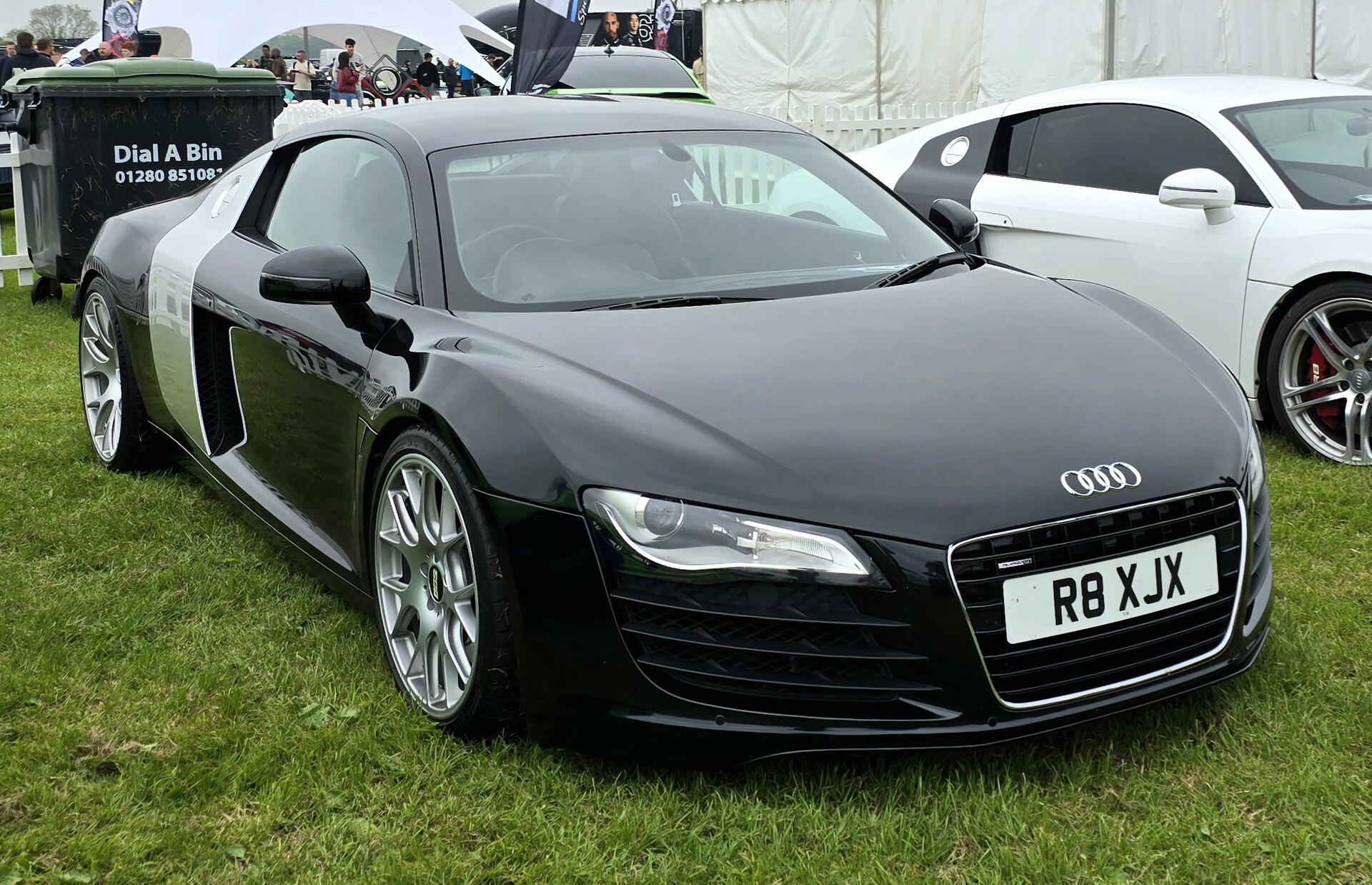
The Audi R8 Performance uses a naturally aspirated 5.2-liter V10 producing 602 horsepower and 413 pound-feet of torque. It revs to 8,700 rpm — even higher than the Z06. The V10 is instantly recognizable by its mechanical complexity and emotional character. There's no turbo lag, no electric assistance, just ten cylinders firing in perfect sequence. It's the last Audi to use this engine, making it historically significant as Audi transitions to turbocharged and hybrid powertrains across its entire lineup.
On paper, the Z06's 68-horse advantage seems significant. In real-world driving, it's transformative. That extra power translates to immediate authority off the line and relentless acceleration through the mid-range. The flat-plane design means the Z06 can be driven harder, rev faster, and maintain aggression in ways the R8's more refined engine cannot match. The R8, conversely, will never let you forget you're driving something with ten cylinders. The V10's complexity and mechanical symphony create an emotional connection that numbers can't capture.
Fuel requirements tell an interesting story: the Z06 demands premium 91-octane, while the R8 requires 91-octane or higher. The Z06's flat-plane design and higher compression ratio make it thirsty for quality fuel. The R8's V10, shared with the Lamborghini Huracan and Audi's other models, benefits from extensive tuning to maximize efficiency without sacrificing power.
Performance Metrics: Where the Z06 Dominates
This is where specification sheets tell the most compelling story in the Z06's favor. Chevrolet engineered the Z06 specifically for performance obsessives, and the numbers prove it.
| Metric | Corvette Z06 | Audi R8 Performance | Winner |
|---|---|---|---|
| Horsepower | 670 hp | 602 hp | Z06 |
| Torque | 460 lb-ft | 413 lb-ft | Z06 |
| 0–60 mph | 2.6s | 3.1s | Z06 |
| 0–100 mph | 5.7s | 7.1s | Z06 |
| Top Speed | 210 mph | 206 mph | Z06 |
| Lateral G (skidpad) | 1.39g | 1.02g | Z06 |
| Quarter-Mile | 10.5s @ 131 mph | 11.2s @ 128 mph | Z06 |
| Braking (60–0) | 99 feet | 104 feet | Z06 |
| Curb Weight | 3,465 lbs | 3,704 lbs | Z06 |
| Weight Distribution | 49/51 front/rear | 43/57 front/rear | R8 (more balanced) |
The Z06 wins nearly every performance metric by meaningful margins. It accelerates harder, stops better, and maintains composure at the limit. The 0.5-second advantage in 0-60 mph might not sound dramatic until you experience it — that's a full car length at highway speeds. The lateral G difference is more significant: the Z06's 1.39g rating versus the R8's 1.02g tells you the Z06 wants to attack corners with aggression, while the R8 takes a more measured approach.
Only in weight distribution does the R8 have an advantage. Its 43/57 front-rear split (closer to mid-engine ideal) theoretically provides better rotation and balance. The Z06's 49/51 split reflects its more traditional front-engine DNA, even though the engine moved behind the driver for 2023. This matters more on a track driving at 9/10ths than on a canyon road at 7/10ths.
Handling Dynamics: Aggressive vs. Balanced
Here's where driving philosophy matters more than horsepower. The Z06's handling is engineered for track performance. Everything is aggressive: the suspension is stiffer, the anti-roll bars are larger, the damping is tuned for maximum response. The carbon-ceramic brakes are enormous — 16.5-inch front rotors versus the R8's 14.2 inches. The aerodynamics are aggressive, with a massive fixed rear wing generating 630 pounds of downforce at 186 mph. This is a car designed to corner hard and brake late.
The Audi R8 takes a different approach. The suspension is still firm, but it prioritizes balance across all driving modes. The Quattro all-wheel drive system continuously adjusts power delivery between front and rear axles based on conditions. The steering is immediate but never jerky. The braking confidence is identical to the Z06 — Audi fitted the R8 with similar carbon-ceramic capability — but the overall setup feels more forgiving for road driving. This car wants to carry speed through corners without demanding perfection in return.
On a track, the Z06 will lap faster. Its specific setup, lighter weight, and aggressive tuning create a tool optimized for one purpose: performance. A competent driver in a Z06 will absolutely destroy an equally competent driver in an R8 on a circuit. This isn't opinion — it's documented through countless comparison tests.
On real roads, the distinction becomes less clear. The R8's balanced setup means it forgives mistakes more readily. The suspension absorbs imperfections without jarring occupants. The steering feedback remains constant whether you're turning into a tight canyon corner or managing a highway ramp. The Z06, while never uncomfortable, never lets you forget you're driving a track car. The ride is firm. The steering demands attention. The overall character is uncompromising.
Interior Cabin: Where the R8 Shows Luxury Heritage
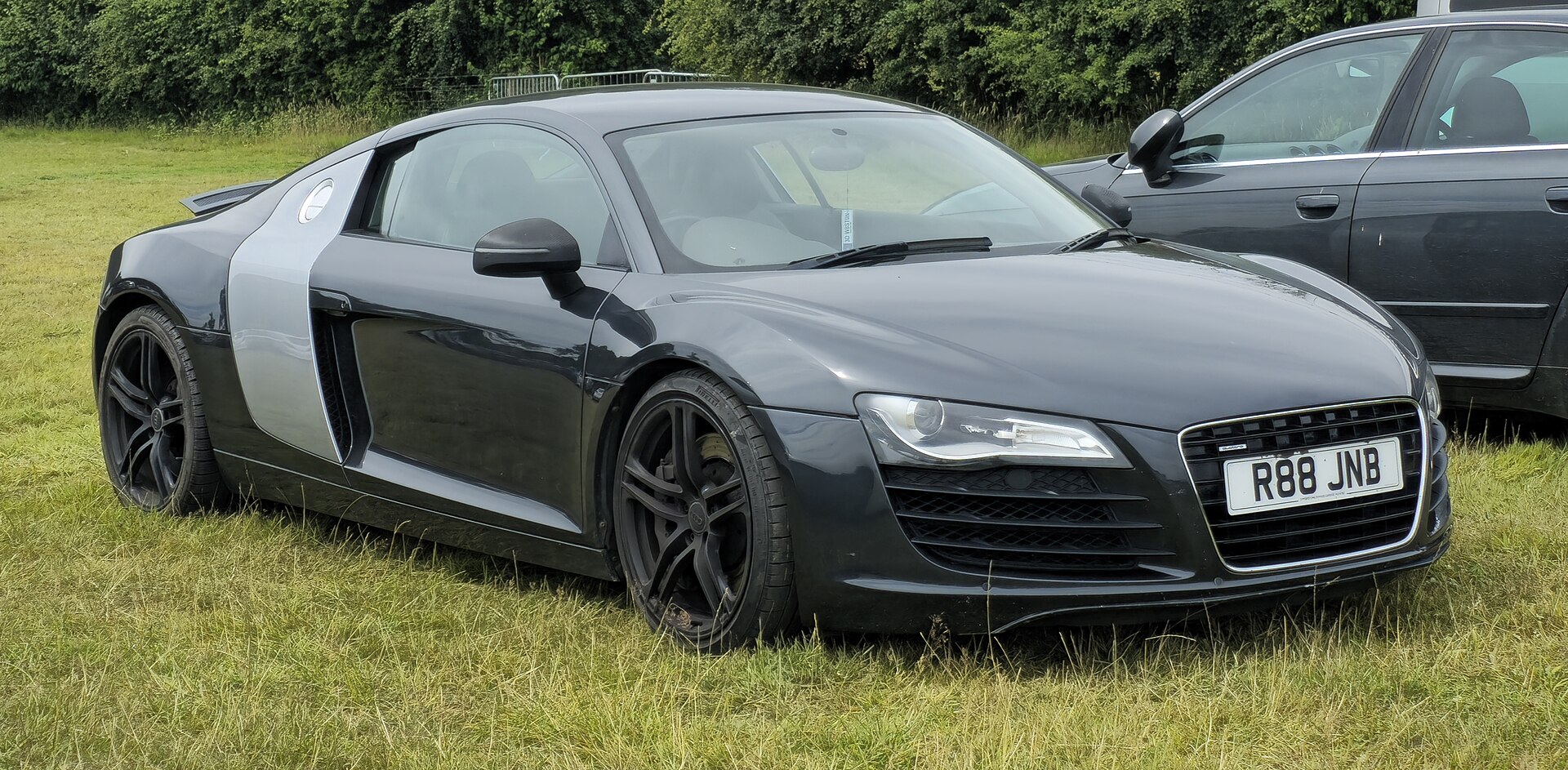
This is where the price difference becomes justified for many buyers. The Audi R8 interior represents two decades of Volkswagen Group refinement. Everything is soft-touch materials, aluminum trim, premium leather, and ergonomic perfection. The infotainment system is intuitive. The steering wheel is wrapped in the finest leather. The seats envelop you in supportive comfort that never feels clinical. Ambient lighting sets moods. Climate control is zone-based and intelligent.
The Corvette Z06 interior has improved dramatically from earlier generations, but it's still fundamentally American. The dashboard layout is driver-centric and functional, but not luxurious. Soft-touch plastics cover most surfaces, with some genuine leather on steering wheel and seats. The infotainment system is competent but not as polished as Audi's. The overall ambiance is professional and focused rather than indulgent.
This gap matters if you're doing long-distance driving. A 4-hour journey in the R8 is genuinely comfortable. The same journey in the Z06 will tire you slightly due to the firmer ride and more spartan interior ambiance. The seats are supportive but less enveloping. The soundproofing is adequate but not exceptional — you'll hear mechanical noise that the R8 isolates.
For weekend drives and track days, the Z06's interior is perfectly fine. You're not sitting in the car wondering why it's not more luxurious — you're focused on the driving experience. But for ownership as a daily-adjacent vehicle, the R8 creates a cabin experience that justifies its premium price.
Daily Drivability: Real-World Usability Comparison
Let's be honest: neither car is truly practical for daily driving. Both have minimal ground clearance. Both guzzle premium fuel at 15-18 mpg combined. Both attract attention that gets exhausting when you just want to grab groceries. But if you're evaluating which is less impractical, here are the real-world considerations.
The Corvette Z06 has a 15.5-gallon fuel tank and a 14-gallon rear trunk with pass-through opening. The tight packaging means carrying anything substantial requires planning. The manual transmission is a joy to use but demands focus in traffic. The ride height is genuinely low — speed bumps are an adventure. The steering is so responsive that parking lot maneuvering requires constant attention.
The Audi R8 has a 19.2-gallon fuel tank, giving it a real-world range approaching 300 miles between fill-ups. The trunk space is marginally better due to different proportions. The automated transmission (standard in modern R8s) means traffic is less fatiguing. The slightly higher ride height means occasional road features won't scrape. The power steering has variable ratio, meaning parking is easier than the Z06.
For actual daily driving, the R8 is clearly superior. If you're driving the Z06 in traffic regularly, you're doing it wrong — this is a car designed for spirited driving, not commuting. That's not a criticism; it's just reality. If flexibility and occasional use in normal conditions matters, the R8 accommodates this mission better.
Pricing and Value Proposition: Nearly Double the Cost
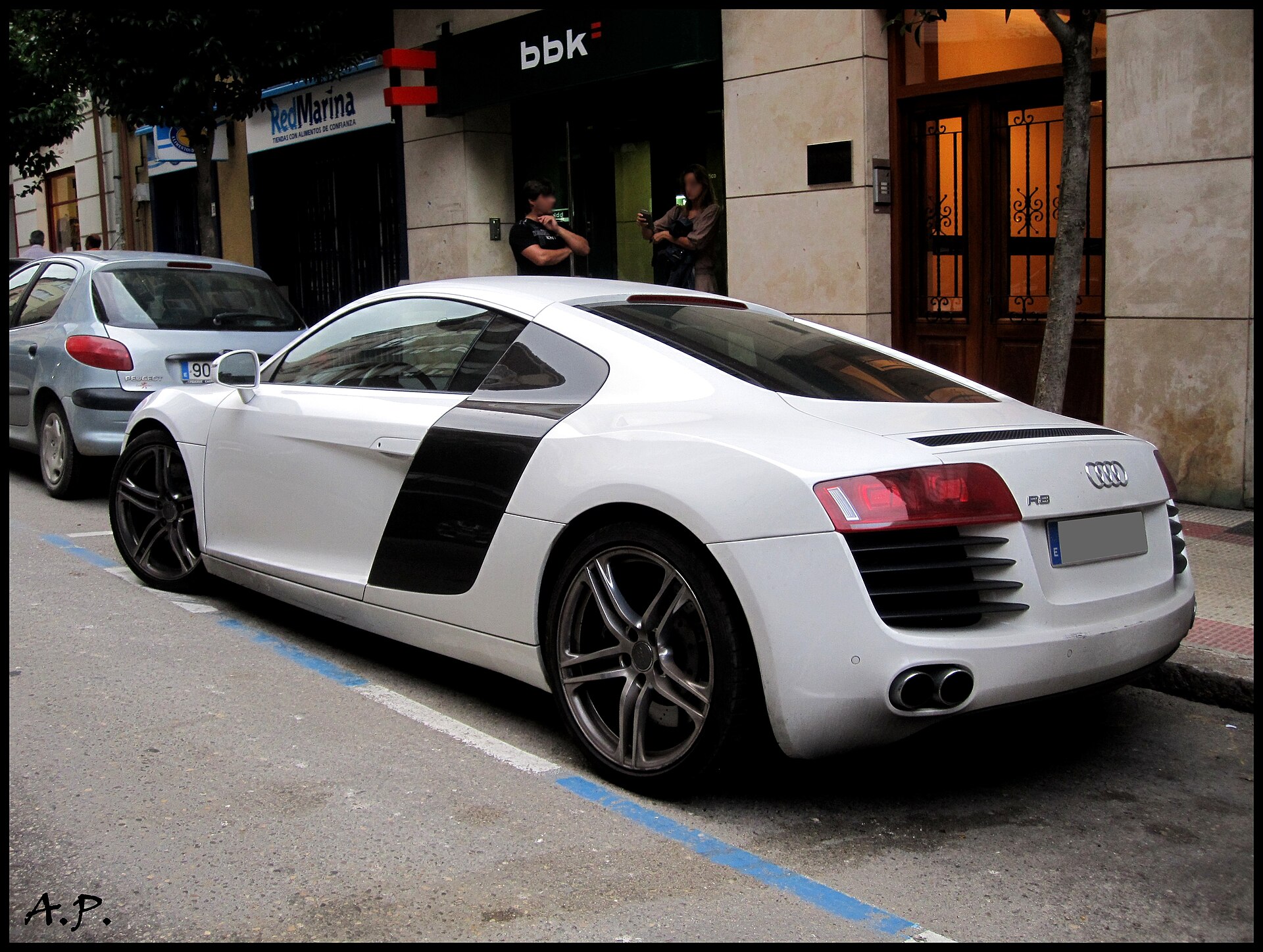
This is where the rubber meets the road for purchase decisions. The Corvette Z06 starts at $113,000 for a base model and tops out around $140,000 for fully-optioned variants. The Audi R8 Performance, now discontinued, commands $196,000 on the secondary market for well-maintained examples. That's an $83,000 price premium — 73% more money for a car that's slower across nearly every metric.
How do we justify that price difference? Several factors matter. First, the R8 is now officially out of production, making it a limited collectible. Supply constraints drive value. Second, the R8 represents Audi's entire luxury engineering philosophy — it's engineered to standards far exceeding the Z06's approach. Third, the R8's Quattro all-wheel drive system adds complexity and capability that the Z06's rear-wheel-drive setup simply doesn't offer. Fourth, the Audi interior is objectively more luxurious across every material and system.
But here's the uncomfortable truth: for pure driving pleasure and value, the Z06 is the objectively better purchase. You get 670 horsepower, superior performance across every metric, a manual transmission that's engaging and precise, and a price that includes meaningful money for maintenance, insurance, and fuel. The R8 requires accepting that you're paying a tremendous premium for refinement, luxury, and a badge that fewer people recognize in the U.S. than the Corvette.
Evaluate Your Financing Options
Exotic car financing requires specialized lenders. Automonitor connects you with specialists who understand the Z06 and R8 market, providing pre-approval and competitive rates.
Get Pre-Approved →Reliability and Maintenance: Different Service Ecologies
The Corvette Z06's LS V8 engine shares DNA with Chevrolet's truck engines — there are hundreds of thousands of these engines in F-150s and Silverados. This means repair knowledge is broadly distributed. Chevrolet dealers nationwide can service these cars. Aftermarket support is enormous. Parts are relatively inexpensive. If something breaks, getting it fixed is straightforward.
The Audi R8's V10 is genuinely rare. Only around 157,000 R8s were built across all generations, and the V10 represents a fraction of that. Repairs require specialists who understand exotic Audi systems. Parts are significantly more expensive. Audi dealers will service them, but at prices that reflect the car's status. A simple service at a Corvette dealer might cost $400-600. That same service at an Audi dealer runs $800-1,200.
In terms of actual reliability, both engines are mechanically sound. The LS V8 has proven itself over decades. The R8's V10 benefits from use in Lamborghini Huracans and other high-performance vehicles — it's genuinely reliable when properly maintained. Neither engine requires exceptional caution or unusual care.
Where reliability differs is in the surrounding systems. The Z06's suspension and braking systems are derived from Chevrolet's engineering. They're robust and simple. The R8's systems are more complex and sophisticated. They require understanding by specialists. Neither is dramatically more or less reliable, but the cost difference when repair is needed can be substantial.
Annual maintenance costs for a Z06 typically run $1,200-1,800 per year for routine service. The R8 runs $2,000-3,000 annually. Both figures assume you're not driving these cars recklessly or racing them regularly. If you're actually using the track, costs escalate significantly for both.
The Discontinuation Factor: Why the R8 Matters More
The Audi R8 was discontinued in 2024. Across 17 years and three major generations, only approximately 157,000 units were built. This matters enormously for future value. Unlike the Corvette, which will continue in new generations, the R8 is finished. No future models, no evolutionary updates, no new supply entering the market. Every R8 is now part of a fixed inventory.
Historically, discontinuation has positive implications for values. The last Jaguar F-Types are appreciating. The final Dodge Challengers are seeing increased interest. The last Audi R8s should follow this pattern. If you buy a well-maintained R8 Performance today and hold it for 5 years, there's a reasonable probability it appreciates or holds value. That's an unusual characteristic for a supercar.
The Z06, meanwhile, will receive new generations and evolutionary updates. The current C8-generation will eventually be superseded by a C9. This means long-term depreciation is likely, just like previous Corvette generations. You're not buying a finite piece of history — you're buying a current production model that will eventually become outdated.
This doesn't mean the Z06 is a bad investment — it's not. It just means the R8's discontinuation creates a different value proposition. You're buying the end of an era. That has both emotional and financial implications.
Detailed Specification Comparison
| Category | Corvette Z06 | Audi R8 Performance |
|---|---|---|
| Engine | 5.5L Flat-Plane V8 | 5.2L Naturally Aspirated V10 |
| Horsepower | 670 hp @ 8,400 rpm | 602 hp @ 7,500 rpm |
| Torque | 460 lb-ft @ 6,300 rpm | 413 lb-ft @ 6,100 rpm |
| Redline | 8,600 rpm | 8,700 rpm |
| Fuel Type | Premium Unleaded (91+) | Premium Unleaded (91+) |
| EPA Combined MPG | 15 mpg | 15 mpg |
| Transmission | 8-Speed Manual | 8-Speed Automatic DCT |
| Drive Configuration | Rear-Wheel Drive | Quattro AWD |
| Acceleration | — | — |
| 0–60 mph | 2.6 seconds | 3.1 seconds |
| 0–100 mph | 5.7 seconds | 7.1 seconds |
| Quarter-Mile | 10.5s @ 131 mph | 11.2s @ 128 mph |
| Handling | — | — |
| Lateral G-Force | 1.39g | 1.02g |
| Braking (60–0) | 99 feet | 104 feet |
| Top Speed | 210 mph | 206 mph |
| Dimensions | — | — |
| Curb Weight | 3,465 lbs | 3,704 lbs |
| Length | 179 inches | 175 inches |
| Width | 77 inches | 76 inches |
| Pricing | $113,000–$140,000 | $140,000–$196,000 |
| Annual Maintenance | $1,200–$1,800 | $2,000–$3,000 |
| Insurance (annual) | $1,500–$2,500 | $2,000–$3,500 |
| 5-Year Depreciation | ~30–35% | ~10–15% (due to discontinuation) |
Transmission Considerations: Manual Engagement vs. Automatic Convenience
The Corvette Z06 offers only a manual transmission — an 8-speed unit with rev-matching that's genuinely satisfying to use. This is significant because manual supercars are becoming extinct. Most buyers skip the Z06 if they can't drive a stick shift. If you can and do appreciate manuals, this decision alone might justify the Z06 over any automatic alternative.
The Audi R8 uses an 8-speed dual-clutch automatic that shifts faster than any human can operate a manual shifter. Shifts happen in 150 milliseconds. This is objectively quicker, though you lose the tactile feedback and control that manual enthusiasts crave. However, the R8's automatic is programmed intelligently — it understands driving context and makes appropriate decisions without constant supervision.
For pure driving pleasure, particularly on twisting roads, the manual Z06 is more engaging. You're directly connected to the mechanical process of power delivery. Every shift is a conscious decision you make, not something the computer decides for you. For road trips and varied driving, the R8's automatic is obviously superior — no fatigue from heavy engagement, constant availability of passing power, and seamless operation in any condition.
This is one area where personal preference completely overrides objective analysis. If you're a manual enthusiast, the Z06 gives you something increasingly rare. If you appreciate modern convenience, the R8's automatic is sublime in its competence.
All-Wheel Drive: The R8's Safety Net
The Audi R8's Quattro all-wheel drive system distributes power between front and rear axles based on traction conditions. This system is genuinely revolutionary — it made supercar ownership safer by giving drivers a margin for error that rear-wheel-drive cars don't provide.
The Z06 is rear-wheel-drive only, relying on electronic stability control and driver skill to maintain control. On dry roads, many drivers will argue RWD is more engaging — the car is more responsive to steering inputs, and weight transfer is more immediate. On wet roads or challenging conditions, RWD requires more attention and forgiveness from the driver.
Statistically, Quattro AWD equipped R8s are safer in real-world conditions. They're less prone to snap-oversteer, they inspire more confidence in less-than-ideal conditions, and they allow less-experienced drivers to push harder with fewer consequences. The Z06, while equipped with sophisticated electronic safety systems, demands respect and precise driving technique.
For owners planning to track the car regularly, this distinction matters less. Both systems are capable on a circuit with a driver who understands their characteristics. For ownership that includes public roads, changing weather, and occasional spirited driving, the R8's AWD provides genuine safety advantages that shouldn't be dismissed lightly.
Which Car Deserves Your Money? A Decision Framework
The answer depends entirely on what you want from a supercar. Let's be specific about who should buy each.
Buy the Corvette Z06 If:
- Performance is your primary criterion, and you want maximum capability for minimum cost. The Z06 delivers more power, faster acceleration, and superior handling dynamics than the R8.
- You love manual transmissions and want to experience the increasingly rare joy of driving a purely mechanical supercar. The Z06's 8-speed manual with rev-matching is genuinely engaging.
- You plan to track the car regularly. The Z06's suspension, brakes, and aerodynamics are specifically optimized for circuit use. You'll lap faster in this car.
- You have a large garage and don't mind a high-maintenance relationship with your vehicle. The Z06 demands attention and appreciates being pushed.
- You value American engineering and don't need luxury interior appointments to feel satisfied. The Z06 is purposeful and honest about its intentions.
- You want the best value proposition for a naturally aspirated mid-engine supercar. Dollar-for-dollar, nothing touches the Z06's performance.
Buy the Audi R8 If:
- Refinement and luxury matter as much as raw performance. The R8 is a supercar that actually feels like premium architecture throughout.
- You want genuine all-weather capability and don't mind trading peak performance for margin-of-safety. Quattro AWD makes the R8 usable in conditions where the Z06 demands caution.
- You appreciate historically significant machines. The R8 is the last of its generation, the last with this V10 engine, and approaching true classic status.
- You occasionally use the car for longer drives or varied conditions. The R8's automatic transmission, better interior comfort, and refined suspension make extended ownership more pleasant.
- You value ownership by specialists who understand exactly what they're working on. The R8 represents a particular engineering philosophy that Audi perfected across multiple generations.
- You're buying with investment consciousness. The R8's discontinuation provides value support that the Z06 simply doesn't offer.
Real-World Ownership Implications
Beyond numbers and specifications, ownership reality differs materially between these cars. The Z06 is a car you buy and immediately become part of its community. Z06 owners are passionate, engaged, and willing to discuss exactly how hard they're pushing the machine. Z06 forums are active, advice is freely shared, and tuning options are plentiful.
R8 ownership is quieter. Fewer R8s exist on American roads. Communities are smaller. Specialists are harder to find. But this creates a different type of ownership experience — one where the car becomes more personal because fewer people own one. Finding another R8 at a car show is an event; finding another Z06 is normal.
Insurance costs differ too. The Z06 typically runs $1,500-2,500 annually depending on age and driver profile. The R8 runs higher: $2,000-3,500. Both are significantly more expensive than standard-fare sports cars, but the Z06 maintains an insurance advantage that reflects its more common status.
Maintenance planning matters enormously. The Z06 can be serviced at any Chevrolet dealer, though specialty shops will do better work. The R8 really needs a specialist or Audi dealer that understands exotic vehicles. Budget differently: Z06 owners typically spend $1,200-1,800 annually on maintenance; R8 owners budget $2,000-3,000.
Get an Expert Pre-Purchase Inspection
Whether you choose Z06 or R8, Automonitor's certified exotic inspectors will identify any hidden issues before you commit. Don't skip this critical step.
Schedule Inspection →Smiles Per Dollar: The Unquantifiable Metric
Every automotive journalist ultimately arrives at this question: which car delivers more joy? Which one makes you smile wider? Which one justifies its existence beyond specification sheets?
The Z06 generates smiles through pure performance. Every acceleration is a thrill. Every corner is a chance to experience what 1.39 lateral Gs feels like. The manual transmission means every drive is interactive. The engine's flat-plane scream at 8,600 rpm creates an auditory experience that no turbo can replicate. If performance creates joy, the Z06 is the answer.
The R8 generates smiles through different mechanisms. The mechanical symphony of a V10 at full throttle is distinctive and unforgettable. The confidence of Quattro AWD in any condition creates a sense of security that removes anxiety from ownership. The refinement of the cabin makes the car feel like a permanent fixture in your life rather than a constant challenge. The historical significance of owning the end of an era resonates on levels beyond performance numbers.
For most drivers, the Z06 delivers more smiles per mile driven aggressively. For drivers who value ownership experience across all conditions, the R8 delivers more smiles per day of ownership. Neither answer is objectively correct — your answer depends on your priorities.
Frequently Asked Questions
Which car is faster in a straight line?
The Corvette Z06 is significantly faster. The 2.6-second 0-60 versus the R8's 3.1-second time is a substantial real-world advantage. If you're comparing straight-line acceleration, the Z06 is unambiguously superior.
Which car is better for daily driving?
The Audi R8 is better for any scenario involving real roads and varied conditions. The automatic transmission, all-wheel drive, slightly better interior comfort, and forgiving suspension tuning make it more practical. Neither car is a true daily driver, but the R8 is significantly less demanding.
Is the Audi R8 worth nearly double the Z06's price?
That depends on your priorities. The premium buys luxury interior, all-wheel drive capability, historical significance (discontinuation), and refined engineering throughout. If those attributes matter to you, yes. If raw performance is your metric, no — the Z06 is objectively better at everything speed-related for less money.
Which car is more reliable?
Both are mechanically sound. The Z06's LS V8 engine has proven reliability across hundreds of thousands of examples in trucks and other Corvettes. The R8's V10 is proven through Lamborghini and Audi applications. Neither engine is more or less reliable than the other. The difference is in maintenance cost, not reliability.
Can the Z06 be daily driven?
Technically yes, practically no. Ground clearance is minimal, fuel economy is terrible, the ride is stiff, and the manual transmission requires engagement in traffic. It's a weekend warrior, not a commuter vehicle. The R8 makes more sense if you're genuinely considering daily use.
Will the R8 appreciate in value?
Possibly. Discontinuation has historically supported value for final-generation models. The R8's rarity and engineering significance could create appreciation over time. But this isn't guaranteed — it's speculation based on historical trends, not certainty.
Which car should I buy if I want to track it regularly?
The Corvette Z06 is engineered specifically for track use. Its suspension, brakes, aerodynamics, and overall setup are optimized for circuit performance. You'll lap faster in the Z06, and it handles extended track sessions without complaint. The R8 is capable but not designed with this mission.
Which engine sounds better?
This is subjective. The Z06's flat-plane V8 produces a screaming, mechanical wail that's distinctive and aggressive. The R8's V10 creates a mechanical symphony that's more refined but equally engaging. If you prefer raw, visceral sound, the Z06 wins. If you prefer mechanical complexity, the R8 wins.
Are these cars good investments?
Neither is a good investment by traditional standards. Supercars depreciate. Insurance, maintenance, and fuel costs are substantial. The Z06 will likely depreciate 30-35% over five years. The R8 might depreciate only 10-15% due to discontinuation, but that's still not appreciation. Buy these cars to drive them, not to make money.
Which car is easier to find used?
The Corvette Z06 is easier to find because production continues and used examples are plentiful. The Audi R8 is increasingly rare as discontinuation is finalized. If you want options and flexibility in finding the exact specification you want, the Z06 is easier. The R8 requires more searching but offers more rarity.
The Final Verdict: American Speed vs. German Sophistication
The Corvette Z06 and Audi R8 represent the final generation of naturally aspirated mid-engine supercars before electrification transforms the entire segment. Both are worthy of serious consideration. Both deliver genuine supercar experiences that will satisfy any driver fortunate enough to own one.
But here's what we've learned through this analysis: the choice between them isn't about facts and figures. It's about philosophy. The Z06 asks you to become a better driver. It demands engagement. It offers performance that rewards skill with immediate feedback. It's a car that makes you feel capable.
The R8 asks you to enjoy the complete experience of ownership. It provides capability wrapped in luxury. It offers refinement that makes you feel cared for. It's a car that makes you feel sophisticated.
If you have $113,000 and you want maximum performance, buy the Z06. If you have $196,000 and you want to experience what German engineering achieves at the supercar level, buy the R8. If you have $140,000, you're right in the middle — and that's where the decision actually matters. In that case, drive both, think about whether you value performance or refinement more, and choose accordingly.
What's guaranteed: whichever you choose, you're driving one of the last naturally aspirated supercars ever built. That alone makes this generation historically significant. Ten years from now, owning either of these cars will feel like owning a piece of automotive history. That's not a small thing. That's everything.
Ready to Find Your Supercar?
Automonitor handles the search, inspection, and negotiation so you can focus on finding the right Z06 or R8 for your needs. Let's find your perfect match.
Start Your Search →