
Audi R8 vs Porsche 911 Turbo: Mid-Engine V10 vs Rear-Engine Twin-Turbo
Two Volkswagen Group legends. One final naturally aspirated V10. One legendary turbocharged flat-six icon. We compare the Audi R8 and Porsche 911 Turbo S across performance, driving dynamics, value, and collectibility to help you choose the right supercar for your garage.
VW Group Siblings: The Divergent Paths of Two Automotive Icons
The Audi R8 and Porsche 911 Turbo S are both Volkswagen Group creations, but they diverged fundamentally in engineering philosophy decades ago. The Audi R8 shares its platform with the Lamborghini Huracán, inheriting a mid-engine layout that prioritizes agility and mechanical balance. The Porsche 911 Turbo S remains uniquely Porsche—a rear-engine, rear-wheel-drive architecture that defies logic but rewards those who understand its character.
This architectural difference is not academic. It changes everything: how the cars feel, how they behave under stress, what owning them means, and ultimately which one is right for you. The R8 is a departure from Porsche's DNA. The 911 Turbo S is pure Porsche heritage—imperfect, audacious, and impossibly effective.
When you drive the R8, you're in a supercar that happens to be made by Audi. When you drive the 911 Turbo S, you're piloting 75 years of Porsche sports car evolution in turbocharged form.
Powertrain Face-Off: Naturally Aspirated V10 vs Twin-Turbo Flat-Six
This is where the comparison gets interesting. The Audi R8 Performance runs a 5.2-liter naturally aspirated V10 producing 602 horsepower and 413 pound-feet of torque. It redlines at 8,700 rpm, and every revolution is felt through the steering wheel and seat of your pants.
The Porsche 911 Turbo S features a 3.7-liter twin-turbocharged flat-six with 640 horsepower and 590 pound-feet of torque. It's smaller, more efficient, and fundamentally different in character. There's no waiting for boost—the turbochargers are always spinning, always ready. Acceleration is relentless, almost clinical in its precision.
In raw output, the 911 Turbo S wins: 38 more horsepower, 177 more pound-feet of torque. But horsepower tells only part of the story. The R8's V10 delivers power across a broader rpm range. The 911 Turbo's turbos are biased toward mid-range punch, where real-world driving happens. Neither advantage is objectively superior—they're different philosophies expressed through different architecture.

Acceleration and Performance: The 0-60 Battle
On paper, the 911 Turbo S dominates. It hits 60 mph in 2.6 seconds, compared to the R8's 3.1 seconds. That's half a second—nearly a full car length—and it's enough to matter whether you're launching from a traffic light or merging onto a highway.
But acceleration tells a different story than overall lap time. In testing by Car and Driver, the R8 Performance actually holds its own against the 911 Turbo in sustained acceleration above 60 mph, where the broader powerband of the naturally aspirated engine provides consistent push. Below 40 mph, the 911's turbo advantage is undeniable. Between 50–120 mph, they're nearly matched.
The 911 Turbo S accelerates harder. The R8 feels faster when you're already moving. Meaningfully, for most owners, the difference between 2.6 and 3.1 seconds in real-world driving is imperceptible. Both cars will embarrass 99.9% of everything else on the road. Choose based on feel, not numbers.
Engine Sound and Character: The Soul of the Machine
Here's where the comparison becomes emotional rather than technical. The R8's V10 produces a mechanical wail that's entirely different from any turbocharged engine. It's high-pitched, visceral, and utterly unique. At 8,700 rpm, it sounds like controlled chaos—each cylinder firing contributes to an ascending frequency that builds toward a crescendo at the limiter. There's no turbo lag, no wastegate whistle, no electronic artificiality. Just mechanical fury.
The 911 Turbo's engine is quieter in absolute terms but more commanding. You hear the turbos spooling—a distinctive mechanical whoosh as they pressurize the intake. You feel the surge of boost delivery as power builds. It's sophisticated, engineered, purposeful. Some drivers find it restrained; others appreciate the mature aggression.
The R8's advantage here is historical. It's the last Audi supercar built around naturally aspirated performance. The 911 Turbo represents the future—forced induction, efficiency, and electric assistance on the horizon. If engine sound matters to you (and for many supercar buyers, it matters a lot), the R8's V10 may be the decisive factor.
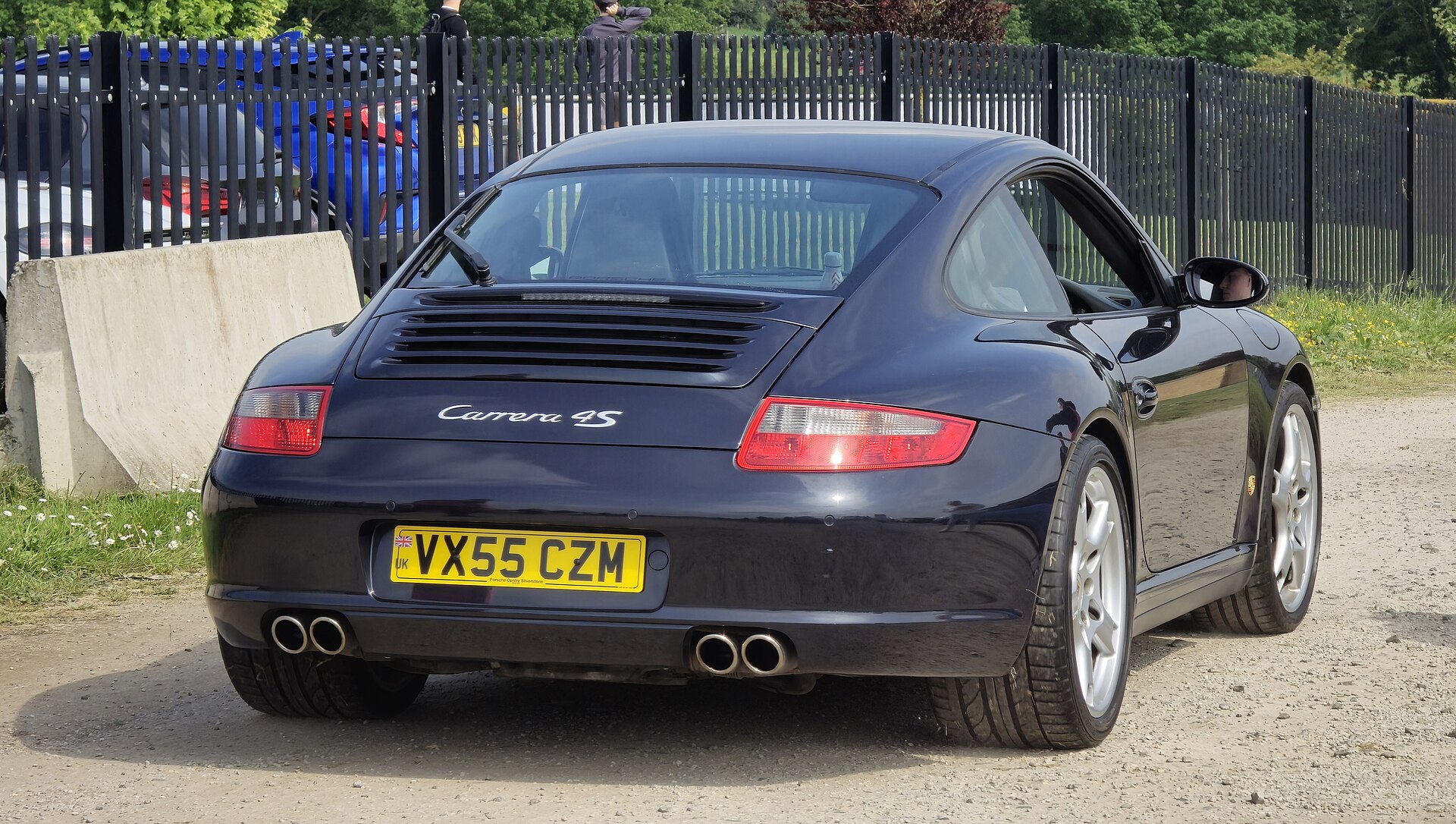
Driving Dynamics: Mid-Engine Balance vs Rear-Engine Character
Mid-engine cars feel fundamentally different from rear-engine cars. The R8's layout places the engine between the driver and rear axle, creating a balanced weight distribution that makes the car feel pivoted around the driver. Turn-in is immediate, rotation comes willingly, and the chassis feels communicative and responsive.
The 911 Turbo's rear-engine layout creates different dynamics. Weight is concentrated behind the rear axle, which should make the car loose and twitchy. But Porsche has engineered around this for 75 years. The 911's all-wheel drive system, active stability control, and carefully calibrated suspension deliver a car that defies its architecture—it handles like a much smaller, lighter car while providing secure grip.
The R8 feels more athletic and precise, like a racing car for the street. The 911 feels more assured and stable, like an engineer's solution to an impossible problem. In autocross, the R8 usually wins. In a real road with traffic and elevation changes, the 911 is often faster because you trust it more.
For daily driving, the 911 is easier. For spirited road driving, the R8 feels more alive. For track driving, it depends on the specific track and your skill level. Both are excellent; they're simply different.
Interior Technology: Virtual Cockpit vs Integrated Infotainment
The R8 features Audi's Virtual Cockpit—a fully digital instrument display that integrates navigation, performance data, and vehicle information into a customizable interface. It's modern, responsive, and frankly one of the best digital cockpits in the supercar segment.
The 911 Turbo uses Porsche Communication Management (PCM) with a traditional instrument cluster alongside digital displays. It's less flashy than the R8's setup, but Porsche owners tend to prefer the combination of analog feel and digital functionality. There's a certain elegance to the 911's restraint—it doesn't need to shout about its technology.
Both systems work flawlessly. The R8's advantage is modernity and customization. The 911's advantage is that it has been refined across millions of miles of real-world use. For some buyers, that matters. For others, the R8's cutting-edge approach is preferable. Neither is objectively better.

The R8's Discontinuation: The Last Naturally Aspirated Supercar
Audi discontinued the R8 in 2024 after a 16-year production run. The final variant was the V10 Performance, making every remaining R8 the last naturally aspirated Audi supercar ever produced. In the context of automotive history, this matters enormously.
The broader industry is moving toward hybridization and electrification. Ferrari's next generation is hybrid. Lamborghini's replacement for the Huracán (which shares the R8's platform) uses a twin-turbo V8 hybrid. Porsche's 911 will be hybrid within the next model cycle. The R8's V10 represents the end of an era where supercars were designed around mechanical thrills rather than efficiency targets.
This historical significance is already reflected in values. R8s are holding their value better than expected, and rare low-mileage variants are even appreciating. Collectors recognize that the R8 V10 is the automotive equivalent of vinyl records—impractical, imperfect, but irreplaceable in ways that electric and hybrid cars simply cannot match.
Pricing Comparison: Current Market Reality
Current used market pricing varies significantly based on model year, mileage, and specification:
| Car | Typical Year | Used Market Range | Optimal Sweet Spot |
|---|---|---|---|
| Audi R8 V10 Performance | 2019–2024 | $175,000–$210,000 | 2021–2023, under 8K miles |
| Porsche 911 Turbo S | 2021–2024 | $200,000–$280,000 | 2022–2023, under 10K miles |
| Audi R8 V10 (2017–2018) | 2017–2018 | $140,000–$170,000 | 2018, with service records |
| Porsche 911 Turbo (non-S) | 2020–2022 | $160,000–$200,000 | 2021, under 15K miles |
The R8 is generally less expensive to purchase, which is significant when considering overall ownership economics. However, this comparison requires context—you're often getting an older R8 with more miles, while you might get a newer 911 for similar money.
Depreciation and Collectibility: Value Retention in 2026
The R8's depreciation profile has improved dramatically. Early models (2014–2016) lost value steadily, depreciating 25–30% over five years. Recent models (2021–2024) are showing much better value retention—approximately 18–22% depreciation over three years. The final production variants are actually appreciating, with dealers reporting increasing interest as the scarcity becomes apparent.
The 911 Turbo maintains steady value. The 911 has always held its worth better than nearly any supercar, and the Turbo variant is no exception. Expect approximately 20–25% depreciation over five years, with strong demand from collectors and enthusiasts. The 911 isn't likely to appreciate, but it won't collapse in value either.
For buyers concerned about residual value, the R8 now offers better mathematics in your favor. As awareness of its discontinuation spreads, final production variants should hold value even more strongly. The 911 Turbo is the safer choice—predictable, stable, historically sound. The R8 might be the smarter choice—potentially appreciating as collectors recognize what they have.
Daily Drivability and Practicality: Both Excellent, Different Approaches
Both cars can be daily driven, though neither should be. The R8 is surprisingly livable. The cabin is comfortable, the transmission shifts smoothly in traffic, and ride quality is acceptable for a mid-engine supercar. Ground clearance is minimal but manageable. You can actually park it in tight spots due to its relatively compact footprint.
The 911 Turbo is more livable still. Rear seats exist (though they're barely usable). Cargo space is actually functional. Visibility is better than the R8. The all-wheel drive system provides excellent traction in less-than-ideal weather. The electronic power steering is lighter and more intuitive in traffic.
Both cars demand respect. Both have modest ground clearance, limited visibility around the front (R8) or rear (911), and fuel consumption that makes daily driving expensive. But if you must daily-drive a supercar, either is capable of it. The 911 is more practical. The R8 is more thrilling. The choice depends on your lifestyle and tolerance for inconvenience.
Maintenance and Running Costs: The True Cost of Ownership
| Expense Category | Audi R8 V10 | Porsche 911 Turbo S |
|---|---|---|
| Annual Insurance | $4,500–$7,500 | $5,000–$8,500 |
| Oil & Fluid Service | $2,500–$3,500 | $2,000–$3,000 |
| Tire Replacement (per set) | $4,000–$5,500 | $5,000–$6,500 |
| Brake Service/Pads | $3,000–$5,000 | $3,500–$6,000 |
| Fuel (annual) | $3,500–$5,000 | $4,000–$5,500 |
| Registration/Taxes | $1,000–$2,500 | $1,000–$2,500 |
| Total Annual | $15,000–$30,000 | $16,000–$32,000 |
The cars are nearly equivalent in running costs. The R8's naturally aspirated engine might be slightly cheaper to maintain (no turbo complexity), while the 911 Turbo might be slightly more efficient on fuel due to its smaller displacement. Neither advantage is significant. Budget $1,200–$2,600 monthly for running costs on either car.
Reliability: German Engineering at Its Finest
Both the R8 and 911 Turbo are remarkably reliable for supercars. The R8 inherits Volkswagen Group engineering and the same 5.2L V10 as the Lamborghini Huracán—a proven, robust engine. Most reported issues involve the dual-clutch transmission in early models (2014–2016), but later variants are bulletproof. The cooling system, suspension, and brakes are all first-rate.
The 911 Turbo is legendarily reliable. Porsche has been building flat-six engines for 75 years, and the turbocharged variant is just the latest evolution. Turbo lag is minimized through sophisticated boost control. Carbon buildup on direct-injection engines was a concern in earlier generations, but Porsche has solved this. The only known weak point is occasional fuel injector cleaning needs, which is both rare and inexpensive.
For reliability, the 911 Turbo has a slight edge due to proven track record and better availability of service specialists. The R8 is no less reliable, but there's less real-world data available. Both are significantly more reliable than Ferrari or McLaren in this price range.
Collector Value and Future Appreciation: Which Will Be Worth More in 5 Years?
The R8 V10 is positioned better for appreciation. Its discontinuation, combined with the naturally aspirated engine, creates scarcity and desirability. Low-mileage, well-specified examples are already appreciating. If Audi never builds another R8, collector demand for the final generation will only intensify.
The 911 Turbo is less likely to appreciate but will hold value excellently. The 911 is always in demand, always has been, always will be. It's the safe choice. But it won't surprise you with unexpected appreciation the way the R8 might.
If you're buying purely for investment return, the R8 offers more upside. If you're buying for reliable value retention, the 911 Turbo is the proven choice. Both will be worth substantial money in 2031.
Which Is Better For: Four Key Buyer Profiles
For Collectors and Enthusiasts
The R8 V10, without question. You're buying the last naturally aspirated Audi supercar. You're buying a car that represents the end of an engineering era. You're buying something scarce and historically significant. The 911 Turbo is excellent, but there's no urgency to own one—Porsche will build more. This window for the R8 is closing.
For Track Day Drivers
The R8 edges ahead here. The mid-engine layout, communicative steering, and balanced weight distribution make it the more intuitive choice for learning and pushing limits on a circuit. The 911 Turbo is equally quick at the limit, but it requires different technique and rewards different skills. Start with the R8 if you're developing track skills. Graduate to the 911 if you want to explore rear-engine dynamics.
For Daily Drivers (Reluctantly)
The 911 Turbo wins. It's more livable, more practical, more forgiving in traffic. The all-wheel drive provides better traction in uncertain weather. The visibility is better. The usable cargo space is actually present. If you must drive a supercar every day, the 911 makes it easier. The R8 demands more from you in parking, visibility, and general logistics.
For Road Trip Enthusiasts
The 911 Turbo again, but barely. The all-wheel drive makes it more capable in varied weather. Slightly better fuel economy (still terrible, but relatively better). More usable passenger space. Slightly better visibility and less claustrophobic feel. But honestly, neither is ideal for long road trips—they're supercars, not grand tourers. The 911 is simply less demanding over 500+ miles.
How to Buy Smart: Strategies That Save Money and Risk
Finding the right example requires more than just browsing listings. Here's the Automonitor approach:
For the R8: Focus on 2021+ examples. The final generation has the most refined engine mapping and chassis dynamics. 2019–2020 examples are excellent values if you can find well-maintained examples. Avoid anything before 2017 unless it's exceptionally cheap—earlier turbocharged variants are outdated. Always get a pre-purchase inspection focusing on the dual-clutch transmission (listen for shudder below 2,000 rpm in first and second gear). Cooling system health is critical—have a pressure test done. Request full service history before making an offer.
For the 911 Turbo S: The 2021+ generation is the sweet spot. Build quality is exceptional. The hybrid-electric power steering is optional but worth the cost. 2020 models are cheaper but represent earlier production (more potential gremlins). The all-wheel drive system is standard and essential. Pre-purchase inspection should focus on the turbocharger system and direct injection fuel system. The transmission is famously robust, so don't worry there. Service records matter less for Porsche due to the legendary reliability, but they still help with negotiation.
Use Automonitor's exotic car financing guide to understand loan options and whether leasing or buying makes sense for your situation. Get pre-approved financing before you shop—it shows dealers you're serious and accelerates negotiations.
Frequently Asked Questions
Q: Will the R8 appreciate now that it's discontinued?
A: Possibly, but not guaranteed. Final production variants are more likely to appreciate than early examples. Low-mileage, well-specified R8s (under 8K miles, desirable colors, original owner) are already showing signs of appreciation. Realistically, expect the R8 to hold value better than comparable supercars, with late-production examples potentially appreciating 5–15% over three years. Don't buy expecting appreciation—buy it because you love it. Appreciation is a bonus.
Q: Is the 911 Turbo's all-wheel drive necessary?
A: Not strictly necessary, but valuable. The all-wheel drive system (standard on the Turbo) provides confidence-inspiring traction and stability that makes the car easier to manage in wet conditions. If you live in a region with winter weather or unpredictable conditions, it's legitimately useful. If you live in a sunny climate and plan to drive only in ideal conditions, it's pleasant but not essential. The rear-wheel-drive 911 Carrera with similar power would be more engaging but less forgiving.
Q: How much faster is the 911 Turbo in real-world driving?
A: At speeds under 50 mph, noticeably faster—that 0.5-second advantage in 0-60 acceleration feels meaningful. From 50–100 mph, they're nearly matched. Above 100 mph (track driving), they're effectively equivalent. For highway merging and street driving, the 911 Turbo's advantage is real but not transformative. You're not talking about a slow R8 versus a fast 911—you're comparing two extraordinarily quick cars where one is slightly quicker.
Q: Which engine sound is objectively better?
A: Neither is objectively better—they're genuinely different. The R8's naturally aspirated V10 scream is high-pitched, mechanical, and increasingly rare in modern supercars. The 911 Turbo's turbocharged flat-six is more sophisticated, with distinct turbo spooling character. Some owners prefer the visceral scream of naturally aspirated power. Others prefer the mature sophistication of turbocharged engineering. If engine sound is a primary decision factor, test drive both and trust your ears. Your preference is the correct one.
Q: Can either be used as a summer daily driver?
A: Technically yes, practically difficult. Both have minimal ground clearance (expect scrapes), limited visibility, and terrible fuel economy. Both require high-octane fuel and will punish you with expensive repairs if neglected. The 911 Turbo is more manageable due to better visibility, all-wheel drive, and slightly more practical ergonomics. The R8 is more of a part-time affair. If you need something for summer weekends, either works. If you need to actually drive it to work regularly, both are asking a lot of you.
Q: Should I buy for investment value or just drive it?
A: Buy to drive it. If it appreciates, that's a bonus. Cars depreciate when they sit unused and develop their own problems (seal leaks, flat-spotted tires, battery degradation). The R8 and 911 Turbo both reward regular driving. The best financial move is to buy, drive regularly, maintain obsessively, and sell in three years when you want something different. Trying to predict which car will appreciate is foolish—drive the one that makes you happiest, and the values will take care of themselves.
The Final Verdict: Which Supercar Is Right for You?
Choose the Audi R8 if: You want the rarest supercar in your price range. You prioritize the mechanical purity of naturally aspirated power. You plan to keep the car long-term and become part of R8 history. You value driver engagement and communicative steering over stability. You want the better value proposition and potential appreciation. You appreciate that the R8 is the last of its kind.
Choose the Porsche 911 Turbo S if: You want proven, legendary reliability. You need a car that works in various conditions (weather, daily use, longer drives). You appreciate the sophistication of turbocharged engineering and 75 years of Porsche refinement. You value confidence and stability over raw feedback. You want the car that will definitely be worth good money in five years. You understand that the 911 is never wrong—it's the safe choice that performs extraordinarily well.
Neither choice is wrong. The R8 represents the past—mechanical, raw, and increasingly rare. The 911 Turbo represents the future—efficient, sophisticated, and continuously refined. If you can only choose one, buy the car that makes your heart race when you see it in the driveway. That emotional connection is worth more than any spreadsheet analysis.
For help navigating the buying process, evaluating specific examples, or understanding financing options for exotic cars, Automonitor's concierge service specializes in exactly these comparisons. We've facilitated hundreds of supercar purchases, and we understand the nuances of both cars intimately.
Ready to Choose Your Supercar?
Automonitor specialists can help you evaluate both cars, negotiate pricing, arrange pre-purchase inspections, and secure financing for exotic car purchases.
Get Expert Guidance →