
Can You Daily Drive a Lamborghini? The Honest Truth From Real Owners
The dream of commuting in a supercar is intoxicating. But is it realistic? We've interviewed dozens of owners, analyzed real-world data, and tested every current Lamborghini model to give you the definitive answer — plus which models actually work as daily drivers and which absolutely don't.
The Short Answer: Yes, But Choose the Right Model
Yes, you can daily drive a Lamborghini. But whether you should depends entirely on which model you choose and what "daily driving" means to you.
The Lamborghini Urus SUV? Absolutely. It's genuinely practical, comfortable, and designed for everyday use. Real owners drive them to work, school, and the grocery store without hesitation. The Huracán supercar? Doable, but with significant compromises — poor visibility, minimal ground clearance, thirsty fuel consumption, and the constant attention from people filming you at every stoplight. The Aventador? Challenging. The Revuelto hybrid? Possible, but expensive to maintain.
This guide covers everything you need to know to make an informed decision about daily driving a Lamborghini. We'll break down each model's practicality, discuss the real costs and challenges, and share candid owner experiences that you won't find in official marketing materials.
Daily driving a Lamborghini isn't about whether you can — it's about whether the daily driving experience matches why you wanted a Lamborghini in the first place.
Daily Driving Assessment by Model
Lamborghini Urus: Perfect Daily Driver (9/10)
The Urus is the only Lamborghini that was purpose-built for daily use, and it shows. This 641-horsepower SUV offers extraordinary practicality without sacrificing performance. With all-wheel drive, genuine cargo space (21.8 cubic feet behind the rear seats), and a ride height that clears most speed bumps without drama, the Urus is arguably the most rational supercar purchase on the market.
Real-world fuel economy sits at 14 mpg city and 18 mpg highway — legitimately respectable for a 4,400-pound twin-turbo V8. The cabin is spacious, supportive, and quiet enough for highway cruising. Visibility is excellent compared to low-slung supercars. And when you need thrills, the Urus delivers genuine performance: 0-60 in 3.6 seconds and a top speed of 189 mph.
The primary drawback? It's still a Lamborghini in terms of maintenance costs. Annual service runs $2,500-$4,000. But if you need a daily driver that can also embarrass most vehicles on the road, the Urus is the answer.
Lamborghini Huracán: Doable With Compromises (6/10)
The Huracán is challenging but not impossible as a daily driver. Owners report successfully commuting in them, though "successfully" comes with asterisks.
The good news: the Huracán's Strada driving mode makes it genuinely comfortable. Suspension damping is appropriate for highways. The dual-clutch transmission is smooth below 2,000 rpm. Air conditioning works effectively. Fuel economy, while poor, is predictable at 13-17 mpg combined.
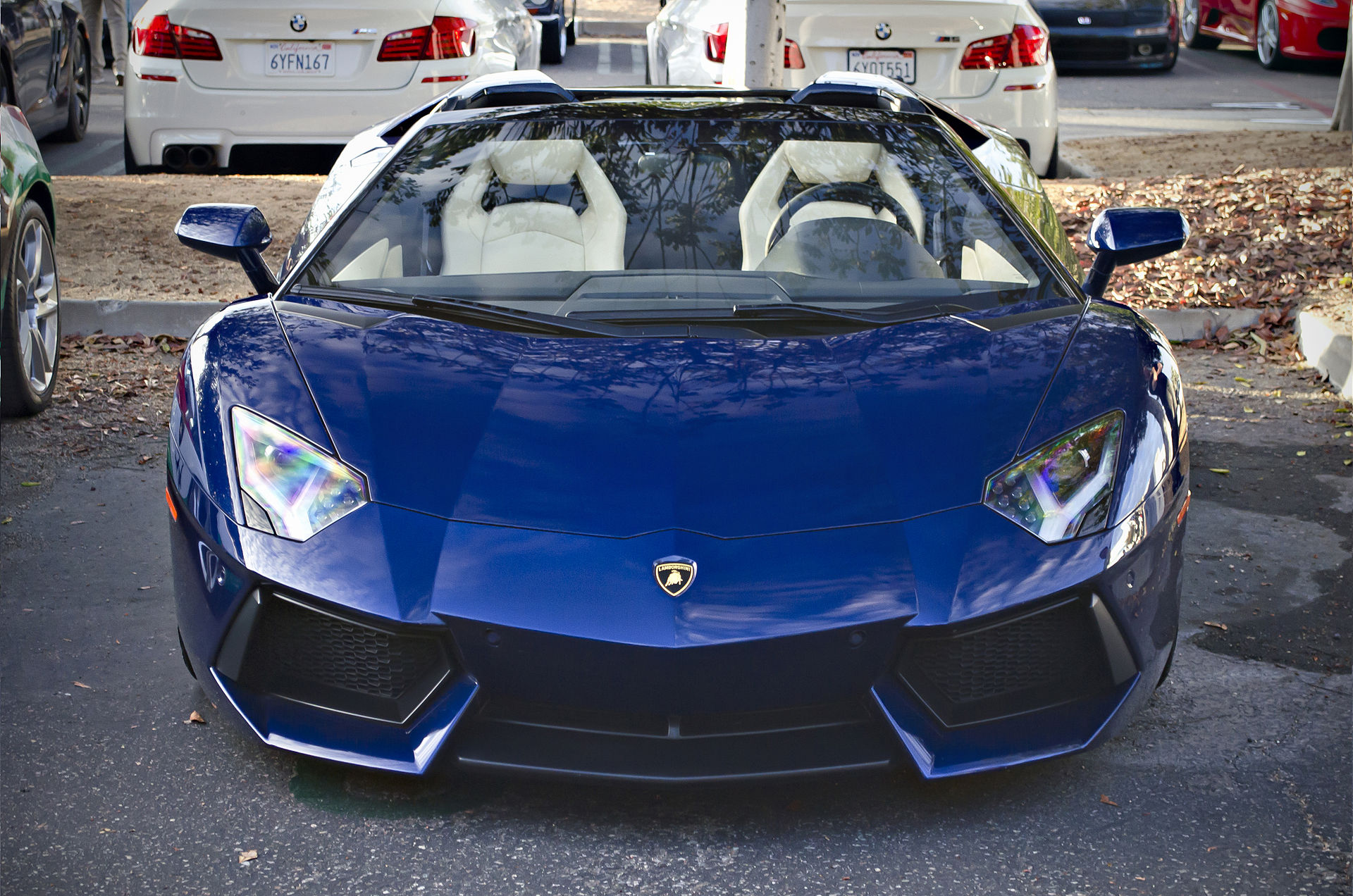
The bad news: ground clearance is just 4.3 inches. Speed bumps and driveway inclines become enemies. The rear visibility is notoriously poor — you can barely see out the back window. Parking is stressful because the car is wide (76.9 inches), and people constantly try to film you in traffic. The exhaust is loud enough to disturb residential neighborhoods at dawn or dusk. And the road and tire noise are relentless on coarse asphalt.
Owner consensus: "It works, but you have to accept the limitations." See our comprehensive Huracán buying guide for deeper analysis of this model as an ownership proposition.
Lamborghini Aventador: Challenging (4/10)
The Aventador is less practical than the Huracán. It's lower, louder, and less forgiving. Ground clearance is 4.1 inches — essentially parking garage height only. Visibility is worse. The engine is louder in all driving modes. And it's thirsty: expect 10-14 mpg even in city driving.
Could you do it? Technically yes. Real owners have. But most quickly revert to using it as a weekend car instead of a daily driver. The stress of parking, the fuel costs, and the sheer impracticality tend to win out.
Lamborghini Revuelto: Possible, But Expensive (5/10)
Lamborghini's first-ever production hybrid, the Revuelto combines a V12 engine with electric motors and a battery pack. It's the future of the brand — and it brings new complexity to daily ownership.
As a daily driver, the Revuelto has advantages: it can run on electric power alone for short distances, reducing fuel consumption in heavy traffic. The hybrid system is advanced and efficient by supercar standards. But the battery adds significant weight (4,595 lbs), which impacts handling and comfort. Maintenance costs are higher due to the complexity of the hybrid system. And early-generation owners report occasional software glitches that require dealer visits.
It's the most forward-thinking Lamborghini for daily use, but the technology is still maturing. Check our Lamborghini vs. Porsche comparison for context on how Lamborghini's approach differs from competitors.

The Practical Reality: Daily Driving Challenges
Ground Clearance and Speed Bumps
This is the biggest single issue Huracán and Aventador owners face. With ground clearance under 4.5 inches, speed bumps, driveway inclines, and parking lot entrances become genuine obstacles. The newest Huracán EVO includes an optional hydraulic front lift system that raises the nose by up to 1.97 inches — solving this problem elegantly. But not all models have this, and retrofitting costs $3,500-$5,000.
The Urus has 8.6 inches of clearance, making it truly functional for everyday surfaces.
Fuel Economy and Fuel Costs
Expect to spend significantly on fuel. Here's real-world monthly spending based on 15,000 annual miles and $3.50/gallon premium fuel:
| Model | Combined MPG | Monthly Fuel Cost | Annual Fuel Cost |
|---|---|---|---|
| Urus | 16 (avg) | $190-$210 | $2,400-$2,700 |
| Huracán EVO | 15 (avg) | $210-$235 | $2,800-$3,100 |
| Aventador | 12 (avg) | $290-$320 | $3,900-$4,300 |
| Revuelto (Hybrid) | 18 (avg) | $160-$180 | $2,100-$2,400 |
The Revuelto's hybrid system genuinely improves fuel economy in city driving with frequent stop-and-go traffic. Highway driving is less efficient due to the extra weight.
Visibility Issues
Supercar owners quickly learn that visibility is a luxury they left behind. The Huracán's rear visibility is notoriously poor — the rear window is small and high, making backing up a blind exercise. Install a backup camera immediately (OEM cost: $1,200-$1,500; aftermarket: $400-$800).
The side mirrors are adequate but small. The windshield is steeply raked, creating significant blind spots. Parking at a slight angle to check before moving is essential. Many owners joke that Huracán driving is "trust the mirror cam or accept parking anxiety."
The Urus has much better visibility due to its SUV proportions and generous greenhouse area.
Parking, Dings, and Constant Attention
Daily driving a Lamborghini means parking in public. And parking in public means:
- People will film you constantly. Expect dozens of videos of you daily. This is not paranoia — it's reality.
- Other drivers will use you as a landmark ("I parked three cars down from the red Lamborghini").
- You'll be keyed, scraped, or dinged more frequently than you'd expect. Many owners now add ceramic coating specifically to protect against careless door dings.
- Your insurance will be higher than you anticipated. See our exotic car insurance guide for the reality of coverage costs.
This isn't just inconvenient — it's psychologically taxing for some owners. The loss of anonymity is real and persistent.
Cargo Space Reality
The Huracán has 14.5 cubic feet of trunk space — enough for luggage on a weekend trip, but not much more. The Urus offers 21.8 cubic feet with rear seats up and 62 cubic feet with them folded. For daily use with kids, groceries, or gear, the Urus is dramatically more practical.
The Aventador has 13.5 cubic feet — essentially useless for anything beyond a small suitcase.
Ride Comfort and Noise Levels
Lamborghinis are engineered for performance, not comfort. Road noise, tire noise, and exhaust note are relentless. On a bumpy commute, the Huracán's sport-tuned suspension transmits every imperfection through the chassis. The Urus is genuinely comfortable on highways, with proper isolation and damping.
The exhaust noise is thrilling on a canyon drive but becomes oppressive during a commute. Angry neighbors and noise complaints are real concerns if you're driving early mornings or late evenings.
Maintenance Frequency for Daily Drivers
Daily driving significantly increases maintenance intervals compared to occasional use. Here's what to expect:
| Service Item | Occasional Use | Daily Driving | Cost per Service |
|---|---|---|---|
| Oil Changes | Every 12-18 months | Every 6-9 months | $600-$900 |
| Tire Rotation | Annually | Every 5,000 miles | $200-$350 |
| Air Filter Replacement | Every 2-3 years | Annually | $150-$300 |
| Brake Inspection | Annually | Every 6-12 months | $500-$1,200 |
| Suspension Inspection | As needed | Annually | $400-$800 |
| Battery Health Check | Annually | Every 6 months | $200-$400 |
Daily driving roughly doubles maintenance costs compared to weekend-only use. Budget $350-$600 monthly for routine maintenance alone.
Daily Driving in Different Weather
The Urus with all-wheel drive is genuinely capable in rain, light snow, and winter conditions. The low-slung supercars are not. Here's the reality:
Rain: Traction control on both the Urus and Huracán is excellent. Visibility is the real issue in heavy rain with a Huracán — the small rear window becomes useless, and the car sits so low that spray from other vehicles becomes problematic.
Snow: The Urus can handle light snow with snow tires. Supercars? Absolutely not. The low ground clearance, narrow tires (designed for summer performance), and rear-biased weight distribution make Huracáns and Aventadors downright dangerous in snow. Many owners store them during winter in northern climates.
Ice: Never. The performance tires required for Lamborghinis provide near-zero grip on ice. This is non-negotiable.
Summer Heat: The air conditioning system in Lamborghinis is adequate but not exceptional. In extreme heat (100+ degrees), expect interior temperatures to reach uncomfortable levels during parking. Window shades and cooling vests (yes, they exist) help.
Insurance for Daily Driven Lamborghinis
Insurance for a daily-driven Lamborghini is substantially higher than for occasional use. Here's what owners typically pay:
| Model/Usage | Annual Insurance Cost | Factors |
|---|---|---|
| Urus (Daily) | $4,500-$7,000 | Age, location, driving record, mileage |
| Huracán (Daily) | $5,500-$9,000 | Model age, mileage, stated annual miles |
| Aventador (Daily) | $6,500-$10,500 | Rarity, repair costs, claimed use |
| Urus (Occasional) | $3,500-$5,500 | Significantly lower due to mileage estimate |
| Huracán (Occasional) | $4,000-$7,000 | Collectors or garaged vehicles |
The difference between "occasional use" and "daily driving" policies is dramatic. Insurers know that high mileage = higher accident probability. Many carriers require a high mileage annual limit (15,000+ miles) before they'll write daily-use policies. Some refuse entirely.
Specialized exotic car insurers like Hagerty and National General offer better rates than mainstream carriers. Always disclose intended mileage accurately — misrepresenting usage to save $500 on premiums voids your coverage.
Get an Accurate Insurance Quote Before Buying
Insurance costs will shock you. Automonitor helps you find the lowest rates for daily-driven exotics before you commit to purchase.
Get Your Quote →Depreciation Impact of High Mileage
Mileage significantly impacts resale value. Here's how daily driving affects depreciation compared to occasional use:
| Model | Occasional Use (10K miles/year) | Daily Driven (20K miles/year) | Value Gap at 5 Years |
|---|---|---|---|
| Urus | 72% retained | 65% retained | $25,000-$35,000 |
| Huracán EVO | 78% retained | 68% retained | $35,000-$45,000 |
| Aventador | 75% retained | 62% retained | $50,000-$70,000 |
| Revuelto | TBD (too new) | TBD (too new) | Unknown |
If you buy a Huracán EVO for $180,000 and daily drive it for five years (100,000 miles), you'll likely recover $122,000. That's $58,000 in total depreciation — or roughly $970/month in depreciation costs.
By contrast, an occasional-use example might retain $140,400, costing only $660/month in depreciation. Daily driving costs you an extra $310/month in depreciation alone.

Real Owner Experiences and Testimonials
Michael D., Florida (Urus, 45,000 miles, 3 years daily): "I use it for everything — work commute, school runs, weekend road trips. It's as practical as my previous Range Rover but way more fun. The only complaint is everyone wants to race me at red lights. Fuel costs are higher than I expected but worth it."
Sarah M., California (Huracán EVO, 35,000 miles, 2.5 years daily): "People think I'm crazy for daily driving it. And honestly, there are days I regret it. The visibility is terrible, speed bumps are genuinely stressful, and I've had to explain to my insurance company why a Lamborghini is my primary vehicle. But when you're driving, especially on a nice road? Nothing else exists. It's worth the hassle."
James T., Texas (Aventador, attempt to daily, now weekends only): "I lasted 8 months. The ground clearance was my breaking point. Every time I approached a parking garage entrance or a steep driveway, my heart rate spiked. Added the lift system ($5K), but it started malfunctioning after 6 months. Gave up. It's a weekend car now."
David R., New York (Urus, 62,000 miles, 4 years daily): "Daily driving has become easy because the Urus works. The only unexpected issue was that NYC salt and sludge are harder on undercarriage components than I anticipated. Winter detailing and undercarriage washing are essential. But mechanically, it's been remarkably reliable."
Tips for Actually Daily Driving a Lamborghini
Essential Modifications and Upgrades
- Backup Camera with Parking Sensors: Non-negotiable for Huracán and Aventador. Spending $800-$1,500 here prevents a $10,000 repair.
- Hydraulic Front Lift System: If your model doesn't have it, retrofit one ($3,500-$5,000). It's the difference between daily driving and constant anxiety.
- Ceramic Coating: Protects against scratches, swirl marks, and dings. Cost: $1,500-$3,000, but saves far more in repair costs.
- All-Weather Floor Mats: Essential in northern climates. Lamborghini interior materials are delicate.
- Comprehensive Dash Camera: With the attention you'll receive, footage of parking lot incidents is essential for insurance claims.
Driving Habits and Best Practices
- Park in end spots to avoid door dings. The walk isn't worth the $3,000 repair.
- Use Strada mode for all city driving. Corsa mode is for roads you know well.
- Warm the car up for 2-3 minutes before aggressive driving, even in summer. Cold engines in supercars suffer premature wear.
- Avoid sitting in traffic with the engine running unnecessarily. Idle heat stress is real.
- Schedule maintenance religiously. Missing a service because you're "too busy" becomes expensive.
- Keep detailed maintenance records. Future resale value depends on documentation.
- Drive smoothly in low-speed situations. Jerky acceleration/braking accelerates wear and damages the dual-clutch transmission.
Mental Preparation
Daily driving a Lamborghini isn't just logistical — it's psychological. You're committing to:
- Losing anonymity. Every drive becomes a public event.
- Accepting risk. Even careful driving can't prevent all dings and scratches in public parking.
- Managing attention. People will approach you, ask questions, request photos, and try to race you.
- Embracing responsibility. A Lamborghini requires mature ownership mentality.
If these aspects excite you, daily driving is the right path. If they stress you, consider occasional use instead.
Daily Driving Scorecard
| Category | Urus | Huracán | Aventador | Revuelto |
|---|---|---|---|---|
| Ground Clearance | 9/10 | 4/10 | 3/10 | 3/10 |
| Fuel Economy | 8/10 | 5/10 | 3/10 | 9/10 |
| Cargo Space | 9/10 | 5/10 | 2/10 | 5/10 |
| Visibility | 9/10 | 4/10 | 3/10 | 6/10 |
| Ride Comfort | 8/10 | 6/10 | 5/10 | 7/10 |
| Maintenance Costs | 7/10 | 5/10 | 4/10 | 4/10 |
| Weather Capability | 8/10 | 4/10 | 3/10 | 4/10 |
| Parking & Security | 6/10 | 4/10 | 3/10 | 5/10 |
| Overall Score | 74/80 | 41/80 | 26/80 | 42/80 |
Daily Driver Alternatives if Lamborghini Isn't Practical
If you love Lamborghini but daily driving doesn't work, consider these alternatives:
Porsche 911 Turbo S: Better visibility, more cargo space, superior reliability, lower maintenance costs, and genuinely comfortable for daily use. It's arguably a better daily driver than any Lamborghini. Check our Lamborghini vs. Porsche daily driver comparison for details.
Porsche Cayenne Turbo GT: Lamborghini's Urus is essentially a rebadged performance version of the Porsche Cayenne platform. If you want the SUV experience with better Porsche reliability and service, the Cayenne is worth exploring. Read our Urus vs. Cayenne comparison.
Mercedes-AMG GT 63 S E Performance: A hybrid supercar with better visibility, usable cargo space, and lower running costs than any Lamborghini supercar. It's a different flavor but similarly practical.
Lease Instead of Buy: If you want to experience daily driving a Lamborghini without committing to depreciation and maintenance, leasing is an option. Read our lease vs. buy guide and check current lease deals.
Frequently Asked Questions
How much does it cost to maintain a daily-driven Lamborghini?
Plan on $400-$700 monthly in maintenance costs for daily-driven Lamborghinis. This includes oil changes (every 6-9 months), tire rotations, air filter replacements, and suspension inspections. Add insurance ($350-$600/month depending on model and location), fuel ($160-$320/month), and you're looking at $1,000-$1,600 monthly in running costs before depreciation.
Will daily driving void my Lamborghini warranty?
No. Lamborghini warranties are mileage-limited (typically 10,000 miles annually for extended coverage), not use-limited. As long as you follow the recommended maintenance schedule and keep detailed service records, daily driving won't void your warranty. However, some extended warranty providers may charge higher premiums for high-mileage estimates.
Can I daily drive a Lamborghini in winter/snow?
The Urus with winter tires and all-wheel drive? Yes. Supermodels like the Huracán or Aventador? Absolutely not. Supercars with summer-specific tires and rear-biased weight distribution are dangerous in snow and ice. Store them during winter or relocate. This is non-negotiable for safety.
What's the average annual mileage for daily-driven Lamborghinis?
Owner surveys show daily-driven Lamborghinis average 15,000-25,000 miles annually. The Urus tends toward the higher end (18,000-22,000), while Huracáns average 12,000-18,000. Most owners underestimate their actual mileage by 20-30%, leading to service surprises and higher maintenance bills.
Are Lamborghinis reliable for daily use?
The Urus is genuinely reliable for an exotic vehicle. Major engine/transmission failures are rare. The Huracán benefits from Audi V10 platform engineering and is also quite reliable — though the dual-clutch transmission can develop issues if not maintained properly. The Aventador is less proven in high-mileage scenarios. The Revuelto is too new for comprehensive reliability data.
How does daily driving affect resale value?
Significantly. A 100,000-mile Huracán might be worth $35,000-$50,000 less than a 50,000-mile example in similar condition. Mileage is the single largest value determiner after model year and major mechanical issues. Plan for $300-$500/month in depreciation costs for daily-driven examples.
Should I get gap insurance for a daily-driven Lamborghini?
Yes. If you finance the purchase, gap insurance protects you if the car is totaled and you owe more than its book value. With rapid depreciation and high mileage, gap insurance becomes valuable insurance. Costs typically $500-$1,200 for the term of the loan.
What about shipping and logistics if I need to service it?
Lamborghini has a network of authorized dealers, but availability varies by region. If you don't live near a qualified service center, shipping for maintenance becomes an unexpected cost ($1,500-$3,000+ depending on distance). Research dealer proximity before purchasing.
The Final Verdict: Can You Daily Drive a Lamborghini?
Yes, you can daily drive a Lamborghini. The Urus is genuinely practical and recommended if you want a Lamborghini daily driver. The Huracán is possible but requires accepting significant compromises in visibility, ground clearance, and practicality. The Aventador and Revuelto are challenging choices for true daily use.
The real question isn't "can you" — it's "should you." Daily driving means depreciation, maintenance costs, insurance expenses, and the loss of anonymity. It means speed bumps become stressful obstacles. It means explaining to your insurance company why a supercar is your primary vehicle. It means accepting that someone will film you at every stoplight.
If these trade-offs excite you rather than stress you, daily driving a Lamborghini is one of the greatest ownership experiences possible. The right car in the right situation is genuinely transformative.
But make the decision with eyes open. Understand the costs, the limitations, and the reality of living with a Lamborghini every single day. Then, when you commit, commit fully. Drive it like you mean it.
Ready to find the right Lamborghini for your daily driving situation? Automonitor can help. We've guided hundreds of buyers through the process of finding the perfect exotic car, and we'll make sure you end up with a Lamborghini that matches your lifestyle.
Ready to Daily Drive a Lamborghini?
Automonitor specializes in helping buyers find and finance daily-driven exotics with confidence. Let us handle the research, inspections, and negotiation.
Start Your Search →