
Best Year McLaren 720S to Buy: Model Year Comparison and Value Guide
The McLaren 720S represents one of the most thrilling supercars ever built, but finding the right model year can save you thousands while avoiding generation-specific issues. Here's our definitive breakdown of which year offers the best value and reliability.
The Verdict: 2020 Model Year Is the Sweet Spot
The 2020 McLaren 720S Coupe represents the optimal balance of value, reliability, and desirability. At an average market price of $155,000–$195,000, it offers all the refinements that McLaren implemented during the car's five-year production run while avoiding the premium pricing of the final 2022 models. More importantly, the 2020 lineup arrived after every early generation issue had been thoroughly debugged and addressed, meaning you're buying a car that has learned from its predecessors' mistakes.
But that's not the complete story. Depending on your intended use and budget, the best year for you might be the bargain-hunting 2018 entry model, the driver-focused 2019, or the potentially collectible 2022 final year. This guide walks you through every model year, variant decision, and reliability consideration that matters when buying a used 720S.
McLaren 720S Production Timeline: 2018 Through 2022
The McLaren 720S debuted in March 2017, with customer deliveries beginning in late 2017. The five-year production run included the Coupe (all years) and Spider (introduced in 2018). Production ended in April 2022, with approximately 4,700 units built across both body styles — a relatively small number that works in your favor as a buyer, as supply constraints help maintain values.
McLaren released the 720S GT as a limited variant in 2019, designed specifically for grand touring rather than track performance. The GT features a slightly more comfortable ride, enhanced luggage capacity, and a revised suspension setup that prioritizes refinement. Only about 800 GTs were built, making them rarer than standard 720S models.
The Spider variant launched in 2018 with retractable hardtop technology, offering open-air driving without the weight penalty of traditional soft tops. The Spider weighs approximately 100 pounds more than the Coupe and costs $15,000–$25,000 more new, but used pricing has compressed that gap significantly.

Year-by-Year Ranking: Which 720S Vintage Should You Buy?
2020: Best Value and Best Reliability – The Sweet Spot
The 2020 McLaren 720S arrives at a critical inflection point: it's early enough in the production run to benefit from two years of service bulletins, recall campaigns, and engineering refinements, yet late enough that all factory bugs have been eliminated. Early reports of hydraulic suspension issues that affected 2018–2019 models had been resolved by the 2020 model year, making this the first year where you can buy with confidence without worrying about expensive repairs.
Pricing for a 2020 Coupe ranges from $155,000 to $195,000 depending on mileage and specification, while Spider variants command $170,000–$210,000. This represents approximately 20–25% depreciation from original MSRP of roughly $315,000 for the Coupe, which is exceptional value for a five-year-old supercar. By comparison, 2018 models have lost 30–35% of their value.
The 2020 model year offers the best risk-to-reward ratio, making it our top recommendation for first-time 720S buyers. The maintenance history is well-documented by this point, and the car still feels current without being prohibitively expensive.
2021: Incremental Updates at a Slight Premium
The 2021 model year introduced minor cosmetic updates and a refined infotainment system, but no mechanical changes of consequence. Pricing ranges from $165,000 to $210,000 for Coupes and $180,000–$225,000 for Spiders. While the 2021 represents a more refined package, the pricing premium of $10,000–$15,000 over a comparable 2020 does not justify the minimal improvements for most buyers. The 2021 makes sense only if you find one with exceptionally low mileage and desirable specification at competitive pricing.
Reliability is identical to the 2020 model, so there's no advantage in that department. Resale value tracking suggests 2021 models depreciate at the same rate as 2020 examples, so you gain nothing on the investment side either.
2019: Second Year, Most Issues Fixed – Hidden Gem Status
The 2019 model year sits in an interesting position: it benefits from all the engineering fixes that McLaren implemented after the problematic 2018 launch, yet it remains significantly cheaper than 2020 models due to market perception that 2020 is "better." In reality, a well-maintained 2019 with documented service is nearly identical in reliability to a 2020.
Used 2019 Coupes range from $145,000 to $185,000, while Spiders command $160,000–$195,000. This $10,000–$15,000 savings over comparable 2020 models represents exceptional value if the car has a clean service history. However, be cautious: some 2019 models carry the hydraulic suspension issues that plagued the early generation. Always demand a pre-purchase inspection specifically checking suspension function and listening for any unusual noises from the adaptive suspension system.
A properly specified 2019 with maintenance records is arguably a better value purchase than a 2020 with unknown history. This is where detailed inspection and documentation become critical differentiators.
2022: Final Year, Limited Production, Collectibility Potential
The 2022 model year represents the final year of 720S production before McLaren transitioned to the newer 750S platform. Only a handful of 2022 models were built (production ended in April 2022), making them the rarest 720S variant. Pricing reflects this scarcity and collectibility potential: 2022 Coupes range from $175,000 to $220,000, while Spiders command $190,000–$240,000.
From a mechanical standpoint, 2022 models are identical to 2021 examples with the same reliability profile. The premium you pay is purely for rarity and potential future appreciation. If collectibility interests you and you have the budget, a low-mileage 2022 with desirable specification could appreciate 10–15% over the next 3–5 years as the car becomes rarer. However, this is speculative, and you should only buy a 2022 if you genuinely love the car and don't need the price difference to offset running costs.
2018: Entry Point, Most Issues, Cheapest Price
The 2018 model year represents the lowest purchase price at the expense of higher risk. Used 2018 Coupes range from $135,000 to $175,000, while Spiders command $150,000–$185,000. That $20,000–$25,000 savings over a 2020 model is significant, but it comes with caveats.
The 2018 generation suffered from several documented issues: transmission hesitation in certain driving modes, occasional infotainment glitches, and most significantly, early hydraulic suspension failures affecting the Proactive Chassis Control system. Some 2018 models required expensive suspension repairs ($8,000–$15,000) that weren't covered under warranty. Additionally, the 2018 models lack some of the refinements and updates that arrived in 2019.
That said, a well-maintained 2018 that has avoided suspension problems is a capable, thrilling machine. If you find one with documented full-service history, a pre-purchase inspection confirming suspension integrity, and pricing that reflects its generation-specific risks, it can represent remarkable value. Budget cautiously and ensure you're comfortable with potential repair costs.
McLaren Reliability Evolution: How Each Year Improved
McLaren learned critical lessons during the 720S production run. The 2018 model year launched with brilliant engineering but with the kinds of early-generation issues that plague any new high-performance platform. By the 2020 model year, nearly all of these problems had been permanently resolved.
2018: Transmission software occasionally caused hesitation at low RPM during low-throttle transitions. Infotainment systems (touchscreen) were prone to freezing. Suspension dampers required frequent recalibration. Power windows occasionally stuck. Most issues were resolved through software updates by mid-2018, but early cars are most at risk.
2019: McLaren issued comprehensive service bulletins addressing known issues from the 2018 model year. Transmission software was substantially revised. Suspension calibration was optimized. Most 2019 models that reached customers were already retrofitted with updated components. Reliability is dramatically better than 2018 models.
2020–2022: No significant mechanical issues beyond normal exotic car wear. Reliability is genuinely good by supercar standards. The 2020 model year in particular represents the sweet spot where McLaren had solved all the technical issues but hadn't yet pushed into the minor cosmetic updates that came in 2021.
The overall consensus from McLaren service networks and independent specialists is that 2020 and later models are significantly more reliable than 2018–2019 examples. This reliability advantage justifies a portion of the price premium, though some of it is pure market perception rather than mechanical reality.

The Hydraulic Suspension Saga: Which Years Were Most Affected
The Proactive Chassis Control hydraulic suspension system that debuted with the 720S was revolutionary but troublesome in early production. The system uses active hydraulic actuators to adjust suspension compliance in real-time based on road conditions and driving mode. When functioning correctly, it delivers unprecedented comfort combined with track-level performance. When failing, it's expensive.
The system is most problematic in 2018 models, where some examples experienced failure within 10,000–30,000 miles. Symptoms included: loss of adaptive damping (the car rides either rock-hard or overly soft), warning lights on the dashboard, or complete system shutdown requiring limp-home mode. Repair costs range from $8,000 to $15,000 depending on whether seals, valves, or complete dampers require replacement.
By the 2019 model year, McLaren had redesigned the sealing systems and valve calibrations, dramatically reducing failure rates. The 2020 and later models rarely experience suspension issues beyond normal service maintenance.
Critical buying advice: For any 2018 or early 2019 model, demand a thorough pre-purchase inspection specifically testing the suspension through full range of damping modes. Listen for unusual noises, verify smooth transitions between Comfort and Sport modes, and confirm that the adaptive system hasn't thrown any warning codes. If the dealer or seller resists detailed suspension testing, walk away.
720S Coupe vs. Spider: Value Comparison by Year
The McLaren 720S Spider retractable hardtop convertible represents one of the most sophisticated open-air supercars ever built. The decision between Coupe and Spider comes down to lifestyle and budget, not performance or reliability.
Spider models command a $15,000–$25,000 premium when new, but used pricing has compressed that gap. A 2020 Spider averages $170,000–$210,000 versus $155,000–$195,000 for a comparable Coupe. The usable price premium is roughly 8–12%, reflecting that many buyers prefer the coupe's clean lines and lighter weight.
Spider reliability is identical to Coupes. The retractable hardtop mechanism is proven technology that responds well to maintenance. The weight penalty (approximately 100 pounds) has no meaningful impact on performance or handling. Choose Spider if you genuinely value open-air driving; choose Coupe if budget or weight-consciousness matters.
For value optimization, Spider models depreciate slightly less sharply than Coupes in absolute terms but slightly faster in percentage terms. This suggests that while Spider buyers maintain some demand, the pricing premium doesn't hold as strongly over time. If your primary concern is value retention, the Coupe is marginally better.
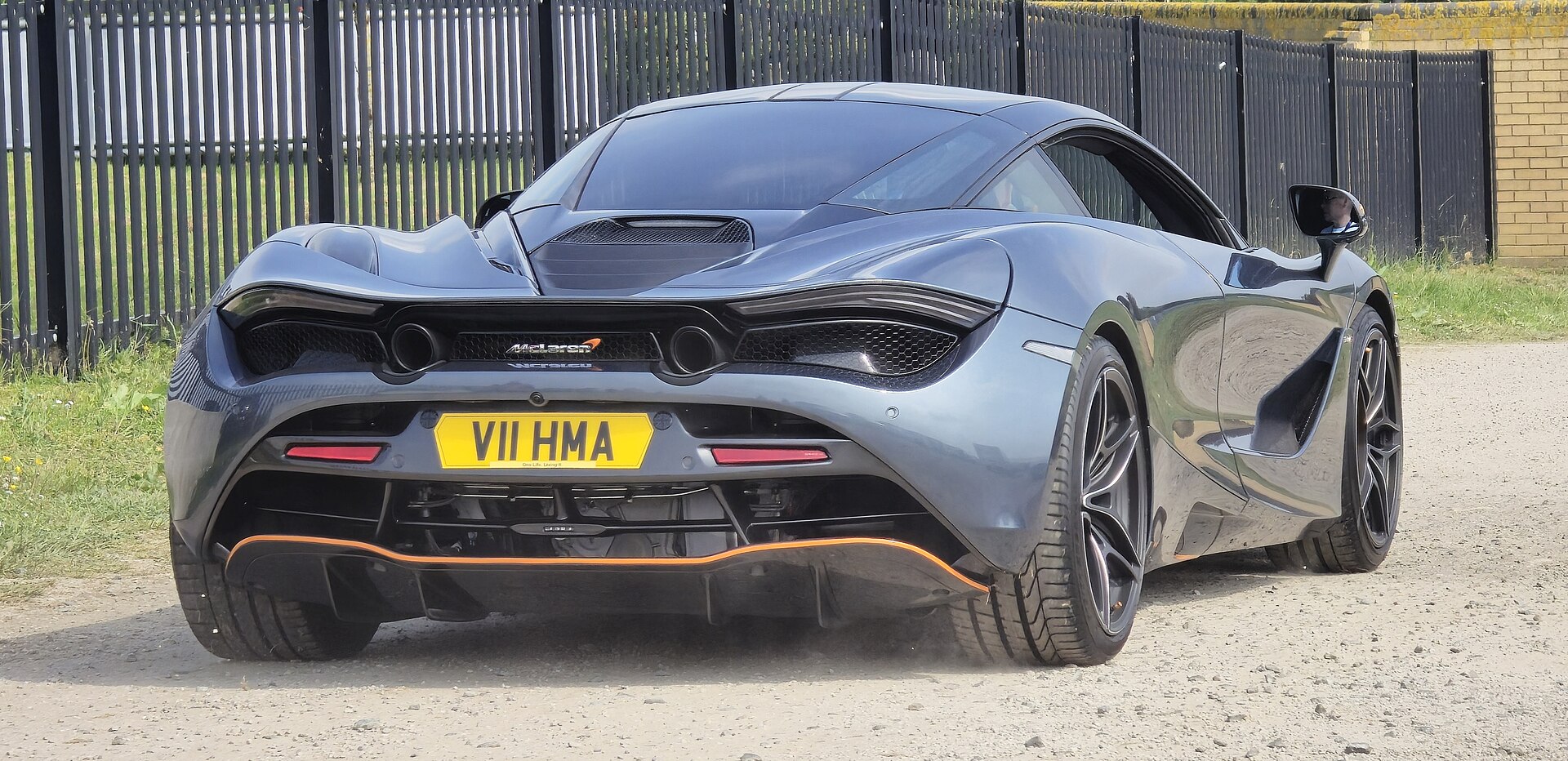
The 765LT and 750S Effect: How Newer Models Impact 720S Values
The introduction of the McLaren 765LT (2019–2021) and particularly the all-new 750S platform (2022 onward) created a pinch in 720S values. The 765LT offered more extreme performance and became the track-focused flagship. The 750S represented an entirely new generation with advanced technology and contemporary styling.
This has actually benefited 720S buyers in one way: used 720S pricing has become more rational and value-oriented as McLaren's lineup expanded. Buyers previously forced to overpay for the 720S as "the" supercar can now access a broader range of options. However, the newest McLaren models have attracted some of the demand that might have previously gone to used 720S cars.
The 765LT positioned itself above the 720S in price and performance, creating a "sweet spot" value proposition for the 720S as buyers realized they could get 95% of the 765LT experience at 70% of the cost. Similarly, the 750S arrived at a price premium that made used 720S models look like exceptional bargains.
The practical implication: 720S values have stabilized after the initial shock of these new launches. The 2020 model year in particular benefits from this stabilization, sitting at an attractive price point that won't decline sharply in the near term.
Best Year for Different Use Cases: Daily Driver, Track, Investment
Best for Daily Driving: 2020–2021
If you plan to drive the 720S regularly, the 2020 or 2021 model year offers the best combination of reliability and refinement. The suspension and infotainment systems have been thoroughly debugged. The 2020 specifically hits the sweetspot of being mature enough for daily driving while maintaining modern conveniences. Expect roughly $175,000–$195,000 for a well-maintained example with moderate mileage.
Best for Track Days: 2019 or 2020
For track-focused driving, the 2019 or 2020 represent ideal choices. The 2019 costs slightly less but requires more thorough inspection to confirm suspension integrity. The 2020 eliminates that concern entirely. Both years offer the refined damper tuning that makes the 720S genuinely capable at speed. Budget for a dedicated track car setup or plan for increased tire wear if you'll be regular tracking your car.
Best for Investment/Collectibility: 2022
If future appreciation matters more than immediate value, the 2022 final-year model offers the best collectibility potential. The limited production numbers and end-of-generation status create the conditions for appreciation. However, this is speculative. Only buy a 2022 if you genuinely love the car and don't need to recover the $20,000+ premium over a 2020 to offset running costs.
Best for Budget-Conscious Buyers: 2019
The most value-conscious approach is a well-inspected 2019 model with documented service history. You save $10,000–$15,000 versus a 2020 while gaining essentially identical reliability (assuming suspension has been verified). This approach requires more due diligence during inspection but rewards careful shopping with exceptional value.
Comprehensive Model Year Comparison Table
| Year | Production Status | Coupe Price Range | Spider Price Range | Key Issues | Reliability Rating | Value Rating |
|---|---|---|---|---|---|---|
| 2018 | Launch Year | $135K–$175K | $150K–$185K | Suspension, infotainment | Fair | Good |
| 2019 | Early Production | $145K–$185K | $160K–$195K | Some suspension issues, mostly resolved | Good | Excellent |
| 2020 | Mid-Production | $155K–$195K | $170K–$210K | None significant | Excellent | Excellent |
| 2021 | Late Production | $165K–$210K | $180K–$225K | None significant | Excellent | Good |
| 2022 | Final Year | $175K–$220K | $190K–$240K | None significant | Excellent | Fair (premium for rarity) |
What to Look for During Inspection: Year-Specific Concerns
Before finalizing any 720S purchase, a thorough pre-purchase inspection is non-negotiable. Maintenance costs for McLarens are substantial, and hidden problems can transform an excellent deal into a financial disaster.
For 2018–2019 models specifically:
- Verify suspension system function through all driving modes. Listen for unusual noises, check that adaptive damping engages smoothly, and demand proof of any suspension service or replacement.
- Test the infotainment system thoroughly. Power up the system, navigate menus, test the touchscreen responsiveness, and confirm Bluetooth connectivity works.
- Request transmission service records and drive the car through low-speed, low-throttle transitions to identify any hesitation or shuddering.
- Check for any open recalls or technical service bulletins that haven't been completed.
For 2020–2022 models:
- Suspension inspection is less critical but still valuable as a baseline for future maintenance planning.
- Verify that all software updates have been applied. Ask the seller for documentation of any service bulletins addressed.
- Check service records to confirm regular maintenance has been performed. McLarens require specific service intervals, and skipped maintenance dramatically impacts reliability.
- Inspect brake pad and rotor condition, as this affects maintenance cost planning.
Get a Professional McLaren Inspection
Automonitor connects you with certified McLaren specialists who perform comprehensive inspections specific to each model year. Don't skip this critical step.
Schedule an Inspection →Buying Strategy: How to Find the Right 720S at the Right Price
Finding the best-value 720S requires strategic searching and patience. Begin by defining your budget to include purchase price plus 24 months of running costs (insurance, maintenance, fuel). Next, determine your must-have specifications: Coupe or Spider, desired color, and mileage tolerance.
Search broadly across Bring a Trailer, authorized McLaren dealers, independent exotic specialists, and regional classified listings. Different marketplaces have different pricing dynamics. Bring a Trailer auctions tend to price 5–10% above dealer inventory, while private sellers often price aggressively but with higher risk.
When you identify a candidate, request complete service history. Red flags include gaps in maintenance records, service by non-McLaren shops (unless the owner can explain special circumstances), or ownership transfers that suggest trading problems between dealers. Green flags include consistent service at McLaren dealerships, records of suspension work completed, and single-owner history.
Price conservatively based on market comps, not asking price. Use completed sales data (not active listings) to establish fair market value. Factor in any anticipated maintenance: if the car is due for service, deduct $1,500–$2,500 from your offer. If suspension or transmission work has been flagged, deduct appropriately and walk away if repairs are needed.
Frequently Asked Questions
Is the 2018 720S worth buying if it's significantly cheaper?
A 2018 can represent exceptional value if you find one with documented full service history, a clean pre-purchase inspection, and pricing that reflects its generation-specific risks. Budget $8,000–$15,000 for potential suspension repairs and ensure you're comfortable with that exposure. For first-time buyers, the 2020 is safer despite the higher price.
Should I buy a Spider or Coupe?
Spider models cost $10,000–$20,000 more but deliver the genuine thrill of open-air driving. Choose Spider if you value convertible driving; choose Coupe if budget matters. Reliability and performance are identical. Spider values depreciate at the same rate, so there's no investment advantage to either choice.
What's the difference between the 720S and 720S GT?
The GT variant (rare, only 800 built) prioritizes touring comfort over track performance. It features a slightly softer suspension, enhanced luggage space, and a more refined interior. If you want comfort-focused driving, the GT is worth seeking out despite its rarity. Most buyers prefer the standard 720S balance of performance and daily usability.
How much will a 720S cost to maintain annually?
Plan for $4,000–$7,000 annually in maintenance, depending on mileage and driving style. This includes routine service, fluid changes, tire replacement, and brake pads. Add $3,000–$5,000 for fuel and $4,000–$8,000 for insurance. That's $11,000–$20,000 annually in running costs before any unexpected repairs.
Is the 720S better than the Ferrari 488 or Lamborghini Huracan?
The 720S competes directly with the Ferrari 488 and Lamborghini Huracan, each with different strengths. The 720S offers the most modern technology and track performance. The Ferrari offers prestige and tradition. The Huracan offers naturally aspirated V10 character. Choose based on which aspect matters most to you.
Will 720S values appreciate?
Unlikely. The 720S will probably continue depreciating gradually as newer McLaren models arrive. However, depreciation has slowed considerably as the car ages and becomes more stable in pricing. A 2020 model will likely be worth $140,000–$175,000 in 2028, representing moderate additional depreciation but nothing dramatic.
Should I buy from a dealer or private seller?
Dealers provide warranty coverage and verified service history but charge 10–15% premiums. Private sellers offer better pricing but higher risk. For a 720S specifically, dealer purchase provides peace of mind worth the premium, though a private sale with comprehensive pre-purchase inspection and service history can work if you're experienced with exotic cars.
Can I use the 720S as a daily driver?
Yes, the 720S is more daily-usable than most supercars thanks to excellent visibility, reasonable ground clearance, and a comfortable Comfort-mode suspension setting. However, fuel economy (approximately 15–18 mpg), expensive tires, and high insurance costs make it expensive to drive daily. It's best suited as a three-day-per-week car.
Final Recommendation
The 2020 McLaren 720S Coupe represents the best overall value in the used 720S market. It arrived after McLaren had refined away the generation-specific issues that plagued 2018–2019 models, offers an excellent balance of price and features, and sits at a market equilibrium where values have stabilized. Expect to pay $155,000–$195,000 for a well-maintained example with moderate mileage, making it accessible to serious enthusiasts without premium pricing.
If budget is your primary concern, a thoroughly inspected 2019 with documented service history can offer exceptional value at $10,000–$15,000 less. If rarity matters and budget allows, a 2022 final-year model offers collectibility potential. And if you're accepting the inherent risks, a 2018 launch-year model with proven reliability provides remarkable value for the adventurous buyer.
Regardless of which year you choose, the 720S is one of the finest supercars ever built, and finding the right one at the right price will deliver years of driving satisfaction. Let Automonitor help you navigate the buying process — we've handled hundreds of McLaren transactions and know exactly what to look for.
Find Your McLaren 720S Today
Automonitor connects you with verified sellers, performs comprehensive inspections, and handles all the logistics. Start your search with confidence.
Browse McLaren Inventory →