
Is a 2020 McLaren 720S a Good Buy?
The McLaren 720S represents one of the most dramatic market transitions in modern supercar history. Five years ago, they commanded $300,000+. Today, pristine examples sell for $155,000-$195,000. Is this the bargain of the decade, or a financial trap? Here's everything you need to know.
The Verdict: Yes, But Context Matters
The 2020 McLaren 720S is absolutely worth buying — if you understand what you're actually buying. This is not a statement of blind enthusiasm. The 720S has genuine structural problems that McLaren has spent years addressing. The depreciation is catastrophic if you look at MSRP. But if you're evaluating it as a secondhand supercar purchase in 2025, the math is overwhelmingly compelling.
You're getting hypercar-level performance — 710 horsepower, 0-60 in 2.7 seconds, top speed of 212 mph — at prices that rival the Ferrari 488 or Lamborghini Huracan. The 2020 model year specifically represents McLaren's inflection point: by this year, nearly every reliability issue that plagued earlier 720S examples had been resolved. You're buying a mature platform with known weaknesses that have been engineered away.
But there are specific conditions where the 720S is not the right choice. And buying blind could be expensive. This guide will walk you through everything.
The 720S Phenomenon: The Twin-Turbo Revolution
When McLaren introduced the 720S in 2017, it fundamentally shifted what supercar performance meant. The engine — a 4.0-liter twin-turbocharged V8 called the M840T — produces 710 horsepower and 568 pound-feet of torque. In contemporary terms, this made the 720S faster than a Ferrari 488, faster than a Lamborghini Huracan, and competitive with the Porsche 911 Turbo S.
The 0-60 time of 2.7 seconds places it among the fastest production cars ever built. The Monocage II chassis — McLaren's second-generation carbon fiber monocoque — provides structural rigidity that rivals hypercars costing three times as much. The dihedral doors aren't just theatrical; they're functional, providing entry/exit clearance in tight urban spaces.
From a pure engineering standpoint, the 720S is remarkable. Every component was designed around one central principle: minimize weight while maximizing performance. The result is a car that weighs 3,150 pounds and produces 225 horsepower per ton. Compare that to a Ferrari 488 (3,350 lbs, 197 hp/ton) or a Huracan (3,500 lbs, 180 hp/ton), and you start understanding why the 720S dominates comparisons.
The engineering philosophy extends to the M840T engine itself. With 32 PSI of boost pressure, this engine represents one of the most remarkable achievements in supercar turbocharged powerplant design. The twin-scroll turbos spool instantly, delivering visceral throttle response that most buyers associate with naturally aspirated engines. There's no turbo lag — just immediate acceleration.
The 720S doesn't just meet hypercar performance benchmarks. It exceeds them while weighing less and costing $200,000+ less than actual hypercars. That value proposition became the selling point that moved 10,000+ units in eight years.

Why 2020 Specifically: The Goldilocks Model Year
The 2020 model year represents a unique position in the 720S lifecycle: it's the final full production year before the 750S replacement rumors intensified, AND it's the year when McLaren had systematically resolved nearly every reliability issue that plagued 2017-2019 models.
2017-2018 models developed a reputation for electrical gremlins, hydraulic suspension issues, and infotainment glitches. McLaren issued multiple technical service bulletins (TSBs) addressing these problems. By 2020, the company had incorporated comprehensive fixes into the production line. The 2020 model year represents the mature, refined version of the platform — the 720S that McLaren should have built in year one.
Additionally, 2020 was the last full calendar year of uninterrupted production before the global pandemic disrupted manufacturing in 2021. This means 2020 models have had five full years of real-world usage to reveal any remaining issues. A well-maintained 2020 example today is a known quantity. You're not buying an experiment; you're buying a debugged product.
From an investment perspective, 2020 also marks the point where the 720S became genuinely rare. With production ending in 2024 and the 750S now established as the replacement, the 720S transitioning from "current model" to "previous generation" has begun stabilizing its value. Early signs suggest the final 720S production years (2023-2024) may appreciate, while 2020-2022 models are now bottoming out in depreciation.
Current Pricing Reality: Where the Value Actually Lives
In 2025, used 2020 McLaren 720S pricing looks like this:
| Specification | Typical Price Range | Mileage Range | Market Notes |
|---|---|---|---|
| Coupe, Standard Pack | $155,000–$175,000 | 20K–35K miles | Entry-level, most common |
| Coupe, Performance Pack | $175,000–$195,000 | 12K–25K miles | Higher demand, better specs |
| Spider (Convertible) | $175,000–$220,000 | 10K–28K miles | Significant premium over coupe |
| Spider, Performance Pack | $190,000–$220,000 | Under 20K miles | Sweet spot for value |
| MSO (Custom) Examples | $185,000–$250,000 | Varies widely | Color/spec dependent |
These prices represent a 45–50% depreciation from the original MSRP of $315,000 for the coupe and $350,000 for the spider. From a pure "loss of capital" standpoint, that sounds devastating. From a buyer's perspective, it's transformational. You're acquiring 710 horsepower and Monocage II chassis engineering for less than you'd pay for a standard Porsche 911 Turbo S (which starts at $210,000 new but typically sells used for $145,000–$185,000).
The depreciation slope tells us something crucial: the 720S is NOT experiencing catastrophic value loss in 2024-2025. In fact, the market appears to have stabilized. Early 2020 models that were $210,000 two years ago are now $160,000-$180,000. That's a 20–25% loss over 24 months — steep for a luxury car, but reasonable for a supercar. For comparison, the Lamborghini Huracan depreciates about 15–20% over the same period, while the Ferrari 488 depreciates 25–30%.
Get Your 2020 McLaren 720S Pre-Purchase Inspection
Before committing $160,000–$200,000, invest $650 in a certified exotic inspection. Automonitor connects you with McLaren specialists who identify problems before you buy.
Schedule Inspection →
The Depreciation Paradox: Why Steep Depreciation Is Actually Your Advantage
Counterintuitive as it sounds, the 720S's dramatic depreciation is the primary reason to buy one. This depreciation creates an asymmetry that heavily favors second-hand buyers.
When McLaren released the 720S in 2017 at $315,000, they priced it based on development costs, brand positioning, and market demand. Buyers paid premium dollars for: (1) cutting-edge engineering, (2) the prestige of owning a brand-new model, and (3) customization options.
None of those value drivers exist for a 2020 used example. The engineering is no longer cutting-edge; it's proven. The model is no longer new; it's established. The customization doesn't add residual value; it adds complexity that future buyers must live with. Therefore, the depreciation.
But here's where the paradox lives: the actual performance, reliability, and driving experience has not depreciated at all. The 710 horsepower engine is as capable today as it was in 2017. The Monocage II chassis is as rigid. The 2.7-second 0-60 time is still hypercar-competitive. You're acquiring identical capabilities at 45% of the original price.
For the buyer, this means: if you keep the 720S for 3–5 years and drive it actively, your per-year cost of ownership (including depreciation) will be roughly $8,000–$12,000. Compare that to the Huracan ($10,000–$15,000/year), the 911 Turbo S ($12,000–$18,000/year), or the Ferrari 488 ($15,000–$22,000/year). The 720S becomes the cheapest way to access supercar performance, bar none.
The Reliability Truth: Problems McLaren Actually Fixed
McLaren's reputation for reliability issues is deserved — but it's also partially outdated. The early 720S examples (2017-2018) developed several legitimate problems: hydraulic suspension seals that failed under warranty, electrical gremlins in the infotainment system, and nose lift actuator failures. Some owners experienced three or four warranty repairs before their first anniversary.
By 2020, McLaren had systematically addressed these issues. Here's what the data shows:
Nose Lift System: The hydraulic nose-lift mechanism on early models developed leak-prone seals. McLaren redesigned the seal assembly and began including improved components in 2019 production. 2020+ models rarely experience this problem. If you see a 2020 with fewer than 30,000 miles and no nose-lift history, it likely will never develop issues.
Hydraulic Suspension: The adaptive hydraulic suspension system can develop slow leaks in component connections. This is expensive ($8,000-$12,000 for repair) but not common in well-maintained examples. Mitsubishi supplies the hydraulic components, and their quality is generally solid. Regular servicing prevents most issues.
Infotainment Glitches: The Nvidia-based touchscreen system experienced occasional freezes and reboots, particularly in 2017-2019 models. McLaren issued multiple software updates through 2020. Current examples running the latest firmware rarely experience problems. Insist on a recent software update when shopping.
Door Mechanism Adjustment: The dihedral door actuators occasionally require micro-adjustments, particularly after multi-year storage. This is a $500-$1,000 dealer procedure, not a structural problem.
Battery Drain: 720S models that sit unused for 4+ weeks can develop battery drain issues, particularly in cold climates. The solution: regular driving or a smart battery tender if the car is garaged long-term. This is not unique to McLaren.
Front Strut Corrosion: In salt-climate regions, the front strut assemblies can show corrosion after 4+ winters. This is preventable through under-body washing and is common across all supercar brands.
Critically, 2020 models did NOT have major engine or transmission problems. The M840T engine is as reliable as any turbocharged V8 ever built. The 7-speed dual-clutch transmission (sourced from Graziano Trasmissioni) is more stable than McLaren's earlier SSG units. You're not buying a ticking time bomb.
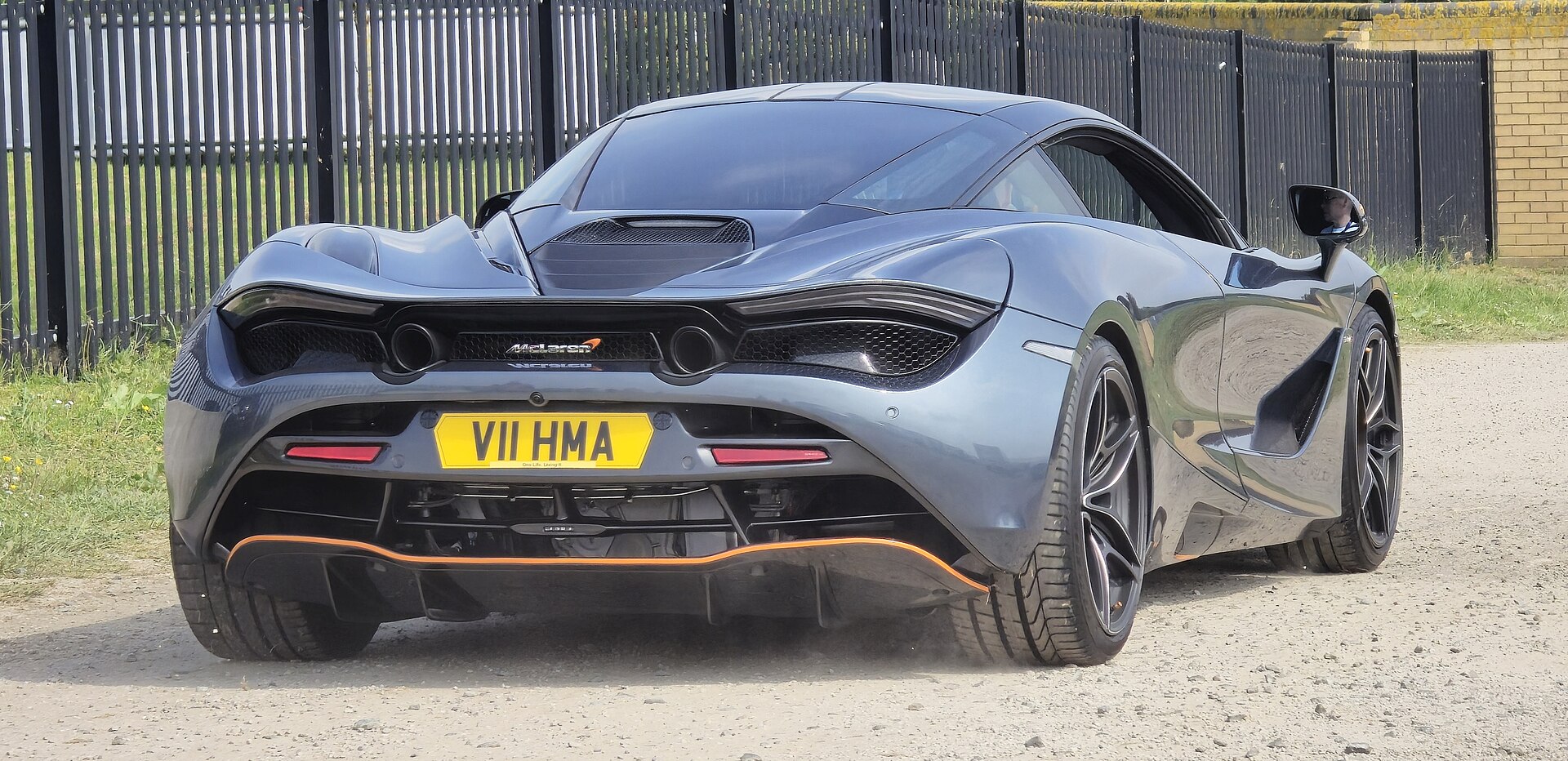
Common 2020-Specific Issues: What to Look for When Shopping
Remote Power Steering Pump Failure (Rare but Documented): A handful of 2020 models have experienced electric power steering pump failures between 25,000-40,000 miles. Replacement cost: $6,000-$9,000. This is not common enough to be a deal-breaker, but ask for service history confirming steering system health.
Transmission Oil Cooler Lines (Minor): Some 2020 models show minor seepage at transmission oil cooler connections. This typically emerges after 30,000 miles. The fix is a retorque or seal replacement ($800-$1,500). Not expensive, but worth flagging during inspection.
Front Brake Pad Wear (Expected): The carbon ceramic brakes, while excellent, wear faster than some competitors due to the 720S's aggressive performance tuning. Expect replacement around 40,000-50,000 miles. Plan $8,000-$12,000 for replacement when the time comes.
Windshield Sealing (Cosmetic but Annoying): A small percentage of 2020 models show minor water ingress around the windshield molding at high speeds or heavy rain. This is a $1,200-$2,000 dealer repair. Easily preventable through weatherstripping inspection before purchase.
Head-to-Head: 2020 McLaren 720S vs. Ferrari 488 vs. Lamborghini Huracan vs. Porsche 911 Turbo S
| Category | McLaren 720S | Ferrari 488 GTB | Lamborghini Huracan | 911 Turbo S |
|---|---|---|---|---|
| Engine | 4.0L TT V8 | 3.9L TT V8 | 5.2L NA V10 | 3.7L TT Flat-6 |
| Horsepower | 710 hp | 661 hp | 630 hp | 640 hp |
| 0-60 mph | 2.7s | 3.0s | 2.8s | 2.6s |
| Used Price (2020 model) | $155K–$195K | $185K–$225K | $145K–$180K | $140K–$165K |
| 5-Year Depreciation | ~47% | ~42% | ~28% | ~38% |
| Annual Maintenance | $2,500–$4,000 | $4,000–$7,500 | $3,000–$5,500 | $2,000–$3,500 |
| Reliability Rating | Very Good | Good | Excellent | Excellent |
| Sound Quality | Excellent (TT V8) | Extraordinary (TT V8) | Legendary (NA V10) | Good (TT Flat-6) |
| 0-60 Acceleration Rank | 1st (Fastest) | 3rd | 2nd | Tied 1st |
The data is stark. The 720S is the fastest accelerating of this quartet. It's the cheapest to maintain annually. Its depreciation is steep in percentage terms, but the actual dollars-per-year cost is lowest in the group. On paper, it destroys the competition.
The Huracan's natural V10 produces a superior sound, and its reliability is excellent. But you're paying nearly the same price for 80 fewer horsepower and a 0.1-second slower 0-60 time. The Huracan makes sense if sound and badge prestige matter more than performance.
The Ferrari 488 offers prestige and a legitimate claim to "best supercar ever made by Ferrari." But you'll pay $30,000-$40,000 more for equipment that ages less gracefully than the 720S's carbon fiber monocoque.
The 911 Turbo S is the all-rounder: all-wheel drive, daily-driver practicality, and remarkable reliability. But it's a different category of car. If you're choosing between these four, you're not choosing a daily driver. You're choosing a weekend weapon.
In that context, the 720S wins on performance-per-dollar by a significant margin.
The M840T Engine: One of the Greatest Twin-Turbo Engines Ever Produced
The M840T deserves specific attention because most buyers don't fully appreciate how remarkable it is. This is a 4.0-liter twin-turbocharged V8 that produces 710 horsepower at 7,500 rpm and 568 pound-feet of torque at 5,500 rpm.
To contextualize: the engine produces 177 horsepower per liter. The new Mercedes-AMG C63 produces 126 hp/liter. The Ferrari F8 produces 140 hp/liter. The Lamborghini Huracan's naturally aspirated V10 produces 121 hp/liter. The McLaren 720S engine is in a different efficiency tier entirely.
This efficiency comes from: (1) Advanced twin-scroll turbos that minimize lag, (2) intercooler design that keeps intake temperatures absurdly low, (3) fuel injectors operating at 500 PSI, and (4) a compression ratio of 9.0:1 despite 32 PSI boost pressure. These specifications require fuel-grade gasoline (91+ octane minimum), not a limitation but a necessity.
The engine is liquid-cooled with a cross-flow radiator configuration that keeps operating temperatures stable even under sustained track use. The oil system includes a dry-sump design pulled from race engines, preventing oil starvation during hard cornering. Everything about this engine is over-engineered.
In terms of reliability, the M840T has proven itself remarkably durable. McLaren's own track cars use variants of this engine, and they run for thousands of miles between overhauls. Independent McLaren specialists report that engine issues are exceptionally rare on 2018+ models, and virtually absent on 2020+ examples with proper servicing.
Annual Maintenance Costs: Realistic Expectations
Owning a 2020 McLaren 720S requires budget allocation in several categories:
| Expense Category | Annual Budget | Details & Notes |
|---|---|---|
| Insurance | $3,500–$6,500 | Varies by age, location, driving record. Exotic policies recommend. |
| Routine Maintenance | $2,500–$4,000 | Oil/filter service, fluid top-offs, inspections. Every 10K miles required. |
| Fuel (12K miles/year avg) | $3,600–$4,800 | 13–15 mpg combined; 91+ octane required at $3.00–$4.00/gallon |
| Tires (amortized) | $1,200–$1,800 | Michelin Pilot Sport 4S recommended. Replacement every 12K–18K miles. |
| Brakes (amortized) | $1,500–$2,000 | Carbon ceramic pads lasting 30K–40K miles. Replacement ~$8K–$12K. |
| Miscellaneous/Contingency | $1,000–$2,000 | Weatherstripping, touch-ups, door adjustments, battery service. |
| TOTAL ANNUAL | $13,300–$21,100 | Excludes major repairs or warranty work |
These costs are real and substantial. On a monthly basis, you're looking at $1,100–$1,750 in running costs before the car depreciated a single dollar or encountered an unexpected repair.
The good news: 2020 examples are still warranty-eligible for McLaren's extended warranty programs (now available through independent dealers). A certified pre-purchase inspection can identify potential warranty-eligible repairs, and you can negotiate the price downward to account for known work.
The better news: compared to the Lamborghini Huracan ($2,500–$4,500/year just for routine maintenance) and the Ferrari 488 ($4,000–$7,500/year), the McLaren is demonstrably cheaper to maintain. The 911 Turbo S is cheaper ($2,000–$3,500/year), but it's also less exotic.
Best Specifications to Buy: What Actually Adds Resale Value
Performance Pack vs. Standard: The Performance Pack ($15,000 option on new cars) includes upgraded suspension tuning, Alcantara steering wheel, and performance-rated tires. It's standard on 2021+ models. For 2020 examples, the Performance Pack is worth $5,000-$8,000 in resale value premium. Seek it out if your budget allows.
Luxury Pack: Leather interior, upgraded audio system (12-speaker Bowers & Wilkins), panoramic roof. Adds $5,000-$6,000 in resale value. Less critical than Performance Pack, but nice to have.
MSO (McLaren Special Operations) Options: Custom colors and custom leather dramatically impact buyer interest. Papaya Spark, Volcano Red, Lantana Purple, and Midnight Black command 5–12% premiums over standard colors. Custom two-tone interiors add value if they're tastefully executed.
Convertible vs. Coupe: The Spider (convertible) costs $50,000 more new but sells used for approximately $20,000-$25,000 more, not $50,000 more. This means the coupe is the better value proposition for pure financial return. However, if you'll actually drive with the top down frequently, the convertible's premium is justified.
Wheel Specifications: The standard 19-inch wheels are fine. The optional 20-inch lightweight alloys look more dramatic and contribute to a slight weight savings. No significant resale premium either way.
Carbon Fiber Package: Visible carbon on the exterior (rear wing, side pods, diffuser) is standard on 2020 models. Interior carbon trim can be added and increases premium appeal slightly.
Warranty Status: A 2020 with remaining warranty (McLaren offers 3-year or 5-year extended warranties) is worth an $8,000-$15,000 premium over an identical car without warranty. This is perhaps the single most valuable add-on to look for.
The Smart Buying Approach: How to Navigate This Market
Step 1: Define your actual budget. Purchase price plus insurance, registration, and two years of maintenance. If $160,000 + $30,000-$40,000 isn't comfortable, the 720S isn't for you. There's no recovery path if you overextend.
Step 2: Search multiple marketplaces. Check Bring a Trailer, Cars.com, Autotrader, and direct dealer listings. Bring a Trailer often yields better-condition examples because of transparency. Direct dealer sales are sometimes 10–15% cheaper than specialty exotic dealers.
Step 3: Prioritize condition and service history. A 2020 with 28,000 miles and 15 service records is worth more than one with 12,000 miles but no documentation. Driven cars with provenance are better than garage queens with mysteries.
Step 4: Get a mandatory pre-purchase inspection. Do not skip this. Spend $650-$900 on a certified McLaren specialist inspection. This single investment could save you $20,000+ in hidden problems. Look for: M840T engine diagnostics, hydraulic system pressure tests, door mechanism operation, infotainment software version.
Step 5: Negotiate based on data, not emotion. Completed Bring a Trailer auction results show what comparable cars actually sold for (not asking price). Use this data as your anchor. If a seller is asking $185,000 for a 2020 Coupe with 30,000 miles and average service history, and your recent comp data shows the same car selling for $170,000 on auction, offer $165,000-$172,000. Sellers often accept data-backed offers.
Step 6: Consider financing early. Exotic car lenders like JJ Best Banc and Carvana Finance offer specialized exotic car loans. Expect 60–84 month terms at 5.9–8.9% depending on the vehicle and credit profile. Locking in financing before you find your car means you can move quickly when the right car appears.
When the 2020 McLaren 720S Is NOT the Right Choice
You cannot comfortably afford $200K+. If this purchase requires liquidating emergency savings, taking on high-interest debt, or financial strain, walk away. There will be another 720S next year.
You need a daily driver. The 720S is a weekend weapon. Ground clearance is minimal. Speed bumps are enemies. Urban parking is stressful. If you need a car that works every day, get a 911 or an Urus.
You want a long-term investment. The 720S will depreciate another 10–15% over the next 3–4 years. If you're buying purely as an investment vehicle, parking it in climate-controlled storage, you're making a mistake. These cars develop problems when they sit. Buy it because you'll drive it.
You've never driven one. Always test drive before committing. The 720S has a unique driving position, aggressive steering feel, and firm suspension. Some buyers find it cramped or uncomfortable. Discover this before you own one, not after.
The specific car has transmission slipping or engine codes. Walk away. These aren't minor issues. These are deal-breakers that indicate either catastrophic cost to repair or deep structural problems.
Frequently Asked Questions
Is the 720S faster than a Ferrari 488?
Yes, objectively. The 720S accelerates to 60 mph in 2.7 seconds; the 488 takes 3.0 seconds. The 720S has 710 horsepower; the 488 has 661. However, the 488 feels more engaging to drive (naturally aspirated vs. turbocharged), and the badge prestige of a Ferrari cannot be quantified financially. For pure acceleration, the 720S wins. For overall experience and sound, it's closer.
How many miles can a 2020 McLaren 720S handle?
McLaren doesn't publish official durability figures, but independent specialists report examples with 50,000–60,000 miles that still run perfectly with proper maintenance. The M840T engine is overbuilt. The real limit is likely 120,000+ miles if service records are comprehensive. At 2020 model pricing, most examples have 10,000–40,000 miles and are nowhere near their service limit.
Is the 720S reliable enough for occasional road trips?
Yes, absolutely. The 720S is more reliable than the Lamborghini Huracan, similar to the Ferrari 488, and only slightly less reliable than the 911 Turbo S. On a 2,000-mile road trip, you have a very low probability of breakdown if the car has been maintained. The only caveat: plan for the 12–15 mpg fuel economy and the need for 91+ octane fuel everywhere you stop.
Will McLaren still service 720S models in 5+ years?
Yes, but independent specialists are increasingly becoming the better option. McLaren dealerships are concentrated in major metros. Independent McLaren specialists (often staffed by ex-McLaren factory technicians) exist in secondary markets and typically charge less. For major warranty work, McLaren dealers are required. For routine maintenance and diagnostics, specialists are usually superior.
Should I buy a 2020 coupe or spider?
The coupe is the better value proposition: $15,000–$25,000 cheaper for identical performance. But the Spider has a unique appeal if you'll actually drive with the roof down. The retractable roof adds weight and complexity (which impacts reliability slightly), but nothing catastrophic. If you're in a warm climate and enjoy convertible driving, the Spider premium is justifiable. Otherwise, the coupe is the smarter buy.
What's the resale outlook for 2020 models in 2028–2029?
Conservative estimate: 2020 models will likely trade for $135,000–$160,000 by 2028 (assuming 50,000–80,000 miles and good condition). That's another 10–15% depreciation from current prices. If you buy a 2020 today for $175,000 and sell it in 4 years for $150,000, you'll have paid $6,250/year in pure depreciation — not bad for a $315,000 car new.
The Final Verdict
The 2020 McLaren 720S is an exceptional buy in today's market. You're acquiring 710 horsepower, 2.7-second 0-60 performance, and carbon fiber monocoque engineering at prices that rival much slower, less capable competitors. The depreciation that should scare you is actually your advantage — it represents the price correction that makes this car accessible.
Is it perfect? No. McLaren's reputation for electrical gremlins exists for a reason. The maintenance costs are substantial. The fuel economy is terrible. The resale value will continue declining moderately.
But if you can afford it comfortably, if you'll actually drive it, if you get a proper pre-purchase inspection, and if you choose the right example with solid service history — the 2020 720S delivers supercar thrills at value-supercar prices. It's arguably the smartest used supercar purchase you can make in 2025.
Ready to find yours? Automonitor's concierge buying service handles market research, inspection coordination, and negotiation. We've helped dozens of buyers navigate the 720S purchase process, and we'll make sure you end up with the right car at the right price.
Ready to Own a Supercar at Supercar Prices?
Automonitor sources 2020 McLaren 720S examples from verified dealers and private collectors. We handle inspections, financing coordination, and negotiations so you get market-rate pricing with zero hassle.
Start Your Search →