
Are Used McLaren Prices Dropping?
Yes. They're dropping faster than almost any other exotic brand. The 570S has fallen 30-35% from peak prices. The 720S is down 25-30%. Even the newer Artura is seeing dealer incentives. Here's why the McLaren market is collapsing and what it means for buyers hunting a supercar bargain.
The Short Answer: Yes, Dramatically
Used McLaren prices are not just dropping. They're collapsing. McLaren now has the worst depreciation among the major exotic car brands—worse than Ferrari, Lamborghini, and even Porsche. The 570S, McLaren's entry-level supercar, has fallen from peak prices of $185,000+ down to $120,000-$140,000 in the used market. The 720S, the brand's most common model, has shed 25-30% from its peak. Even the ultra-modern Artura is starting to show pricing pressure with dealer incentives appearing on new units.
This isn't gradual depreciation. This is a market correction. And for smart buyers willing to understand what's driving these losses, it represents an unprecedented opportunity to own a genuine supercar at legitimately bargain prices.
But here's the critical part that most articles won't tell you: depreciation this severe doesn't happen for technical reasons alone. It happens because of fundamental brand perception issues, dealer network instability, reliability concerns—real and perceived—and a fundamental mismatch between McLaren's production volumes and the demand for McLaren vehicles.
Model-by-Model Depreciation: Where McLarens Are Losing Value
To understand what's happening in the McLaren market, you need to see the numbers. Here's the current depreciation landscape for every major McLaren model:
| Model | Original MSRP | Peak Used Price | Current 2026 Price | Total Depreciation |
|---|---|---|---|---|
| 570S (2015-2020) | $198,500 | $185,000 | $120,000–$140,000 | -30 to -35% |
| 570GT (2016-2019) | $245,000 | $210,000 | $155,000–$180,000 | -26 to -32% |
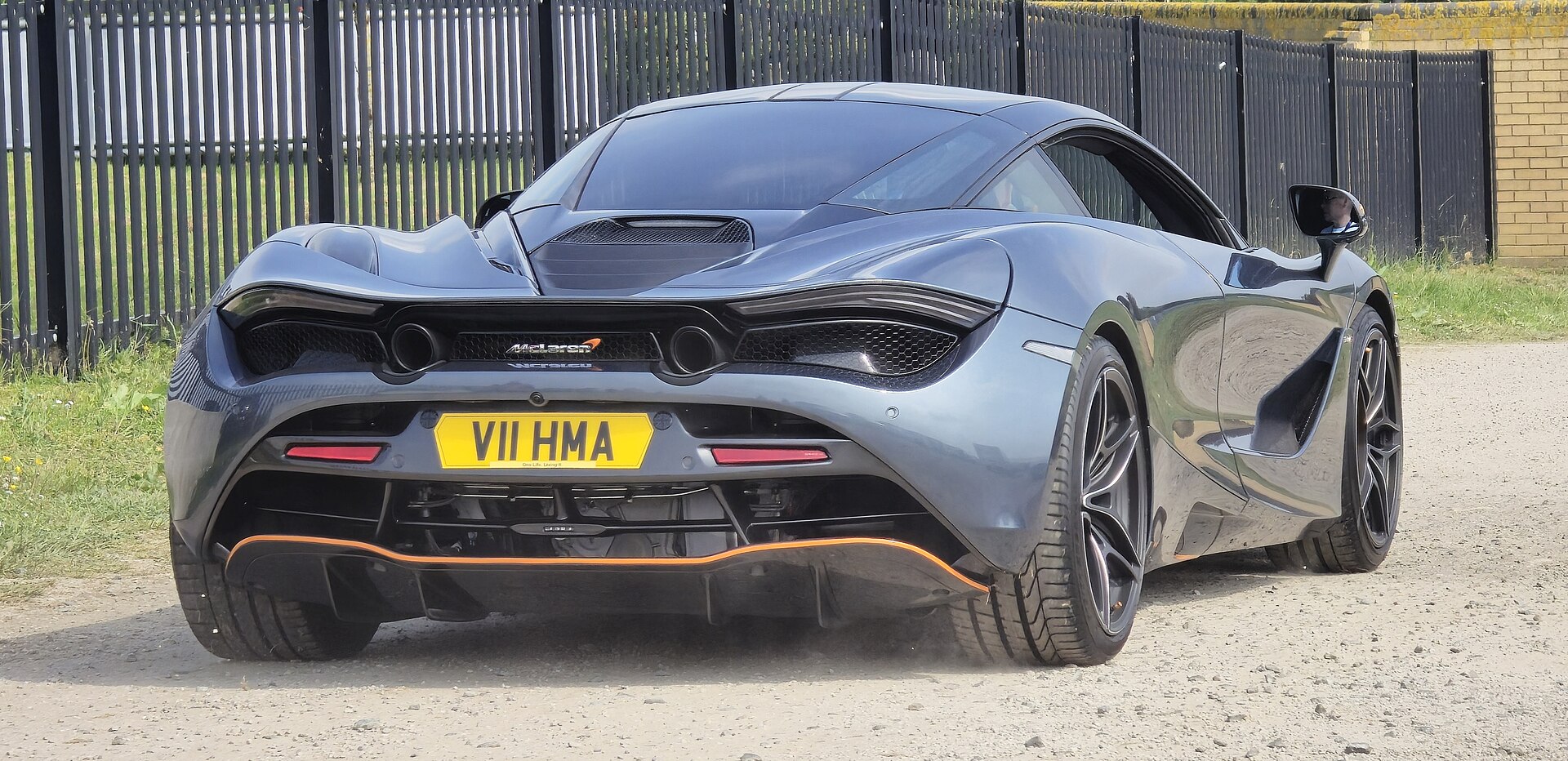
| 720S (2017-2024) | $315,000 | $240,000 | $180,000–$220,000 | -25 to -30% |
| 765LT (2019-2023) | $398,000 | $320,000 | $240,000–$280,000 | -20 to -25% |
| GT (2019-2024) | $298,000 | $260,000 | $220,000–$250,000 | -15 to -20% |
| Artura (2023-2025) | $225,000 | $220,000 | $210,000–$220,000 | Flat to -5% |
| 600LT (2018-2021) | $239,000 | $210,000 | $185,000–$210,000 | -12 to -18% |
The pattern is clear: older McLarens are being absolutely devastated. The 570S, which represented McLaren's push into the "accessible" supercar segment, is trading at prices barely above a used Porsche 911 Turbo. The 720S, despite being a fantastic driver's car, can't command the premium pricing it had even 12-18 months ago.
Compare this to Ferrari: a comparable Ferrari 488 GTB from the same era is holding $185,000-$225,000—solidly higher than the 720S. The Lamborghini Huracan is holding even stronger, retaining roughly 20-25% depreciation versus McLaren's 25-35%. Porsche 911 Turbo S models are holding 20-28%. Even Lamborghini prices, while trending downward, are outpacing McLaren.
This is not an accidental market correction. This reflects a fundamental loss of confidence in the McLaren brand as a whole.

Why McLarens Depreciate So Badly: The Real Reasons
1. Reliability Reputation (Real and Perceived)
McLaren's early cars—the 570S, 540C, and even the 720S—earned a troubling reputation for electrical gremlins, transmission issues, and generally fragile reliability. The 570S in particular had widespread reports of dual-clutch transmission problems, infotainment failures, and suspension component issues. Forums are full of owners discussing five-figure repair bills for problems that should never exist on a $200,000 car.
Are all McLarens unreliable? No. But the perception stuck. When luxury car buyers are considering a $200,000 purchase, brand perception matters enormously. If the first Google result when you search "McLaren reliability" is a Reddit thread about transmission failure at 8,000 miles, you're going to hesitate. That hesitation translates directly to lower used prices.
The Artura is supposed to fix this with a new twin-turbo hybrid V8 and new platforms. It hasn't yet. Early reliability data is mixed, and buyers are still skeptical.
2. Production Volume vs. Demand Imbalance
McLaren doesn't have Ferrari's scarcity advantage. Ferrari carefully controls production to ensure demand always exceeds supply. McLaren ramped production aggressively to build volume—and overshot demand. The market got flooded with 570S and 720S units, particularly in secondary markets where they're harder to sell.
Excess inventory in the used market kills pricing. When dealers have multiple 720S models on the lot and buyers are scarce, prices drop. This is basic supply and demand. McLaren created a supply problem and is now suffering the consequences.
3. Brand Perception Gap vs. Competitors
Ferrari sells heritage and exclusivity. Lamborghini sells drama and statement-making styling. Porsche sells engineering and track capability. McLaren sells... speed specs? McLaren has never created a compelling brand narrative beyond "we're very fast." That's not enough to command premium pricing.
When a buyer is choosing between a 720S and a 488, the 488 wins on prestige. When choosing between a 720S and a Huracan, the Huracan wins on visual impact. When choosing between a 720S and a 911, the Porsche wins on engineering credibility. McLaren doesn't have a story that makes buyers choose them over the alternatives.
This brand perception gap has widened over the past 3-4 years as buyers have had time to live with McLarens and discover their limitations.
4. Dealer Network Instability
McLaren has cycled through multiple dealer partners, and their dealer network is noticeably thinner than Ferrari's or Lamborghini's. This makes finding maintenance, getting warranty service, and selling the car harder than it should be. A Ferrari owner can drive to any of 50+ dealerships across North America. A McLaren owner might have to drive 3-4 hours to reach a servicing dealer.
Thinner dealer networks drive down resale values because ownership is more inconvenient. Buyers bid lower for cars that are harder to service and sell.
5. Expensive Maintenance Costs
Even on a problem-free McLaren, maintenance is expensive. Oil changes run $600-$800. Tire replacements cost $1,500-$2,500 for a full set. Brake service is $8,000-$12,000. Extended warranty plans, which you should absolutely get, run $7,000-$15,000 depending on mileage and coverage.
These aren't outliers. These are normal maintenance costs on McLarens. Potential buyers understand this, and it factors into their offer calculations. If you're looking at a $160,000 used 720S, you immediately subtract $10,000-$15,000 for necessary preventive maintenance and warranty coverage that should have been done already. That mental math kills pricing power.
The Buyer's Opportunity: This Is Where Real Bargains Live
The 720S at $180-$200K: Best Performance-Per-Dollar in Exotics
Here's the unfiltered truth: a used McLaren 720S in the $180,000-$200,000 range might be the single best performance-per-dollar value in the entire exotic car market in early 2026.
The 720S produces 710 horsepower from a 4.0-liter twin-turbo V8. It hits 60 mph in 2.7 seconds. It's faster than a Ferrari 488 in acceleration. It's faster than a Lamborghini Huracan EVO. It's comparable in pace to a $400,000+ Porsche 911 Turbo S. Yet it's trading at $50,000-$100,000 less than those alternatives.
Is it worth that discount? That depends on whether you can handle the reliability concerns and maintenance costs. If you can afford annual maintenance of $8,000-$12,000 and you're comfortable with the brand's track record, the 720S is legitimately cheap for what you're getting.
Read our detailed guide on exotic car pricing trends for comparisons across other brands.
The 570S Under $130K: The Supercar Bargain
The 570S is old now. It's from 2015-2020 era. It has 60,000+ miles on most examples. And it's falling out of favor in the market.
If you can find a well-maintained 570S under $130,000, you're looking at one of the cheapest ways to own a genuine supercar. It produces 562 horsepower, hits 60 mph in 3.2 seconds, and provides a legitimately thrilling driving experience. Yes, it has electrical gremlins. Yes, transmission issues are known. Yes, maintenance is expensive.
But $130,000 for a $200,000 supercar? That's a 35% haircut from launch MSRP. It's worth considering if you can handle the risk.
The 600LT: The Value Play Nobody's Looking At
The McLaren 600LT is different from the 570S and 720S. It's more raw, more driver-focused, and built in much lower production volumes (around 500 units worldwide). It's also holding value better than its siblings—typically trading $185,000-$210,000 versus the 720S's $180,000-$220,000.
If you can find a 600LT in this price range, it's worth serious consideration. Limited production means it's actually likely to appreciate if you keep it long-term. It's also a more focused driving experience than the more "civilized" 720S.

The Risks: Why You Can't Ignore McLaren's Weakness
Maintenance Costs Don't Decrease With Purchase Price
This is the trap that catches unsuspecting 570S buyers. You negotiate a great price on a $120,000 McLaren and feel like you got a steal. Then the transmission needs work. That's $10,000. The cooling system develops leaks. That's $5,000. The carbon fiber body panel gets damaged in a parking lot. That's $8,000-$15,000 depending on location.
Suddenly your "bargain" McLaren is costing you $20,000-$30,000 in the first year you own it. That erases your savings instantly.
Get a detailed pre-purchase inspection from an exotic car specialist. Factor in $10,000-$15,000 in immediate preventive maintenance costs. Budget $10,000-$15,000 annually for maintenance going forward. If those numbers are uncomfortable, don't buy the McLaren.
Continued Depreciation Risk
McLaren prices are falling. They might keep falling. If you buy a 720S today at $200,000, you should assume it could be worth $150,000-$160,000 in three years. That's another $10,000-$15,000 per year in depreciation.
Over three years of ownership, you could easily have $60,000-$80,000 in total ownership costs (purchase depreciation + maintenance). That's roughly $1,667-$2,222 per month in value loss alone. That's before insurance ($2,000-$4,000/year), fuel, and storage.
Warranty Expiration is Critical
Most used McLarens are out of factory warranty by the time they hit the used market. Extended warranties—if still available—are expensive and come with strict conditions. A McLaren with no warranty coverage is a financial risk because a major failure ($15,000-$30,000) would be 100% your responsibility.
This is not negotiable: do not buy a McLaren without extended warranty coverage. See our detailed guide on McLaren warranty options and factory warranty coverage.
How Specification and Color Impact Resale Value
Not all 720S models trade at the same price. Specification matters dramatically.
Color: Bright, distinctive colors (Napier Green, Volcano Orange, Midnight Blue) hold value better than neutral tones. A 720S in Napier Green will command $5,000-$15,000 more than an identical white 720S. This is because high-specification McLarens attract serious enthusiasts who want presence and distinctiveness.
Interior: Bespoke interior colors and materials command premiums. A 720S with premium leather and custom color stitching might sell for $10,000 more than a base interior example.
Mileage: This matters less than you'd think. A 720S with 25,000 miles and full service history might sell for more than one with 15,000 miles but incomplete service records. Buyers want proof the car was driven properly and maintained correctly, not that it sat in a garage.
Service History: A McLaren with complete dealer service records is worth $15,000-$25,000 more than one with spotty or independent service history. This is because warranty claims and future resale depend on documentation.
How Automonitor Helps Navigate the McLaren Market
Buying a depreciated McLaren is not for everyone, and it definitely shouldn't be done without expertise. Here's how Automonitor helps buyers navigate this complicated market:
- Market Data Access: We track every McLaren sale across multiple markets and provide real-time pricing data. You'll know what prices should be before you make an offer.
- Pre-Purchase Inspection Coordination: We connect you with exotic car specialists who know McLaren's specific failure points. They'll identify problems before you buy.
- Warranty and Service Planning: We'll help you understand warranty options, extended warranty costs, and maintenance budgets before you commit.
- Negotiation Support: We've handled hundreds of exotic car purchases. We know how much to offer, what to negotiate, and what concessions to request.
- Post-Purchase Logistics: Insurance, registration, delivery, and secure transport are all handled through our network.
Most buyers purchasing a McLaren at these prices shouldn't do it alone. The complexity and risk are too high. Let Automonitor handle the process.
Get Expert Guidance Before You Buy
McLaren pricing is volatile and market knowledge is critical. Automonitor specializes in exotic car purchases and ensures you pay the right price.
Start Your McLaren Search →Frequently Asked Questions About Used McLaren Prices
Q: Why is the McLaren 570S so cheap compared to the 720S?
The 570S is older (2015-2020 production) and had more reliability issues reported in the early years. It also has less power (562 hp vs 710 hp) and isn't considered as refined as the 720S. Dealers and buyers treat it as a generation behind, similar to how older supercars lose value faster than newer generations.
Q: Should I buy a used McLaren in 2026?
Only if: (1) you can afford $10,000-$15,000 annual maintenance comfortably, (2) you can get an extended warranty, (3) you get a comprehensive pre-purchase inspection, and (4) you're buying for driving enjoyment, not investment. McLarens are not appreciating assets right now.
Q: How does the McLaren 720S compare to the Ferrari 488 GTB at similar prices?
The 720S is faster in a straight line (2.7 sec to 60 mph vs 3.0 sec). The 488 has better brand prestige, more reliable reputation, and better resale value projections. The 720S is the performance bargain; the 488 is the prestige choice. Read our Ferrari pricing analysis for more detail.
Q: Will McLaren prices stabilize or keep dropping?
Pricing has already stabilized somewhat in early 2026 after falling hard in 2024-2025. We don't expect dramatic further drops, but prices are unlikely to appreciate significantly unless McLaren's reliability reputation improves dramatically. The 2026-2027 period will be critical—if the Artura and newer models prove reliable, confidence will return.
Q: What's the best McLaren to buy if I'm worried about depreciation?
The 600LT or limited-edition models like the Senna (if you can find one under $500K). Limited production means supply can't be overabundant, which protects value. Standard 720S and 570S models are the worst performers for value retention. See our guide on timing your exotic car purchase.
Q: Can I get financing for a used McLaren with this much depreciation?
Yes, but lenders will be more cautious. Exotic car lenders typically want 20-30% down payment and will factor depreciation into their loan terms. Interest rates will be higher (6-10% range) because of perceived risk. Check our exotic car market overview for financing options.
How McLaren Stacks Up: 570S vs. 720S vs. 765LT vs. Competitors
| Model | McLaren 720S | Ferrari 488 | Lamborghini Huracan | Porsche 911 Turbo |
|---|---|---|---|---|
| Horsepower | 710 hp | 661 hp | 630 hp | 640 hp |
| 0-60 mph | 2.7s | 3.0s | 2.8s | 2.6s |
| Current Used Price | $180K–$220K | $185K–$225K | $155K–$190K | $145K–$175K |
| 5-Year Depreciation | -30 to -35% | -22 to -28% | -20 to -25% | -20 to -28% |
| Reliability Reputation | Mixed to Poor | Good | Very Good | Excellent |
| Maintenance Cost/Year | $10K–$15K | $8K–$12K | $8K–$12K | $6K–$9K |
| Driving Experience | Exceptional | Excellent | Excellent | Excellent |
| Prestige Value | Moderate | Very High | Very High | Very High |
The verdict: McLaren offers the best straight-line performance and arguably the best driving experience, but at the cost of depreciation and reliability concerns. If you prioritize prestige, buy Ferrari. If you prioritize value and reliability, buy Porsche or Lamborghini. Buy McLaren only if driving dynamics are your primary concern and you can handle the ownership risks.
The Market Outlook: What's Next for McLaren Pricing?
The future of McLaren prices depends on two factors: the brand's ability to fix its reliability reputation and the broader exotic car market trajectory.
The positive case: The Artura represents a technological leap forward. If it proves reliable over the next 2-3 years, confidence will return. Buyers will trade up from 720S models to Artura models, which could support 720S prices. Limited production on special models like the planned Vision-era supercars could attract collectors.
The negative case: If Artura reliability issues persist, or if broader exotic car prices weaken, McLarens could fall further. An economic recession would hit McLarens particularly hard because they're perceived as depreciating assets.
For 2026, expect McLaren pricing to stabilize near current levels. Don't expect appreciation. Do expect volatility if brand perception shifts either direction.
For strategic guidance on whether to buy now or wait for new models, read our detailed analysis of timing in the exotic car market.
The Final Verdict: A Bargain With Consequences
Used McLaren prices are dropping, and they're dropping hard. The 570S is down 30-35%. The 720S is down 25-30%. Even the modern Artura is facing pricing pressure.
This represents a genuine buying opportunity for informed buyers willing to accept the risks. A McLaren 720S at $180,000-$200,000 is legitimately cheap for 710 horsepower and 2.7-second acceleration. The 570S under $130,000 is a supercar bargain.
But this is not a consequence-free deal. McLarens depreciate faster than competitors for real reasons: reliability concerns, expensive maintenance, brand perception gaps, and production volume mismatches. These won't disappear.
You can profit from this opportunity. You just can't ignore the risks. Get a professional pre-purchase inspection. Secure an extended warranty. Budget for maintenance. Negotiate from market data, not emotion. And if you want expert guidance through the process, Automonitor is here to help you navigate it.
See what new McLaren models are coming to understand the future of the brand. And for broader context on how McLaren fits into the wider exotic car market trends, read our comprehensive market analysis.
Ready to Find Your McLaren?
Automonitor connects you with verified sellers and handles all the complex logistics so you can buy with confidence.
Browse Available McLarens →