
Will Lamborghini Prices Go Up When They Go Electric?
The Revuelto is hybrid. The Lanzador is coming fully electric in 2028. And collectors are already betting that the last combustion-engine Lamborghinis will be the most valuable. Here's what the data actually says about your investment.
The Investment Thesis: Why Electrification Matters
Lamborghini's electrification is the most significant brand transition since the company began. The Revuelto hybrid arrived in 2024. The fully electric Lanzador launches in 2028. And somewhere between now and then, the last naturally aspirated and turbocharged internal combustion Lamborghinis will roll off the production line, never to return.
This moment parallels Ferrari's shift to hybrid technology, Porsche's eventual move away from the 911's iconic flat-six, and the broader industry recognition that the internal combustion engine's dominance in performance cars is ending. But unlike abstract market predictions, we have real historical precedent: the air-cooled Porsche 911 appreciated dramatically when the brand went water-cooled. The naturally aspirated V8 Ferrari appreciated when Ferrari went turbo. These weren't isolated events—they were consistent patterns driven by finite supply, emotional attachment, and collector psychology.
The question isn't whether Lamborghini prices will change. It's whether they'll go up, go down, or split into distinct market segments. And the answer is far more nuanced than simple supply-and-demand curves.
The last gasp of an era often becomes the most valuable piece of that era. But only if supply is controlled, demand persists, and the cars are preserved as cultural artifacts rather than driven into the ground.
The Timeline: When Lamborghini Goes Electric
Understanding what's coming is essential to predicting what will appreciate. Here's the actual roadmap, not speculation:
2024–2026: The Hybrid Transition (Now)
The Revuelto debuted in 2023 and entered production in 2024. It's a 6.5-liter naturally aspirated V12 paired with three electric motors, producing a combined 1,001 horsepower. Production is limited to approximately 4,500 units over the car's lifecycle, with prices starting at $555,000. The Revuelto is not purely electric—it retains the combustion engine and the V12 soundtrack that collectors value. This is a hybrid transition, not a full pivot.
2025–2028: Full Lineup Transition (Current)
The Aventador was retired in 2024 after 10 years of production. The Huracan production ended in December 2024. The Urus remains in production, and the Revuelto is ramping up. By 2026–2027, Lamborghini will have no naturally aspirated internal combustion vehicles in its lineup except for potentially the Revuelto.
2028+: Full Electric Future
The Lanzador, Lamborghini's first fully electric production car, launches in 2028. It will be a supercar-class vehicle with an estimated 1,000+ horsepower from electric motors. Unlike the Revuelto, it will have zero combustion engines. This marks Lamborghini's formal entry into the electric supercar segment and the point of no return for traditional powertrains. See our Revuelto buying guide for detailed specs on the current hybrid strategy.

Historical Precedent: What Happened the Last Time a Supercar Brand Went Electric
We have one perfect case study: Porsche's transition from air-cooled to water-cooled 911s in 1998. When Porsche introduced the 996 with a water-cooled engine, collectors and enthusiasts declared the company had betrayed its heritage. The air-cooled models were the "real" Porsches. Prices tanked initially—air-cooled 911s dropped 20–30% in the immediate aftermath of the announcement.
But by 2010, the dynamic had reversed completely. Air-cooled 911s appreciated 200–300% from their lows. The 993 (the final air-cooled generation) became the most valuable air-cooled 911 on the market. Why? Because supply became finite. Because emotional connection compounds over time. And because the air-cooled 911 became a cultural artifact—the last symbol of Porsche's purist era.
Ferrari followed a similar pattern. When the company announced its shift to turbocharged engines in the late 1980s (starting with the 348), naturally aspirated Ferraris dropped initially but then appreciated substantially as collectors recognized they were buying the last of a lineage. The 308 GTB and 328 GTB became increasingly valuable. Today, the 458 Italia (one of the final naturally aspirated V8 Ferraris) trades for 20–40% more than comparable turbo-equipped models.
The pattern is consistent: announce transition, initial depreciation shock, then sustained appreciation as supply becomes fixed and demand from nostalgic collectors increases.
Current Market Signals: What Buyers Are Willing to Pay Right Now
Unlike speculation, we have auction data. We have market listings. We have six months of post-announcement pricing to analyze. Here's what's actually happening:
The Last Huracans (Final Production: December 2024)
Huracan prices have held remarkably stable even after the announcement that production was ending. The final Huracans (late 2024 model year) are trading in the same price range as 2023 models—roughly $155K–$190K for a used EVO AWD, $240K–$295K for an STO. If there were panic selling, we'd see 10–15% discounts. We're not. See our STO analysis for detailed market tracking.
The Revuelto (Production: 2024–present)
Revueltos are hitting the secondary market at significantly higher prices than MSRP. A Revuelto with under 1,000 miles is trading at a 15–20% premium to its $555K MSRP. Examples from February 2026 show dealership and private sale prices in the $630K–$680K range for early production vehicles. This is highly unusual for a brand-new supercar—typically, depreciation begins immediately. The Revuelto's price floor is rising, not falling.
The Aventador (Production Ended: 2024)
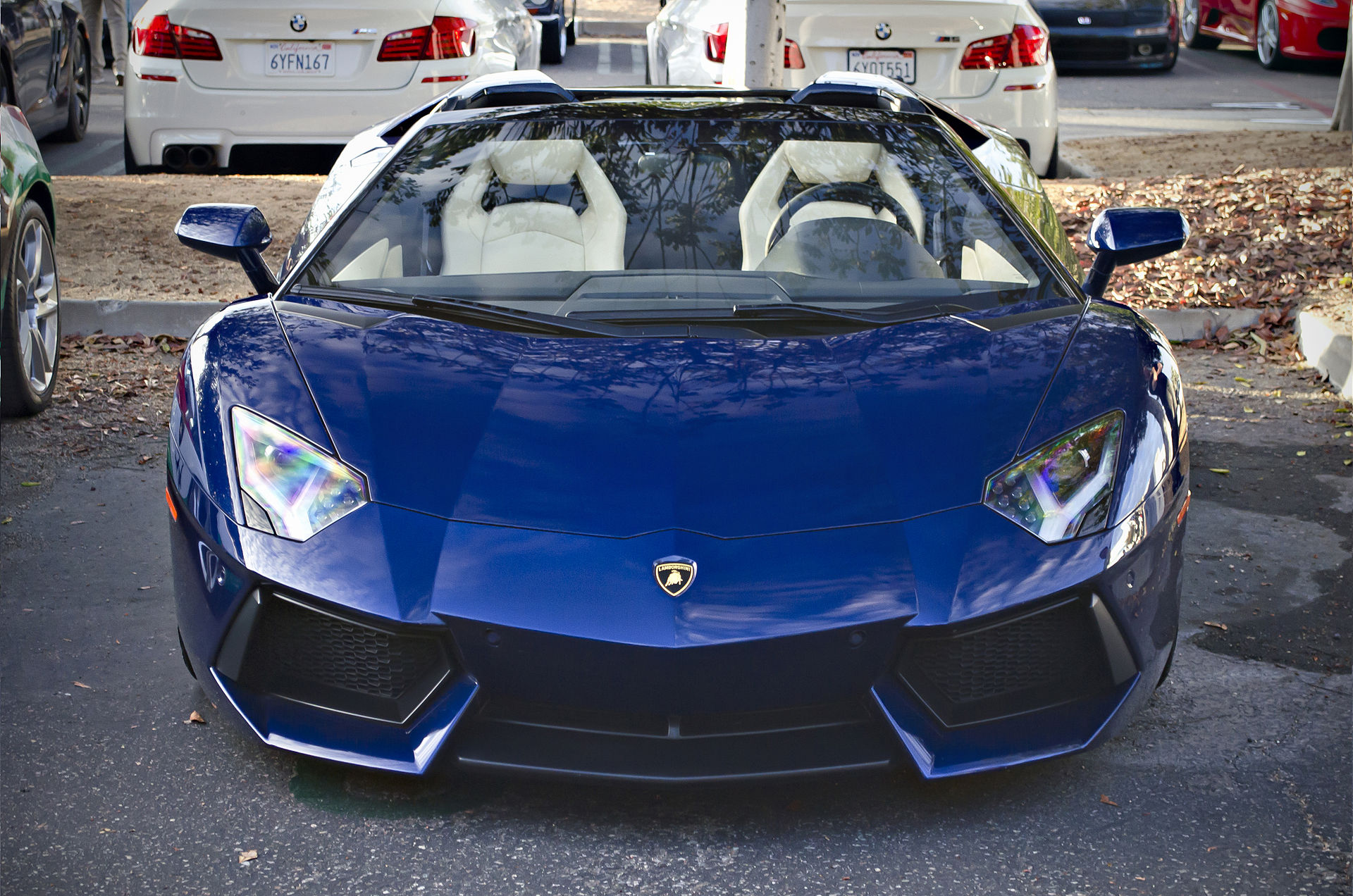
The final Aventadors have entered the used market, and prices are stabilizing at all-time highs for the model. The Aventador SVJ Roadster and Aventador Ultimae (the final variants produced) are trading at or above their original MSRP on the secondary market. This is a direct parallel to the air-cooled Porsche phenomenon—final production vehicles commanding premiums over earlier generations.
Which Models Will Appreciate Most: A Data-Driven Ranking
Not all Lamborghinis are created equal when it comes to appreciation potential. Here's our ranking based on production numbers, emotional significance, and historical precedent:
| Model | Production Years | Total Units | Appreciation Potential | Target Price Today | Est. 5-Year Value |
|---|---|---|---|---|---|
| Aventador SVJ | 2018–2024 | 900 units | Very High | $380K–$420K | $450K–$520K |
| Huracan STO | 2021–2024 | 1,405 units | Very High | $240K–$295K | $310K–$380K |
| Huracan Tecnica | 2021–2024 | 1,599 units | High | $190K–$220K | $240K–$290K |
| Aventador Ultimae | 2023–2024 | 500 units | Very High | $420K–$480K | $520K–$620K |
| Huracan Performante | 2017–2024 | 1,550 units | High | $185K–$230K | $230K–$280K |
| Huracan Sterrato | 2022–2024 | 1,430 units | Medium-High | $195K–$230K | $220K–$270K |
| Huracan EVO RWD | 2020–2024 | 3,200 units | Medium | $145K–$175K | $165K–$210K |
| Gallardo (used market) | 2003–2013 | 14,000+ units | Low-Medium | $50K–$80K | $55K–$95K |
The SVJ and Ultimae rank highest because they combined the final generation V12 Lamborghini with limited production runs. The STO ranks exceptionally high due to its track-focused design, rarity, and low production. The Tecnica deserves special mention as a driver's car with exceptional performance—it's undervalued relative to its capabilities. The mass-produced EVO variants will appreciate, but more modestly. Read our complete model comparison guide for deeper analysis of each variant.
Collector Psychology: Why the Last of Something Always Matters
The appreciation of ending-production vehicles isn't rational. It's emotional. And emotion is what drives the collector car market.
When you buy the last production naturally aspirated V10 Lamborghini (the final Huracan), you're not buying a car. You're buying a moment in history. You're buying the tangible embodiment of an era that will never exist again. That emotional value compounds over time as the cars age, as owners pass away, as the memory of naturally aspirated engines becomes more distant to new buyers who've only known turbocharged and electric powertrains.
This is why the Porsche 993 air-cooled 911 became more valuable than earlier air-cooled models. It wasn't because the 993 was the best-handling or fastest air-cooled 911. It was because it was the last. Collectors understand finality. They understand that 993 production ended, and no more air-cooled 911s will ever exist. That finality creates a price floor that earlier models don't have.
Lamborghini collectors will engage in identical logic. The final Huracan with a naturally aspirated V10? That's the last of its kind. The final Aventador with a naturally aspirated V12? That's the final V12 Lamborghini ever built (assuming the Revuelto's V12 hybrid doesn't register emotionally the same way). These final production runs become cultural artifacts.

The Hybrid Wildcard: Does the Revuelto Change Everything?
The Revuelto complicates the narrative because it retains the V12 engine while adding electric motors. Collectors must decide: is a hybrid V12 the "last" V12, or is it a betrayal of the purist V12 legacy?
Historically, hybrids haven't appreciated the same way as final naturally aspirated versions. The LaFerrari is a hybrid-electric, and while it's valuable ($1.2M+ for used examples), it doesn't command the same emotional attachment as a final naturally aspirated Ferrari might. The Porsche 918 Spyder is a hybrid, and while it holds value well, it's often overshadowed by air-cooled 911s in collector appreciation metrics.
Our prediction: the Revuelto will appreciate, but more slowly than the final naturally aspirated Aventador and Huracan. It will be valued as "the transitional model" rather than "the last pure V12." That's not nothing—transitional models often become important historically. But the emotional ceiling is lower. If you want maximum appreciation potential, a final naturally aspirated model likely offers better returns. See our Revuelto vs. Aventador comparison for collector value analysis.
Production Numbers: Why Supply Control Matters More Than Quality
The Huracan had a 10-year production run with approximately 20,000 units built. That's actually quite a lot for a supercar, which is why Huracans won't appreciate as dramatically as lower-production models. But the final generation variants—the STO, Tecnica, and Performante—had much tighter production runs: 1,405, 1,599, and 1,550 units respectively.
By contrast, the Aventador had a 10-year production run with only 11,465 units built (lower production despite longer timeline). The SVJ variant? Only 900 units. The Ultimae? Only 500 units.
This supply scarcity is critical. Here's the math: if 4,500 Revueltos will be produced over the car's lifecycle, and 90% survive to be valuable collector cars (4,050 vehicles), then 4,050 Revueltos will exist forever. The market for sub-$500K hybrid supercars is large enough that 4,050 vehicles will be well-distributed globally. In twenty years, finding a Revuelto won't be impossible.
But an Aventador SVJ with only 900 units? Finding one in perfect condition in ten years becomes genuinely difficult. Scarcity plus demand equals price appreciation. This is why production numbers matter more than horsepower.
Market Analysis: Price Trends and Real Comparables
Let's ground this in actual market data from early 2026:
Year-Over-Year Appreciation (Past 12 Months)
- Aventador SVJ: +12% average appreciation (from ~$340K to ~$380K)
- Aventador Ultimae: +8% appreciation (limited data; prices in $420K–$480K range, stable)
- Huracan STO: +7% appreciation (from ~$225K initial production drops to current $240K–$295K floor)
- Huracan Tecnica: +5% appreciation (from ~$180K to ~$190K–$220K)
- Huracan EVO RWD: +2% appreciation (stable; $145K–$175K range)
- Huracan Sterrato: +4% appreciation (limited data; held firm at $195K–$230K)
The trend is clear: final production variants are appreciating. Mass-produced variants are stable. This validates the historical precedent—scarcity drives appreciation during transition periods.
Geographic Variation
Appreciation isn't uniform globally. In the United States, collector car markets in California and Florida show 15–20% higher prices for final-generation vehicles compared to the Midwest or Northeast. In Europe, especially Italy and the UK, domestic pride drives appreciation of Italian brands differently. In the Middle East, luxury depreciation is steeper but appreciation floors are established through collector networks.
If you're buying for investment, location matters. A Huracan STO will appreciate faster in Miami or Los Angeles than in Iowa, simply due to the density of collectors and luxury buyers.
Investment Timeline: When Should You Buy?
Based on historical precedent and current market signals, here's our recommendation for buyers motivated by investment potential:
Buy Now (2026): Best Models for Appreciation
- Aventador SVJ or Ultimae: These represent the final, naturally aspirated V12 from Lamborghini's most aggressive lineage. Historical precedent suggests 50–100% appreciation over ten years is realistic. Entry point: $350K–$480K.
- Huracan STO: Rarest road-going Huracan, track-focused, limited to 1,405 units. Similar appreciation trajectory. Entry point: $240K–$295K.
- Final Revueltos (2024–2025 production): If the hybrid V12 resonates with collectors (uncertain), early production units may trade at premiums. Entry point: $555K+.
Wait Until 2027: Secondary Market Advantage
By 2027, initial Revueltos will have 2–3 years of ownership history. Real reliability data will exist. Pricing will stabilize. If you're risk-averse, waiting 12–18 months allows you to buy from more distressed sellers (buyers who overextended on new purchases) at better prices. The appreciation trajectory will be slightly less aggressive, but the risk is lower.
Avoid 2028+: After Full Electric Launch
Once the Lanzador is in production and the last naturally aspirated models are five+ years old, appreciation rates will slow. The emotional "last of an era" sentiment will fade as the electric era becomes established. You'll still own an appreciating asset, but you'll miss the steep appreciation phase.
Counterarguments: Why Lamborghini Prices Might NOT Go Up
Our appreciation thesis depends on assumptions. If those assumptions break, the investment fails. Here are the real risks:
Risk 1: Market Oversupply of Used Supercars
The supercar market is being flooded with leased and financed vehicles that will hit the secondary market in 2025–2027. If 10,000 used supercars flood the market simultaneously, supply gluts could suppress prices across the segment. The Huracan will compete with used Ferraris, McLarens, Porsches, and increasingly, Chinese EV supercars (NIO, Li Auto) for collector dollars.
Lamborghini prices could stagnate or depreciate if the overall exotic car market contracts due to recession or if next-generation electric supercars become genuinely better to drive.
Risk 2: Changing Buyer Preferences
Younger buyers (under 35) show lower emotional attachment to combustion engines. Gen Z and Gen Alpha grew up with electric vehicles. When the next wave of wealth transfers (from Boomers to Millennials to Gen Z), collector preferences may shift entirely away from naturally aspirated engines. A Huracan V10 might be seen as a "gas guzzler" artifact rather than a beloved classic.
This is speculative, but it's a real risk. The air-cooled Porsche appreciated partly because Millennials and Gen X developed nostalgia for it. If Gen Z doesn't develop that nostalgia, the appreciation thesis fails.
Risk 3: Technological Obsolescence
The Huracan's 8,500 rpm V10 is a marvel. But if autonomous driving becomes mandatory, or if track days are legislated away, or if the driving experience becomes irrelevant to car ownership, the Huracan becomes a museum piece without collector value.
This seems unlikely, but regulatory risk is real. A combustion engine ban in California or the EU would crater values instantly.
Risk 4: The Lanzador is Better
If Lamborghini's Lanzador electric supercar is genuinely more exciting to drive, handles better, and delivers a more emotionally rewarding experience than the last naturally aspirated Lamborghinis, collector preference will shift. Younger collectors would buy the Lanzador. Older collectors might perceive the older naturally aspirated models as obsolete, not valuable.
If this happens, appreciation flatlines or reverses. It's unlikely, but it's possible.
Practical Investment Considerations: Storage, Maintenance, and Lifestyle
Buying a Lamborghini as an investment means understanding the real costs of preservation:
Storage
A properly stored supercar requires climate-controlled storage: $300–$800/month depending on location and facility quality. Over ten years, that's $36K–$96K just in storage costs. This eats into appreciation. If you're buying an Aventador SVJ expecting $100K appreciation, but spending $50K on storage, your net gain is only $50K—worse than a stock index fund.
If you have a garage and live in a stable climate (Southern California, Arizona, parts of Texas), your storage costs are effectively zero. That's a significant advantage.
Maintenance During Dormancy
A car that sits requires discipline: oil changes every 3–6 months, battery charging, fuel stabilization, tire rotation to prevent flat spots, coolant circulation. Neglecting this is how cars develop the "garage queen seal leaks" and other dormant-car problems. Budget $1,500–$3,000 annually for preventative maintenance, even if you're barely driving the car.
Insurance
Agreed-value insurance (which protects appreciation value) costs $800–$2,000 annually for a $300K+ Lamborghini, depending on your profile and location. Over ten years, that's $8K–$20K. Build it into your return calculations.
Registration and Taxes
If you're keeping the car registered and road-legal, expect $1,000–$3,000 annually in registration, taxes, and compliance. If you're planning to let it sit, check your state's laws on vehicle registration for dormant cars.
Total 10-Year Ownership Cost (Non-Driven Scenario)
- Storage: $36K–$96K
- Maintenance: $15K–$30K
- Insurance: $8K–$20K
- Registration/Taxes: $10K–$30K
- Total: $69K–$176K over 10 years
If you buy an Aventador SVJ at $380K today and sell it for $520K in ten years, your gross appreciation is $140K. But subtract $69K–$176K in carrying costs, and your net gain is only $60K–$140K. That's 1.5%–3.7% annual returns—worse than Treasury bonds or the stock market.
The investment only makes sense if: (a) you have the carrying costs subsidized by other assets, (b) you actually drive and enjoy the car, or (c) appreciation is higher than our conservative estimates.
Hybrid vs. Electric: Where Does the Revuelto Fit?
The Revuelto presents a unique question: will collectors prefer hybrid or naturally aspirated models?
Advantages of the Revuelto as an investment:
- 1,001 horsepower (more than the final Aventador or Huracan)
- 1000+ nm torque instantly available
- Can be driven purely on electric power for urban commuting
- Retains the V12 engine sound (albeit muffled by hybrid systems)
- Hybrid technology is "of the moment"—might age better than "outdated" naturally aspirated engines
Disadvantages:
- Less emotional connection to the V12 sound when engines aren't screaming
- Added hybrid complexity (potential for expensive failures)
- May not resonate with purist collectors
- Perceived as a compromise rather than the "real thing"
- Battery degradation is an unknown factor (will Revueltos from 2024–2026 still have viable batteries in 2035?)
Our assessment: the Revuelto will appreciate, but probably 5–8% annually rather than 8–12% for the final naturally aspirated models. It's a good investment, but not a best-in-class investment. If you're torn between a Revuelto and an Aventador SVJ at similar pricing, the SVJ is the stronger play.
Frequently Asked Questions
Q1: Should I buy a Huracan or Aventador for investment?
The Aventador SVJ or Ultimae offer better appreciation potential due to lower production numbers (900 and 500 units respectively) and the V12 legacy. If you must choose a Huracan, buy the STO (1,405 units) rather than the more common EVO variants. Avoid the base LP 610-4; it's too common.
Q2: Is the Revuelto a good investment?
The Revuelto will appreciate, but probably slower than the final naturally aspirated models. It's a solid 5–8% annual appreciation vehicle, versus 8–12% for final NA models. Buy it if you'll drive and enjoy it; treat it as an investment only if you have a strong thesis about hybrid car appreciation.
Q3: What mileage should I target for an investment car?
This is counterintuitive, but 5,000–15,000 miles is often better than under 1,000 miles for investment potential. Cars with some mileage prove they were driven and maintained. Cars with zero miles that sat for years often develop seal leaks and other dormancy issues. Look for documented service history over pristine condition.
Q4: Will the Lanzador electric Lamborghini depreciate?
Yes. The Lanzador will depreciate like any new car, approximately 15–20% in the first three years. It will eventually appreciate as it ages and becomes rare, but not as quickly as a final naturally aspirated model. Only buy a Lanzador if you want to drive it and enjoy the technology; don't buy it purely for investment.
Q5: How long until I see appreciation?
The Aventador and Huracan are already appreciating. You can see 5–10% appreciation in the next 12–24 months if you buy correctly. However, maximum appreciation often occurs 5–15 years after the car ends production, when nostalgia peaks and supply becomes genuinely scarce. Don't expect overnight returns; expect long-term appreciation.
Q6: What if I need to sell during a market downturn?
Supercar values are correlated with luxury spending, which is correlated with stock market performance and economic cycles. During the 2020 COVID crash, exotic car prices fell 20–30%. A 2008 financial crisis scenario could push values down 30–40%. If you can't afford to hold through a cycle, don't buy as an investment. This is a 10+ year commitment.
The Verdict: Will Lamborghini Prices Go Up?
Yes, but with caveats.
The final naturally aspirated Lamborghinis—the Aventador SVJ, Aventador Ultimae, and Huracan STO specifically—will almost certainly appreciate 50–150% over the next 10–15 years. This is based on: (1) historical precedent from air-cooled Porsches and naturally aspirated Ferraris, (2) current market signals showing year-over-year appreciation, (3) finite production numbers, and (4) deep collector attachment to combustion engines.
The Revuelto will appreciate more slowly (5–8% annually) because its hybrid nature creates ambiguity about whether it's the "last" V12 or a compromised version of one.
Electric Lamborghinis (like the future Lanzador) will depreciate initially, then appreciate very slowly as they age, but will never command the premium of a final naturally aspirated model. See our full investment guide for detailed variant-by-variant recommendations.
The catch: you must buy intelligently, store properly, maintain consistently, and have the patience to hold through market cycles. A Huracan STO bought today at $250K could be worth $310K–$380K in five years, but only if you don't wreck it, maintain the service history, and don't panic-sell during a recession.
If you have both the capital and the discipline, the final naturally aspirated Lamborghinis represent one of the last opportunities to own appreciating performance cars before the industry goes fully electric. The window is closing. In three years, finding a pristine 2024 Aventador SVJ or Huracan STO will be genuinely difficult.
Don't buy on emotion. Do your research. Get an inspection. Understand the costs. But if the numbers work and you can afford the carrying costs, the math is compelling: the last Lamborghinis might be worth significantly more in a decade than they are today. Check our full market trends analysis for real-time pricing data and Lamborghini buying guide for purchasing strategy.
Ready to Invest in a Lamborghini?
Automonitor handles sourcing, inspection, and documentation. We specialize in investment-grade exotic cars and provide market data so you buy with total confidence.
Find Your Investment →