
What Should I Look for When Buying a Used Lamborghini? Buyer's Inspection Guide
Used Lamborghinis offer incredible value and genuine supercar performance, but they're complex machines that require educated buyers. This guide walks you through every critical inspection point, model-specific issues, and red flags that could save you thousands in unexpected repairs.
Used Lamborghinis: Value Meets Complexity
The used Lamborghini market has evolved dramatically. Ten years ago, buying one meant accepting potential ownership headaches. Today, with proper inspection protocols, a used Lamborghini can be a remarkably reliable supercar. The difference between a great purchase and a costly mistake comes down to knowing exactly what to look for.
This guide is built on thousands of pre-purchase inspections we've conducted through Automonitor. We'll walk you through the critical systems that fail on Lamborghinis, the specific issues by model year and variant, and the exact protocol for evaluating whether a car is worth buying or a time bomb waiting to explode.
Lamborghini-Specific Issues to Watch For
Before we dive into model-specific problems, understand that Lamborghinis share certain vulnerability points across generations. These are the systems that demand your attention during any inspection:
E-Gear and Dual-Clutch Transmission Problems
The e-gear automated manual transmission (especially in older models) and the newer dual-clutch transmissions are the single most common failure point across Lamborghini's lineup. With e-gear systems (found in Gallardo, Murciélago, and early Aventador models), actuator failures cost $8,000-$12,000 to repair. The electronic hydraulic system controlling gear selection deteriorates with age and mileage.
With dual-clutch systems (Huracan, newer Aventadors), the issue manifests as shuddering at low rpm, hesitation during shifts, or grinding noises. A full clutch pack replacement runs $10,000-$15,000. Always test-drive in the lowest gears at speeds under 2,000 rpm and feel for any jerking or vibration.
V10 and V12 Engine Specifics
The naturally aspirated V10 (found in Huracans) is genuinely one of the most reliable engines Lamborghini has ever built — but it has quirks. Excessive oil consumption (more than one quart per 1,000 miles) indicates worn piston rings or valve stem seals. A full top-end rebuild costs $15,000-$25,000.
The V12 (Murciélago, older Aventadors) is tougher in some ways but more expensive when it fails. Check for timing chain noise on cold starts — a rattling sound that goes away after 10 seconds indicates wear. Timing chain replacement requires partial engine disassembly and costs $18,000-$28,000. The V12's greater complexity also means more potential problems.
Carbon Fiber Body Panel Care
Many higher-end Lamborghinis feature carbon fiber body panels for weight reduction. The problem: they're expensive and difficult to repair. Even minor cracks or delamination (where the layers separate) can require full panel replacement at $4,000-$8,000 per panel. Inspect the hood, fenders, doors, and any visible carbon fiber components carefully for any visible damage, white stress marks, or color inconsistency.
Hydraulic Lift System Failures
Lamborghinis with electric nose-lift systems (especially Huracans, some Aventadors) develop slow seal leaks over time. You'll hear a faint hissing when the system cycles, and the nose won't stay elevated. Seal replacement costs $2,000-$4,000, but this often signals that other hydraulic seals are aging and may fail soon.
Suspension Wear Patterns
Lamborghinis sit low and require specific suspension geometry. Worn suspension bushings or ball joints create noticeable clunking when turning or accelerating. The adaptive suspensions (magnetic ride on newer Huracans) add electrical complexity that can fail. A full suspension refresh with bushings and mounts runs $6,000-$12,000.
Lamborghini Pre-Purchase Inspections
Our certified inspectors know every failure point on every Lamborghini model. Catch problems before they cost you five figures.
Schedule Your Inspection →
Model-by-Model Inspection Guide
Huracan (2015-Present): The Reliable Outlier
The Huracan benefits enormously from its Audi R8 platform and Volkswagen Group engineering. It's the most reliable modern Lamborghini, but specific issues exist:
- Dual-clutch transmission shuddering: Most common complaint. Test at low speeds, under 2,000 rpm in first and second gear. Any jerking or hesitation is a red flag.
- Magnetic ride suspension failure: The newer EVO models use electronically controlled dampers that can malfunction. Diagnostics reveal electrical codes; repairs run $4,000-$7,000 per corner.
- Starter motor issues: Intermittent no-start conditions, particularly in cars under 30,000 miles that sat for extended periods. Replacement is $2,500-$4,000.
- Clutch pack life: Original clutches typically last 40,000-50,000 miles. Check service records to verify clutch service intervals were followed.
- Infotainment glitches: The EVO's touchscreen can freeze or lag. Software updates usually resolve this; rarely requires hardware replacement.
Huracan inspection priority: transmission test drive, clutch condition verification, suspension electrical diagnostics.
Urus (2019-Present): SUV Complexity
The world's first Lamborghini SUV introduces fresh reliability problems due to its weight and complexity:
- Air suspension wear: The air suspension compressor and struts degrade faster than traditional springs under the 5,000+ lb weight. Compressor failure costs $6,000-$9,000. Check for suspension warning lights in the driver display.
- Turbo system degradation: The 4.0L twin-turbo V8 works harder than naturally aspirated engines. Turbo seals can fail, causing oil consumption and boost loss. Turbo replacement is $8,000-$12,000 per side (yes, there are two).
- Brake wear: The Urus is heavy, and brake wear is accelerated. Ceramic brake pad replacement costs $4,000-$6,000. Check pad depth; anything under 3mm indicates immediate servicing needed.
- Interior electronics: The Urus has more technology than any Lamborghini before it. Infotainment crashes, ambient lighting failures, and seat motor issues are documented.
Urus inspection priority: suspension diagnostics, turbo system visual inspection (check for oil around turbo housings), brake condition, full electronics scan.
Aventador (2011-2022): The Problem Child
The flagship V12 supercar has a mixed reliability record. Gorgeous, but potentially expensive:
- ISR single-clutch harshness: Earlier Aventadors use the harsh single-clutch e-gear system. Shifts are violent and unpredictable. Later models upgraded to dual-clutch, which is better but still not immune to issues.
- V12 oil consumption: More than one quart per 1,000 miles is excessive. Have a technician perform a leak-down test to determine if it's internal wear or external leaks.
- Scissor door hydraulics: These doors are spectacular but fragile. Slow opening/closing, incomplete opens, or hissing indicate hydraulic issues. Repair runs $3,500-$6,000 per door.
- Dry-sump system complications: The V12's lubrication system is complex. Pump failure or seal degradation creates internal engine damage. Diagnosis is expensive; repair is very expensive.
Aventador inspection priority: transmission characterization (does it shift harshly?), V12 oil condition and consumption history, scissor door operation, cooling system pressure test.
Gallardo (2004-2014): The Budget Bomb
If you're considering a Gallardo for budget reasons, understand what you're getting:
- E-gear actuator failures: The weak point that defines this generation. Symptoms include stuck gears, inconsistent shift speeds, or complete e-gear system shutdown. Full replacement is $8,000-$12,000. This is non-negotiable — if the car shows any e-gear symptoms, walk away.
- Clutch wear: Original clutches rarely last beyond 50,000 miles. Replacement is $4,000-$7,000. Check service records for clutch replacement history.
- Exhaust manifold cracks: The V10's exhaust manifold develops cracks under heat stress, particularly in cars that were tracked or driven hard. Cracks cause exhaust leaks and rough idle. Replacement is $3,000-$5,000.
- Fuel pump deterioration: The in-tank fuel pump can fail without warning, leaving you stranded. Replacement requires tank removal and costs $2,500-$4,000.
Gallardo inspection priority: complete e-gear diagnostics (this is make-or-break), clutch service history, exhaust manifold visual inspection, fuel pump operation.
Murciélago (2001-2010): Age-Related Everything
The flagship V12 that preceded the Aventador is now 15+ years old minimum. Age compounds every issue:
- Viscous coupling wear: The all-wheel drive system's center differential uses a viscous coupling that degrades. Symptoms include pulling to one side or loss of traction in corners. Replacement requires significant labor, $6,000-$10,000.
- E-gear (if equipped): Same actuator issues as the Gallardo, but often worse due to age. Full system replacement is $10,000-$15,000 on a Murciélago.
- Age-related seal leaks: After 15+ years, every seal is a potential leak point. Timing chain cover leaks (rare but catastrophic), gearbox seals, transmission output seals — all are vulnerable. Budget for a full fluid service including gearbox fluid drain-and-fill.
Murciélago inspection priority: AWD system differential behavior, e-gear responsiveness, complete fluid leak assessment, timing chain condition verification.
Service History Red Flags
The most predictive factor in Lamborghini ownership is how the previous owner maintained it. Specific red flags should trigger immediate withdrawal:
- Missed service intervals: Lamborghini recommends service every 12 months or 2,500 miles. Gaps longer than 18 months suggest neglect. Even if the car feels fine, internal wear has accelerated.
- Unauthorized service: Lamborghini-certified service is expensive, which tempts owners to use independent shops. The problem: non-specialists miss critical issues and may use incorrect parts or fluids.
- Rental or fleet history: Avoid cars with rental or fleet backgrounds. These vehicles experience abusive use patterns — hard shifting, redline runs, deferred maintenance. Even if mechanically sound, the internal stress is higher.
- No documented service history: If you can't verify maintenance through dealer records or service receipts, assume the worst. The car may have been serviced sporadically or not at all.
- Timing service gaps around $15,000-$25,000 repairs: If the service history suddenly stops for 6+ months around the time a major repair would be needed, the owner may be hiding work or avoiding documented problems.
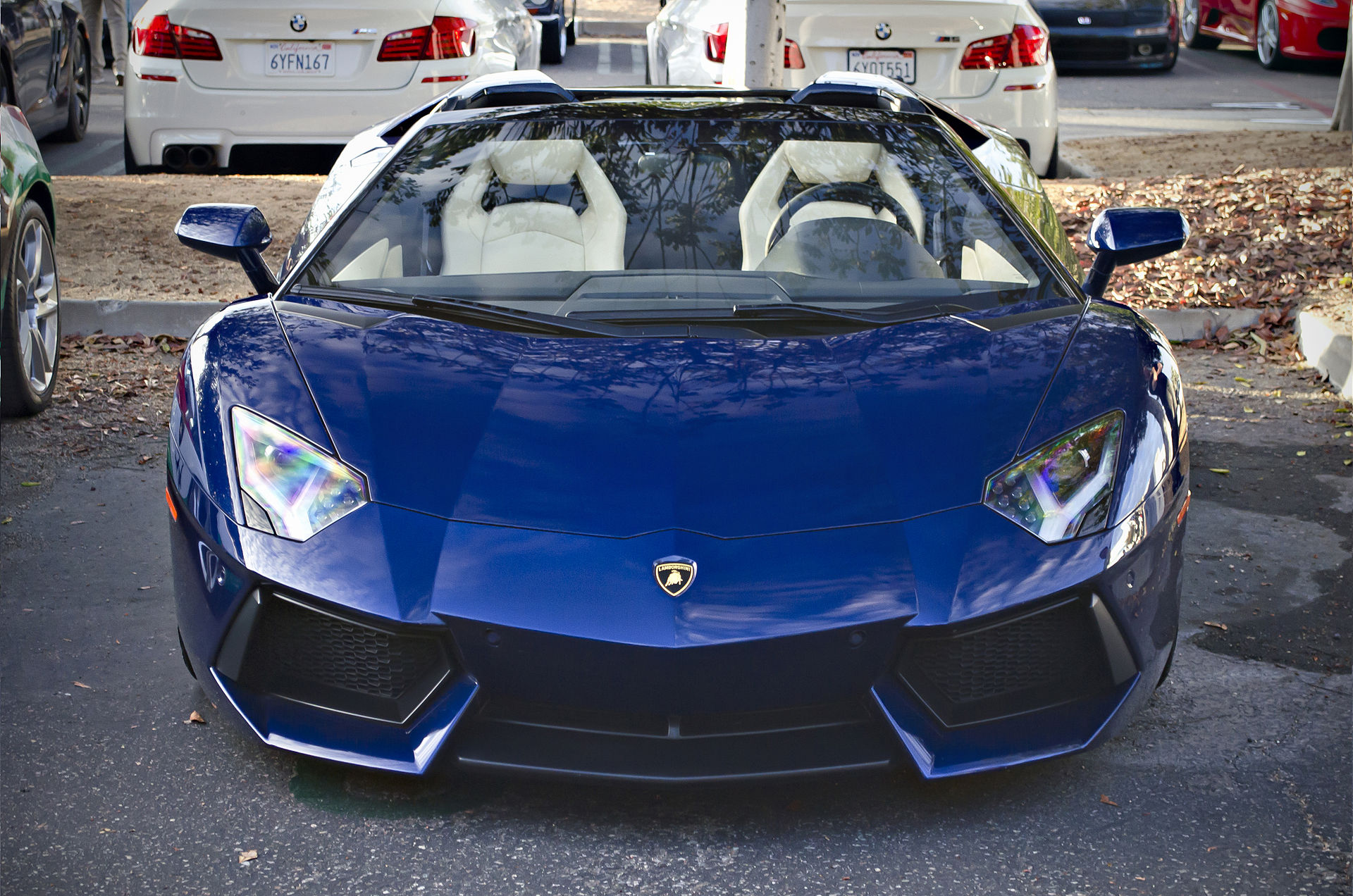
Exterior and Interior Specifics for Lamborghini
Matte Paint Care
Many Lamborghinis use matte or satin finishes, particularly in special colors. These are beautiful but fragile. Matte paint doesn't tolerate washing like traditional paint, and scratches don't polish out. A single deep scratch requires full panel repainting at $2,500-$4,000. Inspect carefully for rock chips, swirl marks, and any color inconsistency that suggests previous repainting.
Alcantara Headliner Wear
Lamborghini uses Alcantara (a microsuede material) for interior headliners and steering wheels. Alcantara deteriorates with UV exposure and age. Worn or faded Alcantara looks shabby and replacement is expensive — $3,000-$5,000 for a headliner replacement. Check that the material looks uniform in color and texture. Any visible wear or fading is a negotiation point.
Carbon Fiber Interior Trim Delamination
High-end Lamborghinis feature real carbon fiber trim pieces. Under heat stress or with moisture intrusion, the layers can separate. Delamination is cosmetic but expensive to fix — $1,500-$3,000 per trim piece. Look for white stress marks or slight separations in any carbon fiber elements.
Leather Condition
Lamborghini leather is premium but doesn't age gracefully. Check for cracking, fading, or uneven coloring that suggests sun damage or poor conditioning. Extensive leather restoration costs $8,000-$15,000.
Test Drive Protocol for Lamborghinis
The test drive reveals more than any static inspection. Here's the protocol:
Cold Start Behavior
Start the engine from cold. The V10 should fire immediately and settle to a smooth idle around 1,500 rpm. A slow crank or rough idle suggests battery issues or timing chain wear. Listen for any rattling or knocking during the first 30 seconds of operation.
AWD System Testing
If you're testing an all-wheel drive model (Huracan AWD, Performante, some Aventadors), engage the traction control fully and make moderate-speed turns. The car should feel planted and not slide. Any understeer or unpredictable weight transfer suggests differential or coupling issues.
Transmission Characterization
Slowly accelerate from a stop in the lowest gear under 2,000 rpm. Feel for hesitation, jerking, or any inconsistency. The shift should be smooth. Repeat this on flat ground and on a slight incline. Shuddering or delayed engagement is a problem.
Now take it to an empty lot and perform hard acceleration runs. Shift speeds should be consistent. If the transmission sometimes shifts quickly and sometimes slowly, it indicates control module issues or impending actuator failure.
Traction Control Modes
Modern Lamborghinis have multiple traction control settings. Test the car in full traction control, sport mode, and full off modes (if available). The transitions should be smooth, and the stability management should feel progressive, not abrupt.
Exhaust Note Consistency
A naturally aspirated V10 or V12 should maintain consistent sound across rpm ranges. Any sudden change in pitch or character suggests exhaust system issues (cracked manifold) or internal engine problems. The sound should be clean and mechanical, not rattling or pinging.
Brake Feel and Response
Brake feel should be immediate and modulated. Any sponginess, long pedal travel, or delayed response indicates brake fluid degradation or system issues. Carbon ceramic brakes (common on high-end Lamborghinis) should feel incredibly responsive, almost too eager.

Critical Inspection Checklist by Model
| Model | Primary Concern | Secondary Concern | Estimated Repair if Found |
|---|---|---|---|
| Huracan | DCT Transmission Shudder | Magnetic Ride Suspension | $10K-$15K / $4K-$7K |
| Urus | Air Suspension Compressor | Turbo System Oil Consumption | $6K-$9K / $8K-$12K |
| Aventador | Scissor Door Hydraulics | V12 Oil Consumption | $3.5K-$6K / $15K-$25K |
| Gallardo | E-Gear Actuator Failure | Clutch Wear | $8K-$12K / $4K-$7K |
| Murciélago | E-Gear or Viscous Coupling | Timing Chain Cover Seals | $10K-$15K / $15K-$25K |
Automonitor's Lamborghini-Certified Inspection Process
Our PPI protocol for Lamborghinis includes:
- Full diagnostic scan: We pull codes from every control module, not just engine management. Transmission, suspension, and body electronics all get scanned.
- Transmission evaluation: A test drive focused specifically on transmission behavior, including controlled low-speed testing and hard acceleration runs.
- Suspension geometry check: We use alignment software to detect worn bushings and ball joints invisible to the naked eye.
- Fluid analysis: We sample engine oil, transmission fluid, and coolant to test for wear particles and contamination.
- Carbon fiber inspection: Any exposed carbon fiber gets magnified inspection for delamination or stress marks.
- Seal integrity assessment: We pressurize systems to detect leaks before they become catastrophic.
- Service record verification: We contact dealers to authenticate service history and identify any hidden work.
Schedule a Lamborghini-certified inspection before you commit to any purchase.
Negotiation Points After Inspection
Once you've completed your inspection, specific findings become negotiation leverage:
- Transmission shuddering: Reduce offer by $10,000-$15,000 (the full repair cost). Don't negotiate — walk if the seller won't accept this.
- Missed service intervals: Reduce by $3,000-$5,000 as buffer for hidden problems that may surface soon.
- Brake wear below 3mm: Reduce by $4,000-$6,000 (full brake service cost).
- Oil consumption above 1 quart per 1,000 miles: Reduce by $8,000-$15,000 (potential top-end rebuild).
- Matte paint damage: Reduce by full panel repainting cost, $2,500-$4,000 per panel affected.
Red Flags: When to Walk Away
Certain findings should trigger immediate withdrawal:
- E-gear system dysfunction on Gallardo or Murciélago
- Timing chain rattle on V12 models
- Transmission codes or multiple gear-related fault codes
- Service gaps longer than 24 months
- Evidence of major accidents (uneven panel gaps, paint thickness variation)
- Carbon fiber delamination
- Missing or unverified service records
The Smart Buying Process
Here's how to structure your purchase:
Step 1: Find candidates. Use Lamborghini buying guides to identify which model and variant fits your budget and needs. Search platforms like Bring a Trailer, Cars and Bids, and authorized dealers.
Step 2: Request service history before scheduling inspection. Ask for complete dealer records or service receipts. A seller unwilling to provide this is a red flag.
Step 3: Get pre-purchase inspection. This is non-negotiable and should be your first physical action on the car.
Step 4: Negotiate from data. Use inspection results to negotiate price. Know comparable sales prices before you make an offer.
Step 5: Plan exit strategy. Even during purchase, think about how you'll sell. Lamborghini selling guides help you understand what will matter to the next buyer.
Final Inspection Wisdom
Buying a used Lamborghini is attainable if you know what to look for. The difference between a ten-year ownership experience that's rewarding and one that's financially devastating is often a $500-$1,000 pre-purchase inspection that catches a $15,000 problem before it becomes a $30,000 problem.
Use this guide. Get a proper inspection. Understand the specific model's weak points. And most importantly, be willing to walk away if something doesn't feel right. There will always be another Lamborghini.
Ready to Buy Your Used Lamborghini?
Let Automonitor handle the inspection, negotiation, and logistics. We'll make sure you end up with the right car at the right price.
Start Your Search →