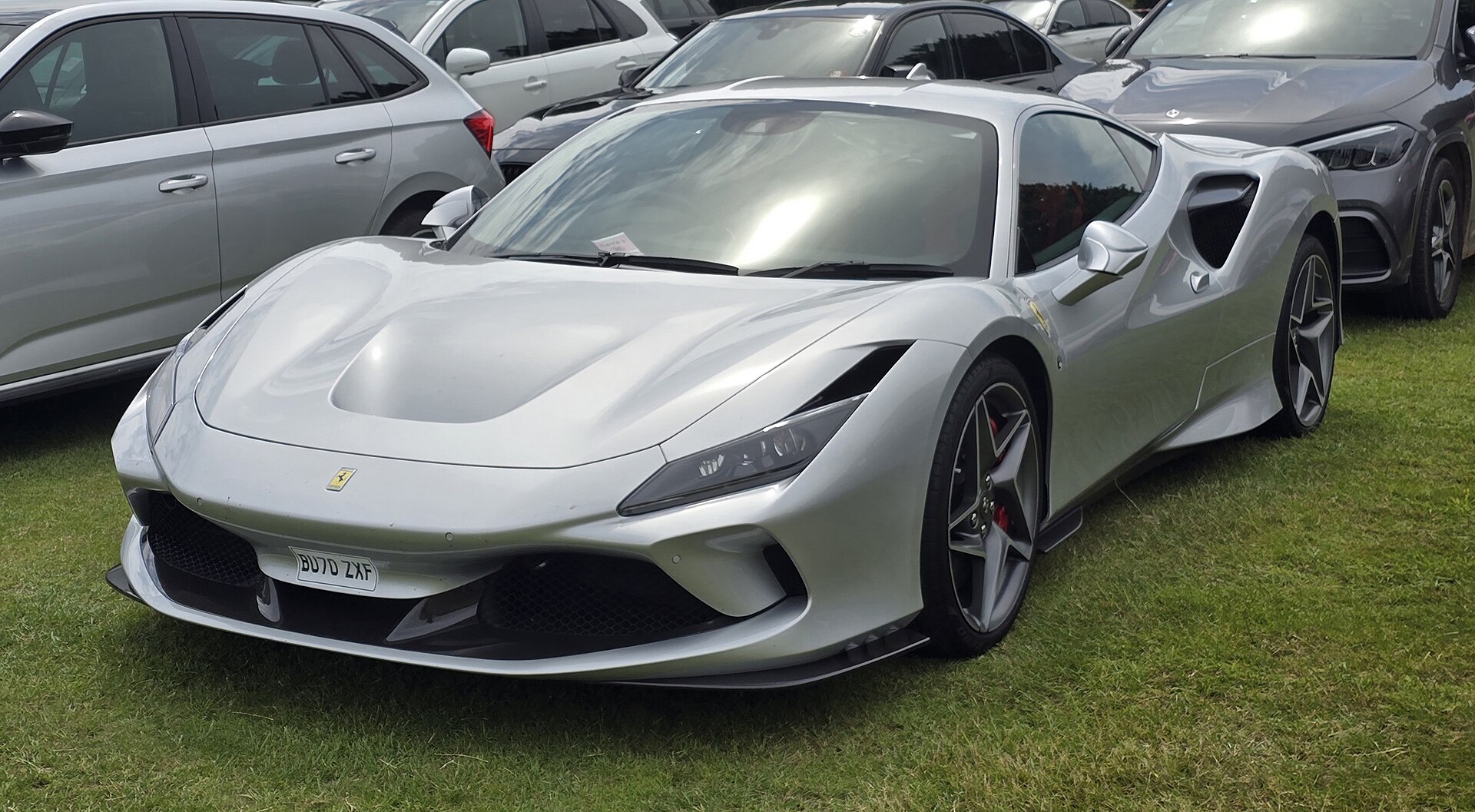
What is the Best Year to Buy a Ferrari F8 Tributo?
The Ferrari F8 Tributo had one of the shortest production runs in Ferrari's modern lineup — just three years, 2020 to 2022. Yet within that compressed timeframe, there are meaningful year-to-year differences that impact price, availability, and long-term value. This guide reveals which year offers the best opportunity for your investment.
The Quick Answer: It Depends on Your Priorities
If you want the best value, 2021 is your year. If you're buying for long-term appreciation, 2022 Spider models hold the strongest upside. If you want the purest launch-year collector's piece, 2020 makes sense despite potential teething issues. But here's what matters more than the year: the specification, service history, and mileage of the individual car you're buying.
The F8 Tributo differs fundamentally from most production cars. With only approximately 4,600 units built across three years, any F8 Tributo is relatively rare. More importantly, Ferrari made virtually no mechanical changes between 2020 and 2022. The real differentiators — what will impact resale value, driving feel, and ownership satisfaction — are color, optional packages, and maintenance records rather than which year badge sits on the rear fender.
That said, understanding the production timeline, the evolving market, and which specifications command premiums will help you make a smarter purchase decision. This guide walks you through every consideration.
Why the F8 Tributo Matters: A Short Window for Collectors
The Ferrari F8 Tributo is the final evolution of the 488 platform before Ferrari moves to hybrid powertrains. That statement alone has implications for value and relevance. In 2023, Ferrari announced the 296 GTB — the first mid-engine Ferrari with a hybrid powertrain. The naturally aspirated V12 and the supercharged V8 are ending their era. Every F8 Tributo, regardless of year, represents the last generation of a particular Ferrari philosophy.
The F8 Tributo's 710-horsepower twin-turbo V8, derived from the 488, is one of the most refined engines ever fitted to a production car. It revs to 8,000 rpm and hits 60 mph in 2.9 seconds. The Assetto Fiorano package — limited to only 275 units worldwide — can lap a track faster than competitors costing twice as much. For drivers and collectors, the F8 Tributo sits at the intersection of raw performance, mechanical sophistication, and historical significance.
The short production run compounds this significance. When Ferrari ends a generation, values typically stabilize and begin climbing, particularly for low-mileage examples and special configurations. The F8 Tributo's three-year window means fewer variants and a tighter supply curve than longer-production cars like the 488 GTB, which ran for seven years. This creates both opportunity and risk depending on which year you choose.
You can read our full guide on whether the F8 Tributo is worth buying to understand the complete ownership picture beyond just the year-to-year analysis.

2020: The Launch Year — First-Generation Builds
Production Context and Availability
The 2020 F8 Tributo represents the first production year, and launches are historically significant to collectors. The 2020 model introduced the new aerodynamic package, the S-Duct technology borrowed from the 488 Pista, and refined styling that modernized the 488 platform. These are the original interpretation of the Tributo concept before any mid-production refinements.
Because 2020 was a launch year during the COVID-19 pandemic, production numbers were lower than subsequent years. Deliveries began in late 2019 and ramped through 2020. This makes early 2020 models particularly scarce and potentially valuable to collectors focused on first-generation variants.
Mechanical Specifications and Performance
All 2020 F8 Tributos feature the same 710-horsepower, twin-turbocharged 3.9-liter V8 engine that remained unchanged through 2022. Acceleration is identical: 0–60 mph in 2.9 seconds, 0–124 mph in 7.8 seconds, top speed of 211 mph. The transmission is the seamless 7-speed dual-clutch transmission optimized for both track and street use.
The 2020 model's aerodynamics — including the S-Duct that directs airflow around the B-pillar and over the rear quarter panel — were Ferrari's latest understanding of balance between downforce and drag. Compared to the 488 GTB, the F8 Tributo offered 10% more aerodynamic efficiency without added weight. All 2020 models benefit from this refinement unchanged through the final 2022 production.
Known Issues and Considerations
The first model year of any complex machine carries inherent risk. Early 2020 F8 Tributos have been reported to develop minor teething issues that Ferrari refined out by mid-production. These are not showstoppers, but potential items to be aware of:
- Infotainment System Glitches: Early infotainment units occasionally require software updates. Not expensive, but annoying if the car lacks the latest firmware. Always verify the system is running the most recent version.
- Door Seal Conditioning: Some early cars required door seal re-conditioning as the rubber acclimated to use. This is covered under Ferrari's service program, not a major concern.
- Transmission Shift Calibration: A small handful of 2020 models benefited from transmission software updates to refine shift response in low-speed driving. Most cars never experience this issue, but it's worth asking the dealer if the car has had this service.
- Parking Sensor Sensitivity: Early models' proximity sensors occasionally required recalibration. Again, a minor inconvenience, not a structural issue.
None of these issues are deal-breakers, and none are prevalent. But first-year production means it's even more critical to request complete service records and get a professional pre-purchase inspection from an expert who knows the F8 Tributo platform intimately.
Market Pricing for 2020 Models
In the used market as of early 2026, 2020 F8 Tributos are priced at the low end of the F8 spectrum:
- 2020 F8 Tributo Coupe: $245,000–$280,000 depending on mileage and spec
- 2020 F8 Spider (limited production): $270,000–$310,000
The pricing discount relative to later years is modest, typically 5–10% below 2021 models. That discount reflects the combination of older age (6 years old in 2026) and the slightly elevated risk of being a first-production-year car. However, if the specific car you're evaluating has full Ferrari service history and clean pre-purchase inspection results, the risk premium is minimal.
Value Trajectory for 2020 Models
Early launch-year models tend to appreciate after initial production ends. Once the generation closes, buyers focused on "first of its kind" factors become active. A well-maintained 2020 with low mileage and desirable specification could reasonably see appreciation of 10–15% over the next 3–5 years as the F8 Tributo becomes more historically significant post-production.
2021: The Sweet Spot — Peak Production Value
Production Volume and Market Saturation
2021 was the peak production year for the F8 Tributo. Ferrari built the majority of the model-year run during this calendar year, making 2021 models both the most common and, paradoxically, the best value. Higher production volume means more cars are in the used market, which creates competition among sellers and favors buyers.
By 2021, any initial production issues from the 2020 launch had been identified and corrected. Ferrari had also refined manufacturing processes and quality control protocols based on first-year learnings. A 2021 F8 Tributo represents the mature version of the platform with no compromises.
Mechanical Consistency and Improvements
The 2021 F8 Tributo is mechanically identical to the 2020 — same 710 hp, same performance figures, same transmission. However, due to production maturity, 2021 models benefit from refined assembly standards and accumulated service bulletins. Any common-issue fixes from 2020 were incorporated into 2021 production lines.
From a reliability and durability perspective, a 2021 F8 Tributo with proper maintenance is among the finest examples you can buy. The engineering is proven, the manufacturing process is optimized, and the support infrastructure (service, parts availability, technical bulletins) is well-established.
Market Availability
Because 2021 was the peak production year, the used market has more inventory of 2021 models than any other year. This is both a pro and a con. The pro: more selection, better pricing negotiations, easier comparison shopping. The con: less scarcity value and less potential for appreciation.
Pricing for 2021 Models
2021 F8 Tributos command the best value proposition in the used market:
- 2021 F8 Tributo Coupe: $250,000–$290,000
- 2021 F8 Spider: $275,000–$315,000
The pricing is approximately 5% lower than 2022 models but slightly higher than many 2020 examples. This positioning reflects the sweet spot of the market: the car has aged one year less than 2020 but is not the rarer final-year model that commands 2022 pricing.
Best Value Recommendation
If your primary goal is buying the best car for the money, 2021 is your target. A well-optioned 2021 F8 Tributo Coupe with under 8,000 miles and documented service history represents outstanding value at $265,000–$280,000. For that price, you're getting a mature, refined car with no first-year risk and full remaining warranty transfer eligibility.
The tradeoff is that 2021 models are less likely to appreciate significantly due to their abundance in the used market. If you're keeping the car for 3–5 years and plan to drive it, that's fine. If you're buying purely for investment upside, look at 2022 instead.

2022: The Final Year — Collector's Potential
Production End Context
2022 represents the final year of the F8 Tributo before Ferrari transitioned to the 296 GTB hybrid platform. This is historically significant. The last year of any nameplate tends to attract collectors and enthusiasts specifically because it marks the end of an era.
Production of 2022 models occurred throughout 2022 and into early 2023 (with delivery throughout 2023). This means newer 2022 models are often among the lowest-mileage F8s available, with many examples under 3,000–5,000 miles. Dealers still have 2022 inventory with minimal miles even in 2026.
The Spider Question: 2022 as the Spider Peak
The F8 Spider (convertible) was introduced in late 2020 but ramped production in 2021 and became most available in 2022. If you're specifically interested in an F8 Spider — which we strongly recommend, as it's the more engaging driving experience and rarer than the coupe — 2022 offers the best selection and often the most competitive pricing on Spiders specifically.
However, Spider models across all three years command a 15–20% premium over equivalent Coupes due to their rarity and appeal. A 2022 F8 Spider will cost more than a 2022 Coupe, but there are more 2022 Spiders available than any other year.
Specification and Rarity
By 2022, Ferrari had settled on the complete palette of available colors, packages, and customization options. Buyers of 2022 models had the full maturity of the options list and made informed choices about what they wanted. This often means 2022 cars are exceptionally well-spec'd with premium colors, carbon fiber options, and special packages.
The Assetto Fiorano package — an extreme track-focused variant with lighter weight, adjusted suspension, and Michelin Pilot Sport Cup tires — was offered across all three years but saw most interest from serious buyers in final-year production. If you want an AF-package car, 2022 offers the best selection.
Pricing for 2022 Models
2022 F8 Tributos are priced at the peak of the used market:
- 2022 F8 Tributo Coupe: $260,000–$310,000
- 2022 F8 Spider: $285,000–$340,000
- 2022 Assetto Fiorano Package: $320,000–$380,000 (very limited availability)
The 2022 premium over 2021 is typically 5–10%, reflecting the final-year designation, lower mileage, and rarity. For buyers who can afford it, this premium is justified by the collecting and appreciation potential of final-production-year models.
Investment Potential
Final-year variants of beloved cars tend to appreciate over time. As the F8 Tributo becomes a historical footnote and production remains closed, demand for final-year examples will likely increase. A low-mileage 2022 F8 Spider in a desirable color like Blu Corsa or Rosso Corsa could appreciate 15–25% over the next 5 years, though this is speculative.
This is not guaranteed, but the historical pattern favors end-of-production models. If you're buying partially for investment upside and can afford the 2022 premium, it's a reasonable decision.
The F8 Spider Analysis: Production by Year and Rarity
Spider vs. Coupe Availability
The F8 Spider (convertible) accounts for approximately 20–25% of total F8 Tributo production. With roughly 4,600 total F8s built, that means approximately 900–1,150 Spiders were produced. For comparison, nearly 3,500–3,700 Coupes exist, making the Spider significantly rarer and more desirable.
By year:
- 2020 Spiders: Approximately 150–200 produced (scarcest year)
- 2021 Spiders: Approximately 350–400 produced (peak Spider year)
- 2022 Spiders: Approximately 450–550 produced (largest final-year cohort)
Spider Pricing Premium
F8 Spiders command a consistent 15–20% premium over equivalent-spec Coupes across all years. A 2021 Coupe at $275,000 corresponds to a 2021 Spider at $315,000–$330,000. This premium reflects both the rarity and the superior driving experience of driving a mid-engine supercar without a roof.
Spider Buying Recommendation
If you're committed to buying an F8 Spider specifically, 2022 models offer the best combination of availability and newest condition. You'll have more models to choose from, lower mileage on average, and the psychological benefit of owning the rarest final-year variant. The premium over 2021 Spiders is justified.
For 2020 Spiders, you're paying 2022 prices for a six-year-old car with potentially higher mileage. Unless you find an exceptionally rare color or specification, the 2020 Spider value proposition is weaker than 2020 Coupes.

Which Options Add the Most Value? Spec Matters More Than Year
Carbon Fiber Packages
The availability of carbon-fiber options increased modestly over the three-year F8 production run. Early 2020 models have fewer carbon options available than later years. By 2022, the carbon parts list was extensive.
Carbon-fiber components that hold resale value:
- Carbon fiber exterior trim (bumpers, splitters, winglets): +3–5% value premium
- Carbon interior trim (steering wheel hub, dashboard accents, shift paddles): +2–3% value premium
- Carbon Ceramic brakes: ~$8,000 option that holds value but requires expensive maintenance ($3,500+ per pad replacement)
Carbon-fiber options are most valuable when they're rare and desirable colors. Don't overpay for carbon on an already-common spec.
Color Significance
Ferrari color choice is perhaps the single biggest driver of used-market value. Neutral colors (Nero Daytona black, Bianco Avus white, Grigio Silverstone gray) are most common and command no premium. Distinctive colors command 5–15% premiums:
- Rosso Corsa (Ferrari red): +5–8% premium (iconic but common)
- Blu Corsa (medium blue): +8–12% premium (distinctive, desirable)
- Giallo Triplo Strato (yellow): +10–15% premium (rare, striking)
- Verde British Racing Green: +10–12% premium (sophisticated, uncommon)
- Arancio Modena (orange): +8–10% premium (bold, unique)
When comparing a 2020 Coupe in Giallo with a 2021 Coupe in black at similar mileage, the 2020 might actually be more valuable due to its color, despite being older. This illustrates why year is less important than specification.
Sport Exhaust and Sound Package
The optional Inconel sport exhaust adds approximately $8,000–$10,000 to MSRP and holds 30–50% of that value in the used market (approximately +$2,500–$4,000 to resale). More importantly, it fundamentally changes the driving experience. The standard exhaust is quieter; the sport exhaust unleashes the V8's visceral character. If this appeals to you, seek cars that have this option.
The Assetto Fiorano Package
This is the single highest-value option available on the F8 Tributo. The Assetto Fiorano package (approximately 275 units produced across three years) includes:
- Michelin Pilot Sport Cup tires (track-focused, softer compound)
- Adjusted suspension tuning for track use
- Lightweight wheels
- Advanced telemetry system
- Special badging
An AF-package car commands a 15–25% premium over non-AF models due to extreme rarity. However, the Cup tires are $3,000+ to replace and wear quickly unless the car is tracked regularly. If you're buying an AF car but won't track it, budget for new road tires immediately.
Specification Strategy When Choosing a Year
Rather than focusing solely on the year, focus on finding the right specification. A 2020 Coupe in Blu Corsa with the sport exhaust at $260,000 might be more valuable and more desirable than a 2021 black Coupe with stock exhaust at $275,000. Prioritize color, options, and condition above year when it comes to your specific purchase decision.
Ferrari 7-Year Service Warranty: What It Means by Year
Maintenance Coverage Overview
Every new Ferrari includes a 7-year maintenance program covering factory service, parts, and labor. This is transferable to second owners if the original warranty is registered. The value of this coverage is approximately $8,000–$12,000 over the seven-year period.
Warranty Transfer Based on Year
2020 Models: The 7-year warranty has expired for most 2020 F8 Tributos as of 2026 (seven years from delivery, which typically occurred in late 2019–early 2020). You should verify with Ferrari whether the specific car has any remaining warranty coverage. Most 2020 cars are out of warranty.
2021 Models: The 7-year warranty will expire in 2028. When you purchase a 2021 car in 2026, you likely have 1–2 years of remaining coverage. This is valuable but limited. Confirm the specific expiration date with the seller.
2022 Models: The 7-year warranty will expire in 2029. A 2022 car purchased in 2026 likely has 2–3 years of remaining coverage remaining. This is more valuable than 2021 and significantly more valuable than 2020.
Implication for Used Pricing
Used market pricing already factors in remaining warranty value. A 2022 model commands higher pricing partly because it has more warranty remaining. The transferable warranty is most valuable for buyers who plan to keep the car for several years post-purchase.
If you're buying a 2020 model, plan for your first year of ownership to include at least one comprehensive Ferrari service outside of warranty. Budget $3,000–$5,000 for routine maintenance on an older F8 that's no longer covered.
Real-World Maintenance Costs: By Year and Mileage
Annual Running Costs
Regardless of year, an F8 Tributo will cost approximately the same to maintain annually:
- Insurance: $4,500–$8,500 annually (depending on location, age of driver, coverage)
- Fuel (13 mpg combined, premium required): $3,500–$5,000 annually for regular driving
- Routine maintenance under warranty: Covered by 7-year program
- Routine maintenance after warranty expires: $2,500–$4,000 annually (oil changes, filter service, inspections)
- Tires (Michelin tires, ~15,000-mile life): $3,500–$4,500 per set, amortized to ~$2,500–$3,000 annually
- Brake pads (12,000–15,000-mile life): $800–$1,200 per set on standard brakes, amortized to ~$1,200–$1,500 annually
Higher-Mileage Repair Risks
The F8 Tributo shares its 488-derived platform, which is among the most reliable turbocharged engines in the supercar segment. However, some items develop after higher mileage:
- Turbocharger seals (after 40,000+ miles): May weep minor oil. Usually monitored rather than replaced, but potential $5,000–$8,000 repair.
- Transmission fluid service (every 10,000 miles per Ferrari guidance): $500–$800 per service
- Air filter and cabin filter replacement (every 20,000 miles): $400–$600
These are not common emergency repairs, but they're worth understanding. A well-maintained F8 Tributo with documented service will rarely surprise you with major costs. A neglected F8 with missed services can develop expensive problems quickly.
Year-Based Cost Considerations
2020 Models (out-of-warranty): Plan for $4,500–$6,500 annually in out-of-warranty maintenance once the 7-year coverage expires (or immediately if it's already expired). This includes labor for routine services at an authorized Ferrari dealer.
2021 Models (1–2 years warranty remaining): Expect $2,500–$3,500 annually during the remaining warranty period, then $4,500–$6,500 post-warranty.
2022 Models (2–3 years warranty remaining): Full warranty coverage applies for the next 2–3 years, so maintenance costs will be purely insurance, fuel, and consumables (tires/brakes) until warranty expiration around 2029.
Depreciation and Future Value: Which Year Holds Value Best?
Historical Precedent with 488 GTB
To understand F8 depreciation, we look at the 488 GTB, which is the immediate predecessor. The 488 GTB, which ran from 2015–2019, has held value exceptionally well compared to other supercars. A 2015 488 GTB purchased at $300,000 is worth approximately $180,000–$210,000 in 2026 — a depreciation of roughly 30–40% over 11 years, or approximately 3–3.5% annually.
Apply this model to the F8 Tributo: a 2020 F8 at $280,000 would be expected to depreciate to approximately $170,000–$195,000 in 2031 (11 years), or approximately 3–3.5% annually.
Production Rarity Factor
The F8 Tributo has produced fewer units than the 488 GTB (4,600 vs. ~7,000). Fewer cars in the used market can mean appreciation potential as population size matters. Assuming no major changes to the used market, an F8 Tributo might depreciate slightly less than the 488 GTB did — perhaps 2.5–3% annually rather than 3–3.5% — due to lower production and fixed supply.
Year-by-Year Appreciation/Depreciation Forecast
2020 Models: 2020 F8s are currently depreciating as they age. They'll continue to depreciate until approximately 2027–2028, at which point the market recognizes them as "classic" first-generation examples. At that point, appreciation may begin. A 2020 bought at $260,000 in 2026 might depreciate to $240,000 by 2029, then stabilize or appreciate slightly through 2035.
2021 Models: 2021s will depreciate steadily through 2027–2028 as they age. They're common enough that they won't see strong appreciation, but they won't collapse in value either. A $280,000 2021 will likely be worth $255,000–$270,000 in 2029, with slow appreciation thereafter.
2022 Models: As final-year, low-mileage examples, 2022s will depreciate more slowly than older years. The rarity and "last of the generation" factor provide some value floor. A $300,000 2022 might be worth $280,000–$295,000 in 2029, with potential appreciation beginning around 2027–2028 as the final-year designation becomes more historically significant.
Bottom Line on Value Retention
If you plan to keep the car for 5+ years and care about resale value, buy a 2022. If you plan to keep it for 3–4 years and want the best driving experience per dollar spent, buy a 2021. If you want a potential collector's piece with appreciation potential, buy a 2020 or 2022. All three years will hold value reasonably well compared to non-Ferrari supercars, but the final-year 2022 has the strongest long-term upside.
F8 Tributo vs. Alternatives: Why Year Choice Matters in Context
F8 Tributo vs. Ferrari 488 GTB (2015–2019)
The 488 GTB remains the most available alternative to the F8 Tributo. You can buy a well-maintained 2018–2019 488 GTB for approximately $210,000–$250,000, which is $30,000–$50,000 less than most F8 Tributos. The tradeoff: the 488 is older, has higher mileage typically, and is technologically slightly dated.
For buyers stretching to afford a 2020–2021 F8 Tributo, a late-model 488 GTB might offer better value. For buyers who want the latest evolution of the platform, the F8 is worth the premium. Read our guide on buying a Ferrari 488 for full context.
F8 Tributo vs. Ferrari 296 GTB (2021–Present)
The 296 GTB is the F8 Tributo's successor and uses a hybrid V6 + electric motor setup producing 819 hp. New 296 GTBs start at $500,000+. Used 296 GTBs (typically 2021–2022 models with low mileage) are priced at $380,000–$450,000. For the $100,000+ premium over an F8 Tributo, you get 109 hp more, hybrid technology, and newest generation styling. Whether that's worth it depends on your values. For collectors who prefer naturally turbocharged engines and classic Ferrari character, the F8 Tributo wins. For buyers who want the latest technology, the 296 makes sense.
See our guide on buying a 296 GTB for more information on that platform.
F8 Tributo vs. Ferrari 812 Superfast (Front-Engine V12 Alternative)
If you want a naturally aspirated V12 (rather than the F8's turbocharged V8), the 812 Superfast is the choice. 812s are priced similarly to F8 Tributos but offer front-engine placement, a V12 engine, and more spacious interior. The tradeoff: the 812 is heavier, less nimble, and less track-capable than the mid-engine F8. For daily drivers who want a big V12, the 812 is excellent. For performance-focused buyers, the F8 wins. Check our complete Ferrari buying guides for more variants.
The Smart Way to Buy an F8 Tributo: Process and Checklist
Step 1: Decide on Your Year Based on Budget and Goals
Use the pricing and depreciation data above to determine whether 2020 (value play with potential investment upside), 2021 (best value proposition), or 2022 (newest, strongest long-term potential) aligns with your budget and ownership timeline.
Step 2: Prioritize Specification Over Year
Once you've decided on a year range, shift focus to specification. Hunt for cars in your desired color, with premium options (sport exhaust, carbon fiber, Assetto Fiorano if available), and with documented full service history. A 2020 in the perfect spec might be more valuable than a generic 2022.
Step 3: Get a Pre-Purchase Inspection
Don't skip this step. A Ferrari-specialist PPI costs $800–$1,500 and can save you $20,000 in hidden problems. Critical items to verify:
- Turbocharger condition (no oil weeping, smooth boost response)
- Transmission shift smoothness through all gears, especially at low rpms
- Cooling system integrity (pressure test required)
- Brake pad remaining thickness and rotor condition
- Service records showing all scheduled maintenance completed on time
- Remaining warranty coverage and transferability
Step 4: Verify Service History Completeness
Ferrari maintenance is crucial to long-term reliability. Demand:
- Oil changes every 10,000 miles or annually
- Full fluid service every 20,000 miles
- Tire changes documented (important to verify non-race-rubber tires were used if car wasn't tracked)
- Any technical service bulletins applied
A car with one missing service record is a red flag. A car with all documented service history is a strong buy.
Step 5: Negotiate from Market Data
Use the pricing ranges provided in this guide to make informed offers. Factor in any deferred maintenance or needed repairs. If the car needs new tires ($3,500–$4,500), new brake pads ($800–$1,200), or immediate warranty-expiration service ($2,500–$4,000), subtract that from your offer.
Step 6: Consider Working with a Specialist Broker
At Automonitor's buying service, we specialize in matching buyers with the exact car they want. We handle PPI coordination, market verification, and negotiation. For a purchase this significant, having expert guidance can save money and ensure you avoid problem cars. Learn more about complete F8 Tributo pricing information.
Planning Your Exit: Selling a 2020, 2021, or 2022
When to Sell Based on Purchase Year
2020 models: These are aging into the 5–6-year-old range. If you own one and plan to sell, 2026–2027 is a good window before age becomes a significant depreciation factor. Values will stabilize in 2028–2029 as the "classic first generation" narrative develops, potentially creating an opportunity for appreciation in 2028–2030.
2021 models: These are in their prime for resale right now (4–5 years old). If you own a 2021 and want to exit, 2026–2027 is an excellent selling window with maximum demand and pricing.
2022 models: Too new for optimal resale timing. Hold until 2027–2029 when the final-year designation becomes more historically significant and the car has aged into the "collector" category.
How to Maximize Resale Value
Regardless of which year you own, these factors maximize resale value:
- Maintain service records obsessively. Every oil change, every fluid service, every tire replacement documented. Missing records are worth thousands in lost value.
- Keep mileage modest. High-mileage F8s depreciate faster than low-mileage examples. Avoid excessive use for track days unless you're building value via that route (rare).
- Maintain original paint and interior condition. Repainting or re-leathering reduces value unless necessary for damage repair.
- Store the car properly. Regular use or climate-controlled garage storage, not outdoor parking. Proper storage prevents seal leaks and electrical issues that plague stored cars.
When you're ready to sell, Automonitor's Ferrari selling service handles the entire process, ensuring you get market-rate pricing from verified buyers.
The Final Verdict: Which Year Should You Buy?
For Best Value: Buy 2021
If you want the absolute best value proposition — a mature, refined car with minimal first-year risk, excellent availability, and pricing 5–10% below final-year premium — buy a 2021 F8 Tributo Coupe with documented service history and under 8,000 miles. Budget $265,000–$285,000 and enjoy one of the greatest turbocharged V8 machines ever built without overpaying for rarity.
For Collector's Potential: Buy 2022
If you believe in final-production-year value appreciation and can afford the premium, buy a 2022 — particularly if you find a low-mileage Spider or a rare specification like Assetto Fiorano. The premium you pay today will likely be recovered as the F8 Tributo becomes historically significant post-production. Budget $300,000–$320,000 for a well-spec'd 2022 Coupe or $315,000–$350,000 for a 2022 Spider.
For Bargain Hunters: Buy 2020
If you find a 2020 in exceptional specification (rare color, premium options, documented full service history, under 5,000 miles) and can negotiate a price 10–15% below equivalent 2021/2022 models, buy it. A 2020 Coupe in Blu Corsa with sport exhaust at $250,000 might be the deal of the F8 market. But don't overpay for age — confirm the car has been maintained impeccably and get a thorough PPI.
The Reality
The difference between a 2020, 2021, and 2022 F8 Tributo is genuinely marginal from a mechanical and driving-experience perspective. All three produce 710 hp, all three deliver identical acceleration, all three will reward you with world-class engineering and performance.
What changes is the psychology of ownership, the value retention trajectory, and the market positioning. Choose the year that aligns with your budget, your timeline, and your vision for the car. Then prioritize finding the right specification — the right color, the right options, the right maintenance history — and you'll own one of the final, most significant Ferraris of the naturally turbocharged era.
For personalized guidance on which F8 Tributo is right for you, Automonitor's buying service can source from multiple markets, coordinate inspections, and negotiate on your behalf. We've handled hundreds of exotic acquisitions and understand exactly what to look for in a 2020, 2021, or 2022 F8 Tributo.
Ready to Find Your Perfect F8 Tributo?
Automonitor connects you with the rarest F8 Tributos available, handles expert pre-purchase inspections, and provides market data to ensure you pay the right price for your year and specification.
Start Your Search →