
Used Lamborghini for Sale Near Phoenix
Scottsdale and Phoenix are among the top markets for exotic vehicles in America. Discover where to find used Lamborghinis, how desert conditions affect ownership, and everything you need to know about buying a Lamborghini in the Arizona heat.
Why Phoenix Is a Lamborghini Hotspot: The Desert's Exotic Car Market
Phoenix and Scottsdale have emerged as one of the premier markets for exotic cars in the United States. The region's combination of high household incomes, favorable weather for year-round driving, and a sophisticated automotive enthusiast community means the used Lamborghini market here is vibrant and well-stocked. You'll find more inventory in Scottsdale than in most American metros outside Los Angeles and Miami, with prices that often undercut California by 8-12% due to lower registration and title transfer costs.
The climate paradox works in your favor as a buyer. Arizona's extreme heat and sun exposure actually accelerate vehicle depreciation faster than in temperate climates — meaning well-maintained Lamborghinis that have been garaged properly represent exceptional value. The challenge is sorting through the cars that were neglected in the desert heat from those that were properly cared for. This guide walks you through both the inventory landscape and the specific considerations unique to Arizona Lamborghini ownership.
Lamborghini Models Available in the Phoenix Market: Pricing by Variant
The Phoenix-Scottsdale market offers an unusually diverse selection of Lamborghini models. Here's what you'll find and what to expect to pay:
| Model | Year Range | Phoenix Market Price | Typical Mileage |
|---|---|---|---|
| Huracán EVO ($189K–$265K) | 2019–2024 | $185K–$250K | 4K–18K miles |
| Huracán Performante ($225K–$310K) | 2017–2024 | $215K–$295K | 3K–15K miles |
| Aventador S ($295K–$385K) | 2017–2021 | $280K–$370K | 2K–12K miles |
| Aventador SVJ ($430K–$580K) | 2019–2023 | $420K–$560K | 1K–10K miles |
| Urus SUV ($155K–$225K) | 2018–2024 | $150K–$215K | 5K–25K miles |
| Gallardo ($110K–$175K) | 2008–2014 | $105K–$160K | 25K–75K miles |
These prices reflect Phoenix-area market data from the last 90 days and account for local sales tax implications. Arizona charges 7.25% statewide sales tax plus local add-ons that can reach 8.6% in Scottsdale — significantly lower than California's 10.75%, which makes Phoenix attractive for buyers located across the Southwest.

The Huracán EVO: The Desert's Most Popular Lamborghini
The Huracán EVO dominated Lamborghini sales from 2019-2024, and the Phoenix market reflects this. You'll find more EVO variants here than anywhere else in the Southwest. The $189K-$265K price range (new MSRP) translates to $185K-$250K on the used market for low-mileage examples from 2021 onwards. 2020 models start around $170K if they have moderate mileage and standard specification.
Why the EVO commands premium presence in Arizona? The active aerodynamics and LDVI chassis management system handle extreme temperature swings better than earlier Huracán variants. The AWD system particularly benefits desert drivers, as it delivers power more effectively on sun-heated asphalt where traction can be compromised by thermal expansion. The 5.2L naturally aspirated V10 produces 640 horsepower and hits 60 mph in 2.9 seconds, but more importantly, that V10 engine runs cool enough in Arizona that even aggressive desert driving sessions don't push cooling system limits.
Look for EVO coupes with the Nero Nemesis or Bianco Pearl paint if possible. These colors absorb less solar radiation than brighter hues, keeping cabin temperatures 8-12 degrees cooler than Ferrari Rosso or Giallo Inti examples. The interior conditioning and infotainment system on the EVO is significantly better than the original 610-4, making the car more livable during Phoenix's brutal summers.
The Aventador Series: For Buyers Who Want Maximum Impact
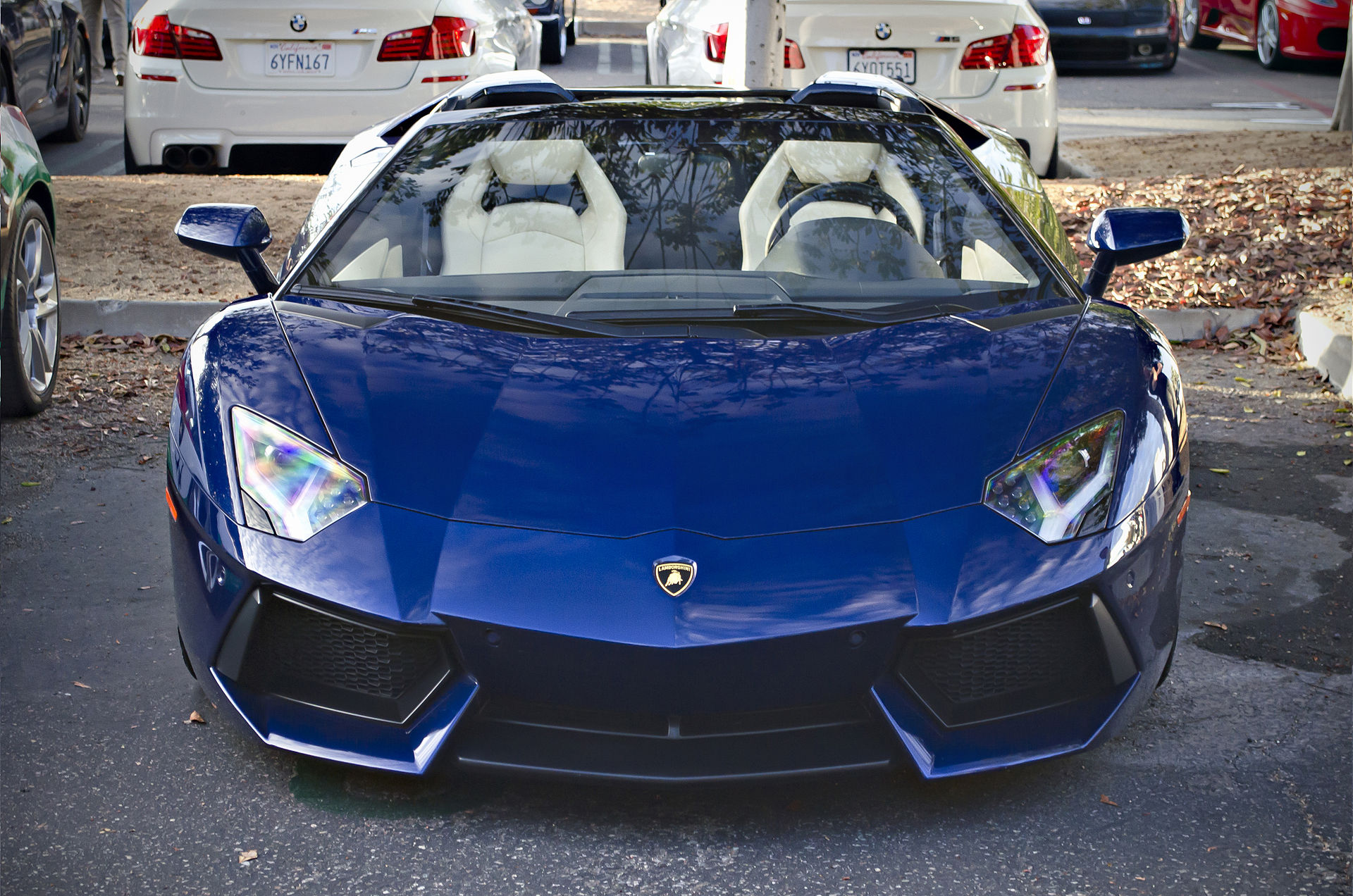
Phoenix's wealth concentration in North Scottsdale makes it a natural market for the flagship Aventador. The Aventador S ($295K-$385K original MSRP) and rarer Aventador SVJ ($430K-$580K) appear regularly in the Phoenix market, often at auctions or through specialty dealers like MotorCar Gallery AZ.
The Aventador S trades some of the EVO's refinement for mechanical purity. The 6.5L naturally aspirated V12 produces 740 horsepower with a bone-jarring aggression that nothing turbo-charged can match. It's the car Lamborghini was building when naturally aspirated V12 supercars were still possible, and every year that passes makes that more historically significant.
In Arizona heat, the Aventador S runs noticeably hotter than the EVO, which should concern you. Engine bay temperatures can exceed 140°F in direct Phoenix sun during summer months, and the V12 cooling system was designed for European driving patterns, not 110-degree ambient conditions. Aventador buyers in Phoenix absolutely must invest in a high-quality radiator shroud cover and should consider a ceramic-coating upgrade to the intercooler piping. Maintenance records from previous Arizona owners are especially valuable here — they tell you whether the car survived the heat without incident.
The Aventador SVJ ($420K-$560K in Phoenix) is marginally better equipped to handle extreme heat due to upgraded cooling, but it remains a car that demands respect in the desert. These ultra-low-mileage examples (typically 1K-10K miles) command premium pricing because collectors understand the SVJ's rarity and appreciation potential. Many are second cars for collectors who drive them minimally, which is ideal from a thermal stress perspective.
The Urus SUV: Lamborghini's Most Popular Vehicle in Phoenix
The Lamborghini Urus ($155K-$225K) has become the most frequently purchased Lamborghini in the Phoenix-Scottsdale region, and for good reason. It's the only Lamborghini that legitimately works as a daily driver in the Arizona heat and dust. The $150K-$215K used market range attracts buyers who want the Lamborghini badge without the claustrophobia of a mid-engine supercar in summer traffic.
The Urus uses a 4.0L twin-turbo V8 with 641 horsepower — powerful enough to embarrass most sports cars from a standstill, yet refined enough to cruise Phoenix freeways without overheating anxiety. The cabin is spacious, air conditioning is legitimately aggressive (crucial in 115-degree heat), and the infotainment system actually feels modern. Ground clearance of 8.6 inches beats every supercar and matches many luxury SUVs, meaning you don't face the speed bump paranoia that Huracán owners endure.
Urus ownership in Arizona makes particular sense because the twin-turbo engine handles extreme heat better than naturally aspirated engines. Turbochargers actually reduce strain on cooling systems by eliminating heat spikes from high-rpm operations — a counterintuitive advantage in the desert. Many Scottsdale residents use the Urus as their primary vehicle, reserving a mid-engine Lamborghini for weekend canyon runs. That usage pattern creates an abundance of low-to-moderate mileage examples at reasonable pricing.
The $155K-$225K price point also democratizes Lamborghini ownership for buyers who've been priced out of used Huracáns. A 2021-2023 Urus with 8K-15K miles typically lands around $175K-$195K in Phoenix, which is $20K-$40K below equivalent EVO pricing despite nearly identical performance and superior practicality.
The Gallardo: The Budget Entry Into Lamborghini Ownership
For buyers with a $110K-$175K budget, the Gallardo remains one of the best values in the supercar market. You'll find extensively used examples (25K-75K miles) throughout Phoenix, many from former Arizona residents who've since upgraded to newer models. The $105K-$160K market range makes entry into Lamborghini ownership accessible even for first-time exotic car buyers.
The Gallardo is a completely different mechanical and driving experience from the EVO or Aventador. The 5.2L V10 (shared architecture with early Huracáns) produces 570 horsepower, making it the slowest Lamborghini in this guide — yet still capable of 0-60 in 3.4 seconds and 10-second quarter miles. More importantly, it's one of the most reliable naturally aspirated V10 engines ever produced. Multiple Arizona examples with 50K+ miles show zero catastrophic failures if they've been maintained properly.
The thermal advantages for Gallardo ownership in Arizona are significant. This generation was optimized for drivers who actually use their cars, not collectors who park them. The cooling system is more robust than later Huracáns, and owners report genuinely comfortable drivability even during Phoenix's hottest months. One caveat: the Gallardo's interior is obviously dated compared to modern Lamborghinis. The infotainment is several generations behind, and some buyers find the cabin ergonomics claustrophobic by modern standards. If you're primarily weekend driving and can live with 2008-level tech, the Gallardo is a deeply undervalued option.

Where to Find Used Lamborghinis Near Phoenix: The Complete Dealer Landscape
The Phoenix-Scottsdale area has several established channels for buying used Lamborghinis. Each has distinct advantages depending on your priorities.
Lamborghini North Scottsdale (Authorized Dealer)
Lamborghini North Scottsdale is the official Lamborghini dealer for Arizona, located in Paradise Valley. They maintain the largest inventory of both new and used Lamborghinis in the state. The advantage of buying through an authorized dealer is documented full service history, certified pre-purchase inspections, and warranty options on select vehicles. You'll typically pay a 3-5% premium over private market prices, but you're paying for peace of mind.
The dealer specializes in inventory from local Lamborghini owners upgrading to new models — these are precisely the garaged, well-maintained examples that survived the Arizona climate unscathed. Staff includes technicians who understand Arizona-specific issues like UV damage to interior materials and brake dust accumulation. They can speak intelligently about which models handle the desert better and will counsel you honestly on cooling system considerations for V12 models.
Scottsdale Motorsport
Scottsdale Motorsport is an independent exotic car dealer with a rotating inventory that frequently includes Lamborghinis. Their pricing is more negotiable than the official dealer, and their staff includes experienced track drivers who can speak intelligently about driving dynamics. The tradeoff is less comprehensive warranty coverage and slightly more variable pre-purchase inspection standards.
MotorCar Gallery AZ
MotorCar Gallery AZ specializes in ultra-low-mileage examples from collector transitions. If you're hunting for a sub-5K-mile Huracán Performante or an Aventador SVJ with minimal use, this is often where such cars surface. Pricing reflects the premium for pristine condition, but inventory moves rapidly due to demand from regional collectors. They offer a more boutique experience compared to larger operations.
Bring a Trailer (BaT) and Cars & Bids
Online platforms like Bring a Trailer and Cars & Bids feature regular Lamborghini auctions with transparent pricing history. Phoenix-based examples often appear here, and you can see completed auction prices to understand market reality beyond asking prices. The advantage is complete price transparency and the ability to bid against other knowledgeable buyers — no hidden dealer markups. The disadvantage is limited opportunity for in-person inspection before bidding and logistics coordination for out-of-state sellers.
Many Phoenix buyers use the online platforms for price research (to understand what their target model is actually worth) then negotiate locally at dealers with that data in hand. Completed BaT auction results are your most objective market data source.
Connect with Phoenix's Lamborghini Specialists
Automonitor partners with verified dealers and pre-purchase inspectors throughout Phoenix and Scottsdale. We'll help you navigate inventory, negotiate pricing, and complete a full inspection before you commit.
Find Your Phoenix Lamborghini →Arizona-Specific Lamborghini Ownership Concerns: The Desert's Impact on Exotic Cars
Buying a Lamborghini in Phoenix is different from buying one in California or Florida because the Arizona environment creates unique stresses on these precision machines. Understanding these factors before purchase prevents expensive surprises down the line.
V10/V12 Cooling in Extreme Desert Heat
The single biggest concern for Lamborghini owners in Arizona is keeping V10 and especially V12 engines cool. Engine bay temperatures regularly exceed 140°F under direct Arizona sun, and ambient air reaching 115°F (not uncommon in July/August) pushes cooling systems to their absolute limits. The Huracán EVO with its 640-hp V10 handles this better than the Aventador S with its 740-hp V12, but both require attentive ownership.
Check the radiator fan operation during your pre-purchase inspection. Have a diagnostic scan run to confirm no cooling system errors are logged. Ask the previous owner specifically about summer driving patterns — if they avoided driving the car mid-day during peak heat, that's a yellow flag suggesting thermal concerns. The ideal Arizona-owned Lamborghini is one that was always garaged during peak sun hours and only driven early morning or evening.
Consider upgrading to a ceramic-coated radiator if you purchase a V12. This $2,000-3,000 upgrade reduces radiator surface temperature by 30-40 degrees, giving you substantial thermal headroom for aggressive driving. It's the single best insurance policy for Aventador ownership in Arizona.
Clear Bra and Paint Protection Film (PPF) Is Essential
Arizona's low humidity and high UV radiation combine to create aggressive paint deterioration unmatched in most American climates. The dust itself is abrasive — desert sand contains high silica content that causes microscopic pitting when windblown against bodywork. Every Lamborghini purchased in Phoenix should have had PPF applied to the hood, fenders, and front bumper, or you should plan to invest $3,000-5,000 immediately after purchase.
The combination of clear bra and ceramic coating is non-negotiable for Arizona Lamborghini owners. Sellers who haven't invested in this protection are signaling they either didn't understand Arizona conditions or weren't committed to proper maintenance. Use this as a negotiation point — factor in the cost of PPF application if the car arrives unprotected.
Brake Dust Acceleration and Corrosion
Lamborghini carbon ceramic brakes shed significantly more dust than conventional brakes, and Arizona's dry climate compounds this problem. The dust becomes airborne more readily, settles on brake rotors, and accelerates corrosion. You'll notice visible brake dust accumulation every 2-3 weeks compared to 6-8 weeks in more humid climates.
This is purely cosmetic and easily managed (ceramic coatings on wheels help significantly), but it's worth understanding. Plan to wash your Lamborghini every 10-14 days during Arizona's hot months — not as often as a collection car stored in a garage, but more frequently than you'd wash an identical car in Florida or California.
Carbon Ceramic Brakes Are Worth the Investment in Arizona
If you're considering upgrading to carbon ceramic brakes during ownership, Arizona makes this exceptionally wise. The extreme heat means conventional brake dust oxidizes faster and causes more corrosion. Carbon ceramic brakes resist thermal fade better (crucial during summer driving), they shed less dust, and they simply last longer in desert climates. Budget $8,000-12,000 for a ceramic brake upgrade, and understand it's not a luxury — it's a practical response to Arizona's environment.
Interior Leather and Alcantara UV Damage
Lamborghini cabins use premium leather and Alcantara extensively, and Arizona sun damages these materials faster than any other American climate. The UV radiation literally breaks down the dye molecules, causing fading and color shift. Alcantara particularly suffers — panels that were jet black can fade to dark gray after three Arizona summers of regular use.
When inspecting a used Lamborghini, pay special attention to sun-exposed interior surfaces. The driver's seat bolster, door cards, and steering wheel take the most damage. Some fade is inevitable, but severe color shift suggests the car spent too much time in the sun. Invest in a high-quality sunshade that covers the windshield completely — this single step reduces interior UV damage by 70-80%.
Consider applying a UV-protective coating to Alcantara trim immediately after purchase. Products like Gyeon Bathe or Ceramic Pro prevent further color shift. Cost is modest ($300-600) relative to the value preservation — interior appearance is a significant factor in resale value, and Arizona conditions are particularly harsh.
Complete Model Comparison: Which Lamborghini Is Right for You?
| Model | Phoenix Price | Horsepower | 0-60 Time | Best For |
|---|---|---|---|---|
| Huracán EVO | $185K–$250K | 640 hp | 2.9s | Balanced enthusiasts; all-weather capability |
| Huracán Performante | $215K–$295K | 640 hp | 2.9s | Track-focused buyers; ALA active aerodynamics |
| Aventador S | $280K–$370K | 740 hp | 2.8s | Ultimate impact; mechanical purity; collectors |
| Aventador SVJ | $420K–$560K | 770 hp | 2.8s | Rarity; investment potential; full-use capability |
| Urus | $150K–$215K | 641 hp | 3.6s | Daily drivers; families; year-round usability |
| Gallardo | $105K–$160K | 570 hp | 3.4s | Budget buyers; reliability; low depreciation |
The Pre-Purchase Inspection: What Arizona Specialists Check
A comprehensive pre-purchase inspection is non-negotiable when buying a Lamborghini in Arizona. The desert environment means certain issues appear more frequently than in other climates. A specialist who understands Arizona conditions will check:
- Cooling System Pressure Test: Essential for any V10 or V12. A proper PPI includes a radiator pressure test at operating temperature, plus thermal imaging of engine bay components to ensure no hidden hot spots.
- DCT Transmission Shudder Test: Early Huracáns (2014-2016) can develop transmission hesitation, particularly noticeable in low-speed parking lot driving. Have the transmission scanned for soft fault codes that suggest early clutch wear.
- Paint and PPF Condition: Even cars with PPF can have application flaws or damage. Use paint depth gauge and visual inspection to understand paint integrity.
- Interior UV Damage Assessment: Photograph sun-exposed surfaces to establish baseline condition and support future warranty claims if applicable.
- Brake Dust and Rotor Condition: Visual inspection of rotors and pads, plus measurement of remaining brake material. Ceramic brakes should show even wear patterns.
- Air Conditioning Adequacy: Run the AC system at max cold while parked in shade, measuring interior temperature stabilization. Inadequate AC is a serious livability issue in Phoenix.
- Service History Verification: Confirm all manufacturer-recommended service has been completed, particularly cooling system flushes and V-belt replacements.
Budget $700-1,200 for a comprehensive PPI from a Lamborghini specialist. This investment can save $10,000+ in hidden problems, and it provides objective documentation that supports negotiation.
Financing a Lamborghini in Phoenix: Local Lender Landscape
Financing options for Lamborghinis in Phoenix are excellent due to the region's exotic car concentration. Traditional banks avoid these vehicles, but specialized lenders understand the market and offer competitive terms.
Expect to provide 20-30% down payment, with loan terms ranging from 48-72 months. Interest rates typically run 6-10% depending on the vehicle age and your credit profile. JJ Best Banc and Woodside Credit both operate actively in Arizona and specialize in exotic car financing.
Some Lamborghini buyers take a different approach: purchasing with cash or through cash-out refinancing of primary residences (in the 4-6% range), which reduces acquisition cost significantly. This strategy makes sense if you have substantial liquid equity and plan 5+ year ownership.
Negotiation Strategy: How to Get the Best Price in Phoenix
Phoenix's competitive exotic car market means prices are fairly efficient — dealers know what cars are worth because inventory turns over regularly. However, negotiation leverage exists if you approach it strategically.
Use completed BaT/Cars & Bids auction data as your anchor. Recent auction results show what informed buyers are actually paying, not what dealers are asking. If a dealer's asking price exceeds the last three comparable auction results by more than 8%, that car is overpriced.
Factor deferred maintenance into your offers. If a pre-purchase inspection reveals upcoming service needs (tires, brake pads, fluid flushes), document the costs and reduce your offer by that amount. A $6,000 cooling system service due in the next year justifies a $6,000 price reduction.
Timing matters in Phoenix. Inventory peaks in fall and spring, creating buyer advantages. Summer inventory tends to be thinner and pricing firmer. If you're flexible on timeline, search aggressively in October-November and March-April.
Build relationships with dealers. Exotic car dealers in Phoenix appreciate repeat customers and referrals. If you're working toward your first Lamborghini purchase, mention you're likely to upgrade within 5 years — dealers will be more flexible on initial pricing knowing you'll return.
Insurance, Registration, and Ongoing Costs
Arizona's registration process is straightforward for exotic vehicles. The state charges a luxury vehicle tax of 0.62% of assessed value for vehicles exceeding $18,000 — or roughly $1,100-1,600 annually for a $180K-250K Lamborghini. This is significantly lower than California or New York, making Arizona attractive from a total-cost-of-ownership perspective.
Insurance for Lamborghinis in Phoenix typically runs $3,500-5,500 annually for comprehensive coverage with appropriate limits. Specialty insurers like AUM and Hagerty understand exotic cars and price more favorably than mainstream carriers. Shop multiple quotes — savings of $500-1,000 annually are realistic if you find the right insurer.
Annual maintenance for a Lamborghini in Arizona is higher than temperate climates due to the aggressive environment. Budget $4,000-6,000 annually for routine maintenance plus $8,000-12,000 for major service intervals (every 10,000 miles for Huracáns). Fuel costs run $3,500-5,000 annually assuming 8,000-10,000 annual miles at 13-15 mpg with 91-octane minimum fuel.
Ready to Buy Your Phoenix Lamborghini?
Automonitor handles negotiation, financing coordination, pre-purchase inspection management, and title transfer logistics. Buying an exotic car shouldn't be stressful — let us simplify the process.
Start Your Phoenix Search Now →Frequently Asked Questions About Buying Used Lamborghinis in Phoenix
Q: Should I buy from the authorized Lamborghini dealer or an independent dealer?
The authorized dealer (Lamborghini North Scottsdale) offers peace of mind through documented service history, warranty options, and technical expertise. You'll pay 3-5% more, but you're buying certainty. Independent dealers may offer better pricing and more inventory choice, but less consistency in inspection standards. First-time Lamborghini buyers benefit from dealer overhead; experienced buyers can extract value from independents.
Q: Is the Urus worth buying if I want a traditional Lamborghini experience?
The Urus is definitively not a traditional Lamborghini — it's an SUV with a Lamborghini badge. But it's genuinely brilliant for Phoenix ownership because it works as a daily driver. If you want mid-engine rawness, buy a Huracán or Aventador. If you want practical Lamborghini ownership that doesn't require strategizing around 115-degree heat, the Urus makes perfect sense and represents genuine value in the $150K-215K range.
Q: What's the most reliable Lamborghini I can buy used in Phoenix?
The Gallardo (especially 2008 and later models) and the Huracán EVO are the reliability champions. The Gallardo's V10 is proven through nearly 15 years of production and real-world ownership. The EVO's modern engineering and active cooling make it more capable in Arizona heat than earlier Huracáns. Both have supporting communities of long-term owners who've documented maintenance patterns. The Aventador S is less proven in extreme heat and demands more attentive ownership.
Q: How much should I budget for annual Lamborghini ownership in Phoenix?
Budget $15,000-25,000 annually for a Huracán or Urus, including insurance ($4,000-5,500), maintenance ($4,000-6,000), fuel ($3,500-5,000), registration and taxes ($1,500-2,000), and miscellaneous ($1,000-2,000). Aventador ownership runs 15-20% higher due to more aggressive maintenance intervals and larger brake system costs. This excludes depreciation, which varies by variant and market conditions.
Q: Is it smart to buy a high-mileage Lamborghini if the price is right?
A $120K Huracán EVO with 35K miles is tempting, but be cautious. In Arizona's climate, mileage without obsessive maintenance creates more risk than in temperate regions. A 15K-mile example from an owner who properly maintained cooling systems and interior protection is worth significantly more than a 30K-mile example from someone who drove it hard in peak summer. Always prioritize maintenance history and climate-appropriate care over raw price savings.
Q: Should I negotiate differently with dealers vs. private sellers?
Absolutely. Dealers have competitive pressure (inventory costs money), so they're motivated to negotiate. Private sellers often lack market data and are emotionally attached to their cars. Use completed BaT auction results with dealers as objective data. With private sellers, invest in a PPI and let the inspection results drive negotiation — most private sellers haven't considered what repairs might be deferred.
The Final Verdict: Buying a Lamborghini in Phoenix
Phoenix and Scottsdale offer exceptional opportunities for Lamborghini buyers. The market is robust with multiple dealer options, pricing is competitive with national averages, and the year-round driving climate means you're not buying a car that sits in a garage most of the year. The Urus has created a category for Lamborghini buyers who want practicality; the Huracán EVO offers the best balance of emotional impact and thermal reliability; and the Aventador remains the statement piece for collectors.
Understanding Arizona-specific concerns — extreme heat, UV radiation, brake dust accumulation, and interior material degradation — transforms you from a car shopper into an informed buyer. The right Lamborghini for Phoenix is one that was owned by someone who understood these conditions and responded with proper maintenance: PPF application, ceramic coatings, regular ac servicing, and garaged storage during peak heat.
Your negotiation advantage is the pre-purchase inspection. Find a specialist who understands Arizona conditions, have them check everything, and let the results guide your offer. The $700-1,200 investment in a comprehensive PPI is the single best decision you can make in the buying process.
Ready to start your search? Our Lamborghini Urus buying guide dives deep into the SUV category. We also have detailed Scottsdale-specific guidance for buyers in the immediate Phoenix metro. And when you're ready to pull the trigger, Automonitor's concierge buying service handles negotiation, inspection coordination, financing, and title transfer — letting you focus on enjoying your Lamborghini instead of managing the logistics.
The Phoenix Lamborghini market is waiting for you. Let's find the right car.
Find Your Perfect Lamborghini in Phoenix Today
Automonitor connects you with the best dealers, handles pre-purchase inspections, and coordinates financing. We specialize in exotic car buying in Arizona and know exactly what to look for in desert-owned vehicles.
Start Your Search →