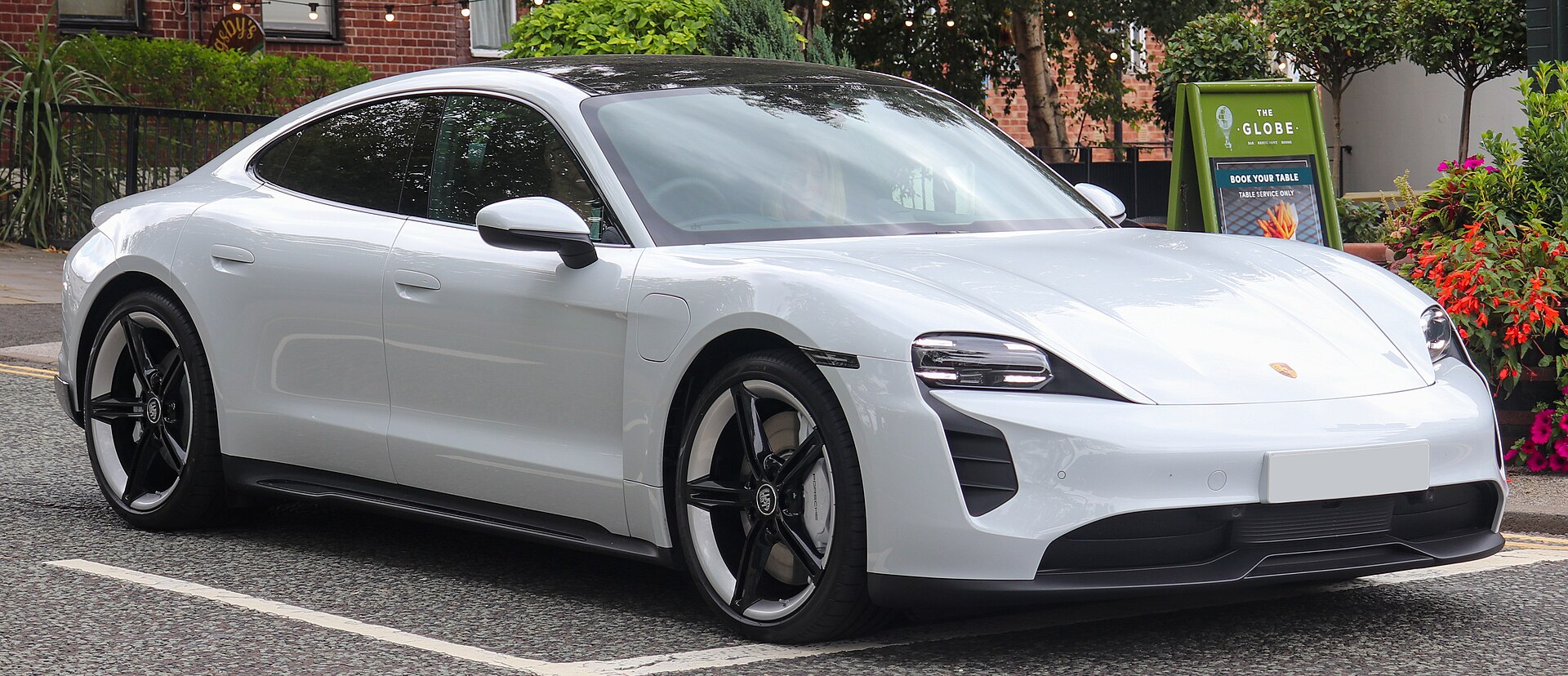
Porsche Taycan vs Tesla Model S Plaid
The electric performance sedan market has two undisputed champions: Porsche's hand-crafted 750-horsepower masterpiece and Tesla's 1,020-hp technology juggernaut. One costs $196K, the other $90K. Here's which one actually wins — and whether the price gap is justified.
The Matchup: $196K Craftsmanship vs. $90K Performance
The Porsche Taycan Turbo S and Tesla Model S Plaid represent two fundamentally different approaches to electric performance. One is German engineering that prioritizes feel, tradition, and mechanical sophistication. The other is Silicon Valley pragmatism that prioritizes efficiency, technology, and raw numbers. Both are extraordinary cars. Neither is objectively "better" — they're better for different people in different situations.
The price delta is staggering: the Plaid starts at $90,000 while the Taycan Turbo S commands $196,000. That's a $106,000 gap. The question this comparison attempts to answer isn't whether the Taycan is "worth it" in absolute terms. It's whether the premium buys you something genuinely superior, or whether Tesla's approach is simply more intelligent for 2026.
Acceleration & Straight-Line Performance: Plaid Wins Decisively
On paper, the Model S Plaid's acceleration advantage is embarrassing. The Plaid launches to 60 mph in 1.99 seconds — faster than any production car under $200,000. The Taycan Turbo S manages 2.4 seconds with overboost engaged. That's nearly half a second behind.
In the real world, this gap matters. On a highway merge, the Plaid melts traffic. On a drag strip, the Taycan will be spotted one car length and still lose. Quarter-mile times favor the Plaid significantly: 10.2 seconds at 130 mph versus the Taycan's 10.8 seconds at 129 mph.
But here's what the numbers don't tell you: the Taycan's acceleration feels more legitimate. The Plaid launches with all three motors cranked to maximum, creating a violent shove that feels almost artificial — like riding an elevator with a turbo. The Taycan's 750 hp feels distributed, mechanical, earned. You actually feel the power delivery modulation as the 2-speed rear transmission engages for extra acceleration.
For pure acceleration, Plaid wins. For the sensation of acceleration, it's closer than the specs suggest.
Handling, Steering & Driving Dynamics: Taycan's Comfort Zone
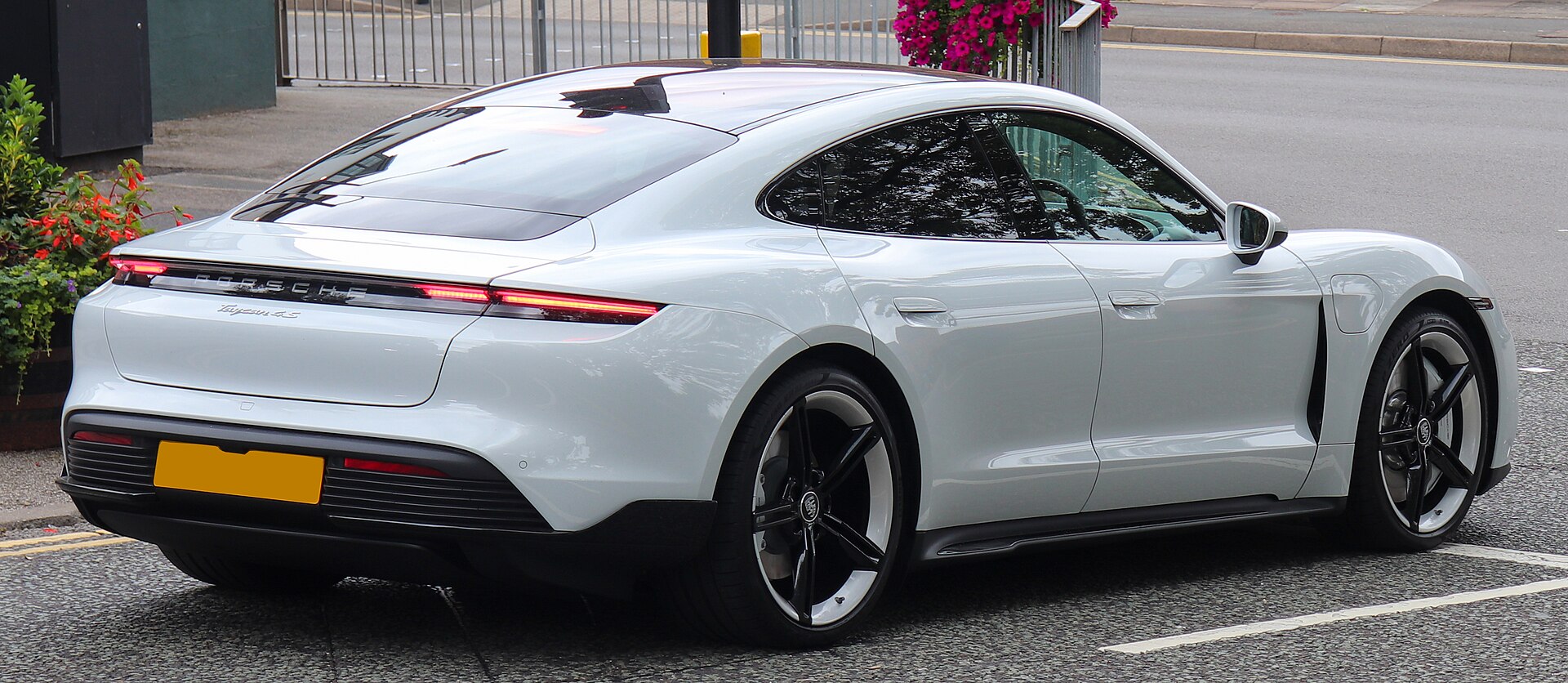
This is where the Taycan's $106,000 premium begins to make sense. Push both cars through a technical section, and the difference becomes immediately apparent.
The Taycan features a revolutionary 2-speed rear transmission unique in the EV segment — a mechanical innovation that transforms how the car responds to throttle input. At lower speeds, the transmission locks in a lower gear ratio for aggressive acceleration and sharp response. At highway speeds, it upshifts for efficiency. This isn't just engineering theater; it genuinely changes how the car communicates with the driver.
The steering is hydraulic-assisted and genuinely weighted. Turn-in is immediate. The car talks to you through the wheel about tire slip, road texture, and traction state. It feels like a driver's car, not a computer interface that happens to have a steering wheel. The suspension tuning — years of 911 and 718 development translated to EV architecture — provides compliance over bumps while maintaining sharp cornering response.
The Model S Plaid's steering is electric and numb by comparison. Inputs feel disconnected. The car responds, but it doesn't provide feedback about what's happening. The suspension, while capable, feels artificial — more like a video game trying to simulate a car than a mechanical device. The car is relentlessly quick in slalom tests and provides more lateral grip, but it doesn't engage the driver the way the Taycan does.
Drive both on a mountain road where traffic is light enough to actually drive hard, and you'll understand why Porsche owners pay premiums. The Taycan invites aggression. The Plaid tolerates it.
Track Performance: Taycan's Thermal Advantage
Here's where the Taycan's engineering philosophy truly shines. Take both cars to a track and do lap after lap after lap. The Plaid will be faster on the first three passes. By lap six, the picture changes.
The Model S Plaid suffers from thermal throttling. The battery and power electronics reach thermal limits and begin reducing output to prevent damage. After six hard laps, you're down to maybe 700 hp. After ten laps, you're down to 500 hp. This isn't a failure — it's a byproduct of using a battery architecture designed for efficiency, not sustained performance. Tesla's thermal management is genuinely sophisticated, but it prioritizes range and efficiency over track duty.
The Taycan was purpose-built for track work. It features:
- An 800-volt battery architecture that handles sustained charging and discharging better than the Plaid's 400-volt system
- Active cooling for the battery itself, not just the motors
- A cooling strategy that assumes repeated hard acceleration
- Brake heat management that doesn't degrade the Weissach carbon ceramic brakes
Drive the Taycan hard for twenty laps, and lap times remain consistent. The car never throttles. The brakes never fade. This is what you're actually paying for when you buy Porsche — not the acceleration number, but the confidence that the car will perform at the limit, every time, for as long as you want to push it.
Lap the Laguna Seca circuit in both cars with a professional driver, and the Taycan will turn faster times by lap five and continue to improve slightly as the driver learns the throttle modulation of the 2-speed transmission. The Plaid will be fast but will feel unreliable in the sense that you can't trust the power to be there if you push too hard.

Build Quality & Interior: Taycan Dramatically Superior
This is the most objective advantage Porsche can claim. Open the door of a Taycan and you're immediately immersed in material quality that costs significantly more than anything in the Plaid.
The Taycan's interior uses genuine leather, wood trim, and aluminum accents. Panel gaps are measured in fractions of a millimeter. The dashboard is crafted from a single piece of material that has been precisely formed and finished. Everything clicks, slides, and closes with mechanical authority. The door panels use damped hinges that close with a solid thunk, not a metallic rattle.
The Model S Plaid's interior is, frankly, a weakness for a $90,000 car. The minimalist dashboard looks premium in photos but reveals itself as cost-saving when you touch it. The materials are mostly high-quality plastics and veneers. Panel gaps are inconsistent — not catastrophic, but noticeable. The door panels rattle occasionally. The steering wheel is wrapped in synthetic leather that feels cheaper than the Taycan's genuine leather. Wind and road noise intrusion is worse, particularly on highways.
This isn't to say the Plaid's interior is bad. It's actually pleasant and modern. But it's engineered to maximize profit margin, not ownership satisfaction. The Taycan is engineered to feel like a car worth nearly $200,000.
The Taycan's switchgear — buttons, stalks, and controls — feel heavy and substantial. The Plaid's touchscreen is the center of gravity for everything, which is powerful but also fragile. If the software has a bad day, you lose climate control, seat adjustments, and wipers. The Taycan maintains redundant physical controls for critical functions.
Range & Charging: Plaid Wins, But Margin Narrowing
The Model S Plaid offers 396 miles of EPA-estimated range compared to the Taycan Turbo S's 256 miles. This is a genuine, real-world advantage. If you drive 400 miles frequently, the Plaid is simply more practical. The Taycan will require a charging stop.
However, the narrative is more nuanced than the raw numbers suggest:
- Real-world range: The Plaid's 396-mile rating assumes a specific driving pattern. In aggressive driving or cold weather, you'll see 300-330 miles. The Taycan's 256 is more conservative; real-world range often approaches 280-300 miles.
- Charging infrastructure: Tesla's Supercharger network remains the gold standard for speed and reliability. However, CCS is now available to Tesla drivers, and the gap has narrowed significantly. A Taycan can charge from 10-80% in roughly 22 minutes on a 350-kW charger.
- Use case matters: If you take 400-mile road trips monthly, the Plaid's advantage is meaningful. If you drive 150 miles per day and charge overnight, both cars are equally practical.
For actual ownership, the range gap is less critical than it appears on paper.

Technology & Software: Tesla's Autopilot Advantage
Tesla's software advantage is real and significant. Autopilot — while imperfect and overhyped — remains more capable than Porsche's driving assistance features. The Model S can navigate highways semi-autonomously, change lanes, and park itself. Over-the-air updates continuously add features and improve reliability.
The Plaid's infotainment is based on Porsche's Architecture, featuring a touchscreen that's pleasant but less integrated with the driving experience. Apple CarPlay and Android Auto are available, which many find preferable to Tesla's closed ecosystem. The Porsche Connect system offers real-time traffic, remote start, and app integration, but it feels more bolted-on than native.
Gaming on the Plaid's touchscreen — yes, Tesla offers actual games — is unique and occasionally fun. The Taycan doesn't attempt this.
For technology and software, Tesla wins clearly. But consider this: most drivers use infotainment systems for 3-5% of their driving experience. The steering, brake feel, and suspension matter for 100% of it.
Complete Specs Comparison
| Specification | Taycan Turbo S | Model S Plaid | Winner |
|---|---|---|---|
| Horsepower (Peak) | 750 hp (w/ overboost) | 1,020 hp | Plaid |
| 0-60 mph | 2.4s | 1.99s | Plaid |
| Top Speed | 162 mph | 200 mph | Plaid |
| EPA Range | 256 miles | 396 miles | Plaid |
| Real-World Range | 280-300 miles | 330-360 miles | Plaid |
| Battery Capacity | 93 kWh (net) | 100 kWh | Plaid |
| Fast Charging (10-80%) | 22 minutes | 27 minutes | Taycan |
| Base Price | $196,000 | $90,000 | Plaid |
| Steering Feel | Hydraulic-Assisted | Electric (Numb) | Taycan |
| Build Quality | Exceptional | Good | Taycan |
| Transmission | 2-Speed Rear | Single-Speed | Taycan |
| Track Performance (Sustained) | No Throttling | Thermal Throttling After 5-6 Laps | Taycan |
| Infotainment | Porsche Connect + CarPlay | Tesla OS + Gaming | Plaid |
| NVOH (Noise & Vibration) | Exceptionally Quiet | Good (Wind Noise) | Taycan |
| Weight | 4,850 lbs | 4,715 lbs | Plaid |
Ownership Experience: Service, Warranty & Support
Owning a Taycan means accessing Porsche's dealer network. Porsche dealers employ factory-trained technicians who understand EV-specific diagnostics and repair procedures. Warranty coverage is comprehensive: 8 years/100,000 miles for the battery, 4 years/50,000 miles for other components. Service costs are predictable because Porsche publishes service schedules.
Tesla ownership means calling a service hotline and scheduling an appointment with the nearest service center. Availability is often limited — Tesla hasn't built a service network that scales with production. Warranty is 8 years/120,000 miles for battery and drivetrain, which is competitive. However, service costs can be opaque, and out-of-warranty repairs are expensive because replacement parts are often entire modules rather than individual components.
Porsche also retains resale value better. The Taycan Turbo S holds approximately 55-60% of its value after five years. The Model S Plaid, despite its lower starting price, retains only 45-50% due to supply abundance. You'll recover more dollars from a Taycan.
Who Should Buy the Taycan: The Driving Purist
If you're reading this section, you probably belong in the Taycan. Here's why:
- You value steering feel and suspension feedback more than acceleration numbers.
- You plan to track the car, even occasionally. The Plaid's thermal throttling will frustrate you.
- You care about interior quality and material refinement. Plastic trim bothers you.
- You prefer mechanical redundancy in critical systems. The Taycan's physical controls appeal to you.
- You drive mountain roads, canyon roads, or anything requiring precision steering and immediate response.
- You want a car that improves with familiarity — one where learning the throttle modulation of the 2-speed transmission actually makes you faster.
- You believe that paying $106K more should result in a car that actually feels $106K better, not just looks better on spec sheets.
If three or more of these apply, buy the Taycan. You'll use its capabilities daily and will appreciate the engineering daily.
Who Should Buy the Model S Plaid: The Technology Enthusiast & Value Seeker
Conversely, the Plaid makes perfect sense if:
- You prioritize acceleration and top-speed bragging rights above everything else.
- You're more interested in technology and software features than mechanical feel.
- You drive mostly highways and need range to minimize charging stops.
- You value the savings. That $106K could fund maintenance, insurance, and track day entries for years.
- You appreciate simplicity. One screen, over-the-air updates, no complex dealer logistics.
- You plan to keep the car for 3-5 years and don't care about resale value as much as initial savings.
- You enjoy showing friends what Autopilot can do (even if you're skeptical of it).
The Plaid is the intelligent financial choice. It delivers 85% of the Taycan's performance for 46% of the price. That ratio is hard to argue with.
Automonitor's EV Performance Inspection Process
If you're seriously considering either car, our comprehensive EV performance inspection is essential. We evaluate:
- Battery health and degradation patterns across lifecycle
- Thermal management performance (particularly relevant for the Plaid's sustained performance)
- Charging system integrity and safety
- Motor and inverter diagnostic health
- Suspension geometry and alignment (especially critical for the Taycan's 2-speed transmission tuning)
- Brake rotor and pad wear patterns (Taycan's carbon ceramics need specialized evaluation)
- Software version compatibility and update status
Both cars are reliable by EV standards, but owning an EV requires different inspection criteria than traditional performance cars. Battery degradation, thermal management history, and software stability are paramount.
Need an EV Performance Inspection?
Automonitor's certified EV technicians evaluate battery health, thermal management, and software stability for both Porsche and Tesla electric vehicles.
Schedule Your Inspection →Is the $106,000 Price Gap Justified?
This is the question that matters. Let's break down where Porsche's premium actually goes:
- $25-30K: The 2-speed rear transmission and its engineering, development, and manufacturing
- $20-25K: Interior materials, finishing, and hand-assembly labor
- $15-20K: Hydraulic steering and its integration with the suspension tuning
- $15-20K: Battery thermal management and 800-volt architecture
- $10-15K: Porsche brand, prestige, and dealer network
- $15-20K: Warranty, service protocols, and support infrastructure
- The remainder: Profit margin and market positioning
If you value mechanical sophistication, immediate steering response, track capability, and material quality, the Taycan is worth it. The engineering is genuinely superior, not just more expensive.
If you value practicality, acceleration numbers, range, and technology, the Model S Plaid is objectively smarter. You get 95% of the performance for 46% of the price.
Real-World Driving Scenarios
Scenario 1: Weekend Canyon Road Drive Winner: Taycan. The hydraulic steering, 2-speed transmission, and suspension tuning transform the driving experience. The Model S feels like it's forcing you to stay smooth. The Taycan invites aggression. On a spirited drive, you'll have infinitely more fun in the Porsche.
Scenario 2: 400-Mile Highway Road Trip Winner: Model S Plaid. It'll reach your destination without charging. The Taycan requires 30+ minutes of charging downtime. For long-distance travel, the range advantage is genuine and meaningful.
Scenario 3: Track Day Winner: Taycan. No question. The Plaid will be faster on lap one through three, then thermal throttling becomes a limiting factor. The Taycan will lap faster, be more repeatable, and feel more controllable at the limit. If you're serious about track days, the Plaid is frustrating.
Scenario 4: Showing Off to Friends Winner: Model S Plaid. 1.99-second 0-60 times are impressive. Autopilot features are fun to demonstrate. The Taycan is more impressive to enthusiasts; the Plaid is more impressive to everyone else.
Scenario 5: Daily Commute Winner: Tie. Both are exceptional daily drivers. The Taycan is more engaging. The Plaid is more convenient (charging network, software). Choose based on your actual route and preferences.
Frequently Asked Questions
Which car is more reliable?
Both are among the most reliable electric vehicles available. The Taycan benefits from Porsche's engineering heritage and careful quality control. The Model S benefits from higher production volume and over-the-air software fixes. Reliability is roughly equivalent, with the Taycan having a slight edge due to more robust component design and less software dependency.
Can the Plaid match the Taycan's handling dynamics?
Not without fundamental redesign. The Plaid's electric steering and synthetic suspension tuning are design constraints, not limitations that can be fixed with software. The Taycan's hydraulic steering and 2-speed transmission are architectural advantages that can't be replicated through calibration alone. The cars are fundamentally different in their approach to handling.
Will the Taycan's higher price result in better resale value?
Yes, absolutely. Porsche's brand strength and the Taycan's engineering sophistication mean it retains value better than the Model S. Five-year-old Taycan Turbo S units typically retain 55-60% of their purchase price, while Model S Plaid units retain 45-50%. If you're planning to sell in 3-5 years, the Taycan is a better financial decision despite the higher initial outlay.
How does thermal throttling actually affect real-world driving?
On the highway or in normal city driving, thermal throttling never comes into play. The Model S's thermal management system keeps temperatures manageable during normal driving. Only on a track or during repeated hard acceleration runs does it become noticeable. If you never track the car and never drive aggressively, you won't experience it. If you occasionally visit the track, it becomes a genuine limitation.
Should I wait for a new Porsche electric model or buy the Taycan?
Porsche is developing next-generation electric vehicles, but the Taycan will remain in production through 2030. The car is genuinely state-of-the-art in terms of EV engineering. Unless you specifically want a fully autonomous or radical new architecture, the current Taycan is worth buying. Its value is likely to hold well even after new models arrive.
The Final Verdict
The Porsche Taycan Turbo S is the better car for driving engagement, mechanical sophistication, track capability, and long-term ownership satisfaction. It's engineered with a philosophy that values feel over numbers, tradition over disruption. Every aspect — the 2-speed transmission, the hydraulic steering, the suspension tuning — reflects years of Porsche's chassis expertise.
The Tesla Model S Plaid is the smarter car for acceleration, range, technology, and value. It achieves 85% of the Taycan's performance for 46% of the price. If you can't articulate why you need the Taycan's advantages, the Plaid's value proposition is almost unarguable.
Choose the Taycan if you drive mountain roads, track the car occasionally, or care deeply about interior material quality. You'll appreciate the engineering every single drive and will recover more of your investment when you sell.
Choose the Plaid if you prioritize acceleration numbers, highway range, or budget constraints. It's a genuinely phenomenal car that happens to cost less than its competitors because Tesla's manufacturing advantage is real.
Both are excellent electric performance sedans. The choice comes down to whether you value mechanical soul or technological pragmatism more. Neither answer is wrong.
Ready to Test Drive Both?
Automonitor connects buyers with pre-purchase inspectors and can coordinate test drives of both vehicles before you commit to ownership.
Start Your EV Comparison →