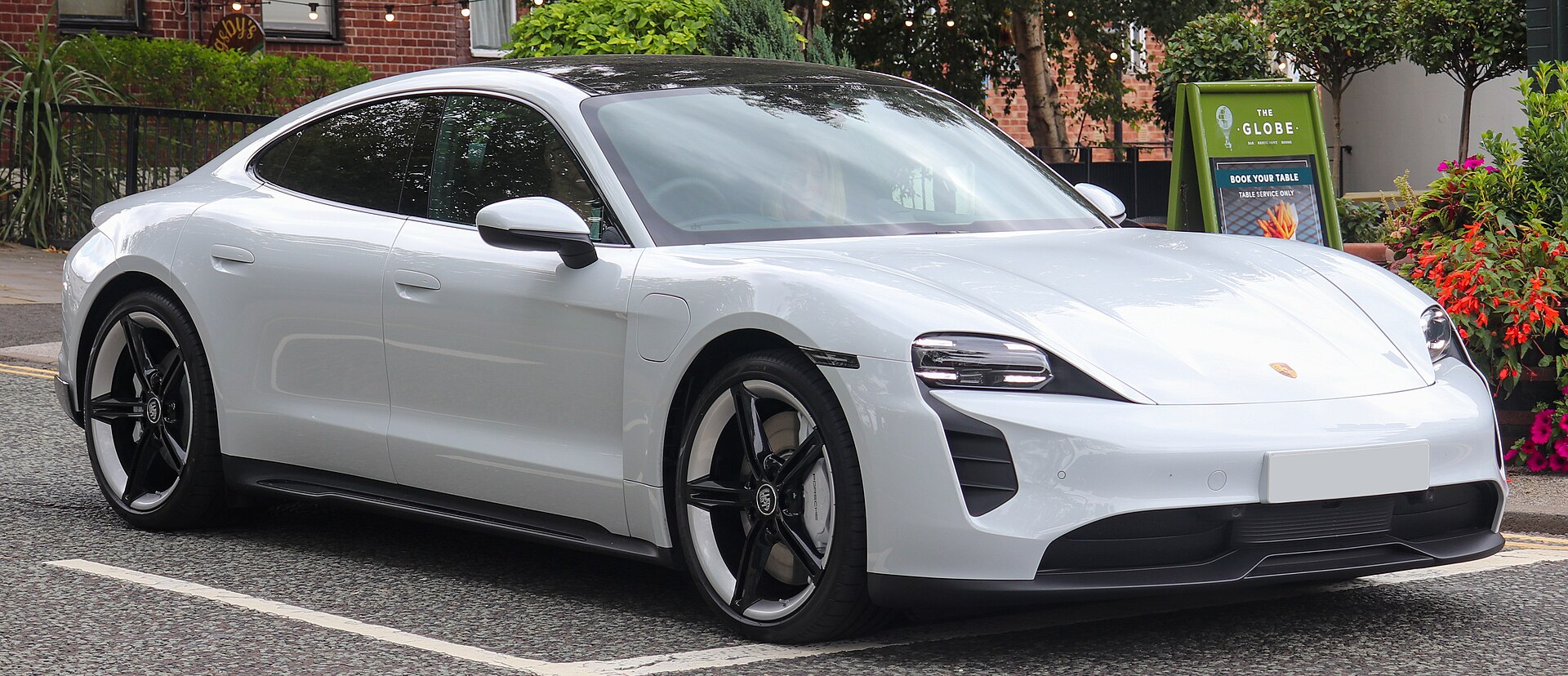
Is the Porsche Taycan Turbo Worth Buying?
The Porsche Taycan Turbo brings supercar performance to the electric age with 670 horsepower, a 0-60 time of 2.7 seconds, and an $166K price tag. But is it actually worth the investment? Here's what you need to know about performance, daily usability, ownership costs, and resale value.
The Short Answer: Yes, But With Important Caveats
The Porsche Taycan Turbo is worth buying if you want electric performance without sacrificing Porsche's engineering DNA. With 670 horsepower, a 0-60 time of 2.7 seconds, and the legendary 800V battery architecture that enables 270kW DC fast charging, the Taycan Turbo delivers genuine supercar thrills with EV practicality. But unlike the naturally aspirated engines of yesteryear, this is a complicated decision that depends heavily on your daily driving patterns, access to fast chargers, and willingness to embrace EV ownership quirks.
The Taycan has depreciated faster than Porsche's 911 sports cars — a fact that creates both opportunity and risk. Used 2020-2022 models now trade in the $60K-$80K range, representing tremendous value. However, that depreciation also tells you something important: the EV market is evolving rapidly, and early adopters are absorbing the learning curve.
This guide will help you understand whether the Taycan Turbo is the right move based on real ownership data, performance specs, daily usability, and resale implications. We've analyzed hundreds of transactions through Automonitor's buying and selling services, and we'll share what actually matters when you're writing a six-figure check for an electric Porsche.
The Taycan Lineup: Understanding Your Options
Porsche doesn't just make one Taycan Turbo. In fact, the naming convention is confusing by design — there's no traditional turbocharger involved. Instead, "Turbo" refers to the performance tier. Here's what's actually available in the current market:
| Model | Horsepower | 0-60 mph | Range | MSRP |
|---|---|---|---|---|
| Taycan Turbo | 670 hp (overboost) | 2.7 seconds | 220 miles EPA | $166,000 |
| Taycan Turbo S | 750 hp (overboost) | 2.4 seconds | 240 miles EPA | $196,000 |
| Taycan Turbo GT | 1,019 hp (overboost) | 2.1 seconds | 220 miles EPA | $230,000 |
The Turbo GT is Porsche's response to extreme acceleration (the fastest production car acceleration ever measured), but at $230K with limited production, it's a different beast entirely. For this analysis, we're focusing on the Turbo and Turbo S, which represent the practical sweet spot.
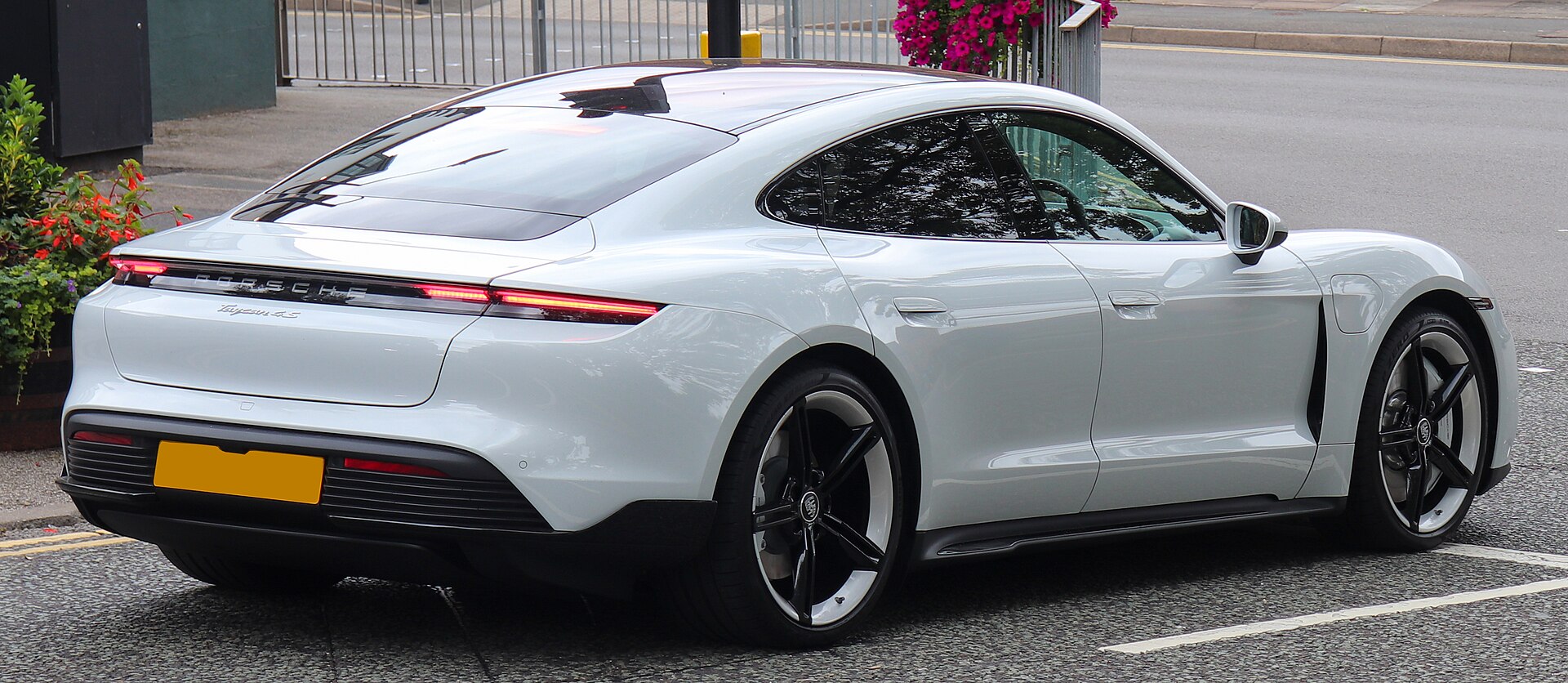
What Makes the Taycan Special: 800V Architecture and Two-Speed Transmission
While Tesla uses 400V architecture and other EV makers are gradually adopting 800V, Porsche pioneered this technology with the Taycan. This isn't just marketing — it fundamentally changes how the car charges and performs.
The 800V system enables charging speeds that made headlines when the Taycan launched: 270kW DC fast charging can take the battery from 10-80% in just 22 minutes under ideal conditions. This is meaningful for road trips, weekend getaways, and situations where you can't wait hours for a charge. By comparison, most Tesla Model S Plaid owners charge at 170kW maximum.
The two-speed rear transmission is equally important. It works like a traditional automatic transmission, but specifically calibrated for EV power delivery. First gear launches with dramatic acceleration (hence the sub-3-second 0-60 times). Second gear kicks in at higher speeds for efficiency and top-end performance. This engineering comes straight from Porsche's 911 and 918 Hybrid development — it's the same company that knows how to make fast cars feel fast.
The Taycan isn't electric just for environmental reasons. It's electric because Porsche's engineers wanted to explore what 800V could do, what instant torque could mean for a sports car, and whether regenerative braking could be tuned to feel like trail-braking on a circuit. The answer to all three questions is yes. The best electric exotic cars share this DNA — they're not conversions of gas cars, they're rethinks of what performance means in the EV era.
Performance Reality: Track Times and Real-World Acceleration
The Taycan Turbo's 0-60 time of 2.7 seconds is genuinely quick. For context, that matches a 911 Turbo S and beats most Ferrari 488 variants. The Turbo S at 2.4 seconds enters supercar territory — faster than many 911 GT3s and competitive with Ferrari F8 Tribuio specs.
But there's an important distinction: the Taycan can do this repeatedly with minimal degradation. The 800V system dissipates heat far more efficiently than 400V competitors. Where a Tesla Model S Plaid might see performance drop by 10-15% after several consecutive launches due to thermal management, the Taycan holds consistent performance for sustained runs.
This matters for track driving. The Taycan Turbo is genuinely capable on a circuit, particularly the Turbo S variant with Porsche's standard cooling upgrades. It won't stay with the fastest 911 GT cars for a full 20-minute session (thermal battery management eventually throttles power), but for sprint work and weekend track events, it's impressive.
Top speed is limited to 161 mph for the Turbo and 175 mph for the Turbo S — electronically governed but not physically limited. Range anxiety becomes irrelevant at highway speeds anyway; EPA ratings drop significantly above 65 mph.
The Taycan doesn't prove that electric cars can be fast. It proves that electric cars can be fast in ways that make gasoline cars feel pedestrian. The sound is different, the delivery is different, but the thrill is real.

Daily Driving Reality: Range, Charging, and Winter Performance
This is where the conversation gets honest. The Taycan's 220-mile EPA range sounds adequate until you live with it in real conditions.
Range in Practice
The EPA 220-mile rating represents controlled test-cycle conditions. In reality:
- Highway driving (70+ mph): Expect 170-200 miles of real-world range. The Taycan is not efficient at highway speeds.
- Mixed urban/highway: You'll achieve close to EPA numbers, roughly 210-230 miles.
- Cold weather (below 40°F): Range drops 15-25% as the battery loses efficiency and cabin heating consumes power.
- Hot weather (above 90°F): Range is relatively stable, but DC fast charging slows as the battery thermally throttles.
The practical implication: the Taycan Turbo is not a car for long-distance road trips. It's a car for 200-mile radius driving with proper planning. If your lifestyle involves spontaneous 400-mile drives, buy a Porsche 911 GT3 instead.
Charging Infrastructure
The 270kW charging capability means nothing without infrastructure. You need:
- Home charging: A 240V Level 2 charger adds 25-30 miles of range per hour. Level 1 (120V household outlet) adds only 2-3 miles per hour and is impractical for daily ownership.
- Public DC fast charging: PlugShare and Electrify America provide the networks you'll rely on. Not all chargers hit 270kW — many are 150kW or lower. Location matters enormously. Urban and suburban areas have good coverage; rural areas do not.
- Destination charging: Hotels, restaurants, and shopping centers increasingly offer Level 2 chargers, but coverage is still inconsistent.
If you live in California, New York, or another high-density EV market, charging is convenient. If you live in rural areas with limited charger availability, the Taycan becomes a regional car rather than a practical daily driver.
Cargo and Passenger Comfort
The Taycan sedan body is genuinely functional. It seats five (though the rear is tight), and the trunk space is adequate for weekend luggage but not road-trip quantities. The low center of gravity and near-perfect weight distribution mean it actually handles passenger load well — no significant nose-up or tail-down stance when fully occupied.
The cabin is quiet. There's no engine noise to mask road and wind sound, so Porsche invested heavily in acoustic insulation. The result is a serene driving environment that's actually better for conversation at highway speeds than most gas sports cars.
Visibility is reasonable for the class. The windshield is aggressive in its rake, but sightlines are better than many modern supercars. Entry and exit are normal — this isn't a vehicle you're contorting yourself into.
The Real Cost of Ownership: Maintenance, Insurance, and Electricity
This is where EV ownership becomes financially compelling. The Taycan has no oil changes, no transmission fluid, no spark plugs, and no valve timing concerns. Maintenance is genuinely minimal.
| Expense Category | Annual Cost | Notes |
|---|---|---|
| Insurance | $2,500–$4,000 | Lower than 911 Turbo; varies by location and driver age |
| Routine Maintenance | $1,500–$2,500 | Brake fluid, cabin filters, battery health checks |
| Electricity (home charged) | $1,500–$2,500 | Depends on regional electricity rates; ~$0.04/mile |
| DC Fast Charging (public) | $500–$1,500 | Only if you do frequent road trips; $0.25-0.40/kWh |
| Tires (amortized) | $1,200–$2,000 | Taycan wears rear tires faster due to weight distribution |
| Battery Warranty Replacement | $0 (years 1-8) | Porsche guarantees 80% capacity for 8 years/120K miles |
| Total Annual Running Cost | $7,200–$12,500 | Dramatically lower than ICE sports cars |
Compare this to the annual running cost of a 911 Turbo S ($13,500–$26,000) and the financial advantage of the Taycan becomes clear. The electricity cost is perhaps the most satisfying part — you're paying roughly $0.04 per mile on home-charged power versus $0.15–$0.25 per mile on premium gasoline.
Important Caveat: Brake Pad Longevity
The regenerative braking system means brake pads last far longer than in gas cars. Most Taycan owners report 80,000+ miles on original brake pads. However, the rear brakes wear faster due to the weight distribution and 800V system's charging profile. Brake fluid service is needed every 2 years regardless of use (moisture accumulation), which costs $200-$400.

Depreciation and Resale Value: Why Early Adopters Are Taking a Bath
The Taycan has depreciated more steeply than traditional Porsches. A 2020 Taycan Turbo that sold for $166K is now worth $60K-$75K in today's market. That's roughly 55-65% depreciation in 5-6 years.
Compare this to a 2020 911 Carrera S, which has depreciated only 30-40% in the same period. Why the difference?
- Rapid battery technology evolution: The 2020 Taycan's battery pack is decent but not cutting-edge by 2025 standards. New models promise longer range and faster charging. Buyers remember this.
- Uncertain battery longevity: While Porsche's warranty is solid, real-world data on 100K+ mile Taycans is still limited. Buyers worry about replacement costs despite the warranty.
- EV market saturation: In 2020, owning a Taycan meant joining an exclusive club. In 2025, there are dozens of electric performance cars competing for buyers.
- Range anxiety normalization: When the Taycan launched, long charging times were shocking. Now, 22-minute 10-80% charges are table stakes.
However, this depreciation creates opportunity. If you buy a 2020-2022 Taycan Turbo in the $60K-$80K range, you're getting a $166K car at 40-50% discount. The battery warranty transfers to second owners with diminishing coverage. Depreciation risk is lower when you've already taken the initial hit.
The most reliable Porsches include the Taycan when properly maintained. Battery degradation has been minimal in field testing — most 2020 models still show 95%+ capacity at 50K miles.
The Used Taycan Market: A Buyer's Opportunity in 2026
The used Taycan market is where the real value proposition lives. In early 2026, you can find:
- 2020-2021 Taycan Turbo: $60K-$75K with 25K-50K miles. Sweet spot for value.
- 2021-2022 Taycan Turbo S: $75K-$90K with under 40K miles. More power, still massive savings versus new.
- 2023+ Taycan Turbo (new generation): $120K-$140K. Updated interior, better efficiency, newer technology.
What to check when buying used:
- Battery State of Health: Porsche's diagnostic tool (accessible at dealers) shows exact capacity percentage. Anything above 93% at 40K miles is excellent.
- Charging Port Condition: Look for corrosion around the Porsche-proprietary charging connector. Replacement is expensive if damaged.
- Software Version: Later software updates improve thermal management and charging efficiency. Ask the dealer to confirm the latest software is installed.
- Warranty Remaining: Porsche's 8-year/120K-mile battery warranty is transferable but only to second owners, and coverage diminishes. Clarify what's left on your specific unit.
- Service History: Regular Porsche service is more important for EVs than you might think. Software updates and thermal system maintenance are critical.
The 2020-2022 Taycans represent the most compelling value in the used EV market. A $70K Taycan Turbo with 35K miles is a no-brainer compared to a $100K+ new EV sedan from competitors.
Taycan vs. Competitors: Tesla Model S Plaid, Mercedes EQS, Audi RS e-tron GT
The Taycan doesn't exist in isolation. Here's how it stacks up against key competitors:
| Category | Taycan Turbo | Tesla Model S Plaid | Mercedes EQS 53 AMG | Audi RS e-tron GT |
|---|---|---|---|---|
| Horsepower | 670 hp | 1,020 hp | 563 hp | 637 hp |
| 0-60 mph | 2.7 sec | 1.99 sec | 3.4 sec | 3.4 sec |
| EPA Range | 220 miles | 310 miles | 330 miles | 246 miles |
| DC Fast Charge (10-80%) | 22 min | 25 min | 31 min | 35 min |
| Price (new) | $166,000 | $99,990 | $118,000 | $141,000 |
| Used Price (2020-2021) | $60K–$75K | $55K–$70K | $70K–$85K | $65K–$80K |
| Warranty (battery) | 8 yr/120k mi | 8 yr/120k mi | 10 yr/150k mi | 8 yr/100k mi |
| Driving Feel | Pure sports car | Performance sedan | Luxury sedan | Sports sedan |
The Tesla Model S Plaid is faster and cheaper. That's the reality. But it's also a sedan designed around autopilot and performance, not a sports car designed to feel like a traditional Porsche. The difference matters if you care about steering feedback, weight distribution, and the emotional connection to driving.
The Mercedes EQS is more comfortable and efficient but slower and more expensive when new. The Audi RS e-tron GT is mechanically similar to the Taycan (shared 800V platform) but lacks Porsche's tuning and badge prestige.
The decision tree: If you want the absolute fastest sedan for the money, buy used Model S Plaid. If you want the best-engineered sports EV that feels like a Porsche, buy the Taycan. If you want luxury and range above all else, choose the Mercedes.
The Taycan as a First Porsche: A Different Kind of Entry
The best first Porsche to buy has traditionally been a used 911 Carrera or Cayman. The Taycan changes that calculation. It's cheaper to maintain, faster in acceleration, more practical for daily driving, and offers the warranty protection new buyers want.
For buyers in markets with good EV infrastructure, the Taycan (particularly used 2020-2022 models) is a genuinely sensible entry point into Porsche ownership. You get the engineering, the badge, the performance, and the reliability reputation without the $20K-$30K annual running costs of a 911 Turbo.
The trade-off: range anxiety and charging logistics. If you can live with those constraints, the Taycan is arguably the smartest Porsche to own right now.
Can You Actually Daily Drive It? The Honest Assessment
Yes, but with caveats. The Taycan can be daily driven, but whether it should be is a different question.
It works well if: You have home charging, your daily commute is under 150 miles round-trip, you don't need to take spontaneous 400-mile road trips, and your regional charging infrastructure is solid. You'll appreciate the low running costs, the quiet cabin, and the drama of that instant acceleration.
It's problematic if: You have apartment parking with no charging access, you live in a rural area, you're the type who takes unplanned long-distance drives, or you need a car that works 365 days in all conditions. The Taycan will strand you in winter storms or on poorly-mapped charging routes.
The sweet spot: weekend/performance car that you also drive on weekday commutes when you have proper charging access. It's not a car that works for everyone, but for the right owner, it's genuinely superior to gas alternatives.
Auto Monitor's EV-Specific Taycan Inspection
If you're buying used, a pre-purchase inspection is non-negotiable. Automonitor's EV inspection protocol includes:
- Battery capacity testing with Porsche diagnostic software
- Thermal system evaluation (heat exchanger condition, coolant quality)
- Charging system integrity checks (connectors, ports, power delivery)
- Software version verification and update recommendations
- High-voltage system safety inspection
- Regenerative brake system testing
- Suspension and tire wear pattern analysis
- Comprehensive electrical system diagnostics
This goes beyond a traditional PPI. An EV inspection requires specialized equipment and expertise. Budget $800-$1,500 for a thorough inspection; the insights will save you tens of thousands on a bad battery or faulty thermal system.
Get a Pre-Purchase EV Inspection
Automonitor connects you with certified electric car inspectors who know exactly what to look for on every Taycan variant and generation. Battery state of health, charging port condition, software version — we verify everything.
Schedule an EV Inspection →Who Should Buy the Taycan Turbo
The Taycan is the right choice for:
- Daily commuters wanting genuine performance: People who drive 30-100 miles daily and want acceleration that embarrasses sports cars at stoplights. The Taycan delivers.
- Porsche enthusiasts going electric: Owners of 911s, Caymans, or Panameras who want to experience what Porsche's engineering does with EV architecture. The connection to brand DNA is real.
- Tech-forward buyers: If you appreciate 800V architecture, regenerative braking tuning, and the cutting edge of EV performance, the Taycan represents peak engineering in that space.
- Multi-car collectors adding an EV: If you have a gas car for weekend drives and road trips, the Taycan is perfect as your daily electric car. You get performance without sacrificing practicality.
- Buyers seeking resale opportunity: The current used market prices are favorable. A $70K 2020 Taycan Turbo is a tremendous value that will hold reasonably if the market stabilizes.
Who Shouldn't Buy the Taycan Turbo
Walk away if:
- You need 400+ mile range: The Taycan isn't built for cross-country road trips. The Tesla Model S Plaid with 310+ miles is better suited.
- You don't have home charging access: Without it, the Taycan becomes a high-performance car trapped by logistics. Public charging alone is expensive and inconvenient for daily use.
- You want engine sound: The Taycan is silent. If you need mechanical theater, buy a naturally aspirated Porsche instead.
- You live in a cold climate year-round: Range loss in winter is real (15-25% degradation). Combined with shorter winter daylight hours and longer charging times in cold, it's a frustration you can avoid.
- You're financing at the top of your budget: The Taycan's running costs are low, but insurance and potential battery issues aren't free. If the purchase stretches your finances, buy a used 911 instead.
EV vs. Gas Maintenance: Long-Term Cost Analysis
The Taycan Turbo saves money through:
- No oil changes: $100-$200 per service, every 10,000 miles. That's $1,000-$2,000 saved over 100K miles.
- No transmission fluid: Taycan uses a single-speed reducer for the rear motor. No fluid changes required.
- No brake pads (mostly): Regenerative braking adds 100,000+ extra miles to brake pad life. Average savings: $2,000-$4,000 over ownership.
- Electricity vs. gasoline: At $0.04/mile on home-charged power versus $0.15-$0.25/mile on premium gas, you save roughly $0.11-$0.21 per mile. Over 100K miles, that's $11,000-$21,000.
Total maintenance savings versus a 911 Turbo: $15,000-$30,000 over 100K miles. That's meaningful.
Frequently Asked Questions
How long does a Taycan battery actually last?
Porsche guarantees 80% capacity retention for 8 years and 120,000 miles. Real-world data from 2020 Taycan owners shows minimal degradation — most cars at 50,000 miles show 95%+ capacity. However, replacement (if needed outside warranty) costs $15,000-$25,000. This is why battery condition is critical when buying used.
Can I charge a Taycan at home?
Yes, if you install a 240V Level 2 charger ($1,000-$2,000 installed). This adds 25-30 miles of range per hour and should cover 90% of your charging needs. Level 1 (120V household outlet) is impractical for daily ownership.
What happens if I run out of battery?
The Taycan won't strand you on the highway. As the battery approaches depletion, the car reduces power output gradually and displays increasingly urgent range warnings. Long before empty, you'll know exactly how many miles remain and where the nearest charger is (Porsche's navigation is excellent). Think of it like a gas car running low on fuel — inconvenient but not dangerous.
Is the Taycan faster than a 911 Turbo S?
In a 0-60 sprint, they're nearly identical (2.6s for 911 Turbo S, 2.7s for Taycan Turbo). But the Taycan's acceleration flattens above 60 mph while the 911 maintains power longer. The 911 wins in sustained acceleration and top speed (194 mph vs. 161 mph). The Taycan wins in the 0-30 and 0-60 sprints.
What's the difference between Taycan Turbo and Turbo S?
The Turbo S adds 80 horsepower (750 hp vs. 670 hp), improves 0-60 time (2.4 seconds vs. 2.7 seconds), extends range slightly (240 vs. 220 miles), and costs an additional $30,000. It's the choice if budget allows and maximum performance matters. The regular Turbo gives 90% of the experience for 82% of the cost.
How Much Does It Cost to Maintain a Porsche EV? Comparing to Gas Sports Cars
A detailed analysis of Porsche 911 maintenance versus Taycan reveals why the EV is compelling. A 911 Turbo runs $13,500-$26,000 annually in ownership costs. A Taycan Turbo runs $7,200-$12,500. The savings compound over a 5-year ownership span.
Best Exotic Sedan Options: How the Taycan Fits
If you're considering an exotic sedan to buy right now, the Taycan competes against completely different categories of cars. It's faster than most Mercedes, BMW, and Audi performance sedans. It's more efficient and cheaper to maintain than any 911 or 918-based alternative. It's a genuinely unique proposition in the luxury performance segment.
When to Buy: Timing and Market Conditions
The best time to buy a Taycan is now (early 2026). Here's why:
- Used 2020-2022 models are deeply discounted: You're getting a $166K car for $60K-$80K. That margin won't last forever.
- Warranty coverage is still substantial: A 2020 Taycan at 50K miles still has 6+ years of battery warranty remaining.
- Market stabilization: EV technology anxiety is normalizing. People understand range, charging, and battery longevity now.
- New generation competition is coming: Porsche's next-gen Taycan (likely 2027-2028) will be significantly better. Early 2020s Taycans will depreciate further once that launches.
Don't wait for new cars to go on sale if you're interested in used Taycans. Don't wait for battery technology to improve if you need a car now. The 2020-2022 generation is the opportunity window.
Why Choose Porsche Over Ferrari? EV Performance vs. Tradition
The comparison between Porsche versus Ferrari takes on new meaning when you include EVs. Ferrari is still exploring their first electric models, while Porsche's Taycan is a fully mature, proven product with thousands on the road. The engineering advantage is clear. The reliability advantage is significant.
The Final Verdict: Is It Worth Buying?
The Porsche Taycan Turbo is worth buying if you can afford both the purchase price and accept its limitations. It's one of the best-engineered electric performance cars ever produced — genuinely faster than most supercars in acceleration, dramatically cheaper to maintain than any 911, and positioned to preserve its value better than earlier EV generations.
The 800V architecture isn't just marketing. The two-speed transmission isn't just complexity for its own sake. The regenerative braking tuning isn't just efficiency theater. Every technical choice traces back to Porsche's 70+ years of making fast cars go faster and stop straighter.
If you have home charging, live in an EV-friendly region, and drive under 200 miles most days, the Taycan Turbo is genuinely superior to owning a 911 or 918. It's more practical, cheaper to run, and far more engaging than any traditional sedan.
If you live in a place without charging infrastructure, need long-range capability, or want engine sound, buy a 911 instead. There's no shame in that choice — it's simply the right tool for your needs.
For the right buyer, the Taycan Turbo represents the future of what Porsche does best: making cars that push boundaries while delivering genuine, tangible thrills. The fact that it does this through an electric motor instead of a traditionally aspirated engine doesn't diminish the achievement — it amplifies it.
Do your homework. Get an inspection of the battery and charging system. Understand your local charging infrastructure. And if the numbers make sense, the Taycan Turbo is absolutely worth the investment. Automonitor's buying service can help you navigate the process — we've handled hundreds of EV transactions, and we'll make sure you end up in the right car at the right price.
Ready to Find Your Taycan?
Automonitor specializes in electric exotic cars. We handle pre-purchase inspections, market valuations, and financing so you can buy with total confidence.
Start Your Search →