
McLaren GT vs Aston Martin DB12: Grand Tourer Comparison
Two of the finest modern grand tourers sit at an intriguing crossroads. The McLaren GT pairs minimalist design with raw performance, while the Aston Martin DB12 embraces tradition and opulence. But which one is the smarter purchase? Here's the complete analysis.
The Comparison: Minimalism vs. Tradition
The McLaren GT and Aston Martin DB12 represent fundamentally different philosophies about what a grand tourer should be. The McLaren strips away everything unnecessary to create a driver-focused machine with surprising practicality. The Aston Martin wraps you in craftsmanship, heritage, and continental elegance. Neither approach is wrong — but they attract completely different buyers, and the purchase decision ultimately comes down to what you value most in long-distance motoring.
At Automonitor, we've helped dozens of buyers choose between these two. The process always starts with the same question: Do you want a supercar that happens to be comfortable, or a grand tourer that happens to be thrilling? Your answer determines everything.
Engine and Powertrain: Twin-Turbo V8 vs Twin-Turbo V12
Both machines are powered by twin-turbocharged engines, but the philosophical difference is striking. The McLaren GT uses a 4.0-liter twin-turbo V8 producing 612 horsepower and 465 lb-ft of torque. The Aston Martin DB12 employs a 5.2-liter twin-turbo V12 delivering 680 horsepower and 701 lb-ft of torque. That V12 is a masterpiece — a naturally aspirated engine that Aston Martin paired with hybrid assistance, creating an engine that sings across its entire rev range while achieving surprising efficiency.
On paper, the DB12 has the performance advantage. It accelerates from 0-60 mph in 3.2 seconds compared to the McLaren's 3.5 seconds, and its top speed of 208 mph bests the McLaren's 203 mph. More importantly, the V12's additional displacement and cylinder count create a driving experience that V8 drivers spend years trying to rationalize. The V12's exhaust note is something else entirely — a symphony that single-turbo V8 simply cannot match.
But here's where it gets interesting. The McLaren's V8 is not just lighter and more efficient — it's more responsive. Turbocharged engines deliver their power earlier in the rev range, and McLaren's twin-scroll turbos spool with minimal lag. For city driving, winding roads, and everyday responses, the McLaren feels more alive. For open motorways and extended cruising, the DB12's V12 smoothness wins.
Real-world fuel economy matters here. The McLaren GT achieves 15-18 mpg combined on a realistic driving mix. The DB12, despite its V12 heritage, surprisingly manages 15-17 mpg thanks to hybrid assistance and advanced efficiency measures. Neither is economical by conventional standards, but both are reasonable for cars of this caliber. Both require premium 91+ octane fuel.
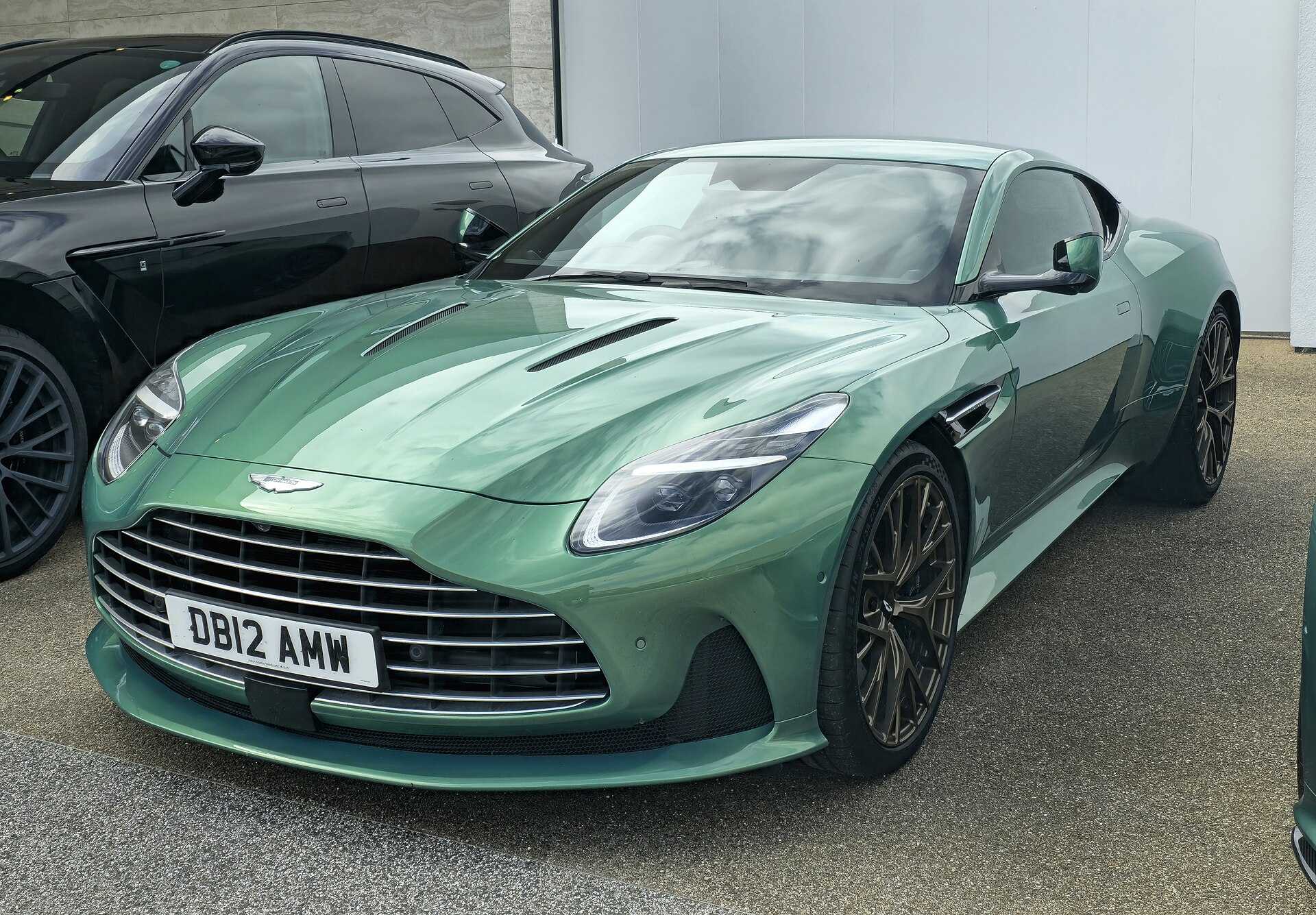
Comfort and Long-Distance Capability: Where Grand Tourers Actually Live
A grand tourer isn't judged by lap times — it's judged by how far you can drive without needing to stop, and how uncompromised you feel when you arrive. This is where the DB12 truly dominates.
The Aston Martin DB12 offers an interior that would be considered luxurious in a Mercedes S-Class, let alone a supercar. The seats are electrically adjustable with memory settings, heated and cooled leather crafted by hand, and positioned for maximum comfort on long drives. The infotainment system is intuitive, featuring Apple CarPlay and premium audio from Bang & Olufsen. Climate control is dual-zone. Storage compartments are logical and abundant. This is a car you can drive from New York to Miami without regret.
The McLaren GT, while comfortable for a McLaren, makes compromises in the name of weight reduction and driver focus. The seats are firm and fixed-position (with only fore-aft adjustment and recline). The interior materials are modern — carbon fiber, aluminum, leather — but assembled with function over indulgence. The climate control works well enough, but you're not being pampered. After five hours of driving, your neck might be sore in a way it wouldn't be in the Aston Martin.
That said, the McLaren GT's visibility is superior. The large windows, reasonable glass area, and straightforward design make it feel less claustrophobic on crowded streets. The Aston Martin's lower roofline and more aggressive windshield angle create a cockpit that feels more cave-like. Some love this — it enhances the drama. Others find it claustrophobic on extended trips.
Luggage capacity gives the edge to McLaren. The GT features 19.4 cubic feet of trunk space, plus a frunk (front trunk) totaling approximately 4 additional cubic feet. The DB12 offers 14 cubic feet behind the seats and a small frunk. If you're planning intercontinental road trips, the McLaren accommodates luggage far more practically. This isn't a theoretical advantage — it's the difference between comfortable touring and constant compromise.
Handling and Driving Dynamics: Precision vs. Confidence
The McLaren GT was designed around one principle: maximum driver engagement with minimum compromise. The steering is electrically assisted but engineered to provide genuine feedback. The suspension uses adaptive dampers that adjust 500 times per second, tightening immediately when the road demands it but remaining supple during cruise. Body roll is virtually eliminated. The driving experience is focused, involving, and immensely satisfying.
The Aston Martin DB12 prioritizes different goals. Its suspension is more forgiving, tuned to absorb road imperfections rather than telegraph them. The steering is beautiful to use but less communicative than the McLaren. The handling envelope is more forgiving — you can push hard, but the car feels like it's working with you rather than demanding your absolute best. This makes the DB12 superior for genuine grand touring, where the goal is to cover ground smoothly rather than extract maximum performance.
In a parking lot comparison, the McLaren feels like piloting a surgeon's scalpel. The DB12 feels like sitting in a comfortable leather armchair that happens to have a 680-horsepower engine. Neither is objectively "better," but they're entirely different animals.
Braking performance is exceptional in both cars. The McLaren offers carbon-ceramic brakes as standard, while the DB12 offers them as an option (highly recommended at approximately $5,000). Both achieve similar 60-to-0 stopping distances around 100 feet, and both inspire total confidence in emergency maneuvers.
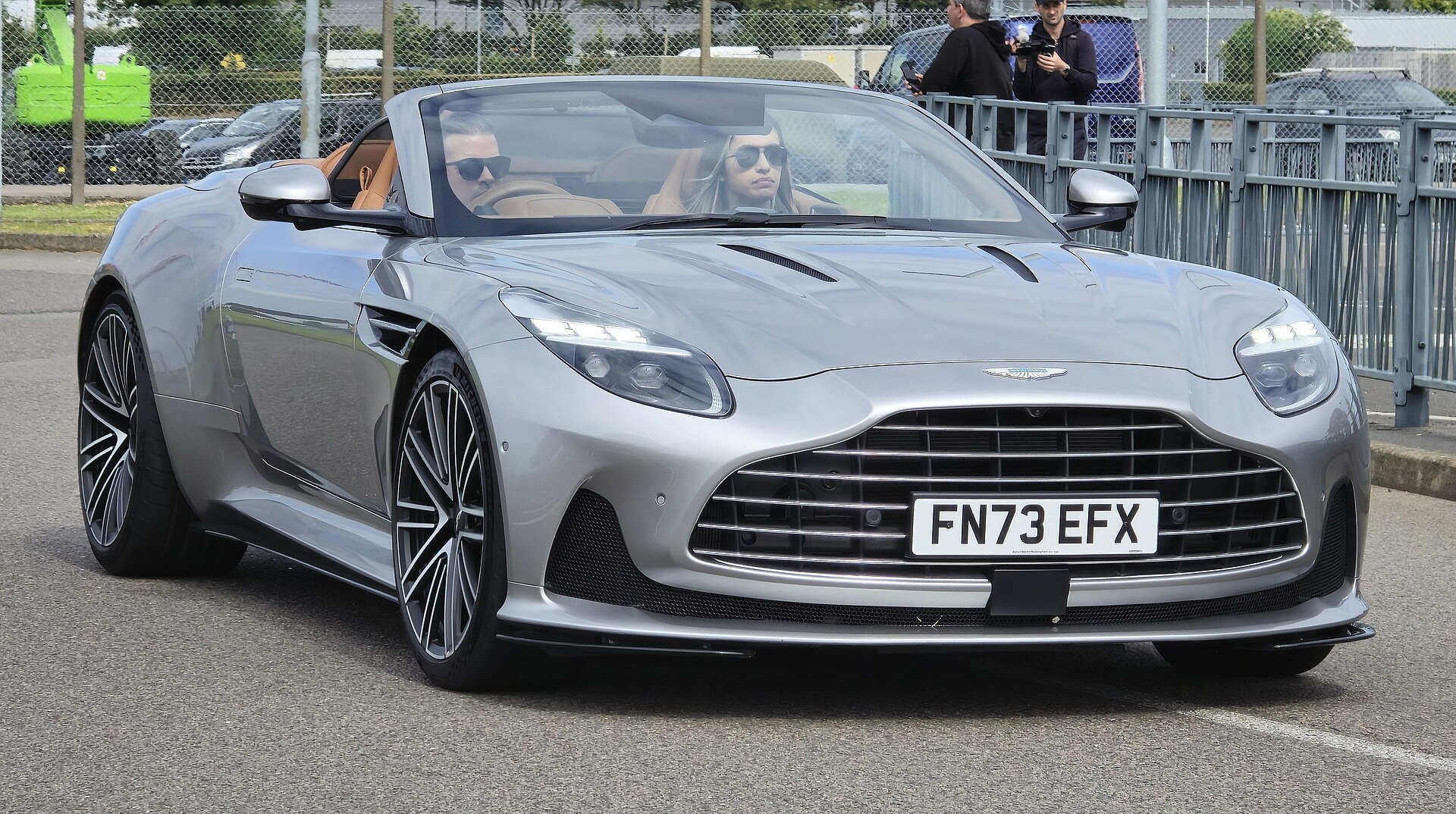
Head-to-Head Specifications
| Specification | McLaren GT | Aston Martin DB12 |
|---|---|---|
| Engine | 4.0L Twin-Turbo V8 | 5.2L Twin-Turbo V12 + Hybrid |
| Horsepower | 612 hp | 680 hp |
| Torque | 465 lb-ft | 701 lb-ft |
| 0-60 mph | 3.5s | 3.2s |
| Top Speed | 203 mph | 208 mph |
| Weight | 3,582 lbs | 3,850 lbs |
| Fuel Economy | 15-18 mpg | 15-17 mpg |
| Trunk Space | 19.4 cu-ft | 14.0 cu-ft |
| Seating | 2+2 (rear cramped) | 2+2 (rear comfortable) |
| Warranty | 3 years / 36,000 miles | 3 years / 36,000 miles |
Technology and Features: Modern vs. Opulent
The McLaren GT uses the proven McLaren Infotainment System (MCIS) featuring a 8-inch vertically-oriented touchscreen. It's responsive, logical, and supported by Apple CarPlay. Driving assist systems include adaptive cruise control and forward collision warning. The steering wheel houses nearly every control you need, and the minimalist design means fewer distractions. This is technology that serves the driver rather than distracts from driving.
The Aston Martin DB12 features a more lavish tech stack. The touchscreen is larger (12.3 inches) and includes Mercedes-derived infotainment integration. Ambient lighting includes 64 colors to suit your mood. The customizable digital driver display can be reconfigured extensively. Surround-view cameras provide bird's-eye visibility. The Mercedes-Benz integration means reliability and familiarity, but it also means less distinctiveness.
Both systems support over-the-air updates and smartphone integration. Neither car is going to feel technologically dated in five years, but they represent different philosophies: McLaren's "essential technology only" versus Aston's "everything should be premium."
For long-distance touring, the McLaren's simpler approach might actually be preferable. You spend less time fiddling with settings and more time enjoying the road. The Aston Martin rewards exploration of its systems but can feel overwhelming during extended trips.
Unsure Which Grand Tourer Suits Your Lifestyle?
Automonitor's experts have guided hundreds of buyers through this exact decision. Let us help you find the car that matches your driving habits and goals.
Schedule a Consultation →
Depreciation and Resale Value: The Financial Reality
This is where the analysis becomes crucial for actual buyers. The McLaren GT, despite being an excellent car, has not held value as well as hoped. The model launched in 2019, and by 2023-2024, used examples were depreciating significantly. You can find excellent examples from 2020-2021 with reasonable mileage for $135,000-$165,000 — roughly 40-45% below original MSRP.
The Aston Martin DB12 is too recent (launched in 2023) for reliable historical data, but early indicators suggest it will hold value better. Why? Heritage, brand prestige, and the fact that V12 engines tend to age more gracefully in the collector consciousness. Early 2023 examples are trading for $160,000-$200,000, suggesting only moderate depreciation relative to base MSRP.
Over five years, expect the McLaren to depreciate approximately 35-40% from purchase price. The Aston Martin is likely to depreciate 25-30%, though this could shift as production numbers become clear. If you plan to keep either car for 5+ years, this difference becomes meaningful. If you're trading every 3 years, both represent reasonable depreciating assets.
The McLaren's current pricing advantage (used examples are cheaper) makes it attractive for buyers focused on entry cost. The Aston Martin's anticipated value retention makes it better for long-term ownership. This relates directly to your exit strategy before you even drive the cars.
Maintenance and Ownership Costs: Budget Accordingly
McLaren maintenance follows a service plan: first service at 6,000 miles, then every 10,000 miles for the first 40,000 miles, then annually. Parts are expensive because they're McLaren-specific, but the design is engineered for reliability. Annual maintenance runs $2,500-$4,000 in reality. Major repairs (transmission service, brake fluid flush) run $1,500-$3,000. Insurance averages $3,500-$6,000 annually depending on location and driver profile.
Aston Martin maintenance is actually less expensive than reputation suggests. The DB12's hybrid V12 uses many Aston-specific parts, but the underlying architecture draws from proven systems. Annual maintenance runs $2,500-$4,500. Parts are expensive, but availability through Aston Martin dealers is reliable. Insurance averages $4,000-$6,500 annually because of the V12 classification.
One critical advantage for the McLaren: The V8 is lighter and simpler, meaning fewer catastrophic failures. Transmission service costs $2,500-$4,000. The DB12's V12 transmission service costs $3,500-$5,500. Over 10 years of ownership, this compounds. Read our complete guide to exotic car maintenance for detailed breakdowns.
| Cost Category | McLaren GT | Aston Martin DB12 |
|---|---|---|
| Annual Routine Maintenance | $2,500–$4,000 | $2,500–$4,500 |
| Insurance (Annual) | $3,500–$6,000 | $4,000–$6,500 |
| Fuel (Annual, 5K miles) | $1,800–$2,400 | $1,800–$2,400 |
| Tires (Amortized) | $800–$1,500 | $1,000–$1,800 |
| Brakes (Amortized) | $600–$1,200 | $800–$1,500 |
| Total Annual Cost | $9,200–$15,100 | $10,100–$17,200 |
Brand Heritage and Prestige: McLaren's Climb vs. Aston's Legacy
This matters more than many buyers admit. Aston Martin's brand heritage dates to 1913. The DB lineage is automotive royalty — James Bond, Steve McQueen, royal families. The current DB12 is the spiritual successor to cars that define automotive elegance. When you arrive somewhere in a DB12, it announces itself with 110+ years of pedigree.
McLaren, by contrast, is a relative newcomer to road cars. Founded as a racing team in 1963, McLaren didn't build road cars until 2011. Yet in 15 years, McLaren has built an extraordinary reputation for engineering excellence. The P1, 675LT, Senna, and Speedtail are all considered masterpieces. The brand has no historical baggage, only forward momentum.
For buyers who value heritage, tradition, and historical significance, the Aston Martin wins decisively. For buyers who value innovation, precision engineering, and cutting-edge design, the McLaren is more compelling. This isn't a performance distinction — it's a personality distinction. Your choice here reflects your values.
Which Buyer Buys Which Car?
Choose the McLaren GT if you:
- Want a driver's car above all else, even if it means sacrificing some comfort
- Plan to drive frequently on varied terrain (city, mountains, highways)
- Value luggage space and practicality for real touring
- Prefer minimalist, modern design over classical luxury
- Are budget-conscious (lower current market prices)
- Want to engage with the machine rather than be pampered
- Value engineering innovation over heritage
Choose the Aston Martin DB12 if you:
- Prioritize comfort and continental grand-touring capability
- Want the most beautiful interior in the supercar segment
- Plan to drive long distances in comfort (8+ hours)
- Are drawn to heritage, tradition, and brand prestige
- Want the intoxicating V12 driving experience
- Are willing to accept less luggage space for styling
- Prefer opulence and craftsmanship over minimalist design
- View the car as an aspirational purchase, not purely functional
Where to Buy and How to Negotiate: Strategic Approaches
The McLaren GT, being slightly older in current inventory, is more widely available through dealers and private channels. Supply is stronger in major markets (California, Florida, New York). Prices have stabilized after earlier depreciation, creating opportunities. You can confidently negotiate 10-15% below asking on dealer inventory. Use our guide on negotiating exotic car prices for specific tactics.
The Aston Martin DB12, being newer and produced in more limited quantities, is less readily available. Authorized dealers are the primary source. Because depreciation is still being established, dealer pricing holds firmer — expect less negotiation room (5-10% discounts are realistic). If you find a private sale, more negotiation is possible.
For both cars, a pre-purchase inspection is non-negotiable. Budget $800-$1,200 for a thorough review. This single step can save you $15,000+ in hidden problems. McLarens should be inspected for transmission smoothness and cooling system performance. DB12s should be checked for hydraulic leaks and suspension wear.
Financing both cars through exotic car lenders is recommended. JJ Best Banc and Woodside Credit specialize in this segment, offering 20-30% down and rates between 6-9% depending on the vehicle age. The DB12, being newer, may qualify for slightly better rates.
Real Ownership Scenarios
Scenario 1: The Weekend Enthusiast ($160K budget)
You have $160,000 to spend and plan to drive 3,000-4,000 miles annually on weekends. You value performance but also want comfort. Your verdict: McLaren GT. With $160K, you can buy an excellent 2021-2022 example with 8,000-12,000 miles, full service history, and no hidden surprises. The practical luggage space suits weekend trips. The engaging handling rewards your driving skills. The lower maintenance costs protect your budget.
Scenario 2: The Grand Tourist ($200K budget)
You have $200,000 and plan to drive 5,000-6,000 miles annually, including multi-day road trips to interesting places. Comfort matters as much as performance. Your verdict: Aston Martin DB12. A 2024 example is within reach with this budget, or a well-equipped 2023 model. The V12 experience and interior comfort justify the investment. Luggage space is adequate for 3-4 day trips. The prestige and heritage enhance the experience. Maintenance costs are predictable because you're within warranty.
Scenario 3: The Investment-Minded Buyer ($180K budget)
You want to buy something that will age gracefully and potentially appreciate. You plan moderate driving. Your verdict: Aston Martin DB12. The heritage, V12 engine, and limited production make it more likely to hold value than the McLaren. Current 2023 DB12s might appreciate 5-10% over five years as production numbers become clear. The McLaren is more likely to depreciate further. If investment is your concern, this tilts DB12.
Reliability and Common Issues
McLaren GTs have proven surprisingly reliable for such a complex machine. The 7-speed Seamless Shift Gearbox (SSG) occasionally needs fluid service, costing $2,500-$3,500. Cooling systems can develop minor leaks around 30,000 miles — manageable at $1,500-$3,000. The DRS (Dynamic Response System) hydraulics occasionally require seal replacement ($1,500-$2,500). Overall, the GTis rock-solid for a McLaren.
The Aston Martin DB12 is too new for extensive reliability history, but the underlying platform shares DNA with Mercedes. The hybrid system adds complexity but is proven from other Aston applications. Early reports are positive. The main wear item will be tires (specialized Pirelli P Zero tires run $2,000-$3,000 per set). No widespread mechanical issues have emerged yet.
For detailed analysis of known issues, read our comprehensive exotic car reliability guide.
Ready to Make Your Decision?
Automonitor can help you find the right grand tourer at the right price. Our specialists know both cars intimately and can help you avoid costly mistakes.
Get Expert Guidance →Worth Considering: Other Grand Tourers
Before you commit to either the McLaren or Aston Martin, consider these alternatives. The Porsche 911 Turbo S offers superior reliability and lower running costs at a similar price point, though it sacrifices some styling. The Ferrari Portofino M (being phased out) provides V12 drama at comparable pricing. The Mercedes-AMG GT63S offers four seats and Teutonic practicality. Each serves the grand touring mission differently. Our exotic car buyer's guide covers all options systematically.
The Final Verdict
There is no objectively "better" car between the McLaren GT and Aston Martin DB12. Both are magnificent machines that excel at grand touring in entirely different ways.
The McLaren GT is the purist's choice — a driver's car that happens to be practical, engineered to perfection, and priced competitively in the used market. It rewards engagement, welcomes challenging roads, and delivers on its promise of driver-focused performance. If you spend your weekends chasing roads and value precision above all else, this is your car. You'll spend less on ownership, benefit from slightly better resale value trajectory (at least historically), and drive something that feels cutting-edge.
The Aston Martin DB12 is the romantic's choice — a car steeped in heritage, wrapped in beauty, and engineered for the pleasure of long-distance motoring. The V12 engine is an event every time you start it. The interior is something you'll enjoy touching every single time you get in. The brand prestige carries weight in every situation. If you view driving as a complete sensory experience and value comfort alongside performance, this is your car. You'll own something with 110+ years of pedigree, experience one of the world's greatest engines, and arrive everywhere looking exceptional.
For most buyers facing this choice, we recommend the Aston Martin DB12 if budget permits, because the experience it offers justifies its cost. The V12 is becoming increasingly rare. The interior craftsmanship cannot be replicated. The heritage is irreplaceable. If you can afford the slightly higher ownership costs and newer-car concerns, the DB12 will reward you with memories that a perfectly-engineered McLaren simply cannot match.
That said, if budget is tight, value precision, or plan to drive more aggressively, the McLaren GT remains a transcendent choice. It's the car that rewards your skill and engagement. It's the car that feels like an extension of your will rather than a display of wealth. Both paths lead to satisfaction — you simply have to know which path reflects who you actually are.
At Automonitor, we've helped hundreds of buyers make this exact decision. Let us help guide your selection with expert knowledge, real market data, and honest assessment of your actual needs.
Find Your Perfect Grand Tourer
Automonitor connects you with verified sellers, handles inspections, and provides transparent pricing so you can buy with complete confidence.
Start Your Search →