
McLaren GT vs Porsche 911 Turbo S: Grand Touring Supercars Compared
Two icons of precision engineering battle in the grand touring segment. The McLaren GT brings exotic exhilaration and carbon fiber luxury, while the Porsche 911 Turbo S delivers reliability and practicality. Here's which one actually wins.
The Verdict: Two Different Philosophies, Two Great Cars
The McLaren GT and Porsche 911 Turbo S represent fundamentally different approaches to the grand touring supercar. The McLaren is a mid-engine exotic that prioritizes visceral driving experience and exclusivity. The Porsche is a rear-engine sports car that prioritizes reliability, dealer support, and everyday usability. Both are genuinely exceptional cars, but they appeal to different buyers with different priorities.
If you value emotional connection, raw performance, and don't mind the complications that come with exotic ownership, the McLaren GT will deliver an unforgettable experience. If you want supercar thrills with the dependability of a Porsche, the 911 Turbo S is the answer. This guide breaks down every critical dimension so you can make the decision that's right for you.
Engine Performance: Twin-Turbo Showdown
Both cars pack turbocharged powertrains, but they approach forced induction differently. The McLaren GT features a 4.0-liter twin-turbo V8 producing 612 horsepower and 561 pound-feet of torque. The Porsche 911 Turbo S has a smaller 3.7-liter twin-turbo flat-six that generates 640 horsepower and 590 pound-feet of torque.
The Porsche makes more power from less displacement, which speaks to Porsche's legendary engineering efficiency. The McLaren's larger V8 has a broader power delivery curve and produces a more aggressive exhaust note. Both engines are twin-turbocharged, but Porsche's VarioBoost technology allows the turbos to operate at different pressure levels depending on demand, giving the 911 Turbo S instantaneous response at any rpm.
In acceleration tests, the differences narrow considerably. The McLaren GT hits 60 mph in 3.1 seconds with a 199 mph top speed. The Porsche 911 Turbo S crushes it with a 2.6-second 0-60 time and a 211 mph top speed. That 0.5-second gap compounds dramatically in real-world driving scenarios. On the quarter-mile, the Porsche pulls away and never looks back. For raw acceleration, the Porsche wins decisively.
However, the McLaren's engine characteristics feel more exotic. The V8 howls differently than the flat-six, and the mid-engine layout provides a different kind of drama. Neither engine will disappoint — it's a matter of what emotional response you're seeking.
| Specification | McLaren GT | Porsche 911 Turbo S |
|---|---|---|
| Engine Type | 4.0L Twin-Turbo V8 | 3.7L Twin-Turbo Flat-6 |
| Horsepower | 612 hp | 640 hp |
| Torque | 561 lb-ft | 590 lb-ft |
| 0-60 mph | 3.1s | 2.6s |
| Top Speed | 199 mph | 211 mph |
| Transmission | 7-Speed Dual-Clutch | 8-Speed PDK Dual-Clutch |
| Fuel Economy (EPA) | 15 mpg combined | 16 mpg combined |

Design Philosophy: Mid-Engine Exotic vs Rear-Engine Sports Car
The McLaren GT's mid-engine layout places the massive V8 directly behind the driver, resulting in a 50/50 weight distribution that favors dynamic balance. This design requires the front trunk to be shallow and the rear cargo area to be limited, but it creates the ultimate handling platform. The carbon fiber monocoque chassis weighs just 1,157 pounds dry, allowing the entire car to tip the scales at 3,582 pounds.
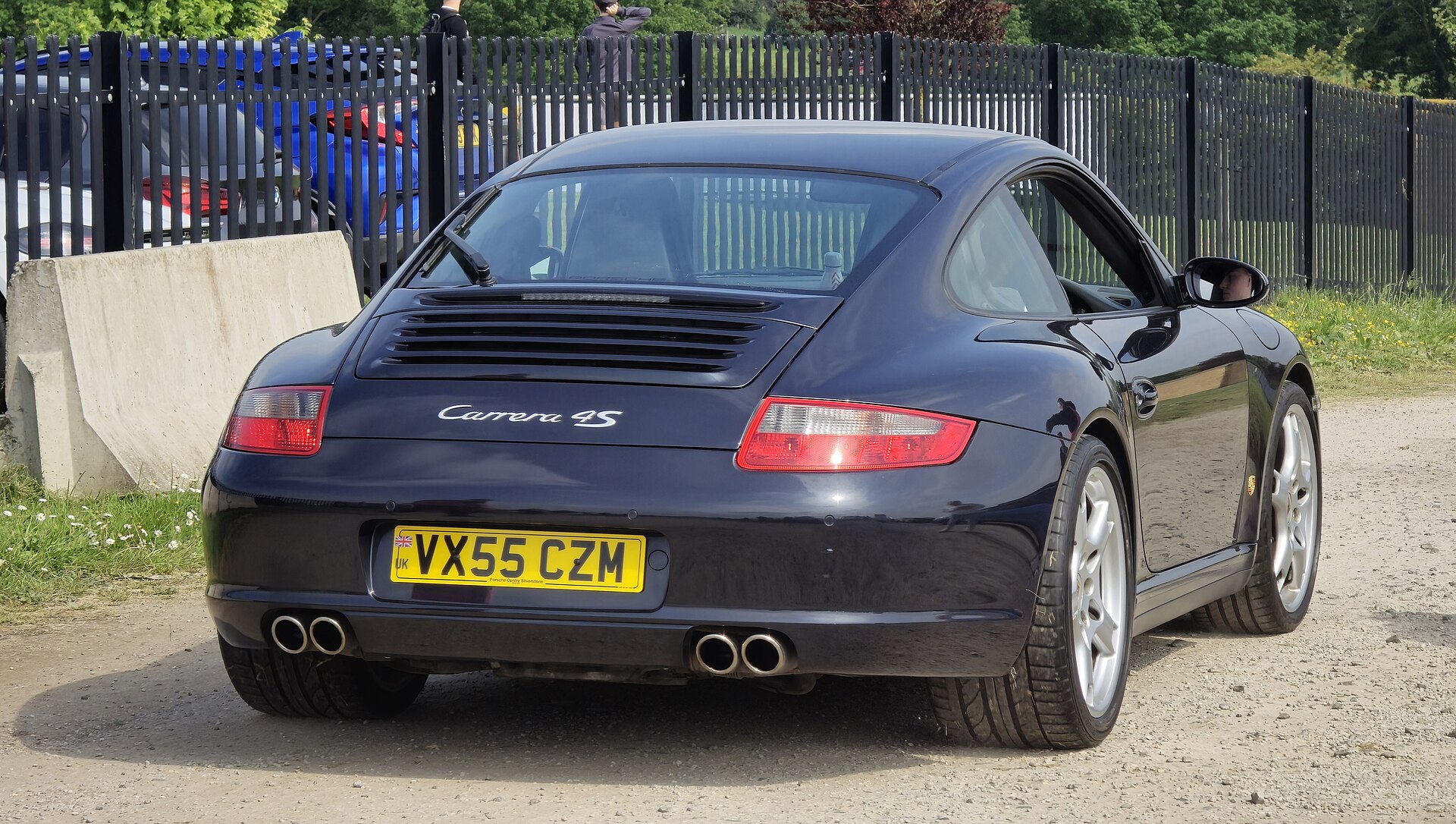
The Porsche 911 Turbo S maintains the iconic rear-engine layout that Porsche has perfected over six decades. This setup places the turbocharged flat-six behind the rear wheels, creating a technically unconventional but empirically proven performance formula. The 911 Turbo S weighs 3,750 pounds, slightly heavier than the McLaren, but Porsche's engineering minimizes the handling penalty of the rear-weight bias.
The McLaren's mid-engine positioning creates a distinctly different driving experience. Turn-in is instantaneous. Mid-corner response is surgical. The car feels like an extension of the driver's intentions. The Porsche's rear-engine layout generates more understeer initially, but the all-wheel-drive system and active suspension compensate brilliantly. On a track, the McLaren might be marginally quicker through technical corners, but the Porsche delivers more confidence to drivers of varying skill levels.
Aesthetically, the McLaren GT looks like what it is: a mid-engine supercar with a front trunk and a purposeful stance. The Porsche 911 Turbo S maintains the classic 911 silhouette that's been evolving for over 50 years. Which design speaks to you is purely subjective, but the McLaren's proportions are more outrageous while the Porsche is more timeless.
Interior, Comfort, and Usability: The Practicality War
This is where the comparison gets really interesting. The McLaren GT was specifically designed to be more livable than McLaren's supercar brethren, but it's still a mid-engine exotic. The cabin is tight. Headroom is limited. Getting in and out feels like folding yourself into a racing suit. Visibility is poor because the engine bay dictates the proportions. The infotainment system feels dated compared to modern Porsches.
The Porsche 911 Turbo S, conversely, is genuinely usable as a daily driver. You can actually see out of the thing. The seats are supportive but not punishing. The cabin materials feel luxurious. Climate control actually works. The infotainment system uses the latest Porsche Communication Management with a responsive touchscreen and Apple CarPlay integration. For real-world driving comfort, the Porsche is substantially ahead.
Cargo space heavily favors the Porsche. The 911 Turbo S has a 14.3-cubic-foot front trunk and a rear seat area that can fold down for additional storage. The McLaren GT has a 6.8-cubic-foot front trunk and minimal rear cargo space. If you actually need to carry luggage for a weekend trip, the Porsche is the only realistic choice. The McLaren GT was designed with the assumption that owners would use it as a Saturday car with minimal baggage.
Climate control and driver assistance features also lean heavily toward Porsche. The 911 Turbo S comes with parking assistance, traffic sign recognition, and a comprehensive suite of driver aids. The McLaren GT offers these features, but they feel bolted-on rather than integrated. For extended drives through varying weather conditions, the Porsche is demonstrably more user-friendly.
Reliability and Dealer Support: Porsche Wins Decisively
This is the area where the comparison most heavily favors Porsche. The Porsche 911 Turbo S is built on decades of evolutionary engineering. The dual-clutch transmission is legendary for reliability. The turbocharged flat-six has proven itself across millions of miles of real-world ownership. Porsche dealers are everywhere, and they stock parts for everything. If something breaks, you can get it fixed by any Porsche dealer in the world.
The McLaren GT is significantly newer and less proven. While early reliability reports are encouraging, McLarens still develop electrical gremlins occasionally. Carbon fiber monocoque repairs are expensive and require specialized expertise. The dealer network is smaller, which means finding qualified service can be challenging if you don't live near a major metro area. A simple repair that would take a Porsche dealer two hours might require shipping your car to the nearest McLaren service center for the GT.
Maintenance costs tell a similar story. A Porsche 911 Turbo S with proper care costs about $2,000-$4,000 annually in maintenance. The McLaren GT typically runs $3,000-$6,000 per year. When something major breaks on a Porsche, parts are abundant and pricing is established. McLaren parts can be hard to source and expensive when available.
If you're buying a used example, this distinction becomes even more critical. A 2020 Porsche 911 Turbo S has five years of ownership history and known issues that are well-documented. A 2020 McLaren GT is newer to the used market, and issues aren't as thoroughly understood. For peace of mind ownership, the Porsche is objectively superior.
Pricing and Depreciation: The Financial Reality
Current used pricing shows both cars in similar territory, but with different depreciation trajectories. A used 2020-2021 McLaren GT typically sells for $180,000-$220,000. A 2020-2021 Porsche 911 Turbo S (992 generation) ranges from $170,000-$210,000. The McLaren's higher asking prices reflect its exotic status and lower production numbers.
However, depreciation curves diverge significantly over longer ownership periods. Porsches hold their value remarkably well, particularly the 911 family. A 911 Turbo S purchased at $300,000 new will likely be worth $160,000-$180,000 in 2026 — roughly 45% depreciation over five years. That's exceptional for a turbocharged performance car.
McLarens depreciate faster. The GT has been on the market since 2019, and used examples show steeper value curves than Porsches. A GT that sold new for $210,000 might fetch $160,000-$180,000 used, depending on mileage and condition. The McLaren's exotic positioning and smaller dealer network work against value retention.
The practical implication: if you buy a used 911 Turbo S and drive it for three years, you might lose only $30,000-$40,000 in value. A used McLaren GT might depreciate $50,000-$70,000 over the same period. Factor depreciation into your total cost of ownership, and the Porsche's advantage grows more pronounced.
Need Expert Pricing Guidance?
Automonitor's market data and dealer network help you find fair pricing on both McLarens and Porsches. Get instant valuations based on real market comparables.
Get Market Pricing →
Daily Driving: Which One Can You Actually Live With?
The 911 Turbo S is genuinely drivable on a daily basis. Visibility is manageable. Ground clearance is adequate. The suspension modes include comfort settings that absorb highway imperfections. You can actually park the car without breaking into a cold sweat. Insurance companies recognize Porsches as regular performance cars and price them accordingly.
The McLaren GT is significantly more challenging for daily use. Ground clearance is minimal — speed bumps are a genuine concern. Visibility is poor, particularly when reversing. Parking requires precision and nerves of steel. Daily traffic feels aggressive when you're piloting a car that weighs 3,582 pounds and accelerates like a land missile. Insurance costs are higher due to the exotic classification.
If you have multiple cars and plan to use the GT as a weekend-only driver, these limitations don't matter. But if this is your only high-performance car and you need to use it regularly, the Porsche is substantially more practical. The 911 Turbo S genuinely works as a primary vehicle. The McLaren GT works as a secondary thrill machine.
Weather driving also heavily favors the Porsche. All-wheel drive comes standard, and the suspension geometry is optimized for all-weather driving. The McLaren GT is rear-wheel drive and feels nervous on wet roads despite sophisticated traction control. Winter driving in a McLaren GT requires commitment and confidence.
Track Performance and Driving Dynamics: Where McLaren Shines
Now flip the scenario to the track. The McLaren GT's mid-engine layout creates a fundamental handling advantage. The car's center of gravity is lower and more centered, making it easier to carry speed through technical sections. Lift-off oversteer is minimal. The car responds immediately to steering input without the mid-corner push that the Porsche occasionally exhibits.
The Porsche 911 Turbo S, despite its rear-engine layout, uses all-wheel drive and active suspension to overcome its less-ideal weight distribution. Advanced electronic systems manage the complexity and deliver lap times that are remarkably close to the McLaren. On a 2-mile circuit, you might see 1-2 seconds separating them with competent drivers.
However, the McLaren feels more involved and raw. There's less electronic mediation between driver input and chassis response. The steering is more direct. The braking feels more aggressive. For drivers who want to engage with every mechanical detail of performance, the McLaren delivers a more rewarding experience.
Extended track sessions reveal another difference: thermal management. The McLaren's mid-engine location and advanced cooling systems keep temperatures stable during spirited driving. The Porsche, with its turbocharged engine mounted in the rear, can generate substantial heat during sustained high-performance driving. For weekend track enthusiasts, the McLaren's thermal management is superior.
The McLaren GT forces you to be a better driver. The Porsche 911 Turbo S makes you feel like a better driver. Both are legitimate approaches, depending on your skill and patience.
Detailed Specifications Comparison
| Category | McLaren GT | Porsche 911 Turbo S (992) |
|---|---|---|
| Engine | 4.0L Twin-Turbo V8 | 3.7L Twin-Turbo Flat-6 |
| Power | 612 hp @ 7,500 rpm | 640 hp @ 6,750 rpm |
| Torque | 561 lb-ft @ 5,500 rpm | 590 lb-ft @ 2,250 rpm |
| 0-60 mph | 3.1 seconds | 2.6 seconds |
| 0-100 mph | 6.4 seconds | 5.8 seconds |
| Top Speed | 199 mph | 211 mph |
| Transmission | 7-Speed Dual-Clutch | 8-Speed PDK Dual-Clutch |
| Drivetrain | Rear-Wheel Drive | All-Wheel Drive |
| Weight | 3,582 lbs | 3,750 lbs |
| Curb Weight Dist. | 50/50 Mid-Engine | 37/63 Rear-Engine |
| Fuel Capacity | 19.8 gallons | 22.5 gallons |
| Fuel Economy | 15 mpg combined | 16 mpg combined |
| Front Trunk | 6.8 cu-ft | 14.3 cu-ft |
| Cargo Space | 3.2 cu-ft | 12.6 cu-ft (rear seats folded) |
| Brakes | Carbon Ceramic | Carbon Ceramic w/ VarioCeram |
| Suspension | Adaptive Multi-Link | Adaptive Air Suspension |
| Tire Size | 285/35R19 & 325/30R20 | 255/35R20 & 285/30R21 |
Carbon Fiber vs Steel: Construction and Durability
The McLaren GT's carbon fiber monocoque chassis represents the cutting edge of automotive material science. Carbon fiber is lighter and theoretically stronger than steel, but it has critical limitations. Impact damage isn't always visible from the outside. Repair costs are astronomical compared to steel. A fender-bender that would cost $3,000 to fix on a Porsche might require $15,000+ of carbon fiber work on a McLaren.
The Porsche 911 Turbo S uses an aluminum and steel construction that's proven, understood, and economically repairable. Major accidents that total a McLaren might be repairable on a Porsche. Insurance companies are comfortable with Porsches because repair costs and timelines are predictable. McLarens introduce uncertainty, which drives insurance costs higher.
From a longevity perspective, steel and aluminum have proven their durability over decades. Carbon fiber in automotive applications is newer, and long-term durability data is still accumulating. A 1990s Porsche 911 is still mechanically viable. A 1990s McLaren... well, there weren't any, but carbon fiber components showing 30-year lifespans is still an open question.
For buyers focused on keeping their cars for five years or less, this distinction matters less. For long-term ownership, the Porsche's conventional construction is more predictable.
Annual Maintenance Costs: Real Numbers
Based on owner surveys and dealer quotes, here's what typical annual maintenance looks like:
| Expense Category | McLaren GT | Porsche 911 Turbo S |
|---|---|---|
| Oil Changes & Filters | $800–$1,200 | $400–$600 |
| Tire Replacement (amortized) | $2,000–$3,000 | $1,500–$2,500 |
| Brake Inspection/Service | $1,500–$2,500 | $800–$1,500 |
| Fluid Top-Ups & Checks | $300–$500 | $200–$400 |
| Major Repairs (unexpected) | $4,000–$8,000 | $2,000–$4,000 |
| Annual Total (routine) | $3,000–$6,000 | $2,000–$4,000 |
The Porsche's lower maintenance costs reflect simpler systems and greater parts availability. McLaren ownership, particularly out of warranty, can become expensive quickly if anything major develops.
Insurance Costs and Availability
Insurance for exotic vehicles varies dramatically based on location, driving record, and the individual insurer's comfort level with the brand. Porsche 911 Turbo S models are readily insurable at rates comparable to other premium performance cars. Expect to pay $3,500-$6,000 annually depending on age, location, and coverage.
McLaren GT insurance is more challenging. Some carriers don't insure them at all. Those that do charge premiums reflecting the exotic nature, relative rarity, and unpredictable repair costs. Budget $4,500-$8,000 annually for comprehensive coverage on a McLaren GT. That's 25-50% more than comparable Porsche coverage.
Combined with higher maintenance costs and faster depreciation, the true annual cost of ownership heavily favors the Porsche 911 Turbo S.
Frequently Asked Questions
Is the McLaren GT faster than the 911 Turbo S?
No. The Porsche 911 Turbo S is significantly faster in acceleration (2.6 seconds to 60 vs 3.1 seconds), top speed (211 mph vs 199 mph), and quarter-mile performance. The McLaren has better mid-corner handling dynamics, but the Porsche's raw pace advantage is undeniable. For lap times on technical circuits, they're closer than the acceleration numbers suggest.
Which is more reliable long-term?
The Porsche 911 Turbo S is substantially more reliable. The flat-six turbocharged engine and eight-speed PDK transmission have proven track records. McLarens are newer to the market and less proven in terms of long-term durability. Carbon fiber construction introduces unknowns that steel doesn't. If reliability is your priority, Porsche wins decisively.
Can I daily drive the McLaren GT?
Technically yes, but practically no. The McLaren GT has poor visibility, minimal cargo space, low ground clearance, and a firm suspension. It's drivable, but daily use is stressful. The Porsche 911 Turbo S is designed specifically for daily usability and genuinely works as a primary vehicle for owners willing to manage fuel costs and parking anxiety.
Which depreciates slower?
The Porsche 911 Turbo S holds value substantially better. Porsches typically depreciate 40-50% over five years. McLarens depreciate 50-60% over the same period. If you plan to sell in 3-5 years, the Porsche's value retention is a significant financial advantage.
What if I need cargo space?
The Porsche wins definitively. The 911 Turbo S has 14.3 cubic feet of front trunk and 12.6 cubic feet of rear cargo space with seats folded. The McLaren GT has 6.8 cubic feet of front trunk and minimal rear space. For weekend getaways or trips that require luggage, only the Porsche is practical.
Ready to Compare These Cars In Person?
Automonitor connects you with McLarens and Porsches available for test drives. Schedule back-to-back comparisons and make your decision with confidence.
Find Both Cars →Final Recommendation
Choose the Porsche 911 Turbo S if you want a car that combines supercar performance with sports car practicality. You get genuine speed, everyday usability, exceptional reliability, lower running costs, and strong value retention. The 911 Turbo S is the smarter financial choice and the more sensible daily driver. Read our full 911 Turbo S buying guide for additional details on variants and specifications.
Choose the McLaren GT if driving experience and exclusivity matter more than practical considerations. You get a mid-engine supercar with exceptional handling, exotic status, and an experience that the Porsche, despite its brilliance, simply cannot replicate. The McLaren GT is more demanding as an owner, more expensive to maintain, and will depreciate faster. But if you have the budget and the patience, the rewards are substantial. See our McLaren 720S guide for context on McLaren reliability.
If you want to compare these options against other grand touring supercars, explore our best first exotic car guide, which evaluates Porsche 911 variants and other options. For deeper financial understanding, check our exotic car maintenance cost breakdown and insurance pricing analysis.
Either car will deliver years of driving joy if purchased with realistic expectations about ownership costs, maintenance requirements, and actual usability. The McLaren GT is an automotive experience. The Porsche 911 Turbo S is a complete package. Both are objectively magnificent machines.