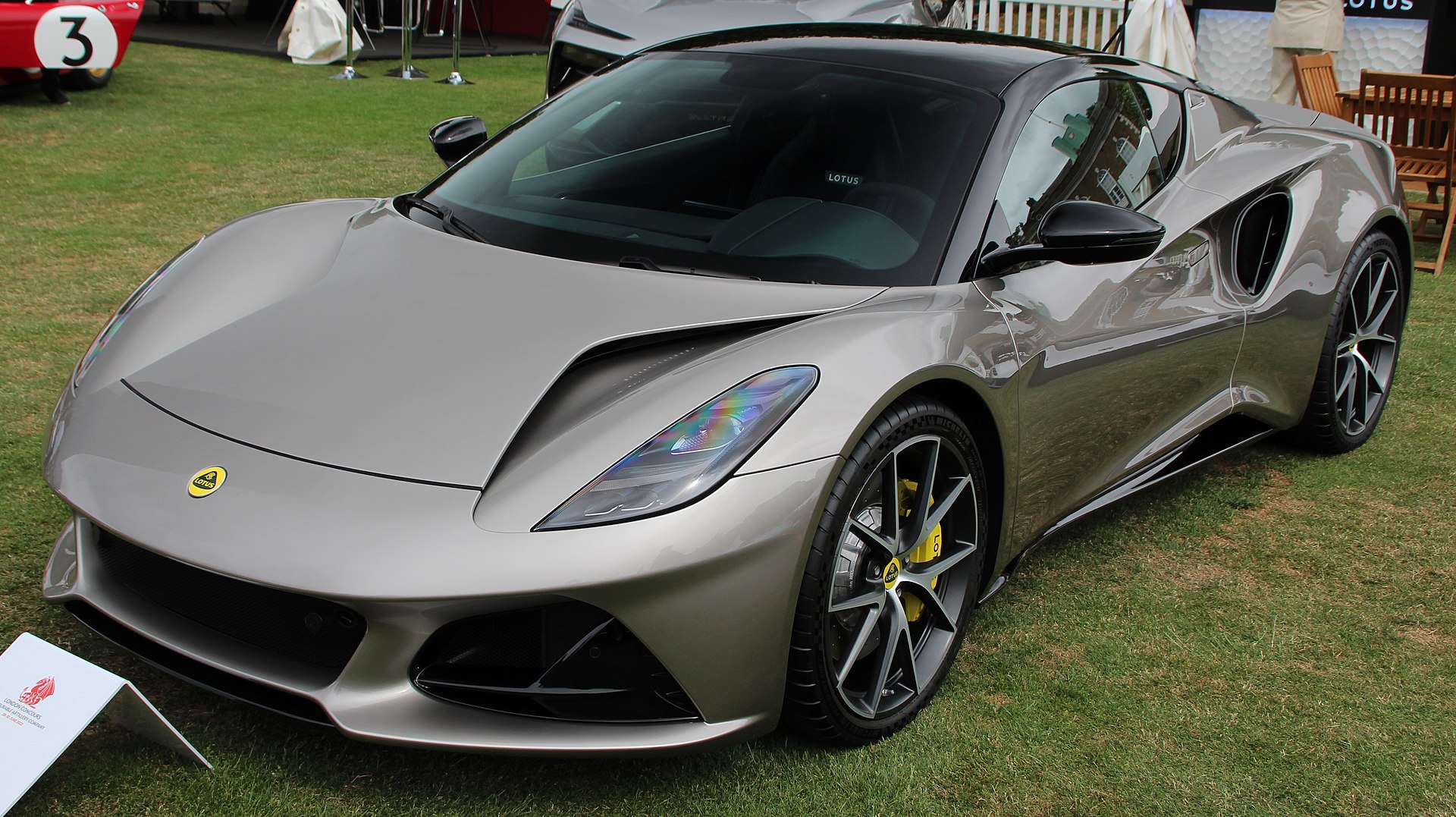
Is a Lotus Emira Worth Buying?
The Lotus Emira sits at a fascinating intersection: lightweight design philosophy meets accessible supercar pricing. But between engine options, build quality concerns, and the complex Lotus dealer network, is it actually a smart purchase for 2026?
The Short Answer: Yes, But With Important Caveats
The Lotus Emira is worth buying if you prioritize driving engagement, lightweight design, and value over brand prestige or warranty assurance. It's one of the last pure driving machines in an era of electronics and electrification — a car that rewards smooth inputs and carries the philosophy of founder Colin Chapman: simplify, then add lightness. But that's also why it's not for everyone. The Emira's radical philosophy means compromises that not every buyer will appreciate, and build quality inconsistencies suggest you need to inspect used examples carefully before committing.
Unlike the Lamborghini Huracan or Ferrari 488, the Emira doesn't trade on raw power or legendary brand heritage. It trades on the purity of the driving experience and exceptional value proposition. You're paying $60,000–$85,000 for a hand-built British sports car with engineering that punches far above its price point. The question is whether that appeals to you more than the security of established brands with better warranty coverage.
We've guided dozens of buyers through the Emira purchase process at Automonitor, and the single biggest insight is this: buyers who love the Emira understand that they're making a conscious trade-off. They're choosing Lotus's driving-first philosophy over the peacock factor of Italian supercar badges. That self-awareness leads to satisfaction.
What Makes the Emira Special: Lightweight in the Wrong Era
Lotus spent decades as the cult brand for drivers who understood that power is optional but weight is evil. The Emira, released in 2021, is the first all-new Lotus road car in over a decade, and it carries that philosophy into the 2020s with remarkable faithfulness.
The Emira weighs just 3,074 pounds. For context, a Porsche 911 Carrera weighs 3,275 pounds. A BMW M440i weighs 3,575 pounds. That 200-pound difference translates directly to agility, responsiveness, and the kind of driving feel that modern tech-laden supercars have engineered away in pursuit of performance numbers. The Emira achieves that lightness through an aluminum chassis, minimal sound deadening, minimal power steering assist, and a refreshing lack of electronic interference.
The steering is mechanical and direct. The throttle response is instantaneous. The suspension tuning prioritizes feel over compliance. This is a car that penalizes sloppy inputs and rewards smooth, thoughtful driving. In a world where every supercar now has paddle shifters, traction control modes, and launch control, the Emira stands apart as a car that demands more from its driver but gives back more in return.
The chassis is essentially a double-wishbone design shared with the Evora, Lotus's previous-generation sports car. But the Emira's geometry is optimized for a completely different powertrain philosophy — one that accommodates multiple engine options, something previous Lotus models rarely did.
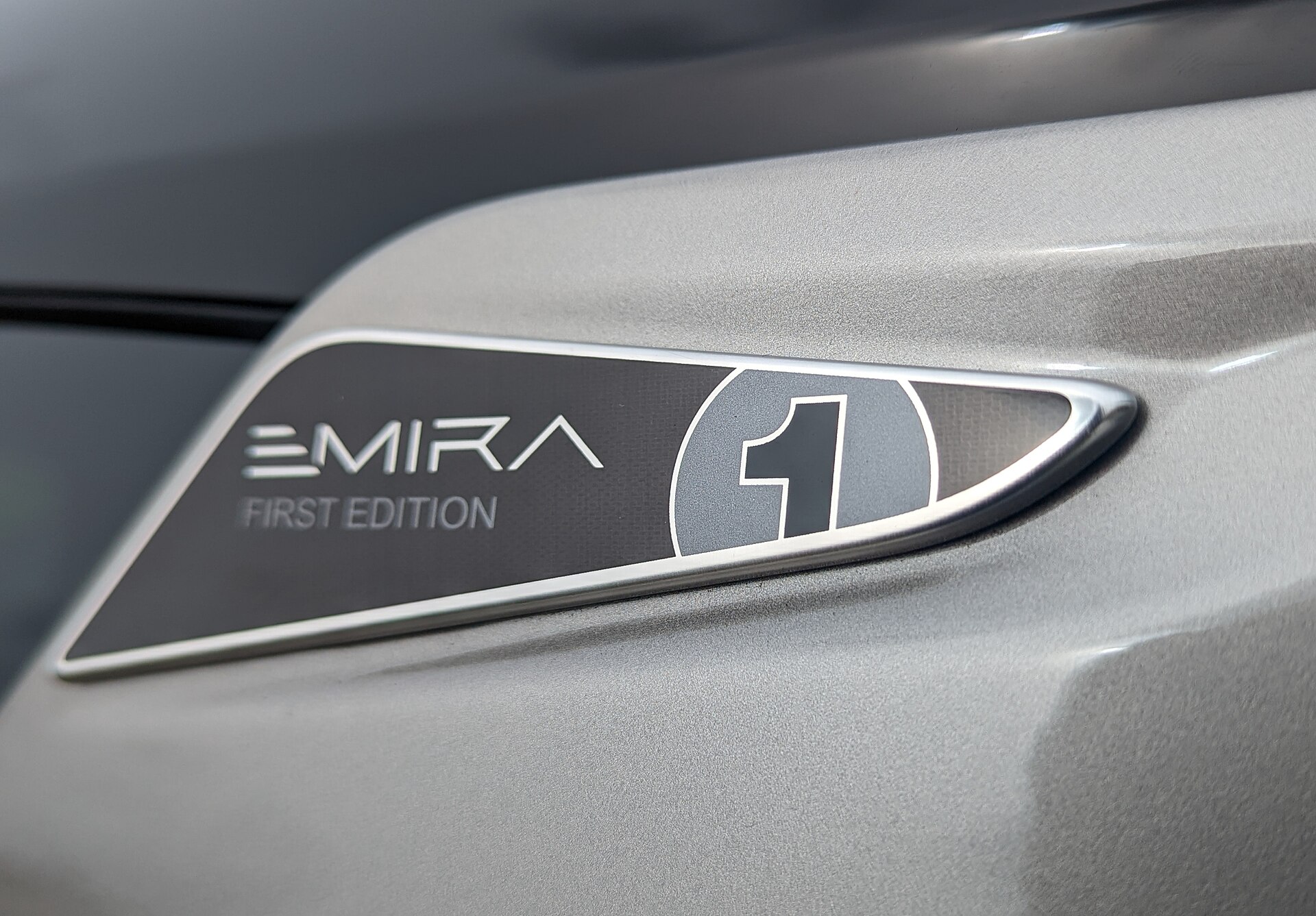
Engine Options: AMG vs. Toyota — The Most Important Decision
The Emira launches with two completely different engine options, and your choice here will define your ownership experience more than any other decision.
Mercedes-AMG 2.0L Turbo I4 (430 hp)
The AMG engine comes from the Mercedes-AMG A45 S, tuned to 430 horsepower and 381 lb-ft of torque. It's turbocharged, intercooled, and incredibly compact — perfect for the Emira's tight engine bay. It hits 60 mph in 3.4 seconds and tops out at 180 mph. On paper, it sounds perfect. But the reality is more nuanced.
The turbo I4 provides excellent mid-range grunt and city-car-level practicality. Insurance is cheaper because it's a 2.0L displacement engine. Maintenance is straightforward — you're essentially using Mercedes parts. But the sound is somewhat muted compared to naturally aspirated engines, and some purists argue that turbocharging the Lotus experience dilutes the philosophy.
Toyota 3.5L Naturally Aspirated V6 (416 hp)
The V6 comes from the Toyota GR Supra (and is shared with the Toyota GR Corolla). It's a 3.5L naturally aspirated unit that produces 416 horsepower and 369 lb-ft of torque. It hits 60 mph in 3.5 seconds and tops out at 179 mph. It's actually 14 horsepower less than the AMG engine, yet buyers often prefer it.
The V6 sounds better — a familiar Toyota sports car wail that carries character. It revs to 7,000 rpm and doesn't require the turbo's brief moment of lag. It's naturally aspirated, which means it rewards high-rpm driving and has that direct, linear power delivery that makes modern turbocharged cars feel artificial. Maintenance is sourced through Toyota, which has a much wider dealer network than Mercedes. Insurance is marginally higher due to displacement, but parts availability is arguably better.
Which Engine Should You Choose?
The AMG I4 wins on pure performance, cold-start responsiveness, and tuning potential. The V6 wins on character, linear power delivery, reliability track record, and dealer accessibility. Most enthusiasts prefer the V6, even though it's technically slower. This tells you something important about the Emira's buyer profile: performance numbers aren't everything.
For detailed comparison, check our Lotus Emira vs. Porsche Cayman GT4 analysis, which breaks down turbo vs. naturally aspirated philosophies in depth.
Build Quality: The Biggest Wildcard
Here's where we need to be blunt: Lotus's build quality has been historically inconsistent. The Emira is the company's first completely new model in 14 years, and the transition from the Evora to Emira production has shown some rough edges.
Early model year Emiras (2021–2022) exhibited panel gap inconsistencies, paint quality variations, and some interior trim fitment issues. These aren't mechanical failures — they're manifestations of a company transitioning from a small, niche manufacturer to something slightly larger. Lotus has since improved their quality control, but inconsistency remains the biggest reliability wildcard.
The interior uses soft-touch materials and genuinely thoughtful ergonomics. Climate control works well. The infotainment system is simple and reliable. But some doors feel slightly loose, some panel alignments aren't perfect, and some early cars needed interior trim adjustments. This is where Automonitor's pre-purchase inspection becomes essential — you need someone who knows which Emiras were built well and which ones need cosmetic touchups.
The chassis and powertrain are genuinely robust. Engine reliability is excellent on both options (the AMG shares architecture with Mercedes-AMG performance cars, and the V6 is from Toyota's sports car line). The transmission (8-speed DCT on AMG, 8-speed automatic on V6) is proven and reliable. Suspension components are overbuilt. The build quality issues are almost entirely cosmetic, not mechanical.
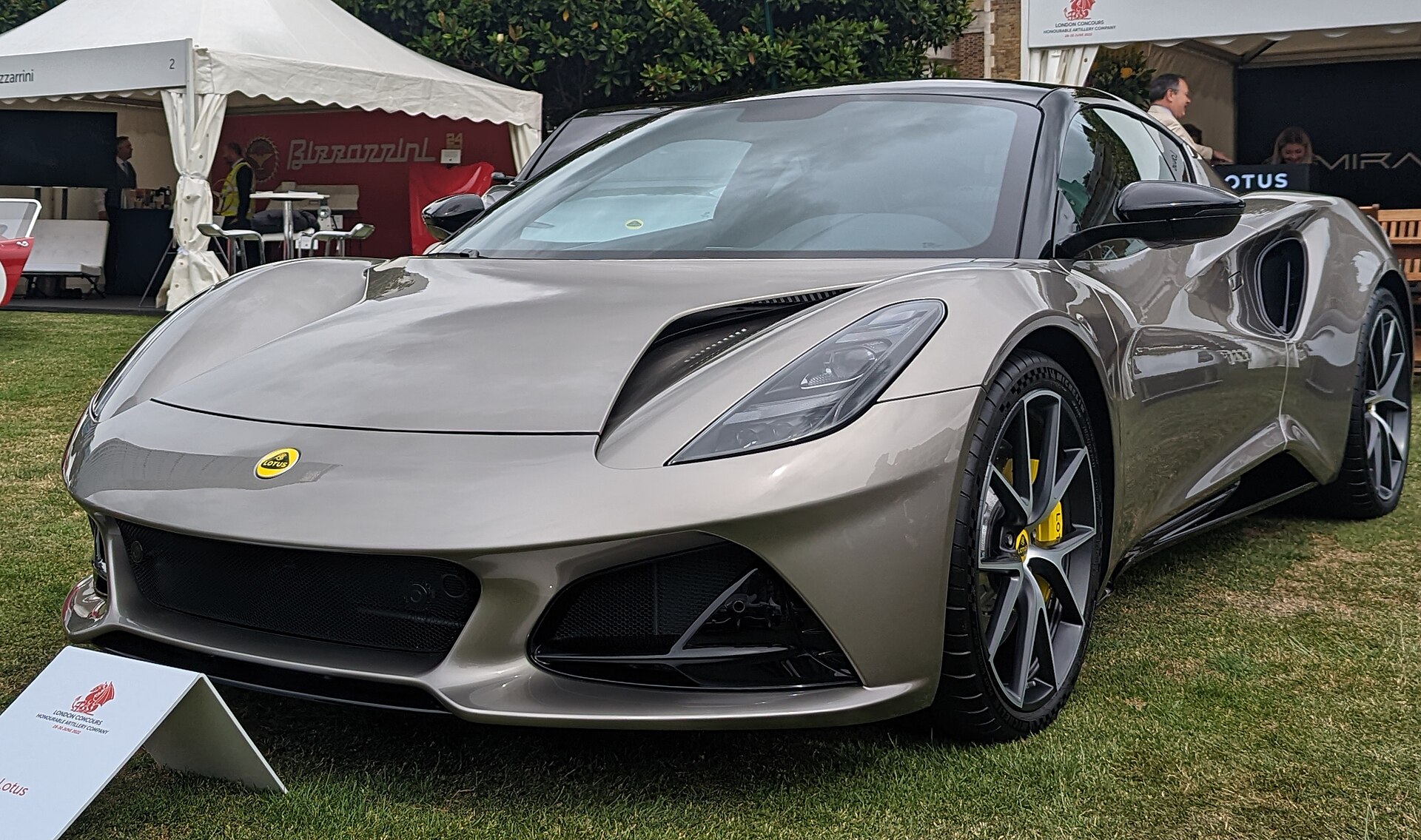
What an Emira Actually Costs: The Complete Ownership Picture
Emira pricing is significantly lower than competitors, which is part of its appeal. Current used market pricing (early 2026) breaks down like this:
| Model Year | Engine | Used Market Range | Sweet Spot |
|---|---|---|---|
| 2021–2022 | AMG I4 | $58,000–$68,000 | 2022 with under 8K miles |
| 2021–2022 | Toyota V6 | $60,000–$70,000 | 2022 with under 10K miles |
| 2023–2024 | AMG I4 | $68,000–$82,000 | 2023 with under 5K miles |
| 2023–2024 | Toyota V6 | $72,000–$85,000 | 2024 with any mileage |
Annual ownership costs are dramatically lower than exotic sports cars in the same performance bracket:
| Expense Category | Annual Cost | Notes |
|---|---|---|
| Insurance | $1,800–$3,200 | Significantly cheaper than Porsche/Ferrari |
| Routine Maintenance | $800–$1,500 | Oil changes, filters, fluid service |
| Fuel | $2,000–$3,200 | 24–28 mpg combined; 91 octane |
| Tires (amortized) | $400–$600 | Pirelli P Zero replacements every 20K–25K miles |
| Brakes (amortized) | $300–$500 | Regular pads; not carbon ceramic |
| Registration & Taxes | $400–$1,200 | State-dependent |
| Total Annual Running Cost | $5,700–$10,200 | Excludes depreciation |
That's roughly $475–$850 per month in running costs — dramatically lower than a Huracan ($1,100–$2,200/month), Ferrari, or McLaren. This is one of the Emira's strongest value propositions. You get genuine sports car ownership with used Civic-level maintenance costs.
Depreciation: Still Writing the Story
Because the Emira is relatively new, we don't have a complete depreciation history yet. But early data is encouraging. A 2021 Emira that cost $68,000 new sells for $58,000–$62,000 in early 2026 — roughly 12–15% depreciation over four years, or about 3–4% annually. That's excellent for a sports car.
The challenge: Lotus brand perception is still being rebuilt. They're not yet at Porsche's equity level, and early build quality issues have made some buyers wary. But as production matures and the brand gains mainstream recognition, appreciation could follow. Some early low-mileage V6 Emiras are holding value better than AMG versions, suggesting buyers value the Toyota engine's reputation.
The practical implication: if you buy a 2023 Emira for $75,000 and drive it for three years, you might sell it for $60,000–$65,000. That's $10,000–$15,000 in depreciation over three years, or roughly $280–$420 per month. For a car of this performance level, that's exceptional. For comparison, see our guide on Lotus Emira pricing trends.
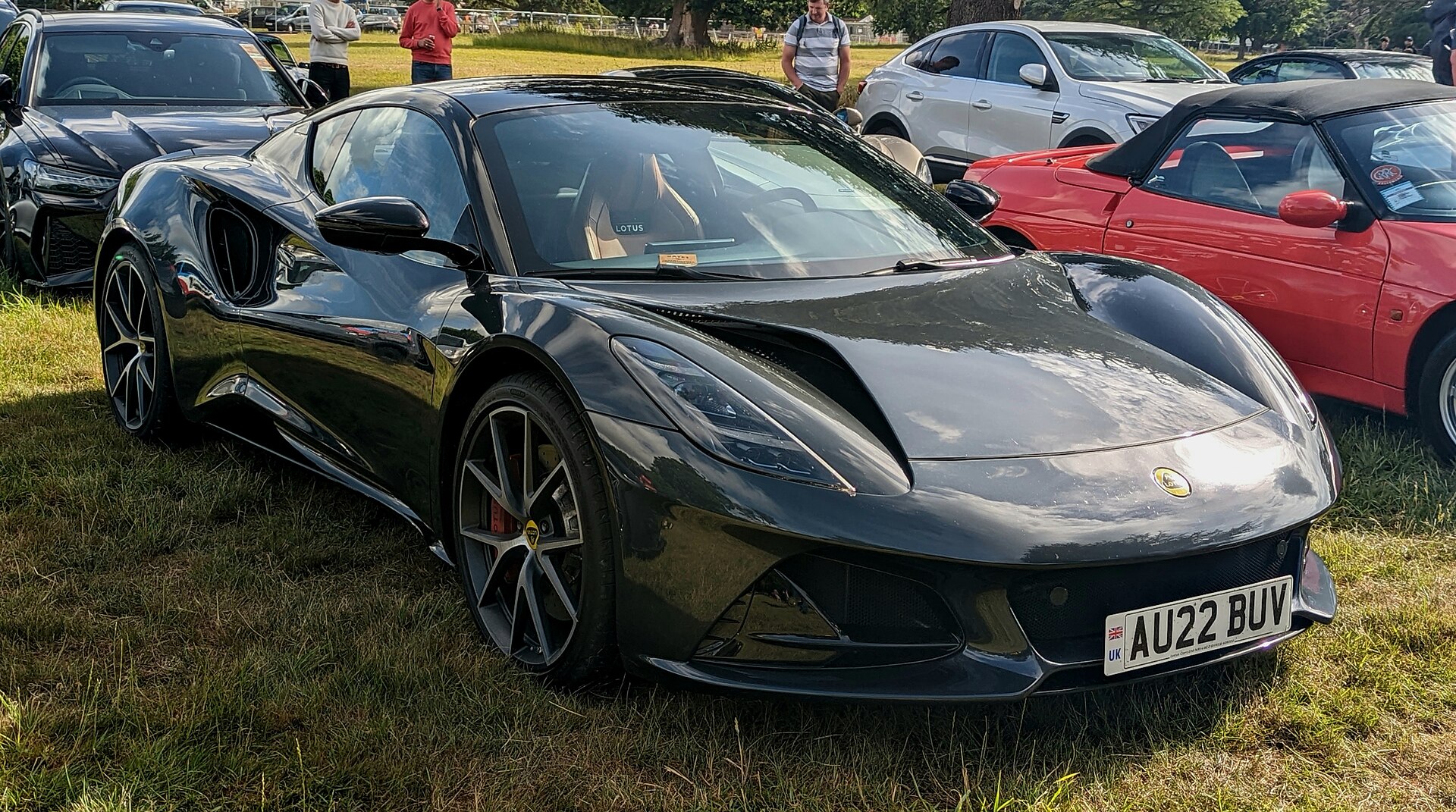
Reliability: Solid Powertrain, Cosmetic Wildcards
The Emira's reliability story breaks into two distinct narratives: mechanical and cosmetic.
Mechanical Reliability
The powertrains are genuinely robust. The AMG I4 is battle-tested in Mercedes-AMG applications. The V6 comes from Toyota's GR sports car line, one of the most reliable engines produced today. No reported engine failures in the Emira population. Transmissions are flawless (DCT or automatic, both proven designs). Suspension components are overbuilt and durable. Cooling system is robust.
The real advantage: if something breaks, parts are accessible through Mercedes (AMG owners) or Toyota (V6 owners). You're not dependent on a niche Lotus dealer network for basic service or repairs.
Cosmetic Issues
Early model year cars showed interior panel gaps, paint inconsistency in some cases, and trim fit issues. These require attention but aren't safety-critical. Always request detailed documentation of any prior service or warranty claims when buying used, and get a professional inspection from someone familiar with Emira quirks.
Long-term Ownership Concerns
Lotus's dealer network is the biggest vulnerability. Unlike Porsche, with 190+ dealers in the US, or Mercedes, with 400+, Lotus has only about 40 dealers across North America. This means: repair wait times can be longer, diagnostic expertise varies, and some dealers are learning the platform as they go. For basic maintenance, this is fine — you can take it to any Mercedes or Toyota dealer. For Lotus-specific issues, you might need to travel.
For detailed reliability information, read our exotic car maintenance costs guide, which includes Emira-specific data.
Get a Pre-Purchase Inspection Before You Buy
Automonitor connects you with certified inspectors who specialize in Lotus vehicles and know exactly which model years have which issues. Don't skip this step.
Schedule an Inspection →The Driving Experience: Why Lotus Still Matters
Numbers don't capture why the Emira is worth buying. The driving experience does.
Start the engine — either the turbo whistle of the AMG or the higher-pitched wail of the V6 — and you immediately sense this car is different. The cabin noise floor is high because Lotus deliberately deleted some sound deadening. You hear everything: the engine, the transmission, the suspension. You're not isolated from the machine; you're integrated with it.
The steering is genuinely unassisted in the way that modern drivers have almost forgotten. There's weight and texture to every input. You can feel the road through the steering wheel — real tactile feedback that tells you how much grip the front tires are generating. Modern power steering is faster and more responsive, but it's also disconnected. The Emira's steering is slower but infinitely more communicative.
The suspension is tuned for precision, not comfort. Potholes are felt. Camber changes in corners are immediately apparent. The car is essentially saying: "Feel where you are on the road, and you'll drive better." It's a philosophy that requires the driver to raise their game. Some drivers find this liberating. Some find it exhausting. There's no middle ground.
The transmission (either the DCT or automatic) is smooth and intuitive. There's no double-clutching nonsense — just honest gear changes that happen when you want them.
The Lotus Emira doesn't need to be the fastest car at the track to justify its existence. It just needs to make every drive feel like you're doing something worth doing — and for those who appreciate it, that's exactly what it delivers.
How It Compares: Emira vs. Porsche 718 Cayman vs. BMW M440i vs. Corvette
You're probably also considering other cars in this price and performance bracket. Here's how the Emira stacks up:
| Category | Lotus Emira V6 | Porsche 718 Cayman | BMW M440i | Corvette C8 |
|---|---|---|---|---|
| Base Price (Used 2023) | $70K–$85K | $65K–$85K | $55K–$75K | $75K–$95K |
| Engine Type | 3.5L NA V6 | 4.0L Turbo Flat-4 | 3.0L Turbo I6 | 6.2L NA V8 |
| Horsepower | 416 hp | 404 hp | 503 hp | 495 hp |
| 0–60 mph | 3.5s | 3.8s | 3.5s | 3.0s |
| Weight | 3,074 lbs | 3,263 lbs | 4,100 lbs | 3,607 lbs |
| Sound | Excellent NA V6 | Decent Turbo Flat-4 | Good Turbo I6 | Extraordinary V8 |
| Steering Feel | Pure & Direct | Good | Good | Excellent |
| Warranty Coverage | Limited* | Excellent | Excellent | Excellent |
| Annual Running Cost | $6K–$10K | $8K–$12K | $9K–$13K | $8K–$14K |
*Warranty depends on build date and mileage; used Emiras typically have limited or no manufacturer coverage.
The Porsche 718 Cayman is the prestige pick — better warranty, established dealer network, and legendary brand equity. The BMW M440i is the sensible choice — more power, more comfort, better warranty, but heavier. The Corvette C8 is the performance bargain — more horsepower, better warranty, better sound. The Emira wins on weight and driving purity, but loses on warranty coverage and brand prestige.
Who Should Buy the Emira? A Profile-Based Guide
The Emira isn't for everyone, and that's not a weakness — it's by design. Here's who should buy one:
Ideal Buyer Profile
- Values driving engagement above all else
- Appreciates mechanical simplicity and feedback
- Can travel to a Lotus dealer if needed (or handle basic service through Mercedes/Toyota)
- Wants sports car performance without the exotic car maintenance burden
- Has a 3–5 year ownership horizon
- Comfortable with "young brand" compromises in exchange for value
- Doesn't need a warranty blanket of security
Not-Ideal Buyer Profile
- Wants established brand prestige and trophy factor
- Values warranty coverage above driving feel
- Needs a car that's always comfortable and compliant
- Plans to keep the car for 10+ years
- Can't afford unexpected cosmetic touch-ups
- Needs immediate access to specialized dealers
- Prioritizes isolation from road noise and feedback
If you're on the fence between an Emira and another platform, read our guide on exotic car buying for first-time buyers. It covers the decision-making framework in depth.
The Smart Way to Buy: Steps That Work for Emiras
Buying an Emira requires a different approach than buying an exotic supercar, but it still demands diligence.
Step 1: Engine decision. Decide AMG or V6 before you start shopping. This isn't a decision you change mid-process. Test drive both if possible.
Step 2: Model year targeting. 2023-model-year cars have much better build quality than 2021–2022. The price jump is worth it. Avoid the absolute earliest production examples (late 2020, early 2021) if possible.
Step 3: Complete service history. Ask for every receipt and every warranty claim. Early cars that needed cosmetic touchups should be priced accordingly. Recent cars with zero service records are golden.
Step 4: Professional inspection. This is non-negotiable. Get someone who knows Lotus vehicles to inspect panel gaps, paint condition, interior trim fit, and full mechanical diagnostics. Budget $500–$800.
Step 5: Real pricing research. Use our Lotus Emira pricing guide to understand market value by engine, year, and mileage. Don't overpay for low mileage — drive it, don't garage it.
Step 6: Financing strategy. Most banks treat the Emira as a standard sports car, not an exotic. Expect 6–8% rates with 20% down. Credit unions often have better terms than traditional lenders.
Step 7: Dealer vs. private party. Lotus dealerships sometimes have Emiras on consignment. Private sales often offer better pricing but fewer protections. Use Automonitor's concierge buying service to vet either option and negotiate from a position of knowledge.
The Depreciation Outlook: Three Scenarios
The Emira's depreciation trajectory depends on how the Lotus brand evolves. Here are three scenarios:
Base Case (Most Likely): Emira depreciates 12–15% over three years. You buy at $75,000, sell at $63,000–$66,000. That's $350–$400 per month in depreciation. Totally acceptable.
Downside Case (Lotus stumbles): If Lotus fails to improve build quality and dealer network, depreciation accelerates to 20–25%. You buy at $75,000, sell at $56,000–$60,000. Still reasonable, but less cushion.
Upside Case (Lotus ascends): If the brand successfully rebuilds its reputation and the Emira becomes recognized as a modern classic, depreciation slows to 8–10% over three years. You buy at $75,000, sell at $67,500–$69,000. A genuine investment car.
Most buyers should plan on the base case and feel delighted if they get the upside case.
When an Emira Is NOT Worth Buying
Transparency matters. Here's when we'd recommend walking away:
You need warranty security. If you're uncomfortable with potentially no manufacturer warranty on a used purchase, the Emira isn't it. You're buying as-is, with all the risk that implies. The Porsche or BMW makes more sense for peace of mind.
You value brand prestige over driving experience. The Emira won't get you the same head turns as a Ferrari or Porsche, and that matters to some buyers. That's okay — buy the car that makes you happy.
You live far from a Lotus dealer and need frequent service. If you're in rural Montana and the nearest Lotus dealer is 400 miles away, this is painful. Factor that in.
You want maximum comfort. The Emira is stiff, loud, and uncompromising. It's not a grand tourer. If you're trading in a Mercedes S-Class, you'll likely hate the ride quality.
You're buying purely as an investment. Sports cars don't print money. The Emira is a car to drive and enjoy. If you're buying as a parking lot asset, pass.
Frequently Asked Questions
Q1: Is the Lotus Emira reliable? Can it go 100K miles?
The Emira's powertrain is very reliable — both engines are proven. Whether it hits 100K miles depends on maintenance. With proper service intervals and no track abuse, 100K is easily achievable. The real question is cosmetic durability over a decade, where Lotus's track record is less certain.
Q2: Should I buy a 2021–2022 Emira or wait for 2023+?
Buy 2023 or newer if possible. Build quality improved markedly. Yes, you'll pay $8,000–$12,000 more, but you'll avoid cosmetic touchup costs and dealer negotiations. Early cars are only worth buying if they're significantly cheaper and come with full service history and warranty documentation.
Q3: Is the V6 or AMG engine better?
Depends on your priorities. AMG: faster, better turbo response, slightly cheaper insurance. V6: better sound, more reliable dealer network (Toyota), more linear power delivery. Most enthusiasts prefer V6. Most performance-focused buyers prefer AMG. Test drive both before deciding.
Q4: What's the insurance cost for an Emira?
Typically $1,800–$3,200 per year for a 35-year-old driver with good credit. Compare that to Huracan ($4,000–$8,500/year) and you see part of the Emira's value proposition. Get quotes before buying.
Q5: How does the Emira compare to the Porsche 718 Cayman GT4?
Both are excellent choices. The 718 is faster, carries Porsche prestige, and has better warranty coverage. The Emira is lighter, cheaper to maintain, offers better value, and delivers purer steering feel. The Cayman is the sensible choice; the Emira is the purist's choice. See our detailed Emira vs. Cayman GT4 comparison for full specs.
Q6: Can I daily drive an Emira?
Yes, technically. But it's not ideal. Ground clearance is low. Speed bumps are enemies. Interior storage is minimal. Fuel range is decent (about 280 miles per tank). Climate control is effective. If you want a car you'll actually use every day, a BMW M440i makes more sense. If you want a car you'll love to drive on weekends and don't mind the compromises, the Emira is perfect.
Ready to Find Your Emira?
Automonitor sources from verified sellers and handles inspections so you buy with confidence. We know which model years to prioritize and what to look for in build quality.
Start Your Search →