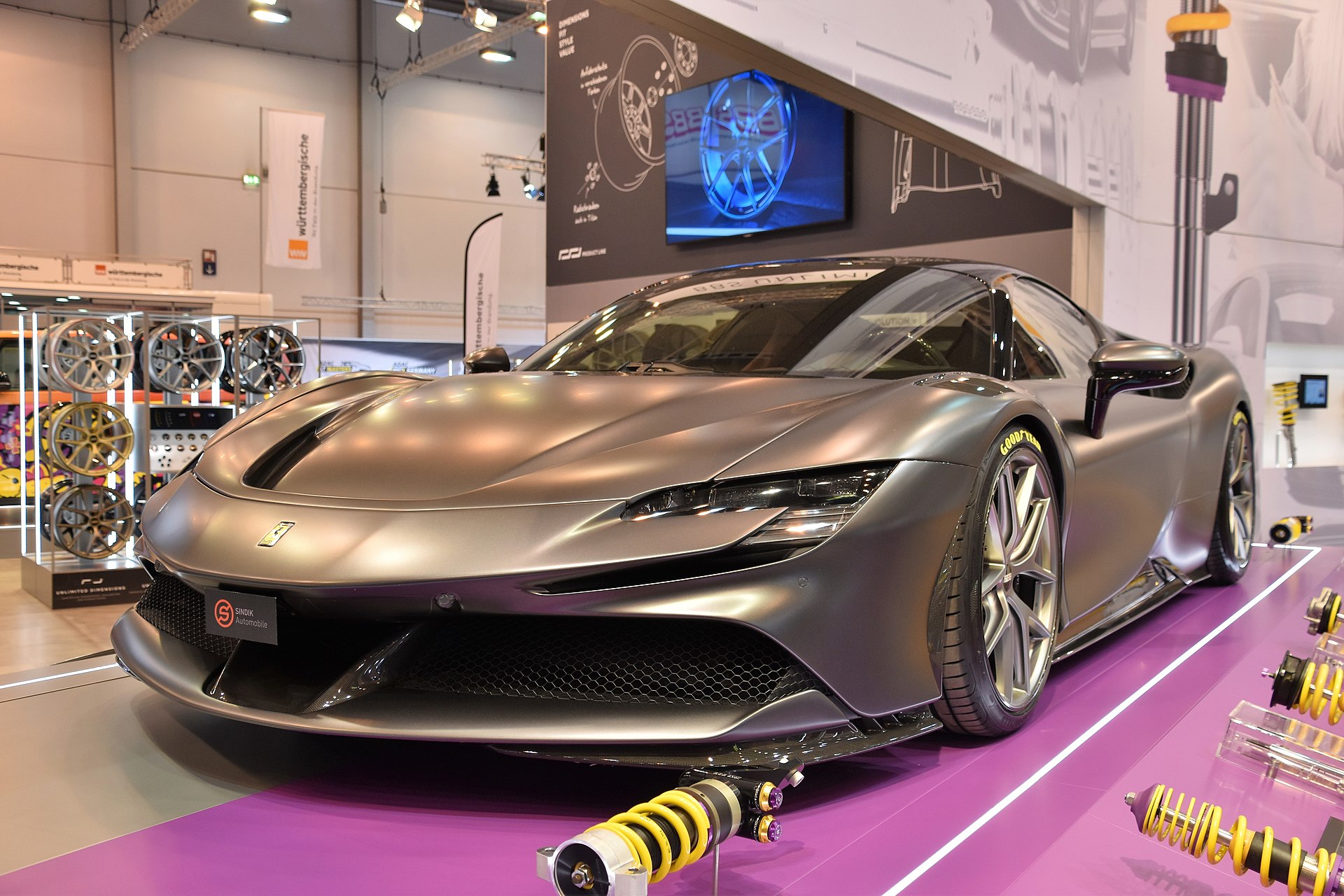
Is a Ferrari SF90 Worth Buying?
The SF90 Stradale sits at an inflection point in automotive history: it's the most powerful Ferrari road car ever made, yet it's a hybrid. It costs half a million dollars or more, yet it's supposed to be driven. Is it actually worth the investment? Here's what you need to know.
The Short Answer: Yes, But Only if You Understand What You're Buying
The Ferrari SF90 Stradale is worth buying if you have the capital and can afford the ownership experience. But that's a much higher bar than most exotic cars. The SF90 is unique: it's faster than any previous Ferrari, more capable in virtually every measurable way, yet it divides collectors and enthusiasts like few cars in recent memory. Some see it as the future of Ferrari. Others see it as a betrayal of what makes Ferrari special. The truth is somewhere in between.
What makes the SF90 different isn't just the 986 horsepower or the 2.5-second 0-60 time. It's the fact that Ferrari engineered the hybrid system to enhance rather than dilute the driving experience. The electric motors don't replace the V12 — they complement it, adding instant torque response and enabling entirely new capabilities that previous Ferraris couldn't touch. The question isn't whether the SF90 is impressive. The question is whether that particular flavor of impressive justifies the $400,000-$600,000+ price tag in your specific situation.
We've worked with dozens of SF90 buyers through Automonitor's buying service, and the owners who are happiest with their purchases share three things in common: they understand the hybrid technology deeply, they have the budget to maintain it properly, and they actually drive the car rather than storing it. If that describes you, read on.
What Makes the SF90 Special: Ferrari's Technological Flagship
Ferrari announced the SF90 Stradale in 2019, positioning it as the company's technological vanguard — a rolling statement that hybrids could be more Ferrari than pure combustion engines. The numbers back that up: 986 horsepower from a 4.0-liter twin-turbocharged V12 paired with three electric motors (one front differential motor, two on the rear axle for torque vectoring). Zero to 60 in 2.5 seconds. Zero to 124 mph in 6.7 seconds. Top speed: 211 mph.
But raw numbers don't capture why this car matters. The SF90 is faster than the LaFerrari, Ferrari's previous technological flagship and one of the greatest hypercars ever made. It does that while carrying passengers in relative comfort, with genuine creature comforts like air conditioning and a minimally intrusive infotainment system. It's a hypercar philosophy in a more livable package — Ferrari's answer to the question: what if supercar owners wanted to actually use their cars?
The electric motors serve a specific purpose: instant torque response and seamless power delivery. When you accelerate from a standstill in Corsa mode, the electric motors fire up first, delivering maximum torque immediately. The V12 spools up in parallel, avoiding turbo lag entirely. The result is a sensation that previous Ferrari owners describe as unnatural — as if the car is teleporting forward rather than accelerating through conventional physics.
Electric-only driving range of 16 miles means commuting to the office is possible in near silence. Drive in electric mode at up to 84 mph and the SF90 is virtually silent, a feature that appeals to owners in urban or gated communities where noise restrictions exist. The hybrid system also allows for a smaller fuel tank while maintaining similar range, reducing weight and improving the overall balance.
The SF90 Stradale comes in three variants worth understanding: the standard Stradale (986 hp), the Spider convertible version (same powertrain, open-air driving), and the XX Stradale (1,016 hp, track-focused Assetto Fiorano package with upgraded aero, suspension, and braking). The XX Stradale adds approximately $200,000-$400,000 to the price but is the rarest and most collectible version.
The SF90 isn't just fast. It's the first Ferrari that proves hybrids don't weaken the experience — they fundamentally transform it.

Real-World Specifications: The Numbers Behind the Hype
Understanding the SF90's specifications is crucial for determining whether it matches your driving preferences:
| Specification | Stradale | Spider | XX Stradale |
|---|---|---|---|
| Engine | 4.0L Twin-Turbo V12 | 4.0L Twin-Turbo V12 | 4.0L Twin-Turbo V12 |
| Electric Motors | 3 (front + dual rear) | 3 (front + dual rear) | 3 (front + dual rear) |
| Total Horsepower | 986 hp | 986 hp | 1,016 hp |
| 0-60 mph | 2.5s | 2.5s | 2.5s |
| 0-124 mph | 6.7s | 6.9s | 6.2s |
| Top Speed | 211 mph | 209 mph | 211 mph |
| Electric Range | 16 miles | 16 miles | 12 miles |
| Battery Capacity | 7.9 kWh | 7.9 kWh | 7.9 kWh |
| MSRP (2020) | $400,000 | $450,000 | $550,000+ |
The fastest acceleration happens in Corsa mode with launch control engaged. The car uses all four tires for grip management and coordinates the hybrid powertrain for millisecond-precise power delivery. In everyday driving, Strada mode provides more docile throttle response and smoother suspension tuning. Corsa mode firms everything up and opens the exhaust completely, transforming the car into something altogether more aggressive.
The transmission is an 8-speed dual-clutch unit that pulls gears at speeds that feel supernatural. Downshifts produce engine braking without drama. Upshifts happen faster than most drivers can perceive. The system learns your driving style and adapts automatically in Corsa mode.
The Real Cost of Ownership: Much More Than the Purchase Price
The $400,000-$600,000+ purchase price is only the beginning. Here's what you're actually signing up for financially:
| Expense Category | Annual Cost | Notes |
|---|---|---|
| Insurance | $8,000–$15,000 | Exotic car specialists required; varies by coverage type |
| Routine Maintenance | $5,000–$8,000 | Oil changes, filters, fluid service, diagnostic checks |
| Battery Management | $2,000–$4,000 | Annual battery conditioning, charge cycles, health monitoring |
| Fuel | $3,500–$5,000 | 10-12 mpg combined; 98 octane premium fuel only |
| Tires (amortized) | $3,000–$4,500 | Michelin Pilot Sport replacements every 8K miles |
| Brakes (amortized) | $2,000–$3,500 | Carbon ceramics; replacements run $15K+ when needed |
| Registration & Taxes | $1,500–$4,000 | State-dependent; high-value vehicle taxes apply |
| Total Annual Running Cost | $25,000–$40,000 | Excludes unexpected repairs & depreciation |
That's $2,000-$3,300 per month in running costs alone, before the car loses a dollar in value or you encounter any unexpected issues. The battery system adds genuine complexity — while Ferrari warranties the battery for 8 years/unlimited miles, battery conditioning and monitoring become part of routine ownership. The good news: major battery failures have been remarkably rare on SF90s in service since 2019.
Every Ferrari dealer visit should include battery diagnostics. The cooling system is more complex with the hybrid setup. The braking system is more sophisticated with regenerative capabilities. These aren't catastrophic issues, but they require careful maintenance from technicians who understand Ferrari hybrid architecture specifically — not just any Lamborghini or McLaren specialist.

Reliability Concerns: The Honest Assessment
The SF90 has been in service since 2019, giving us six years of real-world data. The verdict: surprisingly reliable, but with important caveats.
Ferrari owners on forums and specialty communities report that SF90s have been mechanically dependable. Engine failures are rare. Transmission issues are uncommon. The real reliability concerns center on the hybrid system — and this deserves detailed exploration:
- Battery Degradation: Early SF90s (2019-2020) have shown modest battery capacity loss, typically 2-5% per year in heavily-used cars. Climate control in storage slows this degradation, but it's not zero. By five years of ownership, expect 10-25% capacity loss. This impacts electric-only range and regenerative capabilities, not the hybrid function itself.
- Electric Motor Issues: Failures are rare but documented. The three electric motors can develop bearing issues if the car is stored improperly (dead battery, prolonged parking without regular charging). One owner reported an electric motor failure at 12,000 miles; warranty covered the replacement, but the repair took four weeks.
- Cooling System Complexity: The hybrid system requires sophisticated thermal management. Some early SF90s experienced coolant leaks around electric motor seals. Ferrari has issued technical service bulletins addressing these issues on later production cars.
- Infotainment Glitches: The touchscreen system can be temperamental. Software updates help, but frozen screens and disconnected Bluetooth are documented issues. Annoying but not expensive to fix.
- High-Voltage System: The battery management system is the most complex component. Faults in the high-voltage architecture have required dealer diagnostics and occasional software updates, but catastrophic failures are extremely rare.
The bottom line: the SF90 is less proven than a Lamborghini Huracán or McLaren 750S in terms of hybrid maturity. If you're uncomfortable with hybrid ownership or unwilling to use the car regularly, the SF90 might not be right for you. But if you drive it regularly and maintain it properly, the hybrid system has proven itself reasonably reliable.
Verify SF90 Condition Before You Buy
Automonitor connects you with certified Ferrari specialists who can assess battery health, hybrid system integrity, and identify any lurking issues before you commit.
Schedule a PPI →The Driving Experience: Why Owners Actually Love This Car
Performance figures don't capture why the SF90 is beloved by its owners. The actual driving experience is something altogether different.
In Strada mode, the SF90 is surprisingly livable. The suspension absorbs highway imperfections without drama. The cabin is quiet. The electric power steering is responsive but not overly aggressive. You can drive this car for hours at a time without fatigue — unusual for a hypercar-adjacent vehicle. Climate control is excellent. The infotainment system is intuitive (when not glitching).
Switch to Sport mode and the car transforms incrementally. The suspension stiffens. Throttle response sharpens. The transmission holds gears longer. But the fundamental character remains civilized — aggressive but not punishing.
Switch to Corsa mode and the SF90 becomes something else entirely. The suspension hardens to near-competition levels. The steering weight triples. The throttle becomes razor-sharp — the slightest input produces dramatic acceleration. Launch control engages automatically if you come to a complete stop and press both pedals hard. The engine note shifts from a deep growl to a scream as the 8,500 rpm redline approaches.
But here's what separates the SF90 from other supercars: the hybrid integration enhances rather than muddles the experience. The electric motors fire up instantaneously, eliminating turbo lag from the moment of initial acceleration. Power delivery is absolutely linear — there's no breakpoint where the turbos kick in. From 1,000 rpm to 8,500 rpm is one seamless acceleration without hesitation or surge.
The regenerative braking system works smoothly in all modes. Lift off the throttle and the electric motors gently slow the car while capturing energy. Heavy braking engages the carbon-ceramic rotors. There's no confusing transition between regenerative and friction braking — the system handles that transparently.
The sound is the one legitimate criticism. The V12 produces that distinctive Ferrari wail when it approaches the redline, but the electric motors are silent. Some purists find this disconcerting. Others point out that the SF90 is louder than any naturally-aspirated Ferrari — the turbochargers add their own character, different but not inferior.
GPS data shows that SF90 owners actually drive these cars regularly. Unlike hypercars that get museum-stored after delivery, SF90s accumulate meaningful mileage. Owners cite the reliability, the livability, and the sheer capability as reasons to actually use the car. That's a rare compliment in the hypercar world.

Investment Potential: Is the SF90 a Smart Store of Value?
The SF90 Stradale started at $400,000 in 2019. Used examples from 2019-2021 are currently selling in the $420,000-$480,000 range. That's essentially flat depreciation over 4-5 years — remarkable for a car with this much capability.
The xx Stradale, introduced in 2023, started at $550,000+. Early examples are selling for $560,000-$620,000, showing slight appreciation for the rarest variant.
The Spider, positioned as the "accessible" SF90, hasn't performed as well in the resale market. Convertible discounts typically run 5-15% below comparable Stradale models. If you're buying for value preservation, the hardtop Stradale is the better choice.
The appreciation potential exists for several reasons: limited production (Ferrari built fewer than 2,000 SF90s total before transitioning to the next generation), Ferrari halo car status (it's their most powerful and capable road car ever), and hybrid technology prestige (as internal combustion engines face regulatory pressure globally, the SF90 becomes a historical artifact of a specific moment in automotive history).
That said, the SF90 is not appreciating like a vintage Ferrari. It's not a blue-chip investment. If you buy at market value and sell at market value five years later, you'll likely break even or lose 5-15% depending on mileage and condition. The real advantage is low depreciation compared to other six-figure supercars. A McLaren 750S loses 25-30% in five years. A Lamborghini Revuelto (the new-generation hybrid) hasn't had time to establish depreciation patterns yet.
The best financial outcome happens if you drive the SF90 regularly and keep mileage reasonable (under 50,000 miles over five years). Maintenance records, garage storage, and single-owner history all help. Service history at official Ferrari dealers is important — independent shops, while competent, are viewed skeptically by future buyers.
How It Compares: SF90 vs. Lamborghini Revuelto vs. McLaren 750S
The SF90's direct competition depends on what matters most to you. Here's how it stacks up against other hypercars in the $400K-$600K segment:
| Category | Ferrari SF90 | Lamborghini Revuelto | McLaren 750S |
|---|---|---|---|
| Engine Configuration | 4.0L Twin-Turbo V12 Hybrid | 6.2L NA V12 Hybrid | 4.4L Twin-Turbo V8 |
| Total Horsepower | 986 hp | 1,001 hp | 750 hp |
| 0-60 mph | 2.5s | 2.5s | 2.8s |
| Top Speed | 211 mph | 217 mph | 204 mph |
| MSRP | $400,000 | $580,000 | $299,000 |
| Used Price (recent) | $420K–$480K | TBD (new 2024) | $280K–$350K |
| Driving Experience | Precise, linear, refined | Raw, dramatic, visceral | Sharp, responsive, connected |
| Reliability | Good (hybrid-dependent) | TBD (very new) | Good (mostly mechanical) |
| Daily Drivability | Excellent | Good | Good |
| Brand Prestige | Maximum | Very High | High |
The Lamborghini Revuelto is Lambo's answer to hybrid hypercars — it's newer, angrier, more dramatic, and positions itself as visceral rather than refined. The Revuelto preserves Lamborghini's naturally-aspirated V12 character while adding hybrid assistance. It's louder, more thrilling, and carries that unmistakable Lamborghini aggression.
The McLaren 750S is the most cost-effective entry into supercar ownership among these three, offering 750 horsepower and genuine everyday usability at a significantly lower price point. It's more connected and responsive, but less powerful and less prestigious than either the SF90 or Revuelto.
Choose the SF90 if you value refinement, technology, and Ferrari heritage. Choose the Revuelto if you want more power, more drama, and the visceral experience of a naturally-aspirated V12. Choose the McLaren if budget is a primary concern and you don't need a V12 engine or Italian prestige.
Daily Drivability: Can You Actually Live With the SF90?
This is where the SF90 surprised even Ferrari enthusiasts. It's genuinely usable as a daily driver for appropriate climates and situations.
Electric-only mode allows silent commuting to the office on city streets. Parking isn't ideal (low ground clearance, tight turning radius) but it's manageable with experience. Visibility is limited compared to normal cars, but better than some other supercars. The steering is responsive but not fatiguing. The suspension in Strada mode is forgiving.
Climate control is excellent. The infotainment system handles Apple CarPlay and Bluetooth adequately (when functioning). The cabin is reasonably quiet at highway speeds. Cruise control works well. The trunk holds meaningful cargo — enough for a weekend trip for two people.
Fuel economy in real-world driving is 10-12 mpg combined. The fuel tank holds 17 gallons, so range is roughly 170-200 miles between fills. Many owners report better efficiency by using electric mode for short trips and combining highway driving with longer EV-assisted bursts.
The one significant limitation: the SF90 shouldn't navigate rough roads or unpaved surfaces. Ground clearance is minimal. The suspension is performance-tuned, not comfort-tuned. Parking in tight urban areas is stressful. If you live where cars encounter rough weather, potholes, or mountain roads with severe elevation changes, you should consider this carefully.
For California and Florida owners who drive in warm climates on well-maintained roads, the SF90 is remarkably usable. For owners in harsh-weather climates or rough terrain areas, it's a special-occasion car only.
The XX Stradale Question: Is the Premium Worth It?
The XX Stradale adds $150,000-$400,000 to the price for 30 additional horsepower and track-focused upgrades including:
- Upgraded carbon-ceramic brakes
- Assetto Fiorano package (enhanced suspension, active aero)
- Advanced telemetry system for lap analysis
- Faster gear ratios optimized for racing
- Unique aerodynamics with active aero flaps
- Stripped-down interior (less sound deadening, weight reduction)
The XX Stradale produces 1,016 hp versus 986 hp on the standard Stradale — a meaningful but not transformative difference. The real advantage of the XX is exclusivity: fewer than 500 will be built. Collector appeal is substantially higher. If you're buying for prestige or long-term value preservation, the XX Stradale is the clear choice.
But if you're buying to drive and enjoy the car, the standard Stradale is the better value proposition. The handling differences between standard and XX are subtle. The interior on the XX is actually less comfortable for daily use. The only reason to choose the XX is either collector mentality or genuine track focus (which very few buyers actually pursue).
Our recommendation: buy the standard Stradale unless you have specific reasons for the XX (professional track days, serious collector mentality, specific color/spec requirements).
Is a Hybrid Ferrari Really a "Real" Ferrari?
This question haunted Ferrari when they announced the SF90, and it deserves addressing directly.
Yes, the SF90 is a real Ferrari. Here's why: it's faster than any previous Ferrari road car. It's more capable in virtually every measurable way. It can accelerate harder, brake harder, corner harder, and still operate in electric mode for 16 miles of silent driving. It combines raw capability with usable technology in a way no previous Ferrari achieved.
The argument that hybrids "weaken" the experience misses what Ferrari actually engineered here. The electric motors don't replace the V12 — they enhance it by eliminating turbo lag and enabling new driving modes. The sound might be different than a naturally-aspirated engine, but it's not inferior. The driving experience is more linear, more predictable, more thrilling in specific ways.
Is it different from classic Ferraris? Absolutely. Is it less "pure"? No. It's differently pure — purity of engineering, purity of capability, purity of technology integration. Future SF90 owners will look back at this generation the way we now look back at the LaFerrari: as a crucial moment when Ferrari pushed the absolute boundaries of what was possible.
The SF90 isn't betraying Ferrari heritage — it's pushing that heritage into territory previous Ferraris couldn't reach.
When the SF90 Is NOT Worth Buying
The SF90 is not the right choice for certain buyer profiles. Be honest about whether you fit these categories:
You can't afford to maintain it properly. The $25,000-$40,000 annual running cost is real. If this number represents more than 5-10% of your annual income, the SF90 will cause financial stress. Exotic car ownership should be comfortable, not anxiety-inducing.
You're uncomfortable with hybrid technology. The battery system, electric motors, and power electronics are more complex than a traditional engine. If you fundamentally distrust hybrid systems or prefer the simplicity of combustion engines, you'll never feel comfortable with this car.
You want to store it for value. Cars that sit attract problems: flat-spotted tires, seal leaks, battery degradation, rodent damage. The SF90 should be driven regularly. If you're buying it as a static investment to keep in a climate-controlled garage, you'll be disappointed.
You live in harsh climates. Extreme cold (below 20F), extreme heat (above 110F), salt spray, heavy snow, or rough terrain are problematic. The SF90's cooling system and low ground clearance make it unsuitable for harsh-weather regular use.
You've never driven a hypercar before. Always test drive before buying. The SF90's acceleration is genuinely alarming to drivers unfamiliar with hypercars. Some owners feel the low visibility is stressful. Others find the seating position uncomfortable. These are individual factors that only a test drive reveals.
You need a reliable daily driver. The SF90 can be daily driven, but shouldn't be. If reliability and daily functionality are requirements, a Porsche 911 Turbo S or Ferrari F8 Tributo are better choices. The SF90's hybrid system adds complexity that makes it less predictable as a true daily.
How to Buy an SF90 Wisely
The SF90 is still relatively scarce in the used market, which means buying requires specific strategies:
Step 1: Determine your specific variant needs. Stradale or Spider? Standard or XX? Color and spec requirements? Ferrari SF90s are often ordered to specific customer preferences, and common colors/specs command premium prices. Be flexible on configuration if budget is a constraint.
Step 2: Get a comprehensive pre-purchase inspection. A qualified Ferrari specialist should examine the battery system, hybrid architecture, cooling efficiency, transmission function, and driving experience across all modes. Battery health assessment is crucial — a battery diagnostics cost $500-$1,000 but can reveal $20,000+ in potential future costs.
Step 3: Check service records carefully. SF90s with complete Ferrari dealer maintenance history are worth a 5-10% premium. Independent shop service is fine functionally but hurts resale value perception. Factory warranty coverage remaining is valuable — transferable SF90 warranties add real value.
Step 4: Negotiate based on mileage and condition. SF90 prices are relatively stable, but there's room for negotiation on cars with higher mileage (above 30,000 miles), deferred maintenance, or accident history. Use Automonitor's market data to understand comparable prices before making an offer.
Step 5: Secure appropriate financing. Most exotic car lenders require 30-40% down on SF90s due to their hybrid nature. Interest rates typically run 6-9% for qualified borrowers. Rates are higher than for equivalent non-hybrid supercars. See our guide on SF90 pricing and financing for current lending options.
Step 6: Plan for ownership from day one. Identify a Ferrari specialist for regular maintenance. Order a service plan or set aside funds for scheduled maintenance. Arrange appropriate insurance through exotic car specialists. Know which fuel grade you're required to use (98 octane minimum). These details matter before you take delivery.
Planning Your Exit
Before you buy, think about selling. The decisions you make at purchase directly impact how much you'll recover if you decide to exit.
Mileage matters, but not as dramatically as with regular cars. An SF90 with 25,000 well-documented miles is worth the same as one with 15,000 miles. What matters is that mileage reflects regular driving and proper maintenance, not garage sitting.
Specification affects value significantly. Red SF90s are common and command standard pricing. Unique colors (Giallo Modena, Blu Corsa, Rosso Corsa) command 5-10% premiums. The specific interior package, wheel choice, and option combination all matter in the collector market.
When you're ready to sell, Automonitor's selling service handles market valuation, photography, listing, and buyer vetting. Recent sold prices show SF90 Stradales holding value exceptionally well — one of the best-performing supercars in the current resale market.
The Final Verdict
Is the Ferrari SF90 Stradale worth buying at $400,000-$600,000+? Yes, if you meet three criteria: you have the capital to maintain it properly, you understand and appreciate hybrid technology, and you intend to actually drive the car.
The SF90 is the most powerful Ferrari ever produced. It's faster than the LaFerrari. It's more usable and practical than almost any previous Ferrari hypercar. It represents a specific technological moment in automotive history when manufacturers still believed in internal combustion engines, still valued the driving experience, and were just beginning to harness hybrid power responsibly.
The SF90 isn't perfect. The hybrid system adds complexity and cost. Battery concerns exist. It's not the pure mechanical experience that some Ferrari purists crave. But if you approach the car on its own terms — as a technologically advanced, hybrid-powered hypercar that manages to be both thrilling and livable — you'll likely find it's worth every dollar.
The owners we've worked with who are happiest with their SF90 purchases have one thing in common: they drove the car regularly and appreciated the hybrid system as an enhancement rather than a compromise. If that describes your mindset, you're ready for the SF90. If you're still skeptical about hybrids, explore the F8 Tributo instead — it's a superb naturally-aspirated alternative at a lower price point.
Ready to find your SF90? Automonitor connects you with vetted dealers, handles inspections, and provides market data so you can buy with confidence. We've helped dozens of buyers through the SF90 purchase process. Let us help you too.
Ready to Find Your SF90?
Automonitor sources from 200+ verified luxury dealers and handles pre-purchase inspections from certified Ferrari specialists. We'll ensure you buy the right car at the right price.
Start Your Search →