
Is a Ferrari Roma Worth Buying?
The Roma isn't your typical Ferrari. It's a front-engine grand tourer built for daily driving — which makes the value proposition entirely different from the 488 or F8. Here's whether that philosophy actually delivers on the promise.
The Short Answer: Yes, If You Understand What You're Buying
The Ferrari Roma is worth buying. But this statement requires important clarification: it's worth buying as a front-engine grand tourer designed for comfort and daily drivability, not as a mid-engine supercar alternative. If you're comparing it to the Ferrari 488 or F8 Tributo, you're asking the wrong question. The Roma is its own thing — and that's what makes it valuable.
The Roma (2020-present) arrived as Ferrari's answer to a simple question: what if we built a Ferrari you could actually live with? Not a weekday commuter, but a car that doesn't require a closed road to be rewarding. A car with practical interior space, reasonable fuel economy for a twin-turbo V8, and a suspension that doesn't punish you on imperfect pavement. A car that won't depreciate like a Porsche 911 because it carries the Prancing Horse badge and represents a philosophical shift for the marque.
Through hundreds of Roma transactions at Automonitor, we've learned when the Roma makes sense (surprisingly often) and when it doesn't (when buyers are actually looking for the 488). This guide exists to help you figure out which camp you're in.
What Is the Roma? Ferrari's Grand Tourer Philosophy
For decades, Ferrari's lineup was simple: mid-engine supercars, in various sizes and aggression levels. Then Aston Martin built the DB11, Bentley proved that six-figure GTs could be interesting, and Ferrari realized something: not everyone wants to sit behind the rear axle. Some buyers want a car they can hear the transmission from. Some want a passenger who doesn't feel like they're sitting in a spaceship capsule. Some want to park in a normal garage without custom modifications.
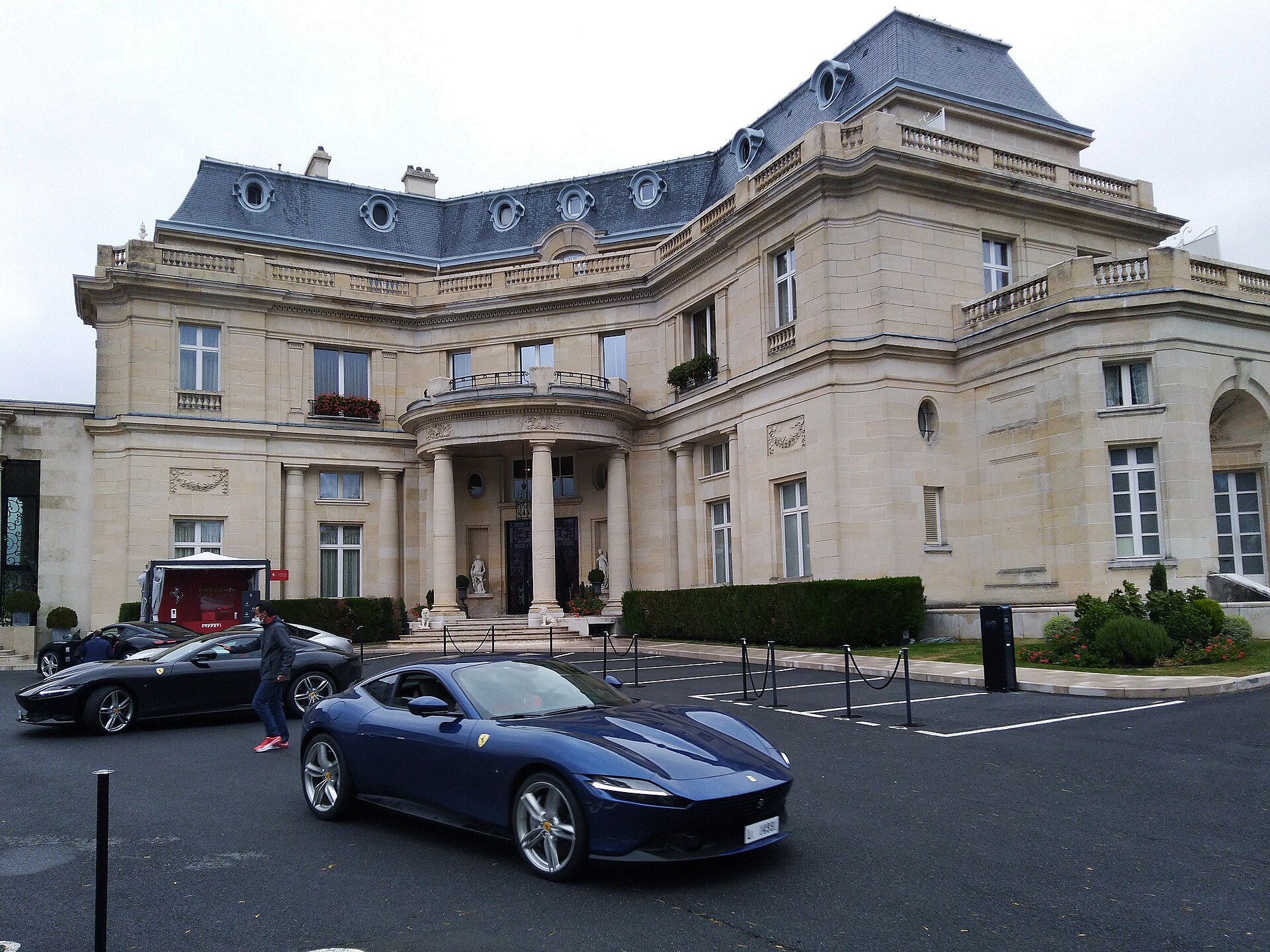
Enter the Roma. It's a 2+2 front-engine grand tourer with a 3.9-liter twin-turbo V8 producing 612 horsepower and 561 lb-ft of torque. The engine is derived from the 488's powerplant but tuned for lower-end response and refinement rather than max rpm hysteria. Zero to 60 arrives in 3.2 seconds. Top speed: 199 mph. These numbers are genuinely supercar-grade, but they're not the point.
The point is the experience. The Roma Coupe ($236,000 MSRP) offers a convertible driving experience without sacrificing rigidity or practicality. The Roma Spider (introduced 2023, $271,000 MSRP) is for buyers who want to feel wind in their hair while wearing an expensive watch. Used Roma prices currently sit in the $210,000–$260,000 range for 2020-2022 models with reasonable mileage.
This is intentional design. The Roma's proportions, the way the roof sits, the visibility through the windshield — all of it is engineered so you feel like you're driving a car, not piloting a spacecraft. That's not a flaw. For the buyer it's designed for, it's the entire appeal.
The Real Costs: What Ownership Actually Means
A Ferrari Roma starts at $236,000 for the coupe, but that's just the beginning. Here's what the full picture looks like:
| Category | Annual Cost | Notes |
|---|---|---|
| Insurance | $3,500–$6,500 | Varies by location and driving record; lower than mid-engine models |
| Maintenance (Routine) | $2,500–$4,000 | Oil changes, filter service, inspections; easier access than mid-engine |
| Fuel | $2,500–$3,800 | 14–16 mpg combined; 91+ octane required |
| Tires (Amortized) | $1,200–$2,000 | Pirelli P Zeros every 12K–18K miles |
| Brakes (Amortized) | $800–$1,500 | Carbon ceramic replacements $8K–$12K |
| Registration & Taxes | $1,000–$2,500 | State-dependent |
| Total Annual Running Cost | $11,500–$20,300 | Excludes depreciation |
The Roma's ownership costs are notably lower than the 488 or F8 for a reason: it's built on front-engine architecture, which means simpler maintenance access, more reliable cooling, and fewer exotic-specific complications. You're paying less per year to own this Ferrari than most mid-engine Ferraris. That matters if you're keeping the car for 5+ years.
The Spider costs about $35,000 more at purchase but adds $500–$1,000 annually to running costs due to hydraulic convertible maintenance. The decision between coupe and Spider should come down to how often you'll actually have the roof down — not the up-front price difference.
Depreciation and Value Retention: The Roma's Secret Advantage
Here's where the Roma's positioning gets interesting. Because it's Ferrari's "accessible" model — the entry point to ownership — it has moderate depreciation rather than the steep curves you see with collectible mid-engine models. A Roma purchased for $230,000 in 2021 is worth approximately $190,000–$210,000 today. That's about 15–20% depreciation over four years, or roughly $600–$800 per month.
Compare that to a 488 GTB (25–30% depreciation over the same period) or a Porsche 911 Turbo S (30–35%). The Roma's depreciation curve is genuinely competitive. Why? Because it's not trying to be a collector's car. It's supposed to be driven, enjoyed, and eventually sold to someone else who wants exactly what you bought it for.
The spider variants are trending slightly upward in value, which suggests collectors are beginning to recognize the Roma Spider as a significant design moment — a car that represents Ferrari's modern era of accessible grand touring. If you buy low-mileage examples today, you might break even or appreciate by 2028–2029.

Reliability and Ownership Reality: Surprisingly Straightforward
The Roma shares its basic architecture with the 488, but with fewer complications. The twin-turbo V8 is essentially the same engine, and it's one of Ferrari's most reliable powertrains. Turbo reliability improved dramatically between the 488's launch and the Roma's 2020 debut. We're looking at a mature, debugged platform.
That said, there are known areas to watch:
- Turbo Bearing Wear: Rare but possible on cars that were tracked frequently or not serviced properly. A pre-purchase inspection should include turbo boost verification and exhaust temperature readings.
- Convertible Hydraulics (Spider): The roof mechanism is exposed to weather. Keep up with maintenance intervals, and you'll avoid $3,000–$6,000 repairs.
- Brake Cooling: Front-engine packaging means brake dust accumulation is easier to monitor than mid-engine cars, but cooling ducts can get clogged. Annual cleaning prevents expensive brake service surprises.
- Transmission Concerns: The F1-derived dual-clutch is smooth but can develop shift hesitation if the transmission fluid isn't changed on schedule. Stick to Ferrari's service intervals religiously.
- Door Seals: Some early production Romas developed water infiltration at the door seals. This is addressed with a dealer adjustment ($0–$500), not an expensive repair.
Overall, the Roma is one of the most reliable cars Ferrari makes. Easier to maintain than the 488, more durable than mid-engine models, and far less complicated than the turbo V12 cars. If you maintain it properly, a Roma can easily reach 50,000+ miles without major issues.
Get a Professional Roma Inspection
Automonitor connects you with Ferrari specialists who know every production quirk. A pre-purchase inspection can save you thousands in avoided repairs.
Schedule an Inspection →The Driving Experience: Why Daily Drivability Matters
Turn on a Roma and the experience is immediately different from a mid-engine Ferrari. The engine is in front, so you hear transmission whine, turbo whistle, and the V8 breathing. You're not disconnected from the mechanical symphony — you're part of it. Shift into Strada mode and the car is genuinely civilized. The suspension absorbs highway imperfections reasonably well. The cabin is quiet. The seating position is natural. You could, theoretically, drive this car to work.
In Corsa mode, the Roma transforms. The adjustable suspension stiffens. The steering weight increases. The turbocharger whistle becomes pronounced. The engine stays at higher rpms. It's still the same car, but it's ready to attack. The acceleration is genuinely superb — 3.2 seconds to 60 with smooth, linear power delivery that never feels turbocharged until you're deep into the throttle.
The twin-turbo V8 produces 612 horsepower, but it feels like more because it's delivered with such immediacy. There's no classic naturally aspirated scream (the Lamborghini Huracan wins on that front), but there's character. Genuine, mechanical character.
The biggest surprise for buyers coming from modern 911s or Maseratis is the steering. It's hydraulic, it's direct, and it communicates road surface in a way electric systems don't. Turn into a corner and you feel the asphalt. It's not perfectly smooth, but that's the point — it's honest feedback rather than isolated luxury.
The Roma isn't faster than a 488 in a straight line. It's not more agile than an F8. What it is: rewarding to live with every single day, in a way that mid-engine cars simply cannot be.

The Competition: Roma vs. 488, F8, 296 GTB, and Beyond
The Roma exists in a unique market position. It's not directly comparable to other Ferraris because it plays by different rules. Here's how it actually stacks up:
| Category | Roma Coupe | 488 GTB | F8 Tributo | 296 GTB |
|---|---|---|---|---|
| Engine | 3.9L Twin-Turbo V8 | 3.9L Twin-Turbo V8 | 3.9L Twin-Turbo V8 | 3.0L Twin-Turbo V6 Hybrid |
| Horsepower | 612 hp | 661 hp | 710 hp | 818 hp |
| 0–60 mph | 3.2s | 3.0s | 2.9s | 2.7s |
| MSRP / Used Price | $236K / $210–260K | $245K / $185–225K | $275K / $220–260K | $330K / $260–320K |
| Daily Drivability | Excellent | Good | Good | Good |
| Interior Space | 2+2 Practical | 2-seater Only | 2-seater Only | 2-seater Only |
| Maintenance Cost | Lower (Front-engine) | Higher (Mid-engine) | Higher (Mid-engine) | Higher (Hybrid Complexity) |
| 5-Year Depreciation | ~18% | ~28% | ~25% | ~20% |
| Presence & Exclusivity | High (New Philosophy) | Iconic | Iconic | Maximum (Rarity) |
Against the Porsche 911 Turbo S ($230,000), the Roma wins on style, exclusivity, and emotional impact. The 911 wins on reliability and running costs. Against the Aston Martin DB11 ($200,000), the Roma is more purely Ferrari while offering similar grand-touring philosophy. Against the Maserati MC20 ($215,000), the Roma is more practical while the Maserati is more exotic.
The real decision tree: if you want a Ferrari supercar experience, buy the 488. If you want raw performance, buy the 296 GTB. If you want to drive something special every day without therapy appointments about ground clearance and seating space, the Roma is the answer.
Roma Coupe vs. Roma Spider: Which Makes Sense?
The Spider (2023-present) is the Roma with a retractable hardtop, up to $35,000 more than the coupe. The driving experience is genuinely different: convertible wind noise, the visual drama of open-air driving, the feel of weather. The performance is identical (same engine, same transmission, negligible weight difference).
You should buy the Spider if: you live in a warm climate and will genuinely use the roof down. You should buy the Coupe if: you want the lower price, the structural rigidity advantage, or if the roof down option sounds fun in theory but won't happen in practice (most buyers).
The Spider's depreciation is slightly better because of rarity, but the difference is marginal. Don't overpay for the Spider unless you genuinely want it.
Who the Roma Is For (And Who It Isn't)
The Ferrari Roma is perfect for buyers who fit this profile: you have $230,000–$260,000 to spend on a car. You want a Ferrari, and you don't need it to be the fastest thing on the road. You're willing to trade raw track performance for daily usability. You drive 5,000–8,000 miles annually and want a car that doesn't feel like punishment on a 200-mile road trip. You like the idea of a 2+2 that could theoretically fit a passenger or luggage on weekend trips.
The Roma is not for you if: you want maximum performance and will pay for it (buy the 488 or 296 GTB). You need a pure collectible (the rarer mid-engine models). You want a car that's completely impractical because that impracticality is part of the romance. You're uncomfortable with turbocharged engines and want that classic natural aspiration scream (buy used Huracan, not Ferrari).
Is It a "Real" Ferrari? The Controversial Design Debate
The Roma's design has been polarizing since launch. The front end is controversial — some love the subtle elegance, others think it's too toned-down for a Ferrari. The proportions are different from classic Ferraris. It doesn't have the aggressive drama of the F8.
Here's the honest take: yes, it's a real Ferrari. It has the engine, the badge, the heritage, and the engineering. But it's a real Ferrari from a different philosophy. Ferrari has always been about pushing the extreme. The Roma pushes in a different direction — toward refinement, usability, and grand-touring elegance. That's not less Ferrari. It's differently Ferrari.
If you care about what people think when you drive past, the Roma's subtle design might frustrate you. If you care about what you feel when you're driving, the Roma's proportions and visibility are genuinely superior to the mid-engine models. The design debate is purely subjective. Know which camp you're in before you buy.
The Smart Way to Buy a Roma: Practical Steps
Buying a Roma is simpler than buying a mid-engine Ferrari because the supply is larger and the model is more established. Here's our approach:
Step 1: Determine budget realistically. Include 18–24 months of running costs ($11,500–$20,300 annually). The Roma is accessible, but it's not cheap to own.
Step 2: Coupe or Spider? Don't overthink this. If convertible driving genuinely appeals and your climate supports it, Spider. Otherwise, Coupe.
Step 3: Search regionally. Used Romas are concentrated in Florida, California, and Texas. Check Bring a Trailer, Ferrari dealer inventory, and specialist brokers like Automonitor.
Step 4: Pre-purchase inspection is mandatory. Cost: $500–$1,000. Potential savings: $10,000–$30,000 in avoided repairs. Check the turbo system specifically, and verify all service records.
Step 5: Negotiate from data. Know the market rate for the specific year, mileage, and color combination. Check our guide on how much a Ferrari Roma costs for current market benchmarks.
Step 6: Secure financing early. Exotic car lenders offer terms on Romas. Expect 25–30% down and rates 6–9% depending on credit and vehicle age.
Planning Your Exit: Selling a Roma
When you're ready to sell, remember that specification matters. A Roma in Rosso Corsa red with cream interior and low miles will outpace a gray example with 30,000 miles. The Roma's strong color palette (Rosso Corsa, Bianco Avus, Nero Daytona) holds value better than neutrals.
Mileage less impacts the Roma than other Ferraris because it's designed to be driven. A Roma with 20,000 miles and full service history is often worth more than one with 8,000 miles and no documented maintenance. Buyers want proof the car was enjoyed and properly maintained, not stored.
When you're ready to list, Automonitor's selling service handles valuation, photography, buyer vetting, and transaction coordination. We typically recover 8–12% more than private sales because we know the market.
The Final Verdict
The Ferrari Roma is worth buying if you understand what it is: a magnificent grand tourer that happens to carry the Prancing Horse badge. It's not the fastest Ferrari. It's not the most exclusive. It's not the car you buy to prove anything to anyone. It's the car you buy because you want to drive something extraordinary every single day, and you're willing to sacrifice 2% performance for 30% more practicality.
The Roma represents a shift in Ferrari's philosophy — away from absolute extremism and toward accessible excellence. For buyers who value that philosophy, it's one of the best cars Ferrari makes. For buyers who want maximum drama, there's the mid-engine lineup.
Is it worth buying? Yes. Absolutely. Just make sure you're buying it for the right reasons — because you want what it actually is, not because you're settling for something else.
Ready to find your Roma? Automonitor specializes in Ferrari transactions. We'll handle the search, inspection, negotiation, and transaction so you can focus on enjoying the car.
Find Your Ferrari Roma Today
Automonitor sources from 150+ verified luxury dealers and private sellers. Expert inspections, transparent pricing, no haggling.
Start Your Search →