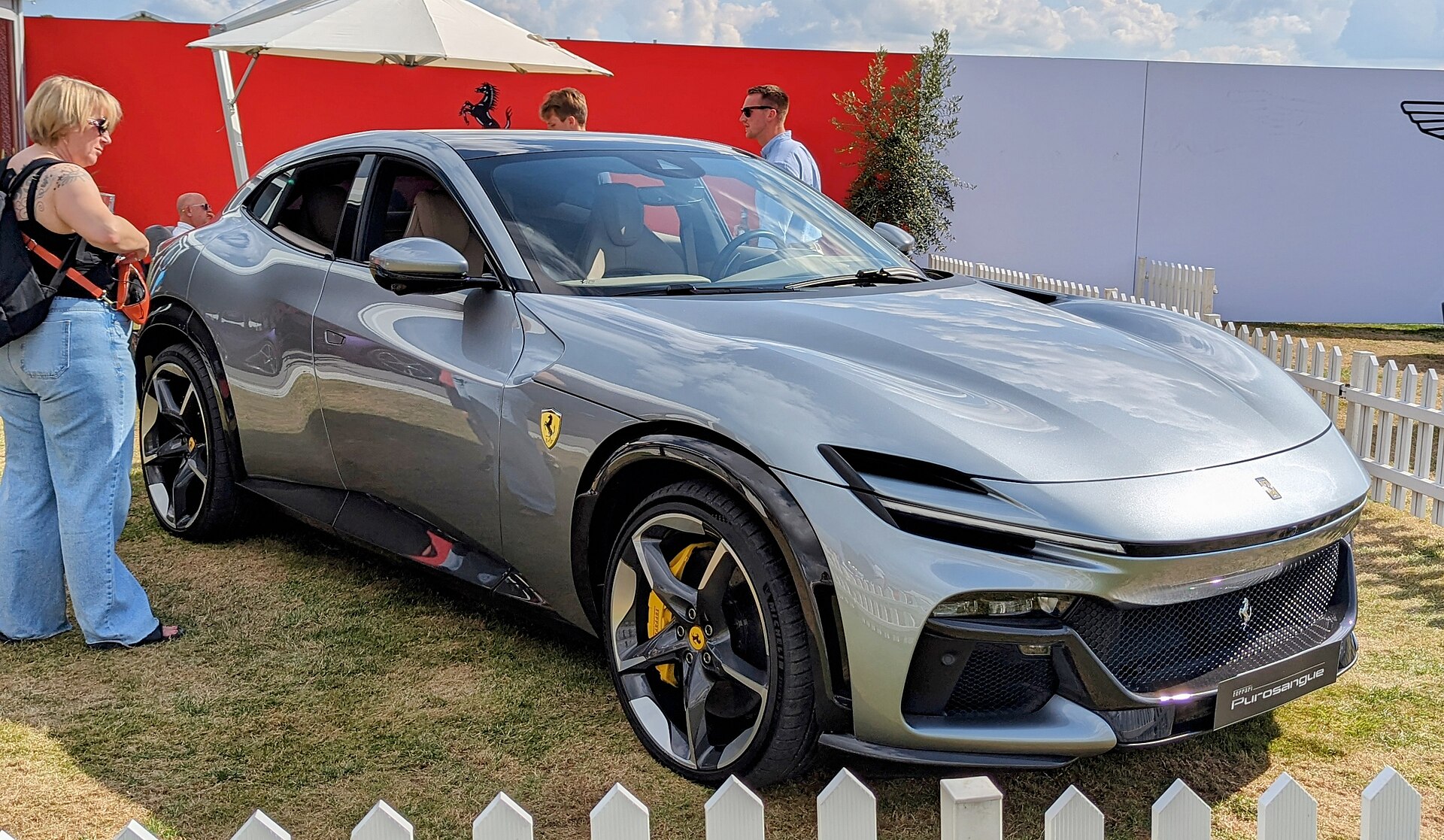
Ferrari Purosangue vs Lamborghini Urus: Ultimate SUV Comparison
Two of the world's most exclusive luxury SUVs collide in this comprehensive comparison. We break down every dimension — from V12 heart to daily usability — to help you understand which Italian masterpiece truly delivers the better ownership experience.
The Verdict: Which SUV Should You Choose?
The Ferrari Purosangue and Lamborghini Urus are the two most visible luxury SUVs on Earth — and they couldn't be more different in execution, despite superficial similarities. The choice between them isn't about finding the objectively better car. It's about understanding what each uniquely delivers and matching that to what genuinely matters to you.
The Purosangue is Ferrari's declaration that the future of supreme performance transcends the formula of lightweight roadsters. It's a 715-horsepower naturally aspirated V12 built into a chassis that prioritizes precision, sophistication, and the peculiar thrill of piloting an automotive icon that weighs nearly 5,000 pounds. It costs $415,000 before options and seats four in measured luxury.
The Urus is Lamborghini's thesis that "supercar DNA" applies to any shape. It's a 657-horsepower twin-turbo V8 engineered for theatrical performance, aggressive styling that announces itself before you arrive, and the psychological satisfaction of owning something visually extreme. It starts at $240,000 and seats five in dramatic flair.
Both are correct. Both are excellent. The answer to which one you should buy lies entirely within your priorities. This guide exists to sharpen those priorities.
Engine Philosophy: Naturally Aspirated V12 vs Twin-Turbo V8
The most fundamental difference between these two SUVs lives in their hearts. The Ferrari houses a 6.3-liter naturally aspirated V12 producing 715 horsepower and 557 lb-ft of torque. The Lamborghini uses a 4.0-liter twin-turbocharged V8 delivering 657 horsepower and 627 lb-ft of torque. On paper, the Ferrari has more power. On the road, the difference is more nuanced.
The naturally aspirated V12 is becoming automotive history. As turbocharging and electrification consume the luxury market, Ferrari made a deliberate choice to give the Purosangue an engine that sounds alive, revs to 8,700 rpm, and delivers power with mechanical directness. There's no turbo lag, no electronic boost management, no sound synthesis through the exhaust. It's pure combustion translated through engineering excellence.
The twin-turbo V8 is the pragmatic choice. Turbocharged engines deliver power more efficiently across a wider band, offer better real-world response with shorter turbo lag, and provide superior torque availability from low rpm. The Urus uses advanced boost management and a sophisticated exhaust system that amplifies the V8's natural aggression while adding audio theatre that Lamborghini engineered to enhance the driving experience.
| Specification | Ferrari Purosangue | Lamborghini Urus |
|---|---|---|
| Engine Type | 6.3L NA V12 | 4.0L Twin-Turbo V8 |
| Horsepower | 715 hp @ 8,000 rpm | 657 hp @ 6,000 rpm |
| Torque | 557 lb-ft @ 5,750 rpm | 627 lb-ft @ 2,250-4,500 rpm |
| 0-60 mph | 3.4 seconds | 3.0 seconds |
| Top Speed | 193 mph | 190 mph |
| Fuel Economy | 17 mpg combined | 18 mpg combined |
| Sound Character | Mechanical V12 music | Turbo V8 drama |
In real-world driving, the Lamborghini Urus accelerates quicker to 60 mph due to superior low-end torque and turbo availability. The Ferrari Purosangue builds momentum more elegantly and maintains an emotional connection to its power that turbocharging can't quite capture. If you measure driving experience purely in lap times and acceleration metrics, the Urus wins. If you measure it in how the engine makes you feel, the conversation becomes infinitely more interesting.
Both engines are remarkably reliable for their output class, though the twin-turbo V8 will cost less to service and modify. Ferrari service intervals are longer now, but parts remain expensive. Read our Ferrari Purosangue buyer's guide for detailed maintenance cost breakdowns.
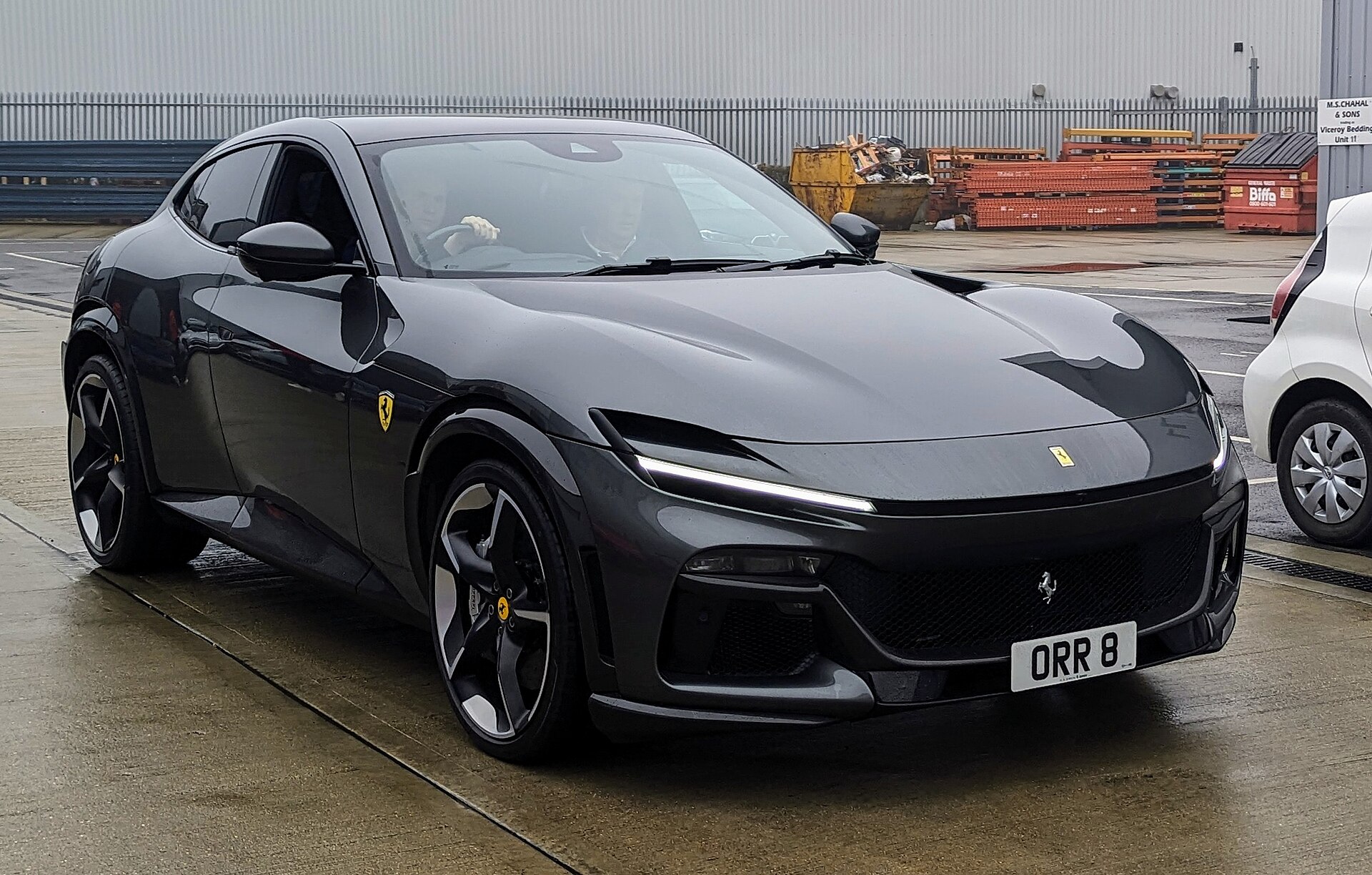
Pricing and Value: Entry Points to Different Worlds
The Lamborghini Urus and Ferrari Purosangue compete in price, but they don't compete for the same buyer. The Urus Performante starts at approximately $240,000. The Ferrari Purosangue begins at $415,000. That's a 73% price differential for vehicles in the same market segment.
Context matters. The Urus is more expensive than a Porsche 911 Turbo S and less expensive than a Range Rover made from recycled champagne corks. The Purosangue costs more than two new Mercedes-AMG G63s and sits in the same stratosphere as a limited-edition Patek Philippe luxury watch. Both are essentially priceless to the buyers who purchase them — they're making a statement about identity and aspiration, not performing a rational financial calculation.
For Automonitor clients considering either vehicle, we typically advise: if the price difference triggers genuine hesitation, the Lamborghini Urus is objectively the better value. You receive 90% of the performance and drama at 58% of the cost. The Purosangue justifies its premium through exclusivity (fewer than 5,000 will exist), heritage (it carries the weight of 75 years of Ferrari DNA), and the unmistakable V12 — something no turbocharged machine can replicate.
Both vehicles offer strong residual value compared to segment competitors, though the Purosangue's scarcity and naturally aspirated engine position it better for long-term appreciation. Our exotic car buying guide explores depreciation across luxury SUV segments.
Performance Dynamics: Track Capability and Daily Aggression
The Lamborghini Urus is a supercar masquerading as an SUV. It carries Lamborghini's foundational DNA of visceral performance, dramatic styling, and the presumption that more power and aggression always improve the experience. Acceleration is immediate, steering is heavy and responsive, and the dual-clutch transmission snaps through gears with theatrical punctuation.
The Ferrari Purosangue is an SUV attempting to drive like a supercar. Ferrari engineered it as a grand tourer first and performance platform second. The Purosangue's chassis is lower, its steering more precise, its suspension more refined, and its overall demeanor more contemplative. Yes, it's faster in a straight line over full throttle. But on flowing roads and track circuits, the Purosangue's engineering sophistication creates a driving experience that's qualitatively different — it feels like piloting precision-engineered machinery rather than unleashing a mechanical beast.
The Urus dominates in immediate sensory gratification. You press the throttle and feel every cylinder firing in real-time. Turbocharged engines create a peculiar intimacy with boost management that naturally aspirated engines can't match. Lamborghini's sound engineering ensures that the experience is amplified, celebrated, and made visceral.
The Purosangue delivers more sophisticated satisfaction. The V12 reveals itself gradually, delivering power in a continuous curve that builds to a crescendo at 8,700 rpm. The steering is heavier and more communicative. The suspension absorbs and responds with greater finesse. Driving the Purosangue feels like conducting an orchestra; driving the Urus feels like detonating fireworks.
For track driving, the Purosangue's mid-mounted weight distribution and advanced chassis dynamics make it the more capable platform. For canyon carving and social impact, the Urus wins decisively.
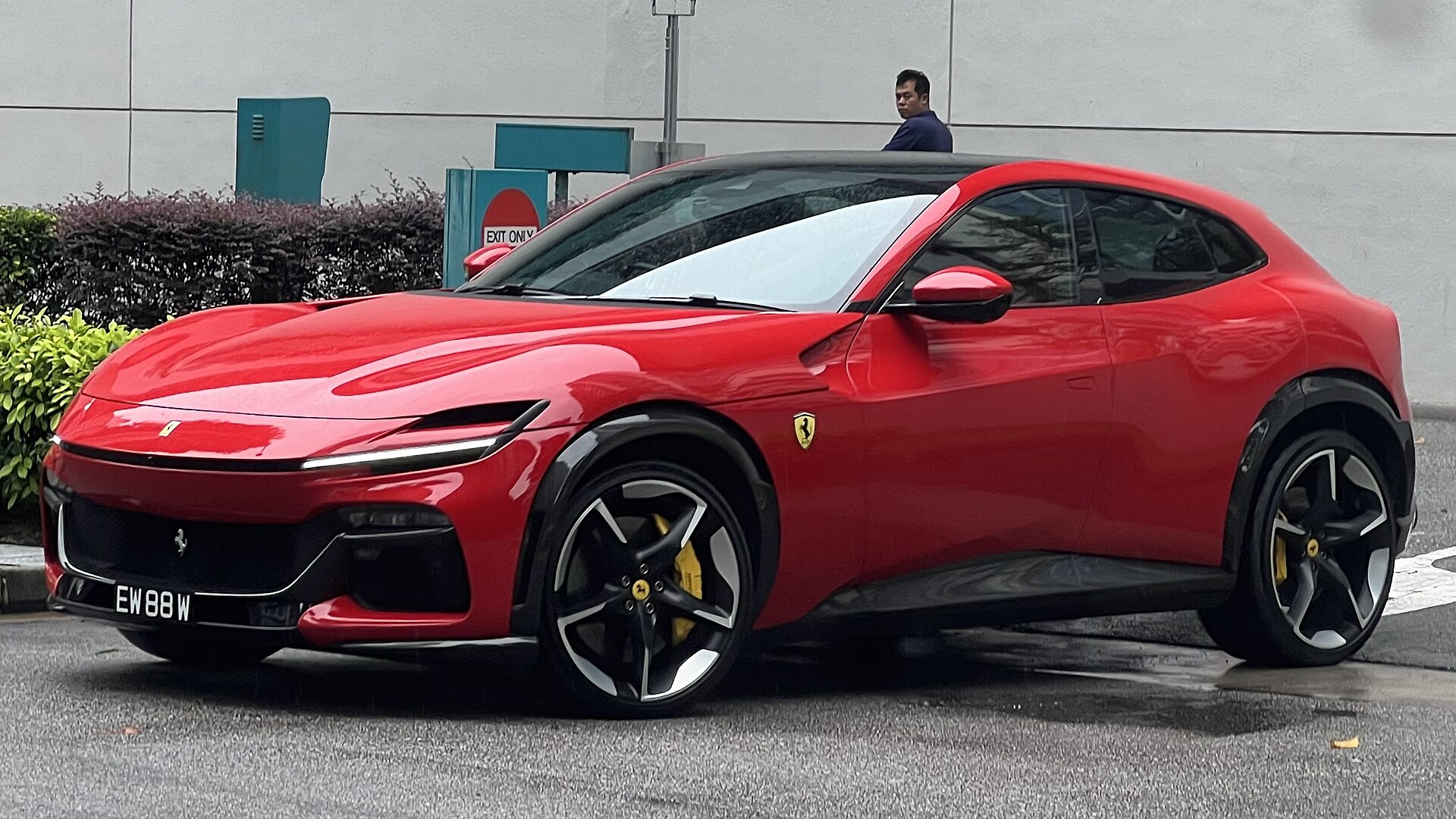
Interior Quality and Luxury: Different Philosophies of Refinement
Both vehicles offer cabins that exist in the atmosphere of extreme luxury, but they interpret that atmosphere through different lenses.
The Ferrari Purosangue prioritizes minimalism and precision. The cabin is driver-centric, with controls positioned for accessibility and logic. Materials are impeccable — leather, Alcantara, carbon fiber, anodized aluminum — arranged with restraint rather than ostentation. The design language is contemporary Italian luxury: clean, functional, beautiful through subtlety rather than excess. Gadgets are present but unobtrusive. Technology feels integrated rather than bolted on. Sitting in the Purosangue feels like occupying the command center of a precision instrument.
The Lamborghini Urus celebrates excess and drama. Every surface is an opportunity to celebrate the brand's identity through bold material choices, dramatic color blocking, and aggressive design language that extends from the exterior into the cabin. Alcantara is deployed liberally. Color options are theatrical. The infotainment system is modern and responsive, but it shares visual real estate with design elements that prioritize impact over subtlety. Sitting in the Urus feels like inhabiting a work of automotive art where every element is intentionally conspicuous.
The Purosangue offers superior ergonomics for people who spend extended time driving and expect their luxury to be functional. The Urus delivers more character and personality for people who view their SUV as both conveyance and statement.
Regarding technology, both vehicles offer comparable functionality — adaptive cruise control, advanced driver assistance systems, premium audio, connected services. The Ferrari's infotainment system is slightly more intuitive. The Lamborghini's is slightly more flamboyant. Neither is deficient; both are adequate to excellent.
Practicality and Daily Usability: Which Is Actually Livable?
Both vehicles are luxurious. Neither is practical in any conventional sense. Both have expensive fuel requirements, limited visibility, significant running costs, and ground clearance that laughs at speed bumps and steep driveways.
The Purosangue seats four in genuine comfort. The Urus seats five. If you have a family and require that fifth seat regularly, the Urus makes logical sense. If seating is secondary to driving experience, the Purosangue's four-seat configuration creates a more intimate, first-class experience.
Cargo space is comparable — both offer approximately 18 cubic feet of trunk capacity behind the rear seats. Expansion to full load comes with complexity on both platforms.
Ground clearance favors neither. The Purosangue is slightly lower (8.3 inches) and the Urus slightly higher (8.6 inches). Neither is an impediment to driving in urban environments, and both present challenges on rough terrain despite their SUV classification.
The Purosangue's lower stance and longer wheelbase translate to a more comfortable ride quality on structured roads. The Urus feels more connected to irregularities in pavement, which some drivers enjoy and others find tiresome on long drives.
The critical practicality question isn't which is better for daily driving — both are challenging as daily drivers. It's which SUV you'll enjoy using even when utility isn't the primary motivation. The Purosangue's balanced dynamics make long drives genuinely pleasurable. The Urus's aggressive personality makes even mundane drives entertaining.
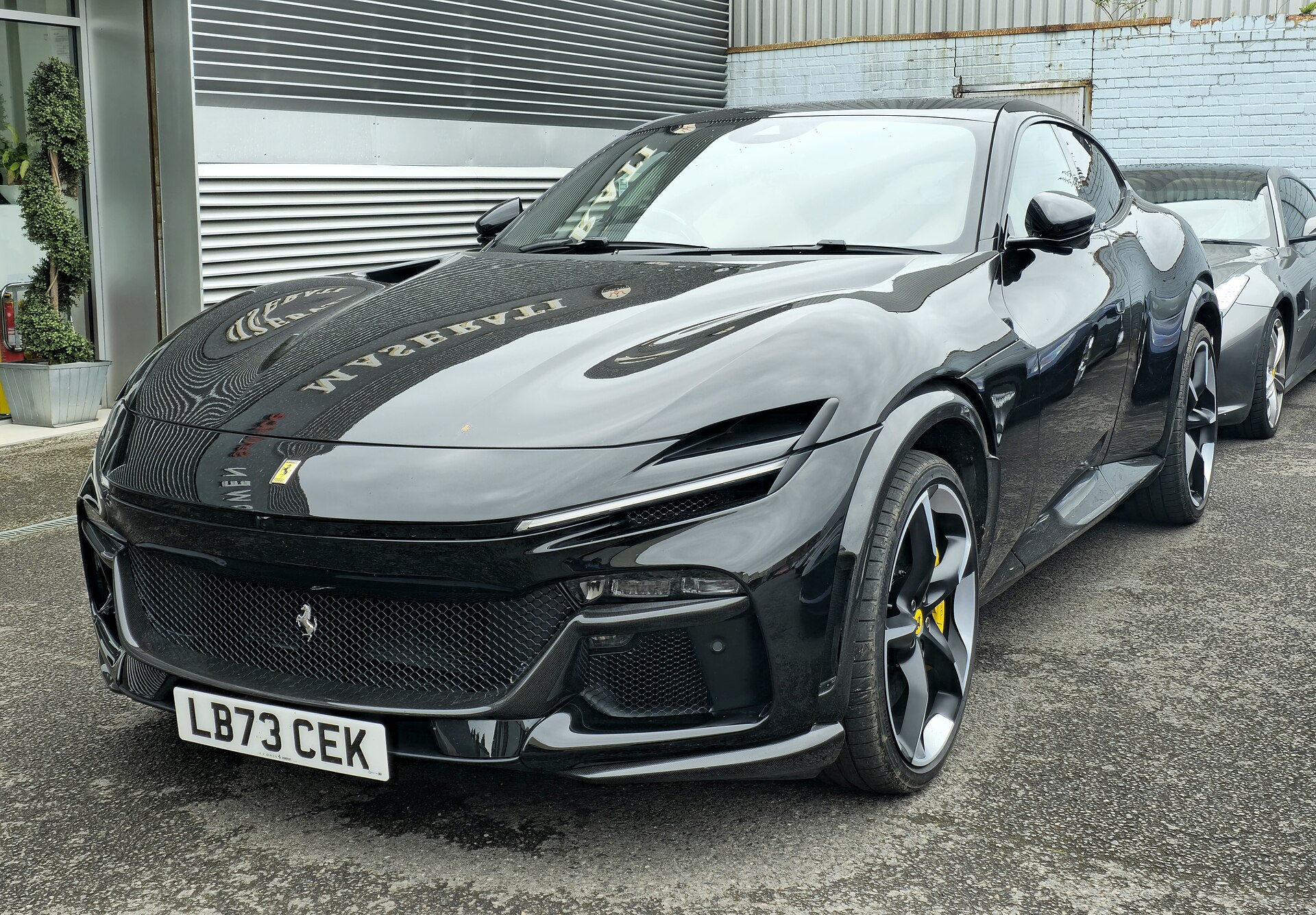
Brand Cachet and Social Impact: What Your Choice Says
Ferrari is history. It's the most successful racing brand in formula one history, the creator of the original supercar concept, and an instrument through which dreams are manufactured. Owning a Ferrari means positioning yourself as someone who understands automotive heritage and yearns for connection to something larger than personal transportation.
Lamborghini is drama. It's the rebellious counterargument to Ferrari's historical prestige, the brand that entered the market by building better cars than Ferrari and hasn't stopped shouting about it. Owning a Lamborghini means declaring that you find traditional luxury excessive and prefer theatrical extremism.
The Purosangue attracts people who understand automotive history and view their ownership as stewardship of something important. These are typically successful, discerning individuals who've earned the right to drive something extraordinary and choose to do so with understated confidence. Their SUV says, "I understand quality. I don't need to explain myself."
The Urus attracts people who see their vehicle as an extension of their personality — bold, confident, uncompromising. These buyers view their Lamborghini not as a responsibility but as permission to exist as the most visible, loudest, most unapologetically themselves version of themselves. Their SUV says, "I am here. You're welcome to pay attention."
Neither perspective is superior. Brand choice reflects identity, and both brands deliver extraordinary vehicles that magnify and celebrate their buyers' chosen identity.
Depreciation and Resale: Protecting Your Investment
The Ferrari Purosangue is historically positioned to hold value better than the Lamborghini Urus, for several reasons. Ferrari's restricted production numbers, the prestige of the brand, and the naturally aspirated V12 all create conditions favorable for value retention. We estimate that a well-maintained Purosangue will depreciate approximately 25-30% over five years.
The Lamborghini Urus, while an excellent vehicle, has higher production numbers and carries the marketing positioning of a brand that, while prestigious, lacks Ferrari's historical cachet. We estimate depreciation of 35-40% over the same period. That's still respectable for a $240,000 vehicle — you're seeing annual depreciation of roughly $2,000-$2,800 per year.
Both vehicles benefit significantly from low mileage, excellent service history, and distinctive specification. A Purosangue in Rosso Corsa red with all performance options will retain value better than a neutral-colored example. A Urus in Giallo Halys (yellow) or Blu Nethuns (blue) will hold stronger than a conventional color.
Neither vehicle should be purchased primarily as an investment. Both should be purchased because you genuinely want to own and drive them. That said, understanding residual value helps you make informed decisions about mileage, usage, and specification. Our guide to best exotic cars to buy for value explores depreciation across the luxury segment.
Maintenance Costs: The True Cost of Ownership
Ferrari's Purosangue benefits from Ferrari's modernized service framework — longer intervals, more reasonable parts pricing than historical Ferrari vehicles, and fewer unexpected gremlins than older models. Annual maintenance costs range from $3,500-$6,000 for routine service, depending on miles driven and specific requirements.
Lamborghini's Urus, sharing Audi Group architecture and engineering, enjoys similar service economics. Annual maintenance costs range from $2,500-$4,500, making it slightly less expensive to maintain than the Purosangue.
Insurance costs are comparable — both vehicles will cost $6,000-$10,000 annually depending on driving record, location, and coverage choices. Fuel costs also parallel each other, with both vehicles requiring premium gasoline (91+ octane) and achieving similar real-world fuel economy.
The critical maintenance difference emerges when unexpected repairs are required. Ferrari parts remain more expensive than Lamborghini parts. A major engine component failure or transmission issue on a Purosangue could cost 20-30% more than equivalent work on an Urus.
For Automonitor clients evaluating these vehicles over a five-year ownership window, the total cost of ownership differs by approximately $15,000-$25,000, with the Urus presenting a modest advantage. That said, both vehicles are only appropriate for buyers who can comfortably absorb these costs without financial strain.
Driving Experience: What It Feels Like Behind the Wheel
Driving the Ferrari Purosangue is a revelation. Despite its considerable mass, the vehicle feels balanced, communicative, and intellectually engaging. The naturally aspirated V12 builds power progressively, encouraging drivers to work the engine through its range rather than relying on boost availability. The steering is responsive and weighted perfectly — heavy enough to feel connected, light enough to not fatigue on long drives. The transmission shifts smoothly in comfort mode and aggressively in sport mode. The overall experience feels European, refined, and utterly confident in its capability.
Driving the Lamborghini Urus is sensory overload in the most entertaining way. The twin-turbo V8 responds immediately to throttle input, the transmission snaps through gears with theatrical urgency, the steering is heavier than the Purosangue's, and the entire vehicle communicates that it's built for maximum engagement and minimum subtlety. Every drive in the Urus is a performance. The sound is amplified, the acceleration is celebrated, and the experience is designed to be memorable and dramatic.
The Purosangue asks you to understand its engineering and appreciate the sophistication underneath. The Urus invites you to simply enjoy the ride and embrace the spectacle.
Both vehicles excel at what they're designed to do. The choice between them depends entirely on whether you prioritize refined sophistication or theatrical drama as your primary motivating force.
Which Offers Better Value: The Bottom Line
The Lamborghini Urus is objectively better value. You receive superb performance, dramatic styling, quality engineering, and a truly distinctive ownership experience for $240,000. That's a $175,000 saving compared to the Ferrari, and the Urus is genuinely capable of delivering 90% of the performance and arguably 100% of the entertainment for that price differential.
The Ferrari Purosangue is better value if your priority is resale potential, long-term ownership pleasure, and the prestige associated with owning the most exclusive luxury SUV available. The naturally aspirated V12, the heritage, the scarcity, and the driving refinement justify the premium for buyers who prioritize those qualities above pure performance metrics.
For new buyers uncertain between the two, we recommend the Urus. It's an exceptional vehicle at a meaningful price advantage, and the ownership experience is genuinely world-class. Purosangue ownership makes most sense for established Ferrari collectors or buyers specifically seeking the V12 experience.
Our comprehensive guide on negotiating exotic car prices will help you achieve the best deal regardless of which vehicle you choose.
Compare These SUVs Before You Buy
Automonitor provides hands-on comparisons with certified pre-purchase inspections and real market data. Book a consultation to test drive both vehicles and understand which matches your priorities.
Schedule Your Comparison →Frequently Asked Questions
Which vehicle is faster?
The Lamborghini Urus reaches 60 mph in 3.0 seconds, while the Ferrari Purosangue requires 3.4 seconds. The Urus is quicker in acceleration. The Purosangue reaches a marginally higher top speed (193 mph vs 190 mph) and delivers more engaging driving dynamics on road courses due to superior chassis balance. For pure acceleration metrics, the Urus wins; for overall driving experience and long-term engagement, the Purosangue appeals to different drivers.
Which is more practical for daily driving?
Both vehicles present daily driving challenges due to fuel requirements, fuel economy, ground clearance, and visibility limitations. The Lamborghini Urus seats five (vs. four in the Purosangue), making it slightly more practical if passenger capacity matters. The Ferrari Purosangue offers better ride quality and comfort on long drives. Neither should be considered a daily driver by conventional standards — both are better suited as weekend/special occasion vehicles. If forced to choose, the Urus accommodates five passengers while the Purosangue prioritizes comfort and refinement for four.
Which holds its value better?
The Ferrari Purosangue is positioned to hold value better, with estimated depreciation of 25-30% over five years compared to 35-40% for the Urus. This advantage stems from Ferrari's prestige, limited production numbers, and the naturally aspirated V12. That said, both vehicles depreciate less aggressively than most competitors in their segment. Neither should be purchased primarily as an investment vehicle.
What are the fuel economy differences?
Both vehicles achieve comparable fuel economy. The Purosangue averages 17 mpg combined, while the Urus achieves 18 mpg combined. Both require premium gasoline (91+ octane minimum, often 93+ octane preferred) and will cost approximately $3,500-$5,000 annually in fuel assuming moderate driving (8,000-10,000 miles per year). The difference is negligible and shouldn't factor heavily into the decision between them.
Which vehicle has better technology and infotainment?
Both vehicles offer modern, responsive technology systems. The Ferrari's infotainment is slightly more intuitive and integrates more seamlessly with the vehicle's design philosophy. The Lamborghini's system is equally capable but prioritizes visual drama and style alongside functionality. Technically, they're comparable; experientially, the Ferrari feels slightly more refined while the Urus feels more theatrical. Neither system is deficient, and technology shouldn't significantly influence your decision.
Can either vehicle be daily driven?
Both vehicles can technically be daily driven, but neither should be. The Purosangue's lower ground clearance makes speed bumps and parking garage inclines challenging. The Urus's higher stance addresses this slightly better. Both vehicles attract attention that makes mundane driving conspicuous. Both require frequent refueling on premium gasoline. Both represent such significant financial commitments that exposing them to daily traffic, weather, and parking lot incidents feels irresponsible. Our Urus buying guide explores practical ownership considerations more deeply.
Final Recommendation
The Ferrari Purosangue and Lamborghini Urus are both extraordinary vehicles that deliver genuine excellence through different philosophical approaches. The Purosangue represents Ferrari's belief that even an SUV should prioritize precision, refinement, and the emotional resonance of a naturally aspirated V12 engine. The Urus represents Lamborghini's conviction that performance and drama transcend vehicle category.
If you're choosing between them primarily on objective metrics — performance, reliability, technology, practicality — the Lamborghini Urus wins decisively. It's faster, less expensive, comparably reliable, and achieves similar real-world performance at a significant price advantage.
If you're choosing between them based on intangible qualities — heritage, exclusivity, driving refinement, the prestige of Ferrari ownership, the appeal of a naturally aspirated V12 — the Ferrari Purosangue justifies its premium for the right buyer.
Most buyers will be happier with the Urus. Some buyers will be transcendently happy only with a Purosangue. Understanding which category you fall into is the essential question this decision requires you to answer.
At Automonitor, we help buyers navigate this decision through hands-on comparisons, detailed market analysis, and honest counsel about total cost of ownership. If you're considering either vehicle, our concierge buying service will ensure you end up in the right car at the right price. We've facilitated purchases of both vehicles for discerning clients, and we'll guide you toward the choice that aligns with your priorities and drives your genuine satisfaction.
Ready to Find Your Luxury SUV?
Automonitor connects you with vetted sellers, handles pre-purchase inspections, and provides real market data for both Purosangue and Urus. Buy with confidence and clarity.
Begin Your Search →