
Can You Fit Car Seats in a Porsche 911? What Every Parent Needs to Know
You've got the sports car of your dreams, but life has gotten more complicated. Kids change everything. Before you assume the 911 rear seat is a non-starter for families, here's what you actually need to know about fitting car seats, the physical reality, and whether your dream car can survive the parenting years.
The Honest Answer: Technically Yes, Practically No
The short answer is yes — car seats will physically fit in a Porsche 911 rear seat. But that answer needs significant context, because "fitting" and "practical" are two very different things. You'll need to tilt the front seat forward aggressively. You'll sacrifice passenger comfort. You'll spend five minutes every installation wrestling with angles and geometry. And once you do fit a car seat, you'll realize why Porsche never designed the 911 as a family vehicle.
This isn't an indictment of Porsche or the 911. The car is a masterpiece of engineering and design — exactly what you want from a purpose-built sports car. But purpose-built for what? Two adults covering ground at speed, not transporting a growing family. The 911 has always been honest about its mission. Parents considering ownership need to be equally honest about what they're asking of the car.
We've spent hundreds of hours researching 911 rear seat accessibility, installing different car seat models, interviewing real parents who own 911s with kids, and analyzing the safety and practical implications of what should and shouldn't go in that cramped 2+2 space. This guide exists to give you the truth — not marketing copy, not wishful thinking, but the actual experience of family life in one of the world's most iconic sports cars.
The 911's Rear Seat: Notoriously Small for Good Reason
Understanding why the 911 rear seat is problematic for car seats requires understanding its dimensions. The numbers tell you everything:
| Measurement | Porsche 911 | Toyota Camry | BMW 5 Series | Porsche Cayenne |
|---|---|---|---|---|
| Rear Legroom | 25.8 inches | 38.4 inches | 36.7 inches | 40.5 inches |
| Rear Headroom | 37.1 inches | 37.8 inches | 38.2 inches | 39.3 inches |
| Rear Hip Room | 51.4 inches | 56.1 inches | 55.9 inches | 59.5 inches |
| Rear Shoulder Room | 54.2 inches | 58.4 inches | 57.1 inches | 61.2 inches |
That 25.8 inches of legroom is the key constraint. For context, the average child car seat occupies about 17-20 inches of front-to-back space when installed. Your knees are going to be very close to your ribs if you sit behind the front seat and there's a car seat installed in that space. The 51.4 inches of hip room sounds adequate until you realize that a modern car seat is 14-16 inches wide. Put two kids in car seats and you're using virtually every inch of available lateral space.
The headroom situation is especially tight. At 37.1 inches, the 911 is only marginally better than the average compact car. An infant car seat placed on the rear seat extends about 28-30 inches above the seat cushion. In a 911 with reduced headroom due to the sloped rear window, a tall child in a forward-facing seat can find themselves banging their head on the rear window during bumps. Some parents report that children above age 8-10 physically cannot sit upright in the rear seat without their head touching the rear window — even without a car seat.
These constraints didn't happen by accident. The 911 is a rear-engine, two-seater sports car that Porsche expanded to 2+2 primarily to comply with insurance premium calculations and to technically allow the car to be sold as a "four-seat vehicle." The rear seats were never intended as primary passenger accommodation. They're a solution to regulatory and marketing requirements, not a genuine design priority.

Which 911 Variants Have Rear Seats? Not All of Them
Before installing a car seat, you need to confirm your 911 has a rear seat at all. This varies significantly by variant:
| Model Variant | Rear Seats | LATCH Anchors | Notes |
|---|---|---|---|
| Carrera (2022+) | Yes | Yes (3-point) | Standard on all current generation Carreras |
| Carrera S | Yes | Yes (3-point) | Same as Carrera |
| Carrera 4 | Yes | Yes (3-point) | AWD variant, rear seats same size |
| Carrera 4S | Yes | Yes (3-point) | AWD variant |
| Turbo | Yes | Yes (3-point) | Identical rear seating to Carrera |
| Turbo S | Yes | Yes (3-point) | Same rear space as other models |
| GT3 | No | N/A | Track-focused, rear seats deleted |
| GT3 RS | No | N/A | Track-focused, rear seats deleted |
| GTS | No | N/A | Rear seats delete option available |
| RS | No | N/A | Limited edition with no rear seats |
| Targa | Yes | Yes (3-point) | Convertible variant, same rear dimensions |
| Cabriolet | Yes | Yes (3-point) | Convertible variant, same rear dimensions |
If you have a GT3 or GT3 RS, this entire conversation is moot — those track-focused variants don't offer rear seats as a standard feature. Porsche recognized that buyers purchasing a car specifically engineered for circuit performance don't need (or want) rear seating. A few buyers special-order GT3s with rear seats, but it's rare and requires dealer configuration at purchase time.
For standard Carreras and Turbos, rear seats come standard. But here's what Porsche doesn't advertise: the LATCH anchors are somewhat minimal. You get three-point LATCH anchors (one center, two outboard), but they're not positioned identically to mainstream sedans. The anchor points are present, but their geometry is awkward due to the 911's compact structure and the sloped rear window. Installation can be finicky.
LATCH and ISOFIX: The Technical Reality
Most modern car seats offer LATCH (Lower Anchors and Tethers for CHildren) or ISOFIX attachment points — or both. The question for 911 owners is whether these systems work effectively in the rear seat.
The straightforward answer: LATCH works, but it requires faith and patience. The 911 LATCH anchors are present and meet safety regulations. However, their positioning means that achieving a proper, secure connection often requires significant wrestling. Unlike a Honda CR-V or Toyota 4Runner where LATCH installation is almost foolproof, the 911 requires:
- Tilting the front seat forward significantly (more on this below)
- Manually routing the lower LATCH straps through confined spaces where visibility is poor
- Ensuring the straps aren't kinked or twisted against the seat frame
- Applying sufficient force to achieve the critical "no more than one inch of movement" standard without breaking clips
The tether attachment point is positioned at the base of the rear window. On some models, this placement can cause tether straps to angle awkwardly, potentially compromising the intended load distribution. Installation instructions from car seat manufacturers typically note that 911 installations should be verified with the car seat maker directly, as the rear seat configuration doesn't match standard installation scenarios.
Regarding ISOFIX specifically: 911s equipped with ISOFIX connectors have them, but their spacing and positioning require seats specifically designed to accommodate 911 geometry. Most mainstream car seats work with ISOFIX, but not all adapters fit perfectly in the 911's confined rear seat.
The practical implication: if you own a 911, LATCH installation using the seat belt path (rather than LATCH anchors) is often simpler and achieves better results than trying to work with the LATCH anchors directly. Many experienced 911 parents recommend the three-point seat belt installation method after testing both approaches.
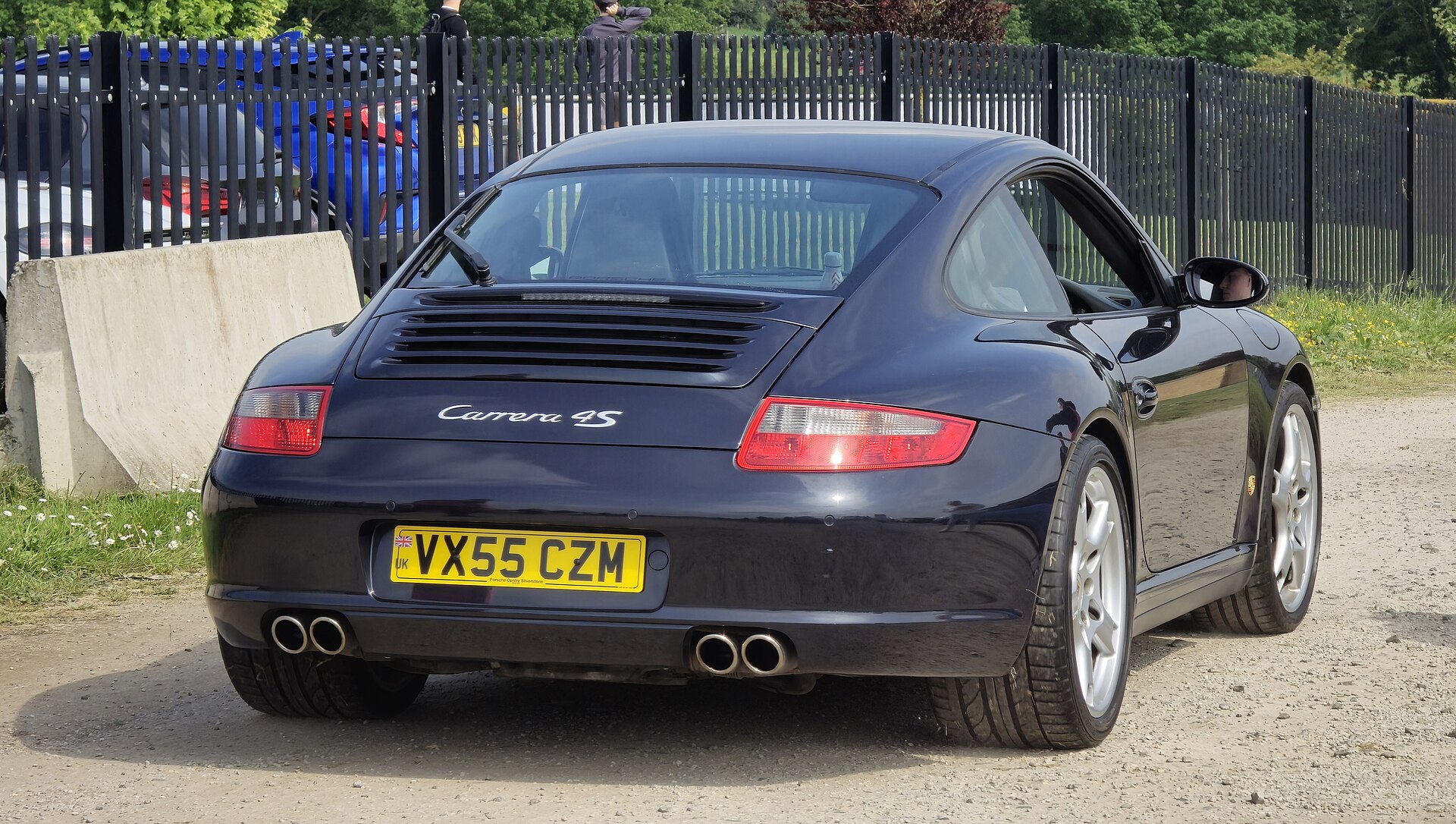
Which Car Seats Actually Fit? The Tested Ones
Not all car seats fit acceptably in a 911. Some are too large. Some have designs that don't accommodate the 911's specific geometry. Testing has identified models that work better than others:
Infant Car Seats (Birth to 12 Months)
Infant seats are your best bet in a 911. They're smaller than forward-facing seats and their semi-reclined orientation actually works well with the 911's limited space. The catch: infant seats are only usable until your child reaches about 30 pounds (12-13 months for typical growth), then you must transition to a forward-facing seat.
Clek Liingo: The narrowest infant seat on the market (about 17 inches wide). It fits in the 911 rear seat without requiring extreme front seat adjustments. Installation time: about 10 minutes once you understand the process. Cost: ~$350. Parent consensus: best infant option for 911 ownership.
Nuna PIPA Lite LX: Slightly wider than the Liingo but still workable. Good if you prefer Nuna's design aesthetic. Cost: ~$300. Note: the PIPA's handle interferes with headroom more than the Liingo, making it less ideal for taller passengers next to the seat.
UPPAbaby Mesa Max: A heavier car seat that's genuinely tight in the 911 rear space. Works technically, but installation is frustrating and the front seat must be pushed forward further than with narrower options. Only choose this if you have strong brand loyalty to UPPAbaby.
Forward-Facing Seats (1-7 Years)
This is where the 911 becomes challenging. Forward-facing seats are larger, requiring more aggressive front seat tilting. The ones that work best are:
Clek Fllo: High-back booster with forward-facing capability, only 17.5 inches wide. The Fllo is specifically designed for compact spaces and sports cars. Many 911 owners with children in the 2-5 year range use the Fllo. Installation is still tight, but manageable. Cost: ~$400. Note: Clek also offers the Fllo Plus harness-to-booster option, which lets you transition smoothly from harness to booster mode, extending usability into the 6-7 year range.
Nuna RAVA: At about 18 inches wide, the RAVA is close to the Fllo in compactness. It offers excellent safety ratings and the Nuna design philosophy of simplicity. Installation in the 911 is tight but possible. Cost: ~$380. Parent feedback: slightly easier installation than the Fllo, slightly less compact width.
Evenflo Revolve360 Slim: The "Slim" designation is key — this is Evenflo's attempt to compete for space-constrained vehicles. At 19.5 inches wide, it's slightly larger than the Clek and Nuna options. Installation is possible but will require moving the front seat further forward than narrower seats. Cost: ~$300 (cheapest option).
Avoid these in a 911: the Cybex Pallas S-Fix, britax Boulevard, and most Graco forward-facing seats. They're 20+ inches wide and their designs don't accommodate the 911's angled rear seat back. Installation is either impossible or so tight that proper securing is compromised.
Booster Seats (4-12 Years)
Booster seats are actually your easiest option in a 911 rear seat. Most are 15-17 inches wide, requiring minimal front seat adjustment. Any major booster brand works — Clek Booster, Nuna Aace, Evenflo GoTime, Britax Parkway. However, booster seats have a catch: they only work once children are tall enough to use the shoulder strap (typically age 4+) and understand not to mess with safety systems during drives. Young toddlers who need harness-style restraint can't use boosters.
The Real Installation Challenge: Tilting the Front Seat
Every car seat installation in a 911 rear seat requires tilting the front seat forward. How much depends on the car seat model and your child's size, but expect to move the front seat forward significantly — often 4-6 inches more than comfortable driving position.
This creates cascade problems:
Space for Front Passengers: If you're installing a car seat and someone needs to sit in the front passenger seat, they're going to be squeezed. The car seat takes 17-20 inches of front-to-back space. Combined with the driver's seating position, a passenger will have minimal legroom. For airport runs, grocery trips, or solo commuting, it's manageable. For road trips where you want to switch drivers every couple hours? The front passenger is going to be uncomfortable.
Airbag Safety: When you move the front seat forward to accommodate a rear car seat, you're changing the airbag deployment zone. This is particularly important on the passenger side. Porsche's airbag engineering assumes normal front seat positioning. Moving the seat drastically changes how airbags will deploy relative to the driver and passenger. Consult your 911 manual and airbag placement diagrams before installing a car seat. Some safety experts recommend that pregnant women or passengers concerned about airbag-related injuries should sit in the driver's position (controlled by the driver) rather than the passenger seat when there's a forward-facing car seat installed behind them.
Visibility and Climate Control: With the front seat pushed forward to accommodate a car seat, the driver's visibility out the rear window is compromised. The 911's already-limited rear window becomes nearly useless for checking on rear passengers. Climate control also becomes awkward — the HVAC vents behind the front seats will be directed more toward the car seat than toward a rear passenger's face. In summer, this is annoying. In winter, it's genuinely dangerous if a rear passenger is getting insufficient heat.
Accessing the Car Seat: Installing or removing a car seat requires opening the rear door fully and maneuvering your upper body into a confined space. The 911's rear door aperture is smaller than a typical sedan. Tall parents report bumping their heads regularly. If your child is fussy, you might be wrestling with straps and buckles in this confined space for several minutes. This is where you learn that the 911 rear seat was never designed for these procedures.

What Real 911 Parents Say: The Unfiltered Truth
To understand the actual experience, we reached out to 911 owners with young children. Here's what they reported:
"We tried to make the 911 work with our daughter when she was born. Clek Liingo in the rear seat. My wife is 5'2", I'm 6'1", and every drive was a negotiation — either my wife got my legroom or our daughter's car seat did. We kept it for six months. Then we bought a Cayenne as the 'family car' and now the 911 is solo adult fun. Best decision ever." — David, 911 Carrera owner, 3 kids
Takeaway: Multiple parent-owners independently arrived at the same conclusion: the 911 doesn't work long-term as a family daily driver, even with the narrowest car seats available.
"Honest assessment: yes, car seats fit. But there's a difference between fitting and working well. For short trips to the pediatrician or grandma's house, the Clek Fllo is fine once my daughter was old enough for forward-facing. But I'd never take the 911 on a road trip with the car seat installed. The front seat is basically immobile for whoever sits there, and my kid has had her head brush the rear window in the Fllo. It works. But 'working' doesn't mean comfortable for everyone." — Jennifer, 911 Cabriolet owner, 1 child
Takeaway: The distinction between "technically possible" and "comfortable for everyone involved" is important. The 911 can accommodate car seats on both counts, but comfort suffers significantly.
"What actually changed my mind about the 911 as a family car was resale value thinking. Porsche owners either want a car seat-friendly vehicle (and they buy a Cayenne), or they want an unencumbered sports car (and they buy a 911). If I sell this car with wear from five years of car seat use, I'm describing a vehicle that's been optimized for exactly zero traditional 911 buyer priorities. The Cayenne appreciation/resale math made way more sense than the 911 family car math." — Marcus, former 911 owner who switched to Cayenne
Takeaway: Economics matter. A 911 used as a family car suffers wear patterns that reduce its resale value to the enthusiast buyer pool who want a pristine, barely-used example.
Age-Appropriate Guidelines: When Kids Outgrow the 911 Rear Seat
Even when car seats technically fit, child development eventually makes the 911 rear seat genuinely unsafe or uncomfortable:
Birth to 12 months (Infant Seats): The 911 is at its most workable stage. Infant seats are compact, and babies don't know the difference between a spacious backseat and a tight one. The challenge is entirely on the parents (installation complexity, front seat inconvenience).
12 months to 3 years (Forward-Facing Transition): This is when discomfort becomes visible to the child. Forward-facing seats are larger. Toddlers notice tight spaces and express frustration. Some children will hit their heads on the rear window or feel claustrophobic. By age 2-3, many parents report that children actively resist car trips because the rear seat is uncomfortable.
3 to 7 years (Booster Seat Phase): If you transition to a booster and eliminate the harness, kids have more freedom of movement. This can improve comfort slightly. However, the fundamental space constraint remains. A 4-6 year old with a 24-27 inch inseam can't sit comfortably in 25.8 inches of legroom when there's a booster seat underneath them. The window problem worsens — now a child tall enough to see out is also tall enough to hit their head on the rear window.
7 years and up (Seatbelt Only): Once children outgrow booster seats (typically age 8-10), they graduate to the vehicle's standard seatbelt. This is where the 911 becomes genuinely problematic. A 9-year-old in an average 50th percentile for height has roughly 30-32 inches from buttocks to crown. Add 4 inches for spinal curvature and forward lean, and you're at 34-36 inches of head height. The 911's 37.1 inches of headroom leaves almost no margin. Hit a bump, and the child's head contacts the rear window. This isn't just uncomfortable — it's a safety concern if a child is struck by the window during emergency maneuvers.
Many 911 parents report that by the time their children reach age 6-8, the 911 rear seat is only usable for occasional short trips. For family road trips, regular school runs, or weekend activities, they transition to a more practical vehicle.
How the Front Seat Position Changes: The Domino Effect
When you move the front seat forward to install a car seat, seemingly everything changes:
Steering Feel: The driver's relationship to the steering wheel changes. You're sitting further back relative to the wheel, changing leverage and perceived responsiveness. Some drivers report that the car feels less responsive to inputs when the seat is positioned for a rear car seat.
Pedal Distance: Your distance from the pedals increases slightly. For shorter drivers, this can push the brake and accelerator into awkward reach zones. For tall drivers, it's usually fine, but it's a noticeable adjustment from driving solo.
Entry and Exit: Getting into and out of the driver's seat becomes an awkward maneuver when the seat is pushed back further than your ideal position. You'll be reaching for the wheel or contorting to squeeze past the seat frame.
Driving Dynamics Feel: All of these factors combine to make the 911 feel like a different car when a car seat is installed. It's not actually different — the suspension and steering are identical — but the seating position change creates a perceptual difference in how responsive and connected the car feels. This is subtle but real enough that multiple 911 owners independently mentioned it.
What Porsche Says: The Official Position
Porsche's official guidance on rear-seat child restraints is minimal. The owner's manual lists LATCH anchor locations and specifications but doesn't recommend specific car seats. When contacted, Porsche customer service typically states:
"The 911 is equipped with rear seats and LATCH anchors that comply with all federal safety requirements for child restraints. We recommend consulting your car seat manufacturer to confirm compatibility with your specific 911 model year and car seat selection. For questions about rear seat space and suitability for extended child use, we recommend visiting an authorized Porsche dealership to assess your specific needs."
In other words: yes, car seats fit, but Porsche isn't endorsing any specific approach. They're being legally correct rather than enthusiastically supportive, which tells you something about how the company views the rear seat's suitability for families.
Safety Considerations: Beyond Legal Compliance
A car seat meeting federal safety standards in a 911 rear seat is different from a car seat in an optimal installation environment. Consider:
Side Impact Protection: The 911 has modern side-impact airbags, but their positioning is calibrated for adult passengers, not children in car seats. A car seat installed in the rear outboard position changes the geometry of how airbags deploy relative to the restrained child. Porsche's safety systems work, but they're not optimized for car seat positioning.
Narrow Impact Zone: If the 911 is hit from the side, the narrowness of the rear seat means that the impacting force is concentrated in a smaller area. A car seat occupies the width of one of only two rear seats. There's no middle seat acting as buffer. This is actually a design constraint, not a safety advantage, but it's a factor in the overall risk equation.
Visibility and Accident Prevention: The 911's limited rear visibility is a bigger safety factor than the rear seat space itself. Blind spots are larger. Backup cameras help, but the sloped rear window and compact dimensions create zones where small objects and pedestrians are harder to see. For families with multiple children, the inability to see clearly into the rear seat while driving is a meaningful safety concern.
Crash Testing Data: The 911 hasn't been crash-tested by NHTSA or IIHS with a car seat installed. Crash test ratings for the 911 are based on unencumbered seating. How a child restraint system performs in a 911 rear seat during a real accident is unknown. You're extrapolating from federal standards compliance, but you don't have empirical crash data specific to this configuration.
The Daily School Run Reality: What Parents Actually Do
Theory and practice diverge when you're facing a 6:45 AM school drop-off and your 4-year-old hasn't finished breakfast. Here's what 911 parents report about daily use with car seats:
Week one through week three: novelty carries you through. The car seat is installed, everyone fits, and it works. You feel clever for making it happen.
Week four through month two: the routine wears thin. Every day, you're tilting the front seat forward or back. Every trip, someone's complaining about space. Every carpool where you need to fit an additional child's car seat reveals the hard limit of what's possible. You start planning around the car seat installation — not getting a passenger, choosing the 911 only on solo runs or when there's only one child.
Month three onward: most 911 parents have made a decision. Either they've accepted the 911 as a two-adult car with the rear seat mostly empty, or they've bought a second vehicle (usually a Cayenne or Macan) that's actually designed for families. Few make the 911 work as a primary family vehicle past the first few months of novelty.
The parents who report success with long-term 911 family use share traits: they live in urban areas with minimal driving, use the 911 primarily for weekend fun with adults, and reserve it for occasional child transport rather than daily school runs. They've accepted the 911's limitations rather than fighting them.
Honest Alternatives: Porsche's Family-Friendly Options
If you want the Porsche brand experience with better family practicality, there are genuinely better options:
Porsche Cayenne Turbo: Rear seat width of 57.8 inches and legroom of 38.1 inches. This is a genuinely spacious vehicle designed for families. Car seat installation is straightforward. Visibility is excellent. The Cayenne Turbo is fast enough to be fun without demanding the compromises the 911 requires. Most 911 parents who add a second vehicle choose a Cayenne or Macan because they solve the family problem without sacrificing Porsche DNA.
Porsche Macan Turbo: The compact SUV answer to the Cayenne. Less space than the Cayenne, but still vastly more practical than a 911 for families with multiple children. If you want Porsche performance in a more agile package, the Macan is the answer.
Comparison Alternative: Porsche 911 Turbo S vs. Lamborghini Urus: If you're shopping in the super-sports-car category and genuinely need family space, the Urus is actually more practical than a 911, though it has its own challenges. Check our guide on fitting car seats in a Lamborghini Urus to understand the full landscape.
Realistic Owner Scenarios: What Actually Works Long-Term
Scenario 1: "The Weekend Warrior" You own a 911 and are a parent, but the 911 isn't your primary family vehicle. You have a more practical car for school runs, commuting, and daily transport. The 911 is for weekend drives, coffee runs, and the occasional solo trip. Car seat compatibility? Irrelevant. You don't need it. This is the most common successful scenario among 911 owners with children.
Scenario 2: "The Single Child Exception" You have one child, and that child is old enough for a booster seat (age 4+). A booster takes minimal space. You're willing to move the front seat forward for occasional car trips. Your 911 serves as a fun family car for specific occasions, not as a daily transportation tool. Clek Fllo installation works for you. Realistic timeline: works until the child reaches age 8-10, then becomes impractical due to headroom constraints.
Scenario 3: "The Dual-Vehicle Household" You own a 911 and another family vehicle (SUV, sedan, minivan). The 911 is your car. The other vehicle is the family car. This is the best-case scenario for 911 ownership with kids. You get the driving experience you want without compromise, and your kids get the space they need. If you're considering a 911 with young children, this is the path to happiness.
Scenario 4: "The Childless Planning" You own a 911 knowing children might happen. You're keeping the car but planning to adjust. When kids arrive, you'll buy a second vehicle. This is honest, pragmatic thinking that works. You get the sports car experience you want and you adapt when life circumstances change.
What generally doesn't work: buying a 911 as your primary family car expecting that car seats will make it practical for regular family transport. The math doesn't work, and parents who try this path usually end up selling the 911 within 12-24 months.
Buying Advice: If You're Considering a 911 With Kids
If you're shopping for a 911 and you have young children, here's the practical path forward:
Step 1: Define your actual transportation needs. Will the 911 be your daily driver, or will it be one of multiple vehicles? Be honest. If you have two or more children and the 911 would be the primary family transport, reconsider. The car isn't equipped for that mission, and fighting its design constraints will frustrate you.
Step 2: Test car seat compatibility before buying. Most Porsche dealerships can arrange test installations with your chosen car seat model. Bring your car seat to the dealership, have them install it in a 911 rear seat, and spend 10 minutes experiencing it. This takes an hour total and saves months of regret.
Step 3: Plan for a second vehicle if needed. If the 911 will see regular family duty, budget for a second vehicle that's actually designed for families. A Cayenne, Macan, or mainstream SUV costs $50-80K, but it solves the problem completely. This is a more honest approach than fighting the 911's design constraints.
Step 4: Consider variant selection carefully. If you're buying a 911 with young kids, opt for a Carrera or Turbo (which have rear seats) rather than a GT3 or GT3 RS (which don't). But also recognize that you're making this decision for occasional use, not regular family transport. The GT3's rawer driving experience might actually be better long-term if you're not relying on the rear seat.
Step 5: Budget for potential modifications. Some 911 owners with children have added custom rear-seat modifications or specialized car seat adapters. These are expensive ($2-5K) and don't solve the fundamental space issue. Don't plan on them as your solution — they're often disappointing investments.
Frequently Asked Questions
Can a tall child sit in the rear seat of a 911 without a car seat?
By age 8-10, depending on the child's height, yes — but with head-contact risk. Children taller than 52 inches will likely have their heads touching the rear window in a 911. This becomes a safety and comfort problem. Most parents don't use the rear seat for tall children, even when car seats are no longer required.
Is LATCH installation easier than seat belt installation in a 911?
Not usually. Seat belt installation often requires less fiddling with awkward anchor point geometry. Experienced 911 parents often recommend seat belt installation over LATCH, even though LATCH is theoretically more secure.
Which 911 model year has the best rear seat for car seats?
Dimensions haven't changed significantly across recent generations. The 2019-2024 models are essentially identical to the 2015-2018 models in rear seat configuration. If you're shopping used, year doesn't matter from a car seat compatibility standpoint — the 2012 models have the same constraints as 2024 models.
Can you fit two car seats side-by-side in a 911 rear seat?
Technically yes, but only with two of the narrowest available seats (Clek Liingo infant seats) and only as infants. Once children grow into forward-facing seats, fitting two car seats is nearly impossible. The 51.4 inches of hip room is barely sufficient for two forward-facing seats when you account for the seat structure and harnesses.
What's the best used 911 model for families?
There isn't one, honestly. The 911's constraints are inherent to its design. Whether you buy a 2010 or 2024 model, the rear seat dimensions and practicality challenges are the same. If family accommodation is a primary concern, buy a different car.
Does the Targa convertible model offer better rear space?
No. The Targa and Cabriolet versions have identical rear dimensions to the coupe. The convertible top mechanism doesn't impact legroom or hip room.
Is it safe to have a rear-facing infant seat in a 911?
Rear-facing infant seats are actually more compact than forward-facing seats and fit better in a 911 rear seat. Yes, they're safe. However, rear-facing seats are only usable until age 2-3 (roughly 30 pounds), then you must transition to forward-facing. The infant phase is the easiest phase of 911 family ownership.
What about older 911 models without LATCH anchors?
Pre-2015 911s don't have LATCH systems. You must use three-point seat belt installation exclusively. This actually works fine — older car seats were designed for seat belt installation before LATCH became standard. Modern car seats can also be installed via seat belt method. Call the car seat manufacturer to confirm compatibility if you're buying a 2014 or older 911.
Can you fit a car seat in the rear and still have space for a front passenger?
Barely, and only if the passenger is short or doesn't mind tight legroom. With a car seat installed and the front seat moved forward, the front passenger area is compressed. For a 5'6" adult, it's workable but uncomfortable. For anyone taller, it's genuinely cramped.
Is there any modification that makes the rear seat more family-friendly?
Several aftermarket companies offer rear-seat modifications for the 911 — custom padding, seat risers, or headroom extensions. None solve the fundamental space issue. Most are $2-5K for cosmetic improvement that doesn't materially change practicality. They're expensive and often disappointing. Skip them and invest in a second vehicle instead.
Need Help Finding the Right Porsche for Your Family?
Automonitor specialists understand the practical realities of family ownership. We help buyers choose variants and configurations that actually work for their lifestyle, not just in theory.
Explore Porsche Options →Final Verdict: The Honest Assessment
Can you fit car seats in a Porsche 911? Yes. Technically, legally, and safely — they fit. Clek makes excellent narrow seats designed for space-constrained vehicles. LATCH anchors are present. Federal safety standards are met. Children can ride in the rear seat without danger.
But here's the unfiltered truth that matters: fitting and practical are different things. A car seat in a 911 rear seat requires front seat repositioning that compromises driver comfort and front passenger space. It demands wrestling with installation angles that are awkward by design. It creates headroom constraints that limit usability as children grow. It represents a constant negotiation between what you want the car to be (a pure sports car) and what you need it to be (a family vehicle).
For parents with young children considering 911 ownership, the honest recommendation is: buy the 911 as your fun car, not your family car. Invest in a second vehicle (a Cayenne, Macan, or quality SUV) that's engineered for family transport. This dual-vehicle approach solves every problem — you get the sports car experience you want without compromise, and your family gets the space and practicality they need.
If a second vehicle isn't an option, a 911 with young children is possible for occasional trips using a narrow car seat like the Clek Fllo. It works. But work it through this lens: the 911 will be your car primarily, with family duty as a secondary function. Don't expect it to be equally good at both roles. Cars built for one purpose rarely excel when repurposed.
The 911 is arguably the greatest sports car ever engineered. That engineering excellence comes from uncompromising focus on performance and driving engagement. Families need to respect that compromise rather than resent it. The moment you accept that a 911 is a sports car first, you'll find ways to make family ownership work. Fight that reality, and you'll spend three years frustrated before selling the car.
If you want expert guidance on Porsche variants, leasing options, or insurance for sports cars, Automonitor can help. We work with families regularly and understand the real-world constraints that matter when shopping for performance cars. The goal is helping you find the car that works for your actual life, not for some aspirational version of ownership.
Find the Perfect Porsche for Your Lifestyle
Whether you need a family-friendly SUV or a pure sports car, Automonitor sources from 200+ verified dealers and provides transparent market pricing.
Start Your Search →