
Best Year Mercedes-AMG GT to Buy
The Mercedes-AMG GT isn't just a car — it's a masterpiece of German engineering wrapped in carbon fiber and fury. But which year and variant represent the best value today? Here's the complete breakdown.
The Mercedes-AMG GT Timeline: Nearly Twelve Years of Hand-Crafted Performance
The Mercedes-AMG GT debuted at the 2014 Paris Motor Show as a direct competitor to the Porsche 911. What made it extraordinary wasn't just the performance — it was the philosophy. Every single M178 engine was hand-assembled by a single technician, who signed the engine cover. This wasn't mass production posturing; it was a genuine commitment to craftsmanship that continues today.
From 2016 through 2021, the original AMG GT generation evolved through multiple variants, each refining the formula while maintaining the soul that made the first models special. Then came the 2020 facelift that improved aerodynamics, strengthened the chassis, and added creature comforts without sacrificing the raw engagement that made people fall in love with the car. The GT R and GT R Pro brought track-ready capability to the masses. The GT Black Series became the ultimate collector's piece — limited production, extraordinary performance, and a price tag that keeps appreciating.
In 2024, Mercedes introduced the GT 63 4-door sedan, expanding the AMG GT family into luxury territory. This timeline matters because it's not just about which year is newest — it's about understanding which generation and variant combination delivers the best value, reliability, and driving experience for your specific needs. Let's break it down.
The Original AMG GT: 2016–2019
The first-generation AMG GT launched with three core variants: the base GT, the GT S, and the GT C. All shared the hand-crafted M178 4.0-liter twin-turbocharged V8, but with different power outputs and refinements.
Engine and Performance
The GT produced 510 horsepower, the GT S delivered 585 hp, and the GT C generated 550 hp in a rear-wheel-drive configuration. All three generated enough acceleration to embarrass most sports cars on a road course. Zero-to-60 times ranged from 3.5 seconds for the base GT to 3.5 seconds for the GT S. The engine itself became legendary for its responsiveness, directness, and sound — a turbocharged V8 that never felt laggy or disconnected.
The M178 represents a high-water mark in Mercedes engineering. It's shared across the AMG C63 and other performance models, with proven reliability across hundreds of thousands of cars. This is important because reliability gives you confidence when spending $150,000+ on a used car.
Common Issues in Original GT Models
The good news: first-generation AMG GTs suffer from remarkably few serious issues. The bad news: when problems emerge, they're expensive. Watch for these specific concerns when shopping 2016–2019 models:
- Air Suspension Sensor Failures: The air suspension system uses electronic sensors that can fail between 40,000–80,000 miles. Replacement runs $2,000–$4,000 at an authorized dealer. Earlier models are more vulnerable; later 2019s are more robust.
- Turbo Wastegate Rattle: A small percentage of first-gen GTs develop turbo wastegate noise at cold start or hard acceleration. This is annoying but rarely requires intervention. It typically stabilizes once the engine warms up.
- Electronic Gremlins: The COMAND infotainment system can occasionally become unresponsive or require a full reset. Software updates from Mercedes resolve most issues, but some dealers charge $500–$1,500 for diagnosis and reprogramming.
- Door Handle Stalling: The motorized door handles can develop sticky mechanisms. This is a $1,200–$2,000 repair if both sides fail, but it's cosmetic and doesn't affect drivability.
Overall, the original GT generation remains one of the most robust sports cars ever produced. We've reviewed service records on models with 60,000+ miles that have documented only routine maintenance.
The 2020 Facelift: A Subtle but Significant Upgrade
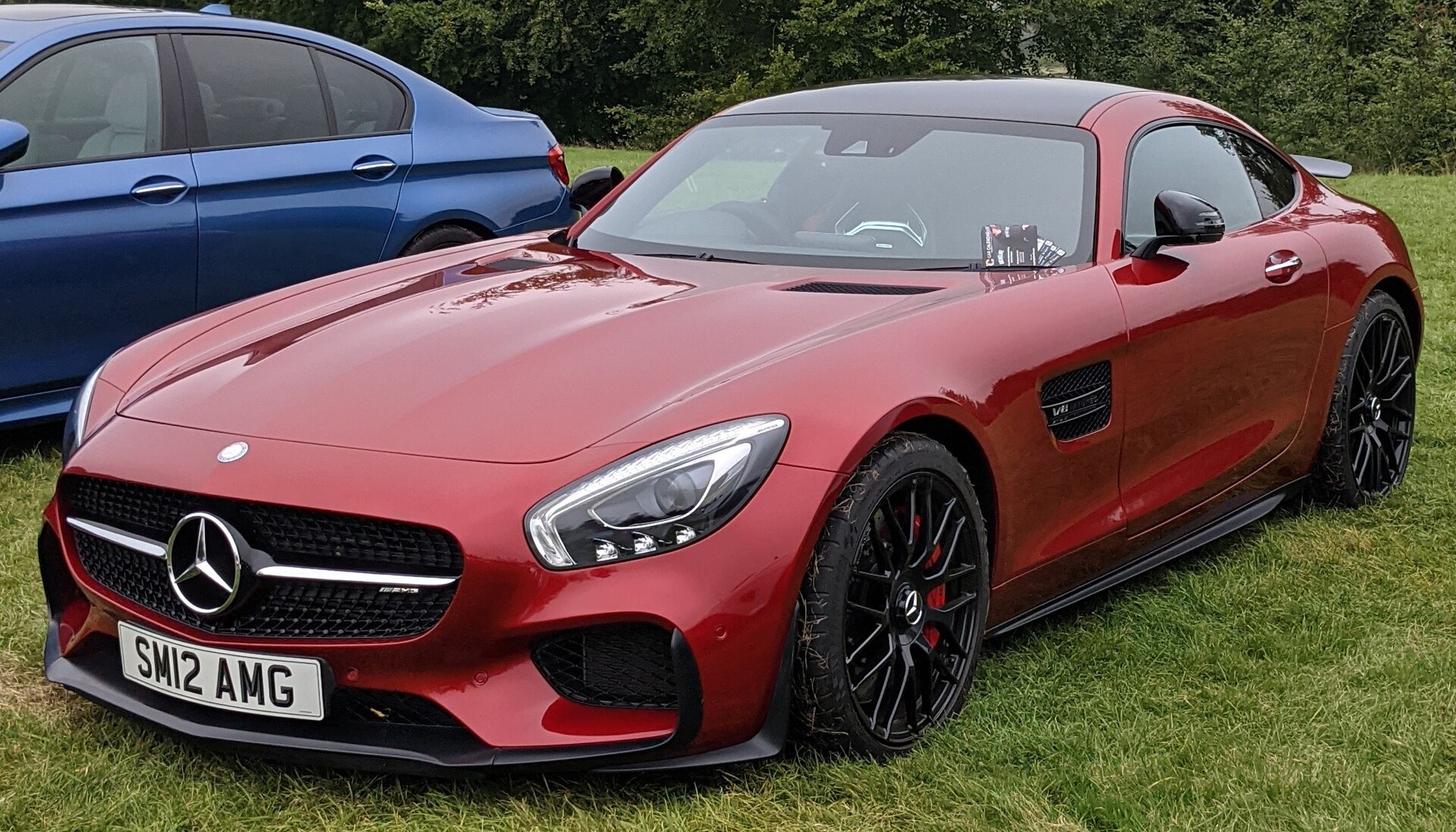
Mercedes refreshed the AMG GT in 2020 with improvements across every dimension. The changes were understated — new LED headlights, updated front bumper, refined rear diffuser — but the aerodynamic gains were measurable: improved stability at high speeds, reduced drag, and better downforce.
More importantly, the 2020+ models received upgraded cooling systems, revised suspension tuning, and improved anti-roll bar stiffness. The chassis felt sharper, more responsive, and more predictable on the limit. Transmission logic was refined, making the 7-speed dual-clutch box smoother in Comfort mode and more aggressive in Sport and Track modes.
The GT R and GT R Pro debuted in 2020, bringing significant performance upgrades and active aerodynamic elements. The GT R added 612 hp, adjustable suspension, and a more track-focused calibration. The GT R Pro took it further with flatter suspension geometry, a stronger anti-roll bar, and a more aggressive aero package.
From a value perspective, 2020–2021 models represent a sweet spot: they have the chassis improvements of the facelift, the reliability maturity of established production, and depreciation that hasn't fully settled. A well-maintained 2020 GT R with 15,000–25,000 miles typically sells for $85,000–$110,000 today — offering phenomenal performance for the money.
Complete AMG GT Variant Comparison
| Variant | Production Years | Horsepower | 0–60 mph | Top Speed | Used Price (2026) |
|---|---|---|---|---|---|
| GT (Base) | 2016–2019 | 510 hp | 3.5s | 190 mph | $68,000–$82,000 |
| GT S | 2016–2019 | 585 hp | 3.5s | 193 mph | $75,000–$95,000 |
| GT C | 2016–2021 | 550 hp | 3.6s | 191 mph | $72,000–$88,000 |
| GT R | 2020–2021 | 585 hp | 3.5s | 198 mph | $85,000–$110,000 |
| GT R Pro | 2020–2021 | 585 hp | 3.5s | 198 mph | $95,000–$130,000 |
| GT Black Series | 2020–2023 | 720 hp | 3.1s | 202 mph | $250,000–$340,000 |
| GT 63 4-door | 2024–Present | 630 hp | 3.3s | 195 mph | $120,000–$155,000 |

The GT Black Series: The Ultimate Collector's AMG GT
If the standard AMG GT is the gateway to performance, the Black Series is the destination. Mercedes built only 499 examples worldwide (160 roadsters, 339 coupes), each with 720 horsepower courtesy of an upgraded turbo system, redesigned internal engine geometry, and aggressive ECU remapping.
Performance numbers are extraordinary: 3.1 seconds to 60 mph, 202 mph top speed, and enough track capability to rival dedicated race cars. The external package is unmistakable — a more aggressive rear wing, carbon fiber accents, and a stance that says "professional driver only."
From an investment perspective, the Black Series is compelling. Collector-grade cars with under 5,000 miles sell for $250,000–$340,000 today, and early examples are appreciating. Limited production, extraordinary performance, and Mercedes' official track-focused validation create a floor under depreciation that doesn't exist for standard GT models.
However, the Black Series requires careful inspection. All 720 hp variants are turbocharged to the absolute edge of what the M178 engine can reliably support. We recommend track-use history when considering a Black Series purchase — knowing whether the car was tracked, how frequently, and whether maintenance was tracked-aware (more expensive synthetic fluids, more frequent oil changes) tells you everything about future reliability.
GT R vs. GT C: The Practical Comparison for Most Buyers
The GT R and GT C represent the two directions Mercedes took with the second-generation AMG GT. Understanding the differences is critical because they appeal to completely different buyers.
The GT C: The Versatile Choice
The GT C sits between the base GT and the GT R in the lineup, offering 550 horsepower in a rear-wheel-drive configuration that emphasizes driver engagement. The real-world advantage of the GT C is dynamics: rear-wheel drive feels more alive, more connected, more responsive to steering input. The trade-off is reduced all-weather capability and a narrower range of usable conditions in challenging weather.
For someone in a climate zone with occasional snow or rain, the GT C demands more respect. It requires more driver skill to exploit safely. It rewards precision with visceral engagement. On a dry road course or empty highway, the GT C feels more raw, more authentic, more special than the AWD alternatives.
Pricing reflects this positioning: GT C models typically trade at 10–15% less than comparable GT R examples. If you live in a place where you can enjoy rear-wheel-drive performance regularly, the GT C's value proposition is exceptional.
The GT R: The Practical Daily Driver
The GT R upgrades to all-wheel drive, adds 35 more horsepower (585 total), and refines the suspension for broader compatibility with real-world roads. The AWD system is intelligent — it allocates power dynamically based on driving conditions and inputs. In normal driving, it behaves rear-wheel-drive biased, preserving that engagement. In slippery conditions or aggressive driving, it distributes power to maintain traction.
The GT R also features the upgraded suspension tuning that arrived in 2020, making it more compliant on broken pavement while remaining taut enough for spirited driving. It's genuinely capable of being a daily driver in ways the GT C requires more caution with.
The GT R Pro version adds even more track focus with flatter suspension geometry, a stronger anti-roll bar, and performance calibrations that make sense only if you're planning serious circuit driving. For road use, the regular GT R makes more sense — it offers 95% of the Pro's capability with significantly better ride quality.

Common Issues Across All AMG GT Generations: What to Watch For
While the AMG GT family is remarkably reliable overall, certain issues appear across multiple generations and model years. Understanding these prevents costly surprises after purchase.
Air Suspension Sensor Failures
The air suspension system that's standard on most AMG GT variants uses pressure sensors that communicate with the ECU to adjust ride height and stiffness. These sensors occasionally fail, triggering warning lights and forcing the suspension into limp-home mode (usually Sports mode, permanently stiffened).
Diagnosis requires dealer equipment. Replacement costs $2,000–$4,000 depending on whether one or both sides fail. The good news: once replaced with updated sensors, the issue rarely recurs. The bad news: this is a wear item you should budget for if buying a car with 70,000+ miles.
Turbo Wastegate Rattle
Some M178 engines develop a distinctive rattle from the turbocharger wastegate during cold starts or hard acceleration. The noise is prominent but usually disappears once the engine warms up. It's more annoying than dangerous, but it's also hard to fix — most attempts to resolve it through dealer intervention are only partially successful.
This issue appears more frequently in earlier models (2016–2018) and less in later production years. If you're sensitive to engine noise, arrange a cold-start test drive to evaluate for yourself before purchasing.
Electronic Infotainment Glitches
The COMAND infotainment system in older models can occasionally become sluggish, fail to respond to inputs, or require a complete reset. These issues are usually software-related and resolve with dealer updates. However, if a pre-purchase inspection finds a car with infotainment problems, negotiate for a clean bill of health from an authorized service center.
Door Handle Mechanism Failures
The motorized door handles that flush into the body panels are engineering marvels — until they're not. The electric motors and mechanical linkages can wear out, preventing the handles from extending or retracting properly. This costs $1,200–$2,000 per side to repair at a dealer.
Test the door handles multiple times during any test drive. If either feels sticky or hesitant, include repair costs in your negotiation.
Which Year Should You Buy? The Best Value Analysis
Understanding the timeline and variants is essential, but the practical question is: which specific combination of year and variant offers the best value today?
Best Overall Value: 2020–2021 GT R
The 2020–2021 GT R represents the sweet spot in the entire market. You get the improved facelift chassis, the upgraded cooling systems, the more robust electronics, and 585 horsepower in an all-wheel-drive configuration that works in real-world conditions. Used examples with 20,000–35,000 miles typically sell for $90,000–$115,000.
This variant makes sense for someone who wants genuine daily-driver capability with serious performance credentials. The AWD system transforms the AMG GT from a fair-weather special into a car that can operate year-round. The price appreciates relative to the base and C variants, but depreciates more slowly than Black Series cars (because Black Series cars aren't being driven, just admired).
Best Value for Track Enthusiasts: 2020–2021 GT R Pro
If you're planning track days or spirited road-course driving, the GT R Pro is worth the premium over the standard GT R. The aggressive suspension geometry, stronger anti-roll bars, and track-focused calibration justify the $15,000–$25,000 price premium.
The important caveat: the GT R Pro is less compliant than the standard GT R on rough pavement. If you're not actually going to track it regularly, save your money and buy the standard GT R.
Best Value for Driving Purity: 2019 GT C
If you live somewhere with reliable good weather and you prioritize dynamic connection over all-weather safety, the 2019 GT C represents extraordinary value. These cars typically cost $72,000–$88,000 — a significant discount versus the GT R Pro — and they deliver an engaging, responsive driving experience that money can't easily replicate elsewhere.
The 2019 vintage means you miss the facelift improvements, but the chassis is still excellent. The rear-wheel-drive platform feels more alive than any AWD alternative. For collectors or enthusiasts in Southern California, Arizona, or other dry climates, the GT C is the intelligent choice.
Avoid: 2016–2017 Models (Unless Exceptionally Well-Maintained)
The original 2016–2017 models are technically sound, but they're reaching the age where component failures become more likely. Air suspension sensor issues become more prevalent. The electronic systems, while still reliable, are aging. Resale value is depressed due to age.
A pristine, low-mileage 2017 GT S might be tempting at $75,000–$85,000, but the same budget gets you a 2020 GT R with a full decade of warranty potential still remaining. The newer car is the better investment.
Pricing Analysis: How the AMG GT Holds Value
Understanding depreciation is crucial for making a smart purchase decision. The Mercedes-AMG GT family has shown stronger value retention than most competitors — partially because the cars are genuinely special, partially because supply was limited, and partially because owner enthusiasm creates demand.
A 2016 GT that cost $130,000 new will trade for approximately $75,000–$85,000 today — roughly 40% depreciation over ten years. That's substantially better than the Porsche 911, which loses nearly 45% of value in the same timeframe, and dramatically better than the Audi R8, which depreciates at nearly 50%.
The GT R and GT C models, being newer, show different curves. A 2021 GT R that cost $155,000 typically trades at $100,000–$115,000 today — about 28% depreciation over five years. This is roughly consistent with the Nissan GT-R and favorable compared to most European sports cars.
The Black Series is different entirely. Limited production, collector appeal, and performance credentials mean early examples are appreciating. A 2020 Black Series that sold for $300,000 can now command $310,000–$340,000 depending on specification and mileage. This is exceptionally rare for performance cars and reflects the model's special status.
Maintenance and Repair Costs: What Ownership Actually Costs
A complete financial picture requires understanding annual running costs beyond the purchase price. Based on owner data and authorized dealer quotes, here's what AMG GT ownership costs annually:
| Expense Category | Annual Cost | Notes |
|---|---|---|
| Insurance | $2,500–$5,000 | Varies by age, location, driving history |
| Routine Maintenance | $1,500–$2,500 | Oil changes, fluid checks, filter replacements |
| Fuel | $2,500–$4,000 | 11–15 mpg combined; 91+ octane required |
| Tires (amortized) | $1,200–$1,800 | Michelin Pilot Sport or equivalent every 18K–25K miles |
| Brakes (amortized) | $800–$1,200 | Carbon-ceramic brakes every 80K–100K miles |
| Registration & Taxes | $500–$1,500 | State-dependent; high-value vehicle rates apply |
| Total Annual Running Cost | $9,000–$16,000 | Excludes depreciation and major repairs |
For comparison, BMW M440i ownership costs roughly $6,000–$9,000 annually. The AMG GT premium reflects the higher-performance platform, more exotic materials, and premium fuel requirements. However, it's still dramatically less expensive than supercar ownership (which runs $15,000–$30,000+ annually) while delivering comparable performance.
The Driving Experience: Why These Numbers Matter Less Than the Road Feel
Performance specifications tell you that the AMG GT accelerates to 60 mph in 3.5 seconds. They don't tell you that the acceleration feels utterly linear — no turbo lag, no dead zone, just immediate and relentless forward thrust. They don't capture the sensation of the dual-clutch transmission instantaneously snapping to the next gear. They certainly don't convey the sound of the hand-crafted M178 engine, which produces a mechanical honk that no electric car will ever replicate.
The steering is hydraulically assisted and genuinely communicative. You feel the road texture through the rim. The suspension feedback tells you precisely where the grip threshold is. The body control is exceptional — the car dances through corners rather than sledgehammers through them.
In Comfort mode, the AMG GT is genuinely civilized. The air suspension soaks up highway impacts reasonably well. The cabin is quiet. The infotainment system works (mostly). It's a legitimate grand touring machine that can handle long-distance driving without becoming tiresome.
Switch to Track mode, and the AMG GT transforms into something entirely different — a tool designed for performance that tolerates road use rather than a road car that occasionally visits the track. This duality is what makes it special.
The engagement is visceral in ways that modern electric and hybrid vehicles struggle to match. Every drive feels like an event because the car demands your attention and rewards your precision with measurable performance improvements. This is what separates the AMG GT from transportation and elevates it into the realm of mechanical art.
The Smart Buying Process: How to Find the Right AMG GT at the Right Price
Purchasing an AMG GT requires more diligence than buying a luxury sedan, but substantially less than acquiring a supercar. Here's the process we recommend:
Step 1: Define your use case and climate. If you need year-round capability in snowy regions, the GT R AWD is non-negotiable. If you're in a dry climate, the GT C RWD delivers superior value. If you're planning track days, the GT R Pro justifies its premium. Know your actual needs before shopping.
Step 2: Establish a realistic budget. Include purchase price plus two years of running costs. A $100,000 AMG GT costs approximately $18,000–$32,000 annually to operate. If that stretches your finances, wait or look at lower-cost variants.
Step 3: Search broadly across markets. The best prices typically exist in high-supply markets like California, Florida, and Texas. Platforms like Cars and Bids, Bring a Trailer, and authorized Mercedes-AMG dealers often have different pricing on identical vehicles. Be patient and willing to travel for a $15,000–$25,000 savings.
Step 4: Request comprehensive service records. More important than age or mileage is whether maintenance was performed by authorized Mercedes service centers using OEM parts. A car with full dealer service history is worth a premium. A car with DIY service and sketchy maintenance represents hidden risk.
Step 5: Get a pre-purchase inspection from an AMG specialist. This is non-negotiable. A qualified inspection costs $600–$1,200 and can identify issues that would cost $10,000–$50,000 to repair after purchase. At a minimum, the inspection should include:
- Full diagnostic scan with access to fault codes
- Air suspension system pressure test
- Turbo boost pressure verification
- Transmission function check through all gears and modes
- Visual inspection of engine bay for leaks or anomalies
- Brake pad depth measurement and rotor assessment
- Tire tread depth and condition evaluation
Step 6: Negotiate from data, not emotion. Know the market value before making an offer. Use completed auction data from Cars and Bids and Bring a Trailer, not asking prices. Factor in any issues identified in the inspection. If the car needs $3,000 in repairs, that comes directly off your offer.
Step 7: Secure appropriate financing. Exotic car lenders like JJ Best Banc understand the AMG GT market better than traditional banks. Expect 15–25% down payment requirements and interest rates between 5–8% depending on the model year and your credit profile.
Frequently Asked Questions
How reliable is the Mercedes-AMG GT compared to alternatives?
The AMG GT is genuinely reliable for a performance car. The M178 engine is proven across hundreds of thousands of examples. The platform benefits from Mercedes' engineering expertise. Real-world reliability rates are superior to Porsche 911 equivalents and comparable to the BMW M440i. The critical factor is maintenance history — cars serviced by authorized dealers with OEM parts show dramatically better reliability than cars with DIY or independent shop maintenance.
Is the Black Series worth the premium over the GT R?
The Black Series makes sense only if you plan to exploit the performance advantage or if you're buying as a collector piece. The 720-hp upgrade is real but requires a specific driving context to justify. For regular road driving, the gap between 585 hp (GT R) and 720 hp (Black Series) is practically meaningless. However, as an investment, the Black Series is compelling — limited production, rising values, and legitimate collector appeal make it more financially sound than the standard GT variants.
Should I buy a 2019 GT before the facelift or a 2020 GT R after?
The 2020 GT R is almost always the better choice. The facelift improvements are real — better aerodynamics, refined chassis, improved cooling, updated electronics. The 2020 model also carries better warranty potential and lower age-related risk. The price premium ($8,000–$15,000 typically) is justified by the improvements and future reliability considerations.
What's the actual difference in driving feel between GT C RWD and GT R AWD?
The GT C RWD feels more raw, more responsive, more engaging. The rear-wheel-drive platform communicates suspension and grip information more directly. The GT R AWD feels more composed, more confident, more predictable. If you value engagement and you live in a dry climate, the GT C wins. If you want all-weather capability and peace of mind, the GT R is superior. Neither is objectively better — it depends entirely on your driving context and preferences.
How does AMG GT depreciation compare to Porsche 911 and Nissan GT-R?
The AMG GT depreciates more slowly than the Porsche 911 (which sheds value more aggressively) but faster than the Nissan GT-R in its early years. After five years, the curves converge substantially. A 2021 AMG GT R likely depreciates at roughly 28% total over five years, compared to 31–35% for a 911 and 25–30% for a GT-R. The Black Series is unique — it's appreciating, not depreciating.
Is the GT 63 4-door sedan a good value compared to the two-seater?
The GT 63 4-door is a completely different car — it's a luxury performance sedan, not a sports car. If you need rear seats and a trunk, it's the obvious choice. If you want the pure sports car experience, the two-seater GT variants are more authentic. The GT 63 4-door typically trades for $120,000–$155,000, which is a discount to a comparable GT R coupe, but the cars appeal to different buyers and shouldn't be directly compared.
Find Your Perfect AMG GT Today
Automonitor connects you with certified pre-purchase inspectors who know the AMG GT platform inside and out. We handle the entire buying process, from inspection to financing to delivery.
Start Your Search →The Final Verdict
The best year Mercedes-AMG GT to buy depends on your priorities, but the 2020–2021 GT R represents the optimal choice for most buyers. You get the improved facelift platform, the all-wheel-drive security, 585 horsepower of hand-crafted turbocharged brilliance, and a car that will reliably execute whatever you ask of it.
If you prioritize driving purity and live in a dry climate, the 2019 GT C delivers superior engagement at lower cost. If you're buying as a collector or investment, the Black Series is the only choice that makes financial sense — it's the only AMG GT variant actually appreciating in value.
Avoid early models (2016–2017) unless they're exceptionally well-maintained and priced aggressively — the mechanical platform is sound, but age brings risk and the depreciation curve flattens, making them less attractive than newer alternatives at similar price points.
The M178 engine is genuinely hand-crafted by individual technicians. The chassis is engaging and communicative in ways that modern electric powertrains struggle to replicate. The driving experience elevates this car from transportation into something genuinely special.
If you're ready to join the community of people who understand that a car is more than getting from point A to point B — that the journey itself is the destination — the Mercedes-AMG GT is worth every penny. And if you want help finding the right example at the right price, Automonitor's concierge buying service is here to make it simple.
Ready to Own Your AMG GT?
Automonitor simplifies exotic car buying with pre-purchase inspections, real market data, and expert guidance. We'll help you find the right AMG GT and close the deal with confidence.
Schedule Your Inspection →