
Aston Martin DB12 vs Ferrari Roma
Two of the world's most beautiful front-engine grand tourers stand at a crossroads. The DB12 arrives as Aston Martin's revolutionary "super tourer," while the Roma represents Ferrari's elegant reinvention of la dolce vita. Which masterpiece deserves a place in your garage?
The Battle of Design Philosophies: Power vs. Elegance
When Aston Martin unveiled the DB12 in early 2024, the automotive world took notice. Here was the spiritual successor to the iconic DB11, but reimagined from the ground up with revolutionary bonded aluminum construction, a new 671-horsepower twin-turbo V8, and a design language that somehow managed to honor decades of heritage while looking entirely fresh. The DBs have always represented British elegance combined with genuine performance.
The Ferrari Roma, by contrast, emerged in 2020 as something different: a modern interpretation of the classic 250 GT California Spider. It's Ferrari's answer to the question: what if we built a car that prioritized daily usability without sacrificing the Ferrari mystique? With 612 horsepower, a lower stance, and an absolutely minimalist interior, the Roma represents a departure from Ferrari's traditional supercar excess.
These two cars represent fundamentally different philosophies. The DB12 says "we can be refined AND powerful." The Roma says "less is more, but we're still Ferrari." Understanding this distinction is crucial to determining which car truly matches your driving needs, aesthetic preferences, and ownership expectations. This comprehensive guide breaks down every important dimension of these two masterpieces so you can make an informed decision.
Design Philosophy: The Artistic Vision Behind Each Car
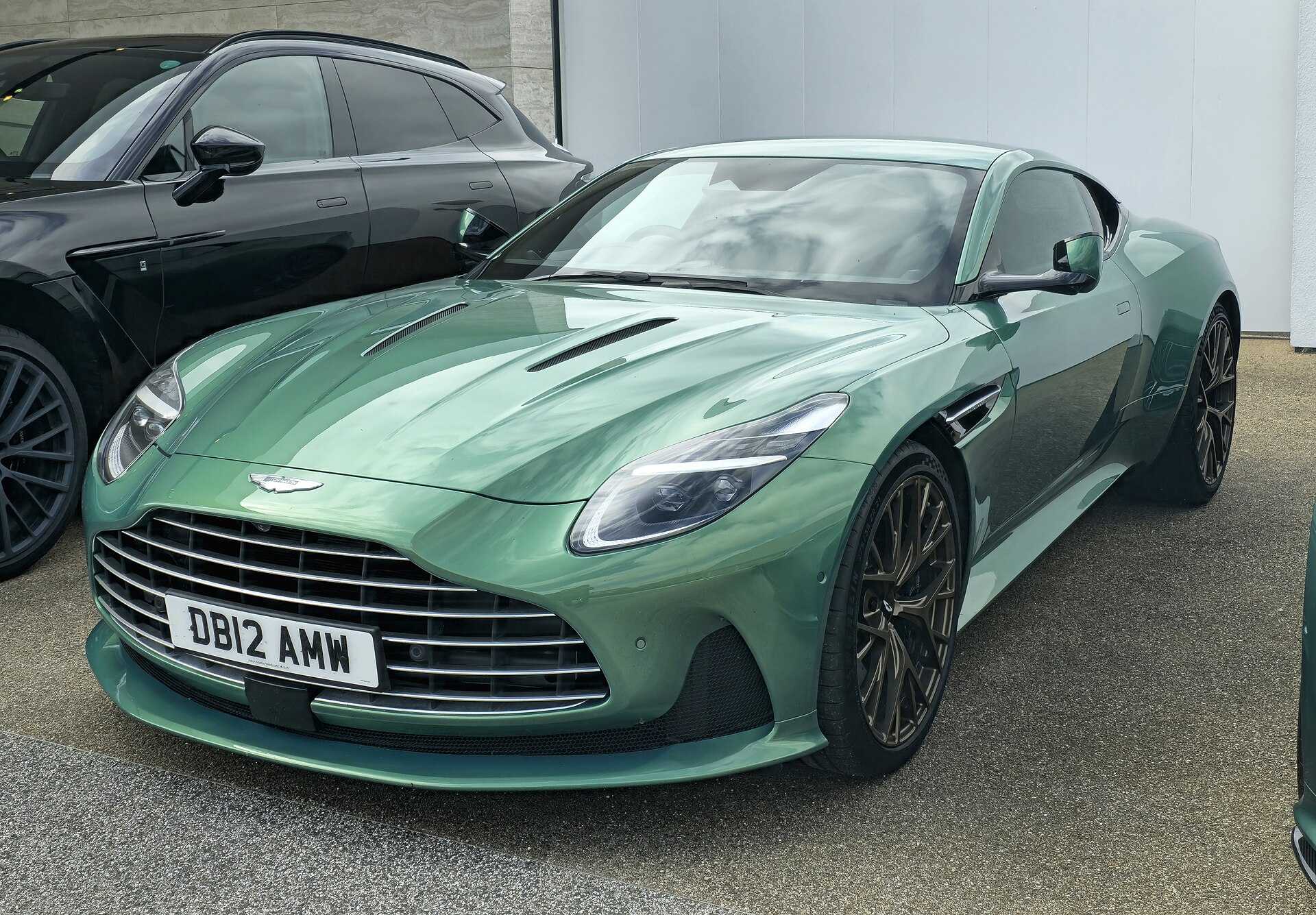
The Aston Martin DB12 carries forward one of automotive history's most recognizable design lineages. Every DB model from the DB5 forward has maintained certain visual signatures—the sculpted sides, the elegant proportions, the understated aggression. The DB12 respects this history while pushing into new territory. Chief Designer Miles Nolan specifically engineered the DB12 to be what Aston Martin calls the "world's first super tourer"—a car that can handle spirited driving yet remain composed and comfortable on long European highway drives.
The front fascia is more upright and purposeful than previous generations, with a larger grille that channels cooling air to the new turbo V8. The headlights are narrower and more focused, emphasizing the DB12's forward-looking stance. The body side is sculpted rather than smooth, with character lines that flow naturally from fender to rear wheel arch. The overall effect is muscular yet refined—an Aston Martin that looks strong without appearing aggressive.
The Ferrari Roma, designed by Pininfarina, takes a completely different aesthetic approach. The design brief was explicit: channel the spirit of the golden-age Ferraris, the 250 GT and other classics that represented the absolute peak of Italian design. The Roma's proportions are lower and longer, emphasizing a classic 2+2 grand tourer stance. The front end is almost austere by Ferrari standards—no aggressive grille, no dramatic angles. Instead, you get clean surfaces, flush door handles, and an absolute minimalism that stands out in the current Ferrari lineup.
The Roma's side profile is perhaps the most beautiful element: a long hood, a short overhang, and a rising beltline that creates a sense of controlled power without theatricality. Where the DB12 acknowledges modern design language, the Roma rejects it entirely, creating something that could almost be mistaken for a car from 1963 if not for the modern lighting elements and proportions.
The DB12 is Aston Martin proving it can be both traditional and revolutionary. The Roma is Ferrari proving it can be both modern and classic. Neither approach is objectively superior—they simply serve different buyer psychology.
Performance Head-to-Head: Raw Numbers Don't Tell the Whole Story
This is where the comparison gets interesting. The Aston Martin DB12 produces 671 horsepower and 568 lb-ft of torque from its 4.0-liter twin-turbocharged V8. The Ferrari Roma produces 612 horsepower and 561 lb-ft of torque from its 3.9-liter twin-turbocharged V8. On paper, the DB12 wins. In practice, the story is more nuanced.
In raw acceleration, the DB12 edges ahead: 0-60 mph in 3.5 seconds versus the Roma's 3.4 seconds. Wait—the Roma is actually faster by 0.1 seconds. Top speed: DB12 reaches 202 mph, Roma caps out at 199 mph. Again, the DB12 wins, but only barely. The reality is that both cars are extraordinarily fast, and the performance difference is negligible for any real-world driving scenario.
The meaningful difference lies in how that power is delivered. The DB12, using Aston Martin's new bonded aluminum platform, employs a more progressive power delivery. The turbocharged V8 comes online smoothly, building boost gradually, and the car rewards smooth inputs with balanced, predictable acceleration. It's the engineering philosophy of a British touring car maker that happens to make supercars.
The Roma's engine, sourced from Ferrari's F8 Tributo, is more immediately responsive. It's turbocharged as well, but the tuning prioritizes responsiveness over linearity. When you step on the accelerator, the Roma jumps forward with an eagerness that's distinctly Ferrari. The transmission in the Roma is fractionally quicker to shift, giving the Roma a slight advantage in real-world acceleration feel.
The 0-60 discrepancy is actually a measurement quirk—the Roma's launch control is optimized differently, giving it a fractionally quicker off-the-line feel, but the DB12's top-end power is genuinely superior. If you're driving at legal speeds on roads open to the public, this distinction is purely academic.
Chassis and Handling: Where British Engineering Meets Italian Refinement
The Aston Martin DB12 sits atop one of the most significant engineering achievements in recent Aston Martin history. The new bonded aluminum platform is 50% stiffer than the previous DB11 structure while using less material. This allows for better suspension tuning, more precise steering response, and a planted, confident feel in corners.
The suspension setup uses double-wishbones front and rear with adaptive damping that intelligently adjusts stiffness based on road conditions. In comfort mode, the DB12 genuinely rides like a grand tourer should—absorbing highway imperfections while maintaining composure. In sport mode, the suspension tightens up dramatically, creating a chassis that's competent and engaging without being punishing.
The Roma, using Ferrari's proven F8 Tributo platform, relies on more traditional Italian grand tourer philosophy. The suspension is slightly softer, prioritizing ride comfort over ultimate cornering performance. The steering is lighter and more intuitive, with a quicker ratio than the DB12. For point-and-shoot driving, the Roma is arguably easier to drive—you can place it precisely without having to think about weight transfer or chassis balance.
This is the fundamental difference: the DB12 is engineered for spirited driving and technical road sections. The Roma is engineered for ease of use and relaxed highway cruising. Both are genuinely competent, but they're optimized for different scenarios. A driver who loves mountain roads will prefer the DB12. A driver who prioritizes relaxed touring will prefer the Roma.
Braking performance is comparable—both cars use carbon-ceramic brakes capable of repeated hard stops without fade. Tire technology is essentially identical, with Pirelli high-performance Corsas on sport variants. Neither car has a meaningful advantage in raw handling metrics, but the subjective feeling is quite different.
Interior Luxury and Daily Usability: Where Choices Reveal Philosophy
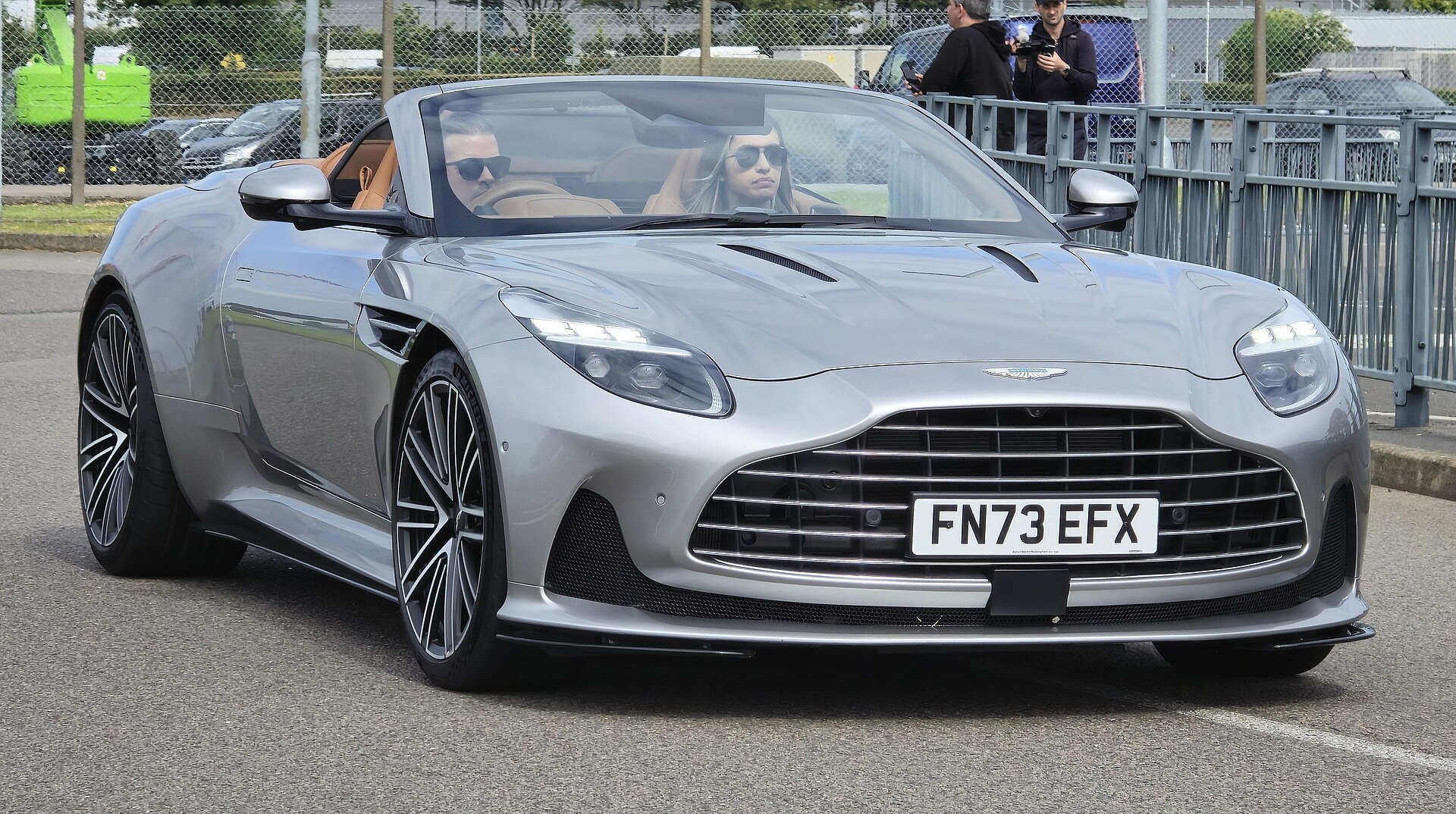
The Aston Martin DB12 underwent a complete interior redesign for 2024. It's not just a refresh—it's a fundamental reimagining. The dashboard is now a sculptural element, with a curved piece of wood (available in walnut or other fine materials) flowing across the entire width of the cabin. The infotainment system is finally modern, with a tablet-style touchscreen, smartphone integration, and genuinely useful navigation.
The seats are superbly comfortable, with extensive electric adjustment, heating, and ventilation. The cabin noise insulation is extraordinary—the DB12 at highway speeds is remarkably quiet, with wind and tire noise suppressed effectively. The visibility is good for a modern sports car, with well-positioned mirrors and an unobstructed view forward. Climate control is effective and intuitive.
Storage space is actually practical: a decent trunk for weekend bags, door pockets that can hold water bottles and documents, and surprisingly thoughtful interior packaging that allows you to actually store things without them rattling around.
The Ferrari Roma takes the opposite approach. Minimalism isn't just a design language—it's a philosophy. The dashboard is nearly empty, with controls integrated into the steering wheel or simple physical buttons on the center console. There's no tablet-style screen; instead, a smaller, more integrated digital display provides essential information. The seats are beautifully designed but less adjustable than the DB12's offerings.
The Roma's interior is genuinely spartan compared to the DB12. Trunk space is more limited. Climate control is less sophisticated. Sound insulation is competent but you're more aware of the road surface. Yet many buyers love this minimalism. It feels lighter, more purposeful, less cluttered by unnecessary technology.
For long-distance touring, the DB12 is objectively superior. For someone who drives short distances and wants to feel the car and road around them, the Roma is arguably the better choice. This isn't a weakness in the Roma—it's a deliberate design choice that resonates with buyers who want to feel connected to the driving experience rather than coddled by technology.
Considering These Exotic Cars?
Automonitor connects you with financing specialists who understand the unique requirements of grand tourer ownership. Get pre-qualified for your DB12 or Roma today.
Explore Financing →Pricing and Value: Initial Investment and Long-Term Costs
The Aston Martin DB12 starts at approximately $245,000 for the base coupe configuration. A well-equipped example with preferred interior materials, paint upgrades, and the advanced technology package can easily reach $280,000-$300,000.
The Ferrari Roma starts at approximately $226,000 for the base configuration. Similar customization options can push a loaded example to $270,000-$290,000. On paper, the Roma is the more affordable entry point, though by a smaller margin than you might expect.
However, pricing tells only part of the story. The DB12, being brand new to the market, has minimal used inventory, so buying new is your primary option. The Roma, introduced in 2020, has a growing used market with examples available from $180,000 (high-mileage, older examples) to $240,000 (low-mileage, well-specified examples).
If you're planning to buy used, the Roma offers more flexibility and potentially better value. If you want the absolute latest technology and design, the DB12 requires a new purchase.

Depreciation Analysis: Which Car Holds Value Better
This is where Ferrari's brand prestige becomes quantifiable. The Roma has demonstrated consistent depreciation of approximately 15-18% over three years. A car purchased at $245,000 will typically sell for $200,000-$210,000 after three years with normal mileage and maintenance.
The Aston Martin DB12 is too new to have reliable depreciation data, but historical DB11 patterns suggest depreciation in the 20-25% range over three years. While the DB12 is a significant step forward, it will likely follow similar patterns unless the new bonded aluminum platform and revolutionary design generates unexpected collector interest.
The Roma's superior value retention is substantial and measurable. Over five years, the Roma typically loses 25-28% of its value, while comparable Aston Martins lose 35-40%. If you're driving the car for three to five years and planning to sell, the Roma is the financially superior choice.
However, this assumes normal market conditions. The unprecedented collector interest in limited-production special variants could change these dynamics. A DB12 Volante (convertible) or a special edition variant could potentially hold or even appreciate in value as production numbers are limited.
Maintenance and Ownership Costs: The True Cost of Ownership
Annual maintenance on the Aston Martin DB12 is estimated at $3,500-$5,000 for routine service, including oil changes, filter replacements, and fluid inspections. The new bonded aluminum chassis requires different inspection procedures than traditional steel chassis, but warranty coverage for the first three years eliminates most potential costs.
Insurance runs $5,000-$7,500 annually depending on your location, driving record, and coverage selections. The DB12's modern safety features and structure result in insurance costs that are reasonable for a $250,000 car.
The Ferrari Roma's maintenance costs are surprisingly comparable: $3,500-$5,500 annually for routine service. Ferrari has worked hard to make the Roma more accessible to broader audiences, and maintenance is part of that philosophy. The Roma's F8 engine is proven and reliable, with Ferraris now reaching 50,000+ miles between major services.
Insurance for the Roma runs $4,500-$6,500 annually—fractionally lower than the DB12, reflecting the Roma's lower repair costs and the insurance industry's historical comfort with Ferrari as a brand.
Fuel costs are comparable: both cars use premium fuel and achieve approximately 15-18 mpg in mixed driving. In real terms, expect to spend $800-$1,200 monthly on fuel for regular driving.
| Cost Category | Aston Martin DB12 | Ferrari Roma |
|---|---|---|
| Base Purchase Price | $245,000 | $226,000 |
| Annual Maintenance | $3,500–$5,000 | $3,500–$5,500 |
| Annual Insurance | $5,000–$7,500 | $4,500–$6,500 |
| Annual Fuel (2,000 miles/month) | $1,200–$1,600 | $1,200–$1,600 |
| 3-Year Depreciation | ~22–25% | ~15–18% |
| Total 3-Year Cost (est.) | $88,000–$102,000 | $80,000–$92,000 |
Comprehensive Specifications Comparison
| Specification | Aston Martin DB12 | Ferrari Roma |
|---|---|---|
| Engine | 4.0L Twin-Turbo V8 | 3.9L Twin-Turbo V8 |
| Horsepower | 671 hp | 612 hp |
| Torque | 568 lb-ft | 561 lb-ft |
| 0–60 mph | 3.5 sec | 3.4 sec |
| Top Speed | 202 mph | 199 mph |
| Weight | 3,660 lbs | 3,480 lbs |
| 0–100 mph | 7.8 sec | 7.5 sec |
| Fuel Economy (combined) | 17 mpg | 16 mpg |
| Transmission | 8-speed Automatic | 8-speed Automatic |
| Seating Capacity | 2+2 (tight rear) | 2+2 (minimal rear) |
| Trunk Capacity | 13.7 cu. ft. | 9.9 cu. ft. |
Which Is Better For Different Driving Scenarios?
Long-Distance European Touring
Winner: Aston Martin DB12. The DB12's superior comfort appointments, better visibility, larger trunk, and more modern infotainment system make it the obvious choice for multi-day road trips. The suspension is better isolated, cabin noise is lower, and the seats support longer driving without fatigue. If you're planning to drive Paris to Monaco and enjoy the journey, the DB12 is the more sensible choice.
Spirited Mountain Driving
Winner: Ferrari Roma (slight edge). The Roma's lighter weight, quicker steering response, and more intuitively calibrated suspension give it a fractional advantage on technical roads. However, the DB12's superior braking performance and more linear power delivery make it excellent as well. In reality, both are genuinely competent. This is genuinely a tie—drive both and pick based on which steering feel you prefer.
Weekend Cruising and Social Events
Winner: Ferrari Roma. The Roma's status and design make it a showstopper in ways the DB12, for all its elegance, simply isn't. A Ferrari badge carries unmatched prestige. The Roma's minimalist interior and classic styling make it feel like a special occasion every time you drive it. If your primary use is weekend fun and showing the car off, the Roma wins on emotional appeal.
Daily Driving and Usability
Winner: Aston Martin DB12. The DB12's practical interior, better visibility, larger trunk, and more intuitive technology make it suitable for occasional daily use. The Roma can be daily driven, but its smaller trunk and more challenging visibility make it less practical. For someone who needs to actually use the car for running errands, the DB12 is more livable.
Collector Appreciation Potential
Winner: Aston Martin DB12 (with significant caveats). The DB12 represents a generational redesign and could become collectible as production numbers remain limited. However, this is speculative. The Roma is already proving itself as a collector's piece, with certain early examples increasing in value. For pure investment potential, neither is a guarantee, but the DB12's revolutionary engineering could make it more historically significant in decades to come.
Customization and Personalization Options
The Aston Martin DB12 offers extensive customization through its bespoke program. Nearly every interior material is customizable—leather colors, wood veneers, trim accents. The exterior offers a full palette of custom paint colors, wheel designs, and interior accent packages. Aston Martin's design team is willing to discuss one-off modifications if budgets allow.
The Ferrari Roma offers similar customization depth. Ferrari's Rosso Corsa paint options include dozens of varieties, and the interior leather selections are extensive. However, Ferrari is generally less willing to deviate from established design language compared to Aston Martin. Both cars offer custom builds, but Aston Martin appears slightly more flexible.
Insurance and Collector Considerations
Both cars are insurable through mainstream luxury insurers like AXA XL, Chubb, and Hagerty. The DB12 is new enough that insurance is priced based on estimated risk. The Roma has established insurance rates based on real claim data.
For collector consideration, both are interesting. The Roma, being older and with more established history, is more likely to be accepted by specialty collector car insurance. The DB12's revolutionary design could make it historically significant, but that significance isn't yet proven.
Read more about exotic car insurance requirements in our comprehensive exotic car insurance guide.
Brand Heritage and Prestige: The Intangible Asset
The Aston Martin brand carries nearly 115 years of history, including the legendary DB lineage dating to 1950. The DB5's association with James Bond created an cultural icon that transcends automotive enthusiasm. Owning a modern DB is, in some sense, owning a piece of that legacy.
The Ferrari brand carries 75 years of racing heritage, Grand Prix championships, and a mystique that no other brand can match. The Roma specifically channels the spirit of Ferrari's classic front-engine cars, and owning a Roma is owning a piece of that golden age of automotive elegance.
In practical terms: the Ferrari badge carries more prestige. Walk into a room with a Roma, and everyone knows what it is. Walk in with a DB12, and many people won't recognize it, though those who do will be impressed by the engineering. If raw brand prestige matters, Ferrari wins. If you prefer understated excellence, Aston Martin wins.
Financing and Lease Options
Both cars are available through traditional exotic car financing via specialists like JJ Best Banc and Woodside Credit. Expect 20-30% down payment requirements and rates between 6-10% depending on credit profile and vehicle age.
Lease options are available for both cars through their respective brand programs, though leases are less common for these vehicles than for mainstream luxury cars. Read our guide on should you lease or buy an exotic car for detailed analysis.
For specific lease rates on the Ferrari Roma, consult our Ferrari lease pricing guide. Payment structures typically range from $3,500-$5,500 monthly depending on mileage allowance and term.
Reliability and Known Issues
The Aston Martin DB12 is too new for comprehensive real-world reliability data, but it benefits from being built on proven mechanical components. The twin-turbo V8 is shared with other Aston Martin models with good track records. The main unknown is how the new bonded aluminum chassis performs over time, though initial testing is positive.
The Ferrari Roma's F8 Tributo-derived engine is proven, with thousands of examples on the road showing excellent reliability. Known issues are minimal—some owners report minor interior rattle in certain trims, and there have been occasional software glitches in the infotainment system. Overall, the Roma is reliable by supercar standards.
Both cars should be considered for pre-purchase inspection regardless of mileage. The test focuses on transmission smoothness, brake system function, and cooling system integrity. Read our guide on exotic car inspection requirements for detailed information.
Frequently Asked Questions
Is the DB12 a true Aston Martin heir to the DB11?
Yes, absolutely. The DB12 represents a significant evolution, not a revolution. It maintains the DB aesthetic and design language while incorporating modern technology, a new platform, and an upgraded engine. If you loved the DB11, you'll appreciate the DB12 as a worthy successor.
Can the Roma really be used as a daily driver?
Technically yes, but practically, it's challenging. The minimal trunk, tight rear seats, and lower practicality make it better as a weekend car. The DB12 is better suited for occasional daily use, though neither is ideal as a true daily driver.
Which car is faster in real-world driving?
They're essentially matched. The Roma has a slight 0-60 advantage, but the DB12 has higher top speed. In normal driving, the difference is imperceptible. For track use, the DB12's superior weight distribution and braking give it a small edge, but both are genuinely fast cars.
How much will insurance cost for each car?
Insurance runs $5,000-$7,500 annually for the DB12 and $4,500-$6,500 for the Roma, depending on location, coverage type, and driving record. The DB12 costs slightly more due to its novelty and higher repair costs.
Which car is better for collecting and investment?
The Roma is proven: early low-mileage examples are already appreciating. The DB12 is speculative but has potential due to its revolutionary engineering and limited production. Neither is a guaranteed investment, but the Roma is a lower-risk collectible choice.
What's the realistic monthly cost to own each car?
DB12: approximately $3,500-$4,000 per month including estimated depreciation, maintenance, insurance, and fuel. Roma: approximately $3,200-$3,700 per month. Both assume 1,500-2,000 miles of driving monthly.
Can I rent out my DB12 or Roma for Turo or similar services?
Technically yes, but insurance requirements are complex and most mainstream policies exclude commercial use. Specialty exotic car rental insurance exists but is expensive and may void manufacturer warranties. It's generally not recommended.
How long will the warranty last on each car?
The DB12 includes a 3-year/60,000-mile warranty plus 5-year paint warranty. The Roma warranty depends on model year—2020-2023 models typically have 3-year coverage, while newer examples have extended coverage. Always confirm warranty terms before purchase.
The Final Verdict: Which Car Is Right For You?
The Aston Martin DB12 and Ferrari Roma represent two fundamentally different philosophies in grand tourer design. The DB12 is the future—revolutionary engineering wrapped in contemporary elegance. The Roma is the past reimagined—classical purity through modern execution.
Choose the DB12 if you value:
- Modern technology and features
- Long-distance touring comfort
- Cutting-edge engineering and platform innovation
- Daily usability alongside weekend performance
- The prestige of driving the latest Aston Martin masterpiece
Choose the Roma if you prioritize:
- Ferrari brand prestige and heritage
- Classic, timeless design that won't feel dated in five years
- Minimalist interior and direct driving connection
- Better depreciation and value retention
- The emotional experience of driving a true Ferrari
If you have the budget to own both, you'd create an interesting pair. The DB12 for adventure and long trips, the Roma for special occasions and weekend thrills. But if forced to choose one, your decision should rest on this simple question: do you want a revolutionary new masterpiece or a timeless classic reimagined?
Ready to Explore Your Grand Tourer Options?
Automonitor specializes in matching exotic car buyers with the right car at the right price. Get expert guidance on financing, insurance, and finding your perfect DB12 or Roma.
Begin Your Search →Both cars are magnificent. Your choice should reflect your priorities, your driving style, and your vision of what grand tourer ownership means to you. Neither car is a compromise—they're simply expressing different philosophies of what the perfect car should be.
Related Reading and Resources
Explore these complementary guides to deepen your understanding of exotic car ownership:
- Ferrari Roma vs Aston Martin Vantage: The Sports Car Comparison
- Ferrari Roma vs Porsche 911 Turbo: German Precision vs Italian Soul
- How Much Is It to Lease a Ferrari: Complete Pricing Guide
- Should I Lease or Buy an Exotic Car: The Complete Analysis
- Exotic Car Financing Guide: Getting the Best Rate on Your DB12 or Roma
- What Is the Monthly Payment on a Ferrari: 2026 Pricing
- Bentley Continental GT vs Mercedes-AMG GT: Alternative Grand Tourers
- Best Exotic Car Lease Deals Right Now: Current Market Analysis
- Can I Depreciate a Ferrari for My Business: Tax Implications
- Exotic Car Insurance Guide: Coverage, Costs, and Specialist Insurers
For external reference and official specifications, visit AstonMartin.com, Ferrari.com, and read comprehensive reviews at Car and Driver and Top Gear.