
What Should I Look for When Buying a Used Porsche 911? Generation-by-Generation Guide
The 911 is the ultimate driver's car — but each generation comes with distinct mechanical challenges, common failure points, and critical inspection areas. This guide shows you exactly what to check before writing the check.
Why the Used 911 Market Is So Strong
The Porsche 911 has maintained an extraordinary reputation in the used sports car market for one simple reason: it works. Unlike many supercars that depreciate catastrophically, spend half their lives in the shop, or require $30,000 annual maintenance budgets, the 911 delivers reliability, parts availability, and value retention that few competitors can match.
Porsche owners typically keep their cars for 7-10 years, which means the used market is flooded with well-maintained examples. The flat-six engine architecture is proven across decades — owners report 100,000+ mile examples still running strong. Porsche's service network is global, parts are genuinely affordable relative to other exotics, and there's an active enthusiast community documenting every potential issue, every fix, and every workaround.
That said, the market is also sophisticated. Sellers know the weak points. They know which generations to avoid, which engines hold up best, and which problems can be masked with a detail and fresh brakes. Your job is to know them too.
Generation-by-Generation Inspection Guide
Not all 911s are created equal. Each generation has inherited some problems, fixed others, and created new ones. Here's what to look for in each era:
996 (1999-2004): The Water-Cooled Revolution — Budget Option ($25K-$60K)
The 996 marked Porsche's transition from air-cooling to water-cooling, and the market has made a harsh judgment: the early 2000s 996s are cheap for a reason. Buying one requires acceptance that you might face $5,000-$15,000 in repairs within the first 12 months of ownership.
IMS Bearing Failure: This is the 911 ownership nightmare. The intermediate shaft bearing, positioned in the engine block, was designed with a plastic composite surface. In early 996s (1999-2005) and some 997.1 models (2005-2008), the bearing degrades and fails catastrophically, causing metal shavings to circulate through the engine oil. Symptoms include metal in the oil (visible on analysis), increased noise from the engine bottom, and eventually complete engine failure. Replacement requires full engine removal: $12,000-$18,000 minimum. Always get a pre-purchase oil analysis. Never buy a 996 without documented IMS bearing service or replacement. Some owners have upgraded to solid-bronze replacement bearings as preventative maintenance ($3,000-$5,000).
Bore Scoring: The early 996 suffered from poor piston ring design that allowed cylinder wall damage. Look for blue-gray metallic dust inside the oil filler cap, loss of power, or smoke under acceleration. Full engine rebuild: $15,000-$25,000. This was partially addressed in 2002, so avoid pre-2002 examples if possible.
RMS Leak: The rear main seal leaks oil onto the gearbox. It's cosmetic but indicates the engine needs seal service. This is cheaper to fix than IMS bearing failure but still $2,000-$4,000 at a specialist.
Transmission Issues: The 996 came with either a 6-speed manual or the Tiptronic automatic. The automatic is fragile. Avoid it. The manual is robust but clutch replacement is common around 50,000-80,000 miles ($2,500-$4,500).
What to Check: Request a pre-purchase inspection including compression test, oil analysis (most critical), and transmission scan. Test drive in full throttle in each gear, listening for hesitation or metallic sounds from the engine block.
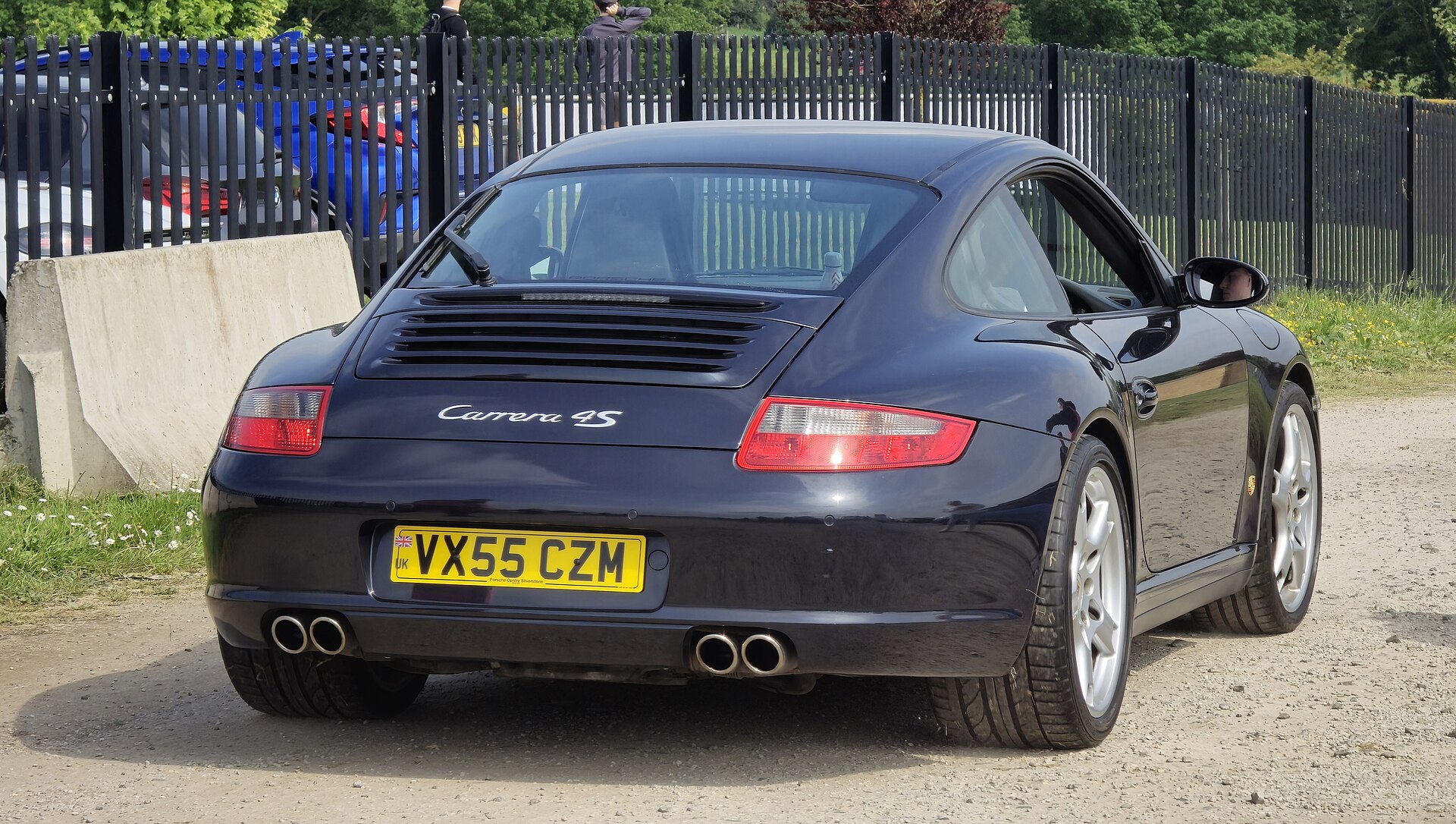
997.1 (2005-2008): Improved But Still Risk ($40K-$75K)
The 997.1 fixed several 996 problems but retained the problematic IMS bearing on naturally aspirated base models (non-Turbo Carrera, Carrera S). Only turbocharged models used a more robust bearing design. This creates a complex buying decision.
IMS Bearing Still Present: If you're buying a 997.1 Carrera or Carrera S (not Turbo), the IMS bearing risk remains. Turbocharged 997.1 models (Turbo, GT2) have a different, more reliable design. This is a critical distinction that many buyers miss.
Bore Scoring Risk Reduced: Porsche improved piston ring design in 2005, so bore scoring is less common than the 996, but it still occurs. Oil analysis is essential.
M97 Engine Improvements: The 997.1 used the M97 engine, which is fundamentally more stable than the 996. However, it inherited the early IMS bearing risk.
PDK Transmission (2008+): The final 997.1 models introduced the dual-clutch PDK transmission. It's exceptional in manual mode, slightly annoying in automatic mode at low speeds (can feel jerky or hesitant). Always test the PDK in stop-and-go traffic. Feel for hesitation or shuddering between 1st and 2nd gear below 2,000 rpm.
What to Check: Confirm whether the car is naturally aspirated or turbocharged. Turbocharged = safer engine. Get an oil analysis. Listen for transmission hesitation in PDK models. Inspect suspension bushings (997.1s are older now, and suspension is wearing).
997.2 (2009-2012): The Most Reliable Era ($55K-$95K)
The 997.2 is the sweet spot for used 911 buyers. Porsche had finally solved the IMS bearing problem by this generation (though some pre-2011 models still had it as an option for cost-conscious buyers in certain markets). The 997.2 also received significant suspension refinement, better steering, and superior interior quality.
IMS Bearing Eliminated: The 997.2 uses a sealed oil-spray design instead of the problematic bearing. This dramatically reduces mechanical risk. There's a reason 997.2 prices command a premium over 997.1.
Engine Reliability: The M97.20 engine used in the 997.2 is proven, durable, and relatively trouble-free. Owners commonly report 100,000+ miles without major issues.
PDK Transmission Excellence: The 997.2 PDK is arguably the best-integrated dual-clutch transmission in the sports car world. It's faster, smoother, and more responsive than the 997.1 version. Clutch wear is inevitable (they're designed to be replaceable), but clutch replacement is roughly $4,000-$6,000 at a specialist.
Coil Overs and Suspension: If the car has the Porsche Dynamic Chassis Control (PDCC) system, it's excellent. Check that the suspension hasn't been over-stiffened or modified. OEM specifications are ideal; over-lowering and aggressive coilovers can cause premature wear to all suspension components.
Coolant System: The 997.2 has a robust cooling system, but old fluid can become acidic and damage the aluminum engine block internally. Ensure documented coolant service. Fresh coolant every 4 years is recommended.
What to Check: Request documentation of regular maintenance (oil changes, coolant service, brake fluid service). The 997.2 requires less skeptical inspection than earlier generations, but don't skip it. Check for suspension modifications. Inspect the interior for wear patterns that might indicate higher mileage than claimed.
991.1 (2012-2016): Modernized and Dual-Clutch ($55K-$100K)
The 991.1 brought the 911 into the modern turbocharged era. Even the base Carrera uses a 3.4-liter turbocharged flat-six, making this generation significantly more powerful and efficient than the naturally aspirated 997. The 991.1 also introduced the second-generation PDK transmission, which is phenomenal.
Turbocharged Base Models: The turbochargers are well-engineered and durable, but they're also more complex than the naturally aspirated engines of previous generations. Turbo maintenance matters: regular oil changes (especially with synthetic oil designed for turbos) prevent bearing wear. Check for turbo whistle (a high-pitched sound under acceleration), which can indicate early bearing play. It's not immediately critical, but it signals imminent turbo failure ($4,000-$7,000 to replace).
PDK Transmission (Second Generation): This is superb. The 991.1 PDK is faster, more responsive, and more efficient than any manual option. The only concern is that the mechatronic control unit can develop rare electrical glitches. Always perform a full diagnostic scan. Verify that both manual mode and automatic mode function smoothly through all gears. In manual mode, check that downshifts are clean and that blip control works properly (the transmission should automatically match engine speed on downshifts).
Coolant Pipe Issue (Turbo Models): Some 991.1 Turbo and Turbo S models developed coolant leaks around radiator connection points. The fix is straightforward ($1,500-$2,500), but it's a known issue. Check the engine bay for any signs of old or fresh coolant staining.
Fuel Injector Carbon Buildup: Turbocharged engines with direct fuel injection can accumulate carbon on the intake valves. Symptoms include rough idle, hesitation during acceleration, or slightly reduced fuel economy. Professional carbon cleaning is $800-$1,500 and solves the problem completely. Not a critical issue, but worth knowing about.
What to Check: Full diagnostic scan is essential. Listen carefully for turbo whistle. Test the PDK transmission in both automatic and manual modes on varied road surfaces. Check for coolant staining. Inspect turbo intake hoses for cracks.
991.2 (2017-2019): Refined Turbos and Final Manual Option ($70K-$120K)
The 991.2 refined the turbocharged formula even further. The flat-six became a 3.0-liter twin-turbo with direct injection, producing 370 hp in the base Carrera (up from 350 hp). The 991.2 also offered a six-speed manual transmission as a final nod to tradition before the 992 eliminated it entirely.
Twin-Turbo Engine: Two smaller turbos replace the single turbo of the 991.1. The advantage is faster spool-up and better responsiveness. The engineering is sound, with no major known issues. Turbo maintenance remains important, but these turbos are extremely reliable when serviced properly.
Manual vs. PDK: This is the last generation to offer a manual transmission. Manual cars are rarer (roughly 15-20% of sales), more desirable to enthusiasts, and typically command a $3,000-$8,000 premium. The manual is excellent — well-synchronized, light clutch, excellent shift feel. However, the PDK is objectively faster and better at maximizing efficiency. Choose based on driving preference, not perceived investment potential.
Tire Monitoring System Failure: Some 991.2 models developed issues with the tire pressure monitoring sensors. This is a $300-$600 fix per sensor, but it's a known issue. Ensure the TPMS system functions properly during your test drive.
Transmission (Manual and PDK): Both are robust. The manual clutch wears at different rates depending on driving style — aggressive drivers might see clutch replacement at 40,000-50,000 miles, while gentle drivers might exceed 100,000 miles. Test the clutch engagement point. If it's extremely high (near the top of pedal travel), the clutch is near end-of-life.
What to Check: Manual cars: check clutch engagement point and feel under load. PDK cars: full diagnostic scan for transmission faults. Listen for turbo whistle. Check TPMS system function. Request service records documenting oil changes with proper synthetic turbo oil.
992 (2020+): Current Generation, Still Depreciating ($90K-$180K+)
The 992 is the newest generation and carries the lowest mechanical risk — it's still under warranty for many examples (assuming it's a recent purchase). However, it's also the newest, meaning it hasn't accumulated the long-term reliability data of older generations.
Advanced Twin-Turbo Engine: The 992 uses an all-new 3.0-liter twin-turbo flat-six with hybrid assistance in some markets (like Europe), but base North American models are pure gasoline turbos. The engine is more advanced, more efficient, and more powerful than any previous 911. No major issues reported, but real-world reliability data is still accumulating.
PDK is Standard (No Manual): The manual transmission was eliminated entirely. The PDK is now an 8-speed dual-clutch (up from 7-speed in the 991.2), offering faster shifts and better efficiency. It's an exceptional transmission. The only people who should avoid the 992 based on transmission are manual purists — and Porsche understands that market, which is why they retained the manual in the 991.2.
Electrification Starting: The 992 began incorporating more electrical systems and software. Sporadic electrical gremlins are possible but haven't been systematically reported as a major issue. However, the 992 also marks the beginning of Porsche's shift toward hybrid platforms, so electrical complexity is increasing.
Depreciation:** The 992 is still depreciating hard. A 2020-2021 911 Carrera purchased at $105,000 will likely be worth $90,000-$95,000 today (2026). This is actually ideal for buyers — you get the latest technology with lower entry costs and fewer financial consequences.
What to Check: Verify remaining factory warranty. Perform a full diagnostic scan. The 992 is newer enough that mechanical checks are less critical than on older generations, but software glitches are possible. Test all electronic systems (power seats, windows, climate control, infotainment). Check the suspension for any unusual noises. Listen for turbo whistle (less common on 992s with optimized turbos).

Carrera vs. Turbo vs. GT3: What to Check for Each Variant
The engine variant you choose dramatically changes what you should inspect. Here's the breakdown:
Carrera (Naturally Aspirated or Single/Twin-Turbo): Check the turbo whistle (if turbocharged). Verify regular maintenance with proper oil and fluid specs. For naturally aspirated Carreras (996, 997.1, 997.2), compression test is valuable. PDK transmission should shift smoothly. Manual clutch should have good engagement feel.
Turbo (Higher Horsepower, Larger Turbos): The Turbo models use more aggressive turbo sizing and produce significantly more power (roughly 100+ hp more than base Carrera). Turbos work harder, so maintenance is even more critical. Check for turbo whistle, boost gauge accuracy, and intercooler condition. Verify that the car has been driven responsibly — track use is more common on Turbo models, and suspension/brake wear accelerates accordingly. Request service records documenting every oil change.
GT3 (Track-Focused, Naturally Aspirated NA V10): The GT3 is a special category. The 996 GT2 and GT3, 997 GT2 RS, 991 GT3, and 992 GT3 are purpose-built track cars available in the used market. The primary concern is track history. Has this car been raced or tracked extensively? If yes, expect accelerated wear on suspension, brakes, and drivetrain. Get a thorough pre-purchase inspection from a specialist. However, GT3s also tend to receive meticulous maintenance — owners track cars they care for. The naturally aspirated engines (996 GT2, 997 GT3) are mechanically simple and durable. Turbocharged GT3s (992 GT3) have sophisticated turbo systems requiring specialist knowledge to inspect properly.
PDK vs. Manual: Transmission Inspection Differences
The transmission choice defines the ownership experience and requires different inspection approaches:
Manual Transmission: Check the clutch engagement point (should be roughly in the middle of pedal travel). A clutch that engages at the extreme top or bottom of travel is nearing end-of-life. Feel for any grinding or chatter during engagement. Test hill starts to feel how the clutch bites. Listen for any grinding or clunking during gear changes. The 997.2 and 991.1/991.2 manual gearboxes are excellent, but worn synchros can cause hesitation shifting into 2nd or 3rd gear. During the test drive, shift into each gear dynamically and feel for crisp engagement.
PDK Transmission: Perform a complete diagnostic scan — PDK electronics are complex, and fault codes can indicate developing issues. Test the PDK in automatic mode on city streets, feeling for smooth shifts and no hesitation or shuddering between gears (especially 1st-2nd and 2nd-3rd). Test manual mode on open road, checking that downshifts are smooth and blip control engages properly. Listen for any mechanical noise (clutch chatter). Ask the dealer for PDK service history — clutch replacement records are important. A PDK with 100,000+ miles that's never had clutch service might indicate gentle driving, or it might indicate imminent clutch replacement expense ($4,000-$6,000).
Fluid Service: Both manual and PDK require fluid service. Manual transmissions need oil changes every 60,000 miles (roughly $500-$800). PDK cars need transmission fluid service — Porsche now recommends every 20,000 miles with their latest specifications, though earlier recommendations were 40,000 miles. Verify service records.
The Porsche Service History Advantage
Unlike exotic brands that leave you hunting for qualified mechanics, Porsche has a global network of certified dealers and independent specialists who document everything. This is a massive advantage:
PIWIS Diagnostics: Porsche's proprietary diagnostic system (PIWIS) reads every system on the car — engine, transmission, suspension, brakes, electronics. When you order a pre-purchase inspection from a Porsche specialist, they plug in the PIWIS system and get a complete picture of maintenance history, fault codes, and service alerts. This is invaluable. It tells you everything the car "knows" about itself. A PIWIS scan costs $150-$300 but can reveal problems that would otherwise remain hidden.
Dealer Records: Porsche's dealer network maintains meticulous service records. Request the vehicle's full service history from the selling dealer or through Porsche's customer care line. These records show every oil change, every brake service, every repair. A car with a full service history is worth significantly more than one with no documentation — it's proof the car was maintained properly.
CARFAX Integration: Most Porsche dealer service records feed into CARFAX, creating a documented ownership trail. Check CARFAX alongside dealer records to identify any gaps or inconsistencies.
Independent Specialists: If the car was serviced at an independent shop, that's not necessarily a red flag — many independent Porsche specialists are excellent and often cheaper than dealers. However, verify that the shop is reputable. Ask for references or check Google reviews.
Common 911 Red Flags: Know What to Avoid
IMS Bearing Failure Symptoms (996, 997.1 naturally aspirated models): Metal in the oil (visible on analysis), blue-gray metallic dust in the oil filler cap area, loss of engine power, engine noise from below, or smoke during acceleration. Any of these = walk away unless the IMS bearing has been proactively replaced or upgraded.
Bore Scoring (996, early 997.1): Blue-gray metallic dust in the oil cap, rough idle, loss of power, smoke under load. Get an oil analysis to confirm. If bore scoring is confirmed, the engine needs rebuilding.
Turbo Whistle (991, 992): A high-pitched whistle under acceleration indicates turbo bearing play. Not immediately critical, but the turbo is dying. Plan on replacement ($4,000-$7,000). Don't buy the car expecting free turbo replacement from the dealer unless it's still under warranty.
PDK Hesitation (all PDK cars): Jerking or shuddering between 1st and 2nd gear, especially at low speeds, indicates clutch wear. Verify clutch replacement costs and factor them into your offer.
Coolant Staining (especially 991.1 Turbo): Fresh or dried coolant staining in the engine bay indicates active or recent leaks. Pressure test the cooling system before purchase.
Mismatched Service Records: If CARFAX shows service dates that don't align with what the seller claims, investigate. Gaps in service history are red flags.
Excessive Track History: Ask directly: "Has this car been tracked?" Look at the condition of the brakes, suspension, and tires. Track cars experience accelerated wear, and you're inheriting that wear. It's not automatically a deal-breaker if the car was well-maintained, but it does change value and remaining lifespan.
Get a Porsche-Specialist Pre-Purchase Inspection
Automonitor connects you with certified Porsche inspectors who use PIWIS diagnostics and know every generation-specific issue inside out.
Schedule an Inspection →
Test Drive Essentials for a Used 911
Rear-Engine Dynamics: The 911's rear-engine layout creates distinctive handling. Drive the car on a road with various curves — feel how it communicates through the steering. The car should feel planted, not twitchy. Any excessive understeer or oversteer might indicate suspension damage or alignment issues.
Flat-Six Sound: A healthy flat-six produces a distinctive, unique growl. Listen for any clattering, knocking, or unusual noise from below the driver. The engine should sound smooth across the rpm range. Turbo whistle is distinct and might be present (which is a problem), but it's not the same as mechanical noise.
Turbo Spool: If the car is turbocharged, accelerate in an open area and feel the turbo spool (the gradual building of power as the turbo spins up). It should be linear and smooth, without any hesitation, surge, or lag. Excessive lag might indicate turbo issues or intake leaks.
Transmission Feel: Manual: shift smoothly through all gears and feel for any grinding or hesitation. PDK: accelerate normally and feel for smooth shifts; shift into manual mode and feel for crisp downshifts with proper blip control.
Brake Feel: The brakes should be responsive and linear. Test them on a safe road. Porsche brakes are excellent, and old pads are cheap ($400-$800). However, if the brakes feel spongy, brake line leaks might be present ($1,000+).
Suspension Handling: Drive over rough pavement and feel for any unusual noise or rattles. The suspension should absorb bumps smoothly. Clunking sounds indicate worn bushings or ball joints ($800-$2,000 to replace).
Engine Temperature: Let the car warm up fully and watch the temperature gauge. It should stabilize and remain stable. Fluctuating temps indicate thermostat issues or coolant problems ($500-$1,500).
Auto Monitor's Porsche 911 Inspection Program
Automonitor provides comprehensive pre-purchase inspection services specifically designed for Porsche 911 buyers. Our inspection program includes:
- PIWIS Diagnostic Scan: Complete read of all vehicle systems, fault codes, and service history integration
- Generation-Specific Inspection: Technicians trained on 996, 997.1, 997.2, 991, and 992 models with knowledge of generation-specific issues
- Oil Analysis: Pre-purchase oil analysis to detect metal particles and early wear indicators
- Compression Test: For naturally aspirated models, confirming engine health
- Turbo Assessment: For turbocharged models, checking for whistle, play, and proper spool characteristics
- Transmission Verification: Complete diagnostic for both manual and PDK transmissions
- Brake and Suspension Evaluation: Detailed check of braking system and suspension components
- Cooling System Pressure Test: Detecting any current or imminent coolant leaks
- Report and Recommendations: Detailed written report with cost estimates for any deferred maintenance
Our specialists have handled hundreds of 911 purchases across all generations. We know what to look for, what to be skeptical of, and what costs are reasonable for repair. A $500-$800 inspection can save you thousands in unexpected repairs or reveal a car that's not worth buying at any price.
Generation Comparison Table
| Generation | Years | Engine Type | Price Range | IMS Bearing Risk | Main Concern | Reliability Rating |
|---|---|---|---|---|---|---|
| 996 | 1999-2004 | Water-Cooled NA V6 | $25K-$60K | High Risk | IMS Bearing / Bore Scoring | ⭐⭐ (Fair) |
| 997.1 | 2005-2008 | NA/Turbo V6 | $40K-$75K | Medium Risk (NA only) | IMS Bearing (NA models) | ⭐⭐⭐ (Good) |
| 997.2 | 2009-2012 | NA/Turbo V6 | $55K-$95K | Eliminated | Age-related Wear | ⭐⭐⭐⭐ (Excellent) |
| 991.1 | 2012-2016 | Turbo Flat-Six | $55K-$100K | N/A | Turbo Whistle | ⭐⭐⭐⭐ (Excellent) |
| 991.2 | 2017-2019 | Twin-Turbo Flat-Six | $70K-$120K | N/A | Minor Electrical Issues | ⭐⭐⭐⭐⭐ (Excellent) |
| 992 | 2020+ | Twin-Turbo Flat-Six | $90K-$180K+ | N/A | Depreciation / Warranty Status | ⭐⭐⭐⭐⭐ (Excellent) |
What to Buy: Our Generation Recommendations
Best Value (Budget $25K-$50K): Skip the 996 unless you find one with documented IMS bearing replacement and full service history. Instead, save a bit more for a 997.1 Turbo ($40K-$60K), which has the proven turbocharged engine without the IMS bearing risk of the naturally aspirated 997.1 Carrera.
Best All-Around (Budget $55K-$80K): The 997.2 Carrera is the sweet spot. IMS bearing eliminated, proven engine, excellent transmission options, and prices are reasonable. A 997.2 with clean service history is a car you can drive with confidence for 50,000+ miles without worrying about catastrophic failure.
Modern Performance (Budget $70K-$110K): The 991.1 Carrera or 991.2 Carrera delivers modern turbocharged technology, exceptional PDK transmission, and lower maintenance costs than older generations. The 991.2 is slightly more refined and expensive, but both are outstanding choices.
Current Generation (Budget $90K-$180K+): The 992 Carrera is the newest, most technologically advanced, and carries the lowest mechanical risk. If you want the latest infotainment, driver assistance, and engine technology, the 992 is worth the premium. However, it's also the most expensive.
Final Verdict: What to Look for Before You Buy
Buying a used Porsche 911 is an exceptional decision if you approach it with knowledge. The 911 is engineered for longevity, supported by a global service network, and positioned to hold value better than most sports cars. But each generation has specific pitfalls, and education is your protection.
Here's your checklist before making an offer:
- Pre-Purchase Inspection: Non-negotiable. Budget $500-$800 and get a PIWIS diagnostic scan from a certified Porsche specialist.
- Oil Analysis: Request pre-purchase oil analysis to check for metal particles and early wear indicators.
- Service History: Demand complete records. If the car has gaps in service history, that's a warning sign.
- Generation-Specific Concerns: Know what to worry about. IMS bearing for 996/997.1 naturally aspirated. Turbo whistle for 991s. Cooling leaks for 991.1 Turbos.
- Test Drive Feel: Drive it thoroughly. Assess transmission smoothness, engine sound, brake feel, and suspension handling.
- Remaining Warranty: For 992s and newer 991.2s, verify remaining warranty coverage. It matters.
- Negotiate From Data: Use completed auction results and comparable sales to set your offer. Factor in any deferred maintenance discovered during inspection.
The 911 isn't a perfect car, but it's a remarkably good one — especially when you know what you're buying and what to watch for. Follow this guide, get the inspection, and you'll drive away in a car that delivers on the promise of the badge: authentic, capable, and built to last.
Find Your Perfect Used Porsche 911
Automonitor's concierge buying service handles the entire process — from sourcing to inspection to negotiation. Let us guide you to the right car at the right price.
Start Your Search →