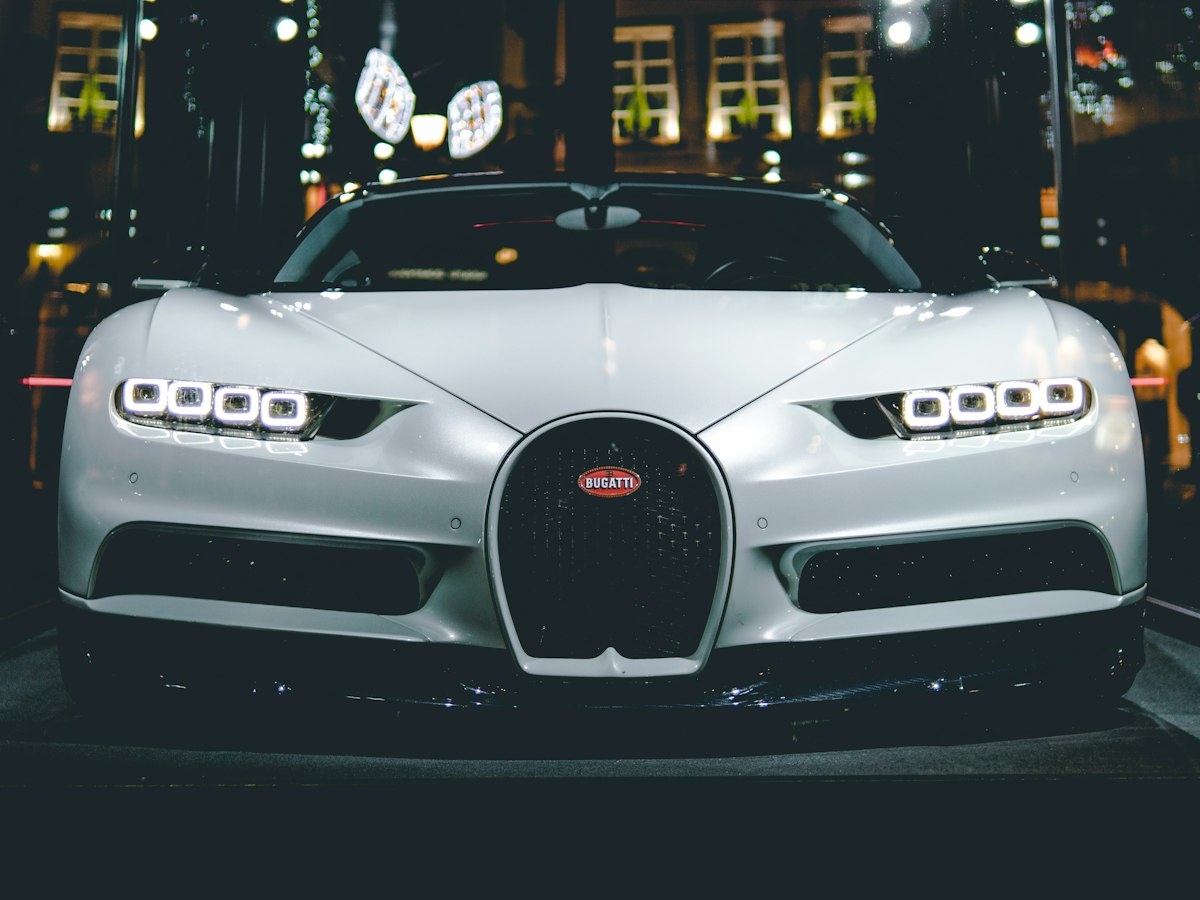
What Modern Supercars Will Become Collectible?
The automotive landscape is shifting. Electrification looms. Naturally aspirated engines are vanishing. Limited production runs are becoming the rule. In this environment, certain modern supercars aren't just investments — they're automotive history being created right now. Here's which ones will matter in 2040.
Why Modern Supercars Are Different: The Hybrid Transition Is Creating Scarcity
To understand which modern supercars will become collectible, you first need to understand why the next decade is historically unique. For the first time since the internal combustion engine was perfected over a century ago, an entire generation of supercars is transitioning away from pure gasoline power. This isn't a slow shift — it's an abrupt cliff.
Lamborghini has already ended Huracan production, replacing it with a hybrid Temerario. Ferrari's next generation will be hybrid-only. McLaren's upcoming lineup prioritizes electrification. Porsche's 911 — the most sacred nameplate in performance automotive history — will go hybrid within five years. Meanwhile, the regulatory environment that mandates this transition means there will never be another naturally aspirated V10 or V12 supercar from these manufacturers in high production volumes.
This creates a perfect storm of collectibility factors: last-generation natural engines, limited production runs, technological innovation that cannot be replicated, and a clean break in automotive history. Manufacturers understand this too. Limited edition variants, special colors, and low production numbers have become standard strategy. They're manufacturing tomorrow's classics intentionally.
The second factor is electronics. Modern supercars are computers with wheels. Semi-autonomous functions, adaptive suspensions, telemetry systems, and complex engine management software make these cars simultaneously more capable and more vulnerable to obsolescence. In 20 years, when software support ends and replacements become impossible to find, certain cars will be preserved precisely because they represent the last era before full electrification. Others will become expensive paperweights.
The winners will be the cars that balance three elements: exceptional driving dynamics that don't depend on electronics, honest mechanical engineering beneath the technology, and rare or significant specifications that command a premium.
What Makes a Modern Supercar Collectible: The Criteria That Separate Tomorrow's Classics From Today's Used Cars
Not every expensive car becomes valuable. In fact, most depreciate relentlessly. The supercars that will become collectible share specific characteristics that separate them from the middle of the pack:
The Last Naturally Aspirated Premium
This is the single most important factor. Every car on this list represents either the last, or nearly the last, naturally aspirated version of its engine in a given segment. The Lamborghini Huracan is the last naturally aspirated V10 supercar Lamborghini will produce. The Ferrari 812 Competizione is Ferrari's final naturally aspirated 12-cylinder supercar. The Porsche 992 GT3 and 991.2 GT2 RS are among the last high-performance naturally aspirated cars Porsche will produce. This creates an immediate collectibility premium that grows every year as the contrast with turbocharged and hybrid successors becomes more pronounced.
Limited Production Meets Global Demand
Scarcity isn't accidental. Lamborghini limited the Huracán STO to 1,405 units worldwide. Ferrari limits most special editions to under 500 units. The McLaren Senna was capped at 500 units. The Porsche 911 GT2 RS at 991 units. When production is this limited and global demand remains strong, the available supply becomes the floor under resale value. You can always sell a rare supercar — the market is deep enough and the pool small enough that demand supports liquidity.
Technological Significance
Collectors value cars that represent genuine innovation. The Ferrari SF90 Stradale's hybrid system was revolutionary when introduced. The McLaren 765LT's lightweight construction became the benchmark. The Porsche 992 GT3 RS's active aerodynamics represented a quantum leap. Cars that pioneered technologies — even if those technologies are later superseded — become historically significant. Engineers collect them. Enthusiasts preserve them specifically because they represent a specific technological moment in time.
Specification Premium: Manual Transmissions, Lightweight Variants, Special Colors
Within model lineups, certain specifications command enormous premiums. Manual transmissions, when available, typically add 20-40% to a car's resale value because they're rarer and considered more "connected" to the driving experience. Lightweight versions — the STO over the EVO, the Tecnica over the regular Performante — become more desirable as performance benchmarks change. Special colors, particularly limited palette options offered only for specific model years, create subcategories of collectibility. A 2021 Ferrari F8 Tributo in Giallo Modena (a color only available that year) will always be more valuable than the same car in black.
Driver-Focused Design Without Autonomous Ambitions
Collectors value cars designed to be driven. The supercars most likely to appreciate are ones built around driver engagement rather than autonomous capability. The Lamborghini Tecnica, Porsche GT3 RS, and McLaren 765LT were all engineered with track capability and driver connection as the primary goal. They'll age better than grand tourers or cars designed primarily for street comfort, because they represent an uncompromised philosophy that's becoming rare.
Lamborghini's Collectible Candidates: The V10 Dynasty's Final Chapter
Lamborghini ended Huracan production in December 2024. That single fact makes every remaining variant worth tracking. Here are the Huracans most likely to appreciate:
Lamborghini Huracán STO ($240K–$295K)
The STO (Super Trofeo Omologato) is the most extreme road-going Huracan ever built. Only 1,405 units were produced worldwide. It features a naturally aspirated 5.2L V10 producing 645 hp, rear-wheel drive for maximum engagement, and track-focused aero that improves downforce by 40% compared to the standard EVO. The STO is currently appreciating, with low-mileage examples trending upward at Hagerty auctions. This is one of the highest-confidence collectible bets in the modern supercar world. Values will continue rising as more people recognize it as the final naturally aspirated, rear-wheel drive supercar Lamborghini will ever produce.
Lamborghini Huracán Tecnica ($190K–$220K)
The Tecnica splits the difference between the STO and standard variants. Rear-wheel drive with 640 hp, it offers 90% of the STO's driver engagement at 70% of the price. The Tecnica will become collectible because it represents Lamborghini's philosophy of pure mechanical engagement without sacrificing everyday usability. It's the modern equivalent of classic driver's cars that are now worth multiples of original purchase price. For investors, the Tecnica offers better value potential than the STO because more production (around 1,000 units) means entry cost is lower, but the upside trajectory is similar.
Lamborghini Huracán Ultimae ($220K–$260K)
The Ultimae is the final standard production Huracán, built in 2024. It's the spiritual successor to the original LP 610-4, featuring the 5.2L V10 in its most refined form. While less extreme than the STO or Tecnica, the Ultimae carries symbolic weight as the last of an era. Early production examples with low mileage and desirable specifications will appreciate, particularly in collectors' markets where historical significance matters as much as performance.
Lamborghini Huracán Sterrato ($195K–$230K)
This is the wildcard. Lamborghini's first production all-wheel drive supercar with increased ground clearance and all-terrain capability sounds impractical — but it's precisely that uniqueness that will drive collectibility. Limited to fewer than 1,500 units, the Sterrato represents Lamborghini taking design risks in an era when most manufacturers play it safe. In 15 years, this will be one of the most sought-after modern Lamborghinis precisely because it was so controversial.
The final generation of naturally aspirated supercars isn't just becoming collectible — they're becoming museums pieces that still drive 200 mph. That premium is only going one direction.
Ferrari's Collectible Picks: Italian Precision in the Hybrid Transition
Ferrari is navigating the electrification transition more gracefully than competitors. The brand's heritage and exclusivity mean appreciation often happens before depreciation. These are the Ferraris most likely to appreciate:
Ferrari 812 Competizione ($400K–$500K)
The Competizione is Ferrari's final naturally aspirated 12-cylinder supercar — period. With a screaming 6.2L V12 producing 830 hp, it represents the end of an era that defined Ferrari for 70 years. Only 599 units were built. This car is already appreciating, with values climbing 8-12% annually in the collector's market. In five years, finding an under-10,000 mile Competizione for under $450K will be nearly impossible. This is one of the safest collectible plays in the entire supercar market.
Ferrari F8 Tributo ($180K–$240K)
The F8 represents peak turbocharged supercar design before the hybrid era. Its 3.9L twin-turbo V8 delivers 710 hp with a sound engineering team worked hard to make turbocharged engines sound good. F8s with low mileage and special colors (Rosso Corsa, Giallo Modena, Blu Corsa) are already showing appreciation. It won't reach 812 levels of collectibility, but mid-range appreciation of 4-6% annually seems likely as the car becomes recognized as the last all-ICE flagship before SF90 hybrids took over.
Ferrari SF90 Stradale ($380K–$480K)
This is the controversial pick. The SF90 is Ferrari's first production hybrid supercar — and it's genuinely brilliant. The hybrid system isn't a compromise; it's an advantage, delivering better acceleration, more usable torque, and superior handling than the 812. Some collectors will dismiss it as "not a real Ferrari." Others will recognize it as one of the most significant supercars ever built, representing the future of the brand. The SF90 Stradale (street version) will likely appreciate steadily as hybrid technology is validated and people realize how advanced this car actually is. Not a first-choice collectible, but a strong value play for patient buyers.
Ferrari 296 GTB ($300K–$370K)
Ferrari's smaller hybrid supercar offers better value than the SF90 with similar technological significance. At $300K, entry price is more accessible, while the hybrid-electric system and 663 hp output remain impressive. The 296 GTB will appreciate more modestly than the 812 Competizione (perhaps 3-5% annually), but the lower entry point means absolute dollar appreciation can match cars costing twice as much. It's a sophisticated play for investors who understand modern Ferrari's direction.
McLaren's Collectible Options: Lightweight Innovation in the Performance Mainstream
McLaren has built fewer cars than Ferrari or Lamborghini, which creates intrinsic scarcity. The 765LT and 720S represent the peak of the carbon-fiber supercar era. Here are the models most likely to become collectible:
McLaren 765LT ($240K–$310K)
The 765LT is McLaren's ultimate lightweight supercar. Featuring a 4.0L twin-turbo V8 with 765 hp, a sub-2,700-pound frame, and active aerodynamics that adjust in real-time, the 765LT represents peak carbon-fiber engineering. McLaren limited production to 765 units (one per horsepower). This car drives like nothing else in its class — responsive, precise, visceral. Values have already started climbing. The 765LT is appreciated by people who understand that 200 fewer pounds beats 100 additional horsepower. This is the collector's McLaren. Expect 8-12% annual appreciation.
McLaren 720S ($140K–$180K)
The 720S is the accessible McLaren, and that accessibility will drive collectibility through volume. With active rear wings, 710 hp, and a 2.8-second 0-60 time, the 720S is still one of the best-engineered supercars ever built. While individual 720S won't appreciate like the rare 765LT, the model's popularity means certain variants and specifications will become desirable. Look for low-mileage examples in special colors or with factory racing experience to show appreciation.
McLaren 600LT ($160K–$210K)
The 600LT is the previous-generation 765LT equivalent. Production was limited to 600 units, and values are rising steadily. Some enthusiasts prefer the 600LT's proportions and engineering to the newer 765LT. As McLarens age and people recognize how well they've held up, the 600LT will become a gateway to McLaren ownership with solid appreciation. Look for examples in special track editions or with documented racing history.
McLaren Senna ($800K–$1.2M)
The Senna is the most extreme McLaren ever built — a 789 hp hypercar with almost no creature comforts, designed purely for track performance. Only 500 units were made. The Senna has already appreciated 30-40% since production ended. If you can find one under $1M, it's a strong buy. The risk is that Senna's extreme nature limits its audience, but that same extremity is exactly why collectors will preserve them. This is a museum-piece car that can still lap a circuit in under 7 minutes.
Porsche's Collectible Plays: German Precision in Limited Editions
Porsche's conservative approach to change means collectors often overlook Porsche models that later become valuable. These are the Porsches most likely to appreciate significantly:
Porsche 992 GT3 RS ($220K–$290K)
The 992 GT3 RS is one of the last pure naturally aspirated Porsches. With a 4.0L flat-six producing 518 hp in naturally aspirated form, the RS represents the final generation of GT cars designed around mechanical feedback rather than electronic assistance. Active aerodynamics that move at speed, a lightweight chassis, and manual transmission option (select markets) make this car genuinely special. Values are holding strong, and appreciation is likely as the car becomes recognized as the last "old school" Porsche 911. This is a safe collectible bet.
Porsche 992 GT3 Touring ($200K–$270K)
The Touring variant strips away the aggressive aero for a more elegant appearance while keeping the same 4.0L naturally aspirated engine. For collectors who appreciate subtlety, the Touring is actually the stronger play. Its restrained design will age better than the loud RS variant. As GT3 RS examples get modified and tracked, well-preserved Touring examples will become increasingly rare and desirable. Look for manual transmission examples, which command premiums in today's market and will likely command even larger premiums in 10 years.
Porsche 991.2 GT2 RS ($250K–$330K)
The 991.2 GT2 RS is the last twin-turbocharged 911 GT car of the previous generation. With 700 hp from a 3.8L twin-turbo flat-six, the GT2 RS is arguably the most capable driver's car Porsche ever built. Only 991 units were produced (get it?). Values have climbed steadily, and with the 992 generation here, the 991.2 GT2 RS will become increasingly valuable as people recognize it as the last of a specific Porsche lineage. Conservative appreciation of 4-8% annually seems likely.
Porsche 718 Cayman GT4 RS ($130K–$160K)
The Cayman GT4 RS uses a 4.0L naturally aspirated flat-six with 500 hp — the same engine architecture as the GT2 RS, just in a smaller, lighter car. With a price point near $130K and genuine scarcity (only 2,500 planned units worldwide), the GT4 RS offers tremendous value as an appreciating asset. It's the most affordable naturally aspirated Porsche you can buy, and that accessibility will drive collectibility. Five years from now, finding a clean GT4 RS under $160K will be nearly impossible.
Other Brands Worth Watching: When Uniqueness Commands a Premium
Aston Martin V12 Vantage ($165K–$220K)
Aston Martin's final naturally aspirated 12-cylinder supercar. Only 250 units were built. While Aston Martin doesn't have the badge recognition of Ferrari or Lamborghini, rarity and the last-of-its-kind status make this car collectible. For patient buyers who understand that Aston Martin's heritage will strengthen over time as the brand stabilizes, the V12 Vantage represents excellent value as a future collectible.
Ford GT 2017–2022 ($450K–$650K)
Ford's mid-engine supercar might seem like an outsider on this list, but it's precisely Ford's outsider status that makes it valuable. This is an American supercar that competes with Ferraris and McLarens — and wins. Production was limited to 1,066 units, with special variants (Liquid Carbon, Gulf Racing editions) commanding premiums. The Ford GT will become collectible because it represents an era when American automotive engineering could stand shoulder-to-shoulder with Europe's finest. Early adoption by collectors means values are already appreciating. This is a strong play.
Mercedes-AMG One ($1.06M–$1.4M)
Mercedes' hypercar hybrid uses technology directly descended from Lewis Hamilton's F1 cars. Only 275 units will be built. At $1M+, the entry price limits the buyer pool, but that exclusivity is precisely why it's collectible. The One represents Mercedes' most extreme expression of engineering. Early values suggest appreciation potential of 10-15% annually as the car becomes recognized as historically significant. If you can afford entry, this is one of the most interesting modern supercars being built.
Modern Supercar Collectibility Scoring: A Comparative Analysis
| Model | Naturally Aspirated | Rarity (1-10) | Significance | Current Price | Collectibility Score | Appreciation Outlook |
|---|---|---|---|---|---|---|
| Ferrari 812 Competizione | Yes (V12) | 9 | Final NA V12 Ferrari | $400K–$500K | 10/10 | Very Strong |
| Lamborghini STO | Yes (V10) | 9 | Last RWD NA Lamborghini | $240K–$295K | 9.5/10 | Very Strong |
| Porsche 992 GT3 RS | Yes (Flat-6) | 8 | Last Pure 911 GT | $220K–$290K | 9/10 | Strong |
| McLaren 765LT | No (Twin-Turbo) | 9 | Peak Carbon-Fiber Design | $240K–$310K | 8.5/10 | Strong |
| Mercedes-AMG One | No (Hybrid) | 10 | F1 Technology for Street | $1.06M–$1.4M | 8/10 | Strong |
| Ferrari SF90 Stradale | No (Hybrid) | 7 | First Ferrari Hybrid | $380K–$480K | 7/10 | Moderate |
| Porsche 718 Cayman GT4 RS | Yes (Flat-6) | 6 | Affordable NA Porsche | $130K–$160K | 7.5/10 | Moderate |
| McLaren 720S | No (Twin-Turbo) | 6 | Most Accessible McLaren | $140K–$180K | 6.5/10 | Moderate |
| Aston Martin V12 Vantage | Yes (V12) | 9 | Last AM 12-Cylinder | $165K–$220K | 7.5/10 | Moderate |
| Ford GT 2017–2022 | No (Twin-Turbo) | 8 | American Hypercar | $450K–$650K | 8/10 | Strong |
Buying Strategy for Modern Collectibles: How to Buy Today for Tomorrow's Value
Identifying collectible supercars is different from identifying good supercars to own. Here's the strategy we recommend at Automonitor:
Focus on Specification, Not Just Model
Within any collectible model line, certain specs are worth premiums. Manual transmissions, lightweight variants, and rare color combinations all appreciate faster than standard configurations. If you're buying a 992 GT3 RS with collectibility in mind, a manual transmission example is worth the premium — it'll hold or gain value relative to automatic versions. If you're buying an 812 Competizione, Rosso Corsa (Ferrari red) command higher premiums than metallics. These aren't aesthetic preferences; they're investment fundamentals.
Track History Adds Value (But Only Good Track History)
A supercar with documented track days at prestigious circuits (Laguna Seca, Daytona, Le Mans track days) adds mystique and value. A supercar that's been crashed at a local track loses value dramatically. The distinction matters enormously. If you're considering a higher-mileage example, track history from professional schools or organized track days is a positive signal that the car was well-maintained. Track history from random street racing is a negative signal that will depress value.
Mileage Matters Less Than Service History
A 15,000-mile supercar with spotty service records is riskier than a 25,000-mile supercar with complete dealer service history and known good repairs. Collectors understand this. A meticulously maintained 20,000-mile example with full records will appreciate faster and to higher values than a 5,000-mile garage queen with unknown maintenance. The narrative matters. "Properly driven and carefully maintained" beats "barely driven but neglected" every time in the collector's market.
Storage Conditions Signal Future Value
Ask where the car was stored. Climate-controlled garage? Outdoor covered parking? Sun-exposed carport? These details matter for paint condition, seal integrity, and overall preservation. Collectors will pay premiums for cars that show evidence of excellent storage because those cars will show better after 10-20 years of ownership. This is especially important for limited-production cars like the STO or 812 Competizione.
Network Knowledge Is Worth Gold
The best way to identify future collectibles is to stay connected to the market. Monitor Bring a Trailer sales trends. Follow Hagerty price guides. Join owner clubs. Talk to service specialists who see patterns in which cars hold up and which ones develop problems. This network knowledge — understanding that Senna prices have jumped 30% in the last year, or that 765LT values are accelerating faster than 720S values — informs better buying decisions. At Automonitor, our team tracks these trends constantly. That's value we can provide to buyers serious about collectibility.
Get an Expert Collectibility Assessment
Automonitor evaluates potential collectible supercars using historical data, market trends, and technical specifications. Get clarity on appreciation potential before you buy.
Request Assessment →The Hybrid Question: Will Hybrid Supercars Ever Become Collectible?
This is the fundamental question collectors face. Will hybrid supercars like the Ferrari SF90 Stradale, Mercedes-AMG One, and future models achieve collectibility status comparable to naturally aspirated cars?
The answer is yes, but with nuance. Hybrids will become collectible for technological significance rather than mechanical purity. The SF90 Stradale is genuinely brilliant engineering — the hybrid system delivers faster acceleration, better handling, and more usable power than the 812 it replaced. Collectors will recognize this and preserve SF90s as the bridge between the naturally aspirated era and the fully electric future. Appreciation will likely be 3-6% annually instead of 8-12%, but it will happen.
However, the hierarchy of collectibility clearly favors naturally aspirated cars. When a 812 Competizione and an SF90 Stradale are sitting in an auction hall, the 812 will fetch a higher price because it represents the end of an era, not the transition into one. If you're buying purely for collectibility and must choose between models, naturally aspirated configurations will outperform hybrids. If you can afford both, own the hybrid for driving pleasure and the naturally aspirated model for value retention.
Common Mistakes to Avoid: How Speculators Lose Money on "Collectibles"
Buying at Peak Enthusiasm: Sometimes a model gets hyped on social media or at a major auction, prices spike 20-30% in a few months, and then normalize. The Ferrari Monza SP2 and SP1 had exactly this pattern. Don't buy supercars because they're trending. Buy them because they meet the criteria for collectibility. If a car's price has already jumped significantly based on recent hype, you're buying at a peak, not a bargain.
Ignoring Maintenance History: A supercar is only collectible if it survives. A car with major repairs deferred, timing belt replacements skipped, or suspension work avoided will cost you $30,000-$100,000+ in back repairs within a few years. That cost comes directly out of appreciation potential. Always demand complete service records. If they don't exist, negotiate a price that reflects the risk.
Confusing Rare With Valuable: A car can be rare and worthless. The Lotus Esprit is rare. Some versions appreciate slowly if at all. The Bugatti Veyron was extremely limited production, but depreciation still crushed early buyers. Rarity combined with brand desirability, performance significance, and market demand creates value. Rarity alone just means fewer people want it.
Over-Leveraging to Own a "Collectible": Paradoxically, the best way to buy a future collectible is with enough financial cushion that you can actually afford to hold it through downturns. If you're stretched to afford the down payment and monthly ownership costs, you'll be forced to sell at the worst time — when markets are down and you need liquidity. The most successful collectors buy their investments comfortably, which means they can ride out any depreciation cycle.
Frequently Asked Questions About Modern Supercar Collectibility
Q: Should I buy a collectible supercar to drive or as a pure investment?
A: Buy it to drive if you can afford the purchase price plus 3-5 years of ownership costs without financial strain. Buy it as an investment if you understand that peak enjoyment comes from driving, and the appreciation is the bonus, not the primary motivation. Pure financial speculation on supercars underperforms most traditional investments. Driving the car you own is the real return.
Q: Will electric supercars ever become collectible?
A: Yes, but not for 10-15 years. Electric supercars like the Lotus Evija and Pininfarina Battista are too new to understand long-term reliability, software support, and battery degradation. Wait until we have a decade of real-world data before predicting collectibility. First-generation EVs often have problems that second-generation cars solved, which destroys value for early adopters. Be patient with electrics.
Q: Is insurance expensive for collectible supercars?
A: Yes, but not as expensive as you'd think. Collector car insurance (when you document the car as an investment and limit miles) runs 50-70% less than standard insurance. Annual costs might be $2,000-$4,000 instead of $6,000-$8,000. However, you still need collision coverage and liability, and you'll need a multi-million-dollar umbrella policy if you're collecting several cars.
Q: Which is the safest collectible supercar for a first-time buyer?
A: The Porsche 992 GT3 RS or Lamborghini STO. Porsches have legendary reliability. Lamborghinis, via Audi Group engineering, are surprisingly solid. Both have clear collectibility cases based on naturally aspirated engines. Both have prices under $300K where appreciation is likely but not speculative. Start here. Once you understand the market, move to higher-risk models.
Q: How long should I own a collectible supercar before selling?
A: Five years minimum. Most supercars hit their lowest value point around 3-5 years, then start appreciating. If you sell within five years on a depreciating model, you'll lose money. The longer you hold naturally aspirated models in particular, the more they appreciate. Holding 10+ years can yield 100%+ returns on cars like the STO or 812 Competizione.
Automonitor's Final Guidance
The supercar market in 2026 is fundamentally different from previous years. For the first time, we can see the end of an automotive era clearly. Naturally aspirated engines won't survive the decade. Limited production runs are becoming the standard. The regulatory environment ensures that cars built now will never be replicated.
This creates genuine opportunity for patient, informed buyers. The Ferrari 812 Competizione isn't just a phenomenal supercar — it's the final expression of 70 years of Ferrari philosophy around naturally aspirated 12-cylinders. The Lamborghini STO isn't just capable — it's the last rear-wheel drive, naturally aspirated V10 supercar Lamborghini will ever build. These aren't speculative bets; they're historical markers that will appreciate simply because their significance becomes clearer every year.
If you're buying a modern supercar with collectibility in mind, focus on naturally aspirated models, limited production variants, and cars with strong driving credentials. Avoid over-leveraging. Buy to drive and appreciate the investment as a bonus. Stay connected to market trends. And remember: the best collectible is one you actually enjoy owning, because that enjoyment lasts far longer than any appreciation premium.
Automonitor can help you find the right collectible supercar, get it properly inspected, negotiate the best price, and understand long-term ownership implications. Our expertise spans 15 years of supercar transactions. We've seen which models appreciate, which ones disappoint, and which ones become icons. If you're ready to invest in a modern supercar that will still matter in 2040, we're here to make sure you buy the right car at the right price.
Find Your Next Collectible
Automonitor sources collectible supercars from verified dealers and private sellers worldwide. Get expert guidance on appreciation potential.
Start Your Search →