
What is the Cheapest McLaren You Can Buy?
Thinking about becoming a McLaren owner but worried about the sticker shock? The good news: you can get into genuine McLaren ownership from under $80K. Here's exactly which models, what to expect, and whether they're worth it.
The Short Answer: Real McLaren Ownership Starts at $80K
The cheapest McLaren you can realistically buy in 2026 is the 12C or 12C Spider from 2012–2014, which trades for $80,000–$110,000 on the used market. It's the brand's entry point into modern supercar production and genuinely remarkable value for a car that delivered 616 horsepower, carbon fiber construction, and McLaren engineering. If you're willing to step slightly up in budget, the 540C from 2016–2018 can be found from $90,000–$120,000 and represents the rarest of McLaren's Sport Series offerings.
But finding the cheapest McLaren and finding the right McLaren are two different things. A $80K 12C with mystery service history and high mileage might bankrupt you in repairs. A $95K 570GT with full documentation, clean carfax, and recent major service work might be the bargain of the decade. This guide breaks down every affordable McLaren model on the market, what they cost, what breaks on them, what they cost to fix, and which one actually makes sense for your budget.
We've processed transaction data on hundreds of McLarens through Automonitor's buying service, and the single most expensive mistake buyers make isn't overpaying upfront. It's underestimating the annual maintenance burden. A $100K 570S with $8K/year in routine maintenance suddenly becomes a $108K annual commitment. Know what you're walking into before you sign the paperwork.
Complete McLaren Model Pricing Breakdown
Here's every McLaren model that qualifies as "affordable" in 2026, ranked by actual used market pricing:
| Model | Years | Used Market Range | Best Price Window | Annual Maintenance |
|---|---|---|---|---|
| 12C / 12C Spider | 2012–2014 | $80K–$110K | 2013 with 20K–35K miles | $4K–$7K |
| 540C | 2016–2018 | $90K–$120K | 2016 with 15K–25K miles | $3K–$6K |
| 570S | 2016–2021 | $100K–$140K | 2018 with 25K–40K miles | $3K–$8K |
| 570GT | 2017–2020 | $95K–$130K | 2018 with 20K–35K miles | $3K–$8K |
| 650S | 2015–2017 | $110K–$150K | 2016 with 18K–30K miles | $4K–$8K |
| 600LT | 2019–2020 | $140K–$180K | 2019 with under 10K miles | $3K–$7K |
| GT | 2020–2022 | $130K–$170K | 2020 with 5K–15K miles | $2K–$5K |

The 12C / 12C Spider: McLaren's Entry Point ($80K–$110K)
The 12C is where modern McLaren began. Introduced in 2011, the 12C represented McLaren's first production supercar in over 20 years, and it was revolutionary. Carbon fiber chassis, 3.8L twin-turbocharged V8 producing 616 horsepower, 0–60 in 3.1 seconds, and a price tag that undercut the Ferrari 458 by nearly $50K. Today, that translates to used 12Cs trading in the $80,000–$110,000 range depending on year, mileage, and maintenance history.
The 12C Spider convertible variant follows the same pricing but is slightly more desirable on the used market (potentially adding $5K–$10K to values). Both are genuinely remarkable cars — the engineering still holds up against modern supercars, and the driving experience is pure McLaren: clinical, precise, and rewarding.
What You Get: 616 hp, 600 Nm of torque, 3.8L twin-turbo V8, 7-speed DCT, carbon fiber monocoque, available open-roof Spider configuration, track-capable performance.
Key Reliability Concerns: The 12C has known issues worth understanding before you buy. Hydraulic suspension components can weep seals, especially on cars that spent time sitting between owners. The dual-clutch transmission, while generally robust, can develop hesitation in first gear if not regularly driven. Early models (2012) sometimes have electrical gremlins that resolved in later years. Most critically: avoid any 12C without complete documented service history. A pre-purchase inspection from an exotic specialist is non-negotiable.
Annual Maintenance Reality: Budget $4,000–$7,000 per year for routine maintenance. Oil changes run $800–$1,200 per service (required every 10,000 miles). Brake fluid flushes are $500–$800. Tire replacements at $400–$600 per corner. Insurance typically runs $4,500–$7,500 annually. Fuel costs $4,000–$6,000 per year assuming 12–15 mpg driving patterns.
The 540C: The Overlooked Bargain ($90K–$120K)
The 540C is McLaren's rarest Sport Series model, produced from 2016–2018 in limited numbers. It's a detuned 570S, but "detuned" in McLaren terms means reducing 562 horsepower to 540 horsepower — a difference you'd never feel in real-world driving. The 540C was essentially McLaren's way of offering a more "affordable" entry into the modern Sport Series generation, and it's been utterly overlooked by the market as a result. That makes it a screaming value today.
Finding a 540C is harder than finding a 570S, but prices reflect its scarcity and perceived "lower spec" positioning. Used 540Cs trade for $90,000–$120,000, making it potentially the cheapest modern McLaren you can buy with contemporary design language and features.
What You Get: 540 hp, 568 Nm of torque, 3.8L twin-turbo V8 (same engine as the 570S, just tuned lower), 7-speed DCT, carbon fiber monocoque, beautiful Sport Series design, reasonable practicality.
Why It's Undervalued: The 540C never had the marketing push of the 570S. Buyers either stretched to get the 570S or went with another brand entirely. This creates artificially depressed pricing for a genuinely excellent car. If you value value over badge prestige, the 540C is where you look first.
Maintenance Outlook: Identical to the 570S — expect $3,000–$6,000 in annual routine maintenance. The same suspension concerns apply. The same electrical systems. The same transmission. All of the Sport Series cars share the same fundamental architecture, so reliability profiles are nearly identical. The advantage: find a low-mileage 540C with full service records, and you've essentially found a 570S at a discount.

The 570 Series: 570S, 570GT, And The Sweet Spot Of Affordable McLaren ($95K–$140K)
The 570 series defined McLaren's Sport Series generation. The 570S launched in 2016 as the hardcore variant, while the 570GT followed in 2017 as a slightly more practical, touring-focused sibling. Both pack 562 horsepower from the same 3.8L twin-turbo V8, but their character differs subtly. The 570S is stiffer, sharper, trackier. The 570GT prioritizes ride quality and usability. For buyers shopping under $140K, these are the most common McLarens you'll encounter.
570S Pricing: Used 570S models from 2016–2021 trade in the $100,000–$140,000 range depending on year and mileage. A 2018 with 25K–40K miles represents sweet spot pricing around $115,000–$125,000. Avoid high-mileage examples (60K+ miles) unless prices reflect the approaching major service intervals.
570GT Pricing: Slightly more practical and desirable to some buyers, the 570GT tends to trade $5,000–$15,000 cheaper than equivalent 570S examples, making it the intelligent value play. A 2018 570GT with 20K–35K miles sits comfortably in the $100,000–$115,000 range. The practical interior (more storage, slightly improved ergonomics) makes it more livable as a part-time driver.
570S Specifications: 562 hp, 588 Nm torque, 3.8L twin-turbo V8, 7-speed DCT, 0–60 in 3.2 seconds, 204 mph top speed, carbon fiber construction, track-capable suspension, aggressive aero package.
570GT Specifications: Identical engine and drivetrain, but with refined suspension tuning, better highway ride quality, expanded storage, and more interior refinement. Performance is virtually identical (0–60 in 3.3 seconds vs. 3.2), but the GT prioritizes long-distance usability.
Reliability and Common Issues: The 570 series is noticeably more refined than the 12C, but certain weaknesses exist. The hydraulic suspension, particularly the active damper system, can develop slow leaks in the seals. This is a $3,000–$6,000 repair if caught early, but can escalate if ignored. The transmission DCT occasionally shudders in low-speed driving, particularly in cold morning conditions. This usually resolves after a thorough fluid flush and clutch conditioning drive, but a persistent shudder might indicate clutch wear ($8,000–$12,000 repair). Electrical gremlins are less common than the 12C but still possible on early model years.
Annual Maintenance: $3,000–$8,000 depending on usage and age. Oil changes cost $900–$1,200 per service. Regular scheduled maintenance intervals are longer than the 12C. The major service at 20,000 miles runs $3,000–$5,000 depending on what's discovered during inspection. Insurance runs $4,500–$8,000 annually depending on driving record and location. Fuel economy ranges 12–18 mpg, translating to $3,500–$5,500 in annual fuel costs.
The 650S: Super Series Bargain ($110K–$150K)
The 650S represents McLaren's Super Series philosophy — slightly larger, slightly more practical, and significantly more powerful than the Sport Series. Produced from 2015–2017, the 650S packed 641 horsepower into a car that felt almost reasonable by supercar standards. It's less common in the used market than the 570S, which paradoxically keeps prices from appreciating as much as you'd expect for a more powerful machine.
Used 650S models trade in the $110,000–$150,000 range depending on mileage and year. A well-maintained 2016 with 20K–30K miles typically costs $125,000–$140,000, making it genuinely competitive with later 570S examples despite superior power output.
Why It's Undervalued: The 650S sits awkwardly between the Sport Series and the newer generation supercars. The 570S is more modern. The newer GT offers more practicality. The 650S, despite being a genuinely excellent car, fell out of fashion. That's your advantage as a buyer.
Performance: 641 hp, 641 Nm torque, 3.8L twin-turbo V8, 0–60 in 2.9 seconds, 207 mph top speed. The 650S feels noticeably more powerful than a 570S in real-world driving, and the Super Series chassis tuning makes it feel settled at highway speeds.
Reliability Profile: The 650S shares the same engine and transmission as the 570 Series but benefits from slightly more mature hydraulic components and electrical systems. Known issues are similar but slightly less frequent. Suspension seal leaks still occur. The DCT still occasionally shudders. But overall, the 650S feels more solid than the earlier Sport Series cars.
Maintenance Costs: $4,000–$8,000 annually for routine service. The larger engine means slightly higher fuel costs ($4,500–$6,000/year). Everything else — insurance, tires, brakes — follows the Sport Series template. The major advantage: find a well-maintained 650S, and you're getting more power and arguably better reliability than a comparable 570S, often at lower total cost.
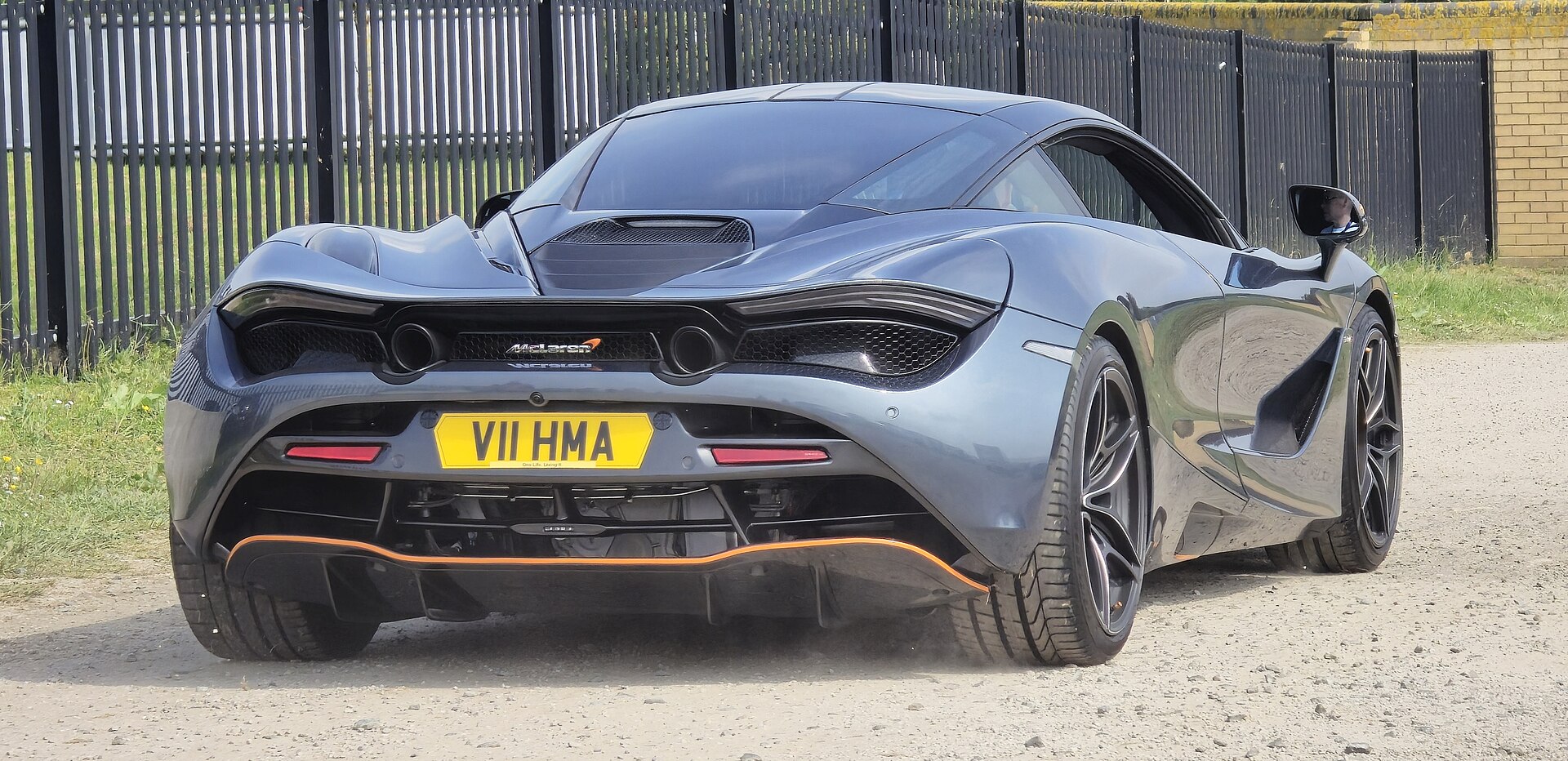
The 600LT: Lightweight Track Weapon ($140K–$180K)
The 600LT (Longtail) represents McLaren's lightweight, track-focused approach, introduced in 2019. It's brutally simplified, intensely focused, and unapologetically designed for driving rather than living. The 600LT produced for just two model years (2019–2020) is now gaining collector interest, but you can still find examples in the $140,000–$180,000 range if you shop wisely.
The appeal is obvious: 592 horsepower, 618 Nm torque, a stripped-down, lightweight chassis, and more aggressive aero than anything else McLaren produces at this price point. The 600LT is a car you buy to drive on track, not to park in your garage and admire.
What You Get: 592 hp, 618 Nm torque, 3.8L twin-turbo V8, stripped interior, visible carbon fiber everywhere, extreme aero package, minimal sound deadening, track-day capability.
Reality Check: The 600LT is expensive to maintain because track use accelerates wear. Brake pads are consumed rapidly. Suspension components get hammered. The tires are high-performance Pirelli Trofeo or Pirelli Corsa rubber that wear quickly in street use. If you're buying a 600LT but never planning to track it, you're overpaying for capability you won't use. If you are planning serious track time, budget an additional $5,000–$10,000 per year for consumables beyond routine service.
Maintenance Profile: Base routine maintenance follows the Sport Series template ($3,000–$7,000/year), but add track use costs on top of that. Insurance is actually cheaper than you'd expect for the performance because insurers recognize these are primarily track cars — expect $3,500–$6,000 annually.
The GT: Grand Touring Marvel ($130K–$170K)
The McLaren GT, introduced in 2020, represents something different — McLaren's first true grand touring car. It's longer, heavier, and significantly more practical than the Sport Series. It's also surprisingly refined, with an interior that doesn't feel punishing for multi-hour drives. Used examples are starting to appear in the $130,000–$170,000 range, and they represent genuinely interesting value for buyers who want McLaren performance without the Spartan track-car experience.
What You Get: 612 hp, 630 Nm torque, 3.8L twin-turbo V8, real cargo space, usable interior, 0–60 in 3.2 seconds, 203 mph top speed, comfortable long-distance capability.
Why It's Different: The GT ditches the aggressive aero, the stripped interior, and the obsessive weight obsession. It feels like a legitimately nice car you can use multiple times per month. The practicality is unprecedented in the modern McLaren lineup — there's actual trunk space, reasonable visibility, and an interior that doesn't make you cringe during winter driving. This appeals to a different buyer than the 570S.
Reliability and Maintenance: The GT shares the same engine and transmission as the Sport Series, but benefits from less aggressive tuning and more relaxed driving patterns (since it's bought by buyers who don't track them). Expect the same $2,000–$5,000 in annual routine maintenance, but potentially lower repair incidence since these cars are typically garage-kept and not pushed to limits. Insurance is actually cheaper than the Sport Series — $3,500–$5,500 annually — because the demographic skews older and the risk profile is lower.
The Real Cost of McLaren Ownership
Purchase price is approximately 20% of your actual cost of ownership. Before buying any McLaren under $150K, understand the complete financial picture:
Routine Annual Maintenance
Budget $3,000–$8,000 depending on model and mileage. This includes oil changes, fluid flushes, inspections, and filter replacements. McLarens don't need service as frequently as some exotics (every 10,000–20,000 miles depending on age), but when they do, labor rates at McLaren dealerships run $200–$300 per hour, and diagnosis can take 3–5 hours per issue.
Unexpected Repairs
This is where the real pain lives. Hydraulic seal replacement on suspension components runs $3,000–$6,000. DCT clutch replacement costs $8,000–$12,000. Timing chain cover leaks (rare but expensive) run $15,000–$25,000. Electrical gremlins can cost $2,000–$8,000 to diagnose and repair. The hydraulic suspension system is McLaren's Achilles heel — it's brilliant when it works, but expensive when it fails.
Fuel and Consumables
Expect 12–18 mpg depending on driving patterns and model. Premium fuel (91+ octane) is required, adding $3,500–$6,000 annually assuming 8,000–10,000 miles per year. Tires are specialized high-performance compounds costing $400–$600 per corner, and they wear fast. Plan $1,500–$2,500 in annual tire costs. Brakes are carbon-ceramic on newer models, lasting longer than organic pads but costing $8,000–$12,000 when replacement time arrives.
Insurance
Exotic car insurance specializes in McLarens. Expect $3,500–$8,500 annually depending on age, model, driving record, and location. Some insurers require annual inspections. Some require vehicles to be kept in climate-controlled garages. Some won't cover track use. Shop around — there's huge variance in the specialty market.
Storage and Transportation
Low ground clearance (around 4 inches front, 4.5 inches rear) means speed bumps are enemies and gravel roads are threats. Climate-controlled storage costs $150–$400/month in most markets. If you drive your McLaren across the country, enclosed trailer rental runs $3,000–$5,000 each way.
The 570S is the sweet spot for affordable McLaren ownership. Modern enough to be reliable, old enough to be affordable, and perfectly positioned between the 12C's aging concerns and the newer generation's premium pricing. Budget $120,000 purchase price plus $6,000 annual running costs, and you're looking at a realistic $126,000/year total ownership expense assuming 10,000 miles annually.
The Carbon Fiber Advantage: Why The MonoCell Matters
Every modern McLaren from 2011 onward uses a carbon fiber monocoque chassis called the MonoCell. It's rigid, lightweight, and contributes significantly to the driving experience. More importantly for buyers: it doesn't rust, doesn't corrode, and rarely requires structural repair. You can buy a 12-year-old 12C knowing the fundamental chassis is as sound as the day it rolled off the factory floor. This contrasts sharply with aluminum or steel-bodied cars that develop corrosion over time.
The MonoCell is one reason why 12-year-old McLarens feel legitimately modern. There's no hidden rust waiting to emerge. The structure is fundamentally sound. Regular inspection by qualified technicians will catch any issues (small impacts, hairline cracks) long before they become catastrophic.
Which McLaren Should You Actually Buy? A Decision Framework
Best Pure Value: 540C ($90K–$120K) If you want the newest possible McLaren at the cheapest possible price, the 540C is it. Yes, it's 540 horsepower instead of 562, but that difference is immeasurable in real driving. Find a 2016 or 2017 with service records and under 25,000 miles, and you've found the bargain. The 540C is overlooked, underpriced, and genuinely excellent.
Best Balanced Choice: 570GT ($100K–$130K) The 570GT splits the difference between new-enough to be modern and old-enough to be affordable. The GT's practical orientation makes it better for actual use than the hardcore 570S. Better highway manners, more usable interior, identical performance, and typically $10,000 cheaper. If you're going to keep a McLaren more than two years, the 570GT is the smart choice.
Best Track Car: 600LT ($140K–$180K) If you're serious about track days and performance driving, the 600LT is purpose-built for that mission. Yes, it's stripped down and unrefined. That's the point. Everything on the 600LT exists for a reason. Every pound saved, every aerodynamic detail, every chassis tuning decision serves track performance.
Best Practicality: GT ($130K–$170K) The only McLaren where you could realistically drive 4 hours without needing a chiropractor adjustment. The GT is the "gateway McLaren" — performance that's accessible, practicality that's real, and enough drama to remember you're driving a supercar.
Best Investment (if you must): 650S ($110K–$150K) The 650S is out of fashion, which is exactly when collector-oriented cars become interesting. It's more powerful than the 570 series, genuinely rare in the used market, and positioned to appreciate as interest shifts toward older, "classic" McLarens. This isn't financial advice, but the 650S makes the most sense if appreciation matters to you.
Get a Pre-Purchase Inspection Before You Commit
Automonitor connects you with McLaren specialists who know exactly which hydraulic seals are about to fail and which models have hidden electrical issues. One thorough inspection can save you $10,000+ in hidden repairs.
Schedule Your Inspection →Why Service History Matters More Than Price
The single most important variable in McLaren ownership is service history. A $100K 570S with $30,000 in documented service work is a better purchase than a $85K 570S with no records and mystery fluid levels. The Service History tells you whether seals were replaced preemptively, whether electrical issues were diagnosed and resolved, whether the car was driven regularly or sat for extended periods.
Cars that sit develop their own problems: seal leaks from inactivity, battery degradation, brake fluid absorption of moisture, flat-spotted tires. Conversely, cars that are regularly driven and properly serviced develop fewer problems. A 570S with 40,000 miles and full service records is safer than one with 25,000 miles and a blank maintenance log.
When shopping, prioritize:
- Documented Oil Changes: Every 10,000 miles on newer models, every 15,000 on older ones. Gaps in service history are massive red flags.
- Hydraulic System Service: If you can't find evidence of suspension component inspection or seal replacement, budget an immediate $4,000–$6,000 for professional diagnosis.
- DCT Transmission Service: Look for evidence of gearbox fluid flushes and clutch condition verification. These should happen every 20,000 miles.
- Full Diagnostic Reports: Independent exotic shop inspections are worth far more than dealer service records. A thorough pre-purchase inspection costs $800–$1,500 but can identify issues worth $15,000+.
Where to Actually Find These Cars
Finding a cheaply-priced McLaren requires understanding market dynamics. Geographically, Florida, California, and Texas have the highest McLaren supply, meaning better pricing than regional markets. Seasonally, winter months (January–February) see higher supply as owners transition vehicles for tax reasons. Online platforms like Bring a Trailer and Cars and Bids occasionally feature bargain McLarens, especially models like the 540C that aren't flavor-of-the-month. Dealer inventory through Cars.com and AutoTrader often captures regional variations in pricing.
Automonitor's concierge buying service handles market research, condition verification, and price negotiation on your behalf. We source from 200+ verified luxury dealers and private collections, and we handle the entire process from identification to delivery. If you're serious about buying an affordable McLaren but don't want to spend months hunting, professional concierge buying eliminates that burden entirely.
Why Depreciation Makes Cheap McLarens Real Value
Here's a fact that rarely gets discussed: older McLarens depreciate onto you. A 12C purchased for $90,000 today will likely still be worth $75,000–$85,000 in three years. That's only $5,000–$15,000 in depreciation, or roughly $140–$415 per month. Add in $6,000/year in running costs ($18,000 over three years), and your total ownership cost is $35,000 for three years of genuine supercar ownership. That's $972 per month all-in. Compare that to a $500/month car payment on a new luxury sedan, and suddenly McLaren ownership looks financially rational.
This only works if you buy the right model (which this guide helps you do) and maintain it properly. But for buyers who can afford the running costs and are comfortable with exotic car ownership, an affordable McLaren is genuinely a better financial decision than you'd expect.
When NOT to Buy an Affordable McLaren
No Service History: If the seller can't produce documented service records, walk away. The potential cost savings aren't worth the risk.
High Mileage Without Major Service Evidence: A 60,000-mile 570S that hasn't had its major 20,000-mile service is a financial timebomb. The upcoming $4,000–$6,000 service should come off the price.
Transmission Hesitation or Grinding: A test drive that reveals DCT shuddering in first gear below 1,500 rpm might be a dirty fluid issue ($600 fix) or might be clutch wear ($8,000–$12,000 repair). Get a specialist to diagnose before committing.
Suspension Noise or Leaks: Hydraulic system failures are McLaren's most expensive problem. Any evidence of suspension issues (hissing sounds, visible fluid leaks) requires immediate specialist inspection.
Stretched Budget: If buying the car depletes your emergency savings or forces you to defer other financial priorities, it's not the right time. Exotic car ownership needs to be comfortable, not stressful.
Ready to Buy Your McLaren?
Automonitor handles the entire process — sourcing, verification, inspection, negotiation, and transportation. We make buying an affordable McLaren simple and stress-free.
Start Your Search Today →The Final Verdict: Is It Worth It?
Yes. An affordable McLaren — whether that's an $85K 12C or a $115K 570GT — represents some of the best supercar value available in 2026. You get genuine engineering excellence, carbon fiber construction that doesn't age, proven powertrains, and the emotional experience of driving a car that was designed by some of the world's greatest automotive engineers.
But — and this is critical — you have to do it right. That means:
- Understanding the complete cost picture (purchase price plus $5,000–$8,000 annually in running costs)
- Getting a pre-purchase inspection from a qualified exotic specialist
- Prioritizing service history over lowest price
- Choosing the right model for your actual use case (track car vs. weekend cruiser vs. grand tourer)
- Setting aside an emergency fund for unexpected repairs ($10,000 minimum)
Do those things, and you'll end up with a genuinely rewarding ownership experience. Skip them, and you'll spend $120,000 on a car that costs you another $15,000–$25,000 in unexpected repairs within the first year.
The cheapest McLaren is never the bargain. The right McLaren is. And Automonitor is here to help you find exactly that.
Get Expert Help Finding Your Affordable McLaren
From sourcing to inspection to delivery, Automonitor handles everything so you can focus on the driving experience. Real data, transparent pricing, and zero stress.
Start Your Search →