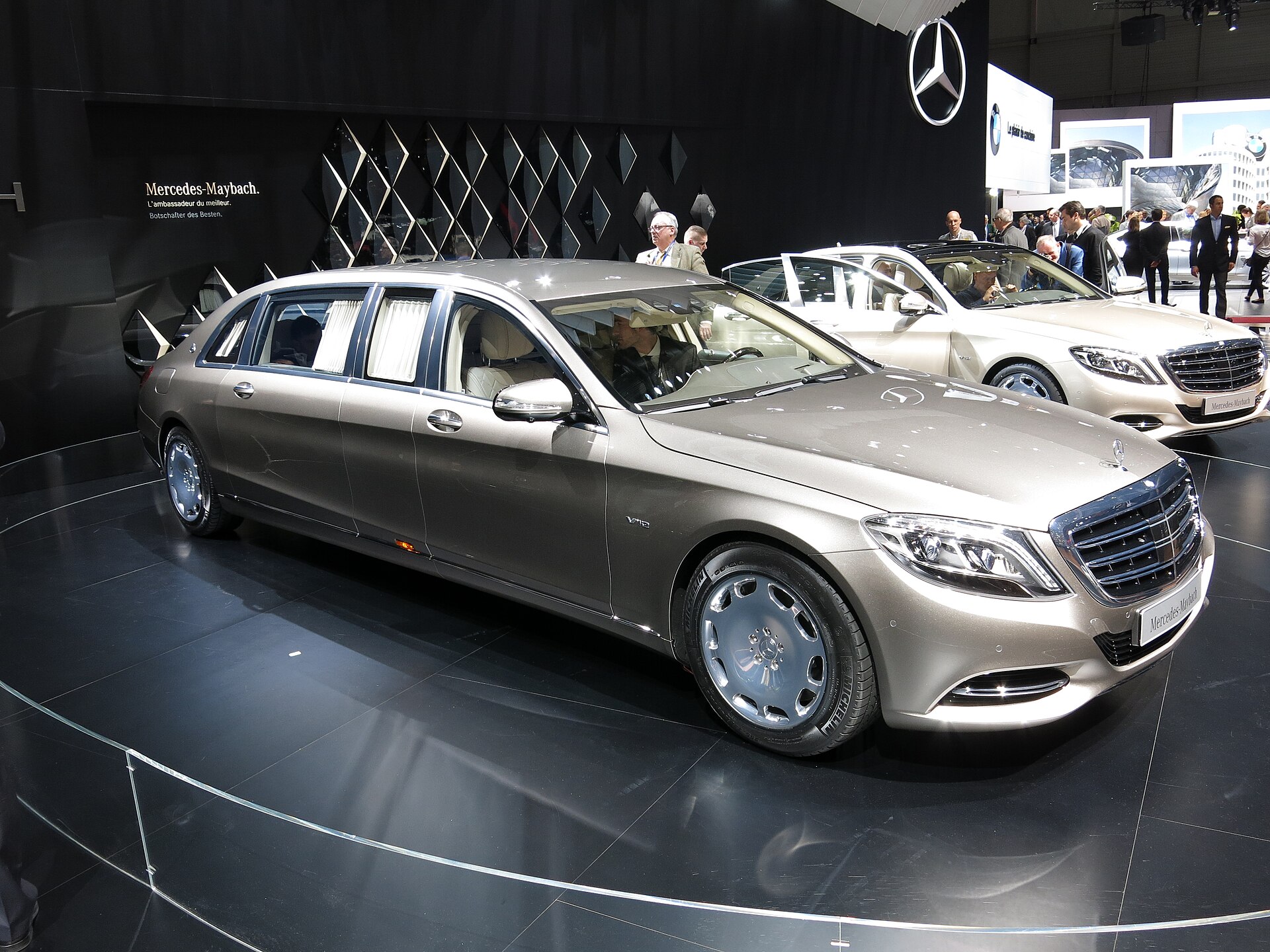
What Is the Best Year to Buy a Mercedes-Maybach S680?
The Mercedes-Maybach S680 sits at the apex of luxury sedan engineering. With the V12 engine rumored to reach its final production year in 2025, the decision of which model year to buy carries unprecedented weight. Here's what you need to know about depreciation, technology, refinement, and value across the 2021-2025 generation.
The Short Answer: 2022 for Value, 2024 for Features, Any Year for Investment
If you're buying a Mercedes-Maybach S680 and want the best balance of depreciation, reliability, and capability, the 2022 model year is your answer. Launched in 2021 as the first-generation W223 Maybach, the 2022 still carries that technological advantage of being post-launch while benefiting from two years of manufacturer data that resolved any remaining first-year production quirks. You'll find 2022 models with reasonable mileage (10,000-20,000 miles) selling for $170,000-$210,000 used — a significant drop from the $229,000 MSRP that new cars commanded. That's roughly 25-30% depreciation over four years, considerably better than most luxury sedans.
However, if you prioritize cutting-edge technology and the absolute newest infotainment systems, the 2024 or 2025 models are worth the premium. The 2024 refresh brought MBUX 2.0 updates and additional E-Active Body Control refinements that meaningfully improve daily driving quality. And if you believe the industry whispers that 2025 will be the final V12 production year, any S680 becomes a potential future collectible — though we don't recommend betting your purchase decision entirely on speculation.
The reality is this: the S680 is one of the most exclusive luxury vehicles on Earth. Only a handful are produced each year. Unlike volume luxury cars that depreciate predictably, the Maybach's scarcity creates an unpredictable but generally favorable resale environment. Every year we discuss carries merits depending on your priorities.
Understanding the Platform: The W223 Foundation
The current generation Mercedes-Maybach S-Class launched in 2021 on the W223 platform — the same foundation as the standard Mercedes-Benz S-Class, but radically reconfigured for extreme luxury. This is critical context: the Maybach doesn't compromise structural engineering for luxury. Every refinement is additive, built on top of one of the most advanced automotive platforms in production.
The S680 specifically uses a 6.0-liter twin-turbocharged V12 engine producing 621 horsepower and 738 pound-feet of torque. This engine has remained essentially unchanged across the 2021-2025 model years — meaning raw performance and reliability are consistent across the entire generation. The real differences between model years are in options, packages, available colors, and infotainment capabilities rather than fundamental powertrain changes.
An important distinction for buyers: the S580 variant uses a 4.0-liter twin-turbo V8 with 496 hp. It's significantly less expensive ($185,000 new), offers exceptional performance, and actually depreciates less severely than the V12 in some cases because demand is broader. However, the S680's V12 carries intangible value — it's among the last of the ultra-luxury V12 sedans ever produced, and that scarcity will ultimately determine whether it appreciates or holds value better than the V8.
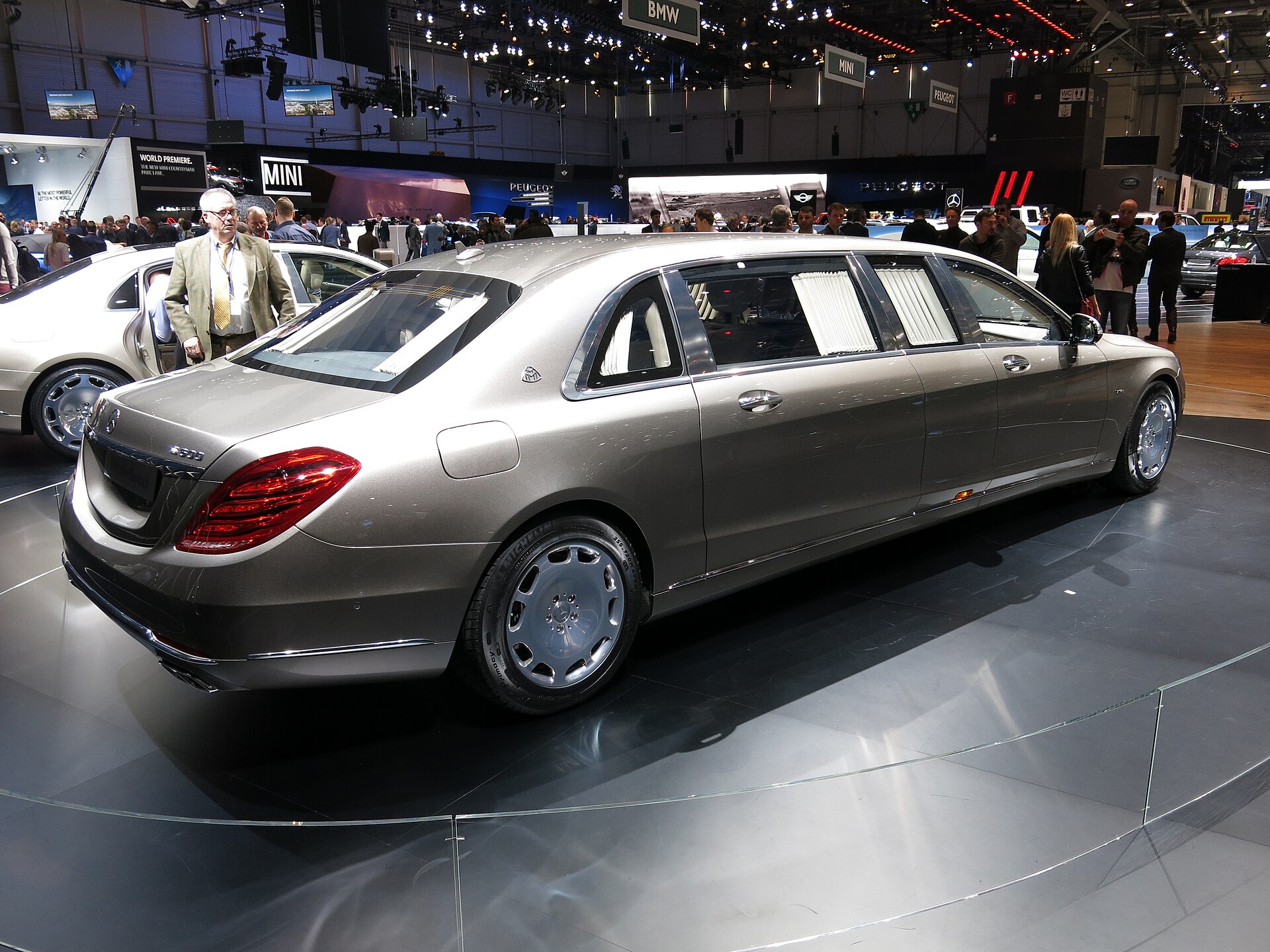
Year-by-Year Breakdown: What Changed and What It Means for Your Purchase
2021 (Launch Year) - The Pioneer's Premium
The 2021 Maybach S680 was the first model year of the current generation. This typically carries a risk premium in automotive purchasing — you're buying a car where real-world ownership data is measured in months rather than years. However, Mercedes' engineering depth and the W223's maturity (it's based on the proven S-Class platform) mean 2021 models have proven remarkably solid.
The 2021 carries higher MSRP depreciation than later years, with examples selling for $160,000-$195,000 depending on mileage and specification. What you gain: authentic launch-year appeal, relatively low mileage examples available, and the prestige of owning the first-generation car. What you risk: any potential manufacturing refinements that came later were still being discovered.
Recommendation: Buy 2021 only if you find an exceptionally well-optioned example at compelling pricing (below $170,000), and only if the maintenance history is bulletproof.
2022 (Sweet Spot) - Refined Confidence
This is our recommended model year for most buyers. Mercedes had 12 months of 2021 production data, which addressed any minor issues before 2022 cars rolled off the line. The 2022 model year saw expanded Manufaktur customization options and color palette, meaning you'll find more diverse specifications on the used market.
Current pricing for 2022 S680 models with 10,000-20,000 miles ranges from $170,000 to $210,000. This represents approximately 25-30% depreciation from the $229,000 launch MSRP — essentially the steepest cliff, after which values stabilize. You're buying a car that's experienced real-world proving, with known reliability characteristics, at a price point that reflects realistic depreciation rather than launch-premium markup.
The 2022 is also ideally positioned if you plan to keep the car for 5-7 years. At that point, you could realistically expect to sell for $140,000-$160,000, meaning your total ownership cost (including depreciation) is predictable and reasonable for a $170K purchase.
Recommendation: Prioritize 2022 models if you value depreciation efficiency and reliability data over cutting-edge infotainment.
2023 (Options Expansion) - Customization Peak
The 2023 model year introduced the Night Series package with exclusive darker exterior trims, unique wheel designs, and available Nappa leather color combinations. This year also saw Mercedes expand the Manufaktur program significantly, allowing deeper customization without resort to full bespoke orders.
Pricing for 2023 models ranges from $185,000-$225,000 depending on specification. The year-over-year pricing increase reflects lower supply and higher specification options rather than mechanical improvements. A 2023 Night Series package S680 will command a premium over standard 2023 models, potentially recovering its cost advantage when you sell.
The 2023 still uses the same infotainment as 2022, so technology isn't a differentiator. The appeal here is purely customization depth — if you've found a uniquely specced 2023 that matches your exact vision, it's worth considering despite higher pricing.
Recommendation: Buy 2023 if you've found a specific configuration you love. Otherwise, 2022 or 2024 offer better value.
2024 (Technology Refresh) - Modern Luxury
The 2024 model year brought the most significant changes of the generation post-launch: MBUX 2.0 infotainment system, updated navigation, improved wireless Apple CarPlay/Android Auto integration, and refined E-Active Body Control suspension algorithms. These aren't flashy changes, but they represent the difference between "cutting-edge 2021 technology" and "current-generation luxury standard."
The suspension refinement particularly matters if you plan to drive regularly rather than garage-queen the car. Mercedes' engineers spent an additional year tuning the E-Active suspension to reduce pitch and roll during highway driving while maintaining comfort. It's subtle but noticeable across 5,000+ mile road trips.
Pricing for 2024 models: $210,000-$245,000, depending on mileage and specification. This represents about 35-40% depreciation from MSRP, suggesting that 2024 models will stabilize value faster than earlier years. The technology refresh means 2024 will remain contemporary longer — a meaningful advantage if you plan 7-10 year ownership.
Recommendation: Choose 2024 if technology currency and suspension refinement justify the higher price. Expect slower depreciation in years 4-7 compared to earlier models.
2025 (V12 Swan Song?) - Speculation and Substance
Officially, Mercedes has not announced that 2025 is the final V12 Maybach S-Class model year. However, industry sources, emissions regulations, and the automaker's electrification roadmap strongly suggest it. The next-generation Maybach (likely 2027 or 2028) will presumably use a hybrid or electric powertrain. If 2025 is indeed the last pure V12 year, it becomes historically significant in ways that earlier models are not.
Current pricing for 2025 models is $220,000-$260,000+, reflecting both new-car premiums and speculative interest. Buying a 2025 purely as an investment bet on "last V12" is risky — collectors care about rarity, condition, and historical significance more than "last of the line" narratives. A 2025 S680 might appreciate meaningfully, or it might depreciate like any other $230K luxury sedan.
What 2025 does offer: the absolute newest technology (including whatever late-cycle updates Mercedes applies), the lowest potential mileage, and genuine scarcity value if the V12 rumors prove true.
Recommendation: Buy 2025 only if you love the car on its merits and can afford the premium. Don't overpay purely betting on collectibility.
Depreciation Reality: How the S680 Holds Value
The Maybach S680 depreciates differently than standard S-Class sedans. Here's the realistic picture based on current market data:
| Model Year | Original MSRP | Current Used Price | Depreciation % | Depreciation/Year |
|---|---|---|---|---|
| 2021 | $229,000 | $160,000-$195,000 | 30-35% | 7-9% annually |
| 2022 | $229,000 | $170,000-$210,000 | 25-30% | 6-8% annually |
| 2023 | $235,000 | $185,000-$225,000 | 24-28% | 8-9% annually |
| 2024 | $245,000 | $210,000-$245,000 | 35-40% | 9-10% annually |
Three critical observations: First, the steepest depreciation cliff occurs in years 1-2, consistent with all luxury vehicles. If you buy a 2-3 year old S680, you're capturing the worst depreciation for the seller, which benefits you. Second, by year 4, annual depreciation slows considerably — a 2022 won't lose significantly more value in year 5 than it does in year 4. Third, low-mileage examples (under 15,000 miles total) command 10-15% premiums over higher-mileage comparable cars, making maintenance and driving history critical.
Compare this to the standard Mercedes-Benz S580: V8 models depreciate 40-45% over five years. The S680's V12 engine actually holds value better, likely due to rarity and emotional appeal. However, maintenance costs can offset this advantage — V12 service intervals run roughly 20% higher than V8 equivalents.
Find Your Perfect S680 Specification
Automonitor specializes in sourcing Mercedes-Maybach vehicles from verified dealers across North America. We handle market analysis, pre-purchase inspection, and price negotiation.
Start Your Search →
Technology and Features: What Actually Improves Year-to-Year
Beyond cosmetics and customization, here's what substantively changes between model years:
2021-2023: MBUX 1.0
The original MBUX system in early Maybach S-Class models uses a 12.3-inch instrument cluster and 12.8-inch touchscreen. It's responsive and intuitive, but navigation updates and software capability are tied to Mercedes' push-update cycle. By 2023, these systems receive over-the-air updates improving functionality, but they remain fundamentally 2021-generation technology.
2024-2025: MBUX 2.0
The refresh brings a 12.3-inch curved instrument cluster and 14.0-inch OLED touchscreen. More importantly, the underlying architecture is faster, updates are more frequent, and voice command capabilities are superior. If you drive 30,000+ miles annually and value contemporary infotainment, this upgrade matters. If you drive 5,000 miles per year, it's a luxury nice-to-have rather than necessity.
All Years: Genuine Feature Parity
The S680 comes standard with: 21-speaker Burmester surround sound, panoramic sunroof, ambient lighting with 64 color options, electronically adjustable multi-contour seats, heated and ventilated rear seats, power-closing doors, and comprehensive driver assistance systems including adaptive cruise, lane-keeping assist, and automated parking.
These don't change materially year-to-year. What changes are customization depth (more color options in 2023-2025), refinement (E-Active Body Control tuning improves in 2024), and infotainment (MBUX 2.0 in 2024+). None of these justify paying $20,000 more unless they match your specific priorities.
Reliability and Service: The Hidden Ownership Costs
All model years of the W223 Maybach S680 have proven remarkably reliable. Mercedes' engineering rigor and conservative design (no over-aggressive performance targets) mean issues are uncommon. However, there are year-specific considerations:
2021-2022: Minimal Known Issues
Early models occasionally report: minor panoramic sunroof rattle (usually fixed under warranty), occasional navigation glitches (resolved via software update), and rare instances of rear-seat ventilation malfunction. None are systemic. Real-world reliability from owners is positive, with many reporting 20,000+ miles of trouble-free ownership.
2023-2024: Proven Solid
By 2023, Mercedes had resolved virtually all 2021-2022 quirks. No significant reliability concerns emerge. The E-Active suspension system, while complex, has demonstrated reliability across the broader S-Class lineup since its introduction.
2025: Too New for Complete Data
As a current-model-year vehicle, comprehensive reliability data doesn't yet exist. However, no early reports of systematic issues are emerging from production vehicles.
Service Costs Reality
The S680 is not cheap to maintain. Annual service typically costs $1,500-$2,500 for routine maintenance. Major services every 20,000 miles run $3,000-$4,500. The V12 engine means higher parts costs than V8 equivalents, and specialized service requires Mercedes dealerships — independent shops can handle some routine maintenance but not major work.
Ownership cost calculator: 10,000 annual miles = approximately $1,200-$2,000 per year in maintenance and service. This should be factored into your decision alongside depreciation and fuel costs.
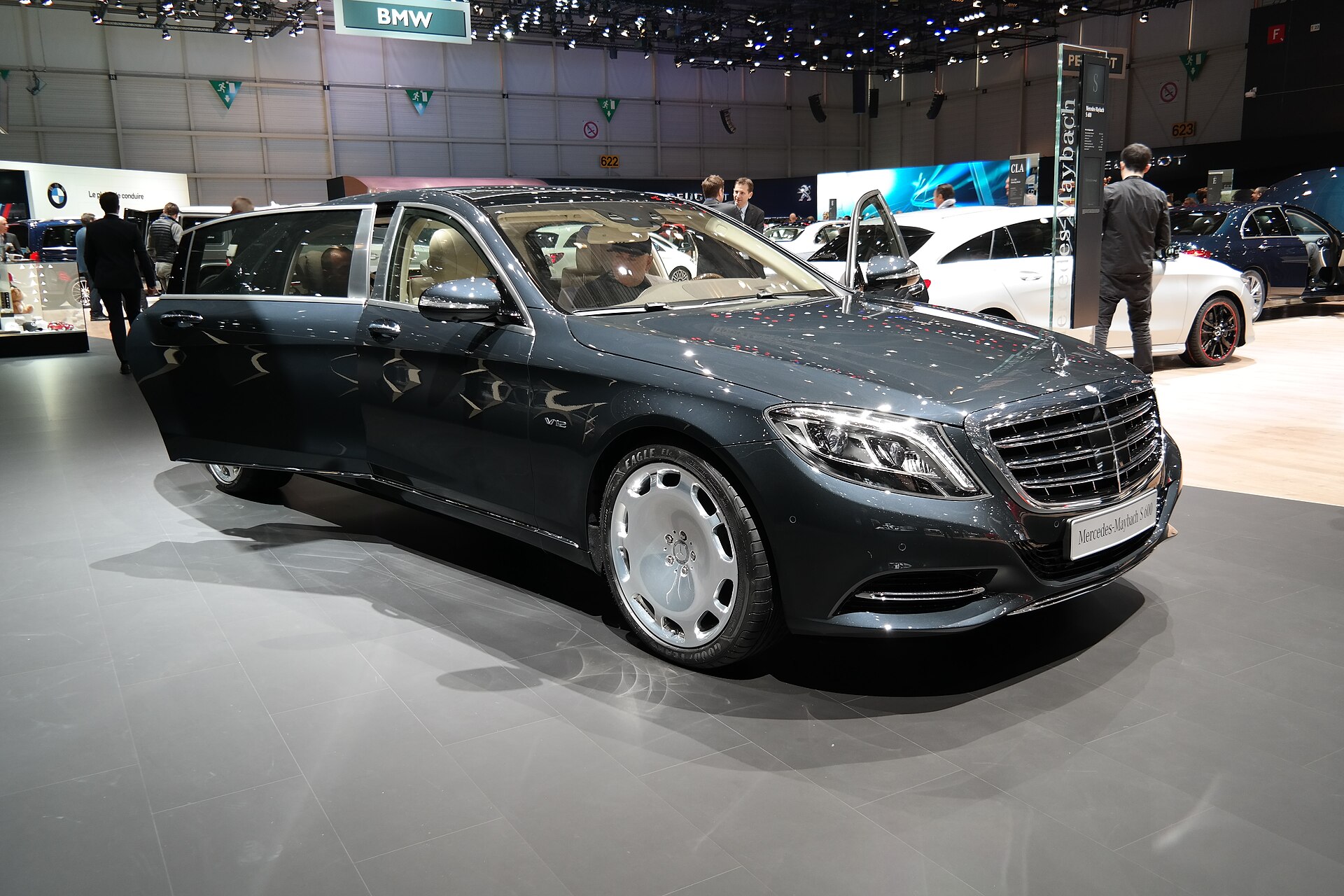
S680 vs. S580: Should You Pay the V12 Premium?
Mercedes offers the Maybach S-Class with two engines: the 621-hp V12 (S680) and the 496-hp V8 (S580). The question every potential buyer faces: is the V12 worth $45,000+ in additional cost?
| Metric | S680 V12 | S580 V8 | Advantage |
|---|---|---|---|
| Power | 621 hp | 496 hp | +125 hp (S680) |
| 0-60 Time | 4.5 sec | 4.8 sec | Marginal (S680) |
| Sound Character | V12 Rumble | V8 Smooth | Personal (S680) |
| New MSRP | $229,000+ | $185,000 | +$45K (S580 cheaper) |
| Used (2022) | $170K-$210K | $140K-$180K | +$30K gap (S680) |
| Annual Service | $1,500-$2,500 | $1,200-$2,000 | S580 slightly lower |
| Rarity/Future Value | Higher (V12) | Lower (V8) | S680 more exclusive |
The practical answer: Choose the V8 if you care about value retention, lower operating costs, and that you're buying a Maybach (already exceptionally rare). Choose the V12 if you're emotionally attached to engine sound, want the most exclusive option possible, and believe the V12's rarity will eventually become collectible. The supply of both is so limited that either choice is fundamentally about preference.
How It Compares: Maybach vs. Rolls-Royce Ghost vs. Bentley Continental
If you're considering a Mercedes-Maybach S680, you're likely also looking at ultra-luxury competitors:
| Car | Engine | Power | MSRP (New) | Used (2022) | Annual Service |
|---|---|---|---|---|---|
| Maybach S680 | 6.0L TT V12 | 621 hp | $229K | $170K-$210K | $1.5K-$2.5K |
| Rolls-Royce Ghost | 6.75L TT V12 | 563 hp | $311K | $200K-$260K | $2.5K-$4K |
| Bentley Continental GT | 6.0L TT W12 | 626 hp | $233K | $160K-$200K | $2K-$3.5K |
| Rolls-Royce Spectre | Electric Motor | 563 hp | $325K | N/A (too new) | $500-$1.5K |
The Maybach's advantage: It's the most technologically advanced, shares a proven platform with the S-Class, and depreciation is predictable. The Rolls-Royce Ghost positions itself as the prestige choice (the badge carries intangible weight), but costs more upfront and is more expensive to maintain. The Bentley Continental competes on performance and customization. The Spectre is the future, but too new to assess reliability long-term.
For informed buyers: The Maybach S680 offers the best balance of engineering sophistication, depreciation, and reliability. If you want German engineering excellence paired with ultra-luxury amenities, it's genuinely the smart choice.
Expert Guidance on Maybach Pricing and Specs
Our team negotiates Mercedes-Maybach purchases weekly. We'll help you find the right model year, negotiate market-fair pricing, and arrange pre-purchase inspection.
Get Expert Consultation →Buying Strategy: How to Get the Best Deal on Your Chosen Model Year
Once you've decided on a model year, maximize your purchasing power with this approach:
1. Define Your Specification Priorities
Maybach S680 pricing varies wildly by color, interior trim, and option packages. Designate 3-4 must-haves (exterior color, interior leather combination, infotainment preference) and be flexible on everything else. A "wrong" color specification can cost you $10,000+ in resale value but should discount the purchase price proportionally.
2. Target the Depreciation Sweet Spot
Buy 2-3 year old models (2022-2023) rather than brand new or 5+ year old. The steepest depreciation occurs year-to-year during this window, and you're still well within warranty periods.
3. Prioritize Mileage and Service History
The difference between a 5,000-mile S680 and a 20,000-mile example is substantial in pricing, but not in reliability or long-term value. Buy the 20,000-mile car if service records are complete — you'll save $15,000+ and still get a car with 50,000+ miles of useful life remaining.
4. Get a Pre-Purchase Inspection
Non-negotiable. Mercedes' complexity means inspection should specifically verify: transmission smoothness, suspension calibration, HVAC system operation, sunroof operation, all infotainment functions, and a full diagnostic scan. Budget $600-$1,000 for a comprehensive inspection. It can reveal $5,000-$20,000 in deferred maintenance.
5. Negotiate from Market Data, Not Emotion
Know comparable sales from the last 90 days before making an offer. If a 2022 S680 is listed at $205,000 but comparable examples sold for $185,000, offer $180,000-$190,000 and be prepared to walk if the seller won't budge. The Maybach is exclusive, but there's always another one available in 2-3 months.
The Investment Question: Will Your S680 Appreciate?
This is the question every potential buyer asks: Could my $180,000 Maybach actually be worth more in 5 years? The honest answer is: possibly, but it's not a reliable investment thesis.
Arguments for appreciation: The V12 engine will be discontinued (eventually), making every S680 increasingly rare. Production numbers are tiny — perhaps 3,000-5,000 worldwide across the entire generation. If Mercedes-Maybach becomes historically significant (unlikely but possible), early V12 examples might appreciate like vintage Mercedes 300SL or 280SL models have done.
Arguments against: Modern cars don't age like classic cars. Regardless of rarity, depreciation is baked into the automotive market. You'd need dramatic supply constraints, cultural shift toward vintage luxury sedans, or a financial environment where assets like supercars become alternative investments for appreciation. Even then, you're competing with Ferraris, Porsches, and Mercedes-AMG performance cars as collectibles.
Our verdict: Buy the Maybach S680 because you love driving and owning it. View your initial 25-30% depreciation as the cost of ownership, then assume relatively stable value in years 4-7. If it appreciates, that's a bonus. Don't overpay for a marginal specification betting on future collectibility.
Final Verdict: Which Year Should You Actually Buy?
Here's our clear recommendation based on different buyer priorities:
If you want maximum value and depreciation efficiency: Buy a 2022 S680 with 12,000-18,000 miles in a neutral color (white, black, or gray). Target $180,000-$200,000 range. You'll get a car with proven reliability, contemporary technology, and future resale value that's predictable and strong.
If you prioritize cutting-edge technology and suspension refinement: Buy a 2024 S680 with under 10,000 miles. Accept that you're paying $220,000-$240,000 (35-40% depreciation from MSRP), but you're getting MBUX 2.0, refined E-Active suspension, and a car that won't feel dated in 5 years.
If you believe in V12 significance and want exclusivity: Buy a 2025 S680 if you can find one at reasonable pricing. Understand that you're speculating on future collectibility, which is inherently risky. But if 2025 is the last V12 year (still unconfirmed), you're buying a piece of automotive history.
If you want the best of all worlds: Buy a 2023 with a distinctive specification (Night Series package or rare color). You'll pay slightly more upfront ($200,000-$220,000) but a uniquely specced car holds value better and commands premium on resale.
Skip 2021 unless you find an extraordinary deal. The launch-year premium isn't worth it at this point in the car's lifecycle.
The Mercedes-Maybach S680 is one of the finest luxury sedans ever produced. It's genuinely worth buying if you can afford it, and any model year from 2022-2024 is an excellent choice depending on your priorities. The 2022 is our recommended sweet spot for buyers seeking depreciation efficiency. The 2024 is best for technology-forward owners. And the 2025 makes sense only if V12 significance and future rarity genuinely matter to you.
Whatever year you choose, buy from a trusted dealer or specialist, get a comprehensive pre-purchase inspection, and budget for realistic ownership costs. The Maybach rewards informed buyers. Don't join the ones who regret their choice by failing to do proper diligence.
Ready to Acquire Your Maybach S680?
Automonitor connects you with verified dealers, handles negotiations, and ensures complete transparency on pricing, history, and mechanical condition.
Start Your Search Now →