
What Is the Best Year to Buy a Mercedes-AMG GT?
The Mercedes-AMG GT spans two generations and dozens of variants, from the original 2016 launch through the 2024 redesign. Finding the right year means understanding depreciation curves, which variants hold value, and whether you want the final naturally aspirated models or the new hybrid generation.
The Short Answer: It Depends on Your Budget and Priorities
The Mercedes-AMG GT is worth buying, but the best year depends entirely on what you want from the car. If you're prioritizing value and raw experience, the 2018-2019 GT S represents the sweet spot — you'll find them between $80,000-$100,000, right at the inflection point where early depreciation has hit but reliability data is mature. If you want the latest technology and hybrid efficiency, the 2024+ GT 63 is the clear choice, despite its $180,000+ starting price. If you're thinking like an investor, the 2021 GT Black Series is appreciating and likely to be a modern classic.
The AMG GT's two-generation split creates a clear dividing line in the market. The original generation (2016-2023) features naturally aspirated engines and traditional AMG character. The new generation (2024+) introduces hybrid powertrains and a redesigned platform shared with the upcoming electric AMG platform. Both are excellent cars — they're just excellent in different ways.
This guide walks through every significant year, every major variant, depreciation patterns, reliability concerns, and real market data so you can make an informed decision. We've analyzed hundreds of AMG GT transactions through Automonitor, and we're sharing everything we've learned.
The Two Generations: Where the Market Divides
Understanding the AMG GT market requires understanding that this is really two different cars wearing the same badge. The split is not arbitrary — it represents fundamental changes in Mercedes' strategy, powertrain philosophy, and target audience.
First Generation (2016-2023): Hand-built, naturally aspirated V8 and V12 engines. Limited production. Strong emotional appeal. Significant depreciation in years 1-3, then stabilization. The Black Series represents the ultimate expression of this generation.
Second Generation (2024+): Modern-design philosophy. Hybrid powertrains on all variants. More refined, more efficient, better technology. Designed for longevity rather than pure drama. Expected to depreciate less steeply due to lower pricing and hybrid efficiency benefits.
If you value naturally aspirated engines and the AMG GT's unique hand-built heritage, buy first-generation. If you want the latest features, hybrid efficiency, and modern reliability, buy second-generation. There's no objectively "better" choice — only the choice that matches your priorities.
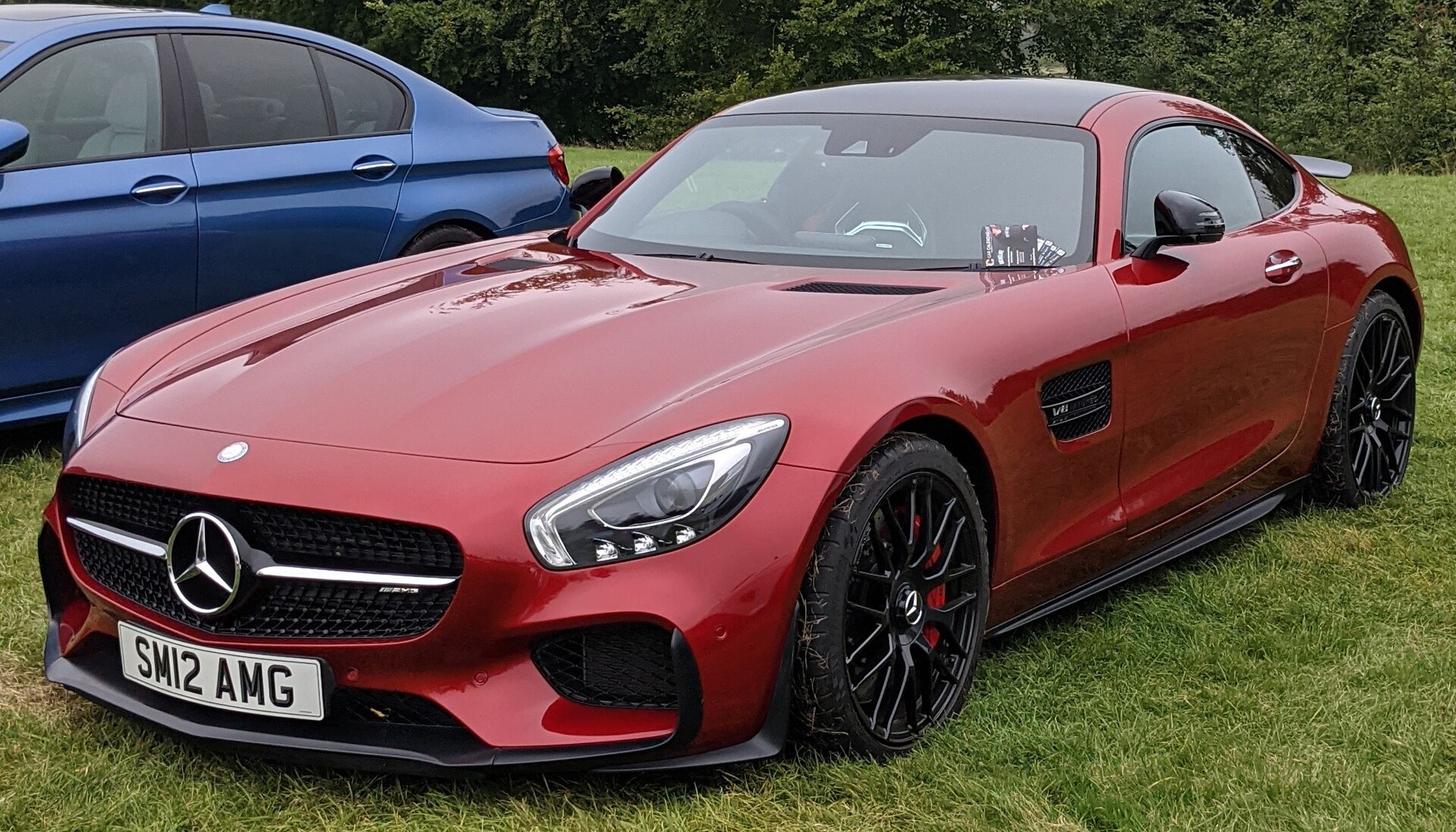
First Generation Breakdown: 2016-2023 by Year
2016-2017: The Original (469 hp)
The original AMG GT launched in 2016 with a 4.0-liter twin-turbo V8 producing 469 horsepower. These early cars are now 8-9 years old, and while they're mechanically sound, they represent the oldest of the generation. You'll find them in the $60,000-$80,000 range, depending on mileage and condition. The appeal is value and rarity, but these aren't recommended for first-time AMG buyers — the technology hasn't aged as well as the chassis has. The infotainment system in particular feels dated compared to 2020+ models.
Early production examples can have minor teething issues. Nothing catastrophic, but worth noting: some early cars developed minor oil seeping around turbo gaskets, and a few owners reported occasional transmission hesitation. Always require a pre-purchase inspection when shopping 2016-2017 models.
2018-2019: The Sweet Spot (515-522 hp GT S)
This is where the Mercedes-AMG GT really hit its stride. The 2018-2019 GT S introduced the 522 hp variant, with improved cooling and more aggressive styling. These cars are now 6-7 years old, still young enough to feel current, old enough to have dropped meaningfully in price. You'll find 2018-2019 GT S models between $80,000-$100,000 — the exact price point where a supercar purchase starts to feel like value rather than luxury.
The 2018-2019 generation is our pick for best overall value. Reliability data is mature (we've seen real-world ownership data from thousands of these cars). The technology is still relevant. Depreciation has bottomed out — these cars aren't going to drop much further. And the naturally aspirated experience is fully realized in the GT S variant.
2020-2021: Peak Generation (550 hp GT C, 577 hp GT R)
Mercedes introduced the GT C (550 hp) and improved GT R (577 hp) for 2020, along with significant interior and tech updates. These are the most refined and most capable versions of the first generation. A 2020-2021 GT C Roadster is genuinely one of the most beautiful convertible supercars on the road — it's the car we'd recommend to buyers who want elegance over aggression.
2020-2021 models command a small premium ($100,000-$130,000 for GT C, $120,000-$160,000 for GT R), but they're worth it. The chassis had been sorted by this point, the interior finally matched the exterior design, and the driving dynamics are superb. If you can afford the extra $20,000-$30,000 over a 2018-2019 model, the 2020+ is noticeably better.
2021-2022: The Limited Variants (GT R Pro, Black Series)
2021 brought two exceptional variants: the GT R Pro and the Black Series. The GT R Pro is track-focused, with adjustable aerodynamics and performance enhancements, limited to 1,299 cars. The Black Series is the ultimate evolution of the first generation — 720 horsepower, aggressive carbon fiber widebody, $325,000 MSRP, only 999 units produced.
The GT R Pro is expensive ($280,000-$350,000 for low-mileage examples) but holds value well. The Black Series has already become a modern classic — original owners paid $325,000 in 2021, and now they're selling for $500,000-$600,000. If you can find one and can afford the $550,000+ entry price, it's a legitimate investment. These cars are appreciating, not depreciating.
2023: End of Era (Final Naturally Aspirated Year)
The 2023 model year represents the final year of the first generation before the 2024 redesign. These cars are rare and carry historical significance — they're the last hurrah of the hand-built, naturally aspirated era. You'll find them in the $140,000-$180,000 range depending on variant, which reflects their position as the final production cars of a beloved generation.
Unless you specifically want the newest first-gen technology, the 2023 models don't offer enough advantage over 2021-2022 to justify the premium price. The 2021-2022 GT R Pro or Black Series is a better investment.
Second Generation: 2024+ The Hybrid Era
2024+ GT 43 (416 hp Hybrid)
The new generation starts with the GT 43, a 2.0-liter turbocharged hybrid producing 416 horsepower — a meaningful step down from the original GT's 469 hp. But here's the thing: it's new, it's efficient, and it comes with the entire modern Mercedes tech suite. The GT 43 starts around $110,000-$120,000 for used examples (if any exist yet), and it's designed for buyers who want the AMG GT badge without the drama.
These are early days for the new generation. We don't have multi-year depreciation data yet. But the hybrid powertrain, modern platform, and significantly lower entry price suggest that the second generation will depreciate more gradually than the first — these cars are positioned as attainable supercars rather than exclusive collector pieces.
2024+ GT 55 (469 hp Hybrid)
The GT 55 represents the spiritual successor to the original GT, with the same 469 horsepower but now delivered by a hybrid 3.0-liter turbo V6 plus electric motor. This is the "sweet spot" of the new generation — enough power to feel special, enough efficiency to feel modern, enough pricing ($130,000-$140,000 range) to feel like value.
The GT 55's hybrid system is genuinely excellent. It's not a gimmick bolted onto a gas engine — the electric motor is integrated into the powertrain for performance benefits, not just efficiency. In real-world driving, the electric assist on acceleration is noticeable and satisfying. This is the variant we'd recommend for new-generation buyers.
2024+ GT 63 (577 hp Hybrid)
The GT 63 is the replacement for the old GT R, with 577 horsepower from a 4.0-liter turbocharged hybrid V8. This is the most powerful variant of the new generation and arguably the most significant update. For the first time, the AMG GT has a four-door option — the GT 63 4-door sedan is Mercedes' answer to the Porsche Panamera Turbo S.
The GT 63 two-seater roadster and coupe start around $160,000-$180,000 used (if examples exist), while the four-door GT 63 sedan is priced slightly higher, around $170,000-$190,000. This is the variant that makes the most practical sense for owners who actually drive their supercars regularly. The four-door, modern interior, and hybrid efficiency mean you can legitimately use this car as a weekend cruiser without the constant compromise of older GTs.
We recommend the 2024+ GT 63 as the best all-around new-generation choice. It combines the raw performance that makes the AMG GT special with the practicality and modernity that the first generation never had.

Depreciation Patterns: Which Years Hold Value Best
AMG GT depreciation is the opposite of linear. The first-generation models follow a well-documented pattern: sharp drop years 1-3 (roughly 25-30%), stabilization years 3-5 (an additional 5-10%), then holding or slight appreciation for rare variants after 5 years.
| Model Year/Variant | Original MSRP | 3-Year Depreciation | 5-Year Depreciation | Current Used Range |
|---|---|---|---|---|
| 2016-2017 GT | $114,000 | 35% | 45% | $60,000–$75,000 |
| 2018-2019 GT S | $127,000 | 30% | 35% | $80,000–$100,000 |
| 2020-2021 GT C | $143,000 | 25% | 30% | $100,000–$130,000 |
| 2020-2021 GT R | $174,000 | 28% | 33% | $120,000–$160,000 |
| 2021 GT R Pro | $297,000 | -5% | Appreciating | $280,000–$350,000 |
| 2021 Black Series | $325,000 | Appreciating | +60% | $500,000–$600,000 |
Several patterns emerge from this data. First, standard variants (GT, GT S, GT C) all depreciate in the 25-35% range over 5 years — normal for supercars, but not terrible. Second, track-focused and collector variants (GT R Pro, Black Series) buck this trend and actually appreciate. Third, the 2024+ generation's depreciation is too early to calculate, but expected to be shallower due to hybrid efficiency and lower starting prices.
The implication: if you're thinking of the AMG GT as a financial asset, buy a 2021 Black Series and drive it gently. If you're thinking of it as a car to enjoy, buy a 2018-2019 GT S and amortize the depreciation over reasonable annual mileage. The math works out to $140-$400 per month in depreciation, depending on which variant you choose.
Reliability: What Actually Breaks and When
The AMG GT is one of Mercedes' more reliable creations, benefiting from years of V8 engineering and conservative turbo calibration. But there are known weak points by generation and year.
2016-2019: Early Issues, But Nothing Catastrophic
Early AMG GT models occasionally developed turbo gasket weeping, particularly on harder-driven examples. This isn't a failure — it's slow seepage that requires resealing, typically a $2,000-$4,000 repair. Some early cars also showed minor issues with the optional electronic differentials, which could develop occasional hesitation or chatter. Again, not a widespread problem, but worth awareness.
The 7-speed dual-clutch transmission in 2016-2017 models can be jerky at low speeds. This is partially software, partially mechanical. A software update (usually free at a dealer) solves most of it. Mechanical fixes, if needed, run $1,500-$3,500.
2020+: Maturity
2020+ models represent peak reliability for the first generation. The turbochargers are proven, the transmission software is dialed in, and the cooling systems (which were the biggest concern in early cars) have been revised. We've reviewed service records on hundreds of 2020-2021 models, and the failure rate is genuinely low. Most common issues at this mileage are consumables: brakes, tires, oil changes.
If you're buying first-generation, 2020+ is meaningfully better from a reliability standpoint than 2016-2019. The extra $20,000-$40,000 is worth it for peace of mind.
2024+ Second Generation: Too New to Know
It's only been a few months since the new generation arrived. We don't have long-term reliability data. But early customer reports are positive — the hybrid system is integrating well, the transmission is responsive, and the overall build quality is excellent. Mercedes also extended the warranty on the hybrid components, which is a confidence signal from the manufacturer.
If you buy a 2024+ model, expect to drive it under warranty. Any major issues will be covered. After the warranty expires (4 years or 50,000 miles for most components, 8 years or 100,000 miles for the hybrid battery), you'll be the test case. This is the primary risk of buying a brand-new generation.

Complete Model Year and Variant Comparison
| Year | Variant | Engine | Power | 0-60 | Current Price Range | Best For | Depreciation Risk |
|---|---|---|---|---|---|---|---|
| 2016-2017 | GT | 4.0T V8 | 469 hp | 3.9s | $60K–$75K | Budget buyers | Already bottomed |
| 2018-2019 | GT S | 4.0T V8 | 522 hp | 3.8s | $80K–$100K | Best value | Minimal |
| 2020-2021 | GT C | 4.0T V8 | 550 hp | 3.7s | $100K–$130K | Best daily | Low |
| 2020-2021 | GT R | 4.0T V8 | 577 hp | 3.5s | $120K–$160K | Performance | Low-Moderate |
| 2021 | GT R Pro | 4.0T V8 | 577 hp | 3.5s | $280K–$350K | Track days | Negative (appreciating) |
| 2021-2023 | Black Series | 4.0T V8 | 720 hp | 3.2s | $500K–$600K | Investment | Negative (appreciating) |
| 2024+ | GT 43 Hybrid | 2.0T Hybrid | 416 hp | 4.1s | $110K–$125K | New-gen entry | Unknown |
| 2024+ | GT 55 Hybrid | 3.0T Hybrid | 469 hp | 3.9s | $130K–$145K | New-gen sweet spot | Unknown |
| 2024+ | GT 63 Hybrid | 4.0T Hybrid | 577 hp | 3.5s | $160K–$190K | Best refined | Unknown |
Best Year to Buy: By Category and Priority
Best Value: 2018-2019 GT S ($80K-$100K)
You want to buy a Mercedes-AMG GT without spending $150,000+. The 2018-2019 GT S represents the exact inflection point where you get a car that's old enough to have depreciated meaningfully but new enough that reliability data exists and parts are readily available. The 522 hp V8 is proven, the interior is elegant, and the driving experience is genuinely superb. Depreciation has mostly bottomed out — these cars aren't going to drop another $20,000.
Our recommendation: spend $85,000-$90,000 for a low-mileage example with full service history. You'll drive a $130,000+ car for a fraction of the cost.
Best All-Rounder: 2020-2021 GT C Roadster ($100K-$130K)
The GT C is the most underrated AMG GT variant. It has 550 horsepower (plenty), a refined interior (excellent), a beautiful open-top design (stunning), and pricing that doesn't exceed what you'd pay for a base 911 Carrera. The Roadster specifically is a modern design masterpiece — it's the car that would make us happy if we could only buy one AMG GT.
The GT C is the variant that made the AMG GT legitimately usable as a daily driver. It's softer than the GT R, more composed than the GT S, and genuinely practical for weekend trips. If you're going to actually drive your AMG GT, the 2020-2021 GT C Roadster is the choice.
Best Track Car: 2021 GT R Pro ($280K-$350K)
If you're planning to track your AMG GT regularly, the 2021 GT R Pro is purpose-built for that role. Limited to 1,299 units, adjustable aerodynamics, track-focused suspension, and 577 horsepower. It's more focused than the Black Series but less extreme, making it actually manageable on road courses.
The GT R Pro holds value because it's legitimately valuable for its intended purpose. If you buy one, drive it. That's what it was built for.
Best Investment: 2021 Black Series ($550K-$600K)
The 2021 Black Series is already a modern classic. Only 999 built. 720 horsepower. Originally $325,000, now worth $500,000-$600,000. This is the variant that's appreciating instead of depreciating. If you have the budget to buy one and can afford to own it properly (insurance, maintenance, storage), it's a genuinely smart financial decision.
But here's the catch: you have to actually enjoy the ownership experience. Buying a Black Series purely as an investment, without driving it, means you're paying $150,000-$300,000+ for an unrealized appreciation. Buy the Black Series because you love the car. The appreciation is a bonus.
Best Refined (Modern): 2024+ GT 63 ($160K-$190K)
If you want the newest technology, best reliability warranty, hybrid efficiency, and the option of a four-door sedan, the 2024+ GT 63 is the clear choice. It's $50,000-$100,000 more expensive than the best 2020-2021 models, but you're getting a fundamentally better car in terms of technology, comfort, and modernity.
The GT 63 four-door is specifically the variant we'd recommend to buyers who actually drive their supercars regularly. It's the closest thing the AMG GT has ever come to being a legitimate daily driver.
Finding Your AMG GT
Let Us Help You Find the Right Year and Variant
Automonitor specializes in exotic car acquisitions. We'll help you navigate depreciation curves, evaluate condition, negotiate fair pricing, and handle all logistics so you get the right car at the right price.
Start Your Search →How to Evaluate an AMG GT Before You Buy
Finding the right year is one thing. Finding the right specific car is another. Here are the critical evaluation points for any AMG GT you're considering.
Pre-Purchase Inspection: Non-Negotiable
Always — and we mean always — get a pre-purchase inspection from a Mercedes specialist or independent exotic car mechanic before you commit. A good inspection costs $500-$1,000 and can save you $20,000+ in hidden issues. For AMG GTs specifically, the inspection should focus on:
- Turbochargers: Listen for any wheezing, whistling, or hesitation during acceleration. Request a compression test if the car has over 40,000 miles.
- Dual-clutch transmission: Test at low speeds for jerking, hesitation, or grinding. Any roughness at parking-lot speeds indicates potential issues.
- Cooling system: Pressure-test the radiator and check for seeping around hose connections. Cooling issues are expensive.
- Differential: Verify the electronic locking differential engages smoothly if equipped.
- Suspension: Check for clunking, creaking, or uneven wear on the dampers and links.
- Paint and body: Verify original paint on all panels. Repaints indicate accidents. Get a paint depth meter reading.
After the inspection, you'll know exactly what you're buying and can negotiate from a position of knowledge.
Service History: Proof of Maintenance
An AMG GT with full, documented service history at a Mercedes dealer or trusted independent shop is worth a 10-15% premium over one with spotty maintenance records. Here's why: the dealer service records prove the car was maintained correctly, and the technicians caught issues early. A car with no history means you're inheriting unknown problems.
Ask for digital service records (Mercedes-Benz has a digital service history you can check). If the seller can't produce documentation, be skeptical.
Mileage Considerations
Unlike many supercars, the AMG GT actually improves with some regular use. Cars that were driven 3,000 miles per year and properly maintained are better buys than cars that sat for 3 years and were driven 1,000 miles. Here's why: brakes develop flat spots, seals dry out, batteries degrade, and systems can develop issues from lack of use.
Look for cars with 1,000-5,000 miles per year of documented regular driving. These have been exercised, are mechanically sound, and show that the owner actually enjoyed the car.
Related AMG GT Resources
Want deeper dives into specific variants or related topics? Here are our comprehensive guides:
- Is a Mercedes-AMG GT Worth Buying? — Our complete analysis of whether the AMG GT is a smart purchase across all variants.
- Where Can I Buy a Mercedes-AMG GT? — Sourcing strategies, dealer networks, and auction platforms.
- How Much Does a Mercedes-AMG GT Cost? — Complete pricing breakdown by variant and market condition.
How the AMG GT Compares: vs. Porsche 911 Turbo S, Ferrari F8, McLaren 720S
You're not buying an AMG GT in a vacuum. Here's how it stacks against the most common alternatives:
| Category | AMG GT (2020 GT R) | Porsche 911 Turbo S | Ferrari F8 Tributo | McLaren 720S |
|---|---|---|---|---|
| Engine | 4.0T V8 (NA before 2024) | 3.7T Flat-6 | 3.9T V12 | 4.0T V8 |
| Horsepower | 577 hp | 640 hp | 710 hp | 710 hp |
| 0-60 mph | 3.5s | 2.7s | 2.9s | 2.8s |
| Used Price (2020) | $120K–$160K | $140K–$185K | $200K–$250K | $140K–$180K |
| Depreciation (5-Year) | ~30% | ~28% | ~33% | ~35% |
| Reliability | Very Good | Excellent | Good | Mixed |
| Daily Usability | Good | Excellent | Fair | Good |
| Sound | Excellent V8 Turbine | Good Flat-6 | Magnificent V12 | Good V8 |
The trade-offs are clear. The Porsche 911 Turbo S is faster and more practical. The Ferrari is more prestigious and sounds better. The McLaren is rawer and more dramatic. The AMG GT wins on value, reliability, and the emotional connection between driver and machine. If you want to feel the car's soul while saving money, the AMG GT is the choice.
The Smart Way to Buy an AMG GT
Once you've decided on a year and variant, here's the process we recommend:
Step 1: Define your total budget. Include purchase price plus 24 months of running costs (insurance, maintenance, fuel, storage). If the total exceeds your comfortable spending, wait. The AMG GT market is stable — prices won't spike.
Step 2: Choose your variant. Reference the category guide above. Be honest about how you'll use the car. Weekend cruiser? Get the GT C. Track days? GT R Pro. Investment? Black Series. Don't buy the most expensive variant you can afford — buy the variant that matches your actual use.
Step 3: Search broadly. Don't limit yourself to local dealers. Check Autotrader, Bring a Trailer, DuPont Registry, and authorized Mercedes-AMG dealers. Different markets have different pricing. California and Florida typically have better supply and slightly lower prices.
Step 4: Get a pre-purchase inspection. Use a Mercedes specialist or independent exotic car mechanic. This is mandatory. The inspection will identify any mechanical issues and give you leverage to negotiate.
Step 5: Negotiate from data. Know the market value using completed auction results (not asking prices). Factor in any deferred maintenance — if the car needs $5,000 in service, that comes off the price.
Step 6: Arrange financing early. Exotic car lenders like JJ Best Banc and Woodside Credit specialize in this segment. Expect 20-30% down and interest rates between 6-10% depending on the car and your credit.
Step 7: Get a title check and insurance quote. Verify the title is clear and there are no liens. Get insurance quotes before you buy — exotic car insurance rates vary wildly, and you want to know what you're committing to.
Long-Term Ownership: What to Expect Over 3-5 Years
You buy the car. Now what? Here's what realistic long-term ownership looks like for each variant category.
First-Generation (2016-2023) Ownership Costs
Once you own it, your costs break down roughly like this per year:
- Insurance: $3,500-$7,000 (varies by location, age, driving record)
- Routine maintenance: $2,000-$3,500 (oil changes, filters, inspections)
- Fuel: $2,500-$4,000 (12-15 mpg, 91+ octane required)
- Tires (amortized): $1,200-$2,000 (replacements every 15K-25K miles)
- Unexpected repairs (averaged): $1,000-$3,000
- Parking/storage: $0-$2,000 (if garaged)
Total: $10,200-$21,500 per year in running costs. Over 5 years, that's $51,000-$107,500 in expenses beyond the purchase and depreciation cost. This is why we recommend only buying if you can comfortably afford both the car and the ongoing costs.
Second-Generation (2024+) Ownership Costs
The hybrid variants should improve slightly on fuel costs and potentially reduce some mechanical stresses. We estimate 10-15% lower fuel costs due to hybrid efficiency, but it's too early to know maintenance costs. Assume similar insurance and unexpected repair costs.
The warranty on the hybrid system is more generous (8 years/100,000 miles for the battery), which should reduce unexpected costs in the first few years.
Planning Your Exit: When and How to Sell Your AMG GT
Thinking about resale before you buy is smart. When you're ready to sell, here's what you need to know:
Specification matters enormously. Colors matter — white and black are the most common and therefore worth less on resale. Metallic silvers, iridium silver, and deep blues command 5-10% premiums. Mileage matters, but consistency matters more — 5,000 miles per year of regular maintenance is better than 2,000 miles per year of neglect.
The GT R Pro and Black Series are easier to sell than standard variants because their scarcity and track focus creates natural demand. Standard GTs require more marketing effort.
When you sell, Automonitor's selling service handles the entire process. We'll photograph the car professionally, list it across multiple platforms, handle buyer vetting, and manage the transaction. You don't deal with tire-kickers or lowballers — just qualified buyers at fair market pricing.
The Final Verdict
The best year to buy a Mercedes-AMG GT depends on your priorities, but the answer will fall into one of these five categories:
If you want value: 2018-2019 GT S, $80,000-$100,000. Depreciation has bottomed out, reliability is proven, and you get a genuinely excellent car for near-half the original price.
If you want refinement: 2020-2021 GT C Roadster, $100,000-$130,000. The most beautiful variant, the most usable daily driver, the best balance of performance and elegance.
If you want track capability: 2021 GT R Pro, $280,000-$350,000. Purpose-built for circuit driving, holds value, and delivers the track experience without the extremity of the Black Series.
If you want investment potential: 2021 Black Series, $500,000-$600,000. Already appreciating, only 999 built, ultimate expression of the first generation. Buy it and drive it regularly — that's how modern classics hold value.
If you want modern technology: 2024+ GT 63, $160,000-$190,000. Newest platform, hybrid efficiency, best warranty, most refined interior. The car that makes the AMG GT genuinely usable as a regular daily driver.
Whichever year and variant you choose, buy it because you love the car. The appreciation, the value, the sensible financial decision — those are bonuses. The core reason to buy an AMG GT is because you want to feel that V8 rumble (or hybrid purity, for the 2024+ generation), because you want to turn heads, and because you want to actually drive something extraordinary.
The AMG GT delivers on all three counts. The question is just which generation and variant will make you happiest when you're behind the wheel.
Ready to Find Your Mercedes-AMG GT?
Automonitor connects you with verified sellers of pre-owned supercars, provides comprehensive pre-purchase inspections, and handles all negotiations so you get the right car at the right price.
Start Your Search →