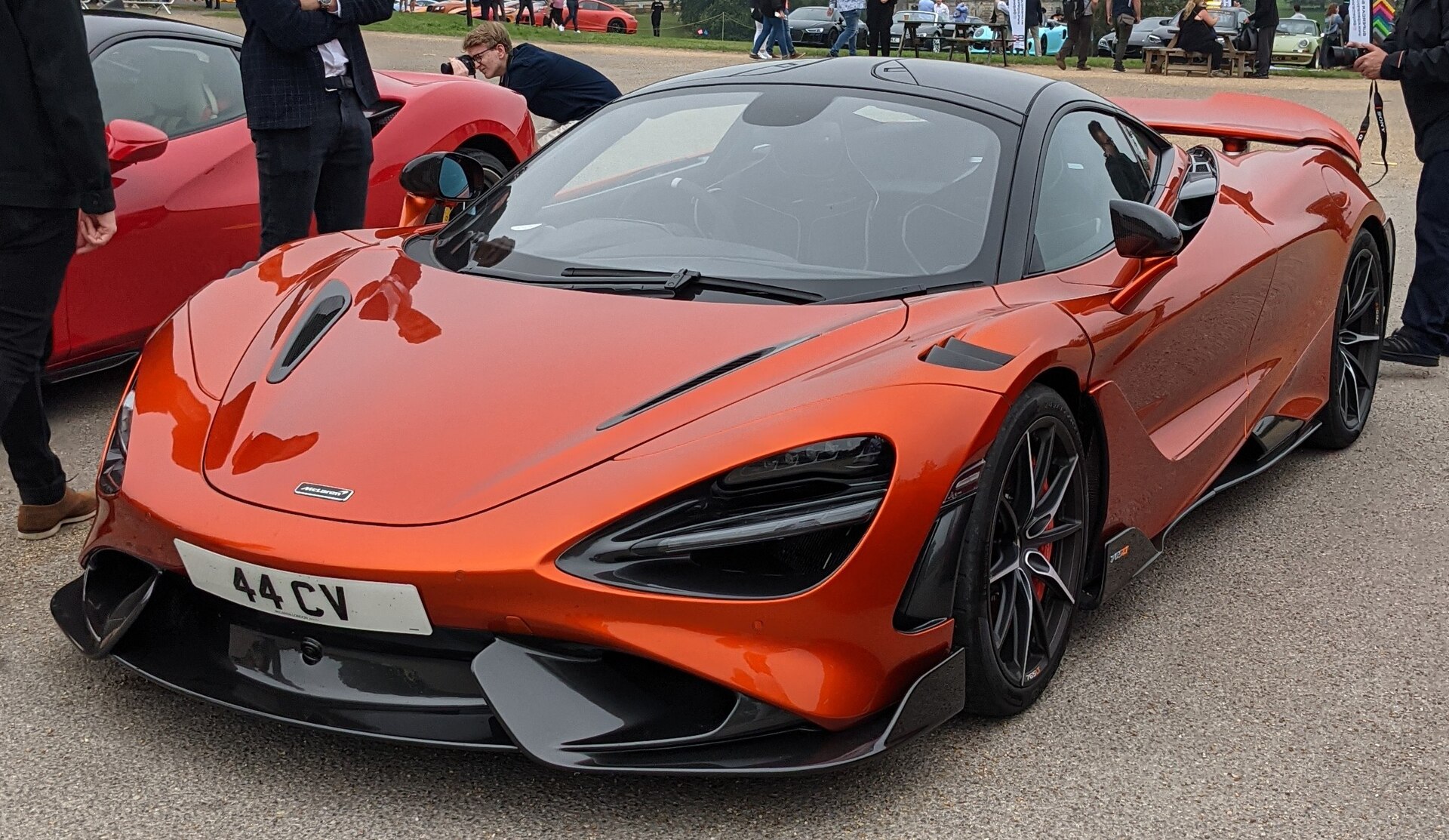
What Is the Best Year to Buy a McLaren 765LT?
Understanding the production timeline of McLaren's limited-run 765LT and which model year offers the best value and specification.
The Ultra-Short Production Run: Why 765 Units Changed Everything
The McLaren 765LT is different from nearly every supercar on the market. It wasn't designed to be a long-term production model with multiple generations and years. The 765LT represented a surgical, focused approach to modern supercar engineering — and that shows in its timeline. Production started in November 2020 with the Coupe variant, followed by the Spider announcement in July 2021. By 2022, this 1,530-unit experiment was essentially complete. All 765 coupes were built. All 765 spiders were built. That's it. The number isn't marketing; it's the entire production commitment.
This ultra-limited run has a profound impact on how you should evaluate which model year to buy. Unlike the 720S, which had a sprawling production window with multiple iterations, the 765LT offers precious few model years to choose from. But what does exist in those years matters enormously for value, specification, and future collectibility. Here's what you need to know before making your decision.
2021 Model Year Coupe: The First, Most Abundant, and Mechanically Identical to Everything That Followed
The 2021 McLaren 765LT Coupe represents the entry point into this segment. These are the first production 765LTs delivered to customers, starting early 2021 following the November 2020 announcement. Since all 765 coupes built worldwide carry the 2021 model year designation, these are the most available variant on the secondhand market today. Current market pricing ranges from approximately $380,000 to $480,000 depending on mileage, specification, service history, and buyer demand at the time of sale.
Mechanically, there are no meaningful differences between a 2021 coupe and a 2022 spider, or any 765LT variant for that matter. Every single 765LT produces 755 horsepower from its 4.0-liter twin-turbo V8. Every single one hits 0-60 mph in 2.7 seconds. Every single one maxes out at 205 mph. There are no annual updates, no mid-cycle refreshes, no engineering changes. What varies between cars is specification alone: paint color, interior trim, optional carbon fiber packages, and McLaren Special Operations (MSO) bespoke customizations.
The 2021 Coupe's appeal is straightforward. It delivers the lowest entry price into 765LT ownership, offers the largest selection of examples on the market, and provides the same superb engineering as every other 765LT produced. If budget is your primary concern, or if you value the ability to choose from multiple examples at different price points, the 2021 coupe is where you'll find the most competition and the best negotiating leverage.

Spider vs. Coupe: The Practical Difference That Justifies the Premium
The McLaren 765LT Spider was announced in July 2021 with deliveries beginning in late 2021 and continuing through 2022. All 765 spiders produced carry 2021-2022 model year designations. Current market pricing ranges from approximately $420,000 to $550,000, a meaningful premium over comparable coupes.
The Spider isn't just a coupe with the roof removed. The structural engineering is fundamentally different. The A-pillars are reinforced. The chassis is rebalanced. The suspension tuning is unique to the convertible format. The windshield can be electronically retracted in 11 seconds. The convertible top itself — a sophisticated power-operated carbon fiber piece — accounts for additional engineering complexity and cost at purchase and eventual service.
The market perception is equally important. Spiders are considered more desirable for street use. They command attention in ways coupes simply cannot. The cacophony of a 755-horsepower twin-turbo V8 with the roof down is incomparable. Spiders also benefit from lower total production overlap with coupes — while 765 of each were built, the Spider has less market saturation due to its later introduction and higher price point filtering out casual buyers. Historical data from McLaren models suggests lower-production drivetrains and body styles appreciate more predictably than higher-volume variants.
The practical answer: if you primarily care about value preservation, coupe examples will hold their worth admirably. If you care about experiential ownership — driving with the roof down in good weather, the sensory engagement of maximum wind and engine noise — the Spider's premium is justified and may actually deliver better long-term returns due to its desirability trajectory.
Specification Matters More Than Model Year: MSO Colors and Carbon Packages Command Premiums
The most important factor in 765LT value isn't whether you're buying a 2021 coupe or 2022 spider. It's what that particular car is wearing. MSO (McLaren Special Operations) bespoke specifications have become critical value drivers in the modern supercar market, and the 765LT is the apotheosis of this trend.
A 765LT finished in a factory standard color like Metallic Silver, Azura Blue, or Jet Black will sell for a baseline price. The same car in an MSO bespoke color — Titanium Pearl, Sunset Orange, or a customer-specified variant — can command premiums of $30,000 to $80,000 over identical mechanicals and mileage. Why? Because specification is permanent. A buyer can't reorder an MSO color later. The rarity and exclusivity baked into that paint job represent a tangible advantage that compounds over time.
Interior trim matters similarly. A 765LT finished in basic Jet Black leather is practical and timeless. The same car specified with Alcantara accents, a bespoke two-tone interior, embroidered floor mats, and carbon fiber interior trim becomes a statement of intent — and that statement commands 15-25% premiums when reselling. Service records confirm these specifications came from the factory, not added later, which validates authenticity to future buyers.
The external carbon packages — front fender vents, front splitter extensions, side skirt panels, rear wing elements — add both visual drama and genuine performance benefits through weight reduction. These can add $15,000 to $40,000 to purchase price, depending on how comprehensively they're applied. A 765LT with full carbon treatment throughout becomes instantly recognizable and immediately desirable to the collector segment, whereas base-spec vehicles, while identical mechanically, occupy a different market tier.
When evaluating potential purchases, photograph and document every specification detail. Cross-reference against the vehicle's original factory build sheet. Look for MSO options that differentiate the car from anonymous market inventory. These details are what separate a forgettable 765LT purchase from a decisively valuable long-term investment.
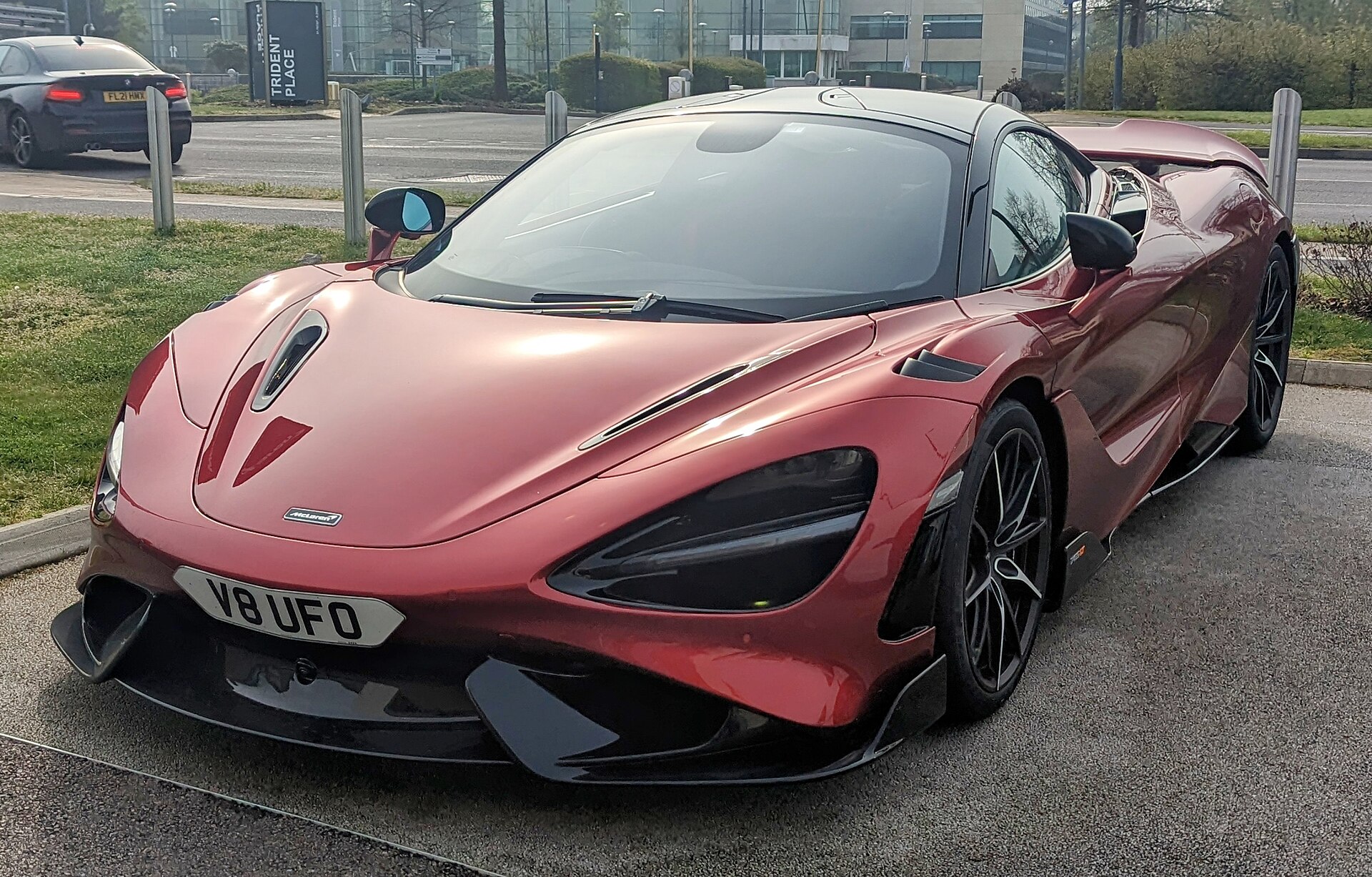
Low Mileage as Currency: Sub-500 Mile Examples Command $50K+ Premiums
The 765LT market has crystallized around a particular collector mentality: garage queens are worth premiums. A 765LT with fewer than 500 miles on the odometer — representing minimal use, careful storage, and maximum preservation — will command approximately $50,000 to $80,000 premiums over otherwise identical vehicles with 3,000-5,000 miles. This pattern holds true even for relatively recent production.
The reasoning is psychologically powerful. A car that's barely been driven can be viewed as "fresh from the factory" despite being three years old. Mechanical wear is negligible. Tire degradation is minimal. The driving experience is theoretically indistinguishable from a brand-new 765LT (which no longer exists, since production ended). For buyers with collection mindset rather than driving mindset, these low-mileage examples represent the closest available proxy to new-car acquisition.
However, this creates a hidden risk. A 765LT with only 200 miles, sitting in a climate-controlled garage for three years, has a different maintenance profile than a driven example. Even garage queens require annual fluid changes, battery monitoring, and system cycling to maintain mechanical integrity. A low-mileage car with a service history showing skipped annual maintenance is a red flag of the highest order — the mechanical seals dry out, the cooling system sits stagnant, the fuel injectors can gum. Actual driven cars with regular maintenance records are often mechanically superior despite higher odometer readings.
The practical recommendation: examine service history obsessively. A 3,500-mile 765LT with annual Porsche dealer service records is worth more than a 800-mile 765LT with zero documented maintenance. Driven examples that were properly cared for will reward you with fewer surprises during ownership.
Build Number Significance: 001 and 765 Command Attention
McLaren publishes build numbers on every 765LT. While all 765 coupes and all 765 spiders are mechanically identical, certain build numbers carry collection value premiums. The first 765LT Coupe (build #001) and the final 765LT Coupe (build #765) both have historical significance narratives. Similarly, the first and last spiders carry symbolic weight.
Build #001 examples typically command 10-20% premiums over comparable cars because they represent the "first production unit" — a distinction that resonates with collectors. Build #765 carries the inverse mystique: the final coupe before the nameplate's production run concluded, which appeals to buyers seeking closure and finality. Lucky numbers (007 for obvious reasons, or numbers matching a buyer's birthday) occasionally sell for small premiums in private sales.
However, don't overweight this factor. Build number significance is secondary to specification and condition. A well-optioned build #347 will almost certainly appreciate better than a basic build #001. These numerical narratives matter most to entry-level collectors or sentimental buyers; practical investors should focus on the comprehensive package rather than a single identifying digit.
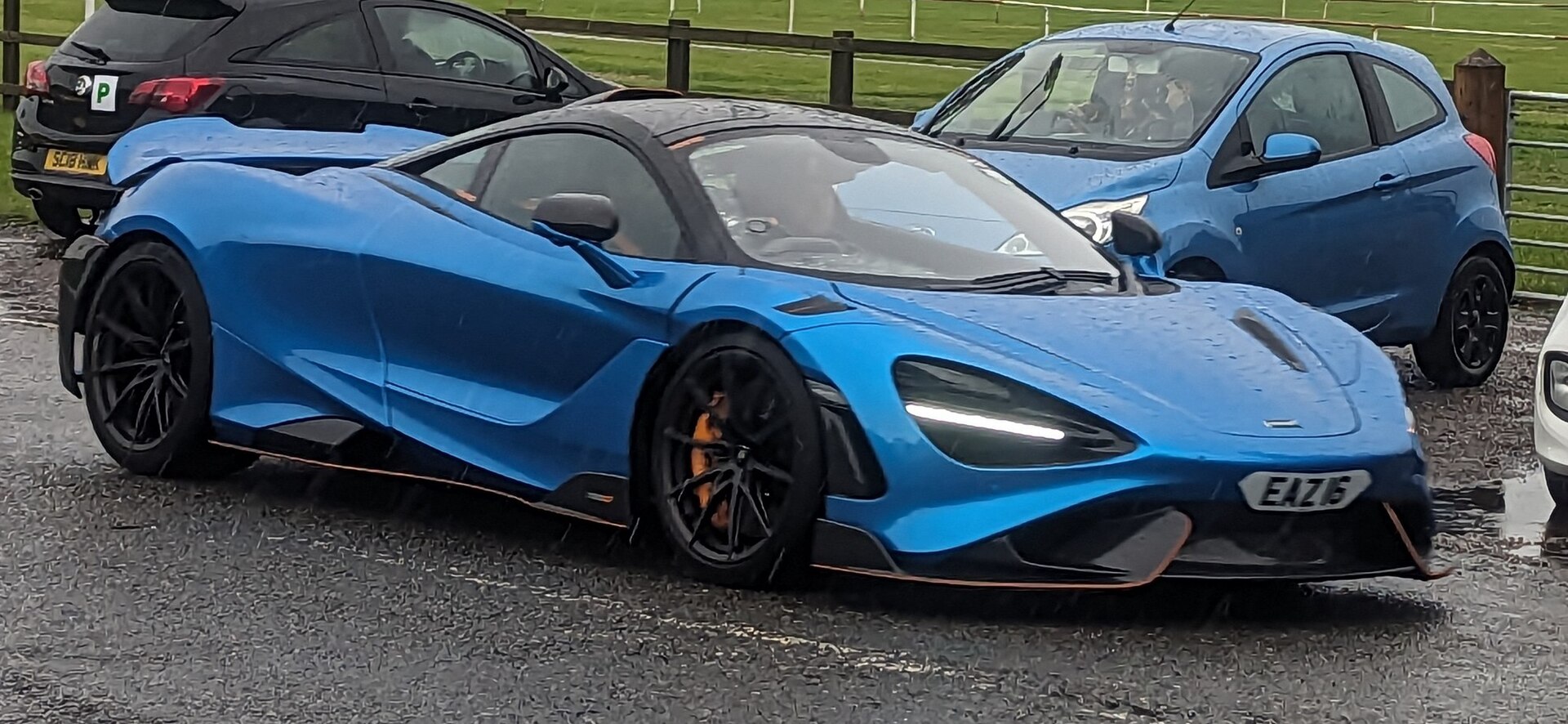
Model Year Comparison: The Complete Matrix
| Category | 2021 Coupe | 2021-22 Spider | Best For |
|---|---|---|---|
| Current Market Price | $380K–$480K | $420K–$550K | Budget-conscious buyers prefer coupes |
| Total Units Available | 765 (all in circulation) | 765 (all in circulation) | Spider has greater scarcity perception |
| Horsepower | 755 hp | 755 hp | Identical performance |
| 0-60 Time | 2.7s | 2.7s | No difference |
| Top Speed | 205 mph | 205 mph | No difference |
| Annual Maintenance | $5K–$8K | $5.5K–$8.5K | Spider slightly higher due to roof |
| Availability | Most abundant | Less common | Coupes offer more selection |
| Depreciation Profile | ~12-15% over 3 years | ~8-12% over 3 years | Spider holds value better |
| Driving Experience | Pure, focused coupe | Convertible engagement | Depends on climate and preference |
| Long-term Investment | Reliable baseline | Better appreciation potential | Limited production favors Spider |
Service History Is Non-Negotiable: Even Low-Mileage Examples Need Documentation
The 765LT benefits from McLaren's extensive experience building durable supercars. The engine is essentially a proven architecture shared with the 720S. The transmission is a sophisticated dual-clutch unit that's been refined across multiple generations. However, supercar ownership introduces maintenance requirements that casual buyers often underestimate.
Every 765LT, regardless of mileage, requires annual fluid changes. Coolant needs refreshing on a specific schedule. Brake fluid requires periodic replacement due to its hygroscopic nature. Tire rotations happen more frequently due to performance demands. A 2,000-mile car sitting for three years without these services has actually aged more than a 5,000-mile car with full annual maintenance documentation.
When evaluating candidates, request complete service records. Look for stamps from authorized McLaren dealers or certified independent shops specializing in McLaren maintenance. Be skeptical of any low-mileage example without documented annual service during its time of ownership. The factory warranty has expired; documentation is your only guarantee that the car was properly maintained during its off-season hibernation.
Specific items to verify: has the cooling system been pressure-tested annually? Have brake fluid records been maintained? Has the transmission received the required service intervals? These details separate well-preserved collector's items from neglected garage queens that may require $15,000-$30,000 in deferred maintenance remediation.
Future Collectibility: Comparing to Senna and P1 Precedents
Understanding where the 765LT fits in McLaren's historical trajectory provides insight into appreciation potential. The McLaren Senna (2019-2021 production, 500 units built) has appreciated in value since its release. Earlier examples now sell for 10-20% more than their original asking prices, particularly low-mileage versions. The McLaren P1 (2014-2015 production, 375 units built) has achieved iconic status, with vintage examples commanding $1.3-$1.5 million against original prices near $1 million — representing 30-50% appreciation over a decade.
The 765LT inhabits a unique position. It's more numerically available than the Senna (twice the production) but represents a similar era of hybrid turbocharged engineering. Unlike the P1 (a hypercar icon), the 765LT is explicitly positioned as a usable, drivable supercar. This distinction matters for appreciation: the 765LT is more likely to follow a Senna-like trajectory (moderate appreciation through scarcity and brand prestige) than achieve P1-level collector status.
The most bullish case for 765LT appreciation: as production models become increasingly turbocharged and electrified, the 765LT's sophisticated pure-gasoline engineering will seem increasingly remarkable. The naturally aspirated-adjacent engineering (even though it's twin-turbocharged, it lacks hybrid complication) positions it as a bridge between pure-gas supercars and full electrification. Historical precedent suggests this transitional status creates collector value.
Early market signals suggest 765LTs are stabilizing in value after initial market saturation. Pricing has plateaued rather than fallen, suggesting floor prices are forming. Within 5-10 years, we expect modest appreciation, particularly for well-optioned, low-mileage examples with comprehensive service documentation and distinctive specifications.
Find Your Perfect 765LT Specification
Automonitor's market analysis tracks every 765LT for sale, comparing specifications, pricing, and appreciation trajectories. Get real-time valuation and inventory data.
Browse 765LTs →Coupe vs. Spider: Which Is the Better Investment?
The financial argument boils down to production overlap and buyer preferences. Coupes are more numerous (765 units has been the entire global production), but spiders benefit from later-market introduction and higher price points that filtered out casual buyers. Statistically, lower-production-volume variants appreciate more predictably in collector markets.
A 2021 coupe represents value stability — its baseline pricing is lower, its selection is broader, and its depreciation will be gradual and predictable. A 2021-2022 spider represents appreciation potential — its premium pricing today reflects built-in scarcity, and that scarcity compounds over time as units get wrecked, neglected, or permanently parked in collections.
The practical recommendation: if you intend to drive the 765LT regularly (weekend cruises, occasional track days, cross-country trips), buy based on which body style suits your use pattern. The experiential premium of a convertible may justify the higher purchase price if you'll actually use it. If you're primarily motivated by investment return, the Spider's scarcity narrative and depreciation profile suggest marginally better long-term positioning, but the difference is modest enough that specification and condition matter far more than body style.
How AutoMonitor Helps You Buy Smart: Market Intelligence, Inspection Coordination, and Real Pricing Data
The 765LT market is relatively thin compared to the 720S or other mass-market supercars. Finding the right example — with the right specification, at the right price, with complete service documentation — requires market knowledge that most individual buyers lack. Automonitor's concierge buying service connects you with vetted sellers, facilitates pre-purchase inspections with McLaren-certified specialists, and provides real-time market data on comparable sales, pricing trends, and specification premiums.
We help you navigate the psychological noise of collector pricing. We identify red flags in service history. We negotiate from data rather than emotion. We coordinate inspections that specifically target the weak points of McLaren's architecture. We handle the entire transaction, reducing risk and accelerating the process from browsing to delivery.
Additionally, our comprehensive 765LT buying guide covers the broader ownership realities beyond model year selection — maintenance costs, insurance, available options, and the long-term ownership experience. We've also covered the new vs. used 765LT decision and where to source them.
For competitive context, explore our guides on the best year to buy a Ferrari SF90, Ferrari 296 GTB, and the general exotic car buying guide. We also compare McLaren models directly, including 720S model year analysis and our 720S value assessment.
The Final Answer: Which Model Year Should You Buy?
There is no universally "best" model year for the McLaren 765LT because all variants are mechanically identical. Instead, your decision should prioritize these factors in order:
First, choose Coupe vs. Spider based on how you'll use the car. Both are equally valid. Coupes are more affordable and offer better selection. Spiders provide the open-air experience and marginally better appreciation potential due to lower production overlap.
Second, prioritize specification over model year. An ordinary 2021 coupe in Jet Black is mechanically identical to a 2022 Spider in MSO Sunset Orange, but the latter carries $80,000-$120,000 in value premium. Seek distinctive colors, carbon packages, interior trim upgrades, and bespoke customizations.
Third, verify comprehensive service history. A driven 2021 with 4,000 miles and full annual maintenance records is superior to a garage queen with 400 miles and zero service documentation. Neglected cars develop unexpected problems.
Fourth, don't overpay for build number mythology. While #001 or #765 carry narrative appeal, a beautifully specified mid-build example will appreciate more reliably than a basic #765.
Finally, factor in your investment timeline. If you're planning to keep the car for 3-5 years, Spider examples will appreciate more predictably due to scarcity positioning. If you're viewing it as a 10+ year hold, either variant is acceptable provided you buy well on specification and condition.
The 765LT represents the final era of McLaren's turbocharged-but-pure-gas engineering philosophy. Whether you choose 2021 Coupe or 2021-2022 Spider, you're acquiring a remarkably usable supercar that will hold its value admirably and provide genuinely rewarding driving experiences. The model year is almost irrelevant. The specification, service history, and purchase price are everything.
Get Expert Guidance on Your 765LT Purchase
Automonitor's specialists understand the nuances of every 765LT in the market. We'll help you negotiate, inspect, and close with total confidence.
Start Your Search →