
What Is the Best Year to Buy a McLaren 720S?
A model year comparison of the McLaren 720S from 2018 to 2022 to find the perfect balance of value, reliability, and specification
Which Year Should You Buy? The Strategic Decision
The McLaren 720S was introduced in 2017 as a coupe and produced through 2022, when it was replaced by the all-new 750S. Over those five model years (2018 MY through 2022 MY), buyers face a compelling purchasing decision: does the value proposition lie in early models at bargain prices, or in later models with refined engineering and additional features? The answer depends on your priorities, budget, and intended use.
All 720S variants share the same foundation: a 4.0-liter twin-turbocharged V8 engine producing 710 horsepower and 568 pound-feet of torque. That engine remains one of the finest twin-turbo powertrains ever engineered, with flat-plane crankshaft technology that delivers naturally aspirated-like aggression. From a mechanical standpoint, the performance envelope across all five model years is virtually identical. The differences lie in electronics, user interface, minor hardware updates, market conditions, and production maturity. Understanding these distinctions is critical to identifying your ideal 720S.
This guide walks you through each model year, highlighting key changes, known issues, market pricing, and which variant represents the best value. We'll also explain why certain model years were affected by external market forces — particularly the chip shortage that dramatically impacted pricing in 2021 and 2022. By the end, you'll understand exactly which 720S represents the smartest purchase for your specific situation.
2018 Model Year — Launch Edition: The Value Play
The 2018 McLaren 720S marked the beginning of the Sports Series evolution toward greater practicality and digital integration. These were the first production 720S models, and they represent the cheapest entry point into 720S ownership today. Coupes from this year typically sell for $155,000 to $190,000 depending on mileage and condition.
As first-production-year cars, 2018 models came with some minor teething problems that would be addressed in subsequent years. Early owners reported occasional electrical bugs affecting the infotainment system, some instances of hydraulic suspension issues that required dealer attention, and very rare instances of water sealing problems around the door frames. None of these issues are common or catastrophic, but they're worth noting. A pre-purchase inspection should specifically check the suspension pressures and run full diagnostic scans on the electrical system.
The 2018 model lacked several conveniences that would arrive later: no Apple CarPlay, no Android Auto, no wireless charging, and the infotainment system itself was McLaren's least intuitive interface across the production run. The interior uses the same quality materials as later models, but the user experience is noticeably less refined. If you plan to drive this car regularly and value connectivity, this matters.
That said, if you're buying purely to drive and don't heavily rely on infotainment features, a well-maintained 2018 720S coupe represents exceptional value. You're getting a 710-horsepower supercar that performs identically to the latest year at a $30,000+ discount. These cars are appreciating assets in today's market, and the value proposition only improves if the maintenance is documented.

2019 Model Year — Production Refinement: The Sweet Spot
By 2019, McLaren had refined the 720S production process considerably. Software updates had addressed the electrical quirks from 2018. The hydraulic suspension had been tested in thousands of cars and was performing reliably. The 2019 model year also introduced the 720S Spider, opening an entirely different market segment at $315,000 MSRP. Today, 2019 720S coupes sell for $165,000 to $200,000, while Spiders command a $15,000 to $30,000 premium on the used market.
This is genuinely where the value-to-refinement ratio peaks. You get a production-mature car that has had all the first-year kinks worked out of the system, with pricing that reflects genuine used depreciation rather than the steep discounts of launch-year clearance. The 2019 model year also represents the last year before several meaningful feature additions that would arrive in 2020.
The reliability profile of 2019 models is excellent. By the time production ramped to full capacity, McLaren engineers had identified and corrected any systemic issues. Used 2019 720S models with complete service histories and reasonable mileage (under 12,000 miles) represent the lowest-risk purchase in the lineup. If you want a 720S Spider specifically, 2019 is the first and most affordable year to get one, making it an obvious choice for drop-top buyers who care about value.
2020 Model Year — Infotainment Evolution: Digital Leap Forward
The 2020 720S brought meaningful feature additions, most notably the long-awaited integration of Apple CarPlay and Android Auto. This was a massive quality-of-life upgrade that addressed the single biggest complaint from 2018-2019 owners. The infotainment system itself became more responsive and intuitive, and OTA (over-the-air) updates became available for the first time, promising future improvements without dealer visits.
2020 also marked the year of special editions, most notably the 720S Le Mans, a track-focused variant limited to 50 units worldwide. The Le Mans featured unique aero, track-specific tuning, and distinctive design cues. These cars immediately appreciated due to rarity and desirability. Regular 2020 coupes sell for $175,000 to $220,000 today, while Le Mans editions command significantly more due to their limited production.
The 2020 model year benefited from another year of production refinement. Reliability was excellent, and the reliability improvements from 2019 carried forward. If modern conveniences like smartphone integration matter to you but you want to avoid the inflated pricing of 2021-2022, the 2020 model year represents an excellent compromise. You get meaningful feature additions without the premium pricing that pandemic supply constraints would later impose.

2021 Model Year — Pandemic Pricing: Market Peak, But Limited Availability
The 2021 720S was caught in the perfect storm of supply chain disruption. Global chip shortages meant McLaren could produce fewer vehicles. Simultaneously, demand for exotic cars surged as wealthy buyers sought alternative assets during pandemic uncertainty. The result: 2021 models were in short supply and sold at record prices, often at or above MSRP. Used 2021 coupes still command $185,000 to $230,000 today.
From a technical standpoint, the 2021 model year was essentially identical to 2020. No meaningful feature additions, no significant engineering changes. The only notable distinction was 2021 was also the homologation year for the 720S GT3, McLaren's track car derivative. If you have specific interest in GT3 heritage or collector appeal, the 2021 model year carries some significance. Otherwise, it's difficult to recommend paying 2021 prices when 2020 models offer the same features at lower cost.
If you find a 2021 720S that's been well-maintained and priced reasonably (below $210,000 for a coupe), it's still a solid purchase. But don't pay a premium simply for the model year. The market has corrected since 2021 pricing peaked, and buyers can do better.
2022 Model Year — Final Production Run: Production Maturity & Collectibility
The 2022 McLaren 720S represents the final year of production before the all-new 750S arrived. This final production run was the most refined and mature version ever built. After five years of production, manufacturing tolerances had tightened, quality control had been optimized, and every known issue had been systematically eliminated.
Used 2022 coupes currently sell for $200,000 to $260,000, making them the most expensive 720S you'll find on the market. That premium reflects several factors: ultimate production maturity, the lowest mileage examples available (since they're the newest), and emerging collectibility interest from buyers who recognize the 720S is now a closed production car. As time passes, the 2022 model year will likely appreciate as final-year examples become more desirable.
If you can afford the 2022 price and plan to keep the car for years, the investment case is legitimate. You're buying the absolute best version of the 720S platform, with zero remaining bugs and maximum reliability potential. For buyers who value newest-car warranty coverage and the psychological comfort of owning a perfectly clean example, the 2022 model year is worth the premium. For value-conscious buyers, the 2020 model year delivers 95% of the experience at 15-20% less cost.
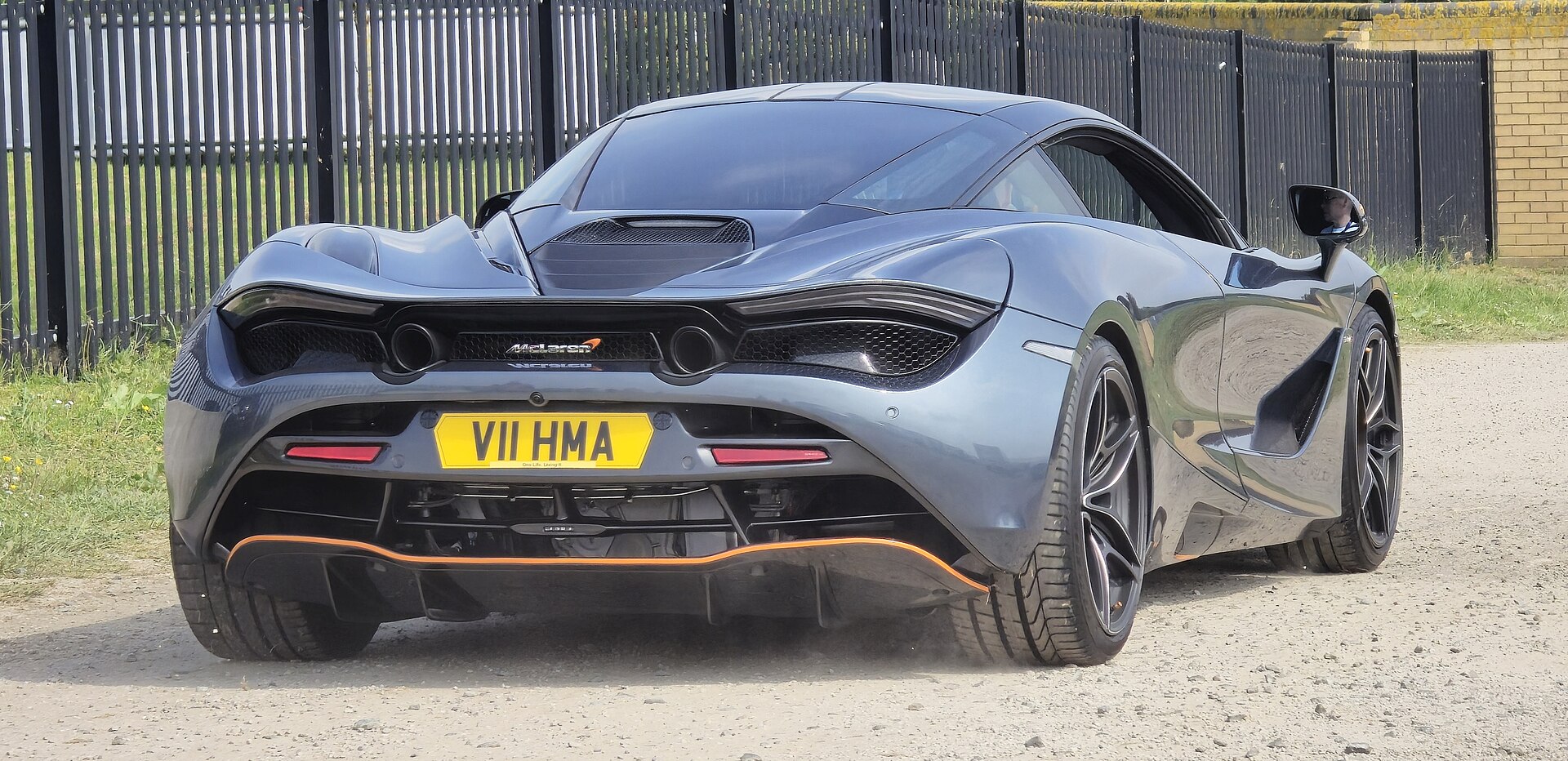
Spider vs. Coupe: The Convertible Premium
The McLaren 720S Spider arrived in 2019 and remained in production through 2022. The engineering is identical to the coupe, with an electrically-retractable hardtop roof that operates at speeds up to 30 mph. Structurally, the Spider retains the same carbon fiber monocoque and chassis rigidity as the coupe.
Buyers pay a premium for the Spider: approximately $15,000 to $30,000 more on the used market compared to equivalent coupes. Is it worth it? That depends entirely on your use case. If you plan to drive with the roof down regularly, the Spider is transformative — the 710-horsepower V8 sound at open-air is an experience the coupe can't match. If you're buying for occasional weekend use, the cost premium might be difficult to justify.
From a reliability standpoint, Spiders have proven to be just as reliable as coupes. The roof mechanism is robust and rarely develops problems. If you're a Spider buyer, prioritize 2019 or 2020 models, which offer good value. 2021-2022 Spiders are genuinely special cars for collectors willing to pay full market rates.
Special Editions & Track-Focused Variants: Collectibility & Value
McLaren offered several track-focused and limited-edition 720S variants worth understanding. The 720S Le Mans (2020, 50 units) is the most collectible, featuring unique carbon fiber aero, track-tuned suspension, and MSO customization. Values for Le Mans models have appreciated significantly since 2020, with clean examples selling at a 20-30% premium over standard 720S models.
The 720S GT3 (announced 2021) is a track-only derivative, not a road car, but its production represents significant heritage for 2021 model year road cars. If you find a 2021 coupe or Spider from the GT3 homologation year with special GT3-related customization or documentation, it carries some collectibility value.
MSO (McLaren Special Operations) custom cars appear throughout the production run. Individual specifications — rare colors, upgraded interior materials, bespoke paint finishes — increase collectibility and appeal. When evaluating a 720S, check if it has MSO customization details that are unique or desirable in the market. These touches can preserve or enhance value.
Complete Model Year Comparison Table
| Model Year | Used Price Range | Key Features | Known Issues | Production Notes |
|---|---|---|---|---|
| 2018 | $155K–$190K | Launch edition, basic infotainment, no Apple CarPlay | Occasional electrical bugs, rare suspension quirks | First year production, some teething issues |
| 2019 | $165K–$210K | Spider introduced ($315K MSRP), software refined, improved reliability | Minimal — production mature | Sweet spot for value + refinement |
| 2020 | $175K–$220K | Apple CarPlay & Android Auto added, Le Mans edition (50 units), OTA updates | None significant | Le Mans models appreciate; best digital integration before 2021 |
| 2021 | $185K–$230K | GT3 homologation year, minimal changes from 2020 | None significant | Pandemic pricing peak — limited supply drove up costs |
| 2022 | $200K–$260K | Final production year, maximum refinement, emerging collectibility | None known | Production maturity at peak, appreciating assets |
Reliability Across Years: What to Watch For
The 720S is generally a reliable supercar, especially compared to rival offerings from Ferrari or Lamborghini. The 4.0L twin-turbo V8 is a masterpiece of engineering with remarkably few known issues across all production years. However, some specific problems worth monitoring by year:
2018 Models: Early electrical gremlins affecting infotainment and climate control. Pre-purchase inspection should include full diagnostic scan. Hydraulic suspension systems occasionally needed fluid top-ups — have dealer check pressure readings.
2019-2020 Models: Largely problem-free. Most mechanical and electrical issues from 2018 had been resolved. Reliability data shows these years have the fewest warranty claims.
2021-2022 Models: Due to limited time in service, long-term reliability data is still emerging. Early indicators suggest these years are excellent, with the benefits of five years of production refinement behind them.
Across All Years: Common issues to verify during inspection include carbon buildup on direct-injection valves (normal for the engine type), dual-clutch transmission smoothness in low-speed driving, brake pad wear (these cars stop hard), and any signs of previous track use (bolt-on upgrades, track pad glazing, modified suspension geometry).
Schedule a Pre-Purchase Inspection Before Committing
An expert 720S inspection costs $500–$1,000 and can save you tens of thousands in hidden problems. Automonitor connects you with certified exotic car specialists.
Find an Inspector →The "Goldilocks Zone": Why 2019-2020 Models Represent Peak Value
After analyzing market data, reliability reports, and feature sets, the optimal purchase window for value-conscious 720S buyers is 2019 to 2020. Here's why this window matters:
Price Positioning: 2019-2020 models benefit from genuine depreciation while still commanding attractive prices compared to the newest cars. You'll save $20,000–$40,000 compared to 2022 pricing.
Reliability: By 2019, all first-year manufacturing issues had been corrected. You get a production-mature car without the higher wear-and-tear risk of 2018 models.
Feature Completeness: The 2020 model year added Apple CarPlay and Android Auto, the single most important modern convenience for daily driving. Going back to 2018 means sacrificing these features. Going forward to 2021 means paying 2021 pandemic premiums.
Spider Availability: If you want a Spider, 2019 and 2020 are the only years where you'll find reasonably-priced examples with room to negotiate. 2021-2022 Spiders command collector pricing.
Market Momentum: These are the years where buyers are actually buying and driving their 720S cars, not collecting them. If your intention is enjoyment rather than investment, the 2019-2020 window aligns perfectly with actual use patterns.
The 720S is McLaren's masterpiece of affordable supercar engineering. Choosing the right model year means choosing between early-adopter discounts, feature completeness, and production maturity. For most buyers, 2019-2020 hits that magical intersection perfectly.
Finding the Best Deal: Strategy & Tactics
Knowing which model year is optimal is only half the battle. You also need a systematic approach to finding the best example at the best price. Here's our methodology:
Step 1: Define your target window. Based on our analysis, decide if you're prioritizing value (2018-2019), feature completeness (2020), collector appeal (2021-2022), or a specific variant (Spider, Le Mans, etc.).
Step 2: Search nationally, not locally. 720S inventory is concentrated in wealthy markets: Southern California, Miami, New York, and the Northeast. Expand your search geographically. Regional pricing differences can be $20,000+ for identical cars.
Step 3: Check auction history. Completed auctions on Bring a Trailer and Cars and Bids provide genuine price discovery. Compare what equivalent cars actually sold for, not what dealers are asking.
Step 4: Evaluate service records obsessively. A 2018 model with complete McLaren dealership service history is worth more than a 2022 with spotty maintenance. Service continuity is paramount in exotic cars. If records are missing years, red flag.
Step 5: Get a PPI before committing. Invest $500–$1,000 in a proper pre-purchase inspection by someone who specializes in McLarens. This single step can prevent five-figure mistakes.
Step 6: Negotiate from data. Use completed sales data, not asking prices. If a car is asking $210,000 but comparable models sold for $195,000, use that data in negotiation.
When Should You Buy Your 720S? Market Timing Matters
Beyond choosing the right model year, timing your purchase strategically can yield significant savings. The 720S market follows predictable seasonal patterns. Prices tend to soften in November through February, when wealthy buyers aren't necessarily shopping. Spring (March-May) brings renewed activity and higher prices. Summer is neutral, and fall (September-October) sees fresh inventory as wealthy buyers upgrade their collections.
If you're flexible on timeline, delaying your purchase until winter could save $5,000–$10,000. If you've found the exact car you want at a fair price, don't wait hoping for better — these cars sell quickly when priced right.
Also consider that 2022 models are now appreciating assets, having officially transitioned to "out of production" status. If you're considering a newer car, recognition that prices may be stabilizing can inform your negotiation strategy.
How AutoMonitor Tracks 720S Values & Helps You Buy Smart
At Automonitor, we track thousands of exotic car transactions daily. Our database includes completed sales prices, market listings, auction results, and pricing trends across all model years and variants. This real-time data becomes your competitive advantage when shopping for a 720S.
When you use Automonitor's buying service, we handle the research, sourcing, inspection coordination, and negotiation. We know which dealers are overpricing, which private sellers are realistic, and which market regions offer the best value. We connect you with certified inspectors who know the 720S inside and out, and we provide transparent pricing analysis so you never overpay.
Start your 720S search with Automonitor and see how data-driven buying transforms the process from stressful and uncertain to informed and confident.
Related Buying Considerations
Beyond model year selection, several other decisions impact your 720S ownership experience. Should you buy new or used? Where can you find one? Is a 720S worth buying at all? And how does it compare to the Ferrari F8 Tributo or Lamborghini Huracan?
We have comprehensive guides covering all of these questions. Start with our complete 720S buying guide to understand the broader context of 720S ownership before committing to a specific model year.
The Final Verdict: Which Year Should You Buy?
If you're budget-conscious and willing to live without Apple CarPlay, a well-maintained 2018 or 2019 model at $160,000–$190,000 represents exceptional value. You get the full 710-horsepower experience at near-wholesale pricing.
If modern conveniences matter but you don't want to overpay for newness, a 2020 model at $175,000–$210,000 is the Goldilocks option. You get Apple CarPlay, Android Auto, OTA updates, and a production-mature platform without pandemic pricing.
If you want the newest, most refined car and value investment potential, go for 2022 at $200,000–$260,000. You're buying a final-year production example with maximum reliability and emerging collectibility.
Avoid 2021 unless you find an exceptional deal — it offers nothing different from 2020 at significantly higher pricing due to pandemic supply constraints.
Don't let model year alone drive your decision. Mileage, service history, accident history, and overall condition matter more than age. A high-mileage 2022 with questionable history is worse than a low-mileage 2019 with perfect dealer records.
Whatever model year you choose, get a pre-purchase inspection, negotiate from data, and buy from a knowledgeable source. The 720S is one of the finest supercar platforms ever engineered. Choosing the right year and the right example ensures you'll enjoy every second of ownership.
Ready to Find Your Perfect 720S?
Automonitor sources from verified dealers and private sellers worldwide, handles inspections, and guides you through the entire buying process with real market data.
Start Your Search →