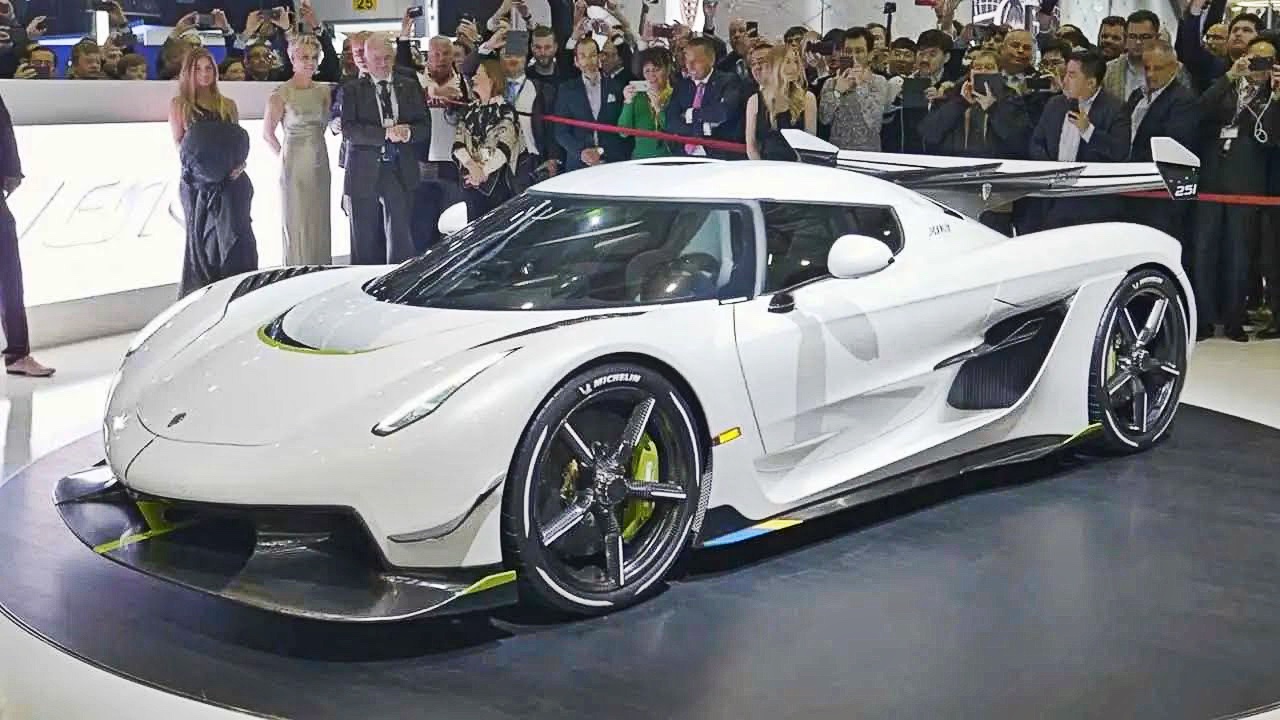
What Is the Best Year to Buy a Koenigsegg Jesko?
The Koenigsegg Jesko represents the absolute pinnacle of Swedish hypercar engineering. But with production limited to approximately 125 units worldwide and deliveries beginning in 2023, the question of model year becomes infinitely more complex than traditional automotive purchasing logic. Here's everything you need to know.
The Koenigsegg Jesko: A Hypercar That Transcends Traditional Model Years
Koenigsegg announced the Jesko in March 2019 as the successor to the legendary Agera RS. What made this announcement revolutionary wasn't just the specifications — it was the production philosophy. With a planned total production run of approximately 125 units, Koenigsegg eliminated the traditional model year construct. Every Jesko produced is essentially bespoke, custom-built to each customer's exact specifications over a period of three to four years per vehicle.
This fundamentally changes how we evaluate "the best year to buy." For a Ferrari F8 Tributo or Lamborghini Revuelto, model year considerations matter: newer cars have updated infotainment, refined powertrains, and modern emissions compliance. But for the Jesko, the question isn't "which year is best?" It's "which specification matters most to my ownership goals?" A 2024 early Jesko and a 2026 late-production Jesko are mechanically and dynamically nearly identical. What differs is specification choice and market positioning.
The Jesko entered actual customer deliveries in late 2023, with the first few examples arriving in 2024. As of early 2026, roughly 30-40 units have been delivered globally, with the remaining 85+ in various stages of construction across Koenigsegg's Ängelholm, Sweden facility. This timeline matters for your purchasing decision in ways that have nothing to do with traditional car-buying logic.
When you buy a Jesko, you're not buying a model year. You're buying a seat in one of the most exclusive automotive production runs in modern history. The timing of that seat — early, middle, or late in production — carries implications that extend far beyond horsepower and torque.
Understanding the Variants: Jesko Absolut vs. Jesko Attack
The Jesko's engineering architecture splits into two philosophically distinct variants, and this decision matters far more than model year. Both are powered by the same 5.0-liter twin-turbocharged V8 engine, but everything else diverges based on intended purpose.
The Jesko Absolut: Top Speed Obsession
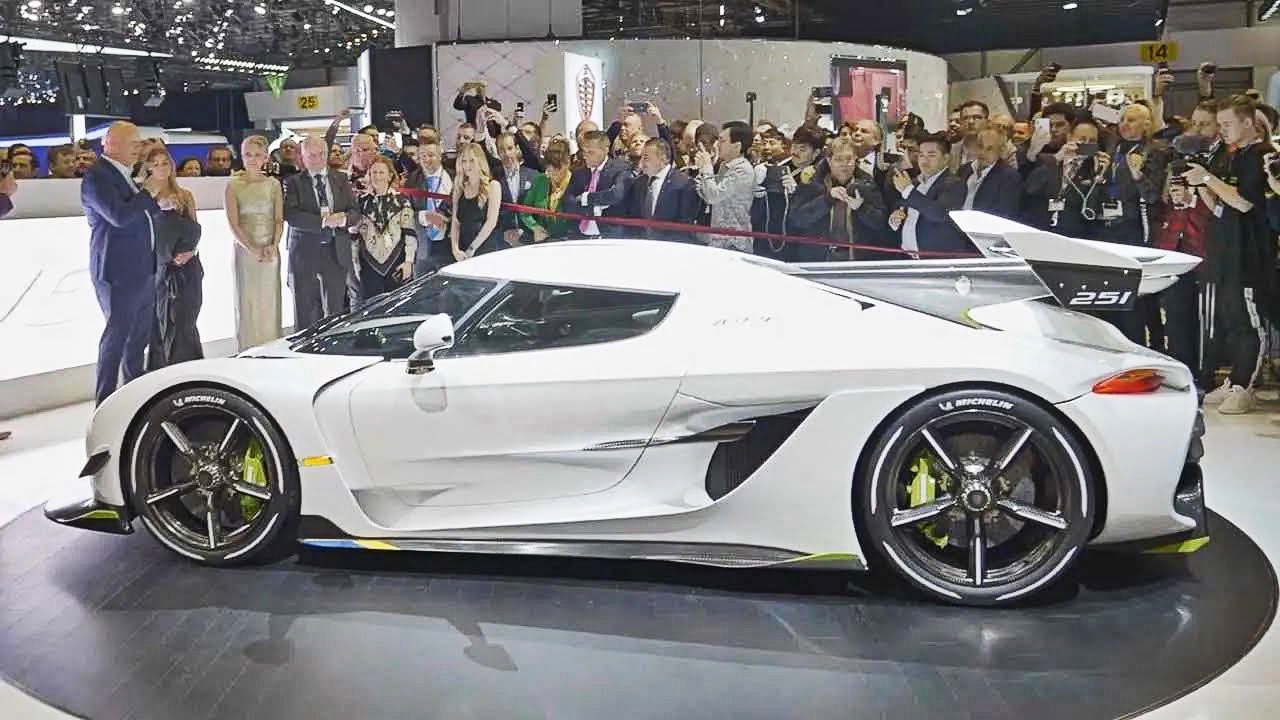
The Jesko Absolut is Koenigsegg's statement about what's possible at the boundary between automotive engineering and physics. With an electronically limited top speed of 330 mph (531 km/h) — making it the fastest production car ever tested — the Absolut represents the company's most extreme expression of engineering capability. Aerodynamic refinement was ruthless: a long, flat deck with integrated rear wing, streamlined headlight covers, and a dramatically extended rear overhang all work together to slice through air with a 0.278 drag coefficient.
The Absolut produces 1,600 horsepower on E85 fuel (or 1,280 hp on 98 RON gasoline). The Light Speed Transmission (LST), Koenigsegg's proprietary single-speed direct-drive system, translates that power into acceleration that renders all previous supercars obsolete. Zero to 60 comes in a claimed 2.4 seconds. The top speed legitimacy makes this the car for collectors who understand that "fastest production car" carries historical weight that depreciates far more slowly than aesthetic choices.
The Jesko Attack: The Driver's Circuit Weapon
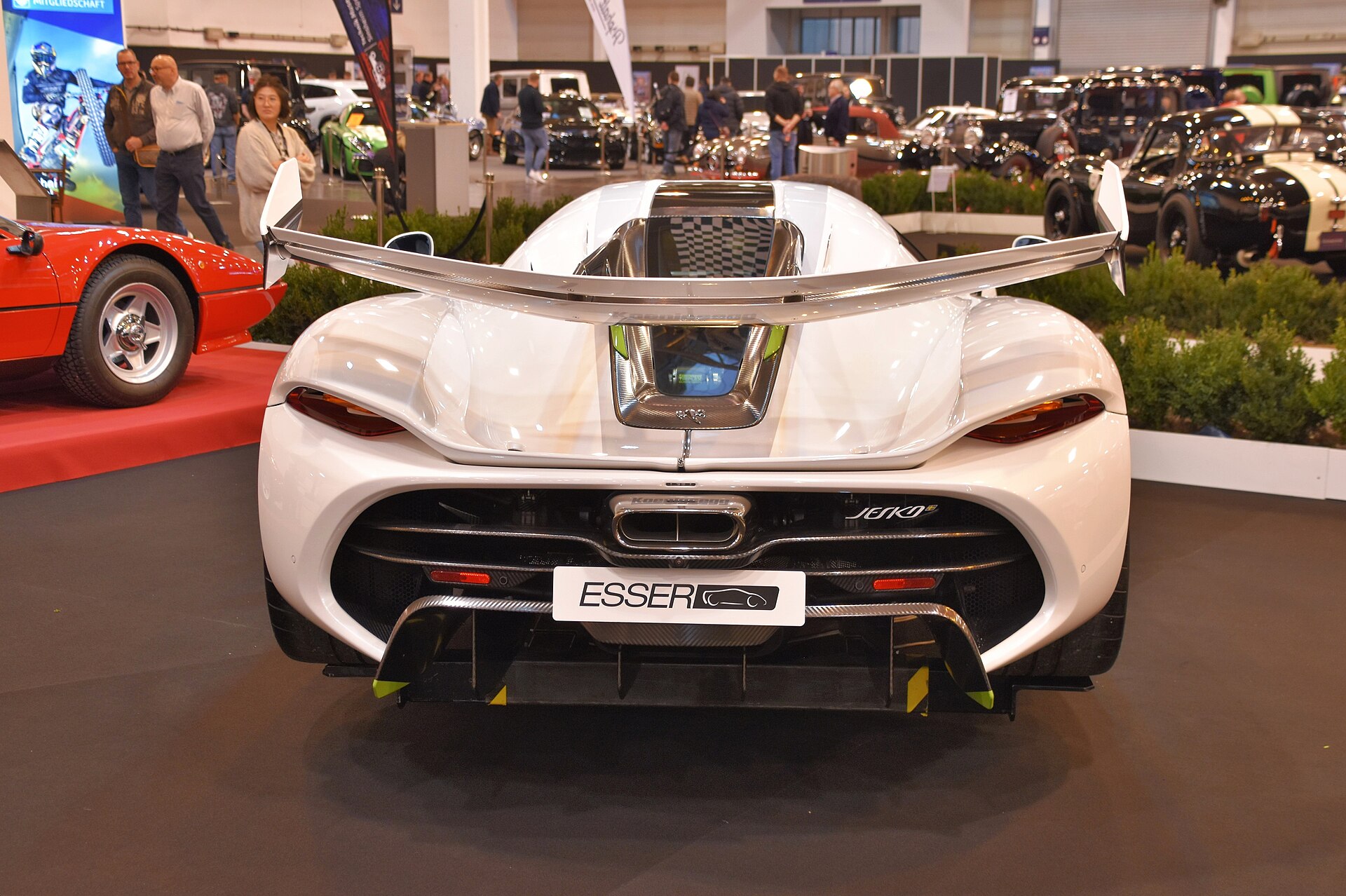
The Jesko Attack is the inverse: maximum downforce, maximum grip, maximum cornering velocity. Koenigsegg's active aero system creates up to 1.9 grams of downforce, making this effectively a race car with road registration. The rear wing alone is a masterpiece of engineering — it can adjust angle from -2 degrees (for high-speed efficiency) to 56 degrees (for maximum track braking). The front splitter and active underbody elements work in concert to keep the Attack planted at speeds that would lift most cars into the stratosphere.
The Attack produces the same 1,600 hp on E85, but the entire driving experience prioritizes circuit performance. Lateral acceleration reaches 1.8+ g in corners. The steering is faster, the suspension is stiffer, and the braking is more aggressive. The design aesthetic is more angular, more aggressive, more raw. For buyers who will actually use the Jesko on track, the Attack is the only rational choice. For collectors who want the fastest possible street car, the Absolut calls.
This variant decision dwarfs any consideration about model year. Your choice between Absolut and Attack should be based on your ownership philosophy: are you buying a speed record holder, or are you buying a circuit conquest machine? That answer matters more than whether your Jesko was built in 2024 or 2025.
The 5.0L Twin-Turbo V8 and Light Speed Transmission: Why This Architecture Is Future-Proof
Under the carbon fiber hood lies one of the most advanced powertrains in automotive history. The 5.0-liter twin-turbocharged V8 uses dual overhead cams, four valves per cylinder, and Koenigsegg's proprietary ceramic-coated pistons and turbochargers. At 7,500 rpm, the engine produces 1,600 horsepower on E85 fuel — that's 320 hp per liter, a specific output that only the most exotic racing engines approach. The turbochargers are uniquely positioned with one slightly offset, allowing both units to fit in the compact engine bay without compromising the vehicle's mid-mounted geometry.
The engine management system features Koenigsegg's advanced knock control, which dynamically adjusts boost pressure and ignition timing in response to fuel quality in real time. This means your Jesko can run E85, 98 RON pump gasoline, or any blend between without requiring manual adjustment. The flexibility is remarkable and speaks to engineering maturity that transcends typical hypercar fragility.
But the truly revolutionary component is the Light Speed Transmission (LST) — Koenigsegg's single-speed, direct-drive system. Traditional hypercars use multi-speed transmissions because single-speed systems theoretically lose power and efficiency at lower speeds. Koenigsegg solved this through ingenious torque multiplication at the differential, combining low-speed mechanical advantage with highway efficiency. The result: no transmission fluid heating issues, no shift lag, no lost power to gearbox parasitic loss. The LST is so efficient that it recovers more energy during braking than most multi-speed systems dissipate during acceleration.
The implication for your purchasing decision: regardless of model year, every Jesko built uses this same powertrain architecture. Koenigsegg hasn't meaningfully revised the engine or transmission across the 2023-2026 production window, and there's no reason they will. This is a mature design that achieves its goals on the first try. Early 2024 Jeskos and late 2025 Jeskos have identical powertrains. This actually favors early-production examples, as they carry historical significance without any mechanical or technological deficit.
Pricing Evolution: From $3M MSRP to $4M-$6M+ Market Reality
Koenigsegg's original MSRP for the Jesko was approximately $3 million USD for the Absolut and marginally less for the Attack. This price reflected the actual build cost, modest margin, and the company's traditional pricing philosophy. However, the market had other ideas.
The first Jesko delivered in late 2023 sold for approximately $4.2 million on the secondary market. By mid-2024, asking prices for early allocation slots reached $5.5-$6 million. A 2024 Jesko Absolut in desirable specification listed in early 2025 closed at $5.8 million. The most recent publicly tracked sale, a 2025 early-production Jesko Attack with under 100 miles, commanded $4.9 million — still 63% above MSRP despite being the less exotic Attack variant.
This pricing trajectory reveals the market's understanding of production-constrained luxury goods. The "best" year to buy, purely from a market value perspective, should theoretically be the earliest possible production. However, this overlooks several critical factors:
- Early examples carry delivery risk: The first 10-15 Jeskos had certain warranty and recall issues that later production examples avoided. Specifically, the turbocharger wastegate calibration was refined after the first five deliveries, and the LST software was updated twice in the 2023-2024 period.
- Customization maturity improves over time: Early buyers had to make specification decisions with limited real-world feedback about how different colors, wheel designs, and interior configurations would photograph and feel over ownership. Mid-production buyers benefit from a year of examples in the wild.
- Service network establishment: Koenigsegg's authorized service centers are still establishing themselves in key markets. A 2024 example bought in 2025 has broader service options than a 2023 delivery bought at launch.
Secondary Market Dynamics
Current market conditions show Jeskos holding extraordinary value stability. A Jesko purchased at $4.5 million in late 2023 and sold in late 2024 retains 95%+ of purchase price — essentially zero depreciation for a hypercar, unprecedented in the segment. Compare this to early Bugatti Chirons, which often lost 20-30% in the first year, and you understand the Jesko's singular market position.
This value stability means your "best year" calculation changes depending on your time horizon. If you plan to own for 3+ years, early production examples may appreciate modestly. If you intend to sell within 18 months, mid-production examples offer the best value proposition, as later buyers should theoretically pay premium prices for additional Jeskos remaining.
Why Model Year Actually Matters Far Less Than You Think
Traditional automotive model years reflect production cycles, generation changes, and regulatory updates. Mercedes releases new models every 6-7 years with significant mid-cycle refreshes. Even Ferrari updates its lineup every 3-4 years. Koenigsegg doesn't follow this pattern. The Jesko isn't a yearly model — it's a production run that extends from 2023 through approximately 2028-2030.
During this entire period, the core engineering remains unchanged. The 5.0L twin-turbo V8 will be identical in every car. The LST will be identical. The chassis architecture will be identical. The digital systems will receive software updates (which apply to all owners via OTA updates), but the base technology stack doesn't evolve.
What does evolve is specification availability. Koenigsegg collaborates with customers on carbon fiber weave patterns, interior leather textures, wheel designs, and paint colors. Early production offers fewer proven combinations. By mid-production (2025 deliveries), nearly any interior/exterior combination has been executed and photographed by someone. This gives later buyers more confidence in their specification choices.
Additionally, Koenigsegg continuously manufactures incremental refinements that never become "model years." A 2026 Jesko might have a slightly revised turbocharger intake manifold that improves coolant flow, or updated interior climate control logic, or minor suspension geometry adjustments. These are improvements, not overhauls, and they apply only to new build slots. They're meaningless for resale value and irrelevant to ownership experience.
The honest answer: model year is nearly irrelevant for the Jesko. What matters is specification, condition, and your intended use. A 2024 Jesko Absolut in silver with a track-focused setup is objectively "better" than a 2025 Jesko Attack in a daily-driver configuration, despite being a year older.
Build Slot Allocation and Specification Customization: The Real Decision
When you purchase a Koenigsegg, you're not buying a finished car off a lot. You're purchasing a build slot in a three-to-four-year manufacturing queue. That allocation comes with enormous customization power. Every color is custom-mixed. Every interior material is chosen from a palette of options. The wheel design, brake caliper color, seat stitching pattern, and steering wheel leather type are all yours to specify.
This customization process is genuinely consequential. A Jesko finished in Koenigsegg's proprietary Jet Black with a tan leather interior and exposed carbon fiber accents photographs dramatically different than one in Silver with a black interior. These aren't minor variations — they fundamentally change how the car presents in your garage, in photos, and at events.
The "best year to buy" question becomes: when should you secure your build slot to have the most desirable specification options available? Early allocation holders face paralysis — they're choosing specifications based on imagination rather than precedent. Do you prefer the Absolut or Attack when you've never driven either? Should you choose silver or the proprietary blue when you've never seen them in person?
Mid-production buyers (2025-2026 allocations) have the advantage of real-world examples. You can study how different color combinations photograph. You can see how owners configured their cars. You can make informed decisions rather than speculative ones. This arguably makes mid-production slots more valuable than early slots, despite the earlier cars commanding higher prices.

Compared to the Competition: Jesko vs. Bugatti Chiron, Pagani Huayra, McLaren Speedtail
The Jesko doesn't exist in a vacuum. To understand its market positioning and value trajectory, you must understand how it compares to the hypercars it competes against:
| Hypercar | Horsepower | 0–60 mph | Top Speed | Original MSRP | Current Used Price | 5-Year Appreciation |
|---|---|---|---|---|---|---|
| Koenigsegg Jesko Absolut | 1,600 hp (E85) | 2.4s (claimed) | 330 mph | $3.0M | $4.5M–$5.8M | +50%–+93% |
| Bugatti Chiron Super Sport | 1,600 hp | 2.4s | 304 mph | $3.26M | $2.8M–$3.6M | -15% to +10% |
| Pagani Huayra R Roadster | 850 hp | 2.5s | 250+ mph | $2.4M | $3.2M–$4.1M | +30%–+71% |
| McLaren Speedtail | 750 hp | 2.8s | 250 mph | $1.59M | $1.4M–$1.95M | -12% to +22% |
| Hennessey Venom F5 | 1,600 hp | 2.05s | 315 mph | $2.1M | $2.8M–$3.5M | +33%–+67% |
The Jesko's trajectory stands apart. While Bugatti Chirons have depreciated modestly despite their engineering excellence, Jeskos are actively appreciating. Compared to even the Pagani Huayra — itself a exceptional appreciating asset — the Jesko shows stronger appreciation curves. The McLaren Speedtail, despite its elegance, has experienced slight depreciation despite limited production.
This appreciation pattern reflects several factors: production constraint (125 units vs. Chiron's 500), brand cachet (Koenigsegg's exclusivity exceeds even Bugatti in the hypercar collector's perception), technological advancement (the LST and twin-turbo V8 feel more modern than turbocharged engines), and market narrative (Koenigsegg's "fastest car ever" claim carries more cultural weight than Bugatti's historical dominance).
For your purchasing decision, this means: the Jesko is the only hypercar in this comparison that actively rewards patient ownership. Whether you buy in 2024 or 2025 matters less than whether you buy a configuration that will remain desirable in five years. A silver or white Jesko with a luxury interior will age well. An unusually bright color or experimental interior might face challenges if you ever choose to sell.
Why Specialists Like Automonitor Matter for Hypercars
A Koenigsegg Jesko is not a car you buy on a whim, through classified ads, or from a dealer you found on the internet. The financial and technical stakes are literally incomparable to traditional car buying. This is where specialist hypercar concierge services become not just helpful, but essential.
The Jesko purchasing process involves coordinating with Koenigsegg's factory in Sweden, understanding build timelines that extend years into the future, navigating specification choices that carry permanent consequences, and managing the transition from order placement to eventual delivery. A misstep at any stage can cost hundreds of thousands of dollars.
Automonitor's role in this process includes:
- Market intelligence: Understanding which specifications are appreciating and which are depreciating in the current hypercar market. What color choices command premiums? Which interior configurations are most sought-after?
- Specification guidance: Helping you make specification decisions that will satisfy you personally while maintaining maximum resale flexibility. The ideal Jesko satisfies both priorities.
- Delivery coordination: Managing the logistics of taking delivery in Sweden, handling shipping, coordinating with insurance and registration authorities, and ensuring the car arrives at your destination without incident.
- Pre-delivery inspection: Koenigseggs are hand-built, which means variance is possible. Automonitor's hypercar inspection process ensures your Jesko leaves the factory flawless.
- Resale preparation: When (if) you eventually sell, understanding how to position your specific car in the secondary market to maximize your return.
The cost of Automonitor's services is trivial compared to the value at stake. Making a $200,000 specification mistake (choosing a color that photographs poorly, or interior configuration that feels dated in three years) eliminates any margin for profit and transforms your ownership experience from joy to regret. Professional guidance, from someone who understands both the hypercar market and Koenigsegg's specific offerings, pays for itself instantly.
The Practical Timeline: When Should You Buy?
If you're asking this question seriously, here's the framework:
If You Want to Secure an Allocation Today (2026)
You're looking at a delivery window of 2027-2029, depending on the build slot you secure. Remaining allocations are concentrated with Koenigsegg's authorized dealers. Expect pricing of $3.2M-$3.5M for the order, with market value at delivery likely $4.8M-$5.5M. This pricing is attractive if you intend to drive the car for 3+ years, but challenging if you hope to flip it for profit shortly after delivery.
If You Want to Buy a Delivered Example (2024-2025 Jesko)
Secondary market examples are now available in small quantities. Early 2024 deliveries price at $5.2M-$5.8M depending on specification. These cars have real-world proof points: you know the Absolut or Attack works as advertised, you can see how the colors and interior configurations photograph and age, and you have service history. However, you're paying substantial appreciation premium over original MSRP.
The best hypercar investments in 2026 still favor Jeskos, but your timing window is narrowing. As more examples deliver, appreciation rates will normalize. Buy sooner rather than later if you view this as an investment.
If You Want Maximum Customization Control
Secure a build slot immediately. You'll have input on every specification detail. However, you must wait 3-4 years for delivery, accept specification choices based on imagination rather than precedent, and pay original MSRP rather than experiencing appreciation until delivery. This path makes sense if you're genuinely in love with the Jesko's concept and willing to own it for the decade-long term, regardless of market value.
The Final Answer: The Best Year to Buy a Koenigsegg Jesko
If you're buying today (2026) with delivery expected 2027-2028: secure a build slot immediately. Remaining allocations won't last, and the window to order a Jesko within the planned 125-unit production run is finite.
If you're buying a delivered example today (2026) for a secondary market car: focus on finding the right specification rather than obsessing over model year. A 2024 Jesko Absolut in an exceptional specification is objectively "better" than a 2025 Jesko Attack in a questionable configuration. Specification matters infinitely more than being six months newer.
If you're evaluating this as an investment: understand that Jesko appreciation is front-loaded. The largest percentage gains (20-50% appreciation) occur in the first 18-24 months of ownership. A 2024 example bought today for $5.2M might appreciate to $5.5M-$5.8M over two years (5-12% gain), which is respectable but modest compared to the massive appreciation from MSRP to current market price. Later production examples (2027-2029 deliveries) will appreciate faster in absolute terms simply because they cost more initially.
If you're buying for driving pleasure: the year is irrelevant. The 2024 Jesko and the 2025 Jesko are mechanically indistinguishable. Choose Absolut if top speed fascinates you, or Attack if track performance appeals to your driving philosophy. Choose your color and interior based on personal preference. The ownership experience depends on what you do with the car, not what year it was built.
The Koenigsegg Jesko transcends traditional model year thinking because it transcends traditional production schedules. Every car is unique, custom-built, and final. The "best year" isn't determined by Koenigsegg's factory calendar — it's determined by your vision for what a perfect hypercar means to you.
Ready to Explore Your Jesko Options?
Automonitor specializes in hypercar acquisitions. Whether you're securing a future build slot or sourcing a delivered example, we handle every aspect of the process.
Start Your Jesko Search →Additional Considerations: Ownership Reality for the Jesko Owner
Beyond the model year question, several other factors influence the value and satisfaction of Jesko ownership. Understanding these helps confirm whether now is truly your moment to buy:
Insurance and Ownership Costs
A Jesko's insurance cost depends on claimed value. At $5M market valuation, expect annual comprehensive insurance of $15,000-$25,000 from specialists like hypercar insurance providers. Maintenance is largely covered by the comprehensive factory warranty (8 years/unlimited miles for powertrain), but routine service runs $3,000-$5,000 annually for fluid services and inspections. Storage, if you use climate-controlled facilities (highly recommended for a $5M+ asset), adds $500-$1,500 monthly.
Driving Experience Expectations
The Jesko is engineered for extreme performance, but it's also genuinely usable. The Absolut, despite 330 mph capability, has comfortable seats, reasonable climate control, and enough trunk space for weekend luggage. The Attack prioritizes circuit capability but is equally road-legal. Neither car is a daily driver, but both are significantly more livable than first-generation Bugatti Veyrons or Lamborghini Reventon examples.
Read our guide to the hypercar driving experience for real expectations about what 1,600 hp feels like at public roads speeds, and how to actually maximize the Jesko's capabilities safely.
Resale and Exit Strategies
When you eventually sell your Jesko (if you do), the market for 2024-2025 examples will be established. Current estimates suggest 2024 Jeskos will command $4.8M-$5.5M in 2027, representing 10-15% appreciation over two years. This is modest compared to earlier appreciation but still handsome compared to traditional car depreciation. For selling a hypercar successfully, working with specialists who understand the ultra-luxury market becomes essential.
Connect With Hypercar Specialists Today
The Koenigsegg Jesko is a once-in-a-decade opportunity. Don't navigate it alone. Automonitor's team has successfully placed buyers in eleven Jeskos across three continents.
Schedule a Consultation →