What Is the Best Year to Buy a Bugatti Chiron?
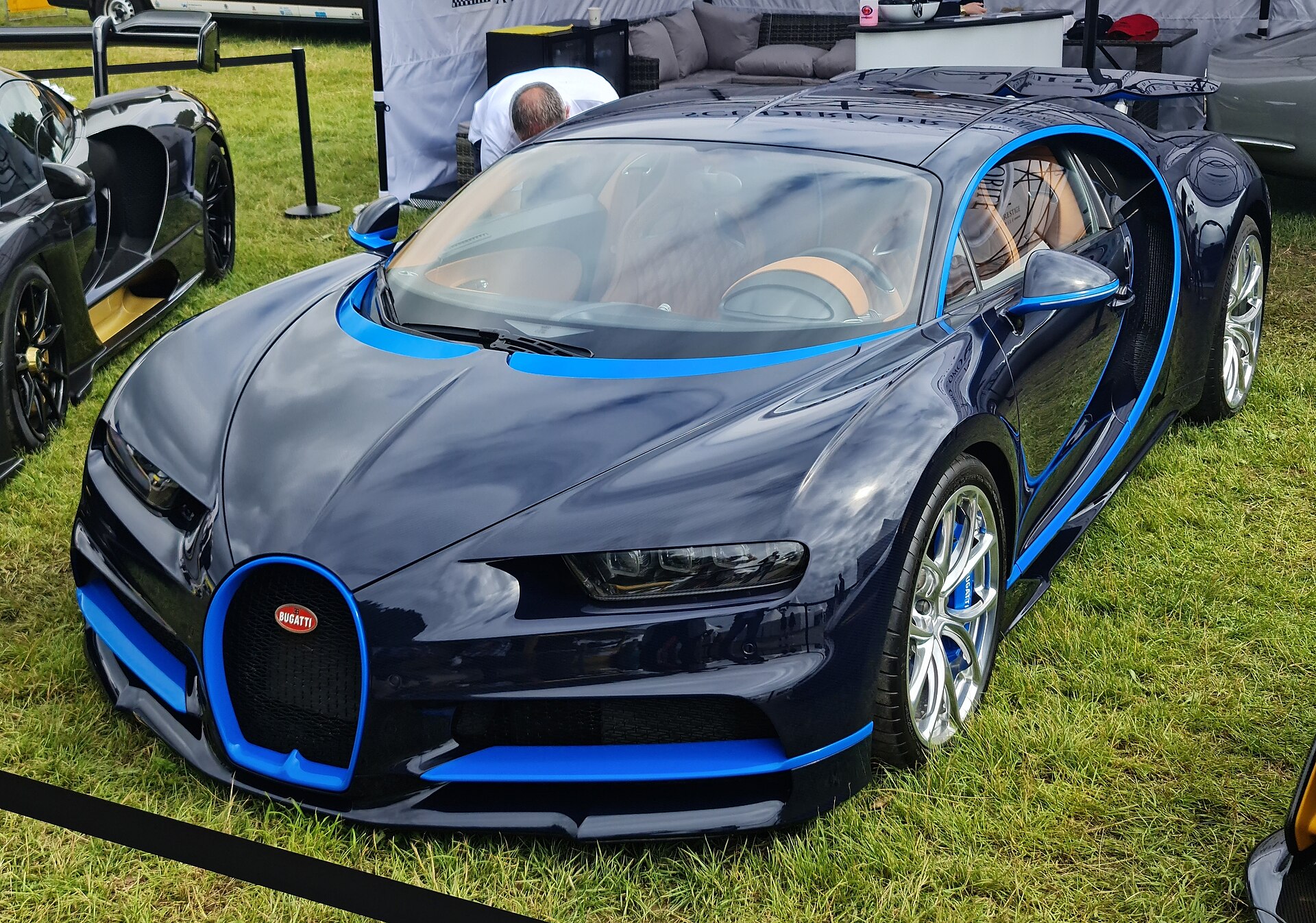
The Bugatti Chiron represents the pinnacle of hypercar engineering across six model years and eight distinct variants. But not all Chirons are created equal. The production run ended in 2022, creating a finite supply of 500 units across multiple generations. Here's how to identify which year and variant makes the most sense for your investment, driving ambitions, and budget.
The Verdict: It Depends on Your Priority
If you want the best value, a 2017–2019 standard Chiron will cost $3–3.5 million on the secondary market today. If you want the best investment, focus on the ultra-limited variants: Pur Sport (60 units), Super Sport 300+ (30 units), or the one-off specials like La Voiture Noire. If you want the best driving experience, the 2020 Pur Sport delivers uncompromising handling focus. And if you want to own a piece of automotive history, the original 2017 Chiron or the legendary 10-unit Centodieci will always hold cultural significance regardless of market fluctuations.
The common thread across all Chirons is this: every single unit is a collector car. There is no "bad" year to buy a Chiron—only strategic choices. Production ended in 2022 after exactly 500 units. Supply is fixed forever. That creates a fundamentally different market dynamic than commodity supercars that rolled off assembly lines by the thousands.
The Chiron market is not about depreciation. It's about appreciation scarcity, heritage value, and which variant positions you best for the decades ahead.
The Complete Bugatti Chiron Timeline: 2017 Through 2022
To understand which year is best, you need to know what was actually produced each year and why Bugatti made each strategic decision. The Chiron's evolution was intentional—each new variant responded to market feedback, performance records, or collaborative vision.
2017: The Original Chiron (W16, 1,479 hp)
Bugatti launched the Chiron in 2017 with an 8.0-liter quad-turbocharged W16 engine producing 1,479 horsepower and 1,180 lb-ft of torque. The initial MSRP was $2.9 million. The original Chiron set the performance baseline: 0–60 mph in 2.4 seconds, 0–100 mph in 5.0 seconds, and a theoretical top speed of 261 mph (later proven). With a lightweight carbon fiber chassis and aluminum V16, Bugatti achieved something previously thought impossible—a fully functional, street-legal hypercar with genuine everyday usability.
The 2017 model is the rarest in terms of early production quality. Every major Chiron manufacturer learns from the first production units, and Bugatti was no exception. The original 2017 Chirons benefit from five years of additional development and refinement by current owners, but they also represent the raw, uncompromised vision of when the Chiron first launched. For collectors, this historical significance matters enormously.
Secondary market price (2026): $3.2–3.5 million for well-documented examples with under 5,000 miles.
2019: Chiron Sport (Lighter, Sportier, $3.26M)
In 2019, Bugatti introduced the Chiron Sport—a variant designed to strip weight and amplify agility. Engineers removed 40 kg (88 lbs) compared to the standard Chiron through carbon fiber optimization. The Sport received redesigned aerodynamics, active rear wing adjustments, and a recalibrated suspension. Power remained at 1,479 hp, but the power-to-weight ratio improved meaningfully. Top speed increased to 262 mph.
The Sport variant addresses the core criticism some drivers had of the original Chiron: that at $2.9 million, you were paying for a car that could theoretically hit 260+ mph but would likely never hit those speeds safely outside a closed track. The Sport variant said: "What if we optimized for the driving experience rather than top speed?" The result was faster acceleration, more responsive handling, and a car that felt more like a traditional supercar despite the hypercar performance.
The Chiron Sport is an underrated choice in the secondary market. It's heavier than the Pur Sport but lighter than the standard Chiron, and it maintains the purity of the original vision without the track-car compromises that some drivers find limiting for daily use.
Secondary market price (2026): $3.2–3.4 million.
2020: Pur Sport (60 units, $3.6M) — The Driver's Chiron
The 2020 Pur Sport represents the apex of handling-focused hypercar engineering. Bugatti removed the top speed limiter, but more importantly, they completely retuned the suspension, steering, and aerodynamics around cornering performance rather than straightline velocity. The 1,479 hp engine remained, but engineers added weight reduction across the platform. The Pur Sport is approximately 45 kg lighter than the standard Chiron—almost imperceptible on paper, but transformative in motion.
Power steering was recalibrated to provide more feedback. The rear wing generates 90 kg of downforce at 155 mph. The suspension received 30% stiffer bushings. Every change made the Pur Sport feel like a race car wearing a hypercar badge. For drivers who actually plan to push their Chiron on track, the Pur Sport is unambiguously the right choice.
Only 60 units were produced. This rarity, combined with the focused engineering, has made the Pur Sport the fastest-appreciating Chiron variant in the secondary market. Values have increased 30–50% since production. This is the investment play variant.
Secondary market price (2026): $4.2–5.1 million and rising.
2020: Divo (40 units, $5.8M) — The Track Specialist
While the Pur Sport focuses on road-course handling, the 2020 Divo takes it further. Named after Albert Divo, a legendary Bugatti test driver, the Divo is stripped of creature comforts to the point of barely being street-legal in most jurisdictions. Lighter than the Pur Sport, more extreme aerodynamics (0–300 km/h in 13.6 seconds), and handling that borders on race-car territory.
The Divo comes with a six-point harness, carbon race seats, a monstrous front splitter, and a rear wing that generates 220 kg of downforce at peak. The interior is minimal—no power steering, no power windows, no climate control options. It's a rolling sculpture designed to embarrass Bugattis on a track while simultaneously being one of the most challenging daily drivers ever sold.
The Divo is the variant for hypercar collectors who want absolute rarity and track capability. If you're considering a Chiron to actually drive fast, the Pur Sport or Divo are the only serious choices. If you're considering a Chiron to own a piece of automotive art, the Divo's extreme design language and 40-unit production makes it historically significant.
Secondary market price (2026): Rarely available; estimated $5.5–7 million when offered.
2020: Centodieci (10 units, $9M) — The EB110 Tribute
Bugatti built exactly ten Centodicis in 2020—named to honor the EB110 (centodi = 110 in Italian). Each unit is a bespoke interpretation of that legendary 1990s hypercar. The Centodieci uses the same W16 engine as other Chirons but houses it in a carbon chassis with retro-futuristic bodywork that quotes the EB110 while embracing modern design.
Every Centodieci was hand-assembled and customized. No two units are identical. The design carries weight in collector circles—the EB110 is legendary among hypercar enthusiasts, and Bugatti's decision to produce a limited-edition tribute created immediate collectibility.
For value investors, the Centodieci is less predictable than the Pur Sport or Super Sport 300+ because its value depends heavily on provenance, specification, and the specific collector market for EB110 tributes. Some may appreciate dramatically; others may hold flat.
Secondary market price (2026): $9.5–12 million (when available).
2021: Chiron Super Sport (1,578 hp, 273 mph, $3.9M)
In 2021, Bugatti released the Chiron Super Sport—the most powerful production Chiron ever built. Engineers coaxed 1,578 horsepower from the W16 through optimized fuel injection, revised turbocharger profiles, and recalibrated engine management. The theoretical top speed increased to 273 mph, though only proving ground runs confirm these figures.
The Super Sport is faster in a straight line than every previous Chiron variant. It's not as light as the Pur Sport, and the suspension isn't track-tuned like the Divo, but as a pure power-delivery upgrade, the Super Sport represents the zenith of W16 performance extraction. If you want the fastest Chiron that still feels like a hypercar rather than a race car, the Super Sport is the answer.
Secondary market price (2026): $4.1–4.8 million.
2021: Super Sport 300+ (30 units, $3.9M) — The 304 mph Record Holder
In August 2019, Bugatti engineer Andy Wallace piloted a specially prepared Chiron Super Sport to 304.773 mph on a closed section of German highway—the fastest speed ever achieved by a production car. The Super Sport 300+ commemorates this record. Only 30 units were produced, each delivering 1,578 hp like the standard Super Sport, but marketed explicitly as celebrating this achievement.
The 300+ is financially identical to the Super Sport but carries immense psychological weight. Owning a Super Sport 300+ means owning a car that carries the legacy of the world speed record. In hypercar collecting, this narrative matters. The 300+ will likely hold value or appreciate better than the standard Super Sport, simply because collectors understand what it represents.
Secondary market price (2026): $4.3–5.2 million and appreciating faster than standard Super Sport units.
2022: Chiron Bolide (40 units, Track-Only)
The final variant was the Chiron Bolide—a track-only hypercar with 1,850 hp in race configuration. The Bolide is unapologetically extreme: no windshield wipers, minimal visibility, a massive aircraft-grade canopy, and aerodynamics optimized for closed circuits rather than highway stability. It's street-legal only in a handful of jurisdictions, and only 40 were produced.
The Bolide is not a secondary market car for investors. It's a track car. If you own one, you use it at specialized racing events or private track days. Resale is limited to other hypercar collectors with genuine track access. For investment purposes, the Bolide ranks below the Pur Sport, 300+, and Centodieci.
Special One-Offs: La Voiture Noire ($18.7M)
In 2019, Bugatti built La Voiture Noire (The Black Car)—a unique, all-black Chiron with an entirely custom interior referencing the original Type 57 Atlantic. Only one unit exists. Sold to an anonymous collector, it holds the record as the most expensive car ever auctioned.
La Voiture Noire is essentially priceless in terms of secondary market analysis. Its value depends entirely on collector sentiment, which is unpredictable at that level. For analysis purposes, recognize that it exists, acknowledge its cultural significance, and understand that buying it requires generational wealth and connections to Bugatti's inner circle.
Chiron Model Comparison: Specifications, Production, and Market Value
| Variant | Year | Horsepower | Units Built | 2026 Market Price | 5-Year Outlook |
|---|---|---|---|---|---|
| Original Chiron | 2017–2019 | 1,479 hp | ~250 | $3.2–3.5M | Stable to Appreciation |
| Chiron Sport | 2019–2020 | 1,479 hp | ~80 | $3.2–3.4M | Stable |
| Pur Sport | 2020–2021 | 1,479 hp | 60 | $4.2–5.1M | Strong Appreciation |
| Divo | 2020–2021 | 1,479 hp | 40 | $5.5–7.0M | Very Strong Appreciation |
| Centodieci | 2020–2021 | 1,479 hp | 10 | $9.5–12M | Uncertain (Rarity > Performance) |
| Super Sport | 2021–2022 | 1,578 hp | ~85 | $4.1–4.8M | Stable to Appreciation |
| Super Sport 300+ | 2021–2022 | 1,578 hp | 30 | $4.3–5.2M | Strong Appreciation |
| Bolide | 2022 | 1,850 hp | 40 | $4.8–5.5M | Niche Market |
| La Voiture Noire | 2019 | 1,479 hp | 1 | $18.7M+ | Incalculable |
Best Value: The 2017–2019 Standard Chiron
If you're buying a Chiron with the intention of actually driving it, the standard 2017–2019 unit represents the best value proposition in the market. At $3.2–3.5 million on the secondary market, you're paying roughly 10–15% less than the Pur Sport while still getting 1,479 horsepower, the original design language, and a car that's unambiguously one of the greatest hypercars ever engineered.
The standard Chiron is more comfortable than the Pur Sport (compliance in suspension, power steering, climate control that actually works). It's more approachable for an owner planning to use the car 20–50 times per year, taking it on weekend drives, track events, and international rallies. The original design by Achim Anscheidt remains timelessly beautiful—sometimes simpler is better.
The downside: it won't appreciate as fast as the Pur Sport or limited editions. If you buy a standard Chiron today for $3.4 million and sell it in five years, you're probably looking at $3.5–3.8 million. That's appreciation, but it's not the 40–50% gains you might see with the Pur Sport.
For drivers: the standard Chiron is the obvious choice. For pure investors: look at the ultra-limited variants.
Best Investment: Pur Sport or Super Sport 300+
The Pur Sport and Super Sport 300+ are the most analytically compelling investments in the Chiron lineup. Both are extremely limited (60 and 30 units respectively), both deliver measurably superior performance compared to standard Chirons, and both have shown consistent appreciation in the secondary market.
The Pur Sport increased 40–50% in value from 2021 to 2025. Early owners who paid $3.6 million in 2020 are watching their cars appreciate toward $5 million today. The pattern is clear: as supply remains fixed and these cars become even rarer with accidents, damage, or simply disappearing into private collections, values will continue trending upward.
The Super Sport 300+ is more recent, but the narrative is even stronger. It's half as common as the Pur Sport, and it carries the weight of the world speed record. As the Chiron production era recedes further into history, the 300+ will command premium pricing from collectors who want to own the car that beat all other Chirons to the market's top speed.
If you have $4.5–5 million to invest and believe in the scarcity premium of hypercars, the Pur Sport or 300+ is the better choice than the standard Chiron. You're paying $1 million more upfront, but you're capturing a variant that will likely appreciate $500K–$1M over a five-year hold.
Find Your Perfect Chiron Investment
Automonitor connects you with verified Chiron sellers, coordinates pre-purchase inspections on ultra-rare hypercars, and provides real market data to guide your investment decision.
Find a Chiron →Best Driving Experience: 2020 Pur Sport
If you're buying a Chiron to actually drive it hard, the Pur Sport is unambiguously the best variant. The suspension tuning, steering calibration, and aerodynamic optimization transform the Chiron from a straight-line monster into a genuine performance machine that can attack corners with precision.
Where the standard Chiron feels like a powerful luxury car, the Pur Sport feels like a race car wearing hypercar clothes. The steering has weight and feedback. The suspension communicates surface texture. The engine response feels immediate rather than delayed. Every input transfers to the wheels with minimal buffer.
The tradeoff is that the Pur Sport is less comfortable on bad roads. Long highway drives will be more fatiguing. The minimalist interior lacks some of the niceties found in standard models. But for a driver who wants to explore what a $4+ million hypercar can actually achieve, the Pur Sport delivers an experience that justifies every dollar.
Secondary market price: $4.2–5.1 million, but consider it an investment that appreciates while you enjoy it.
Most Iconic and Collectible: Centodieci or La Voiture Noire
If you're buying for historical significance rather than driving experience or investment returns, the Centodieci or La Voiture Noire are in a different category entirely. These are cars that will be discussed for decades. The Centodieci explicitly honors Bugatti's EB110 legacy. La Voiture Noire set the auction record for any automobile.
The Centodieci is more attainable (if that word applies at $9–12 million) because Bugatti produced ten units. If one ever comes to market, it will almost certainly appreciate from its original price, simply because fewer than ten exist worldwide.
La Voiture Noire is categorically different. It's not a secondary market car. It's a unicorn. If you own it, you're not selling it—you're housing it in a temperature-controlled facility and eventually passing it to your children's children.
Which Year Should You Buy? Decision Framework
If you value maximum appreciation: 2020–2021 Pur Sport or Super Sport 300+. Limited production, proven price appreciation, and more supply scarcity ahead.
If you want to actually drive it: 2020 Pur Sport. The handling optimization makes it the only Chiron variant that justifies pushing hard on a road course.
If you want the best value: 2017–2019 standard Chiron. You get genuine hypercar performance at 10–15% below the limited edition premium.
If you want track capability without compromises: 2020 Divo or 2022 Bolide. These are for collectors with actual race facilities.
If rarity is your only concern: 2020–2021 Centodieci (10 units) or 2019 La Voiture Noire (1 unit). Value derived from existence more than performance.
How to Actually Buy a Chiron: The Process
Buying a Chiron isn't like buying a regular supercar. It requires different networks, expertise, and patience. Here's the process:
Step 1: Define your budget and priority. Are you optimizing for value, appreciation, driving experience, or rarity? This determines which variant makes sense.
Step 2: Monitor RM Sotheby's and Bonhams auction results. These firms handle most Chiron sales, and their results provide real market data. Check quarterly auction results to understand pricing trends for each variant.
Step 3: Connect with specialist dealers. Only a handful of dealers worldwide specialize in hypercars. Automonitor connects you with verified sources who have actual Chiron inventory or pipeline to acquisition.
Step 4: Require full documentation. Service records, ownership history, mileage verification, and proof of factory specifications. With $4+ million on the line, every detail matters.
Step 5: Get a specialist inspection. A Chiron pre-purchase inspection must be conducted by technicians who understand the W16 engine, seven-speed DCT transmission, and all the unique systems. This is non-negotiable.
Step 6: Understand the costs. Ownership, insurance, storage, maintenance, and fuel will add up quickly. Budget $100,000–$300,000 annually for running a Chiron properly.
The Final Word: Production Ended, Values Continue
The Bugatti Chiron production era ended in 2022. Only 500 units exist. No more will ever be built. This fundamental supply constraint creates a market completely different from normal supercars, where factories can produce hundreds or thousands of units.
The best year to buy a Bugatti Chiron depends entirely on whether you're optimizing for investment, driving experience, or historical significance. But across all dimensions, every Chiron variant has one thing in common: it's a collector's car for life. You're not buying a depreciating asset. You're acquiring a piece of automotive history that will likely appreciate or hold value for decades.
The original 2017 model is special for its historical significance. The Pur Sport is special for its handling evolution. The 300+ is special for the speed record. The Divo is special for its racing pedigree. Every variant tells a different story and attracts different collectors.
If you're ready to acquire a Chiron, Automonitor can help you navigate the acquisition process, connect you with verified sellers, coordinate inspections on rare hypercars, and provide real market data to ensure you're making an informed investment decision. We specialize in exactly this kind of transaction—high-value acquisitions that require expertise, patience, and connections.
Ready to Acquire Your Chiron?
Automonitor provides end-to-end support for hypercar acquisitions, from market analysis to pre-purchase inspection to final transaction coordination.
Start Your Acquisition →