
What Is the Best Year to Buy an Audi R8?
The Audi R8 spans two decades of engineering excellence — from the gated manual V8 pioneer of 2008 to the final V10 RWD masterpiece in 2023. Every generation brings different strengths, different values, and different collectors' appeal. Here's exactly which year fits your needs.
Two Generations, One Icon: Understanding the R8 Timeline
Since its 2008 debut, the Audi R8 has occupied a unique position in the supercar world. It's the car that proved Audi could build something genuinely thrilling, not just technically proficient. The R8 proved that a mid-engine supercar didn't need an Italian badge to captivate enthusiasts or command respect at the track.
The R8 spans nearly 16 years across two distinct generations. The first generation (2008-2015) brought the original V8 4.2L and the revolutionary V10 5.2L. The second generation (2017-2023) committed entirely to V10 power with increasing sophistication. Each generation has distinct characteristics, depreciation curves, and collector appeal.
This guide analyzes every model year to help you find the best R8 for your budget, driving style, and investment goals. Whether you're seeking the rarest manual variant, the most reliable daily driver, or the collector's piece most likely to appreciate, we break down exactly what to expect from each era.
First Generation V8 (2008-2012): The Original Masterpiece
The 2008-2012 R8 V8 represented Audi's statement that a naturally aspirated 4.2L V8 could compete with the world's finest supercars. With 420 horsepower and the revolutionary option of a six-speed gated manual transmission, these cars created genuine enthusiasm that modern dual-clutch units have never recaptured.
2008-2010 V8 with Manual Transmission: These are the crown jewels. The gated manual delivers mechanical connection and theatrical engagement that no modern supercar offers. Values have already climbed to $130,000-$150,000 for well-maintained examples, and appreciation is accelerating as these cars age. The 2008-2009 models are particularly collectible due to age and lower production numbers. If you're buying for investment, these are the variants to target.
2011-2012 V8 with Manual: The last gated manuals before Audi moved exclusively to dual-clutch. Still appreciating rapidly, trading for $125,000-$145,000. More affordable than the 2008-2010 models but same mechanical engagement.
V8 Coupe vs. Spyder: The Spyder (convertible) versions command 8-12% premiums in today's market. If you found a V8 manual at the same price in both body styles, the Spyder is the better value play.
Reality check: Early V8s can develop carbon buildup on the direct injection valves around 40,000 miles. Budget $3,000-$5,000 for professional walnut blasting service. Check service history carefully — this is when good preventative maintenance makes the biggest difference to long-term reliability.
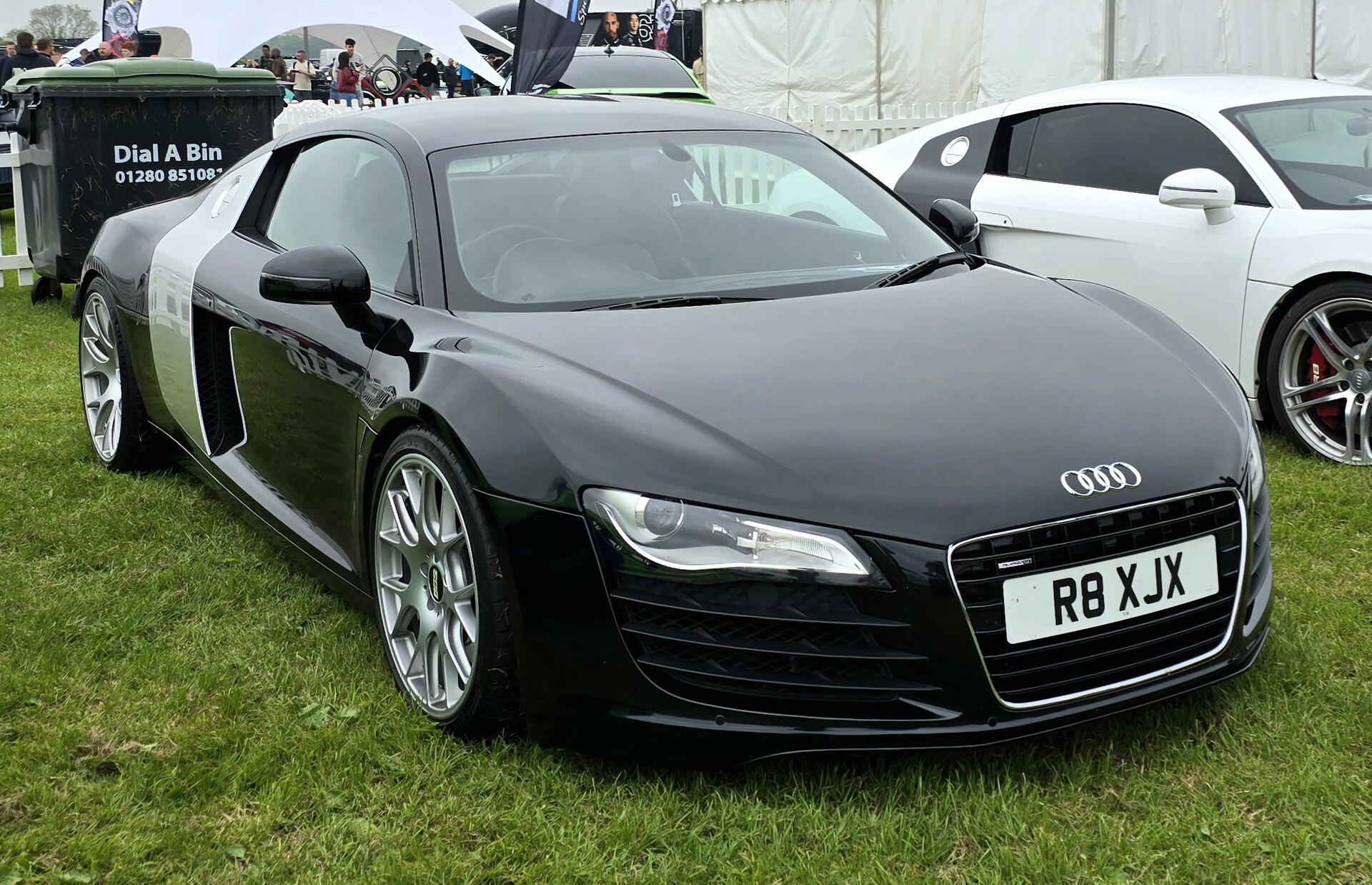
First Generation V10 (2009-2015): The Game-Changing Engine
When Audi introduced the 5.2L V10 in 2009, it immediately became the engine most enthusiasts wanted. The V8 was competent. The V10 was transcendent. With 525-550 horsepower depending on year, the V10 R8 was faster, sounded better, and commanded the road with an aggression the V8 never achieved.
2009-2011 V10 Manual ($115,000-$140,000): These were the first and rarest gated manual V10s. Approximately 2,500 units across these years, with manuals representing perhaps 20% of production. Current owners are realizing what they own — these cars are appreciating. The 2009 is the rarest and most collectible.
2012 V10 Plus ($125,000-$155,000): Power increased to 550 hp. Still available with the gated manual, though increasingly rare with DCT automatic. More refined interior than 2009-2011. Better daily-drivability with improved infotainment and climate control.
2012 GT Special Edition (333 units worldwide, $140,000-$180,000): This is the jewel. Only 333 GT editions were produced globally. 560 horsepower. Unique aero. Extensively upgraded interior. Values are climbing because collectors have discovered scarcity. If you find one in good condition, it's worth paying a premium.
2013-2015 V10 Plus with R tronic DCT ($110,000-$135,000): The last of the first generation. Refined suspension, improved steering, still naturally aspirated. More affordable than earlier V10s because manual scarcity premium doesn't apply. Best value for budget-conscious buyers who want V10 performance and reliability.
Key insight: The 2012 V10 Plus is the sweet spot for buyers who want gated manual option (still available), premium equipment, and proven reliability without the 2008-2010 premium. The 2013-2015 R tronic models offer V10 thunder at significantly lower entry points.
Second Generation V10 (2017-2019): The Modern Debut
The 2017 redesign kept the magnificent 5.2L V10 but abandoned the gated manual entirely in favor of a 7-speed dual-clutch transmission. Hardcore purists were disappointed. Everyone else got a more refined, faster, more practical supercar.
2017-2018 V10 Base ($95,000-$120,000): The most affordable path to modern R8 ownership. 532 horsepower. Fully electronic rear-wheel steering. Magnetic ride control. These are legitimately well-engineered daily drivers that can embarrass much more expensive cars on the road. 0-60 in 3.5 seconds. $95,000-$110,000 represents excellent value — you're getting second-generation refinement at first-generation pricing.
2018-2019 V10 Plus ($110,000-$135,000): Enhanced powertrain tuning (572 hp), more aggressive aero, better interior. The refinement jump from base to Plus is noticeable. Slightly better resale than base models due to equipment differentiation.
2019 V10 Performance ($115,000-$145,000): Renamed from "Plus," gains carbon fiber trim, upgraded brakes, and track-focused suspension. More exclusive than the Plus due to lower production numbers. Still excellent value compared to later Performance models.
Market reality: Early second-gen models (2017-2018) are the price sweet spot. Depreciation has settled, reliability is proven, and you're getting a car that's easier to live with than any first-gen R8. Insurance costs are lower than first-gen. Parts availability is better. If your priority is enjoyment without pain, start here.
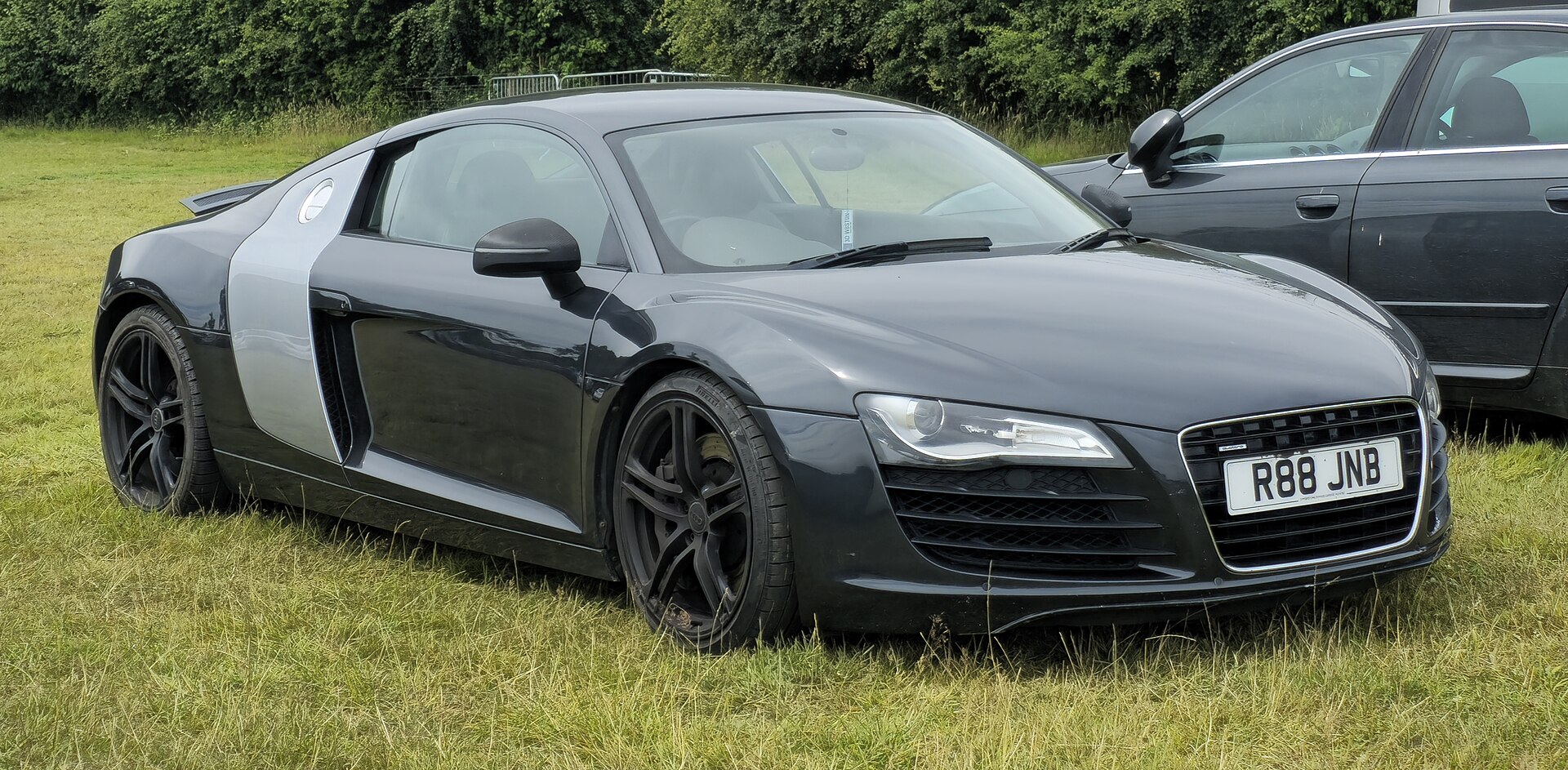
Second Generation Refined (2020-2022): Peak Performance
2020-2021 V10 Performance Quattro ($135,000-$165,000): This is the model we recommend most frequently for buyers who want modern V10 supercar ownership without the final-edition premium. Audi renamed the lineup — "Performance" replaces "Plus" — and added visual aggression through refreshed aero and carbon fiber accents. The V10 now produces 602 horsepower (up from 572). The 0-60 time dropped to 3.2 seconds. This is where the R8 reached maturity.
The 2020-2021 models represent the sweet spot for value. They're new enough that reliability is proven without being recent enough to carry new-car premium pricing. A 2020 with 15,000-25,000 miles trades for $145,000-$160,000 — that's a $25,000-$35,000 savings over 2023 models with the same engine.
2020-2021 V10 Performance RWD ($125,000-$150,000): Audi introduced rear-wheel-drive R8s starting in 2020. Rear-drive reduces weight, improves steering response, and delivers that visceral connection that purists crave. For a driver's car that's still manageable in any weather, RWD is the move. Values are slightly lower than AWD due to less all-weather practicality, but the driving experience is superior.
2022 V10 Performance Variants ($140,000-$170,000): Final tweaks before 2023 discontinued production. Slightly updated infotainment. Improved climate control. Mechanically identical to 2021. Values plateaued — no significant appreciation expected as 2023 final editions were approaching.
The 2020-2021 window is critical: These are the final modern R8s before the 2023 collector's edition premium. They're mature, proven, and reasonably priced. If you're buying for daily driving or weekend thrills without investment speculation, this is your year range.
Final Edition (2023 GT RWD): The Ultimate Collectible
Audi announced in 2021 that the R8 would end production in 2023. That knowledge transformed the final model year from a mere update into a historical artifact. The 2023 GT RWD became the final supercar from one of automotive history's most storied lineups.
2023 GT RWD (333 units worldwide, $185,000-$230,000): Only 333 of these were built. Rear-wheel drive. 602 horsepower. Final iteration of Audi's signature mid-engine V10. Limited carbon fiber aero. Unique interior appointments. Hand-numbered plaques. This is the watch that everyone wants to inherit.
Current pricing reflects the scarcity. But here's the important part: 2023 GT RWD examples haven't been on the used market long enough to establish true depreciation curves. What we're seeing is artificial scarcity premium. The first 2023 models sold new in mid-2022 are now trading for approximately $200,000-$220,000 with 5,000-12,000 miles. That's roughly 15-20% depreciation, which is actually reasonable for a new supercar.
Will values appreciate once the R8 is fully out of production and perceived scarcity intensifies? Possibly. But remember: 333 units is not exceptionally rare in the supercar world. The 2012 GT (also 333 units) has appreciated from roughly $100,000 to $160,000-$180,000 over a decade. If the 2023 GT follows the same trajectory, it could be a solid long-term hold. But that's speculation, not certainty.
The practical perspective: Buy the 2023 GT if you love the car and can afford the premium. Don't buy it purely for investment. The real money will be made by people who find undervalued 2020-2021 Performance examples and hold them for five years.
Head-to-Head Comparison: First vs. Second Generation
| Category | First Gen V8 (2008-2012) | First Gen V10 (2009-2015) | Second Gen (2017-2022) | Final Edition (2023) |
|---|---|---|---|---|
| Engine | 4.2L NA V8 | 5.2L NA V10 | 5.2L NA V10 | 5.2L NA V10 |
| Horsepower | 420 hp | 525-550 hp | 532-602 hp | 602 hp |
| 0-60 mph | 3.9s | 3.5s | 3.2-3.5s | 3.2s |
| Used Price Range | $95K-$150K | $110K-$180K | $95K-$170K | $185K-$230K |
| Gated Manual Available | Yes | Yes (through 2012) | No | No |
| Daily Drivability | Good | Good | Excellent | Excellent |
| Reliability | Good | Good | Excellent | Excellent |
| 5-Year Appreciation Potential | Strong (Appreciating) | Strong (Appreciating) | Neutral | Uncertain |
| Best For | Collectors, Manual Purists | Investors, Enthusiasts | Daily Drivers, Value Seekers | Final-Edition Collectors |
Best Year by Priority: Finding Your Perfect R8
Best Value: 2017-2018 V10 Base ($95,000-$115,000)
You get second-generation engineering, V10 power, and full warranty history at first-generation pricing. These cars have stabilized in the market — expect to lose 2-3% per year going forward rather than the steep depreciation of newer models. They're old enough to be sensible purchases, new enough to be reliable. Is the R8 worth buying? Start here if budget is the primary concern.
Best Daily Driver: 2020-2021 V10 Performance Quattro ($145,000-$165,000)
Peak refinement. All-wheel drive for weather security. 602 horsepower. Updated infotainment. The most mature R8 ever built, now priced reasonably due to 2023 final-edition competition. You're getting a car that can genuinely be driven year-round without compromise. This is where Audi proved that supercars don't have to be temperamental to be thrilling.
Best Driver's Car: 2020-2021 V10 Performance RWD ($125,000-$150,000)
If engagement matters more than weather security, this is it. The RWD configuration is more raw, more responsive, more theatrical. Lighter than AWD. More challenging to drive at the limit. Prices are lower because fewer buyers want RWD practicality trade-offs. That's your advantage — you get performance-oriented engineering at value pricing.
Best Investment: 2008-2012 V8 or V10 Manual ($110,000-$180,000)
These are appreciating now and likely to continue appreciating for at least 5-10 more years. The gated manual is the rarest feature in the R8 lineup. Only these first-gen cars offer it. As manual transmissions disappear from new cars entirely, the last examples become more valuable. The 2008-2009 models are the safest bets for appreciation. The 2012 GT is a lottery ticket. See our guide on how much an Audi R8 costs for current market benchmarks.
Best Collector's Piece: 2023 GT RWD or 2012 GT ($140,000-$230,000)
The 2023 GT is the final R8, period. The 2012 GT is the rarest first-gen variant. Both are limited to 333 units. Both command collector premiums. Both have unique specification availability. Buy these if the rarity and historical significance matter more than pure performance value. These are the cars you'll be proud to own in 20 years, regardless of depreciation.
Reliability Deep Dive: What Breaks and When
The R8's Volkswagen Group engineering backbone makes it remarkably reliable for a supercar. But there are known patterns by generation:
First Generation (2008-2015): The V8 and early V10 engines are extremely robust. Carbon buildup on direct injection requires proactive maintenance every 40,000-50,000 miles. The DCT transmission (introduced 2008, continuously updated through 2015) can develop shuddering at low speeds in pre-2012 models — insist on a test drive from cold start with focus on transmission smoothness below 2,000 rpm in 1st gear. Rear differential seals can weep around 60,000+ miles, a $1,500-$2,500 repair. Otherwise, these cars are solid.
Second Generation (2017-2023): The new platform brought significant improvements. The 7-speed DCT is more refined than earlier versions. Carbon buildup is still present but better managed. The magnetic ride control suspension is more durable than the earlier adaptive setup. Cooling system components have been upgraded. We see fewer issues overall, with the primary concern being the occasional electrical gremlins related to the updated infotainment system (software updates typically resolve these).
Maintenance reality: Budget $3,000-$5,000 annually for routine maintenance on any R8. Brakes are significant ($2,000-$4,000 per service at 50,000+ miles). Tires are specialty items ($2,500-$4,500 per set of four). Oil changes are approximately $300-$400 at independent specialists (Audi dealers charge significantly more). Carbon cleaning every 40,000-50,000 miles: $3,000-$4,500. If you find a cheap R8, verify service history carefully — deferred maintenance on these cars becomes catastrophically expensive.
Depreciation Patterns: How R8 Values Actually Move
First-generation R8s (2008-2015) have bottomed out in depreciation. Values are stable to appreciating, particularly for manual variants and the 2012 GT. The gated manual premium is real and expanding — a V8 manual commands 25-35% premium over equivalent V8 DCT models.
Second-generation base models (2017-2019) continue depreciating at 5-8% annually. The sweet spot for depreciation is the 2020-2022 range, where values have largely stabilized. A $150,000 2020 R8 is unlikely to depreciate significantly further — you're buying at a mature point in the curve.
The 2023 final edition commands an artificial premium that may or may not be sustained. Current resale data shows 2023 models retaining approximately 85% of their MSRP value, which is healthy but not exceptional for a limited-production supercar. This suggests the premium is softening as more examples reach the used market.
If investment potential concerns you, focus on the 2020-2021 Performance models. These are unlikely to depreciate further and could appreciate modestly if supply remains constrained. The first-gen manual variants are already appreciating and likely to continue.
The Smart R8 Buying Strategy: Where to Look and What to Pay
The R8 market has specific dynamics worth understanding before you start shopping:
Price by Market: California, Florida, and Texas have the highest R8 inventory and most competitive pricing. Avoid buying in markets with limited supply — premiums can run 10-15% higher. Use Bring a Trailer auction results to understand market value. Check Hagerty valuation data for long-term trends. These sources are more reliable than dealer asking prices.
Manual vs. DCT Pricing: A gated manual V8 or V10 will cost 20-35% more than equivalent DCT models. Determine if you actually want manual engagement enough to justify the premium. Modern R8 DCT transmissions are genuinely quick and smooth — you're not sacrificing performance for convenience.
Color Matters More Than You Think: Standard colors (black, white, gray) sell for 5-8% less than distinctly colored examples. Audi's signature colors — Ascari Blue, Ara Blue, Granite Gray — carry modest premiums. Acid Green, Cyber Orange, or other outlandish colors are both a blessing (visual impact, low acquisition cost in many cases) and a curse (limited appeal, harder to sell).
Mileage Sweet Spots: For 2017-2021 models, the 8,000-15,000-mile range offers the best value-to-condition ratio. Sub-5,000-mile examples command premiums not justified by condition improvement. Higher-mileage examples (30,000-50,000 miles) should trade at significant discounts if maintenance is documented.
Pre-purchase inspection is mandatory. Budget $800-$1,200 for a thorough PPI from a shop that specializes in German supercars. This can identify $10,000+ in deferred maintenance before you're committed. Get a compression test on the V10 (should be consistently 135+ psi across all cylinders). Verify all service records are present.
Get Pre-Purchase Inspection Before Buying
Automonitor connects you with certified exotic car specialists who understand every R8 generation. Identify issues before you buy and negotiate from a position of knowledge.
Schedule an Inspection →The Verdict: Which Year R8 is Right for You?
The "best" R8 depends entirely on what you prioritize. If you want the rarest possible car and appreciate manual engagement, hunt for a 2008-2010 V10 manual. Be prepared to spend $140,000-$160,000, and understand that these cars are already appreciating in value. They're emotional purchases with good financial fundamentals.
If you want the best daily-driving supercar with modern reliability and refinement, the 2020-2021 V10 Performance Quattro at $145,000-$165,000 is nearly unbeatable. This is where Audi perfected the recipe. You're buying proven, mature engineering at sensible used prices.
If you want value and don't mind slightly older technology, the 2017-2019 V10 base models represent genuine savings without meaningful compromise in performance. These are the cars that will hold value best relative to initial cost.
If you want the bragging rights of the final-edition supercar, the 2023 GT RWD is the move — though understand you're paying collector premium for scarcity and historical significance, not superior performance.
Whatever year you choose, verify service history meticulously, get a professional inspection from someone who knows these cars, and understand that the real cost of R8 ownership happens after you drive off the lot. The monthly running costs are real, and surprise repairs can be expensive. But if you're prepared for the financial reality, the Audi R8 represents one of the greatest supercar values in today's market.
For guidance on finding the right R8 for your budget and needs, check our guide on where to buy an Audi R8 and let Automonitor handle the sourcing, inspection, and negotiation. We've completed hundreds of R8 transactions and understand the market intimately.
Ready to Find Your Perfect R8?
Automonitor sources from 200+ verified dealers, handles pre-purchase inspections, and provides real market data so you buy with total confidence.
Start Your Search →